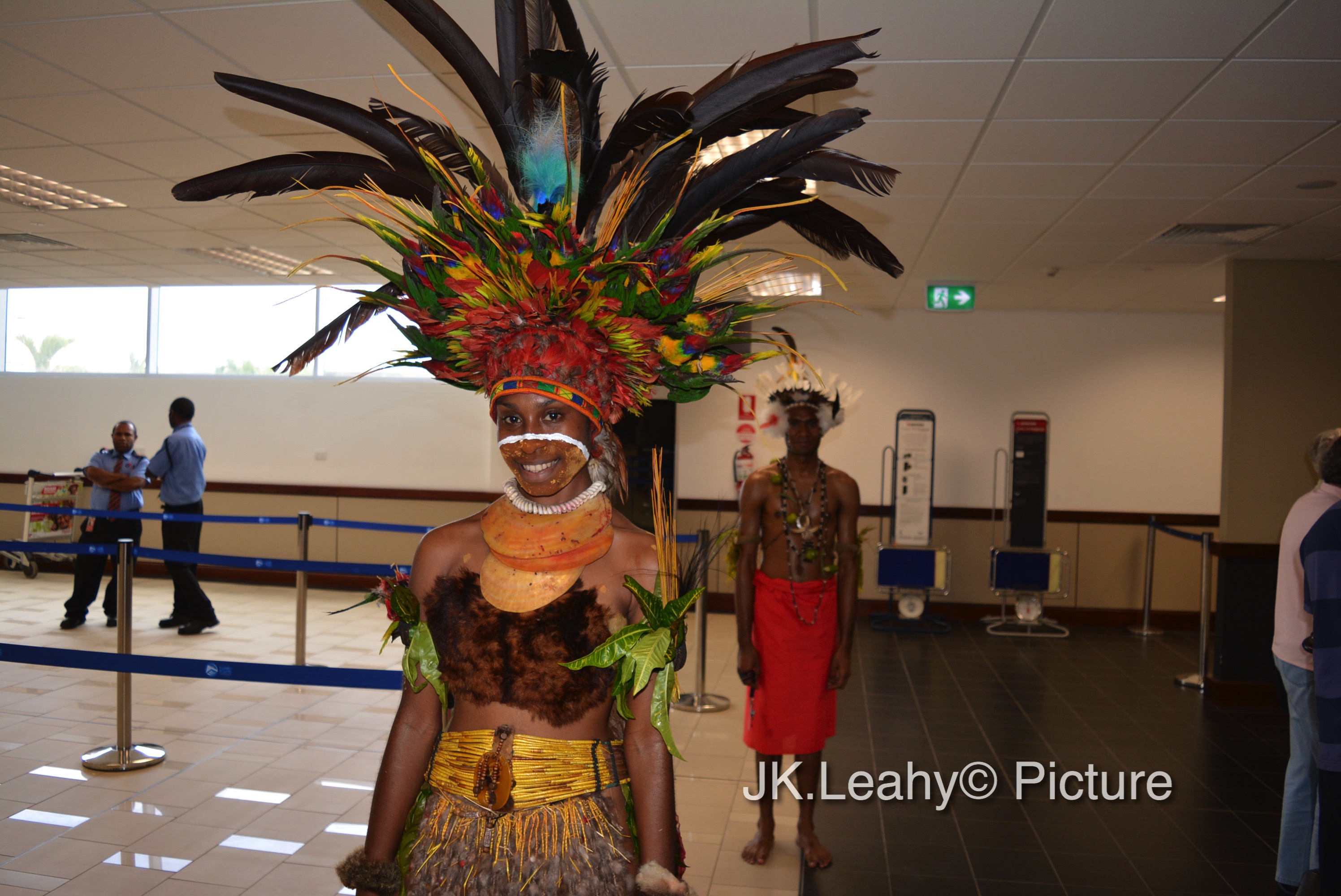
There are some faces you cannot forget. I had been going through and editing pictures from Papua New Guinea and I found many faces with many untold stories. Some faces are hard to forget. Here is one of the unforgetful faces from the Irugl Mother Of Life Orphanage run by the Simbu Children’s Foundation (SCF). More on founder Jimmy Drekore’s work and the Irugl story on this blog in the future.
On my return home to Papua New Guinea on September 16th, it was the Independence Day. My son Chris and I were very lucky to see PNG people celebrating in their traditional costumes.
On arrival at the Jacksons International Airport, Port Moresby, our first meeting was with this stunning beauty. I wish I had taken more, but I only had time to take four photographs of this beautiful woman and rush to domestic terminal to transit to Lae. I will get her name later, that’s how PNG networking is, but she was dressed in Simbu traditional dress. I believe she was part of the Air Niugini staff and assisted the international departure passengers.
If you have any questions about her dress, ask me, but this post is purely to show the beauty of the image. When I come across moments like this, I am very proud to be a Papua New Guinean. My reasons being, we are unique people, we love our culture and we are always proud to show it.
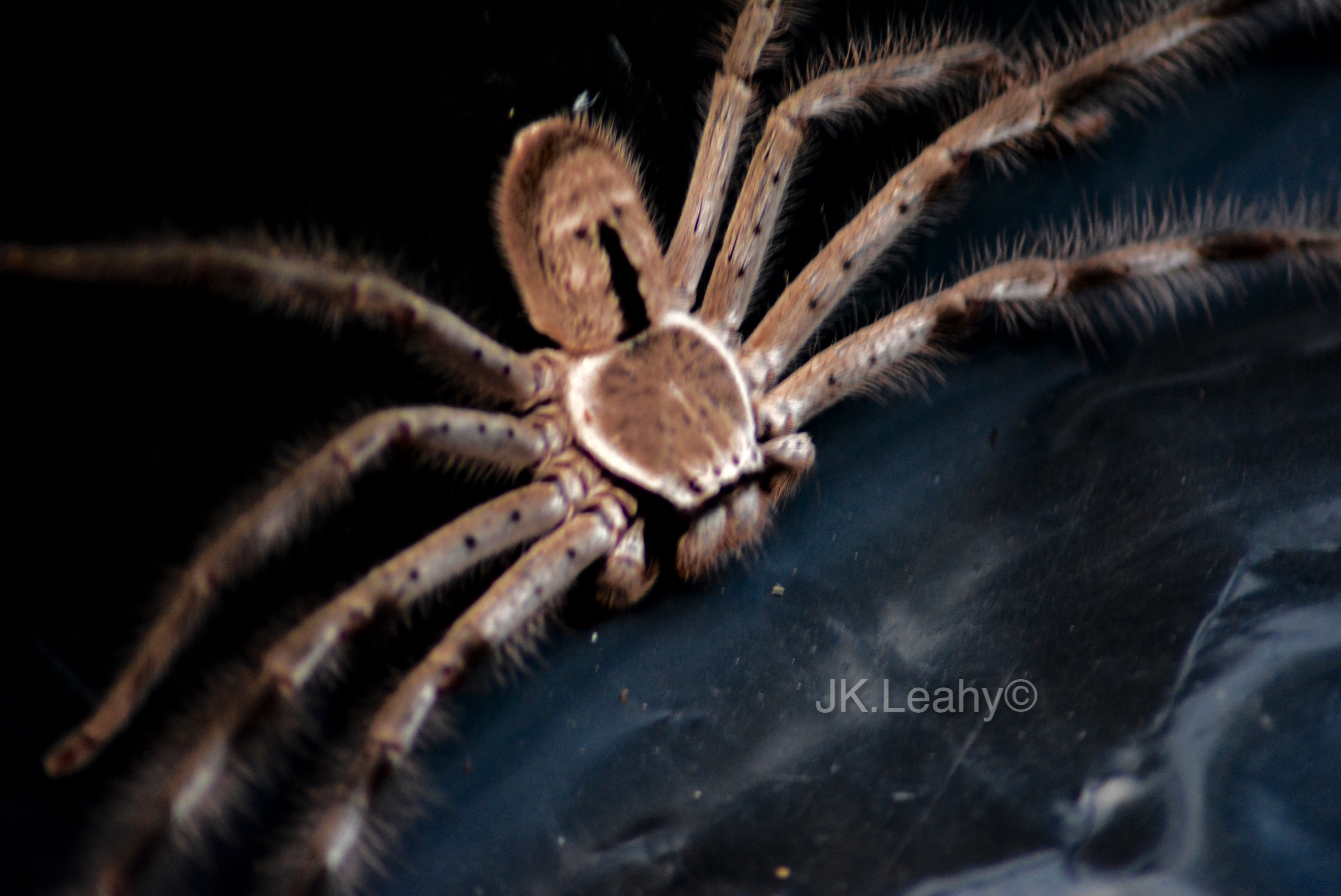
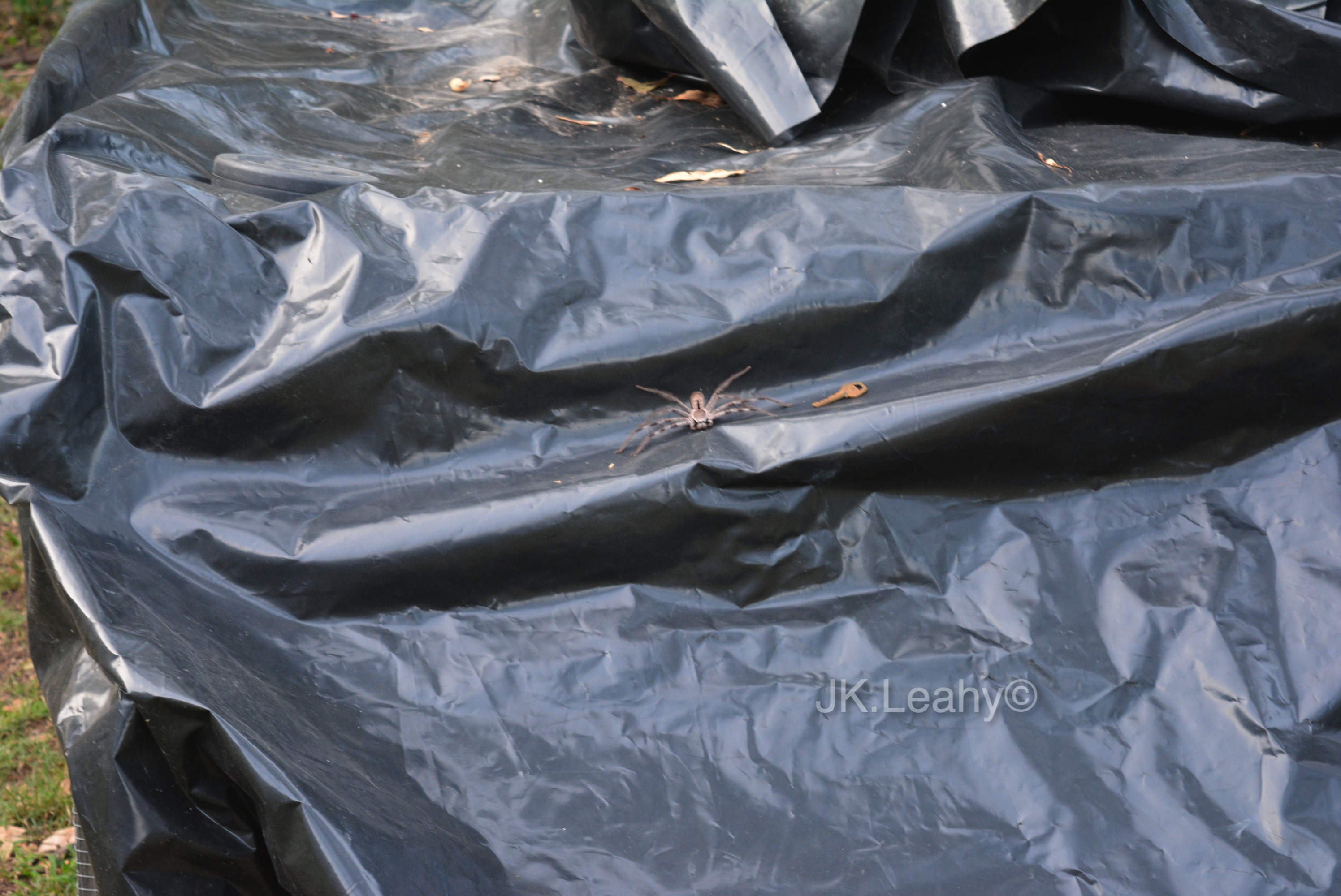
Early this evening about 5pm, I was putting away the chickens when I saw a white fluff rolling across the black plastic on the chicken pen at Bellbowrie, Queensland. I had covered the chicken pen with a thick plastic to protect them from the storm. The fluff strangely did not drop to the ground, but instead, it stayed on the plastic.
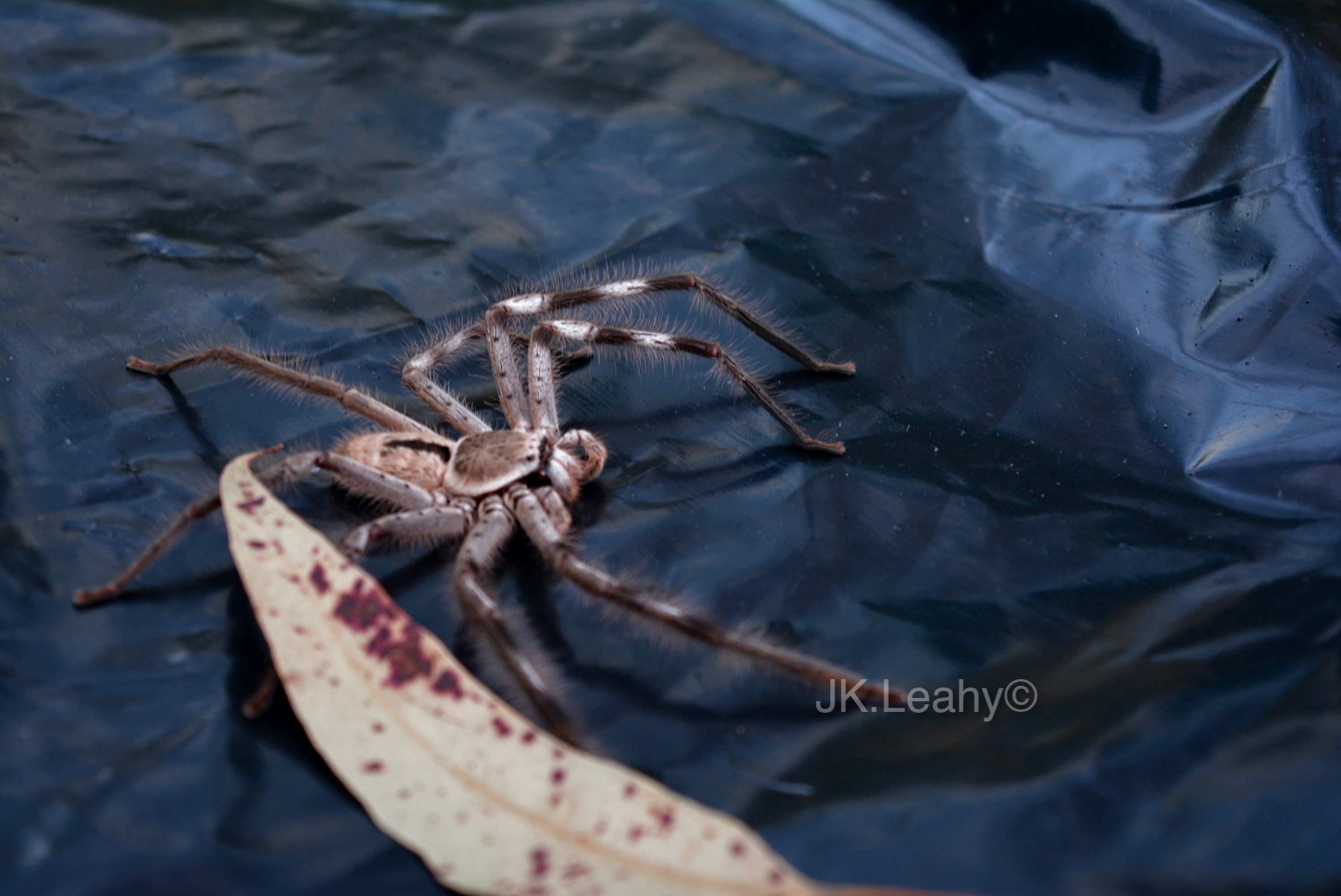
As I got closer, I’m not sure who was more surprised, me or it – the fluff ball. It was a Huntsman spider, the largest one I had ever seen. It sat firmly at the front, guarding the chicken pen like a watchman. It made a short quick move into position. Its eyes were shiny and I felt, it was watching my every move.
I tried to drop a gum leap on it from the back, to scare it away. Who was afraid of a gum leaf? Not a Huntsman.
“With this incredible light, if you ain’t moving, I will shoot you”, I told it. I ran upstairs and grabbed my camera. When I returned, it was in the exact spot, next to the gum leaf. I dared not use a micro lens, things were hairy enough as it was. Besides, I had no intention of being up close or accidentally dropping my camera – in the event Mr Huntsman came for me.
I pushed the house key next to the Huntsman cautiously with the yard rake, as spiders are known for their unpredictable moves.
“By the way – I am not giving you my house key”, I said.
It still did not move, but this gave me a good scale for my shot. I had no intention of killing it, I just wanted to put away the chickens and I did not want the chickens to eat the spider. So, after a few shots, I decided to do other things.
Half hour later, I returned and the wind had blown off the gum leaf. The spider was still in the same spot, so I gave the black plastic cover a jerk. And, as quick as the Huntsman appeared, it vanished.
Australian Huntsman spiders belong to the Family Sparassidae (formerly Heteropodidae) and are famed as being the hairy so-called ‘tarantulas’ on house walls that terrify people by scuttling out from behind curtains. – See more at: Australian Museum
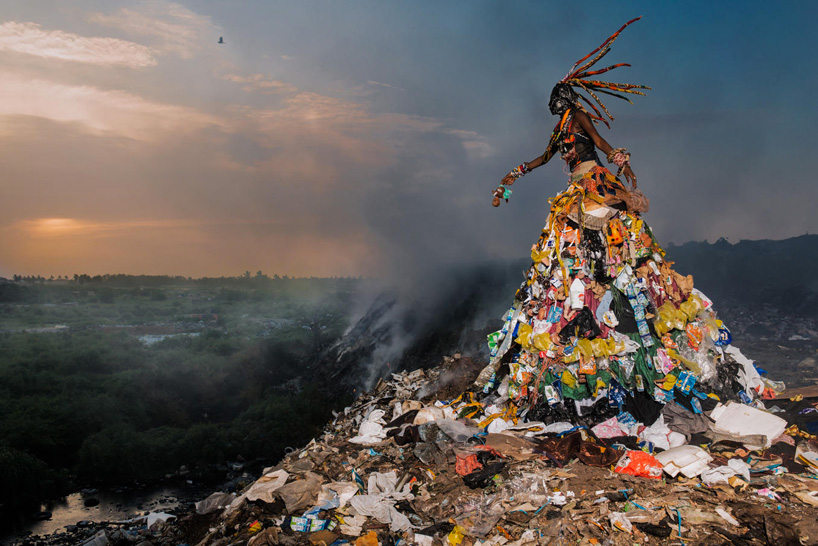
The prophecy project, shot at ten locations in Senegal, features intricately costumed figures interacting with polluted environment. The collective work was created by Photographer Fabrice Monteiro, Costume Designer Doulsy (jah gal) and Eco Fund. Each costume was meticulously built from garbage and debris found throughout the site, reflecting the atmosphere and state where each type of garbage was found and returned to each site where Monteiro photographed them.
The Prophecy was collated to address concerns of critical environmental issues across many countries in Africa. (It should also be the concern of the rest of the world). In the video, see how the artists put each living sculpture together.
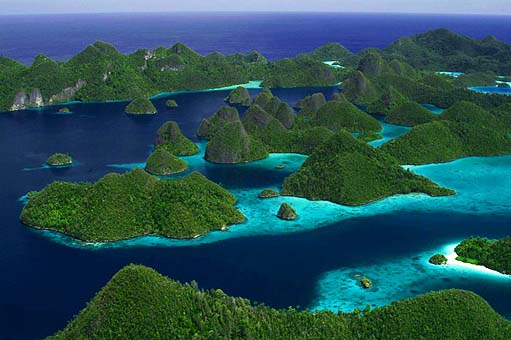
Wayag Island is one of the islands within the Raja Ampat district in the province of West Papua. The island is known for its beautiful atolls and amazing underwater life covering a total area of 155,000 hectares (about 383,013.3 acres).
I heard this interesting news yesterday that West Papua is declared as the first province anywhere in the world; and the entire province is now a world conservation site. West Papua remains part of Indonesia. One is hopeful that the political status and the livelihood of West Papua people will be recognised as well.
If coral reefs are the rainforests of the seas, then the Coral Triangle is the underwater equivalent of the Amazon. This is a bioregion that’s half the size of the United States, passes through six countries (the Philippines, Indonesia, Malaysia, Papua New Guinea Solomon Islands and East Timor), and harbours more marine species than anywhere else on the planet. There are single reefs in the Coral Triangle that contain more species than the entire Caribbean. When it comes to abundance and sheer scale, nowhere else comes close to the Coral Triangle.
The Indonesian province of West Papua has just been declared a Conservation Province, a first for both Indonesia and the rest of the world. The new designation is important both symbolically and in ensuring the future health of the province’s astonishing ecosystems. Besides its rainforests, West Papua is the world’s epicentre of marine biodiversity, boasting more species than anywhere else on the planet.
One of the women in Kapatcol hamlet in Misool shows her harvest. (Courtesy of The Nature Conservancy, Nugroho Arif Prabowo) – See more at: Jakarta Post
As forest fires rage in Sumatra in the midst of the worst El Nino weather event on record, this example of local government taking action in partnership with local communities and international NGOs shows that real, inclusive action is possible and that it can reach the legislative level.
The declaration was signed on Monday by West Papua governor Abraham Ataruri in Manokwari, the provincial capital, with Indonesia’s minister for Home Affairs, Tjahjo Kumolo in attendance. “This declaration will help us maintain and manage our natural resources wisely and continuously so that future generations can enjoy them,” said Ataruro. The new bylaw designating West Papua a Conservation Province falls under the jurisdiction of Indonesia’s Ministry for Forestry & the Environment.
Supported by Conservation International (CI), Worldwide Fund for Nature (WWF) and The Nature Conservancy (TNC), the local government in West Papua has set up a working group representing a range of civil and political bodies to ensure that the new legislation translates into meaningful action on the ground. They are now drawing up regional bills known as Ranperdasus.
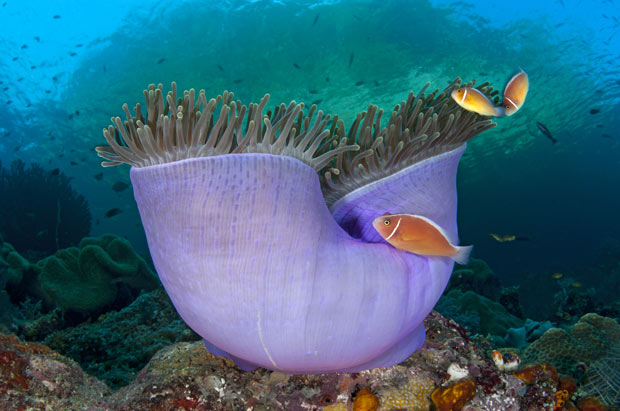
Pink anemonefish (Amphiprion perideraion) in a purple magnificent sea anemone (Heteractis magnifica), Misool, Raja Ampat, West Papua. Picture: Alex Mustard/Steve Bloom Images / Rex Features
Background Information
Papua (both Papua and West Papua provinces) is a complex piece of the planet, partly because of its convoluted tectonic history that forms mountainous areas, prominent lakes, swamps and mangroves where Indonesia’s largest mangrove ecosystem is nestled at the head of Bintuni Bay.
The north-western part of Papua is also part of the Coral Triangle Marine Protected Area, containing the world’s greatest diversity of coral-reef fish, with more than 1,650 species in eastern Indonesia alone. Papua’s abundant coastline is magnificent, placed together with more than 1,000 fringing islands like Raja Ampat, Biak, Supiori, Yapen and the satellite islands of Cenderawasih Bay, which also contribute significantly to Papua’s astonishing features.
It is currently considered an area of global priority for biodiversity conservation because, in part, of the species-rich forest environment of Australopapuan fauna, as well as of many uniquely New Guinean species.
Papua has huge reserves of natural resources in the mining and oil and gas sectors and continues to retain some 80 percent forest cover, including large reserves of commercially valuable lowland rainforest.
These all significantly contributed to the gross domestic product (GDP) of the provinces.
Despite its socially rich environment, Papua and West Papua are among the provinces with the highest level of poverty in the country. A report by the Central Statistics Agency (BPS) said that until March 2013, West Papua was among the eight provinces with the highest poverty rate (26.67 percent) — second after neighbouring Papua (31.13 percent). Jakarta Post
A note from the author of this blog – so finally the world is going to conserve the land, place and environment of the West Papua people is this the sign that times are changing for West Papua people? Could we apply the same kind of protection for the Melanesian PEOPLE in West Papua too?
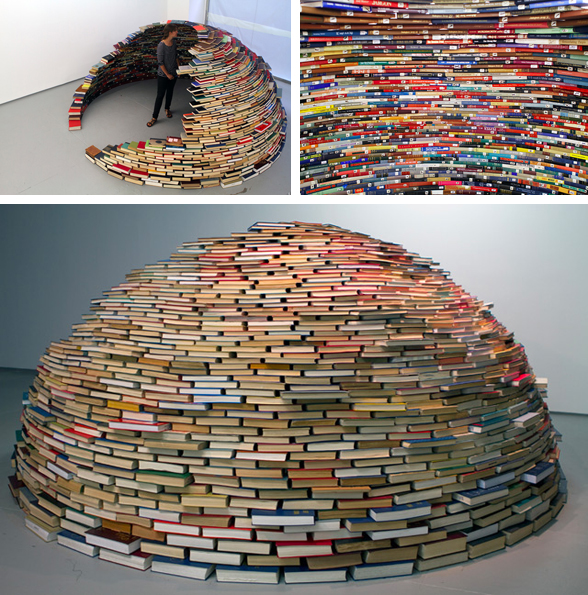
A book igloo by Colombian artist Miler Lago was constructed cleverly with their titles/spines face inside. The entire art is created by material of the printed words.
Miler was born in 1973 and lives and works in Bogota, Colombia. He is known for his other famous work, Fragments of Time – an attempt on the artist’s part to slow things down, but the form of the work itself goes further still: these are branch-like forms composed entirely of sheets of newspaper and books, densely stacked together and sanded at the edges, which generates both a mottled, trunk-like surface and a wood effect colour, (see pictures below).
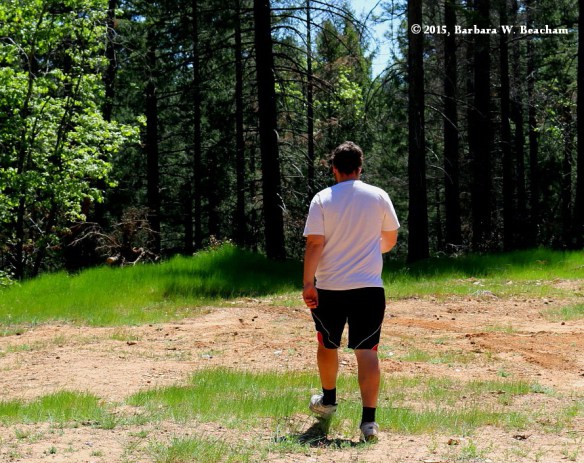
Mondays Finish the Story is a weekly flash fiction challenge by Barbara W. Beacham. Barbara provides the picture and the first sentence, and the challenge is to write a story of 100-150 words using the picture and the first sentence. Here is my story.
A Chill – JK.Leahy fiction
“Not knowing what to expect, he made his way into the dark of the forest.” Marcus chuckled to himself, setting off for his morning run. Sun pierced the thick canopy, casting gentle light on his usual track winding through the woods behind his house. He pulled his laces taut as he reminded himself to pick up Elle from her friend’s eighth birthday sleepover to leave her with her mother at ten. As he increased his pace, Marcus thought of his plans for the day, making a special note to pick up Elle.
His daughter had spent the night across town for her best friend’s 8th birthday, but this week she’d be at her mother’s place; Marcus’s ex-wife hated it when he was late. Exhausted, Marcus stopped in a clearing and greedily gulped down the fresh morning air, but despite the heat, he saw something that gave his blood a chill. Hanging from a noose was a rag doll dog with button eyes…his little girl’s dog…
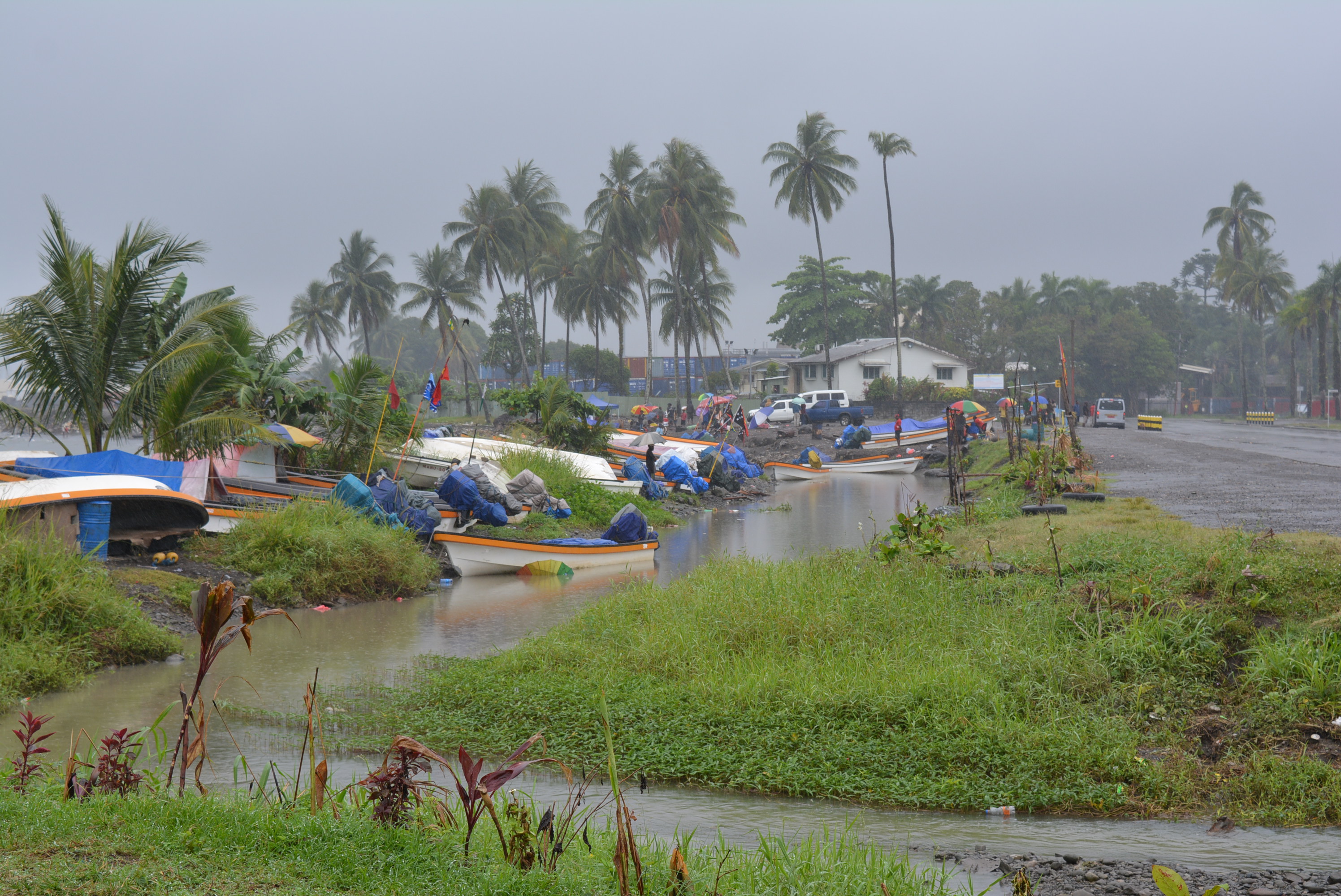
I recently visited my home town, Lae, the greenest city of Papua New Guinea. Lae is the capital of Morobe Province and is the second-largest city in PNG. It is located near the delta of the Markham River and at the main highway into the highlands of PNG.
Lae is very hot and humid, although when we were visiting in September, the weather was cool and very pleasant. It rained 50 per cent of our three-week visit which was a change from nightly rainfall.
I love Lae because it is home and my family lives there. Lae also offers some of the best organic food you can get anywhere in the world. In Lae market, you can also get any kind of meat and fish you want.













 Tribalmystic Stories