At the end of April I was nominated by the lovely Lisa W Tetting for the Premio Dardos Award. I was ill at that time and was unable to write a post about it. I am now catching up on some of those writing that needs to be done and I would like to thank you very much Lisa for nominating my blog for this award. I am deeply honoured that you are of the opinion I have added value to the blogging world.
Since Lisa’s nomination, I have also been nominated for other blog awards. I will respond to your nominations in the next two weeks between my regular posts.
What is Premio Dardos Award?
The Premio Dardos Award acknowledges the values that every blogger shows in their effort to transmit cultural, ethical, literary, and personal values every day. As per Lisa’s words, these stamps were created with the intention of promoting fraternization between bloggers, a way of showing affection and gratitude for work that adds value to the Web. Since I launched my blog 18 months ago and followed many other blogs here on WordPress, I have grown as a writer and a person. I have also shared knowledge I learnt here to my friends and family.
I have also made friends with many bloggers on WordPress and these connections mean a lot to me.
The Premio Dardos Award are simple:
1) Accept the award by posting it on your blog along with the name of the person that has granted the award and a link to his or her blog.
2) Include the image of the “Premios Dardos” in the post.
3) Pass the award to another 15 blogs that are worthy of this acknowledgement.
The nominees below have contributed in some way to the cultural, ethical, literary, and my personal values. (Please note that some of my nominees are award-free but they are worth mentioning. I hope you can visit and read some of their interesting posts).
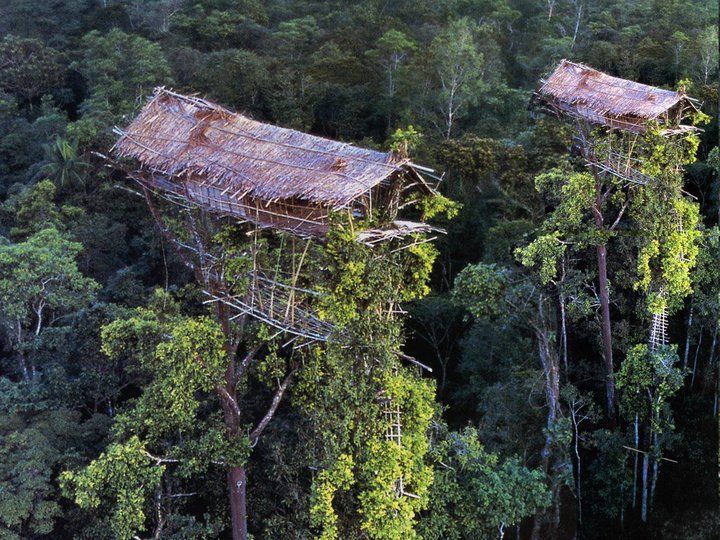
A life of contentment in the rainforest. The Korowai People of West Papua in Melanesia.
Irian Jaya’s Kombai and Korowai people live in houses built in the treetops.
Living in the trees is natural for the Korowai and Kombai people in the southern eastern Papua. These tribal Melanesians are one of the last people on the planet who survive purely on their natural environment. The Korowai’s are also referred to as the Kolufo and have become known to the world through pictures and documentaries as one of the most amazing architects of tree houses.
The tree house builders survive in the basin of the Brazzan River in large areas of deep rainforest and swampy lowland. They are hunter-gatherers and horticulturists who practice shift-cultivation and have a very rich and an extraordinary oral tradition. They live together in small communities.
Image: BBC Documentary
The higher they built a house, the more prestigious it is. The reason behind this amazing architecture which often reaches up to 100 feet or more off the ground is to avoid floods, insects and diseases. It was also a way to spot tribal enemies as the Korowai themselves had practiced cannibalism in the past.
Sowayen climbing down a “yambim” or ironwood tree after knocking loose a nest of black ants that he uses for fish bait. The Korowai are superb climbers, and get up thick trees like this by gripping vines with their hands and splayed toes. This picture was taken as part of an expedition for GEO Magazine and National Geographic Magazine to document the way of life of the Korowai tribe.
The Korowai people build their houses high above the forest floor, and deep in the swampy lowland jungles of Papua.
In the BBC documentary below, you can watch from start to finish, how a Korowai tree house is built.
Mondays Finish the Story is a flash fiction challenge by Barbara W. Beacham. Here is my story for this week’s prompt in the first sentence below and in reference to the above picture.
Zeus was not having a good day and he made sure everyone knew it. Mack was a mess as soon as Zeus got going.
“Get me a cleaver…”
“Nooooo! Pleease! Oh god – I’m sorry!” Mack sobbed and gurgled as I ran to boss’s collection for a blade. I almost dropped it; my legs could barely keep up.
As Zeus’ knuckles tightened to white around the knife handle, I desperately avoided his predatory gaze, leering at me through the lightning bolt tattoo across his right eye.
“Now, get out” he growled. I didn’t linger.
Mack had hidden Zeus’s package as well as the money. He lied. I warned him that Zeus would not buy it. The kid messed up.
I wondered why you’d risk losing some fingers for a few bucks, and then I heard a chop. Mack’s screams battered the walls of the warehouse, and the echoes shook my bones. I guess you never quite get used to working for a psychopath.
Papua New Guinea (PNG) is home to the world’s largest butterfly – the “Ornithoptera alexandrae” or Queen Alexandra birdwing. Its wingspan can grow to 25cm. Queen Alexandra only breeds and lives in the Managalas Plateau in Eastern PNG or Oro Province. The butterfly numbers are unknown, and its habitat is increasingly disappearing. There are also concerns that the number of the large butterflies are depleting.
The Queen Alexandra’s Birdwing is on the red list of threatened species of the International Union for Conservation of Nature (IUCN), and its international trade is banned. From the perspective of species conservationists, the butterfly satisfies all of the criteria to make it a critically endangered species.
Walter Rothschild discovered the species in 1907 and named it after Alexandra of Denmark. The first European to discover the butterfly was one of Rothschild’s employee, Albert Stewart Meek during their expedition to Papua New Guinea.
Female Queen Alexandra image from Manchester Museum collection.
Unusual Reproductive Biology
The threatened butterfly is vulnerable because of its unusual reproductive biology. The female lays its eggs exclusively on a poisonous vine called Aristolochia. Once the caterpillars have hatched, they ingest the plant’s toxic leaves, making them unpalatable for potential predators.
The Aristolochia winds its way up into the crowns of jungle trees, which can grow to heights of up to 40 meters (131 feet). The butterfly would be lost without the vine, so propagating the Aristolochia is one of the main goals of conservationists.
Male Queen Alexandra image from Manchester Museum collection.
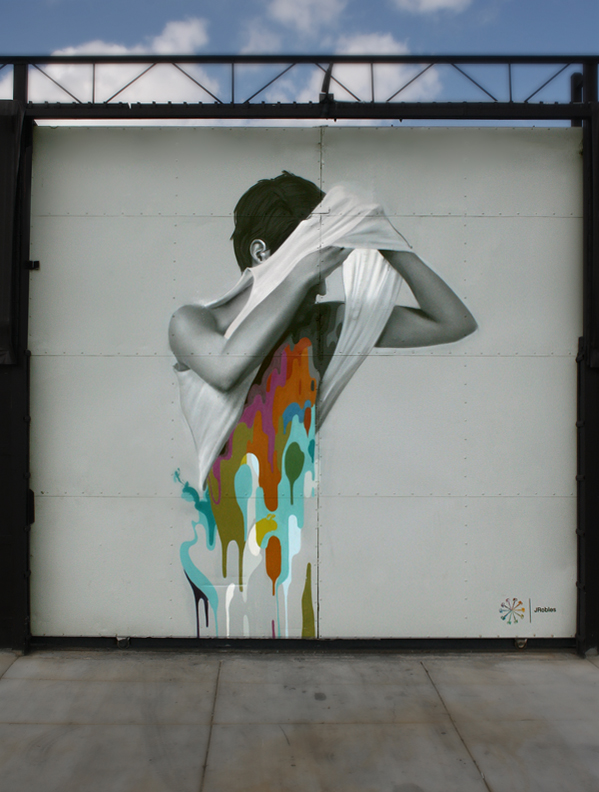
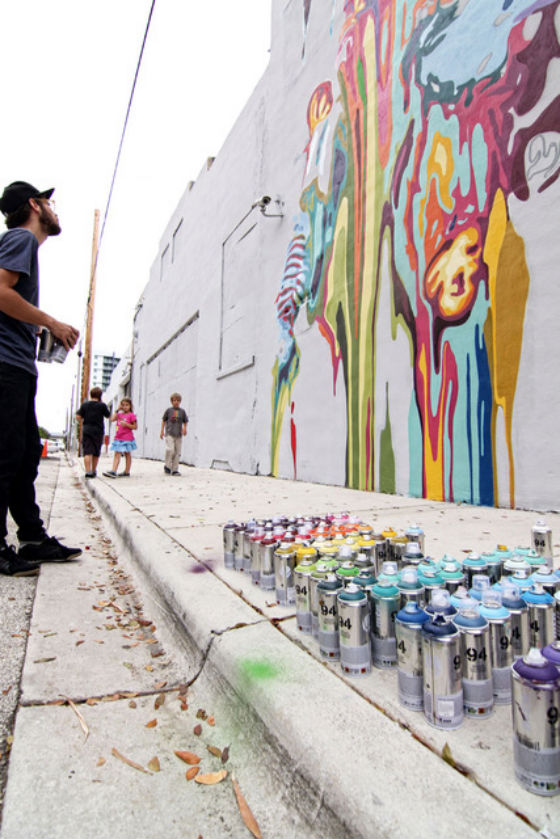
Johnny Robles an artist, creates cool street art in the streets of Miami. With a mixture of cartoon and pop style drawings and graffiti techniques, he gives color to the streets. Residents say they love it..and so do I.
Featured here at work where some of his cool stuff happens.
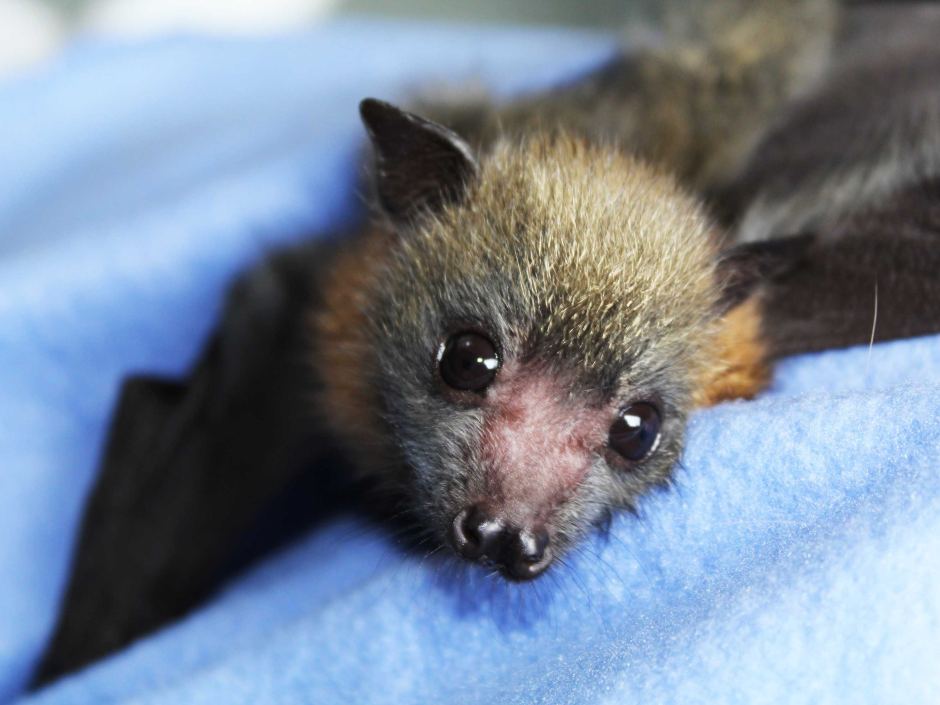
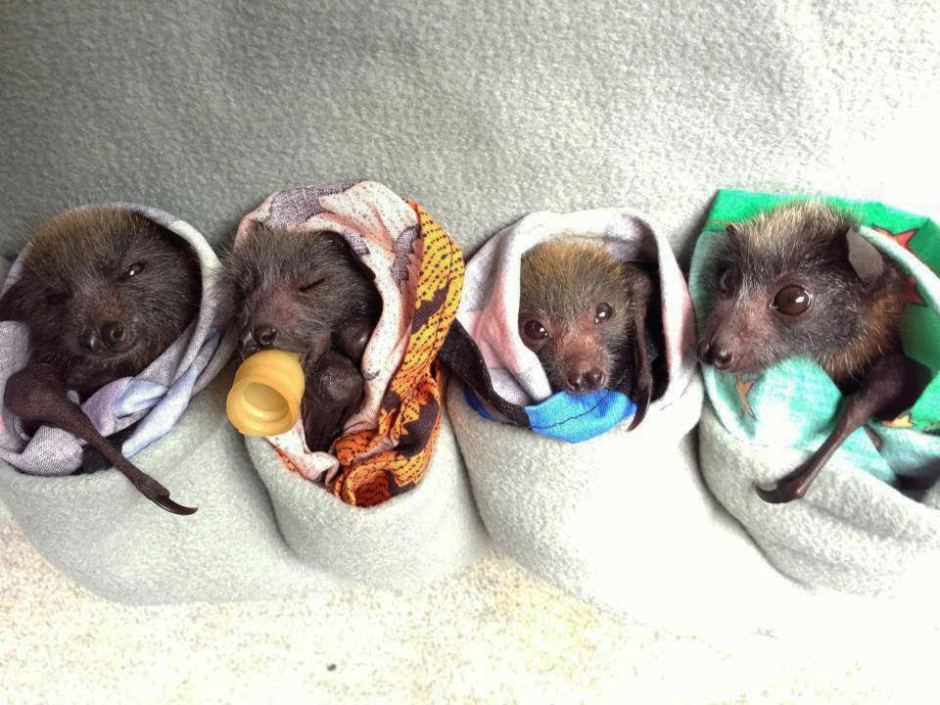
Two-weeks-old Troy suffered heat stress. Picture by Sarah Thorpe, Landcare Australia
ABC News: A sanctuary for orphaned fruit bats on Sydney’s North Shore (Australia) has been expanded to house more pups and adult bats.
Every spring up to 100 fruit bat orphans are hand-reared by wildlife volunteers, then taken to the Kukundi shelter at Lane Cove National Park.
Their mothers can die from natural predators, flying accidents and entanglement in power lines.
baby bats injured by electrocution (on power lines) wait for milk. Landcare Australia
“They will go to backyard fruit. And they will get tangled in backyard fruit netting. And this does terrible things to their wings so they can’t fly,” said Tierre Thorpe from wildlife carer organisation Sydney Wildlife.
“They often get caught on power lines so they get electrocuted,” she said.
The breeding season is in October when it is all hands on decks for volunteers.
Picture by Tiere Thrope shows a baby on a mini-milk bottle. Landcare Australia.
The bats “go through a rehabilitation process in our volunteer’s homes and they come here to gain flight fitness,” she said.
“They learn to fly. They are dehumanised. And we have a hatch at the back which is opened at the time. And then we support feed them for a couple of weeks so they can come back to obtain food while they have their freedom.”
An expanded cage for orphans which was opened this week is expected to cater for 100 babies a year – alongside the 500 adults in a separate cage.
Are Australian short story writers an endangered species?
I found this review by Geoffrey Dean, an accomplished Tasmanian (Australian) writer quite interesting especially while editing some of my short stories for competitions recently.
I enjoy writing short stories, ranging from “Mondays Finish the Story” (Barbara W. Beacham) flash fiction challenge of 100-150 words to stories I have written in 1500 to 3000 words in our Creative Writing Workshop with Isabel D’Avila Winter. In short story competitions, the limit to the number of words you are required to write can really change a story, as I have found recently while reducing one of my 1500 word short stories to 1000 words for a competition. I have felt in the past week that I probably could have spent less time and written a better story, if I wrote a completely new story. On the other hand, I found it much easier to increase the number of words of another short story from 800 words to the required number, 1000 words. The additional 00 words may have slowed the phase of the story, but it is work-in-progress.
Submitting to literary magazines also calls for a fit. You have to write to specific requirements with type and paragraphing or head-lining, but the main challenge is the number of words to fit a page or a column. So how can you fit into the system? Can you be less descriptive or reduce the number of characters without taking from your plot or could you do without long passages of back-stories without killing the story?
In the following review, “Are Australian short story writers an endangered species?”, see how author Geoff Dean writes about his process of creating a short story and his discussions on the steps that took him to the end where the answer about short stories and their lengths are quite clear. As Dean writes, one must always aim to write a good short story first and foremost before trying to fit the story “into the system”, i.e., the magazine page size or competition requirements…in other words, to hell with the system, I am going to write my story my way and eventually find a place for it.
Geoffrey Dean has published 80 short stories. The Tasmanian Writers’ Centre (TWC) in conjunction with Island Magazine and the Geoff and Elizabeth Dean Foundation have just launched the Geoffrey Dean Short Story Competition which is now open to Australian writers.
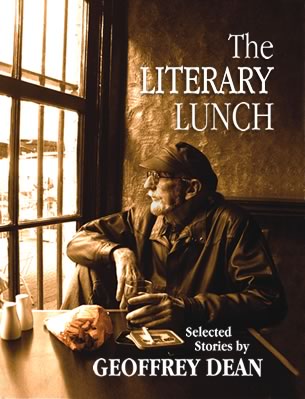
Born in Hobart, Tasmania in 1928, Geoffrey Dean (Geoff) had his first short story published in the mid-1950s. Scores of his stories have appeared in eight collections of his work (Mysteries, myths, and miracles; Under the Mountain; The Literary Lunch; Strangers Country and other stories; Cold Dean Monday and other Australian stories; Summerbird and other stories; Over the Fence; and the Hadlee Stories), as well as magazines, anthologies and collections in Australia, the UK, USA, Norway and China. He won many literary prizes and awards, including the State of Victoria Short Story Award and the Arafura Literary award. His story, The Town that Died was made into a TV drama and broadcast by the Australian Broadcasting Corporation in 1986. Geoff died in August, 2011.
RRP AUD22.95, or via this site for AUD$20.
Inquiries to: anne dot hugo @ gmail dot com
Roaring Forties Press,
PO Box 368 North Hobart, Tasmania 7002 Australia
If the blind can read with their fingers, with braille, scientists say they can also teach the deaf to hear with their tongues.
Tongue Mapping Research at Colorado State University has found that a new device works similarly to a cochlear implant, but where an implant sends electric impulses to the auditory nerve where the brain recognizes these impulses as useful information, CSU’s device sends these impulses to a mouthpiece packed with electrodes via Bluetooth. By pressing their tongue against the mouthpiece, users can feel impulses as tingling or vibration. Researchers hope that with training the brain will be able interpret specific patterns as words, effectively turning a tongue into ears.
Here is a draft of a potential chapter. I may use it in the memoir, but the story was prompted by Isabel D’Avila Winter in my creative writing workshop last week for the biggest lie I have ever told. I have not shared any memoir pieces lately, because I have not been writing much, but here it is for my readers who enjoy the memoir stories on Tribalmysticstories.
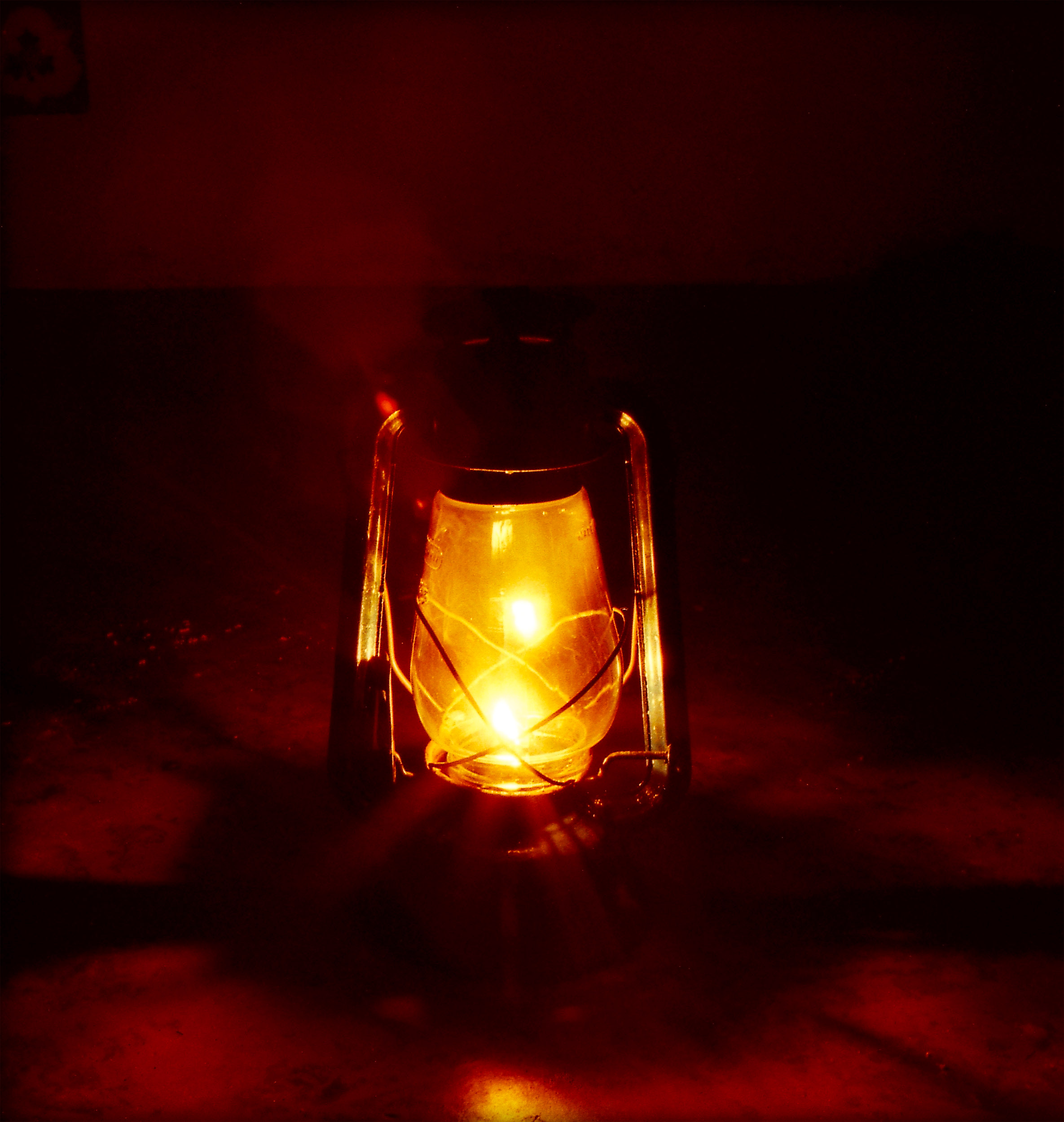
The Chinese kerosene lamp burnt low. It was close to me and I smelt the kerosene cut into floral smells from the freshly washed bed sheet. In a continuous dance, its golden-yellow flame peaked in a steady poise and melted into the dark head of the small metal lamp. The lamp was barely taller than my school ruler but it gave enough light for me to see the print. The flame in the round clear glass, size of an orange, outlined the specs of paprika stains on the lamp. At the same time, the flame threw a soft orange ambiance under my sheet and even around the room.
If I moved too quickly, I could knock the lamp over and burn myself because the lamp was partially under the sheet, and next to my book I was reading. This was my private and peaceful space where I read my books. This was also against Mother’s rules.
Having a lamp to myself was a luxury I rarely had in a noisy, crowded house. My mother and I had a small room about three by three metres and my older uncle (of two uncles) and his wife shared another larger room with their five children. My grandmother and aunty shared the last one. My younger uncle was away at the University of Technology, about 20 minutes from my village. My uncle was the first man from our village to go to university.
It was a house where everyone knew everything that was going on. My family had this one Chinese lantern to use as an inside lamp and one Coleman lamp as the outside lamp. Both lamps burnt on ‘kero’ as the villagers referred to kerosene. Fire was the main source of light and there was a torch, which hardly had batteries because no one could afford them. The torch was mostly used for travelling between the village houses. It was also used to visit my aunts and uncles or for going to the pit toilet away from our house – not for reading or using as a room light. If we left the village to fish or camp, the Coleman and the torch came with us.
I knew I was using the 20 cents kerosene up but I was solving a mystery with Nancy Drew. I liked being a detective myself.
“Ampom” mother called and without saying, I knew she called me for dinner. She used one of my names that meant, light-skinned.
“Ok” I said, without moving.
In the village, kero sellers would buy wholesale in 44-gallon drums in Lae City and retail the kerosene to us in re-cycled wine or spirit bottles – charging 20 cents per bottle. It eventually became 50 cents and then a $1. That was in 1970s. Wholesalers bought kero from service stations and general stores. My cousin and I would take our bottle, a clear Vodka re-cycled bottle, and I did not remember which of my uncles drank the Vodka – to any village retailer for kero. We stood there while they pumped the kerb into our bottle but there was a special technique where the boys in the village mastered. The pump would be pressed a couple of times and stopped. The air would push the blue liquid from the drum through the transparent pump into our re-cycled bottle. You have to stop the pump quickly or it sprayed the kero everywhere. I always thought it was cool and I wanted to have a go at pumping the kero this way.
At home, every night, once the kero was put into our Coleman lamp and some in the Chinese lamp – my family gathered in our blackened old kitchen and ate their dinner.
The floor was uneven and with the weathered timber leaving gaps in between, we dropped the bones of chickens and pork to the village dogs and pigs, which fought over it. Sometimes the fights would become too aggressive and the animals would run into the fragile posts so it felt like the kitchen would drop off the side of the main house. My cousins and I would get scolded for dropping our scraps down the timber gaps. Tonight, my family were only a few metres away from me separated by a couple of walls. I turned the lantern wick higher for more light. I adjusted my bed.
Most of the kapok had fallen out or shrivelled in my pillow so I tucked some clothes under it and raised my head. I reached up with my book and turned the pages.
I knew Mother would place my food on the bench top, near the hot teapot, so it will stay warm. Sometimes grandma would place the covered food at the fireplace and they both would insist I go out and eat before bed. Both mother and daughter always respected my reading and schoolwork, but sometimes, my mother would agitate me with her calling. On this night, I wanted to finish my book.
“Ampom!” Mother called.
“Yes” I answered, annoyed.
“Come and eat”.
“I will”.
“Come now, the food is getting cold.”
“I am coming soon”. I turned to the next page and read faster. This was not fun, but I tried to go as fast as I could without skipping any pages.
A few minutes later, mother called again and I could tell she was getting angry. I was not ready to eat. I did not answer. I removed and turned the wick on the Chinese lamp so low, the room became dark. I shut my eyes and put Nancy Drew away. I was annoyed at my mother. I was hungry but only to find out what had happened in the story.
“Ampom!” I heard mother yell. I did not answer her.
Mother rose from the floor in the kitchen, and I heard her march to our bedroom.
She opened the door by pushing hard against the grating sand on the floor. The door did not have a lock. I had shut my eyes and twisted my body into an awkward position and pretended I was asleep.
Mother started calling my name and sat down and tried to shake me. I did not move.
“Ampom!, Ampom!,”
Mother lifted my shoulders and my head rolled back as if I was unconscious or dead. I was supposed to pretend I was asleep, but somehow, the idea of being dead entered my head – so I went with it.
“Ampom, tisa, tisa” – Mother begged in Bukawa for me to wake up.
“Giuc – Giuc!” mother started calling her sister. My aunt was shocked by the tone of my mother’s voice and tried to ask my mother what was going on. There was no time for mother to explain. By now my mother became hysterical and started calling her own mother for help because she thought I was dead.
In minutes – everyone rushed into the small space on my bed and started pulling my hair and calling all my four names. They would throw cold water on me next to try to wake me.
I finally ‘woke’ up to the relief of my mother – who was already crying. I told Mother I lied and I was pretending to be asleep and she did not believe me. I told her; I only wanted to have some peace and quiet – and even some light to read my book. Being a nurse, she was not convinced so she gave me a thorough check up; feeling the temple, checking the eye-balls, checking the ear and the throat. And then, I had no choice but to go outside and eat.
Inspired by a true-life adventure, Headhunt Revisited: With Brush, Canvas and Camera is a documentary film, a book and exhibition about Caroline Mytinger and the power of her art to build connections across oceans and decades.
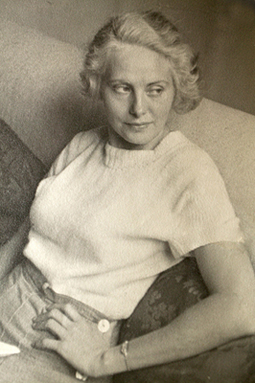
Caroline Mytinger: by Michele Westmorland (Images of research materials from the Monterey Museum of Art or Phoebe Hearst Museum of Anthropology)
The inspiration for Headhunt Revisited took shape in the 1920’s, when an intrepid American portrait artist, Caroline Mytinger, and her friend, Margaret Warner, traveled to Papua New Guinea and the Solomon Islands on a hunt to capture portraits of the indigenous peoples. Their four-year expedition resulted in 25 stunning paintings that depicted and preserved the culture of Melanesia in a way recorded by no other.








 Tribalmystic Stories