Category Archives: blogging

Princess Celebrates Motherhood


2015-06-14_22.25.49
Breakfast at Bellbowrie – Princess and partner stand on guard while their daughters eat first. The life of a duck in our backyard.

Princess celebrated motherhood yesterday when her eight babies learnt to fly for the first time on our lawn in Bellbowrie, Queensland (Australia). She is a wild wood duck who grew up in our family home. I have written three stories about her on this blog, see the links below to bring you up to date with her life story.

You could say – after all she has been through, she deserved one happiness, and that she has. She literally grew up inside the house – in my son Nathan’s bedroom – she lived in a crate at night and during the day, we watched her wander around the yard, and making friends with other adult wild ducks and our laying chickens. She would always come back upstairs when it got dark.

I had rescued Princess in 2013 just after Christmas with five other ducklings in our back-yard. During the course of raising the ducklings my sons and I became parents as well as students, learning how we could help the ducklings grow and then release them back into the wild. Goodness knows what was going on in the communication from duck to human language, but soon, the ducklings fell into a pattern of eating, playing, swimming and just following each other and anyone of the three of us, in a line when we walked around the property. When we decided to name the ducklings, she stood out because she was the smallest and had a nervous twitch – everything had to be done for her. She would just wait to be served.

2015-06-15_19.41.28
Family snack time on the front lawn.

Princess’ four siblings died in the process of growing – the vet said, it could be anything – the stress, cold, fright, and drowning. There were two ducklings left. Princess and her sister. They continued to live with us inside the house in one of the spare bathrooms at night and much to the disgust of our visiting friends and family who sometimes accidentally stepped on duck poop. As they got older and stronger, we let the two sisters swim in a small water tank which was deeper than the bath. Later they took to our swimming pool and we could see them really enjoying themselves. When they became taller and their wings got bigger we knew they were ready to fly;  my son trained them to fly off our balcony into the pool (15 metres away) and also fly onto the lawn from the two story house.

With her nervous twitch,  we noticed, her big sister became protective of Princess any time she found things difficult. She would nuzzled Princess and peck her gently to settle her.  I became very attached to the confident big sister. She was a very smart and a caring big sister, She always tried new things and places before involving Princess. The two ducks bonded closely and were almost ready to be trained back into the wild together.  Early one evening while we were having dinner with the two ducks tucked into their large box on our verandah,  a python came up, unexpectedly, slipped into the box and coiled around one duck – the confident sister.

Click to read The Duck War story

2015-06-15_18.40.29
Flight practice. I caught them on my phone after work yesterday.

From that day onwards, Princess remained in the house with us, less confident to fly and became very attached. A few weeks later she started to regain her confidence. Then she tried to fly so Nathan took her to the window and she flew into the pool – about 30 metres away. She was natural. Swimming, diving and fluttering her wings. She loved it and started there all day – we had to bring her food to her, like a true Princess. She also flew a complete circle around our neighbours yard and took a swim in their brand new swimming pool. I jokingly told Princess, it was okay as long as she did not poop in their pool or get caught.

Then, one day a bunch of young male ducks that were hanging around our pool flew off and we saw her go. We followed her through a few neighbour’s property and decided, she was ready to go.

She returned to our property regularly and pretended she did not know us when we called her name. Sometimes, her twitch would become obvious – perhaps from worrying, we were trying to get her back. Amongst other wild ducks, when her name was called, Princess would be the only duck turning to look at us. It was funny. She had many suitors who often fought over her in the front lawn and the pool.

It was only a short time before Princess established herself  with a pack of wild ducks that frequented our yard. Then Princess fell in love.  Earlier this year, I posted a story about Princess and her first ducklings.

Click here to read Saved Duck Returns with Babies story

On their first day, she brought her babies out for a walk and played in our yard and then a swim in the pool.  Within a few days, she decided to leave our property and cross the main road into a vacant block which led into the wild, a creek and then Brisbane River.  I followed them to the edge of the bush concerned she had made a grave decision. There was a big storm, the next day. The mother, partner and babies – did not show up for two days.

Click here to read Nothing Came with the Rain story

Seven weeks ago, my son Nathan was very excited about new ducklings in our yard. Ducks don’t always have babies in winter so we were surprised. We rushed out and counted eight baby ducks. Sure enough, someone had been busy, it was Princess and her partner with their ducklings. She had also lost the nervous twitch.  The ducklings were not newborn. They were at least two-three weeks old. She had hid her babies until they grew up. It was clearly a clever plan by Princess. We could not work out where they were before they came home.

20150613_090108-2
The new girls marching in for morning tea by the poolside.

Attentive and followed by her partner and their babies, Princess headed for the chicken’s feed. Even the chickens let the ducks eat. We were all overjoyed.

I decided to buy some duck food from our local produce store. I did not post a story about the new arrivals earlier, just to let Princess have the quiet life she wanted and raise her eight daughters. Our family tried to keep our distance and no paparazzi were allowed. It has been almost five weeks since they arrived and adding the first few weeks in hiding, they have grown rapidly and are now ready to fly. Usually the babies grow their strong feathers by six weeks and fly at eight weeks.

The mother got them started in the pool –  flapping wings and lifting off – then falling on the water. The training also takes place in the water and on our lawn – just as we tried to teach her. It is quite funny and heart-warming to watch. Ten days ago, wild foxes got into our chicken coop and took Lady Stella. (That’s another story). After the midnight drama and the shock of losing the toughest hen –  we raced about our property trying to  find Princess and her family. We discovered, after all this time, she had cleverly nested her family in the thick layers of my flowers just on the water’s edge in our fenced swimming pool where no large animal can get in. She family planned well in the sense that being winter, even the snakes would be hibernating. So…they are safe for now and it is only days before the new girls will fly. Then, they will all be in the wild together.

I feel that Princess has truly achieved motherhood and as her mother, I am very proud of her.


Princess is a Mother Again


20150613_090110
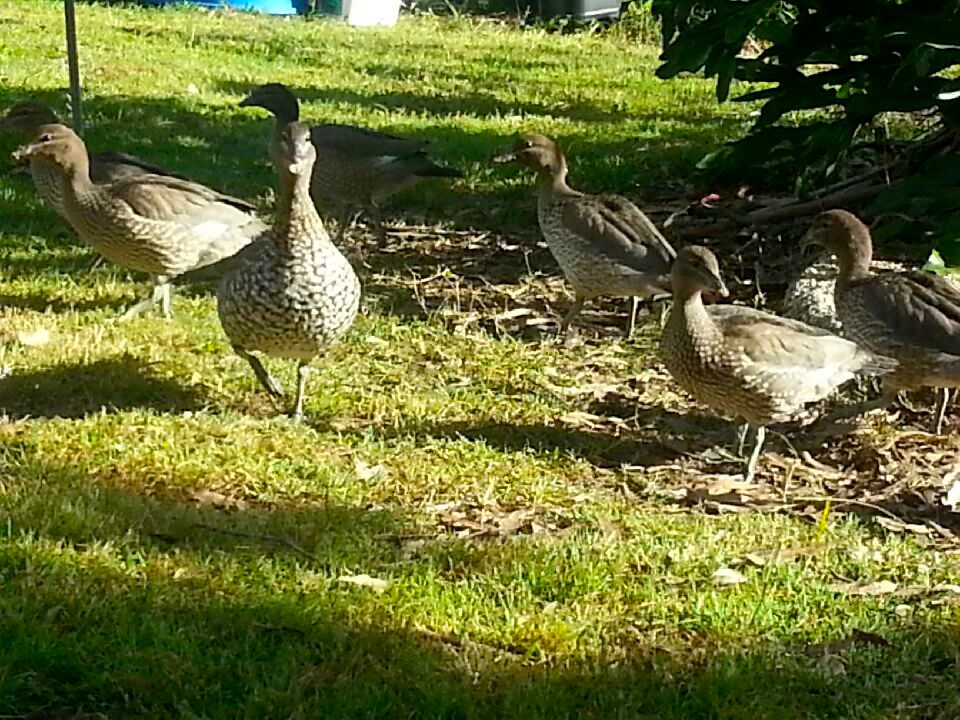
Princess, facing the camera leads her daughters into our yard for breakfast.

Good news. Princess, our home-raised wild duck who lost all her family members, returned with eight ducklings. More on her story in tomorrow’s post.


Magda’s Luck – Short Story


2015-06-15-bw-beacham
Picture by Barbara W. Beacham

Mondays Finish the Story is a unique flash fiction challenge where Barbara Beacham provides a new photo and the first sentence of a story each week. The challenge is to finish the story using 100-150 words, not including the sentence provided. This challenge runs from Monday to Sunday.

Magda’s Luck – Short Story © JKLeahy

At first, it looked like an ordinary marble, but it was far from it. Magda got to it, reached down awkwardly and picked it up. It was big and heavy.

Years of factory work damaged her back. Magda longed for an easy way to survive. The ball was larger than a cricket ball yet smaller than a soccer ball.

“Perrr-fect!” she smiled to herself and wiped off the red dirt.

This was a sign. She closed her eyes in prayer. She has seen it done in the markets with no truth in it and told Chek. Besides, who would know? Her husband Chek died last year.

With her gypsy olive skin, a pair of wild gooseberry eyes set against her greyish black hair, Magda was ready.

She pushed her Coles trolley to Brisbane’s West End markets. Already she could predict her own future. Her years of struggle are about to end in a few hours when she starts her new career  – predicting people’s futures.

Premio Dardos Award – Value Added to Blogging World


premio-dardis-award-3 B

At the end of April I was nominated by the lovely Lisa W Tetting for the Premio Dardos Award. I was ill at that time and was unable to write a post about it. I am now catching up on some of those writing that needs to be done and I would like to thank you very much Lisa for nominating my blog for this award. I am deeply honoured that you are of the opinion I have added value to the blogging world.

Please visit Lisa’s blog, Rebirth of Lisa.

Since Lisa’s nomination, I have also been nominated for other blog awards. I will respond to your nominations in the next two weeks between my regular posts.

What is Premio Dardos Award?

The Premio Dardos Award acknowledges the values that every blogger shows in their effort to transmit cultural, ethical, literary, and personal values every day.  As per Lisa’s words, these stamps were created with the intention of promoting fraternization between bloggers, a way of showing affection and gratitude for work that adds value to the Web. Since I launched my blog 18 months ago and followed many other blogs here on WordPress, I have grown as a writer and a person. I have also shared knowledge I learnt here to my friends and family.

I have also made friends with many bloggers on WordPress and these connections mean a lot to me.

The Premio Dardos Award are simple:

1) Accept the award by posting it on your blog along with the name of the person that has granted the award and a link to his or her blog.
2) Include the image of the “Premios Dardos” in the post.
3) Pass the award to another 15 blogs that are worthy of this acknowledgement.

The nominees below have contributed in some way to the cultural, ethical, literary, and my personal values. (Please note that some of my nominees are award-free but they are worth mentioning. I hope you can visit and read some of their interesting posts).

My nominees are:

Beauty Along the Road

Radiance Project NZ

Millie Thom

Pacific Paratrooper

How the Cookie Crumbles

Chris the Story Reading Ape

The Rattling Bones

alphastare

Confedcontessa

yadadarcyyada

Author Joel Savage

Life in Russia

ESGEE Musing

First Night Design

Whole Production


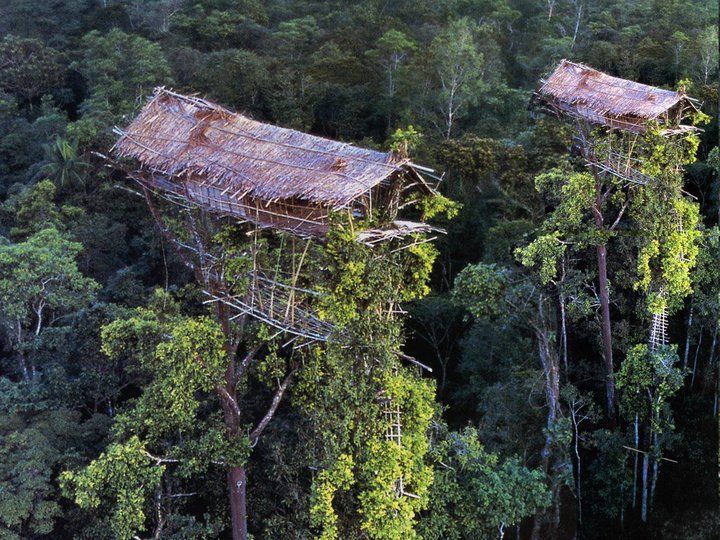
Living in the Trees – The Korowai People


A life of contentment in the rainforest. The Korowai People of West Papua in Melanesia.

Irian Jaya's Kombai and Korowai people live in houses built in the treetops.
Irian Jaya’s Kombai and Korowai people live in houses built in the treetops.

Living in the trees is natural for the Korowai and Kombai people in  the southern eastern Papua. These tribal Melanesians are one of the last people on the planet who survive purely on their natural environment. The Korowai’s are also referred to as the Kolufo and have become known to the world through pictures and documentaries as one of the most amazing architects of tree houses.

The tree house builders survive in the basin of the Brazzan River in large areas of deep rainforest and swampy lowland. They are hunter-gatherers and horticulturists who practice shift-cultivation and have a very rich and an extraordinary oral tradition. They live together in small communities.

44f8056a45b290241653afa3fa02c1ef
Image: BBC Documentary

The higher they built a house, the more prestigious it is. The reason behind this amazing architecture which often reaches up to 100 feet or more off the ground is to avoid floods, insects and diseases. It was also a way to spot tribal enemies as the Korowai themselves had practiced cannibalism in the past.

Sowayen climbing down a “yambim” or ironwood tree after knocking loose a nest of black ants that he uses for fish bait. The Korowai are superb climbers, and get up thick trees like this by gripping vines with their hands and splayed toes. It took him about a minute to get up this tree, and it took Neeld Messler, a rope expert, over an hour to rig this tree with ropes so the photographer could climb it safely. In the lower left corner Sayah is watching. One of their fishing methods is to put a piece of an ant nest in the water and wait for the fish to come and eat the drowning ants. The fisherman hides behind foliage on the river bank, and shoots the fish with a four-pointed arrow. This picture was taken as part of an expedition for GEO Magazine and National Geographic Magazine to document the way of life of the Korowai tribe. Most of the Korowai in these photos had never had prior contact with anyone outside of their language group, and have no material goods from the outside world. They live in tree houses built above the forest floor to protect themselves from outsiders. The Korowai believe that contact with outsiders will bring an end to their culture. Cannibalism has been part of their traditional system of criminal justice to avenge the death of their clansmen, but the practice is dying out and is outlawed by the Indonesian government. The Korowai believe that most natural deaths are caused by sorcery, and must be avenged by the death (and consumption) of the person responsible.
Sowayen climbing down a “yambim” or ironwood tree after knocking loose a nest of black ants that he uses for fish bait. The Korowai are superb climbers, and get up thick trees like this by gripping vines with their hands and splayed toes. This picture was taken as part of an expedition for GEO Magazine and National Geographic Magazine to document the way of life of the Korowai tribe.

The Korowai people build their houses high above the forest floor, and deep in the swampy lowland jungles of Papua.

In the BBC documentary below, you can watch from start to finish, how a Korowai tree house is built.

The Eye of the Storm – Short Story


2015-06-08-bw-beacham
Picture by Barbara W. Beacham

Mondays Finish the Story is a flash fiction challenge by Barbara W. Beacham. Here is my story for this week’s prompt in the first sentence below and in reference to the above picture. 

The Eye of the Storm ©JK Leahy short stories

Zeus was not having a good day and he made sure everyone knew it. Mack was a mess as soon as Zeus got going.

“Get me a cleaver…”

“Nooooo! Pleease! Oh god – I’m sorry!” Mack sobbed and gurgled as I ran to boss’s collection for a blade. I almost dropped it; my legs could barely keep up.

As Zeus’ knuckles tightened to white around the knife handle, I desperately avoided his predatory gaze, leering at me through the lightning bolt tattoo across his right eye.

“Now, get out” he growled. I didn’t linger.

Mack had hidden Zeus’s package as well as the money. He lied. I warned him that Zeus would not buy it. The kid messed up.

I wondered why you’d risk losing some fingers for a few bucks, and then I heard a chop. Mack’s screams battered the walls of the warehouse, and the echoes shook my bones. I guess you never quite get used to working for a psychopath.

(149 words)

Concerns For the World’s Largest Butterfly


Papua New Guinea (PNG) is home to the world’s largest butterfly – the “Ornithoptera alexandrae” or Queen Alexandra birdwing. Its wingspan can grow to 25cm. Queen Alexandra only breeds and lives in the Managalas Plateau in Eastern PNG or Oro Province. The butterfly numbers are unknown, and its habitat is increasingly disappearing. There are also concerns that the number of the large butterflies are depleting.

The Queen Alexandra’s Birdwing is on the red list of threatened species of the International Union for Conservation of Nature (IUCN), and its international trade is banned. From the perspective of species conservationists, the butterfly satisfies all of the criteria to make it a critically endangered species. 

Walter Rothschild discovered the species in 1907 and named it after Alexandra of Denmark. The first European to discover the butterfly was one of Rothschild’s employee, Albert Stewart Meek during their expedition to Papua New Guinea.

ornithoptera_alexandrae_f2
Female Queen Alexandra image from Manchester Museum collection.

Unusual Reproductive Biology

The threatened butterfly is vulnerable because of its unusual reproductive biology. The female lays its eggs exclusively on a poisonous vine called Aristolochia. Once the caterpillars have hatched, they ingest the plant’s toxic leaves, making them unpalatable for potential predators.

The Aristolochia winds its way up into the crowns of jungle trees, which can grow to heights of up to 40 meters (131 feet). The butterfly would be lost without the vine, so propagating the Aristolochia is one of the main goals of conservationists.

ornithoptera_alexandrae_m1
Male Queen Alexandra image from Manchester Museum collection.


Fruit Bat Babies Get Help


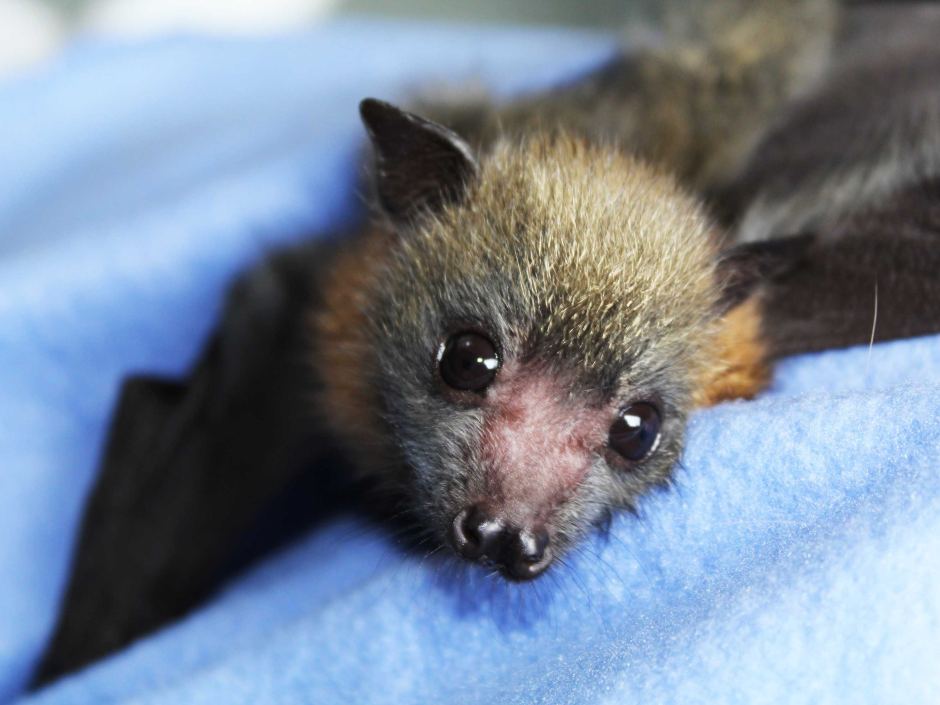
6527140-4x3-940x705
Two-weeks-old Troy suffered heat stress. Picture by Sarah Thorpe, Landcare Australia

ABC News: A sanctuary for orphaned fruit bats on Sydney’s North Shore (Australia) has been expanded to house more pups and adult bats.

Every spring up to 100 fruit bat orphans are hand-reared by wildlife volunteers, then taken to the Kukundi shelter at Lane Cove National Park.

Their mothers can die from natural predators, flying accidents and entanglement in power lines.

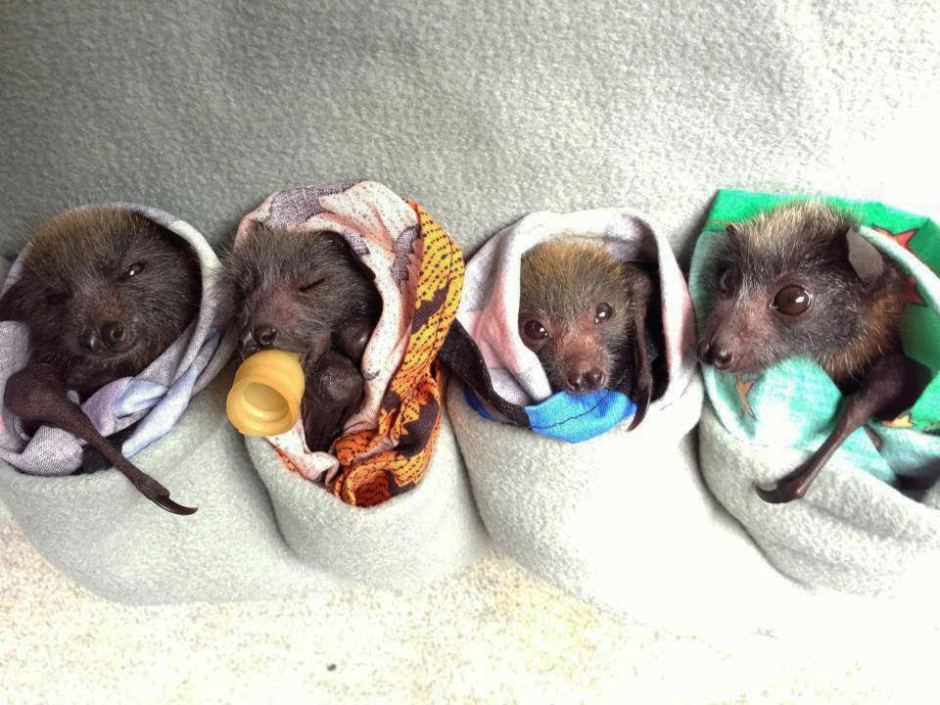
6527128-4x3-940x705
baby bats injured by electrocution (on power lines) wait for milk. Landcare Australia

“They will go to backyard fruit. And they will get tangled in backyard fruit netting. And this does terrible things to their wings so they can’t fly,” said Tierre Thorpe from wildlife carer organisation Sydney Wildlife.

“They often get caught on power lines so they get electrocuted,” she said.

The breeding season is in October when it is all hands on decks for volunteers.

6527154-4x3-940x705
Picture by Tiere Thrope shows a baby on a mini-milk bottle. Landcare Australia.

The bats “go through a rehabilitation process in our volunteer’s homes and they come here to gain flight fitness,” she said.

“They learn to fly. They are dehumanised. And we have a hatch at the back which is opened at the time. And then we support feed them for a couple of weeks so they can come back to obtain food while they have their freedom.”

An expanded cage for orphans which was opened this week is expected to cater for 100 babies a year – alongside the 500 adults in a separate cage.

More on ABC News

A Twill Weave – Short Story


A Twill Weave – Short Story by JLeahy ©

2015-06-01-bw-beacham
Picture by Barbara W. Beacham

Mondays Finish the Story is a weekly flash fiction by Barbara W. Beacham which runs from Monday to Sunday. This week’s prompt starts with the quote in the story below and the above picture. I hope you enjoy my take on this one. The stories have to be 100-150 words.

A Twill Weave

“What a tangled web we weave, when first we practice to deceive”, someone had scrawled in bad handwriting. Humidity and stench made the cell unbearable but I wondered who the writer was. Had a moment of epiphany or remorse released those words?

Months have flown by, but I knew after the bundle was found on me, my five years of trafficking ended. The door turned.

“Mr Chris Dam –ass?” he pronounced Dameche.

“Yes”, I said relieved to get interaction after 24 long hours in the transit cell.

“Follow me,” he said with no emotion.

We walked down the hallway, opposite to where I was first led in. My heart sank.

“Where are you taking me?”

“To another cell, we have someone coming in…to use that one” he said.

At the hallway end, he unlocked a cell.

It was smaller. I looked out and through a tiny grilled window. A huntsman is putting the finishing touches on an elaborated web.

How Long Should A Good Short Story Be?


Geoffedited

Are Australian short story writers an endangered species?

I found this review by Geoffrey Dean, an accomplished Tasmanian (Australian) writer quite interesting especially while editing some of my short stories for competitions recently.

I enjoy writing short stories, ranging from “Mondays Finish the Story” (Barbara W. Beacham) flash fiction challenge of 100-150 words to stories I have written in 1500 to 3000 words in our Creative Writing Workshop with Isabel D’Avila Winter. In short story competitions, the limit to the number of words you are required to write can really change a story, as I have found recently while reducing one of my 1500 word short stories to 1000 words for a competition. I have felt in the past week that I probably could have spent less time and written a better story, if I wrote a completely new story. On the other hand, I found it much easier to increase the number of words of another short story from 800 words to the required number, 1000 words. The additional 00 words may have slowed the phase of the story, but it is work-in-progress.

Submitting to literary magazines also calls for a fit. You have to write to specific requirements with type and paragraphing or head-lining, but the main challenge is the number of words to fit a page or a column.  So how can you fit into the system? Can you be less descriptive or reduce the number of characters without taking from your plot or could you do without long passages of back-stories without killing the story?

In the following review, “Are Australian short story writers an endangered species?”, see how author Geoff Dean writes about his process of creating a short story and his discussions on the steps that took him to the end where the answer about short stories and their lengths are quite clear.  As Dean writes, one must always aim to write a good short story first and foremost before trying to fit the story “into the system”, i.e., the magazine page size or competition requirements…in other words, to hell with the system, I am going to write my story my way and eventually find a place for it.

“Are Australian short story writers an endangered species?”

Geoffrey Dean has published 80 short stories. The Tasmanian Writers’ Centre (TWC) in conjunction with Island Magazine and the Geoff and Elizabeth Dean Foundation have just launched the Geoffrey Dean Short Story Competition which is now open to Australian writers.

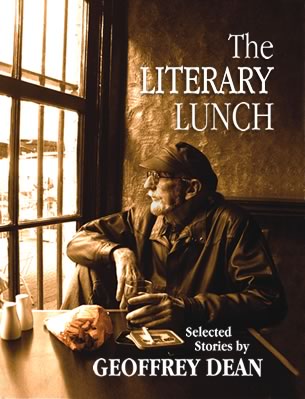
Born in Hobart, Tasmania in 1928, Geoffrey Dean (Geoff) had his first short story published in the mid-1950s. Scores of his stories have appeared in eight collections of his work (Mysteries, myths, and miracles; Under the Mountain; The Literary Lunch; Strangers Country and other stories; Cold Dean Monday and other Australian stories; Summerbird and other stories; Over the Fence; and the Hadlee Stories), as well as magazines, anthologies and collections in Australia, the UK, USA, Norway and China. He won many literary prizes and awards, including the State of Victoria Short Story Award and the Arafura Literary award. His story, The Town that Died was made into a TV drama and broadcast by the Australian Broadcasting Corporation in 1986. Geoff died in August, 2011.

Geoff

RRP AUD22.95, or via this site for AUD$20.
Inquiries to: anne dot hugo @ gmail dot com
Roaring Forties Press,
PO Box 368 North Hobart, Tasmania 7002 Australia

The Tasmanian Writers’ Centre