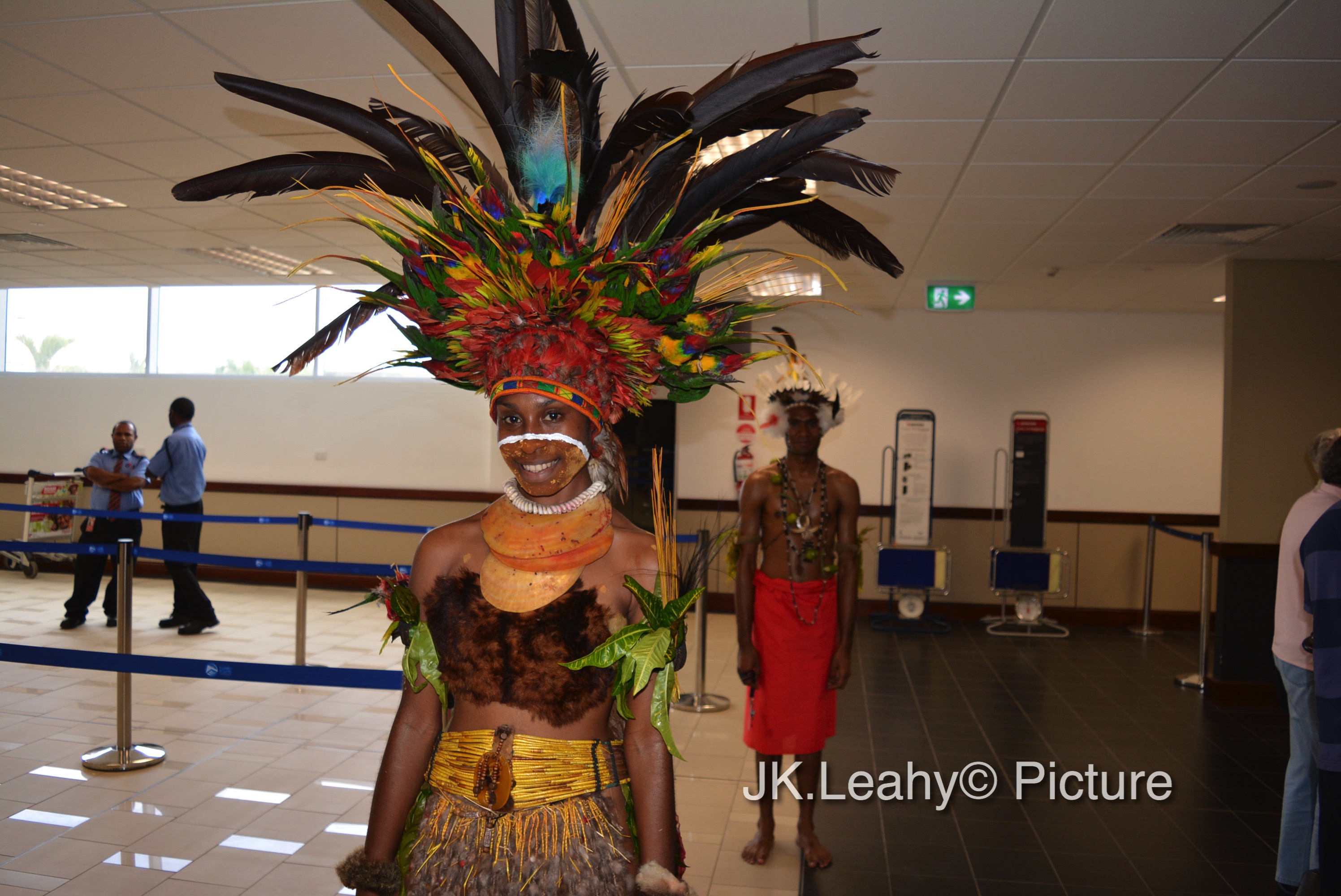
There are some faces you cannot forget. I had been going through and editing pictures from Papua New Guinea and I found many faces with many untold stories. Some faces are hard to forget. Here is one of the unforgetful faces from the Irugl Mother Of Life Orphanage run by the Simbu Children’s Foundation (SCF). More on founder Jimmy Drekore’s work and the Irugl story on this blog in the future.
On my return home to Papua New Guinea on September 16th, it was the Independence Day. My son Chris and I were very lucky to see PNG people celebrating in their traditional costumes.
On arrival at the Jacksons International Airport, Port Moresby, our first meeting was with this stunning beauty. I wish I had taken more, but I only had time to take four photographs of this beautiful woman and rush to domestic terminal to transit to Lae. I will get her name later, that’s how PNG networking is, but she was dressed in Simbu traditional dress. I believe she was part of the Air Niugini staff and assisted the international departure passengers.
If you have any questions about her dress, ask me, but this post is purely to show the beauty of the image. When I come across moments like this, I am very proud to be a Papua New Guinean. My reasons being, we are unique people, we love our culture and we are always proud to show it.
It rains most of the year in Lae City, Papua New Guinea. Everything is grey, weather is over-casted, but when it stops raining and the sun comes out, Lae is green. The Kuanua ran aground and storms installed it just off the edge of former Lae airport.
Kuanua’s rusts make her stand out in the wet weather.
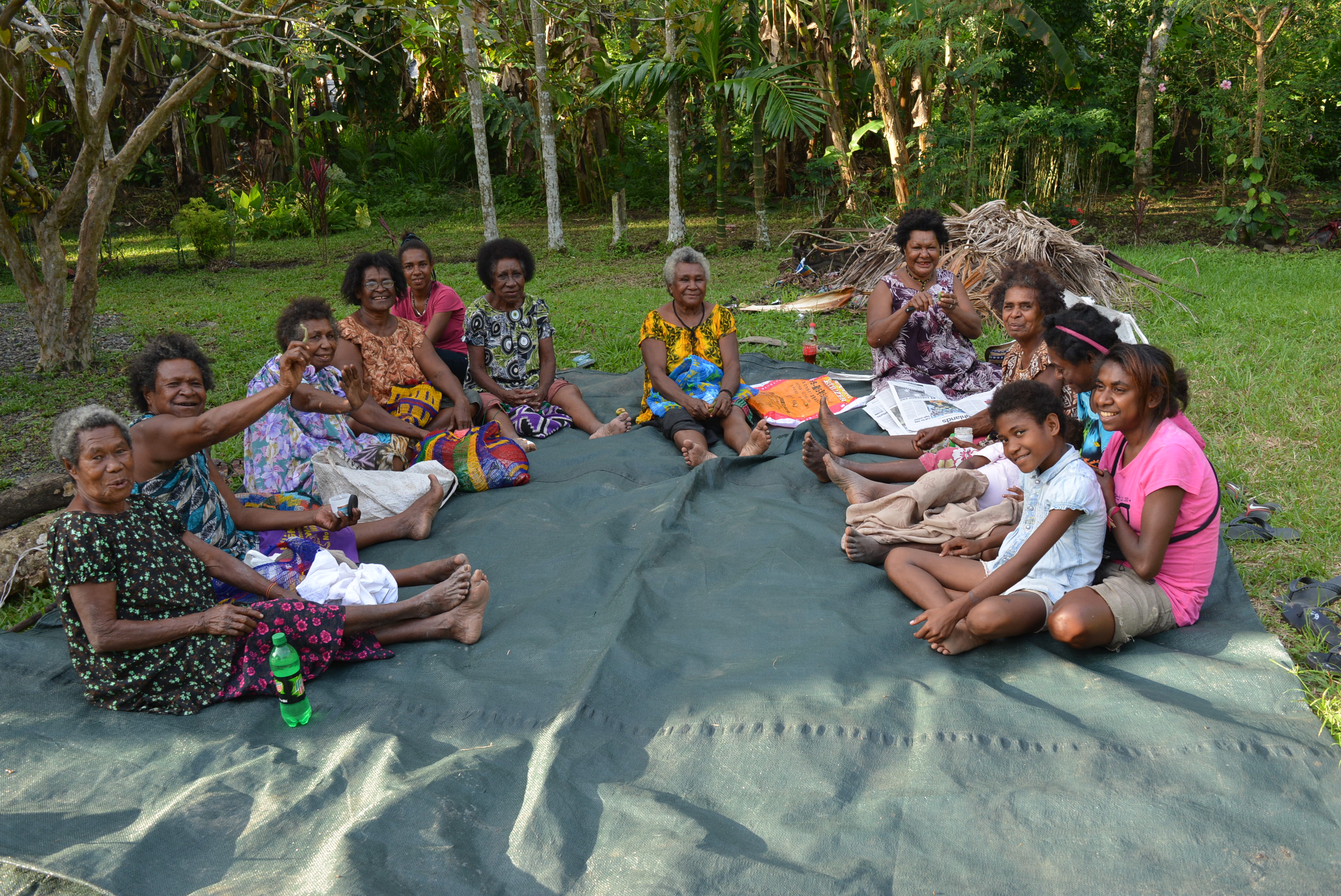
With my mother Freda on my right and my Aunt Ruth Tobias and my close friend Abuc Nagong in front. Bowali, Oct 2015.
My sons and I enjoyed our trip back to Lae, PNG – where we come from. I had not gone back to my village for seven and my sons for eight years. It was a long time. My reasons are too complicated to explain, but I could not wait any longer to return. The best part about our return was the story-telling and catching up. This was how we did it – sitting in a circle and chewing betel nut while we tell the stories. We tried to do this at least a few hours each day.
My mother and all my aunts chewing betel nut and story-telling on our lawn.
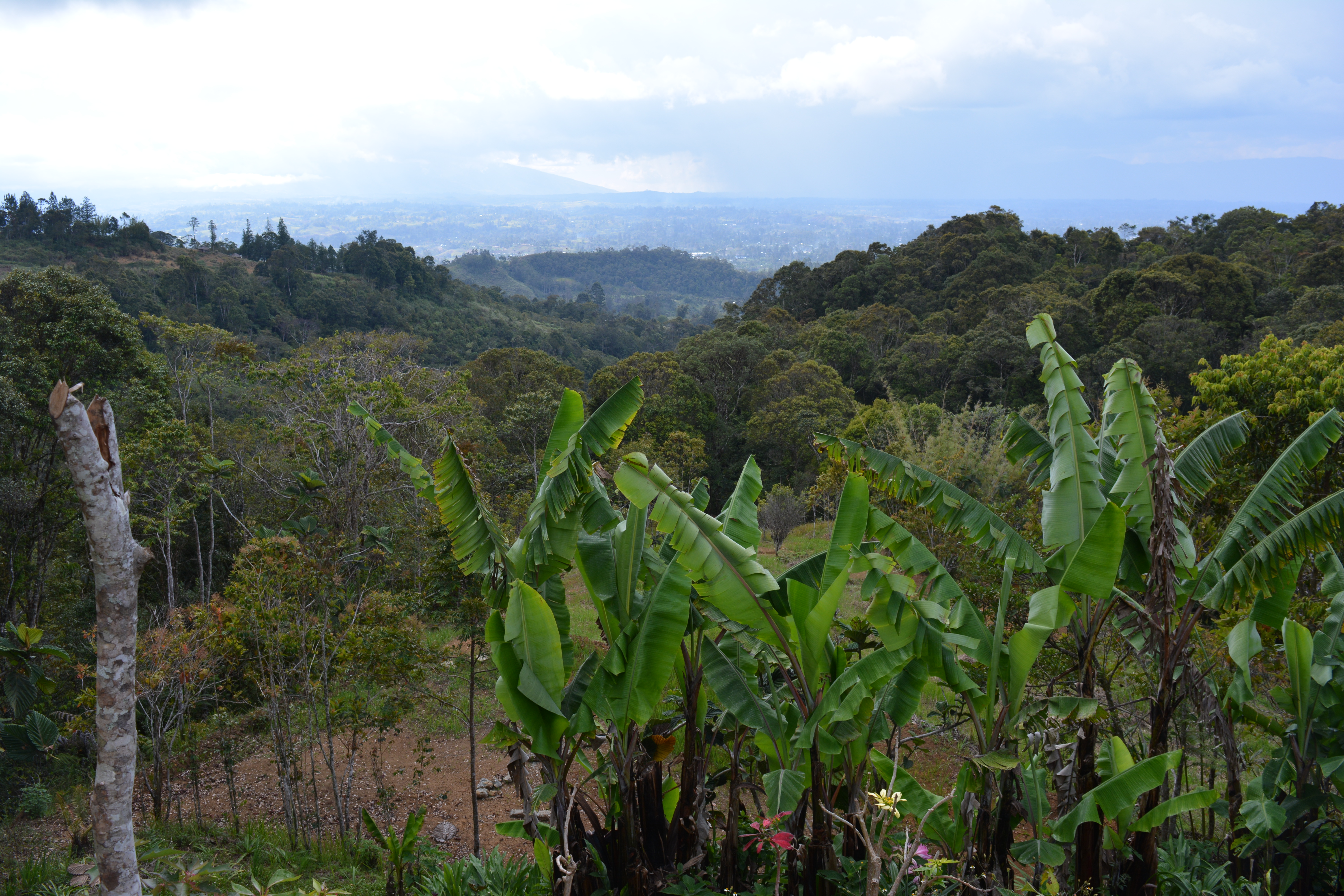
Mt Hagen town view from Mt Kuta – Papua New Guinea. Picture: JK.Leahy
Although it was under a sad circumstance, it was good to return to Mt Hagen town, Papua New Guinea, after almost 17 years to attend George Leahy’s funeral. The town had a dry spell, but the air was crisp and everything looked green and luscious.
This is the view from a beautiful house on the Kuta Ridge that I visited the last week. The house was built by my late cousin, Maggie Wilson. In partnership with her family and her people, she ran a successful world re-known guest house called the Haus Poroman (house of friends) for several years before she passed away a few years ago. Her eldest daughter Bernadine Danomira took me to the ridge to visit Maggie’s place and see the view once more. It was still as beautiful as I remember it.
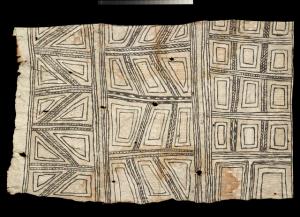
Image copyright: TePapa Museum, Wellington, New Zealand.
Papua New Guinea has one of the most unusual collections of bark cloth (tapa) in the world. The art of making tapa is a timeless tradition in PNG and many Pacific Island countries. A cultural heritage handed down from generation to generation, tapa making has survived western influences and is still worn by its makers.
While the tapa cloth is made in different parts of the country, the Oro Province is known world-wide for its distinctive designs and patterns. More on tapa in a future post.
THE night was still and dark. Dogs did not bark. The wind blew gently.
Children and babies had stopped crying and laid their heads to rest. Even the night birds were silent around the coastal Morobe village.
Below the whistle of the gentle breeze, Kalem heard a song. It was soft, beautiful and so sad it almost made her cry. It sounded very familiar.
Lying still on her woven pandanus mat that grandma made for her, she searched through her memories – where has she heard this song? Her grandma had passed away last year. She missed her. After tossing and turning for what seemed like forever, Kalem knew she had to find out.
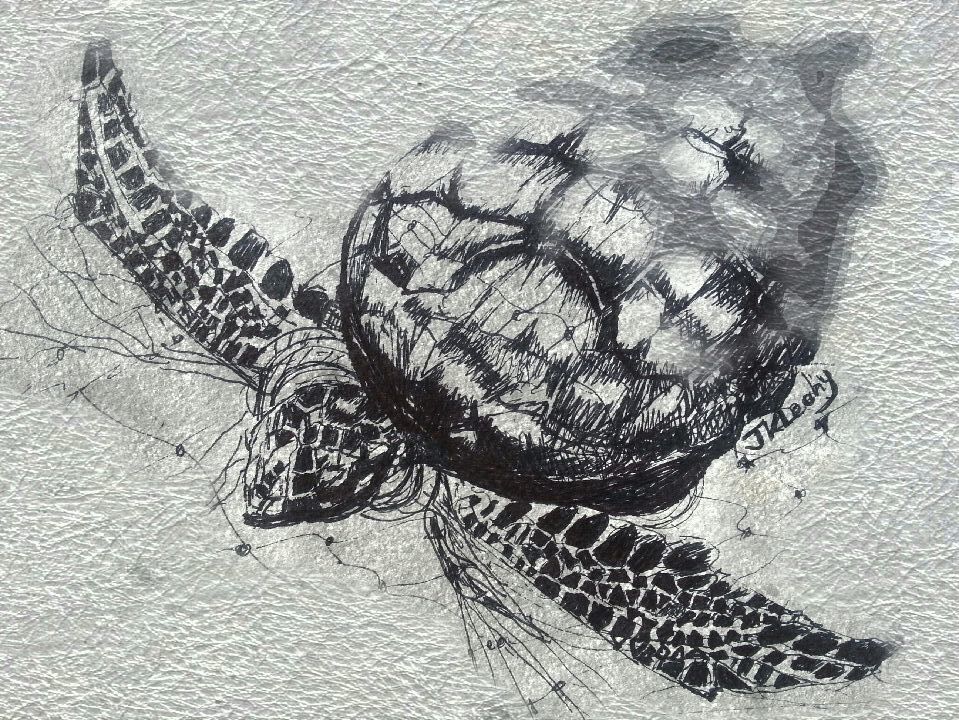
She picked up her mother’s torch. Beside the torch was a piece of hard shell, a turtle shell she found on the beach. She kept it for good luck. Suddenly she remembered – the song! It was the song of the turtles. Their nesting time happens near Kalem’s birthday, but they have not come to her village for a long time.
Tonight, something was wrong. Grandma said only the mother turtle sang the turtle song. No one in the village knew that song except her grandmother, mother and now her. Grandma sung and taught the song to Kalem while they were fishing. “Who is singing it now?” Kalem wondered.
Afraid but excited, Kalem headed to the beach. As she walked, she remembered Grandma’s words: “Our people are connected to the ocean, we fish to survive but we must respect the lives in the ocean. We must never kill for nothing.”
Not many people can connect to the animals and fish, but grandma said their family had a special gift because their ancestors came from the sea and are tied to the ways of the sea. Kalem walked quickly along the beach as she listened for the song.
“If you ever hear the song Kalem, you know, Mother Turtle needs you”, her grandmother told her. When Kalem was born in the turtle season, grandma told her mother – “this girl would one day meet Mother Turtle”.
Kalem followed the song out of her village and along the shores, further and further away from her house. Her heart beat faster when she arrived at the river where the villagers washed. Where the river met the sea, villagers set fishing nets along the shoreline. Kalem heard a loud splash. She slowly stepped forward, flashing the torch.
Tied to a large driftwood stump on the beach was a long, green fishing net. On the calm water surface, a big red buoy floated just offshore, and at the end of the net.
Something had been caught in the net. The thing splashed again. It rippled and frothed the seawater in a circle. It was large, dark and nearby the shore. It did not look like any fish or crocodile Kalem knew.
When she flashed the torch at the dark shape, she was shocked to find a very large sea turtle tangled in the net. It was so large, Kalem was sure it must have been the mother of all turtles. Kalem flashed the torch on the water.
She could see smaller turtles floating about, their heads bobbing in the water. The turtles circled the net. They were all making strange noises like they were crying too. The mother turtle was bigger than Kalem’s ten-year-old body, but Kalem had to try save to her.
Even with no strength left, the mother turtle kept singing her song. Weakly, her tired flippers hit the net and her voice faded to almost a whisper. Kalem’s tears flowed down as she waded through the water quickly and tried to set the turtle free. After struggling with the net and the weight of the turtle, Kalem ran back to the village and woke her mother.
“Help, wake up!” Kalem cried. “It’s Mother Turtle – we must help her”.
Kalem’s mother was confused. Often she thought her daughter was a daydreamer. After Kalem calmed herself and explained, she grabbed her mother’s arm and led her back to the beach. They took a knife and cut the net to set the mother turtle free. The large turtle swam up to Kalem and her mother. She bumped them with her nose before she and the other turtles disappeared into the deep, dark waters.
Kalem remembered grandma telling her about the life of the mother turtle. Grandma said it took many years before the turtle was ready to make babies. Every two or three years, the mother turtle leads her group to her own nesting beach, where she was born. Sometimes she travelled long distances to get there. Usually she would lay over a hundred eggs, but only a few survived.
Other animals, people and large fish eat the eggs and baby turtles. Kalem’s people loved eating turtle eggs and meat. Their village was once a nesting ground for turtles. Lately, less and less turtles have come to lay eggs. Standing silently in the dark with her mother, Kalem thought of how scared the turtles were tonight.
“They might never return…we must teach our people to protect the turtles”, she whispered to her mother.
“I am so proud of you Kalem. The turtles will head to a safe place to lay their eggs. Maybe this was not the right place for them, but they will find a perfect home some day”.
Her mother held Kalem close as they headed back to the village.
The Melanesians including Papua New Guineans produced war shields they used to protect themselves but these shields have a great artistic value. While these large hand-carved rectangular, square or oval-shaped cultural objects were made for protection in tribal war, they are also very beautiful. It is hard to visualise a work of art being used to protect one’s life, but made of hard-wood, the shields serve their purpose.
A shield of the Melanesia is a fascinating object. Many are made from wood and carry intricate tribal and clan markings representing profound spiritual meanings. The maker ensures that the markings incised or painted on this shield would protect someone’s life. In all the cultural objects that come from my heritage (the Melanesia), fighting shields would be my favourite.
From the 80s, I started collecting shields whenever I travelled across PNG. Once the West Papua community had a trade show in Port Moresby and I was extremely delighted to visit and I purchased a couple of shields and a door which was carved with intricate shield designs. West Papua shields, the Asmat, top my list of favourites. Over time, my obsession with shields resulted in over 30 pieces collected.
I have some pictures tucked away in my old computer, unfortunately, I could not find them for this post. Most of the shields from my collection were displayed in a cafe I owned and ran with a friend.
From JKLeahy collection: Eastern Highlands shield-PNGBefore we migrated to Australia, there was a feud over lack of electricity and water to a cafe business I owned with a friend. The landlord kept charging us astronomical amounts when we had to operate the cafe without water nor electricity. We lost business and customers. When we demanded to pay less rent (with power and water), we were locked of the cafe. Th landlord took everything, exceeding the value of the disputed rent. It was not just losing $50,000 worth of cafe equipment and furniture, my shield collection were stolen from the cafe. All gone. What happened after is another story.
It has taken me all these years to put this memory behind me. The pain returns often when I gaze at a beautiful Melanesian shield in a gallery or the thousands of beautiful pictures on Google. While most of the best and unique pieces in my life have gone, I still have a few beautiful pieces to make me smile. And I have this book (pictured below).
With Harry Beran, my friend Dr Barry Craig, anthropologist and a longtime serving curator in Papua New Guinea published a comprehensive compilation on the war shields of Melanesia in their book, “Shields of Melanesia”. The volume illustrates more than one hundred types of shields from all culture areas of Melanesia that used fighting shields. Approximately eighty percent of the shields illustrated in the book have never appeared in print. The book has images of some of the best Melanesian shields.
The Guardian Picture: In 2009, the crater of the extinct volcano Mount Bosavi, in the Eastern Highlands Province, PNG was found. The green beetle pictured was one amongst many species discovered, except that this specie is iridescent.
The green beetle is one of my favourites and the insect possesses a beautiful rainbow shine. The beetles come out in millions during fruit seasons. In Papua New Guinea beetles are eaten as food, but the green beetle is so beautiful that tribal dancers use the insect as part of their fashion. The fashion or their traditional dress, especially headbands and headdresses are worn in singsings. A singsing is a performance of song and dance by a group and it is one of many living rituals, handed down through generations.
An Eastern Highlander (PNG) spotting a row of green beetle in his headdress. The beetles are woven intricately into the golden orchid fibre in diamond patterns.
I have seen the beetles myself in Goroka, Eastern Highlands Province and found these ones on headdresses in Simbai, Madang Province, which prompted this post.
Simbai tribesmen (Madang, Papua New Guinea) wearing their fashionable head wigs made from the green beetle.
A Report from Radio New Zealand International’s Johnny Blades.
Papua New Guinea is at a juncture, experiencing unprecedented economic growth but still mired by poverty, tribalism and parlous human development outcomes. Exxon Mobil’s $US19 billion Liquefied Natural Gas project in PNG began exports last year, marking a major milestone in the country’s development as a foreign investment destination and energy hub.
Yet the benefits from development of PNG’s abundant natural resources – mineral, oil, forestry, fisheries and others – appear mainly confined to a tiny part of the population. RNZI’s Johnny Blades travelled to PNG and, in this video report, he asks if PNG can convert its significant resources wealth into tangible gains for its burgeoning population.







![20150718_122849[1]](https://tribalmystic.me/wp-content/uploads/2015/07/20150718_1228491.jpg)


 Tribalmystic Stories