Category Archives: short stories

The Hillside Find – A short story entry in Crocodile Prize.


The Hillside Find is a short story I wrote when I first started blogging  over a year ago.  It is based on my life as a young journalist working in my first job in Papua New Guinea’s leading daily, The Post Courier.

I have entered this story in the PNG’s annual literature competition which closes on June 30th. If you are interested, please visit also the two links below to see other entries from PNG writers. I will post my second entry tomorrow. The word limit is 1000 words.

The Crocodile Prize

Keith Jackson & Friends: PNG Attitude

47076981
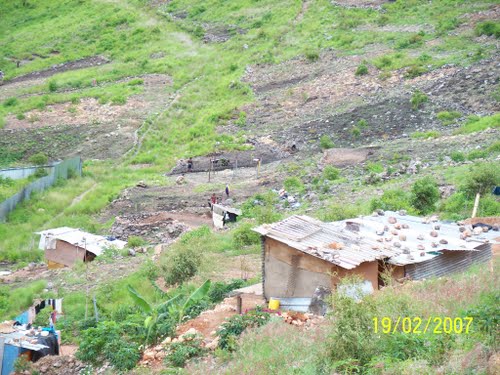
Peter John Tate picture of a Kone settlement, Port Moresby


The Hillside Find

Joycelin Kauc Leahy© for Crocodile Prize Short Story

We climbed together, side by side. Chief Superintendent Roy Tiden and I stepped through the tall kunai grass and up the rocky Ranuguri hillside. The mid afternoon sun fought with its last strength, throwing an orangey tinge on the grass and on vibrant houses on the hillside. Ranuguri is in Konedobu. Below, the sound of traffic in Kone died down as we moved further up. It was a Tuesday in February 1985; the year Papua New Guinea would celebrate its ten years of independence from Australia. It was also the year the country recorded the highest crime rate in Port Moresby. Solving crimes excited me. At nineteen, and reporting for PNG’s leading daily, life was never dull.

My mother had called the night before from Lae, asking me to bring my little brother to Port Moresby and care for him. I was the eldest of four and Rivona was turning eleven. Port Moresby crime figures were escalating and living here was hardly safe enough for me. I wondered how a historical government post such as Kone boasting the best harbour and a bustling business centre could also be afflicted with such a high crime rate. In the newsroom the talk was that a state of emergency would be declared for Port Moresby. I stopped briefly to wait for Supt Tiden. As he got closer, I continued climbing.

I wanted to care for my brother, knowing how hard it was for my mother with three young children. But I was afraid journalism work would keep me away for long hours. This was my first job, and I wanted to do well. Maybe I could also bring my grandmother, so she could help me with my brother. With my mind absorbed, I didn’t realise I’d left the superintendent behind. Glancing down at him for directions, Supt Tiden pointed to the top of the hill. I headed there with my bag and notebook, stepping carefully over the loose gravel and scattered boulders.

Down the hillside, Mr Tiden’s blue uniform showed through the green swaying Kunai grass. Further past him I could see some of the old colonial buildings. Colourful clothes danced on makeshift lines and smoke escaped from open fires. Next to the police headquarters other old buildings had been converted into the mining department offices. Several dozen vehicles were parked there. I brushed the sweat off my forehead and wiped it on my skirt.

When I got the call, Mr Tiden had mentioned a rise in death amongst gang members, especially young boys. He said he’d been called out a week ago to a crime scene where the body had already decomposed. While moving the remains onto a stretcher, the rotting arm dropped onto the superintendent, and as it brushed him the fingernails came off. Thinking of that story and what we might discover today, I felt nauseous. I wanted to get it over and done with and return to the comforts of the Post Courier newsroom.  My workmates there have become my second family, away from my hometown Lae.

I neared the hilltop. Supt Tiden was several meters downhill. His large body restricted his speed up the hillside. He’d started puffing at the foot of Ranuguri and joked about racing me to the top, making light our reason for being there. By then he was already an astute detective with over 20 years of police work.

With the incident report descriptions of the crime location, I figured I would see a crime scene near where I stood. I expected the obvious: signs of damage to the land surface, a scrap of bloody clothing, and any kind of evidence. “Maybe, I am ON the scene,” I whispered to myself. The hairs on my skin stood. At my feet the ground was bare and uneven with rough limestone.

I called out, “Mr Tiden!’ Mr Tiden!” Out of respect I always referred to the superintendent as Mr Tiden. I could hear the wind blowing my voice down the valley. No response. My throat dried up as I hugged myself.

I looked around and across the hilltop trying to see where the sound of buzzing flies came from. I didn’t want to step on anything or anyone. I could not even see those damn flies, but I heard them very close. A crow soared and two others joined the circle, just metres above me. I held my notepad tight. I pulled my bag up to my chest and smelt the leather. Inside it were my no-brand cinnamon lipstick, an extra pen, a bunch of keys and the police issue can of chemical mace. Mr Tiden said I might need it one day.

“The mace!” I almost said out loud. But what help would it be? Apart from spurts of kunai, there was nothing else here. Whatever there was would not be too hard to find, but my legs refused to take me further. I waited. The flies buzzed and the grass shooed. I wished the police helicopter would blast up the hillside and break the silence.

I was about to call Mr Tiden again when I heard muffled cursing and knew he had arrived. “There you are, Joycelin.”

“Am I in the right place?”

“You are! That is great detective work,” he answered cheerfully.

I pretended to smile.

“Come this way.” He started turning down the opposite side of the hill then halted suddenly.

I walked up to him and looked down. Stretched out before us was a boy’s body. He had three large rocks weighing him down – on the neck, the abdomen and the legs. The head had a massive dent and the rock on his neck was covered in blood. “He can’t be more than 11 or 12 years old,” said Supt Tiden after a complete circuit around the body. I had not moved yet.

Supt Tiden looked up at me, waiting for a reaction. The only thing running through my head was my brother, Rivona.

It could have been him, I thought.


Thank you Isabel for all your help.  This story is a tribute to Chief Supt Roy Tiden and also my brother, Rivona who are both no longer with us. Roy died years later and Rivona lived to be a young man in Port Moresby. Almost 20 years later and two weeks before his 32nd birthday, Rivona died suddenly. 


Magda’s Luck – Short Story


2015-06-15-bw-beacham
Picture by Barbara W. Beacham

Mondays Finish the Story is a unique flash fiction challenge where Barbara Beacham provides a new photo and the first sentence of a story each week. The challenge is to finish the story using 100-150 words, not including the sentence provided. This challenge runs from Monday to Sunday.

Magda’s Luck – Short Story © JKLeahy

At first, it looked like an ordinary marble, but it was far from it. Magda got to it, reached down awkwardly and picked it up. It was big and heavy.

Years of factory work damaged her back. Magda longed for an easy way to survive. The ball was larger than a cricket ball yet smaller than a soccer ball.

“Perrr-fect!” she smiled to herself and wiped off the red dirt.

This was a sign. She closed her eyes in prayer. She has seen it done in the markets with no truth in it and told Chek. Besides, who would know? Her husband Chek died last year.

With her gypsy olive skin, a pair of wild gooseberry eyes set against her greyish black hair, Magda was ready.

She pushed her Coles trolley to Brisbane’s West End markets. Already she could predict her own future. Her years of struggle are about to end in a few hours when she starts her new career  – predicting people’s futures.

How Long Should A Good Short Story Be?


Geoffedited

Are Australian short story writers an endangered species?

I found this review by Geoffrey Dean, an accomplished Tasmanian (Australian) writer quite interesting especially while editing some of my short stories for competitions recently.

I enjoy writing short stories, ranging from “Mondays Finish the Story” (Barbara W. Beacham) flash fiction challenge of 100-150 words to stories I have written in 1500 to 3000 words in our Creative Writing Workshop with Isabel D’Avila Winter. In short story competitions, the limit to the number of words you are required to write can really change a story, as I have found recently while reducing one of my 1500 word short stories to 1000 words for a competition. I have felt in the past week that I probably could have spent less time and written a better story, if I wrote a completely new story. On the other hand, I found it much easier to increase the number of words of another short story from 800 words to the required number, 1000 words. The additional 00 words may have slowed the phase of the story, but it is work-in-progress.

Submitting to literary magazines also calls for a fit. You have to write to specific requirements with type and paragraphing or head-lining, but the main challenge is the number of words to fit a page or a column.  So how can you fit into the system? Can you be less descriptive or reduce the number of characters without taking from your plot or could you do without long passages of back-stories without killing the story?

In the following review, “Are Australian short story writers an endangered species?”, see how author Geoff Dean writes about his process of creating a short story and his discussions on the steps that took him to the end where the answer about short stories and their lengths are quite clear.  As Dean writes, one must always aim to write a good short story first and foremost before trying to fit the story “into the system”, i.e., the magazine page size or competition requirements…in other words, to hell with the system, I am going to write my story my way and eventually find a place for it.

“Are Australian short story writers an endangered species?”

Geoffrey Dean has published 80 short stories. The Tasmanian Writers’ Centre (TWC) in conjunction with Island Magazine and the Geoff and Elizabeth Dean Foundation have just launched the Geoffrey Dean Short Story Competition which is now open to Australian writers.

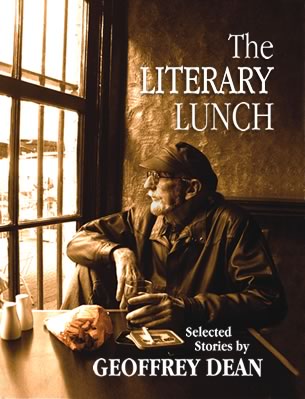
Born in Hobart, Tasmania in 1928, Geoffrey Dean (Geoff) had his first short story published in the mid-1950s. Scores of his stories have appeared in eight collections of his work (Mysteries, myths, and miracles; Under the Mountain; The Literary Lunch; Strangers Country and other stories; Cold Dean Monday and other Australian stories; Summerbird and other stories; Over the Fence; and the Hadlee Stories), as well as magazines, anthologies and collections in Australia, the UK, USA, Norway and China. He won many literary prizes and awards, including the State of Victoria Short Story Award and the Arafura Literary award. His story, The Town that Died was made into a TV drama and broadcast by the Australian Broadcasting Corporation in 1986. Geoff died in August, 2011.

Geoff

RRP AUD22.95, or via this site for AUD$20.
Inquiries to: anne dot hugo @ gmail dot com
Roaring Forties Press,
PO Box 368 North Hobart, Tasmania 7002 Australia

The Tasmanian Writers’ Centre


Burning Out – Short Story


Here is a draft of a potential chapter. I may use it in the memoir, but the story was prompted by Isabel D’Avila Winter in my creative writing workshop last week for the biggest lie I have ever told. I have not shared any memoir pieces lately, because I have not been writing much, but here it is for my readers who enjoy the memoir stories on Tribalmysticstories.

oil%20lamp
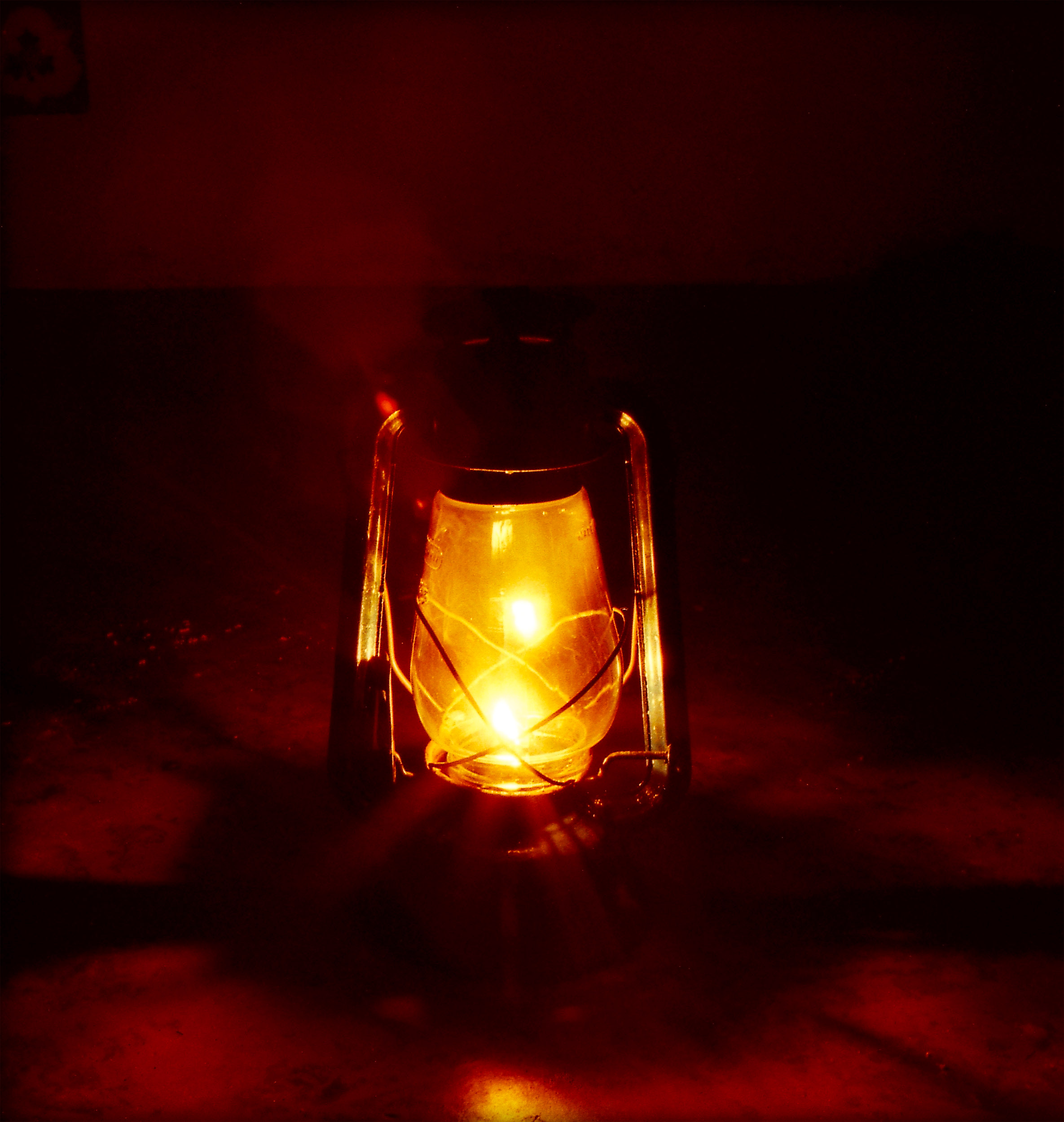
Kerosine/oil lattern: Public Domain image.

Burning Out – A short story

© JLeahy – Memoir series

The Chinese kerosene lamp burnt low. It was close to me and I smelt the kerosene cut into floral smells from the freshly washed bed sheet. In a continuous dance, its golden-yellow flame peaked in a steady poise and melted into the dark head of the small metal lamp. The lamp was barely taller than my school ruler but it gave enough light for me to see the print. The flame in the round clear glass, size of an orange, outlined the specs of paprika stains on the lamp. At the same time, the flame threw a soft orange ambiance under my sheet and even around the room.

If I moved too quickly, I could knock the lamp over and burn myself because the lamp was partially under the sheet, and next to my book I was reading. This was my private and peaceful space where I read my books. This was also against Mother’s rules.

Having a lamp to myself was a luxury I rarely had in a noisy, crowded house. My mother and I had a small room about three by three metres and my older uncle (of two uncles) and his wife shared another larger room with their five children. My grandmother and aunty shared the last one. My younger uncle was away at the University of Technology, about 20 minutes from my village. My uncle was the first man from our village to go to university.

It was a house where everyone knew everything that was going on. My family had this one Chinese lantern to use as an inside lamp and one Coleman lamp as the outside lamp. Both lamps burnt on ‘kero’ as the villagers referred to kerosene. Fire was the main source of light and there was a torch, which hardly had batteries because no one could afford them. The torch was mostly used for travelling between the village houses. It was also used to visit my aunts and uncles or for going to the pit toilet away from our house – not for reading or using as a room light. If we left the village to fish or camp, the Coleman and the torch came with us.

I knew I was using the 20 cents kerosene up but I was solving a mystery with Nancy Drew. I liked being a detective myself.

“Ampom” mother called and without saying, I knew she called me for dinner. She used one of my names that meant, light-skinned.

“Ok” I said, without moving.

In the village, kero sellers would buy wholesale in 44-gallon drums in Lae City and retail the kerosene to us in re-cycled wine or spirit bottles – charging 20 cents per bottle. It eventually became 50 cents and then a $1. That was in 1970s. Wholesalers bought kero from service stations and general stores. My cousin and I would take our bottle, a clear Vodka re-cycled bottle, and I did not remember which of my uncles drank the Vodka – to any village retailer for kero. We stood there while they pumped the kerb into our bottle but there was a special technique where the boys in the village mastered. The pump would be pressed a couple of times and stopped. The air would push the blue liquid from the drum through the transparent pump into our re-cycled bottle. You have to stop the pump quickly or it sprayed the kero everywhere. I always thought it was cool and I wanted to have a go at pumping the kero this way.

At home, every night, once the kero was put into our Coleman lamp and some in the Chinese lamp – my family gathered in our blackened old kitchen and ate their dinner.

The floor was uneven and with the weathered timber leaving gaps in between, we dropped the bones of chickens and pork to the village dogs and pigs, which fought over it. Sometimes the fights would become too aggressive and the animals would run into the fragile posts so it felt like the kitchen would drop off the side of the main house. My cousins and I would get scolded for dropping our scraps down the timber gaps. Tonight, my family were only a few metres away from me separated by a couple of walls. I turned the lantern wick higher for more light. I adjusted my bed.

Most of the kapok had fallen out or shrivelled in my pillow so I tucked some clothes under it and raised my head. I reached up with my book and turned the pages.

I knew Mother would place my food on the bench top, near the hot teapot, so it will stay warm. Sometimes grandma would place the covered food at the fireplace and they both would insist I go out and eat before bed. Both mother and daughter always respected my reading and schoolwork, but sometimes, my mother would agitate me with her calling. On this night, I wanted to finish my book.

“Ampom!” Mother called.

“Yes” I answered, annoyed.

“Come and eat”.

“I will”.

“Come now, the food is getting cold.”

“I am coming soon”. I turned to the next page and read faster. This was not fun, but I tried to go as fast as I could without skipping any pages.

A few minutes later, mother called again and I could tell she was getting angry. I was not ready to eat. I did not answer. I removed and turned the wick on the Chinese lamp so low, the room became dark. I shut my eyes and put Nancy Drew away. I was annoyed at my mother. I was hungry but only to find out what had happened in the story.

“Ampom!” I heard mother yell. I did not answer her.

Mother rose from the floor in the kitchen, and I heard her march to our bedroom.

She opened the door by pushing hard against the grating sand on the floor. The door did not have a lock. I had shut my eyes and twisted my body into an awkward position and pretended I was asleep.

Mother started calling my name and sat down and tried to shake me. I did not move.

“Ampom!, Ampom!,”

Mother lifted my shoulders and my head rolled back as if I was unconscious or dead. I was supposed to pretend I was asleep, but somehow, the idea of being dead entered my head – so I went with it.

“Ampom, tisa, tisa” – Mother begged in Bukawa for me to wake up.

“Giuc – Giuc!” mother started calling her sister. My aunt was shocked by the tone of my mother’s voice and tried to ask my mother what was going on. There was no time for mother to explain. By now my mother became hysterical and started calling her own mother for help because she thought I was dead.

In minutes – everyone rushed into the small space on my bed and started pulling my hair and calling all my four names. They would throw cold water on me next to try to wake me.

I finally ‘woke’ up to the relief of my mother – who was already crying. I told Mother I lied and I was pretending to be asleep and she did not believe me. I told her; I only wanted to have some peace and quiet – and even some light to read my book. Being a nurse, she was not convinced so she gave me a thorough check up; feeling the temple, checking the eye-balls, checking the ear and the throat. And then, I had no choice but to go outside and eat.

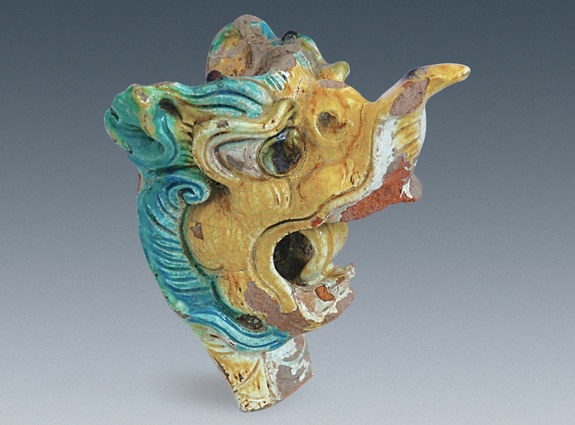
Xanadu’s Dragon Heads – Science Discoveries


xanadu-dragon-head-1
A colorful dragon head made of clay was found in a palace at Xanadu. Credit: Photo courtesy Chinese Cultural Relics

The remains of three colorful dragon heads made of clay have been discovered in a huge palace in Xanadu, a city constructed by the grandsons of Genghis Khan. Scientists reported that the dragons were made of fine, red, baked clay and were attached to the ends of beams and used as decoration. They “are lifelike and dynamic” and “have yellow, blue, white and black coloring” glazed on them, researchers wrote.

The palace where the dragon heads were discovered, sprawls over 9,000 square meters (about 100,000 square feet), or nearly twice the floor space of the modern-day White House. Archaeologists have been excavating the palace, learning how it was designed and decorated.

Read more

The Carménère Moment – Short Story


The Carménère Moment©JLeahy Short Story 

2015-05-25-bw-beacham
Picture by Barbara W, Beacham

Mondays Finish the Story with Barbara W.Beacham

“The only residents remaining in the small town of Miners Hill are spirits.” Uncle Joseph said.

A tear rolled down his wrinkled tired face. The Eastern Belt explosion left several hundred dead last week. The town was evacuated. I watched another tear form and my eyes salted.

“My first thoughts were Josepha, Maria, and Antonia”.

“Where were you?”

“We sat for dinner. I went down to get a bottle of wine from the cellar – only minutes away”, he covered his face with bloody bandaged hands and wept.

My 50-year-old uncle cried as I rubbed his shoulders.

“I…I heard a single explosion, it sounded so far away. I thought it was the daily blasting at mine site. I should have come up. Antonio wanted a Carménère to celebrate Maria’s first communion. I couldn’t read the labels…suddenly I heard the crumbling, screams upstairs and everything went black”.

“Don’t cry, please uncle. They are with God now”, I whispered, as I cried with him.

(150 words)


Brooding Storm – Short Story


Mondays Finish the Story by Barbara Beacham

This is a flash fiction challenge where Barbara W. Beacham offers a picture and the first sentence of the story. Based on the photograph and the first sentence, one must come up with a 100-150 word short story.

2015-05-18-bw-beacham1
Picture by Barbara W. Beacham

BROODING STORM © JK. Leahy

The crew of the Angel Flame received orders to head out. When Yakov and Marishka reach the secluded Russian base, most men had already boarded.

Marishka wiped her tired eyes as her husband walked to the submarine, leaving her, their newborn Polinka and their sick two-year-old, Boris. It was a dreary Friday at 5am; three lost seagulls skirted past Yakov, fleeing the brooding storm.

After Yakov’s head vanished into the submarine, Marishka left – four hours later the snowstorm hit. The radio announced that nobody was hurt. Marishka medicated and monitored Boris’s temperature.

The next day at 7am she heard a knock. It was persistent. Unwrapping herself from Polinka, she reached for her gown.

Marishka caught a glimpse of a man in uniform through the winter-frosted glass and threw open the door with a grin. Expecting to fall into Yakov’s arms, her stomach sank when instead she met the gaze of a stone-faced man carrying Yakov’s personal effects.

“Mrs Vladimir?”

“…Yes?”


Are We All Suspicious?


I took a walk yesterday in Bellbowrie, down our street on the edge of Brisbane River. I tend to walk on the grass because I like the soft- feel on my feet as I walk. Where we live, there is usually a piece of the city council land between the road and the various properties, enough for footpaths and walkers.

It was almost 5:45pm and with our winter, the place became dark quickly. I had a torch but I could still see so I did not use it.

“Are you right?” I heard a voice and saw a young man, about mid twenties, wearing white shorts and a polo coming towards me. I did not recognise him. He was walking on the road, going in the opposite direction.

Suddenly, I thought to myself, “why wouldn’t I be right?” And, “do I not look alright?” “Am I wrong?”

The tone of this young man’s voice did not seem friendly. I did not say any thing at first, just looked at him. I also wondered myself – if he was alright. I did not ask. My house was only four houses up the road.

Then, I calmly and with my best and warmest smile, I said, “I enjoy walking on the grass because it is soft and feet-friendly. I don’t like walking on hard surfaces”.

“Oh!” he responded with a puzzled look and then walked past me.

I don’t think it was the answer he expected. If that wasn’t the answer – what did he expect?

I re-told this random conversation to my younger son and he suggested, “may be the man thought you were ‘sus'”. (meaning suspicious).

“Do I look suspicious?”

To that question my son laughed and told me not to worry. How can I not?  It troubles me that given the world we live in today, you can never know what is well-meaning and what is not. Have we humans become allergic to each other?


The Missing – Short Story


2015-05-11-bw-beacham
Picture by Barbara W. Beacham

Mondays Finish the Story

Arriving at the beach, she reflected on her life. Mea searched the waves for two poles where the village bell hung. She had missed the bell sounds and the village gatherings. It has been 20 years since she left for Australia. The bell hung in the village centre; now, only seawater.

“I can’t see it,” she told her brother Tau.

“I don’t think it’s there anymore”.

“Right there” she pointed. “And what happened to Bubu Raga’s coconut trees?”

“The King tides, five years ago, took Moale’s family’s house, betel nut, breadfruit and the coconut trees. We dashed for the hill”.

“Oh My God! That would’ve been scary”.

“Yes, we lost everything. That was the day Chief Naka accepted the government’s offer to relocate us with other climate change refugees. It’s strange being on other people’s land. You are very restricted, but in the past 30 years, the water has raised so much. Our island will soon be completely submerged”.

Liklik Meri – Little Girl


20150509_121158
“Liklik Meri”. Watercolour and inks by JLeahy © Prints will be available for sale.

I have been writing less to allow my right arm and shoulder to heal. It seems to have taken forever.

With making artwork, I use different muscles and the work takes my mind of pain. I returned to some of my old paintings. These were mostly unfinished artwork, to see if I can finish some. Here is one of my work from 2014, “Liklik Meri” which means little girl in Papua New Guinea (PNG) pidgin. She is from the highlands. I enjoy painting our highlanders because they have gorgeous and colourful dresses. Often these traditional dresses are completed with absolutely stunning headdresses. (See my earlier post on head piece).

I should have taken a ‘before’ picture, but I didn’t. I began painting her six months ago with watercolours. I tried to keep the same medium but after working on the young lady for a few months now, I decided to use inks, mostly black ink pens for the outlines. I hope you like the end result.