Category Archives: Culture and Heritage

Stories about the arts, cultural projects, festivals, costumes, exhibitions, intangible skills

Concerns For the World’s Largest Butterfly


Papua New Guinea (PNG) is home to the world’s largest butterfly – the “Ornithoptera alexandrae” or Queen Alexandra birdwing. Its wingspan can grow to 25cm. Queen Alexandra only breeds and lives in the Managalas Plateau in Eastern PNG or Oro Province. The butterfly numbers are unknown, and its habitat is increasingly disappearing. There are also concerns that the number of the large butterflies are depleting.

The Queen Alexandra’s Birdwing is on the red list of threatened species of the International Union for Conservation of Nature (IUCN), and its international trade is banned. From the perspective of species conservationists, the butterfly satisfies all of the criteria to make it a critically endangered species. 

Walter Rothschild discovered the species in 1907 and named it after Alexandra of Denmark. The first European to discover the butterfly was one of Rothschild’s employee, Albert Stewart Meek during their expedition to Papua New Guinea.

ornithoptera_alexandrae_f2
Female Queen Alexandra image from Manchester Museum collection.

Unusual Reproductive Biology

The threatened butterfly is vulnerable because of its unusual reproductive biology. The female lays its eggs exclusively on a poisonous vine called Aristolochia. Once the caterpillars have hatched, they ingest the plant’s toxic leaves, making them unpalatable for potential predators.

The Aristolochia winds its way up into the crowns of jungle trees, which can grow to heights of up to 40 meters (131 feet). The butterfly would be lost without the vine, so propagating the Aristolochia is one of the main goals of conservationists.

ornithoptera_alexandrae_m1
Male Queen Alexandra image from Manchester Museum collection.


Re-Visiting The Journey of An Artist


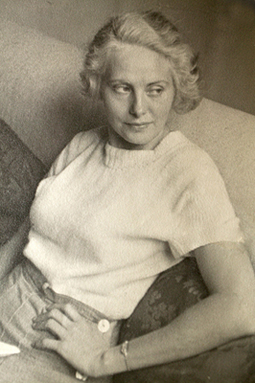
Inspired by a true-life adventure, Headhunt Revisited: With Brush, Canvas and Camera is a documentary film, a book and exhibition about Caroline Mytinger and the power of her art to build connections across oceans and decades.

Images of research materials from the Monterey Museum of Art or Phoebe Hearst Museum of Anthropology Contact Information: Michele Westmorland 14128 - 11th Drive SE Mill Creek, WA  98012 (425) 401-2949 michele@westmorlandphoto.com
Caroline Mytinger: by Michele Westmorland (Images of research materials from the Monterey Museum of Art or Phoebe Hearst Museum of Anthropology)

The inspiration for Headhunt Revisited took shape in the 1920’s, when an intrepid American portrait artist, Caroline Mytinger, and her friend, Margaret Warner, traveled to Papua New Guinea and the Solomon Islands on a hunt to capture portraits of the indigenous peoples. Their four-year expedition resulted in 25 stunning paintings that depicted and preserved the culture of Melanesia in a way recorded by no other.

Read More 

Art + Climate = Change


Article Lead - wide996235664gh4s84image.related.articleLeadwide.729x410.gh4scw.png1432004258077.jpg-620x349
Rosemary Laing’s “The Paper”. Photo: Supplied SMH

VISUAL ART JAPANESE ART AFTER FUKUSHIMA: RETURN OF GODZILLA ​RMIT Gallery Until May 30

Japanese Art After Fukushima is part of an excellent festival, Art + Climate = Change, which gathers local and international artists working with environmental ideas. It has spanned numerous venues across the state and is an important initiative of Guy Abrahams from the non-profit-making Climarte​.

Read more

Famished Eels – A Short Story Winner by Mary Rokonadravu


In partnership with Commonwealth Writers, Granta is publishing the 2015 winning stories for Africa and the Pacific: ‘Light’ by Lesley Nneka Arimah (Nigeria) and ‘Famished Eels’ by Mary Rokonadravu (Fiji). To listen to podcasts by all the regional winners and read the regional winning stories for Asia, Canada & Europe and the Caribbean, please visit the Commonwealth Writers website.

Podcast from the story-teller

I have read and wish to share the Pacific winner’s short-story. It is one of the most beautifully told short-story I have read. I would recommend you read the whole story from the link I have provided at the end of this passage.

Famished Eels
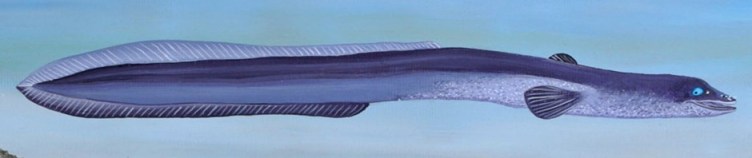
cropped-flying-eel-long

After one hundred years, this is what I have: a daguerreotype of her in bridal finery; a few stories told and retold in plantations, kitchens, hospitals, airport lounges. Scattered recollections argued over expensive telephone conversations across centuries and continents by half-asleep men and women in pyjamas. Arguments over mango pickle recipes on email and private messages on Facebook. A copper cooking pot at the Fiji Museum. Immigration passes at the National Archives of Fiji. It is 2011.

Fiji, with Guyana, Suriname and Trinidad and Tobago, had just registered the ‘Records of the Indian Indentured Labourers’ into the UNESCO Memory of the World Register, when my father, the keeper and teller of stories, suffered a stroke. Fate rendered his tongue silent. He cannot read or write – he first set foot in a classroom at fifteen, and was told by a nun he was too old. He ignores my journalist and doctor siblings to select me, the marine biologist, to finish his task. I am off the coast of Lifou in New Caledonia counting sea urchins when the call is relayed.

He hates me for not becoming a journalist, I say to myself.

I will be on the Thursday flight, I tell my older sister.

She meets me at the airport and drives me down to Suva. It is past midnight. We pass eleven trucks overloaded with mahogany logs between Nadi and Sigatoka. A DHL courier truck. A quiet ambulance. She smokes at the wheel, flicking ash into the cold highway wind. We pass a dim lamp-lit wooden shack before Navua. Someone is frying fish. We both know it is fresh cod. We remain silent as we are flung into the kitchen of our childhood at Brown Street in Toorak. We stop to sip sweet black tea from enamel pialas in Navua.

Come on tell me, she blurts. Who you seeing now? Is it a dark-skinned Kanak? Is that what’s keeping you in Lifou? Do you speak French now?

Screw you, I say from the back seat.

He wants you to do this because you won’t lie to him, she says. The rest of us may. Just to make him happy. Just give him what he wants to hear. But you won’t. You will find out and you will tell him.

Screw you, I say again, more to myself than her.

All his life, my father has sought one thing only – to know the woman in the photograph. To know the name of her city or town in India. To know that at some juncture in history, there was a piece of earth he could call his own. All he had had was a lifetime of being told he was boci. Baku. Taga vesu. Uncircumcised.

A hundred years was not enough. Another five hundred would not be either. In a land where its first peoples arrived a couple of thousand years before the first white man, the descendants of indenture would forever remain weeds on a forsaken landscape. A blight.

He had stubbornly remained in Fiji through three military coups and one civilian takeover. Everyone had left. He remained the one who rented out flats until his brothers’ houses were sold. He supervised brush-cutting boys on hot Saturday mornings. He was the one to call the plumber to change faucets in grimy, unscrubbed shower recesses. He was the one who kept receipts for oil-based butternut paint, bolts and drill bits; photocopied them faithfully at the municipal library and mailed them to Australia, Canada or New Zealand. Each envelope had a paper-clipped note: OK. It was the only word he learned to write. I received Christmas cards from him saying the same thing: OK. The handwriting on the envelope changed depending on who the postmaster was at the time.

His younger brothers send out family newsletters on email. There is only one photograph of my father they use, a blurred profile of him holding a beer. They use the same caption – ‘Still refuses to use email.’ I wish to click Reply All and say ‘fuck you’ but there is a distant niece in Saskatchewan on the list – she writes me regularly for shark postcards and she knows the scientific names of eleven types of nudibranch. She recorded herself reciting it like bad poetry and put it on YouTube. I am the only one who knows this. She insists I use real handwriting, real stamps. She hates pancakes, frogs, flatlands. Her handwriting yearns for water. Salt water. Sea. In her milk tooth grin I see the next storyteller – the one to replace the man who has gone silent. She is ten and wants three pet octopi.

I was born to be a bridge. All I see are connections. I bridge between time, people and places. I study migratory species. Tuna fish stocks. Whales. Sea urchins in between. Cephalopods. I was nine when I picked up my first cuttlefish bones on a tidal flat in Pacific Harbour. For years I thought it was a whistle. I wrote out the names of the world’s oceans, seas, currents and fish in longhand, unaware the lead scrawlings were placing miles between my father and me. He watched me from across the kitchen table. My mother had died bringing me into the world. He washed okra with patient fingers. Boiled rice. Warned me he was going to slice red onions.

Make sure you buy land, he whispers. When you grow up, buy a small piece of land. Build a house just for you. Promise me.

Promise. But my eyes were already on the Kuroshio Current. I was already reading the voyage of Captain James Cook and the transit of the planet Venus. Hearing the howl of winds at Tierra del Fuego. No one told me that as recently as one hundred years before, ships had cut through the rough straits with people carrying the makings of my teeth in their genes. They almost never happened. Almost.

Keep writing, he says in our old kitchen. As long as someone remembers, we live.

My sister drops me off at the Colonial War Memorial Hospital.

I won’t come in now, she says. I still smell of cigarettes.

My father is asleep when I reach out to hold his hand.

Famished Eels Continues here

The Call of Garamut


The garamut is a slit gong made out of wood. The instrument is widely used in Melanesian cultures. Garamuts are used for traditional dancing and performances. It is also used to call and gather. Communities used the garamut to call meetings, call school children to classrooms and congregations to churches.

182_0723
Picture by Pioneer Bible Translators. Calling his congregation to church; one of the most common uses of garamuts.

In Papua New Guinea the instrument, depends on its size and how shallow the slit is, gives a distinctive sound. It can also be played very rhythmically and the sounds makes you want to dance.

CUR.52.126a-c_print_front_bw
A garamut in Brooklyn Museum.

In the first video clip, I am delighted to show my own people dancing the siak, a slow motion dance in Salamaua, Morobe Province. A single and sometimes two garamuts would lead the siak accompanying kundu drums. Pay attention to the sound of the garamut – the largest wooden instrument in background.

The second video below is from Manus Province. For their performances, Manus dancing requires a collection of garamuts of various sizes and played together. The biggest drum (deepest) leads the rhythm and song.

Discovered Human Bone Uses : Home-ware?


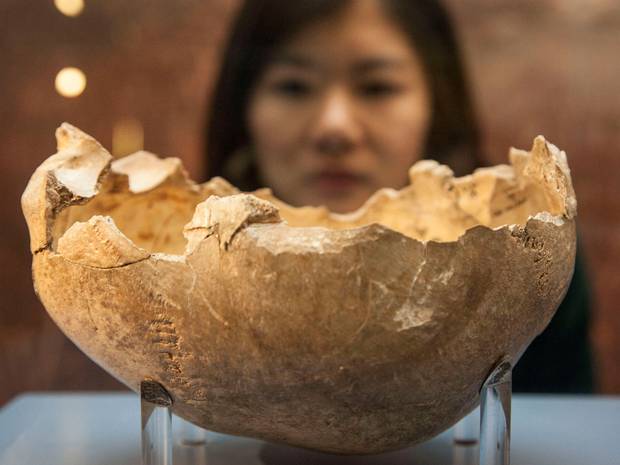
skull-cup-2-v2
New research offers the best evidence yet that cannibalism took place in Somerset’s Cheddar Gorge 15,000 years ago

The Independent UK reported that scientists investigating a system of caves in Somerset have found new evidence that shows our human ancestors engaged in cannibalism in Britain – and that no part of their victims was wasted.

A research team from the Natural History Museum and University College London have used modern carbon-dating techniques to establish that remains in Gough’s Cave at the mouth of Cheddar Gorge were all left there over just a few seasons around 15,000 years ago.

But more alarming is what was done to the bones before they were deposited. Find out here

Indigenous Australia Exhibition Opens in British Museum


Discover the remarkable story of one of the world’s oldest continuing cultures in this major exhibition.

The show is the first major exhibition in the UK to present a history of Indigenous Australia through objects, celebrating the cultural strength and resilience of both Aboriginal peoples and Torres Strait Islanders. This culture has continued for over 60,000 years in diverse environments which range from lush rainforest and arid landscapes to inland rivers, islands, seas and urban areas today. Hundreds of different Indigenous groups live across this vast continent, each with their own defined areas, languages and traditions. The exhibition runs from 23 April – 2 August 2015.

And here is another view of the exhibition has sparked.

Exhibition Sparks Protests

Published on Apr 23, 2015 (YouTube)
On 21 April 2015, the British Museum’s BP-sponsored ‘Indigenous Australia: enduring civilisation’ press launch was disrupted by activists, criticising oil sponsorship and calling for the repatriation of stolen indigenous objects.

British Museum Link

Scatterings of Blood River


Mondays Finish the Story by Barbara W. Beacham

2015-04-06-bw-beacham1
The Kingdom Behind the Fog – Photo by Barbara W. Beacham

Scatterings of Blood River ©JLeahy Memoirs

Once upon a time in a land far, far away, beyond the blue fog of Torrest Straits lived many tribes in Papua New Guinea. Amongst them, a fierce warrior named Katham led the Ahe people.

Seeking fertile land Katham attacked Tikeleng, Apo and Aluki tribes for the Lahe coastline. The early 1900s battle took place near a large river. Positioned in the thick tropical forest Katham and his warriors fought till his last coastal enemy fell. Katham and two ardent followers returned inland. They crossed the river, which they named Bu-dac, meaning Blood River, because it was red and filled with floating bodies. The three heard loud splashing. Katham approached the shallow bank cautiously thinking an injured enemy was still alive.

To his astonishment, he found a toddler struggling for air and Katham picked up and hugged the baby boy. The baby threw up water and cried. Without other survivors, Katham returned home, named and raised the toddler as his son.

Based on our (Ahe people’s) history as told by my grandmother, Geyamlamuo Poaluawe Baim. Budac remains a river where our people wash daily. The toddler’s three generations are still part of our family. Our village Wagang remains in the position Katham fought for.  Thank you Barbara for a perfect picture to inspire my oral history.

Big Beautiful Books by Wendy Wahl


ArtPrize
Branches Unbound, Wendy Wahl’s work at the Grand Rapids Art Museum, Photo by: Jim West

It’s not news that the world of printed text on paper is challenged in the 21st century by digital media and the reorganization of how information is created, distributed and accessed. Knowledge saving and sharing continues to be reinvented – 5000 years ago the Incans used a device called a quipu made of string and knots for communication, 3000 years ago the Sumerians had libraries containing clay tablets while the Egyptians used papyrus and parchment scrolls.

photo-5.ww_
Kansas City Public Library, Missouri. photo by Mike Sinclair

During the Han Dynasty the Chinese invented paper to write on and in the 15th century Europeans began printing with movable type to create a codex. In the 1970s computers were incorporated into the printing process.Social and environmental conditions along with technological developments influence the structure of books that are produced. These objects evolve to fit the needs of the cultures that use them. Today there are e-readers with names like kindle, nook and ibook. For nearly a decade my response to the current transformation has been to use discarded encyclopedias as a material to create art works and large scaled installations as an expression of the significance and potency of the printed word on paper. Read More

Remains of Cervantes, author of Don Quixote, ‘identified in convent’


0384d459-cbe2-4973-9555-0f85ee2d5160-2060x1236
The parts of a casket discovered at Madrid’s Convent of the Barefoot Trinitarians. Photograph: AFP/Getty Images

Spain says it has unearthed the apparent remains of the literary giant Miguel de Cervantes in a Madrid convent almost 400 years after his death.

In a Guardian report, Anthropologist Francisco Etxebarria said after a year-long search his team had positively identified “some fragments” of the Don Quixote author in an alcove in a convent crypt.

Though there is no genetic proof of the find at this stage, Etxebarria’s anthropologists and archaeologists said they were confident on the basis of the documentary research they carried out.

In January the team announced the discovery of part of a casket at Madrid’s Convent of the Barefoot Trinitarians during excavations aimed at solving the mystery of the writer’s final resting place.

Cervantes is recorded as having been buried at the convent’s chapel in the centre of the Spanish capital a day after his death on 22 April, 1616, but the exact whereabouts of his grave were unknown.

His bones went missing in 1673 when building work was done at the convent. They are known to have been taken to a different convent and were returned later.

In April 2014 Etxebarria’s team launched what was the first significant search for the remains of the greatest writer of the Spanish Golden Age.

Using infrared cameras, 3D scanners and ground-penetrating radar, they identified 33 alcoves where bones could be stored.

Cervantes, who was born near Madrid in 1547, has been called the father of the modern novel for The Ingenious Gentleman Don Quixote of La Mancha, which was published in two parts in 1605 and 1615.

His influence on the Spanish language has been so great that it is often referred to as “the language of Cervantes”.

the guardian