Category Archives: Art

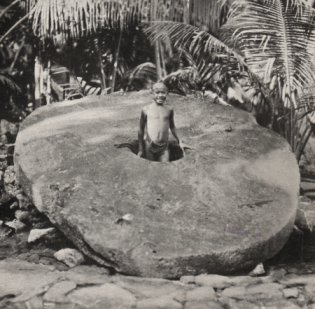
Yap’s Giant Coin is Legal Tender


yapmon2
Public domain picture

Like some of the more unusual legal tender in other cultures of the world, the stone money from Yap is quite unique, and grand.

This is not your typical gold coin or silver coin you could flip. You would need all your friends to help you flip it and I would not wait to catch it coming down.

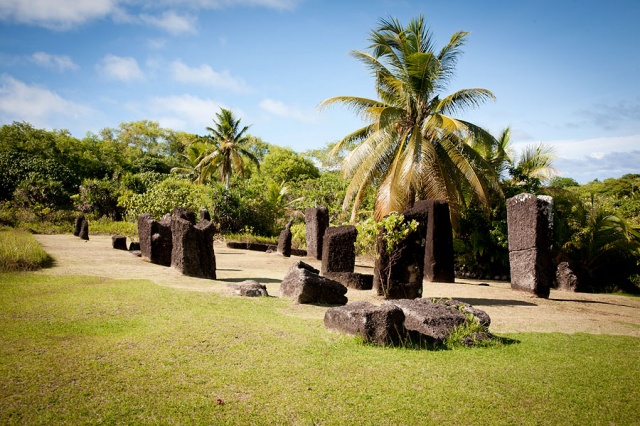
To continue from my post about the giant Easter Islands Monuments and this is my own theory; I’m speculating that the people who build the giant statues of the earlier post on this blog were part of the same (tribe of) people who manufactured the Rai or the giant stone coins of the Micronesian islands of Yap and Palau. My reason for thinking there may be a connection is because of what I have seen in Palau and Northern Marianas. There are giant statues all over the world and I am no archeologist. The Micronesians also have giant stone monoliths and statues. Yap became part of this ring of exchange and sharing giant objects when they brought the coins from Palau into Yap.
1230259_13387225544644
Palau monoliths. Picture credit:http://oceanislandtravel.com/home.asp?aid=505

Yap is one of four states of the Micronesia. The large coins pictured above and below were made from limestone disks and each represent wealth in a family group. There is a lot of reading in the history of all these large objects and studies are still being carried out on the mystery that surrounds the objects.

yap-currency_2579860b
Amusing Planet Picture

Why did the Yapese take to this new kind of money?

John Tharngan, historical preservation officer of Yap explained that  the coins were invented during a period when the chiefs on Yap were struggling for power.

“In those days all sorts of commodities were being used as valuables, including shells and turmeric and so the concept of bringing something in from outside, that didn’t exist on Yap, was very attractive. So when they brought this piece home and called it money, it encouraged other people to make the journey and bring stones back. So they went and brought more, this time in the shape of a full moon with a hole in the middle, for ease of transportation, like the ones you can see here on Yap”, Tharngan said.

img-coin12
Jaime Hernandez – March 12, 2012 – Making the Rai.

The value of the stone coins is determined by the number of lives lost during the process of transportation and the workmanship on each stone. They are used for buying land and bride price.

I first saw the Rai at the National Museum of Palau in 2008. I asked many questions and got bemused looks from locals, to say that these coins were part of everyday trades, an undying culture passed through generations. I could not imagine a piece of coin carried by six adult male compared to a dollar you could pull out of your pocket and flick in the air, and in Papua New Guinea, we mostly used shells as our legal tender. Perhaps at one point, we also used stones.

6707e96d6388439144963897fefd5de8
What a wonderful life blog picture.

Yap is about 100 square kilometres and home to 12,000 people. The island of Yap has no precious material like gold or silver instead, they use these giant disks of limestone called Rai as currency for large trades and still use them as small as seven to eight centimetres in diameter to trade with. The larger ones stand as high as 3.65metres (12 feet tall) and weigh five tonne. Many of the Yapese coins were carved in Palau and shipped 400 metres to Yap. There was a story that once a large Rai was transported across the water between the Yapese and it tipped the canoe and sank. This coin was always remembered and its value (for the family that owned that coin) was continued to be used in the trades. Read more on the Yap’s coins on the links below.

Amusing Planet

BBC News

Most unusual money in the world – what a wonderful life blog also has an article about money from other cultures.
Easter Island Monuments – How did they get there?


Unsolved Mysteries: The secret of Easter Island. YouTube.

In the most isolated place on Earth a tiny society built world-class monuments. Easter Island (Rapa Nui) is 1,000 miles from the nearest Pacific island, 3,000 miles from the nearest continent. It is just six by ten miles in size, with no running streams, terrible soil, occasional droughts, and a relatively barren ocean. Yet there are 900 of the famous statues (moai), weighing up to 75 tons and 40 feet high. Four hundred of them were moved many miles from where they were quarried to massive platforms along the shores.

Terry Hunt and Carl Lipo began their archeological work on Easter Island in 2001 expecting to do no more than add details to the standard morality tale of the collapse of the island’s ecology and society—Polynesians discovered Rapa Nui around 400-800AD and soon overpopulated the place (30,000 people on an island the size of San Francisco); competing elites cut down the last trees to move hundreds of enormous statues; after excesses of “moai madness” the elites descend into warfare and cannibalism, and the ecology collapses; Europeans show up in 1722. The obvious lesson is that Easter Island, “the clearest example of a society that destroyed itself“ (Jared Diamond), is a warning of what could happen to Earth unless we learn to live with limits.

A completely different story emerged from Hunt and Lipo’s archaeology. Polynesians first arrived as late as 1200AD. There are no signs of violence—none of the fortifications common on other Pacific islands, no weapons, no traumatized skeletons. The palm trees that originally covered the island succumbed mainly to rats that arrived with the Polynesians and ate all the nuts. The natives burned what remained to enrich the poor soil and then engineered the whole island with small rocks (“lithic mulch”) to grow taro and sweet potatoes. The population stabilized around 4,000 and kept itself in balance with its resources for 500 years until it was totally destroyed in the 18th century by European diseases and enslavement. (It wasn’t Collapse; it was Guns, Germs, and Steel.)

The world-class monuments of Rapa Nui

What was up with the statues? How were they moved? Did they have a role in the sustainable balance the islanders achieved? Hunt and Lipo closely studied the statues found along the moai roads from the quarry. They had D-shaped beveled bottoms (unlike the flat bottoms of the platform statues) angled 14 ° forward. The ones on down slopes had fallen on their face; on up slopes they were on their back. The archeologists concluded they must have been moved upright—”walked,” just as Rapa Nuians long had said. No tree logs were required. Standard Polynesian skill with ropes would suffice.

Archaeologists Terry Hunt and Carl Lipo attempt to solve the mystery in this documentary. Easter Island is also called Rapa Nui.

Read more here:

Easter island Reconsidered


The Kreod Pavilion: Cool Stuff


Cool stuff – The KREOD

3D_Modes_01_by_Li_03_a33ed62e65

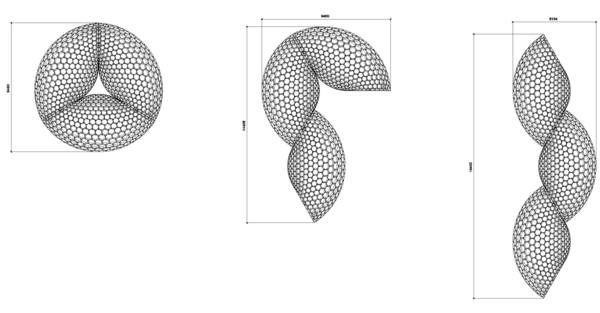
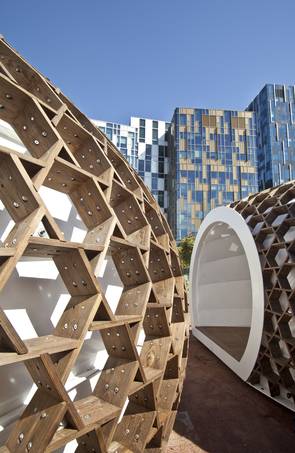
The Cool Stuff this week is a multi-functional exhibition space called Kreod Pavilion. Inspired by nature and organic in its form, this beautiful space was designed by London Architect Chun Qing Li.
Environmentally friendly the Kreod pavilion combines three 20 m² capsules in a variety of spatial configurations. The hexagonal structure is based on a simple recurrent joint connection detail as seen in Chun Qing Li’s sketches below.

Kreod_0001-AL_01_0604_P01_03_e0f3786651d

Architect: Chun Qing Li & Pavilion Architecture
Location: Greenwich Peninsula, GB-London SE10 0PE (until early 2013)

kreod_nacht_1_03

Kreod is a multi-functional pavilion – its three pods can be combined in a variety of configurations or installed as free-standing forms. It is portable and easily demountable. The wooden structure of KREOD is made of Kebony, a certified sustainable alternative to tropical hardwood. The product is dark, acquiring a silver-grey patina over time if left untreated.

Kreod_Pavilions_0015_Photo_by_Ed_Kingsfo_e2b5c67d97      KREOD_Launch_025_Photo_by_Ed_Kingsford_0_d8fdae62aa

The wood was impregnated with a liquid produced from crop biowaste. The treatment with furfuryl alcohol forms stable furan polymers, which are locked in the wood cell walls and increase the dimensional stability as well as durability and hardness of the wood, giving exceptionally good decay resistance and long life span was obtained after kebonization. This durability was achieved without the disadvantages of traditional impregnation methods using toxic chemicals.

See more here

Social Media ‘Art’ @ $90,000 Per Piece


new-portraits
“New Portraits” is primarily made up of Instagram pictures of women, many in sexually charged poses

I found this story quite disturbing and in my opinion, it has a huge impact on intellectual property laws and what we own (or not own) as artists or people in general, once the property becomes virtual. In this story by Jessica Contrera, Washington Post – your Instagram photos aren’t yours: Someone can sell them as art for $90,000, which raises the questions once more about what is truly yours once it goes virtual.  The Internet is the place where nothing goes to die. Those embarrassing photos of your high school dance you marked “private” on Facebook? The drunk Instagram posts? The NSFW snapchats? If you use social media, you’ve probably heard a warning akin to “don’t post anything you wouldn’t want your employer (or future employer) to see.” We agree, and are adding this caveat: Don’t post anything you wouldn’t want hanging in an art gallery. (What about what other people post of you, without you knowing?) This month, painter and photographer Richard Prince reminded us that what you post is public, and given the flexibility of copyright laws, can be shared — and sold — for anyone to see. As a part of the Frieze Art Fair in New York, Prince displayed giant screenshots of other people’s Instagram photos without warning or permission. The collection, “New Portraits,” is primarily made up of pictures of women, many in sexually charged poses. They are not paintings, but screenshots that have been enlarged to 6-foot-tall inkjet prints. According to Vulture, nearly every piece sold for $90,000 each. Read more here

Together We Can: Jamie Lee


Together We Can, a music video from Papua New Guinea.

I had a request by fellow blogger Annette from Beauty Along the Road for some singsing (dancing) when I posted a story last Saturday about the South Pacific Games opening in Port Moresby, Papua New Guinea. I could not find any material on the web, You Tube and other avenues, however I found this video, released on July 3rd, 2015 which is about the 2015 SP Games. The video was released to celebrate the opening of the 2015 South Pacific Games. I am proud to share this video not only for its content, but it was created by two of PNG’s amazing talents, Jamie Lee and Jagarizzar. The video features a collection of traditional singsing  from across PNG and some of PNG’s pop and contemporary singers. I hope you enjoy the video.

Artist: Jamie-Lee

Featured Artists: Jagarizzar, Briena Micah, Tinzy Mau, Henry & Santanya Gewang

Choir: Emirau Praise

Directed by Karl Bouro & Andrew Bouro of Torn Parachute

Written & Composed by Jagarizzar & Jamie-Lee

Produced, Mix & Mastered by Bryan B of Tune Studios, Malaysia

Aerial/Drone Footage: Robert Weber & MASALAI

Video Producers: Motsy David & Kamuna Consultancy

Production Assistants: Floyd Manata, Roan Paul, Graham Robinson

Cultural Groups: Aroma, Morobe, Huli Duna, Asoro Mudman, Paluai SookSook, Kiwai Dancers, Buka Bamboo Band

This is My Heritage: Photographic Exhibition


This is My Heritage: Photographic Exhibition

SANYO DIGITAL CAMERA
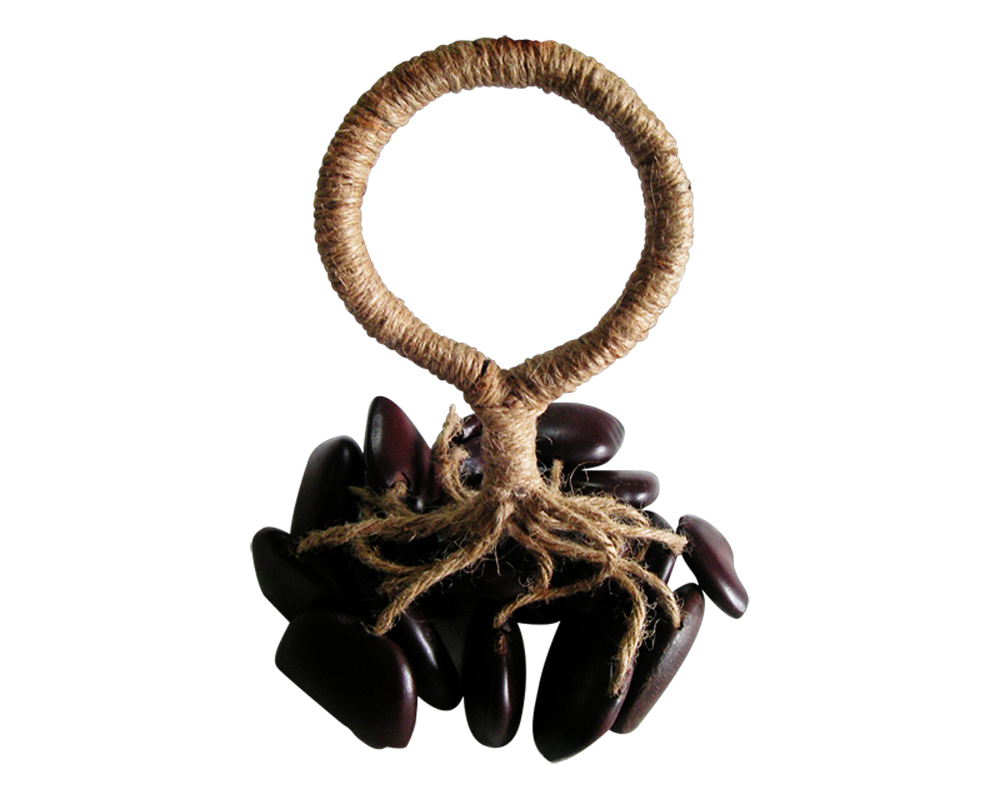
Similar seed pod rattle found on the public domain images.

Standing in the warm Brisbane sun outside the Queensland Museum this morning, listening to Rhianna Patrick recall her story about her heritage, which reminded me of my own. My grandmother and I collected the same seeds and went through almost the same process to produce seed pod rattles for my aunts to dance with. This musical instrument is quite common in Melanesia and other cultures such as the Indigenous Australian culture.

While Rhianna and her father drilled holes in the hard seed shells, grandma and I used metal rods from broken umbrellas by burning the rod on the fire until it was red, which then easily burnt a hole into the seed.

Rhianna’s story was about making the Kulap, the dance rattle (as pictured above) from the Torres Strait. The rattle was an object found in the Queensland Museum collection. Rhianna’s is one of twelve stories told in a photographic exhibition to highlight the significance of Australian indigenous cultural heritage in association with the collection. The exhibition also acknowledged young keepers of traditional knowledge and promoted the importance of skills in making these cultural objects. Young keepers of traditional knowledge and skills were encouraged to sustain the knowledge and skills for future generations.

Curated by Michael Aird and Mandana Mapar, twelve outstanding indigenous Australian story-tellers were invited to speak about their personal recollections of their cultural heritage – the Kulap, an object in the Queensland Museum, was the one thing that stirred many memories for Rhianna.

In her early childhood, at eight, Rhianna recalled that she had run out of things to ‘show and tell’ at school, and finally, she was forced to make something up. That was when her father suggested the two of them make the Kulap. In the process of collecting seeds on the beach to sawing the seeds in half and incising holes to threading the half seed pods together, the Kulap-making became one tradition she learnt from her father, and also one cultural heritage that has left a lasting impression on her.

Rhianna’s story about the Kulap with 12 other storytellers and their personal recollections on objects of cultural significance went on show in Queensland Museum today. The event was timed to mark the beginning of the National Aborigines and Islanders Day Observance Committee (NAIDOC) week.

In the curatorial statement, curators Aird and Mapar wrote, “In our own way, each of us gathers mementos and keepsakes around us as we remember our past and look towards the future. Our collective stories and memories guide us to tell our own personal narratives with strength and conviction.”

According to Aird and Mapar, the stories told in this exhibition reflect on the tangible core themes of connection to family and country of the indigenous people. The stories also acknowledge the unique techniques used to craft some of the artefacts and signpost historical and political milestones in Queensland indigenous history.

National NAIDOC Awards Ceremony 2014. Event Photos Australia Pty Ltd

This is my heritage opened today to coincide with the Statewide launch of NAIDOC, a week-long event celebrating the history, culture and achievements of Aboriginal and Torres Strait Islander peoples.

Treasurer and Minister for Aboriginal and Torres Strait Islander Partnerships Curtis Pitt said the This is my heritage exhibition was a stimulating way to recognise Queensland’s indigenous people as the primary guardians and knowledge holders of their cultural heritage.

Naidoc Home Page

My Day Today – Art experiments


2015-07-04_18.42.28
Potato prints using acrylic and plant dyes from the garden
2015-07-04_18.53.02
Plant dyes from my garden on watercolour paper and digital graphic outlines (black). Below – work in progress and starting to look like birds.

Birds1

The picture I waited from my home for: Byron Photographer


9-2859328-lis010715moon01_t620
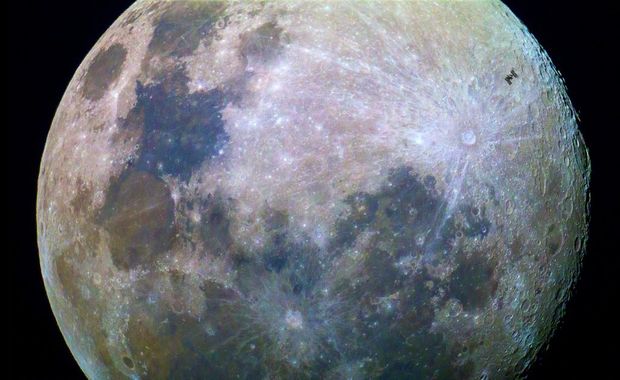
Byron Bay photographer Dylan O’Donnell took this stunning photo of the International Space Station passing the moon on Tuesday. Photo Contributed

The media has called it the holy grail of astro-photography. The Cool Stuff of the week is Dylan O’ Donnell’s fantastic photograph of the full moon with the incredible capture of the space station on the top right.

The BYRON Bay (Australia) photographer who captured the shot on Tuesday with  International Space Station passing over the moon said this was his second attempt to take the stunning shot.

“I’ve only tried once before and I completely botched it, it looked like a blur,” he said.

The International Space Station ISS passes through the sky semi regularly, but for it to line up like it did with an almost full moon is quite rare.

“Some people go chasing around the world to try to line it up but I just waited from my home and it was about 12 months from the last time it lined up that way for me.”

Reported by Rodney Stevens

A Mundane Story – Vimeo


A Mundane Story – Loop Ring Chop Drink

Written, Directed & Animated by Nicolas Ménard
Sound & Music by Rich Vreeland
The mundane story of a heartbroken man,
an online gambling addict, an alcoholic kleptomaniac
and an anxious loner living in the same apartment building. Additional animation by Iris Abols, Anne-Louise Erambert, Nicole Kozak & Robert Loebel

Featuring a selection of abstract paintings by Samuel Jacques
Colouring by Mélanie Daigle, Oliver Hamilton, Sam Jones,
Jeanette Lee, Nicolas Ménard, Jonathan Reyes & Khylin Woodrow
Sound mix by Dayo James
With the voices of Clément Baptiste, Wallace McDougall & Alice Dunseath
Special thanks to Blinkink, Jean-Philippe Fauteux & Philip Hunt
© Royal College of Art, 2014

PNG Literary Competition Achieves Record Entries.


The Papua New Guinea Literary Competition The Crocodile Prize received the highest number of entries ever, this year.  On closing last night the Crocodile Prize fetched a total 826 entries from 132 writers & illustrators.

Poetry 355; Essay 196; Story 129; Children 52; Heritage 48; Illustration 21; Tourism Arts Culture 15; Book of the Year 10.

These numbers may not sound very much for writers in other countries, but for any Papua New Guinean writer, it is a very heart-warming news, especially coming from a literary culture that almost became extinct. In the early 70s, leading up to the country’s independence, passion for art, culture and heritage including the literary pursuits and publishing of works written by PNG writers were at their peak. It is not quite clear why the interests have fallen so much after independence. That culture may have been used because we were proud of our identity and we wanted independence so much or perhaps the general growth of consumerism and the wider issues of social, economic and political changes have contributed to this new – lack of passion of culture. I remember growing up with radio stories written by PNG writers, attending and being part of stage plays – written by PNG writers. Poetry, stories, essays as well as other forms of literary work were promoted and supported by the national government.

The lack of passion in the arts and the literary support to me is quite surprising and sad; our culture is based on oral history and story-telling.

As a PNG writer, a practicing artist and an arts curator, it seems very clear to me, that the PNG government’s priority is elsewhere and not the least in the arts. But to not even support the literary aspect and especially in developing educational content that is relevant to our children and educational for our people is wrong. We cannot just tell stories and pass them on – now we can write them down and keep for many years.

It is not how much minerals we export and logs we sell, but the natural beauty, our rich art, culture, languages and stories that set PNG apart, and gives us our unique identity.  The literary scene dwindled to almost non-existent, although that could have been easily combined with and taught through the education system. There are not many avenues and support nor funding where PNG writers could train or share their work, and even to sell. Most workshops, training and activities relating to creative writing or any literary work have been Aid funded or Privately sponsored in the past four decades. Now this is how things have started to change for the PNG literary scene.

THE CROCODILE PRIZE STORY
The Crocodile Prize was established in 2010 by Phil Fitzpatrick and Keith Jackson, (both Australians) worked for many years in Papua New Guinea; Fitzpatrick as a patrol officer, Jackson as a broadcaster and journalist.

The Prize evolved from the popular PNG Attitude blog, which has a policy of encouraging and publishing Papua New Guinean contributors.

The concept of a national literary competition was triggered by Fitzpatrick’s concern that creative writing in Papua New Guinea had fallen upon hard times, and that this was a cultural constraint needing to be addressed.

The first awards were presented in 2011, a year of determining whether or not a project of this kind could be managed successfully given geographical, financial and the constraints of a voluntary organisation.

Using PNG Attitude as a vehicle for publicity and initial publication, Fitzpatrick and Jackson soon discovered an enthusiastic and rapidly emerging body of Papua New Guinean writers.

They were assisted greatly in the early stages by material and financial support provided by the Australian High Commission in Port Moresby and later by a range of sponsors, most of them PNG-based.

This backing made it possible for a range of associated activities to be instituted in addition to the Prize, including an awards ceremony, the publication of an annual anthology and the initiation of writers’ forums.

After the first awards in September 2011, it was agreed the Prize should become a permanent part of the literary landscape of PNG. Now under the management of the Crocodile Prize Organisation, COG, 2015 will mark its fifth year of operations.

PHIL FITZPATRICK on 2015 Competition

Thus ends another year of the Crocodile Prize literary contest.

IT’S not every day that you get to influence the revival of literature in a whole country, unintentionally or otherwise.

I must admit to some surprise that it has happened at all. What started as a humble writing competition seems to have bloomed beyond all expectations.

There is a sense of pride in what has happened but, strangely, it’s not personal. Rather it is a sense of pride in the achievements of the writers involved.

At a personal level it has been more of a humbling experience. There is also a sense of awe and enrichment.

The enrichment comes from reading the works submitted to the competition and the sheer learning experience involved.

I think, despite nearly fifty years travelling back and forth to the country, I’ve really only learned to understand Papua New Guinea in the last few years of the Crocodile Prize.

There is also a tinge of anger involved, mostly through the fact that an uninterested government and lackadaisical education system could let such a promising and rich cultural emergence in the 1970s wilt on the vine and become moribund.

That aside, one of the ironies I really enjoy is the fact that the revival has only now been possible because of the advent of digital technologies that were supposed to see the demise and eventual extinction of books. Such are the shaky prognostications of the doomsayers.

The key factors in the Papua New Guinean revival have been the Internet and the availability of digital publishing and print-on-demand technologies.

These have underpinned the Crocodile Prize, firstly by providing a writers’ outlet in the form of PNG Attitude and secondly in offering a cheap way to publish the best in an annual anthology and then to go even further in publishing stand-alone individual books by Papua New Guineans.

The future of literature in Papua New Guinea is starting to look rosy but we need to remind ourselves that it is still extremely fragile.

The disastrous complacency of the 2013 competition organisers reminds us of what could still happen.

2014-15 has been a watershed year and there’s light at the end of the tunnel but sustainability is still a long way off and we aren’t there yet by any stretch of the imagination.

The winners of this year’s Crocodile Prize will be announced early September. The awards event will be held in Kundiawa on Saturday 19 September

Keith Jackson & Friends: PNG Attitude