Category Archives: Writing Stories

Things My Mother Obsesses About – Story


Obsession JK. Leahy memoir

The kitchen in Bellbowrie house was marvelous. It’s Wednesday today, but the kitchen also looked marvelous on Tuesday and Monday.  I simply wanted to make chicken soup tonight, but I was afraid to dismantle this piece staring at me.

I looked at the stacked white cups, plates, and silver bowls that made this strange beautiful body and then the cutlery that made its arms and legs. Each item was part of another. It was a tidy dishwasher look without all the sections, except it was arranged to come together as one piece. If I had built a kitchen sculpture like that myself, it probably would have already unraveled when I got to stacking the spoons and the forks. And right now, if I tried to remove one cup or spoon to use, the rest would come crashing down like a dismantled sculpture. My son Nathan washed our dishes sometimes, but this was not his work of art – it was clearly my mother’s. My mother is obsessed about cleanliness and obviously tidiness. She has her own unique way of doing it.

Our kitchen has been so clean and different in the past six weeks since my mother has been with us in Brisbane that I’m inspired. I made a promise to myself; I could live up to this new expectation after she leaves. May be I could cut down on writing, art, a job, the garden, birds…It was not that we lived in a dirty house, but when my mother does something, especially cleaning, she takes it to a higher level, and makes you feel really good about it.

I could not have made this kitchen any cleaner in the past five years. Mother was not only obsessed with cleanliness, but getting any job done. Her gardening was the same and she began early and worked long hours. She was determined to clean the whole area and I reminded her some parts of our place was meant to be bushy for the animals. My siblings had asked me to bring our mother away from PNG to rest – but you think she would listen to me – no. She loves working hard. She attributes her strict work ethics to her parents, nursing, and her early learning from the Germans and Americans after the war.

I was grateful for her help now, but I fear when her holiday ends, this kitchen would return to the way my sons always left it; filthy with empty containers, piled up dirty dishes, peeled purple onion shells and spilled beverages. I clean it but it was never easy to maintain that pristine state for more than two days.

I took out the thigh fillets and started making chicken soup for my mother, my younger son Chris and I. Nathan had cooked his own meals for nearly a year and since he started a special fitness programme.

Across from the kitchen, my mother was folding the clean washing. Her knitting was on the dining table, colourful and laid out in neat bundles of colours. Mother folded all our clean washing like the way a machine would have done. We did sit and tell stories while we folded, but I soon gave up folding with her because she tended to unfold and re-fold the clothes I folded. And, if I told her she wasted her time because the clothes were meant to be worn again, she just giggled and said she preferred they were ‘properly folded’.

As I watched the boiling pot of chicken soup, I pictured Mother laying out all her medical tools on the shiny trays and pushing them from ward to ward on her tall shiny trolley. She is staring ahead with her white cap and apron crisply ironed and sitting in the precise position on her green uniform. She walks with her head held high and exuding a presence of authority when all around her is turmoil. I wondered if anyone had ever messed up her display of shiny metal pieces on the trays when she was a nurse. I once asked and she told me – never!

I think Mother’s cleaning and folding obsessions started from the hospitals and later, H.C. Leo a Chinese clothing manufacturer in Port Moresby hired her to fold completed garments. She was so precise with her craft that customers thought the cellophane packed and sealed shirts were done by machines.

My mother’s dedication to what she loves doing is second to none.

(To my regular readers – I wrote this draft/story yesterday, a part of a longer piece for Isabel D’ Avila Winter and our last Creative Writing Workshop group next Tuesday in Kenmore). If you expected drama while reading this – well there is, but it is in the rest of this story in the memoir – thank you for reading).
Michael Kiwanuka – Music for the Soul


Thank you Slipper Edge for sharing the music of this fantastic talent, Micheal Kiwanuka.

Of Ugandan parentage, who escaped the Amin regime (1971-1979), Kiwanuka (born May 3,  1987) grew up in Muswell Hill, North London. He attended Fortismere School after completion of A-levels and studied in the School of Media, Arts and Design at the University of Westminister.

Kiwanuka acknowledged that his music has influences of great musicians such as Otis Redding, Bill Withers, Bob Dylan, Jack Johnson and Eric Bibb.

Official website and tours.

The Honey in the High Hollow – Bird Photos


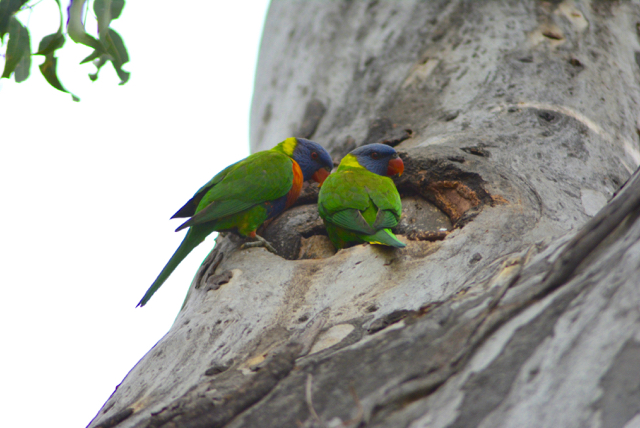
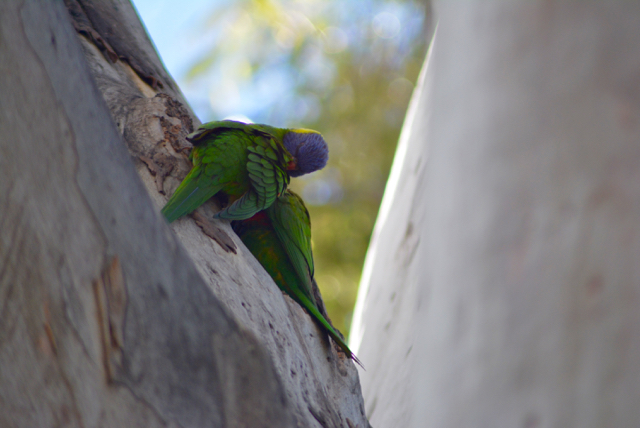
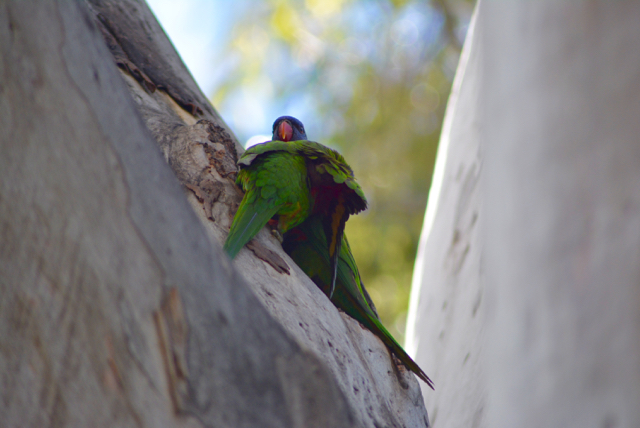
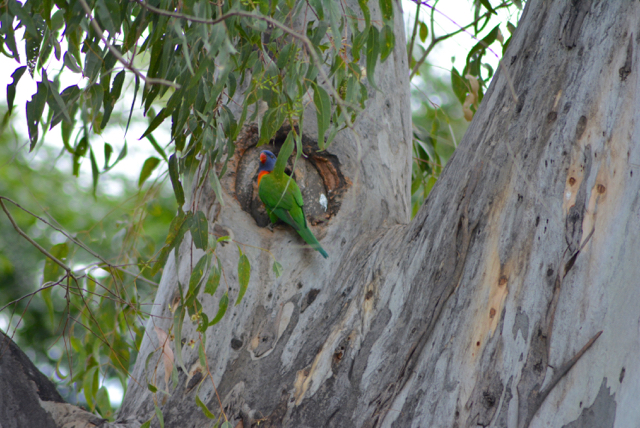
I went to watch my son play rugby with my mother this morning and this pair of young rainbow lorikeets got my attention. The game had not started yet, but I could hear them quietly chatting in the trees while honey-hunting. The pair was after the honey more than 20 feet high in the  hollow  of this large gum tree at University of Queensland rugby field, Brisbane.

DSC_0045
JK.Leahy photo©
DSC_0007 (1)
JK.Leahy photo©
DSC_0009
JK.Leahy photo©

DSC_0020


DSC_0054
JK.Leahy photo©
DSC_0053
JK.Leahy photo©
DSC_0020
JK.Leahy photo©


Reality versus Fiction


Reality versus Fiction
a10fa6acb6aef96ef481dad4acbb3ea3

Watercolour image courtesy of haruki-murakami.com

You have not posted on this blog for ten days, (Oh my! Was it that long?) How time flies when you are pursuing reality; trying to get as much out of my mother for a memoir after 50 years or so of your life and finding that you still can’t get her to talk about EVERYTHING, applying for many jobs and getting no response and it is ok when it should not be (because you are worried about your mortgage and your bills and what your family is going to eat), trying to stay positive while the news about how your country (PNG) is going to waste away at the hands of politicians, university students being shot by police because they want to voice what is right, and another bright young student loses his life to Malaria when he could have been saved, receiving sad news that one of your heroes (Mohamed Ali) has died…and the list goes on.  

Many writers are faced with reality versus fiction every day. Sometimes it can be hard to separate the two, and it makes you think hard on what is real and what is not. I also found it interesting that my perception of some important things I remembered when I was a child was different from what my mother told me today. Sometimes, in our recent discussions, I even realised it was not even the reality versus fiction, but a different or two conflicting points of view – hers and mine. Perhaps I found myself thinking too hard about this topic in the past few weeks that I needed to write something about it. 

Anyway, I’m rambling, but glad to be writing here again and I have a piece here from my friend Teresa Buisman about 1Q84 written by Haruki Murakami which I think is relevant to what I am writing about. A few days ago, Teresa watched the documentary I posted on tribalmystic blog about Haruki Murakami and his work of fiction. 

I was surprised to learn that Teresa had read 1Q84, a trilogy I bought for my son Nathan two Christmas’s ago, but he never read the book so I read it myself. The only complaint I have about this book is that, it really strained my finger muscles while reading it in bed, (it is of 1300 pages and heavy) and if you are into this kind of story, be prepared to lock yourself in a room where no-one can disturb you for five days. If you ask me if I slept at all – I probably didn’t, but I can’t remember anything else except the story. This piece on reality was written two years ago as Teresa was reading the book.

On Reality by Teresa Buisman

I’m reading a book called 1Q84 by Japanese author Haruki Murakami – I love his writing; it gives me food for thought. One of the things that he’s making me think about this time is the perception of reality. The book is set in an alternative 1984 and whilst some things are the same as “normal” other things are completely different.

For instance, there are two moons in the sky – one is the regular moon as we know it, the other is a smaller green moon that sits beside it.  You would think that people would notice such a change in the night sky but it seems that the majority don’t.  They keep living their normal lives, going to work, doing the shopping, moving through their days as they always have.  Our heroes, however, are experiencing changes at the core of their reality. I don’t want to spoil the book for those of you who want to read it but it struck me that reality is perception just as much as perception is reality – does that make sense? What is real for some people is far-fetched and out of reach for others.

Look around you, there are examples everywhere. Take the lady on Hay Street this morning: a very chilly morning for Perth at around 2oC.  She’s there on the street with her little sign asking for your spare change. The sign tells you she’s homeless, suffering with MS and has no money. She’s got a blanket over her knees, she’s shivering and dishevelled. Her eyes are dim pools of hopelessness, she’s given up. This is her reality.  Does she ever see that there could be another reality for her?

As I pass I drop a few coins in her collection box, hoping that other people will also be kind and that she’ll find warmth and comfort to help her through the chilly days ahead.  I don’t know what to say to her, she’s from a different world to me as I head off to my corporate job in a swish glass and marble building with warm drinks on tap and wonderful views down to the Swan River.

Do I feel guilty about the relative affluence of my reality? Perhaps I think I have worked hard and deserve my good fortune? Or perhaps I feel bad for only giving her enough coins to buy herself a coffee instead of slipping her a quick $50 that I probably wouldn’t even miss? Or maybe I just take it for granted and don’t think about it at all?  But whichever way I look at it, the MS lady and I live in very different realities – in the same town – working in the same street.

Do we make our luck, our own reality, or is it fate – destiny? Those of us who are fortunate enough to live in the affluence of the western world have the opportunity to make our own reality.  But what about the MS lady? What’s her story? She’s from this same westernised affluent society isn’t she, so what makes her reality so different?

Reality is very subjective.


Natural Dyes and Processes – India’s Story


foi_nature_dye

Turban cloth – Victoria & Albert Museum ©

I was looking for various textiles that have been prepared by hand and I was particularly interested in natural dyes and its processes. I found this great article in Victoria and Albert Museum called “The Fabric of India: Nature & Making”. 

These are some of the short film clips and a paragraph on the dying process. If you are interested, read the full article on the museum’s website.

India’s natural dyes, especially those for blue and red, have been renowned for millennia. Blue dye was so closely associated with India that the ancient Greeks took its western name – indikos (indigo) – from the country itself. Red dyeing with fixing agents (mordants) was known to the Indus valley civilisation by about 2500 BC.

Fixing the colour is the great challenge of dyeing cloth. Indian dyers’ use of mordants was key to their expertise, which was unrivalled until the invention of western chemical dyes in the 19th century. It is this wealth and mastery of bright and lasting natural dyes that perhaps best distinguishes India’s textile heritage.

Cast Iron Drinking Hole


Cast Iron Drinking Hole for Birds

DSC_0167
JK.Leahy picture. Bird bath. 2016

Five years ago, when we moved to Bellbowrie, we found this cast iron pot on one of the kerbside collection. I guess you could call it someone’s castaway. (Brisbane City Council does the annual kerbside cleans and collects rubbish or throw aways from residents).

It was a good water container for chickens and ducks. One day, my ceramic bird bath fell off this stump and broke and I gave the birds the pot full of water. Its size  and weight made it perfect for a bird bath. I only had to wait 30 minutes before the birds starting flying down to the cast pot to drink.

Everyday since putting up the pot in the tree (six months ago), birds and other animals stop by to have a drink and a bath. I get to watch them from my verandah. Sometimes there would be a small flock of nosey miners frolicking noisily just like the drinking hole had been there all along.

DSC_0166
JK.Leahy picture. Bird bath. 2016

Why Pigs Dig for Worms – A Melanesian Myth from Fiji


A Melanesian Myth.

This story is from Myths & Legends of Fiji and Rotuma. A students’ Edition and a collection of stories and illustration by A.W Reed and Inez Hames.

This story was written as it would be told by an orator at the fireplace in Melanesian societies. So imagine you are sitting in a Melanesian village and an orator (usually a male) will be telling this story. I have added my own illustration below.

2016-05-24 13.49.30_resized copy
JK.Leahy illustration: Pig

Vegetables cooked in earth oven (umuu or mumu) are fit for men and gods only when placed in baskets with succulent steaming meat, rich and layered with fat, (bel gris in Tok Pisin). Then a man may take taro, yam or greens in one hand and a piece of meat in the other, and  feast as though he were a god. In those days, the only challenge is to find an animal that can be steamed or roasted to provide enough meat for hungry men to eat. Man (as in human) decides, birds and rats are far too small.

“Let’s ask the gods”, man said.

Men gathered and started up the mountain to make their request to the gods. They were accompanied by fish, reptiles, animals, birds, and insects, all curious to hear the gods’ response.

The gods, who also love good food, were in good mood and welcomed the strange query from mankind. The gods inspected the gathering. Birds and other lives cowered and withdrew into the shadows so the gods would not see them nor pick them.

One of the gods reached out and caught a rat by the scruff of its neck and held it up. With arms and legs waving into empty air, a terrified rat cried: “Not me! Not me! Please not me! I am too small. I’m all bones and I taste horrible – please let me go!”

“Yes, the rat is too small – we need a larger animal” a man said.

“What about pig?” one of the gods suggested. “Now there’s a fine animal for you; rich and savoury.”

The pig was pulled before the gods by his short tail, and shivering before the gods, he squealed: “I’m too big! You could never fit me in one of your food basket.”

“Perhaps you are right Pig”, one of the gods said. “But you may be wrong”. Then the god instructed man: “Fill up a basket and put the pig on top so you can see what he looks like on top of the serving.”

The protesting pig was put into the basket. His legs fitted inside the basket comfortably, but his snout stuck out at one end and tail out the other end.

The pig gave a broad smile and said smugly to man: “What did I tell you?”

The rat who had escaped earlier, ran forward and quickly twisted the pig’s tail into a neat swirl and tucked it into the basket.

Pig still had a smile on his face. “You’ve got my tail, but you will never get my snout inside, it is too long.”

Worm rigged himself upright until he was balanced on his coiled tail.

“What is it Worm?” a god asked.

“Please, if we break the pig’s snout we could bend it up and then he should fit into the basket”, the worm said.

And that was what they did; which explains why Pig has a turned up nose and spends so much time digging up the ground in search of worms.


The Tale of the Coconut – A story from Papua New Guinea, produced by German Filmmaker


I was introduced to The Tale of the Coconut last night by Professor Craig Volker who was my English Teacher in Aiyura National High School from 1981-82 in Papua New Guinea. In this story,  a Duke Of York traditional story (or legend) was taken and translated it into a modern film.

Prof Volker was involved in this project, which was made in Madina, New Ireland where he comes from. He was originally from the USA, but taught and lived most of his life in PNG and has adopted Madina as his village. This film is the first PNG children’s film produced in a Tok Ples – native tongue. There are also German, English, and Tok Pisin versions.

The film was produced and directed by Marc Thümmler.

THE TALE OF THE COCONUT // DIE LEGENDE DER KOKOSNUSS (2015)

Children’s film // Kinderfilm, 15 min, 2015
SYNOPSIS
When you turn around a coconut you will find a human face on its bottom side. The children’s film THE TALE OF THE COCONUT explains why this is the case. The children of Karawara Primary School tell us an old legend from their home, the Duke of York islands in Papua New Guinea.
THE TALE OF THE COCONUT recounts how a group of men from the island leave for Pigeon Island to go hunting. After the hunt, one of the men is left behind on Pigeon Island without a raft and has to swim back home by himself. On his trip back he is attacked by a shark.
At first he cleverly distracts it with the pigeons he caught. But then he runs out of pigeons…

If you want to watch this movie, here are the links;

I am happy to send you the links to the other language versions of the film that are now available online:

English version with optional French and Spanish subs

Ramoaaina version (Tok ples) with English subs

Tok Pisin version with English subs

German version

Tok Pisin version with German subs

Ice Cream Cones You Can Only See


My sister-in-law asked me once if I wanted to see ice cream cones.

“To eat?” I asked.

“No – just to see,” she said.

I thought that was a rather weird thing to suggest, until I actually saw what she meant.

DSC_0311

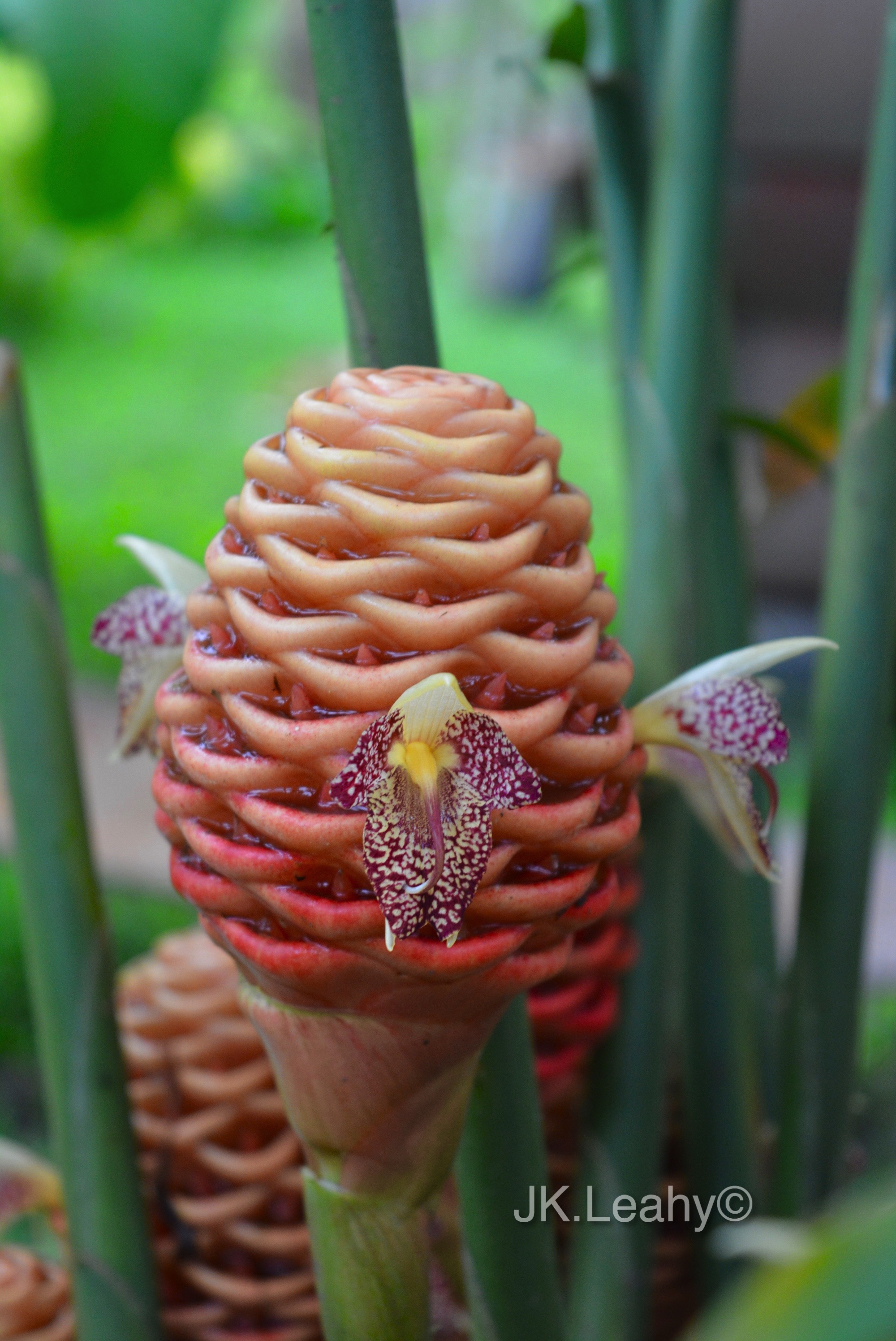
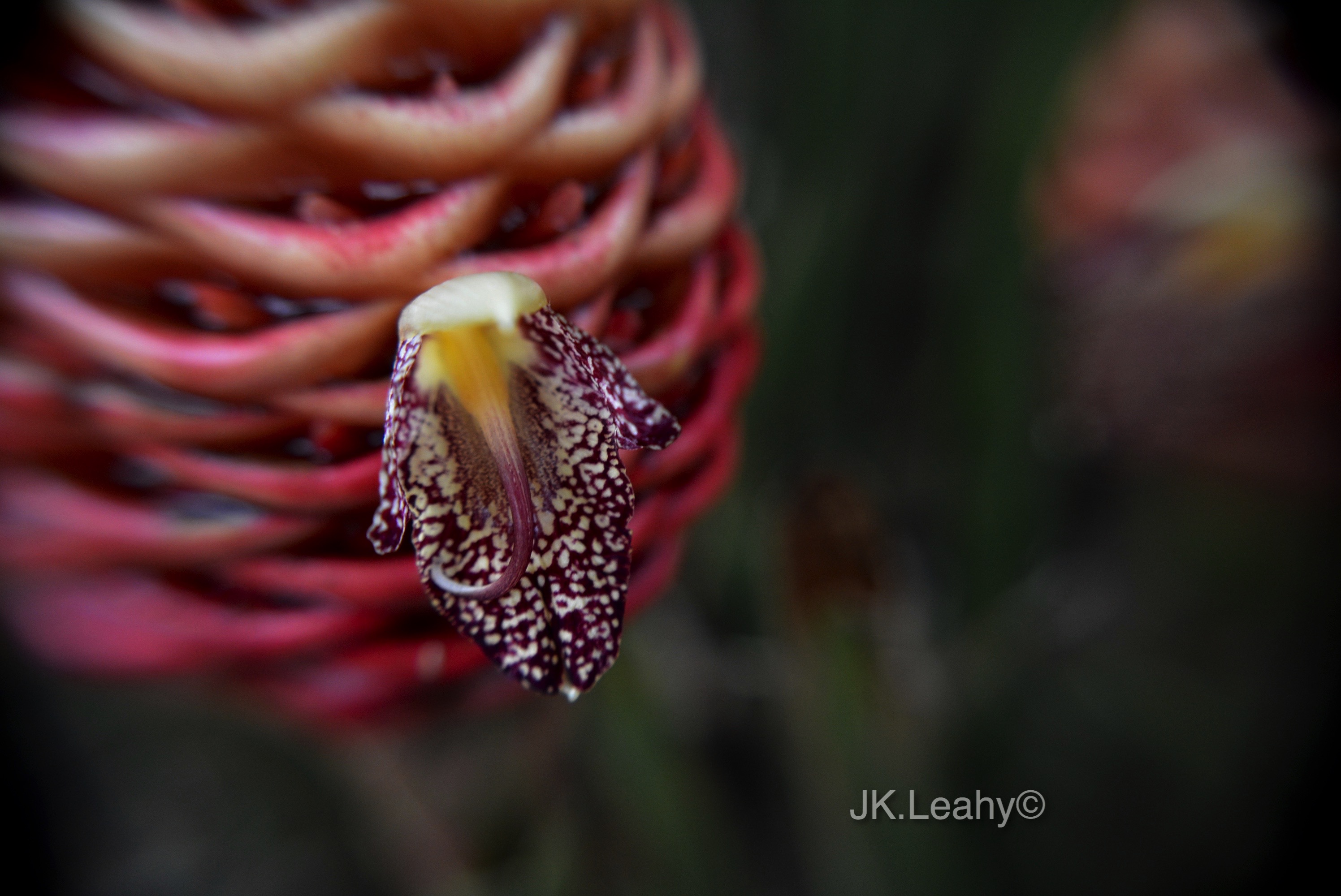
Shampoo Ginger Cones are referred to as ice cream cones in Lae, Papua New Guinea where many other beautiful ginger plants are found. This plant species originated from Hawaii.

When it flowers, these tiny orchid-like bloom protrudes from the cones. It is hard to imagine that a tough, robust and rubbery bulb could produce such a delicate flower.

The featured collection (here) came from photos I took of my sister-in-law Esther Kauc’s garden. Both Esther and my mother have cultivated a wide range of ginger plants for the unique flowers and dense leafy coverage which provides shade and boundary for their homes.

Upon seeing the plants, I realised what Esther had meant. I didn’t have any urge to bite into them – but I was captivated by the ginger’s beauty so much so, I could not stop looking at them.

DSC_0306


DSC_0305


DSC_0307


DSC_0309


DSC_0304


DSC_0310


DSC_0312


Writing Fiction from Memories – Japanese Writer Haruki Murakami


A documentary exploring a life of a Japanese writer who draws from the real world, his memories and his love for music, to create best-sellers.