Category Archives: Stories

General stories, Other posts, Reblogs

The Song of the Turtle – Children’s Story


Winner of the Paga Hill Development Company Award for Writing for Children in The 2015 Crocodile Prize.
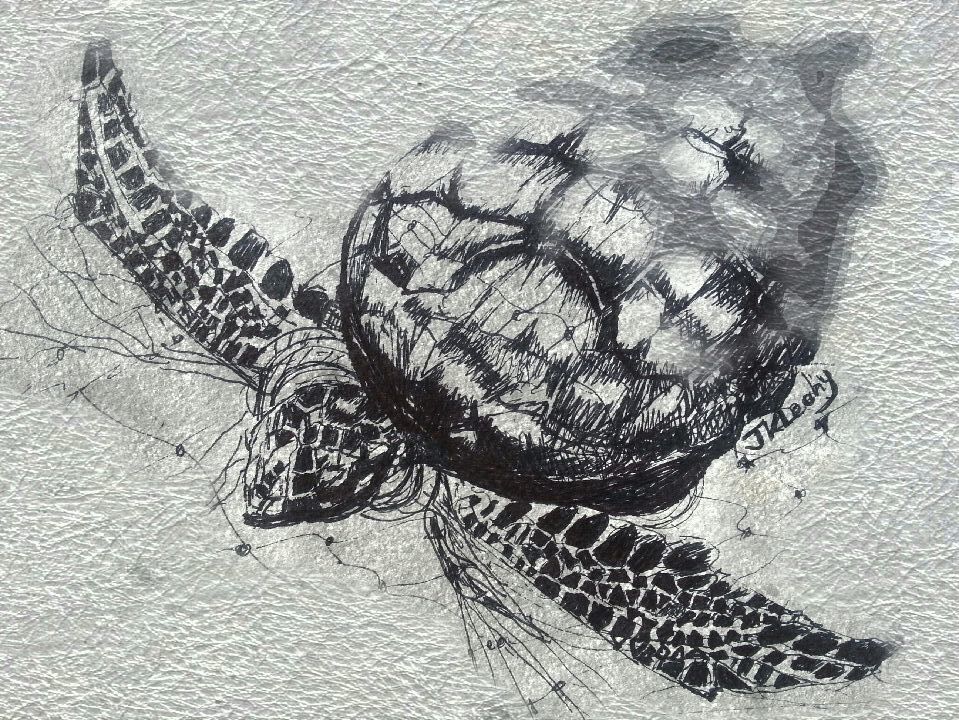
PaperArtist_2015-06-28_15-18-25
JK.Leahy© Illustration in Pen on paper. 2015.

The Song of the Turtle – ©JK.Leahy Children’s Story

THE night was still and dark. Dogs did not bark. The wind blew gently.

Children and babies had stopped crying and laid their heads to rest. Even the night birds were silent around the coastal Morobe village.

Below the whistle of the gentle breeze, Kalem heard a song. It was soft, beautiful and so sad it almost made her cry. It sounded very familiar.

Lying still on her woven pandanus mat that grandma made for her, she searched through her memories – where has she heard this song? Her grandma had passed away last year. She missed her. After tossing and turning for what seemed like forever, Kalem knew she had to find out.

She picked up her mother’s torch. Beside the torch was a piece of hard shell, a turtle shell she found on the beach. She kept it for good luck. Suddenly she remembered – the song! It was the song of the turtles. Their nesting time happens near Kalem’s birthday, but they have not come to her village for a long time.

Tonight, something was wrong. Grandma said only the mother turtle sang the turtle song. No one in the village knew that song except her grandmother, mother and now her. Grandma sung and taught the song to Kalem while they were fishing. “Who is singing it now?” Kalem wondered.

Afraid but excited, Kalem headed to the beach. As she walked, she remembered Grandma’s words: “Our people are connected to the ocean, we fish to survive but we must respect the lives in the ocean. We must never kill for nothing.”

Not many people can connect to the animals and fish, but grandma said their family had a special gift because their ancestors came from the sea and are tied to the ways of the sea. Kalem walked quickly along the beach as she listened for the song.

“If you ever hear the song Kalem, you know, Mother Turtle needs you”, her grandmother told her. When Kalem was born in the turtle season, grandma told her mother – “this girl would one day meet Mother Turtle”.

Kalem followed the song out of her village and along the shores, further and further away from her house. Her heart beat faster when she arrived at the river where the villagers washed. Where the river met the sea, villagers set fishing nets along the shoreline. Kalem heard a loud splash. She slowly stepped forward, flashing the torch.

Tied to a large driftwood stump on the beach was a long, green fishing net. On the calm water surface, a big red buoy floated just offshore, and at the end of the net.

Something had been caught in the net. The thing splashed again. It rippled and frothed the seawater in a circle. It was large, dark and nearby the shore. It did not look like any fish or crocodile Kalem knew.

6a00d83454f2ec69e201b8d131573c970c-400wi
Photo Digital illustration image JKLeahy ©

When she flashed the torch at the dark shape, she was shocked to find a very large sea turtle tangled in the net. It was so large, Kalem was sure it must have been the mother of all turtles. Kalem flashed the torch on the water.

She could see smaller turtles floating about, their heads bobbing in the water. The turtles circled the net. They were all making strange noises like they were crying too. The mother turtle was bigger than Kalem’s ten-year-old body, but Kalem had to try save to her.

Even with no strength left, the mother turtle kept singing her song. Weakly, her tired flippers hit the net and her voice faded to almost a whisper. Kalem’s tears flowed down as she waded through the water quickly and tried to set the turtle free. After struggling with the net and the weight of the turtle, Kalem ran back to the village and woke her mother.

“Help, wake up!” Kalem cried. “It’s Mother Turtle – we must help her”.

Kalem’s mother was confused. Often she thought her daughter was a daydreamer. After Kalem calmed herself and explained, she grabbed her mother’s arm and led her back to the beach. They took a knife and cut the net to set the mother turtle free. The large turtle swam up to Kalem and her mother. She bumped them with her nose before she and the other turtles disappeared into the deep, dark waters.

Kalem remembered grandma telling her about the life of the mother turtle. Grandma said it took many years before the turtle was ready to make babies. Every two or three years, the mother turtle leads her group to her own nesting beach, where she was born. Sometimes she travelled long distances to get there. Usually she would lay over a hundred eggs, but only a few survived.

Other animals, people and large fish eat the eggs and baby turtles. Kalem’s people loved eating turtle eggs and meat. Their village was once a nesting ground for turtles. Lately, less and less turtles have come to lay eggs. Standing silently in the dark with her mother, Kalem thought of how scared the turtles were tonight.

“They might never return…we must teach our people to protect the turtles”, she whispered to her mother.

“I am so proud of you Kalem. The turtles will head to a safe place to lay their eggs. Maybe this was not the right place for them, but they will find a perfect home some day”.

Her mother held Kalem close as they headed back to the village.

Crocodile Prize Anthology cover

The Crocodile Prize 2015 Anthology is out on Amazon

A Camera Opens New Doors – Tribalmystic Blog


A camera means more new pictures will be seen on Tribalmystic stories. It also means I can share my garden with you, virtually.

Watermarked Photos-1
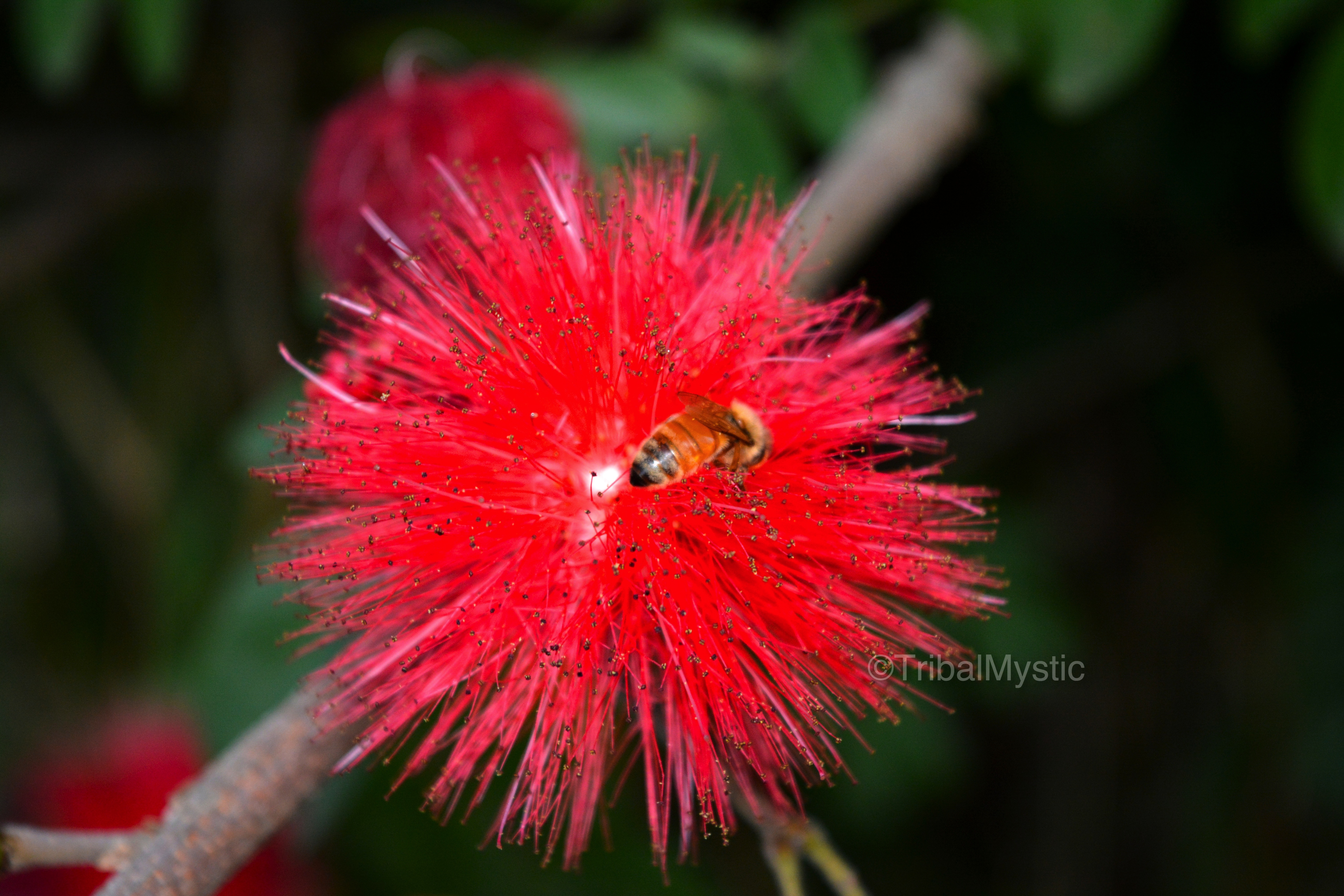
Samanea Saman bloom. It is also called False Powder Pluff.

I got myself a ‘real’ camera today. A Nikon D5200. It may not be a Pro level camera and not what I was aiming for, but I have not had an SLR for nearly twenty years so I am thrilled. My son Nathan loaned me some money for it. When my younger son Chris and I arrived home, guess who already had the package opened and was handling it – Chris!

Watermarked Photos

Mum was cooking and giving stern instructions from the kitchen for Chris to wash his hands first and not leave any greasy prints on the lens or any part of the camera. Poor Chris…I’m sure he was just laughing inside his head. Who tells a 16-year-old what to do these days? Know the feeling when your kids play with your stuff?

Then, the little bugger went off and charged the battery and started taking pictures. Oh well…I guess he was just as excited as I was, even when he pretended he wasn’t.

Watermarked Photos-2

There was some light left and I went for a quick walk in the garden to try the camera with some very curious bystanders. I shall show the ‘bystanders’ on Tribalmystic stories later. These are pictures of Salmanea Saman, often referred to as the false powder fluff – not the stuff you wear on your make-up though.

I have to get my photography grove back. Let me know what you think of my first pictures. Thank you.

Kinabuhi: A film on the Survival of the Coconut Farmers


The coconut is one of the most valuable trees in the islands across the Pacific, Asia, Latin America and Africa. The coconut tree has many uses. The nut, its husk and shells, the trunk, leaves, even the bone of a single leaf is used. Children use the leaf for toys and women weave and cook rice in the leaves. Hats, baskets, mats and many other useful items are also made from the coconut leaves.

The coconut juice, coconut oil and coconut cream have become a recent rage in nutrition and diets in the western world. Ask abungac (grandpa) Google about the many uses of the coconut.

What happens when you destroy the tree that gives life?

Watch this story in “Kinabuhi“, a Vimeo video made by Kapuluan.

Vimeo

Coconut as disease cure

101 uses for coconut oil


The Looming – Short Story


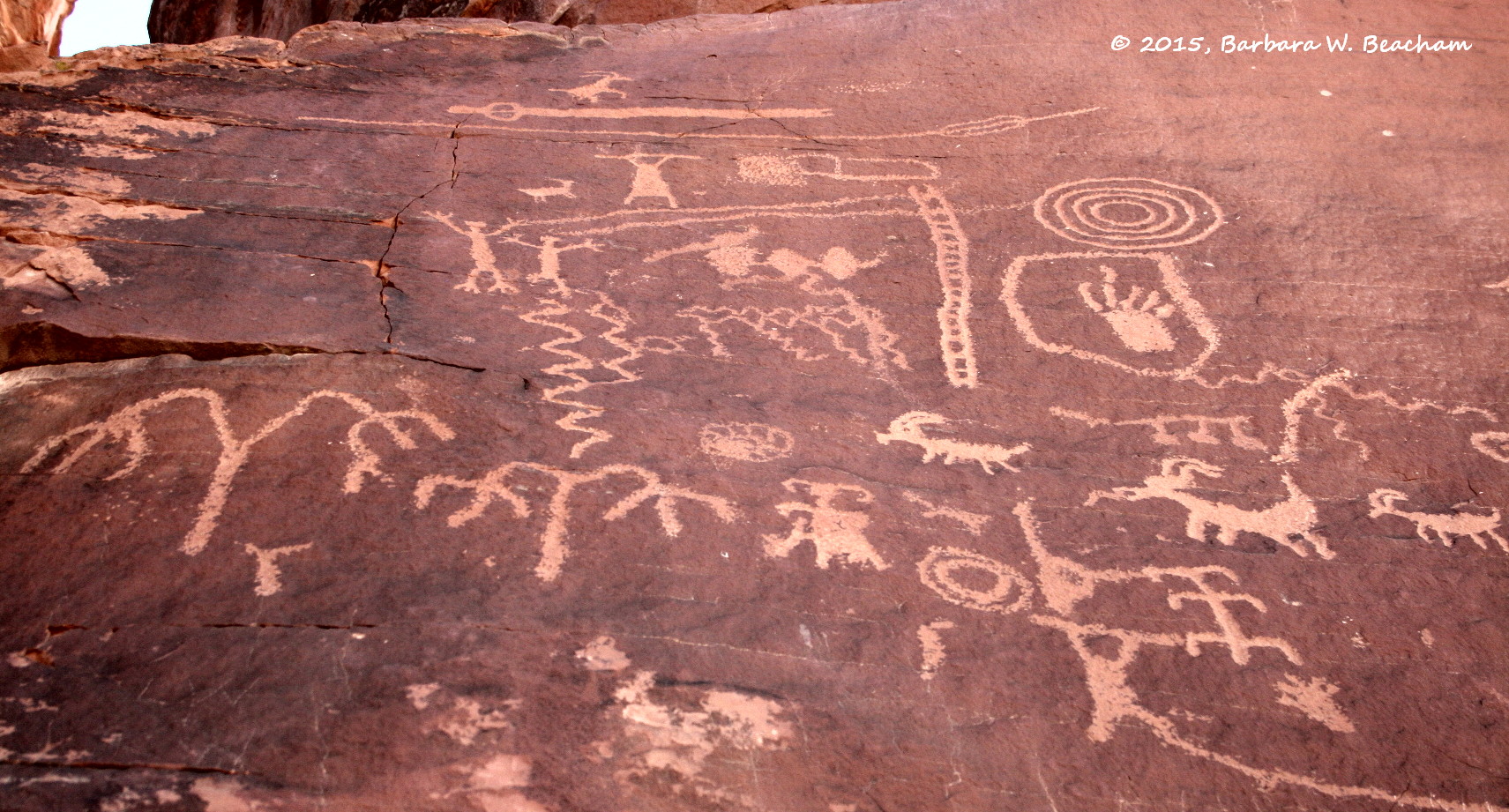
2015-07-20-bw-beacham
Picture by Barbara W. Beacham

Mondays Finish the Story

This is a unique flash fiction challenge where Barbara W. Beacham provides a new photo and the first sentence of a story each week. The challenge is to finish the story using 100-150 words. This challenge runs from Monday to Sunday.

The Looming JK.Leahy short story ©

The petroglyphs told the story of an unusual event.

The old man’s eyes widened. He blinked from the petroglyphs and stared into the sky. The interpretation led to the present. Something was happening. Yawing, seven, could sense the fear in his grandfather’s voice.

Yawing followed Old Manu’s eyes; the clouds gathered into a thick dark cover.

“What is it, grandpa?”

“There’s no time”

“No time for what?”

“Go! Get your mother!” Old Manu ordered Yawing. “We need to move quickly. It is coming for us”.

“What is coming for us?”, Yawing asked, wide-eyed. He reversed to the door.

“Go!”

Yawing quickly turned and ran to find his mother among the women at the river. He tripped and fell.

“Mother! We must leave, now”, Yawing shouted with a mouthful of sand.  He spat.

“They are coming for us!”

Yawing’s alarmed voice chilled into silence, his three little sisters, playing outside their house. As they watched, he ran to their mother.


Melanesian Shields: Beautiful War Objects


Melanesian shields

papua_asmat_shields
West Papuan tribesmen prepare to ward with their shields. Credit:http://www.ourpacificocean.com/papua_history/index.htm

The Melanesians including Papua New Guineans produced war shields they used to protect themselves but these shields have a  great artistic value. While these large hand-carved rectangular, square or oval-shaped cultural objects were made for protection in tribal war, they are also very beautiful. It is hard to visualise a work of art being used to protect one’s life, but made of hard-wood, the shields serve their purpose.

A shield of the Melanesia is a fascinating object. Many are made from wood and carry intricate tribal and clan markings representing profound spiritual meanings. The maker ensures that the markings incised or painted on this shield would protect someone’s life. In all the cultural objects that come from my heritage (the Melanesia), fighting shields would be my favourite.

1407257404738.jpg Gallery
An exhibition of Melanesian shields in Cavin-Moris Gallery.

From the 80s, I started collecting shields whenever I travelled across PNG. Once the West Papua community had a trade show in Port Moresby and I was extremely delighted to visit and I purchased  a couple of shields and a door which was carved with intricate shield designs. West Papua shields, the Asmat, top my list of favourites. Over time, my obsession with shields resulted in over 30 pieces collected.

I have some pictures tucked away in my old computer, unfortunately,  I could not find them for this post.  Most of the shields from my collection were displayed in a cafe I owned and ran with a friend.

20150718_122849[1]
From JKLeahy collection: Eastern Highlands shield-PNG
Before we migrated to Australia, there was a feud over lack of electricity and water to a cafe business I owned with a friend.  The landlord kept charging us astronomical amounts when we had to operate the cafe without water nor electricity. We lost business and customers. When we demanded to pay less rent (with power and water), we were locked of the cafe. Th landlord took everything, exceeding the value of the disputed rent. It was not just losing $50,000 worth of cafe equipment and furniture, my shield collection were stolen from the cafe. All gone. What happened after is another story.

It has taken me all these years to put this memory behind me. The pain returns often when I gaze at a beautiful Melanesian shield in a gallery or the thousands of beautiful pictures on Google. While most of the best and unique pieces in my life have gone, I still have a few beautiful pieces to make me smile. And I have this book (pictured below).

shieldsbook

With Harry Beran, my friend Dr Barry Craig, anthropologist and a longtime serving curator in Papua New Guinea published a comprehensive compilation on the war shields of Melanesia in their book, “Shields of Melanesia”. The volume illustrates more than one hundred types of shields from all culture areas of Melanesia that used fighting shields. Approximately eighty percent of the shields illustrated in the book have never appeared in print. The book has images of some of the best Melanesian shields.


How To Catch A Bird


When you are growing up, and as a child, it is not always clear what your parents tell you, and often, you end up learning the lesson the hard way. How To Catch a Bird is one of those tough lessons Vera van Wolferen learnt as a child.

In Vera van Wolferens own words:  “How To Catch a Bird is a stop motion short film based on a childhood memory. It’s the graduation film I made for my masters in animation at AKV St. Joost Breda. When I was eight; my dad taught me how to fish. He told me to take the worm off the hook after fishing, but I had no idea why. After fishing I forgot about the worm and left it dangling on the hook. If I only knew then what the consequence of this action would be.”
Animation by Vera van Wolferen
Music by Gerard van Wolferen

Cold Brisbane: We are feeling the temperature


2015-07-15_19.13.26
An oiled wood coaster made by Chris Harris. 15/7/2015

Three nights ago, it was one of the coldest nights ever recorded in Brisbane in 103 years. It was very cold in the office all day and we increased the heat several times, but I had no idea it was six degrees. It was one degree in one of the suburbs – that morning. Up the river, near our home, it was below two degrees at Ipswich. This may not be cold for some of you readers that have temperatures measuring below zero at all times, but here, Brisbane is supposed to be one of the warmer states of Australia so we are feeling the cold.

Tonight was predicted to be another cold night, but so far, it has been around eight degrees celsius in Bellbowrie. On return from my evening walk, my 16-year-old son Chris brought me these little wood coasters he made while cutting firewood for our fireplace. The wood came from a tree that fell in a previous storm in our yard. We have been slowly using the tree up for various projects. And despite the cold, Chris was out making art.

2015-07-15_19.14.33
A set of six wood coasters from Chris Harris. 15/7/2015

Each coaster is large enough to place under a hot cup and has beautiful grains of the hardy Acacia tree (a native to Brisbane) running through them in various shades. I decided to oil some to really bring out the grain.

2015-07-15_19.17.06
Christopher Harris’ wood work.

Brisbane Weather story on The Courier Mail

Papua New Guinea at a juncture


A Report from Radio New Zealand International’s Johnny Blades.

Papua New Guinea is at a juncture, experiencing unprecedented economic growth but still mired by poverty, tribalism and parlous human development outcomes.  Exxon Mobil’s $US19 billion Liquefied Natural Gas project in PNG began exports last year, marking a major milestone in the country’s development as a foreign investment destination and energy hub.

Yet the benefits from development of PNG’s abundant natural resources – mineral, oil, forestry, fisheries and others – appear mainly confined to a tiny part of the population.
RNZI’s Johnny Blades travelled to PNG and, in this video report, he asks if PNG can convert its significant resources wealth into tangible gains for its burgeoning population.

https://www.youtube.com/watch?v=GwTm10i6KP8#t=10

Easter Island Monuments – How did they get there?


Unsolved Mysteries: The secret of Easter Island. YouTube.

In the most isolated place on Earth a tiny society built world-class monuments. Easter Island (Rapa Nui) is 1,000 miles from the nearest Pacific island, 3,000 miles from the nearest continent. It is just six by ten miles in size, with no running streams, terrible soil, occasional droughts, and a relatively barren ocean. Yet there are 900 of the famous statues (moai), weighing up to 75 tons and 40 feet high. Four hundred of them were moved many miles from where they were quarried to massive platforms along the shores.

Terry Hunt and Carl Lipo began their archeological work on Easter Island in 2001 expecting to do no more than add details to the standard morality tale of the collapse of the island’s ecology and society—Polynesians discovered Rapa Nui around 400-800AD and soon overpopulated the place (30,000 people on an island the size of San Francisco); competing elites cut down the last trees to move hundreds of enormous statues; after excesses of “moai madness” the elites descend into warfare and cannibalism, and the ecology collapses; Europeans show up in 1722. The obvious lesson is that Easter Island, “the clearest example of a society that destroyed itself“ (Jared Diamond), is a warning of what could happen to Earth unless we learn to live with limits.

A completely different story emerged from Hunt and Lipo’s archaeology. Polynesians first arrived as late as 1200AD. There are no signs of violence—none of the fortifications common on other Pacific islands, no weapons, no traumatized skeletons. The palm trees that originally covered the island succumbed mainly to rats that arrived with the Polynesians and ate all the nuts. The natives burned what remained to enrich the poor soil and then engineered the whole island with small rocks (“lithic mulch”) to grow taro and sweet potatoes. The population stabilized around 4,000 and kept itself in balance with its resources for 500 years until it was totally destroyed in the 18th century by European diseases and enslavement. (It wasn’t Collapse; it was Guns, Germs, and Steel.)

The world-class monuments of Rapa Nui

What was up with the statues? How were they moved? Did they have a role in the sustainable balance the islanders achieved? Hunt and Lipo closely studied the statues found along the moai roads from the quarry. They had D-shaped beveled bottoms (unlike the flat bottoms of the platform statues) angled 14 ° forward. The ones on down slopes had fallen on their face; on up slopes they were on their back. The archeologists concluded they must have been moved upright—”walked,” just as Rapa Nuians long had said. No tree logs were required. Standard Polynesian skill with ropes would suffice.

Archaeologists Terry Hunt and Carl Lipo attempt to solve the mystery in this documentary. Easter Island is also called Rapa Nui.

Read more here:

Easter island Reconsidered


The First Papua New Guinea Writer – Hosea Linge


Hosea Linge book cover

My friend Steven Winduo (Land Echoes) whom I have featured here wrote this story about the first Papua New Guinea writer, Hosea Linge. Linge’s book, The Erstwhile Savage: An Account of the Life of Ligeremaluoga was published in 1932. Ligeremaluoga is from Kono village in New Ireland Province.

Winduo discovered Linge when he researched into why there are so few published PNG authors, when exposure to writing itself and print technology was introduced when the first Europeans arrived in Papua New Guinea.

“I am particularly interested in answering the question why it took so long for PNGeans to write”, Winduo said.

No doubt by the end of his research, he will reveal the reason for the lack of numbers of published PNG authors. Click the link below to read the Linge story:

Steven’s Window