“I thought of this project after browsing the aisles at a lumber store and seeing Pecky Cypress,” Mike Warren told Bored Panda. “I’ve never seen anything like it and knew I wanted to make something with it”
For his year 12 school project for his Technology class, my son Chris and his friends are making a piece of furniture for the school and the school pays for the materials. Chris has suggested a large drawing and planning table for the technology room. The classroom only has a work area so the table would be an asset to the programme. Chris’s group decided to go with a glow in the dark table which also looks just as pretty in normal lights. That was how, I learnt about the glow in the dark table. This short story shows you what they look like.
Our Cool Stuff for the week is the Glow in the Dark table by Mike Warren. You can use the same technic for chairs and other furniture but I think the resin is more effective on a larger piece.
Mike Warren is a furniture designer and enthusiast. He created this table that illuminates at night after being exposed to light during the day. The illumination comes from mixing the photoluminescent powder with the resin and using it to fill the holes that form naturally in Pecky cypress wood.
“The type of wood I used for this table is known as ‘pecky cypress’, which is regular cypress that has been naturally damaged with a fungal growth inside causing sections to rot” Warren said.
Warren removes the damaged pockets and leaves cavities in the wood for the resin and glow powder filling. The pockets of damaged (rotten) cypress are soft and can easily be removed with compressed air and some light digging with a hand tool as shown in the video below.
Many coastal communities in Papua New Guinea are particularly vulnerable to change. Global drivers such as peak oil, fluctuating economic conditions and climate change all have complex impacts on local livelihoods.
In response to rapid and accelerating rate of change and uncertainty, CSIRO research helps make predictions of their potential impacts and allowing groups to plan proactively. This requires designing flexible strategies that can bring benefits under a variety of future conditions.
Planning sustainable development for such uncertain futures is a key area of research for CSIRO. The design of development programs which can improve livelihoods and achieve the United Nations Human Development Goals, while also being adaptive and flexible to uncertain futures, is a big challenge. Such planning must include the multiple groups which have an interest in development, including members of the local communities, government, civil society and international donors.
Our research project “Climate futures, ecosystem services and livelihood adaptation strategies in West New Britain Province, PNG” explored these issues. From 2011-2013, we worked with local communities, non-governmental organisations and government groups to develop a framework using CSIRO science to help inform future decision-making in a collaborative way. We hope you enjoy the video report.
The SBS News brings us the first carbon positive pre-fab home in Australia. This house and the news made my Cool Stuff list.
Carbon zero is the benchmark for best practise when building today, but in the future the federal government expects so-called “carbon positive” buildings to play an increasingly important role limiting global warming.
In a significant step forward in efforts to reduce emissions, Melbourne-based architects have designed what is being billed as Australia’s first carbon positive pre-fabricated home.
Here is a short video of the house and to read more click on the link below. SBS News clip or read more here
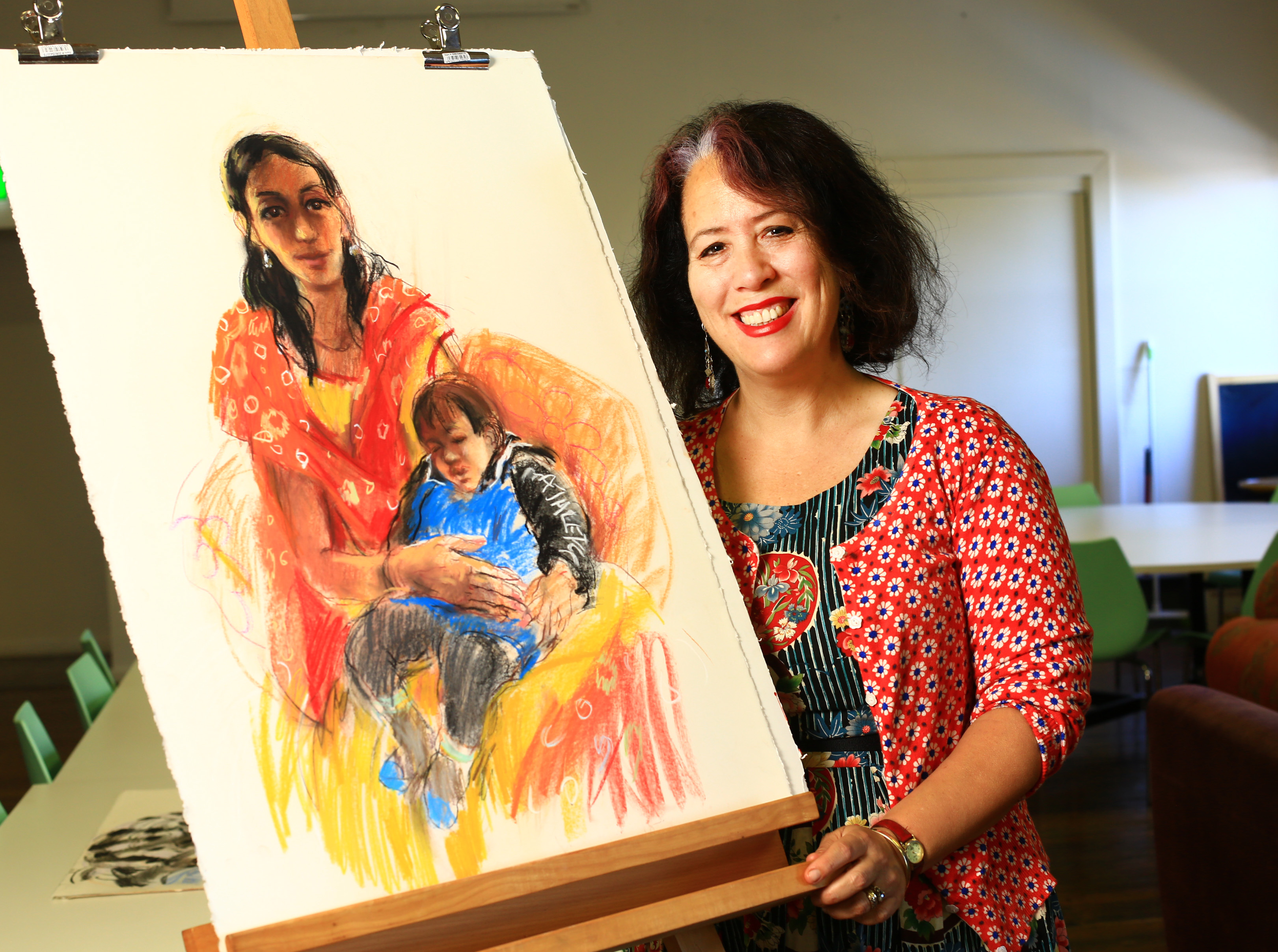
‘Seeking Humanity’ is an art exhibition by renowned Australian artist, Wendy Sharpe. It is not about politics, but puts a human face to those who have fled situations of great danger in their home country in search of safety and freedom in Australia.
A previous Archibald winner and 2014 finalist, Wendy has drawn portraits of 39 asylum seekers and refugees. Through her art, she shares their lives with us to show that underneath all the troubles and politics around the issue, we are all the same; we all have the same hopes and dreams. The show will start on February 17 and end on May 24 in Penrith, Sydney and Canberra.
‘Seeking Humanity’ is brought to you by the Asylum Seekers Centre. All portraits will be on sale with proceeds going to the Centre to help provide practical and personal support for asylum seekers.
Click on the link and press play to watch Wendy draw live.
I really liked the story about the missing shoes and I accidentally came across it while having a conversation with my son. I enjoy conversations with both my sons because I learn a lot from them. When they were younger I still learnt from them, but, it is nothing like the age now where they are growing into young adults and they have their own views and interests. Nathan, my eldest (19) is a storyteller so he often suggests some interesting topics for my readers. While I bring you some of these interesting topics, I have personally learnt a lot from reading these topics myself. In a way, life as a parent starts by being a teacher, and eventually your children become your teacher and you are their student.
Together, Nathan and I watched a show called the Drunk History this afternoon. It is a comedy about drunk actors re-telling history. The show was quite funny. One of the historical features in this show caught my attention, and in a more serious way. It was a story about the Native American super athlete, Jim Thorpe. Now some of you may know that Thorpe was celebrated for his legendary achievements in athletics and football. Thorpe’s life before he became an athlete was quite moving. What caught my attention and I found to be truly inspiring, was a story about Thorpe’s participation in the 1912 Olympics and what he did (as pictured) when his running shoes went missing.
And, yes, he’s wearing unmatched , different sized shoes he found in a garbage bin at the Olympics. This didn’t stop him from winning two gold medals.
As Wheeler details in Jim Thorpe’s biography, Thorpe’s sneakers went missing before the final event of the 1912 three-day Olympic competition.
Thorpe’s emergency plan led him to burrow through the trash for a shoe too small then borrow a shoe so oversized he had to stuff it for his foot to fit.
What the mismatched pair produced was his magnum opus in the finale, winning the 1,500 meters in 4 minutes, 40.1 seconds – a time that a gold medalist decathlete wouldn’t beat until Mykola Avilov ran a 4:22 at the 1972 Munich Olympic Games.
“That story always evokes the greatest response when I share it,” Wheeler said. “I think it can still inspire generations to come. I think in the case of Jim Thorpe, the true story is just as good, or better, than the mythology.”
When people make lists of the greatest athletes of the 20th century, they are populated with the usual suspects: Michael Jordan, Babe Ruth, Muhammad Ali, Serena Williams, Wayne Gretzky, Jim Brown, Pele… but there is one name that should always make the list even though many people, even the biggest sports fans, may not recognize it, or if they do, they know little about the man- Jim Thorpe.
The story of Jim Thorpe is one of determination, triumph, tragedy, racial prejudice, controversy, and extraordinary athletic achievement. Born approximately May 28, 1887 (the exact date has been disputed) in a small one-room cabin near the town of Prague, Oklahoma, Jim was the son of a farmer named Hiram and a Potawatomie Indian named Mary James, who was a descendant of the famed Native American warrior Black Hawk.
Jim, or by his Native American name Wa-Tho-Huk meaning “Bright Path,” grew up on Native American land fishing, hunting, playing sports, and learning from tribal elders. He was actually born a twin, having a built-in best friend and brother to play with. Unfortunately, when Jim was only nine, his twin brother died from pneumonia.
The stress of losing his brother caused Jim to act out and he was sent to an “Indian” boarding school in Lawrence, Kansas. A few years later, his mother would die while giving birth. Shortly thereafter, his father died as well.
Left an orphan, Jim fled his hometown and began attending Carlisle Indian Industrial School in Carlisle, Pennsylvania. The school was founded by United States General Richard Henry Pratt in 1879 with the purpose of integrating Native Americans into the American way of life by “eliminating their Indianness.”
It was there that a 17-year old, depressed Jim Thorpe walked by the school’s track & field practice on the way back to his dorm. He saw all the boys running and jumping and later said he thought to himself “I can do that better than they can.”
I personally have always admired Dame Josephine. She has lived an extraordinary life and will continue to inspire the women of Papua New Guinea and other Pacific islands. Thank you Veronica Peek for writing this story and sharing it with us.
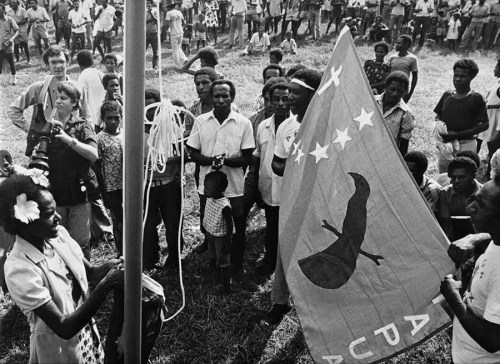
When I look back now on those seventies years in Papua New Guinea, there is one politician who stands out as personal favourite, and that is Dame Josephine Abaijah. In those days when she had no title, Josephine and I were neighbours of sorts. She owned a news agency in the Port Moresby suburb of Boroko and it was at street level, of course. Up one flight of stairs and directly above her shop was a suite of rooms where I had my photography studio and darkroom. If the acrid chemical smells emanating from said darkroom ever troubled her, she didn’t say so.
My memory of Josephine, then, is of a dainty, impeccably groomed lady behind a counter who served me my copies of Australian newspapers and magazines. Thing is though, she wasn’t always there. This little lady had bigger fish to fry.
According to the Chivoko people, anything and everything you need comes from the forest and the sea. Food, building materials, things they could wear, are all provided by Mother Nature. If Mother Nature was destroyed, that would be the end of life. This is a story about a community coming together to make a conservation effort to protect their land, sea, environment, and their heritage for their further generation. What is great about this short film is that the future generation are taking action and are part of this effort.
Written and filmed by the storytellers themselves from Chivoko Village, Northwest Choiseul, the Solomons Islands. Choiseul Province is the northernmost island in the Solomon Islands double chain archipelago and lies approximately 45 kilometres southeast of Bougainville, Papua New Guinea.
It is not often that you find musicians using nature to aid in their musical performances. In the Melanesian culture, a rare tradition passed down from generation to generation of women still lives on. Lakes, rivers or the sea water is used as a percussion in this tradition, to provide the music with singing. In recent years, this beautiful tradition has been shared with the world through international tours and festival performances. The performers of the Vanuatu Women’s Water Music group (two pictured) hail from the remote northern tropical islands of Vanuatu. They travel the world performing the Na Mag and Ne Lang dances as a prelude to the mystical water music, dressed in their traditional costumes of Gaua and Mere Lava made from flowers and leaves, coconuts and pandanus. Their performance is truly mesmerizing as they reimagine the old with contemporary expressions of Matto – bringing together traditional beats and rhythms with ukulele-led melodies and soaring vocal harmonies.
“And in an age when most bands are dominated by just a handful of instruments — drums, bass and guitar — I encounter a new way of making music every year at the RWMF. In 2011, women from a village in Vanuatu turned the lake of the cultural village into their instrument, cupping their hands under the water to make booming percussion sounds”, wrote Michael Switow when reviewing the women’s performance at the Rainforest World Music Festival.
Onoda (second left) walking from the jungle where he had hidden since World War II, on Lubang island in the Philippines
I found this story deeply moving.
Hiroo Onoda was the last Japanese imperial soldier to emerge from hiding. He finally surrendered in 1974 on Lubang island in the Philippines. Onoda’s imperial army uniform, cap and sword were still in good condition.
Two weeks ago, one of the most fascinating story about the war came to an end when a former imperial soldier, Hiroo Onoda died at the age of 91 in Japan. When the war had ended in 1945, and his troops surrendered, Onoda had refused to surrender and hid in the jungles of the Philippines for 30 years. He was accidentally discovered by a traveller, and through conversation, the traveller returned and reported Oneda’s existence to the Japanese army.
When approached, Mr Onoda still could not believe, the war was over. Only his own superior and commander from 30 years ago, had to go to the Philippines and convince Mr Onoda – the war was truly over.
Onoda struggled to adapt to normal life on his return to Japan and he emigrated to Brazil in 1975 to become a farmer. He finally returned and settled in his homeland in 1984 and opened nature camps for children.
He did not consider his 30 years in the jungle to have been a waste of time.
‘Without that experience, I wouldn’t have my life today’ he said. ‘I do everything twice as fast so I can make up for the 30 years. I wish someone could eat and sleep for me so I can work 24 hours a day.’






 Tribalmystic Stories