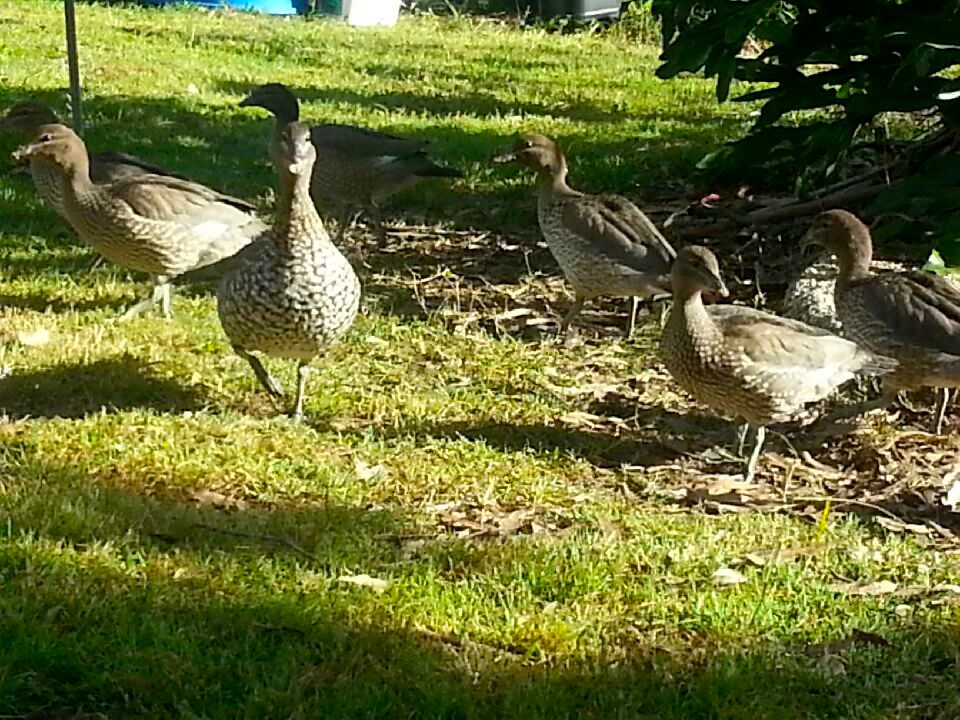
Good news. Princess, our home-raised wild duck who lost all her family members, returned with eight ducklings. More on her story in tomorrow’s post.

Good news. Princess, our home-raised wild duck who lost all her family members, returned with eight ducklings. More on her story in tomorrow’s post.
A life of contentment in the rainforest. The Korowai People of West Papua in Melanesia.

Living in the trees is natural for the Korowai and Kombai people in the southern eastern Papua. These tribal Melanesians are one of the last people on the planet who survive purely on their natural environment. The Korowai’s are also referred to as the Kolufo and have become known to the world through pictures and documentaries as one of the most amazing architects of tree houses.
The tree house builders survive in the basin of the Brazzan River in large areas of deep rainforest and swampy lowland. They are hunter-gatherers and horticulturists who practice shift-cultivation and have a very rich and an extraordinary oral tradition. They live together in small communities.
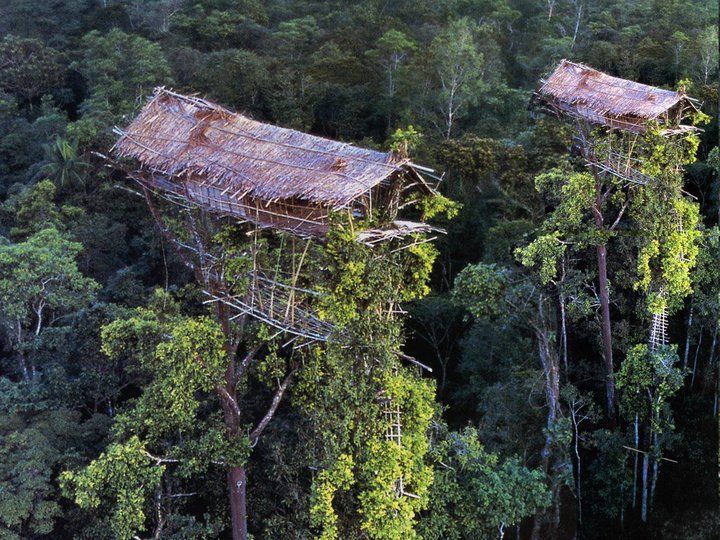
The higher they built a house, the more prestigious it is. The reason behind this amazing architecture which often reaches up to 100 feet or more off the ground is to avoid floods, insects and diseases. It was also a way to spot tribal enemies as the Korowai themselves had practiced cannibalism in the past.

The Korowai people build their houses high above the forest floor, and deep in the swampy lowland jungles of Papua.
In the BBC documentary below, you can watch from start to finish, how a Korowai tree house is built.
Papua New Guinea (PNG) is home to the world’s largest butterfly – the “Ornithoptera alexandrae” or Queen Alexandra birdwing. Its wingspan can grow to 25cm. Queen Alexandra only breeds and lives in the Managalas Plateau in Eastern PNG or Oro Province. The butterfly numbers are unknown, and its habitat is increasingly disappearing. There are also concerns that the number of the large butterflies are depleting.
The Queen Alexandra’s Birdwing is on the red list of threatened species of the International Union for Conservation of Nature (IUCN), and its international trade is banned. From the perspective of species conservationists, the butterfly satisfies all of the criteria to make it a critically endangered species.
Walter Rothschild discovered the species in 1907 and named it after Alexandra of Denmark. The first European to discover the butterfly was one of Rothschild’s employee, Albert Stewart Meek during their expedition to Papua New Guinea.

Unusual Reproductive Biology
The threatened butterfly is vulnerable because of its unusual reproductive biology. The female lays its eggs exclusively on a poisonous vine called Aristolochia. Once the caterpillars have hatched, they ingest the plant’s toxic leaves, making them unpalatable for potential predators.
The Aristolochia winds its way up into the crowns of jungle trees, which can grow to heights of up to 40 meters (131 feet). The butterfly would be lost without the vine, so propagating the Aristolochia is one of the main goals of conservationists.

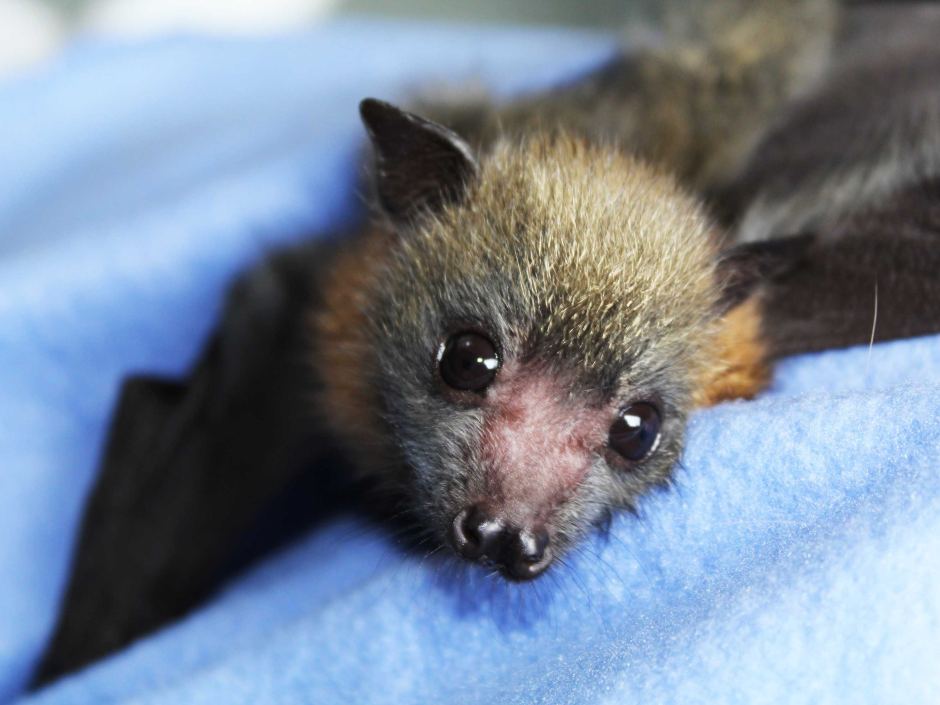
ABC News: A sanctuary for orphaned fruit bats on Sydney’s North Shore (Australia) has been expanded to house more pups and adult bats.
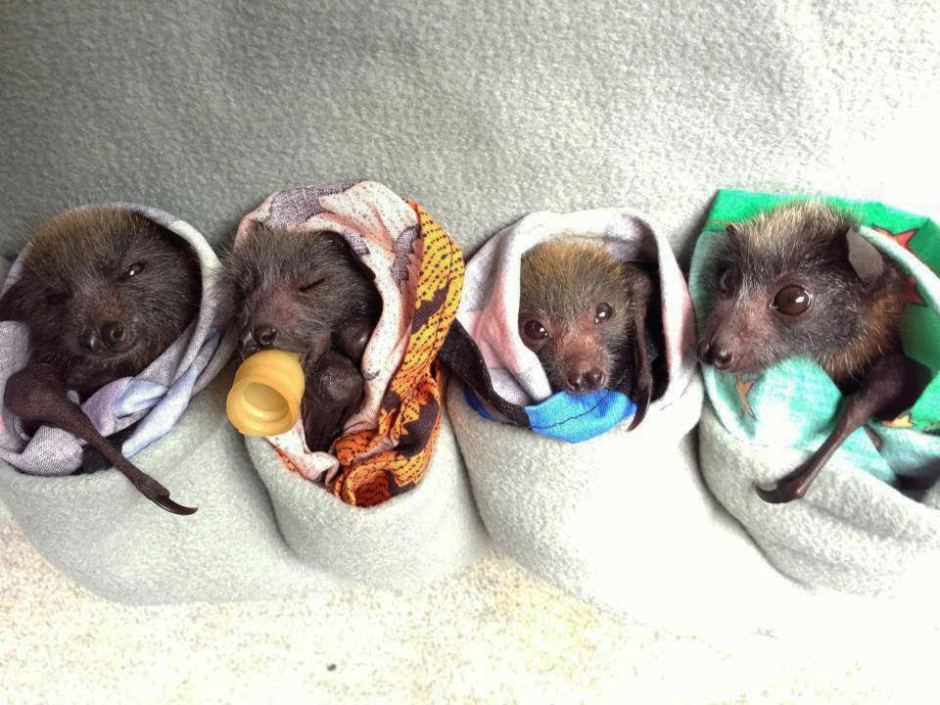
Every spring up to 100 fruit bat orphans are hand-reared by wildlife volunteers, then taken to the Kukundi shelter at Lane Cove National Park.
Their mothers can die from natural predators, flying accidents and entanglement in power lines.
“They will go to backyard fruit. And they will get tangled in backyard fruit netting. And this does terrible things to their wings so they can’t fly,” said Tierre Thorpe from wildlife carer organisation Sydney Wildlife.
“They often get caught on power lines so they get electrocuted,” she said.
The breeding season is in October when it is all hands on decks for volunteers.

The bats “go through a rehabilitation process in our volunteer’s homes and they come here to gain flight fitness,” she said.
“They learn to fly. They are dehumanised. And we have a hatch at the back which is opened at the time. And then we support feed them for a couple of weeks so they can come back to obtain food while they have their freedom.”
An expanded cage for orphans which was opened this week is expected to cater for 100 babies a year – alongside the 500 adults in a separate cage.
The rarest kind of one of the world’s most common birds found in Melbourne
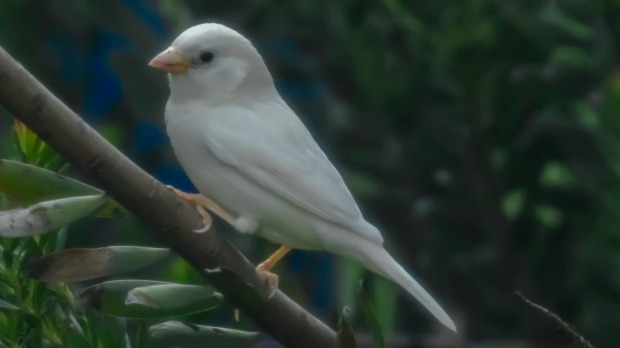
The Age Technology reported a pure white sparrow, the rarest incarnation of one of the world’s most common birds, has been spotted in suburban Melbourne.
A regular visitor to select gardens in Sanctuary Lakes in Melbourne’s west, locals have nicknamed the bird the “little white angel”.
Keen bird watcher Bob Winters, who worked as an environmental educator for the Gould League for 20 years, says the sparrow is a “one in a million neighbour” with only a handful of white sparrow sightings reported worldwide.

A little creative genius lives with me and is sometimes called my younger son, Chris. He is over one 190 cm tall so he is not that little, but this 16-year-old always comes up with amazing ideas. One of his discoveries was how to magnify or shoot micro pictures with his iPhone using a recycled attachment from an old torch. Here are a couple of images Chris was excited to share with me for their artistic value – he deliberately softened the lines.
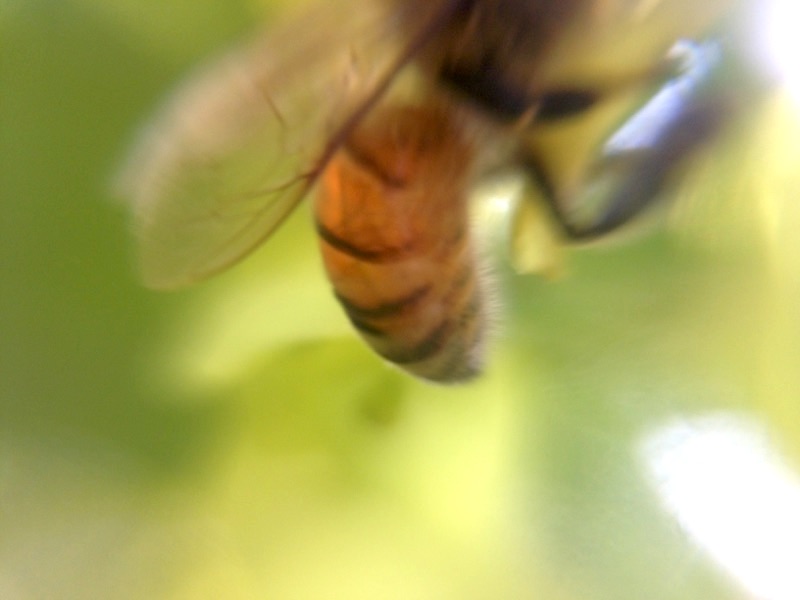
When I asked him what camera he had used to take the pictures, he showed me his phone and explained, he took apart an old torch and stuck a glass lens from the old torch on his iPhone camera lens to take the super micro images. I was so excited, we went everywhere in the garden to take more pictures from deep inside centre of petals to the eye-balls of family members so we could see the colour spectrums. It is quite incredible. The bee pictures are two of Chris’s images.

VISUAL ART JAPANESE ART AFTER FUKUSHIMA: RETURN OF GODZILLA RMIT Gallery Until May 30
Japanese Art After Fukushima is part of an excellent festival, Art + Climate = Change, which gathers local and international artists working with environmental ideas. It has spanned numerous venues across the state and is an important initiative of Guy Abrahams from the non-profit-making Climarte.

The earth will be re-shaped forever, once the Antarctic giant melting ice disappears. Does that not sound scary? It sounds very scary to me. And the water that is melting from the ice is enough to fill 1.3 million Olympic swimming pools.
Scientists say the antarctica’s once-massive Larsen B Ice Shelf is melting rapidly, and will likely be entirely gone by the end of this decade, according to a new report from NASA. A team led by Ala Khazendar of NASA’s Jet Propulsion Laboratory (JPL) found the shelf is developing large cracks while its tributary glaciers rapidly disintegrate.

Water is eating away at the Antarctic ice, melting it where it hits the oceans. As the ice sheets slowly thaw, water pours into the sea — 130 billion tons of ice (118 billion metric tons) per year for the past decade, according to NASA satellite calculations. That’s the weight of more than 356,000 Empire State Buildings, enough ice melt to fill more than 1.3 million Olympic swimming pools. And the melting is accelerating. See more

I personally love the cassowary bird because of its unique beauty.
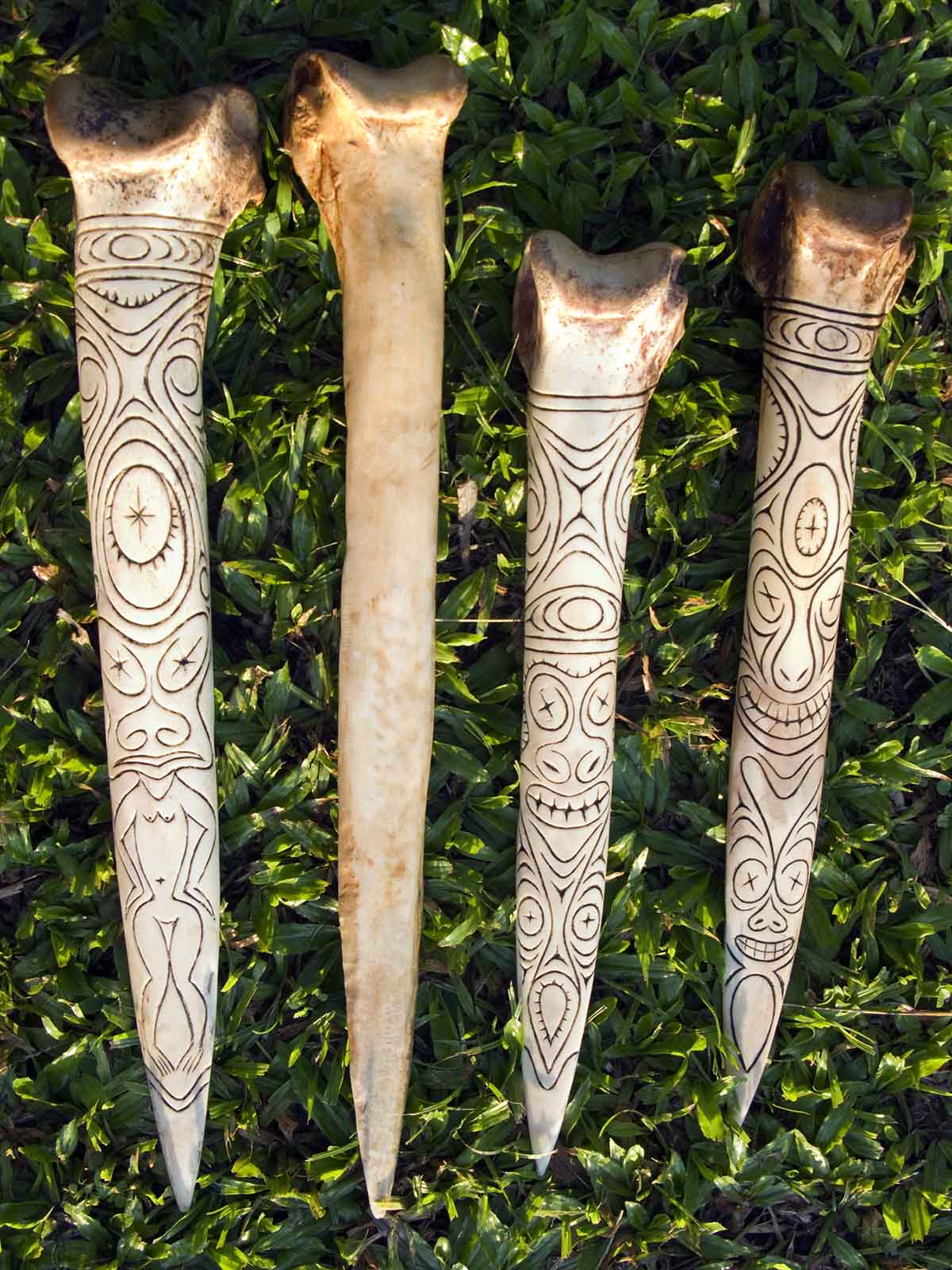
In Papua New Guinea(PNG), the cassowary is highly regarded in traditional myths as a source of life and spiritual energy. While cassowary is food in PNG cultures, it is also kept as a pet. Cassowary feathers are used for headdress and bones used for tools. I remember my grandfather (mother’s father) kept a cassowary wing bone he used to stitch sago leaves together for our roof. Some tribes, foe example the Abelam people in Sepik have used the femur of the cassowary birds to make weapons such as daggers (pictured below).
The cassowary lives in north of Australia and PNG. I constantly read articles about the near-extinction of this giant bird and I wanted to share the awareness that if we in Australia (and PNG) are not careful, we will lose this species.
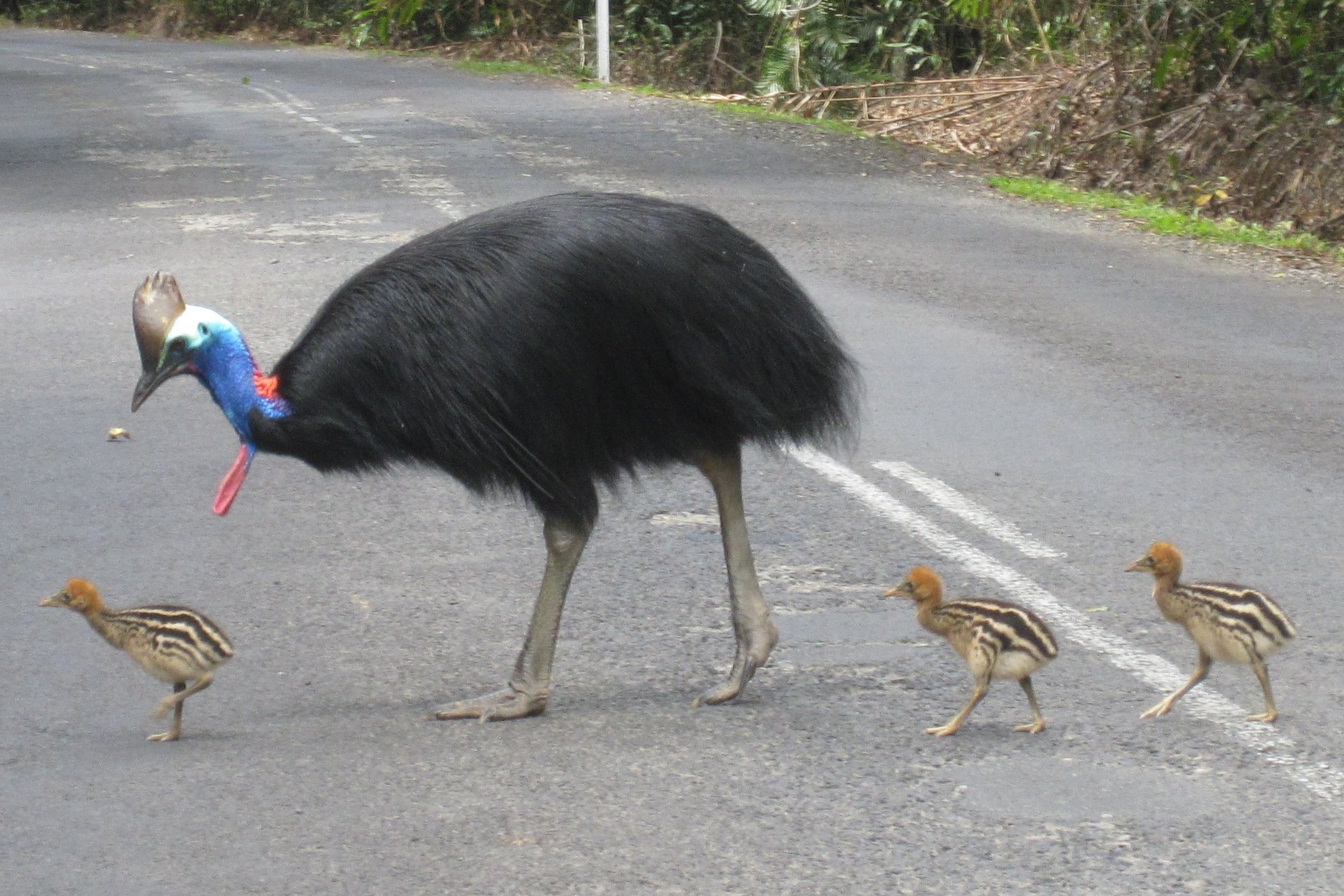
This question is no longer a joke.
According to Megan Neal at Houston Zoo website:
“Unfortunately, there’s no punch line and the situation is no laughing matter. Habitat loss and fragmentation have left the Australian population of cassowaries on the brink of extinction. These huge birds need large amounts of land to roam in search of food and to breed”.
Like other species, cassowaries’ habitat have been repeatedly destroyed by the boom in residential and commercial construction. Everyone wants to live near the rainforests of Australia, but there’s simply not enough room for everyone.
The Australian Conservation Foundation (ACF) answer to the question gives another example of the problem. The cassowary crossed the road because its habitat has been chopped in half by a freeway. So far this year, more cassowaries have died from speeding cars, dog attacks and habitat loss than in all of 2014.
ACF report said the modern-day hazards are now increasing the extinction risk.
“While local groups are doing great work to protect these gorgeous creatures, governments need to catch up! We need to transform our national nature protection framework so local, state and national laws work in together to protect life in Australia”.
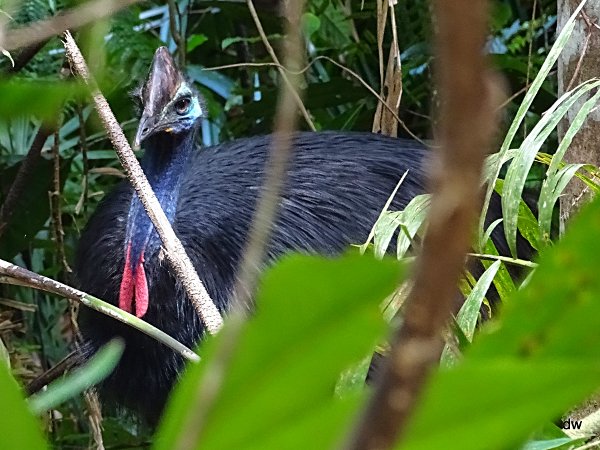
It is an iconic and unique species that deserves better than the devastating carnage it faces on regional roads throughout the Wet Tropics.
Sadly, 2015 is off to a particularly bad start for the endangered – and rather large – flightless bird with reports of at least six cassowaries killed between Mission and Bramston Beach this year.
Another cassowary was killed recently by domestic dogs on the Atherton Tableland.
Until recently, the remaining wild population was thought to be at around 2000. However, new research by the CSIRO estimates that the cassowary population may be more than double that at around 4400.
But this number is spread over 730,000 hectares of potential habitat with strong populations known in some areas and few or no records from other areas.

Arriving at the beach, she reflected on her life. Mea searched the waves for two poles where the village bell hung. She had missed the bell sounds and the village gatherings. It has been 20 years since she left for Australia. The bell hung in the village centre; now, only seawater.
“I can’t see it,” she told her brother Tau.
“I don’t think it’s there anymore”.
“Right there” she pointed. “And what happened to Bubu Raga’s coconut trees?”
“The King tides, five years ago, took Moale’s family’s house, betel nut, breadfruit and the coconut trees. We dashed for the hill”.
“Oh My God! That would’ve been scary”.
“Yes, we lost everything. That was the day Chief Naka accepted the government’s offer to relocate us with other climate change refugees. It’s strange being on other people’s land. You are very restricted, but in the past 30 years, the water has raised so much. Our island will soon be completely submerged”.
 Tribalmystic Stories