Category Archives: Living

Black East: Tracing Black Ancestry


My friend Paco D. Taylor enjoys researching and writing articles. I have not met many people who are so fascinated and interested in a culture outside of their own.  Paco is from Chicago, U.S.A, but he is intrigued by Melanesia. After a year of exchanging stories, history, art, music, etc, I can understand why Paco  feels strongly about the Melanesian people and culture.  His study of the black people in Asia has produced some very interesting connections to Melanesians.

In my culture, as you make friends with someone and whether they are from your tribe, a relative or a friend,  they become your “wantok”.  Some time ago, my wantok Paco published his article, Black East which discusses the ancestry of the black people in the East. I have read and found this story very interesting and Paco has kindly let me share the article on this blog. I hope you enjoy it. If you have any questions, I’m sure Paco would be very happy to answer them.
unnamed
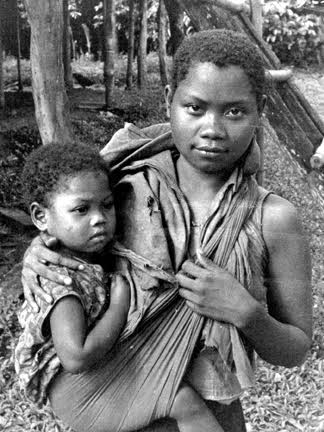
​Ban Doan Woman (Wa) and child (Samoi). Saturn Province, Southern Thailand, 1963. Photo by John H. Brandt

BLACK EAST
By Paco D. Taylor

As a kid growing up on the far South Side of Chicago, whenever I would envision the physical features of Asian peoples—since those I saw most were in martial arts movies and Ultraman reruns on television—a fairly narrow set of characteristics always came to mind. Perhaps not surprisingly, brown skin and curly black hair were never among them. But one fateful day my father told me of an eye-opening experience he’d had as a young man serving in the United States Marines. While stationed in the Philippines between 1961 and 1963, “Pops” learned of Asians whose physical features were significantly different from what most Americans have been conditioned to expect.

There in the Philippines, Pops saw native Filipinos who, albeit small in stature, looked a lot like him, with dark brown skin, curly black hair and—stranger still—African facial features. To say the very least, the sight of such people living in the heart of Southeast Asia was completely unexpected.

It was also unsettling.

Perhaps equally as unsettling, my father learned that these puzzling pint-sized people were referred to locally by a Spanish term, one that translates literally into English as the “little blacks.”

Facts of Life

As the Earth’s largest and most populous land-mass, Asia is home to 60 percent of the planet’s human population. Included in this sum are the continent’s lesser-known groups called the Negritos—indigenous Asians who look a lot more like the relatives of Gary Coleman than Jackie Chan.

Whatchoo talkin’ ’bout, Paco?

The term Negrito was first applied by Spanish explorers in the 16th century, after encounters with such people during early forays into the region. And though wholly unscientific, the term is still used today to refer to distinct ethnic groups living in parts of Southeast Asia and the Asian Pacific island of Papua New Guinea.

According to James J.Y. Liu, author of the book The Art of Chinese Poetry, the term kunlun is the equivalent of Negrito in the Chinese language, and there are several mentions of kunlun people in the early literature of China. The most well-known of these can be found in the classic adventure romance entitled The Kunlun Slave.

In the language of their Malay-speaking neighbors, Negritos are known as the orang asli, meaning, “first people” or “original people.” This term would come into general use in the 1930s, in response to efforts by the Malaysian government to officially recognize them as the region’s earliest human inhabitants.

Prior to the adoption of a more respectful designation, such people were commonly called by the pejorative term semang (“debt slave”), a word bonded to times when, like other blacks, Negritos too were abducted from their homelands and sold into slavery, but in Asia.

Family Tree

The defining physical features of Negrito people include dark brown to black skin, curly black hair and diminutive stature. The average height among men is 5 feet, 5 inches, and the average height among women is 4 feet, 8 inches.

And though they are seemingly orphaned from humanity’s family tree, Maury Povich won’t be needed to pop for a DNA test to figure out “Who is the father?” According to geneticists, these peculiar Peoples are actually the modern descendants of the first migrant populations to venture into Asia more than 50,000 years ago.

That there is a strong resemblance between Negritos and African groups like the Pygmies of Uganda and Congo is obvious What is impossible to see, however, is that on DL (DNA level), these people share closer genetic bonds to other Asians than they do to now-distant cousins back in the Motherland.

Stunted Growth

Fossil finds from across the continent suggest that these nomadic hunter-gatherers once lived across Asia from India to southernmost Japan. The southern islands of the Pacific Ocean (Oceania) were also once part of their domain, as well as the southern continent of Australia and the island of Tasmania.

Their stomping grounds today, however, are but mere traces of what they once were.

Challenged by the continuous spread of larger, more organized and more technologically advanced human groups, their once wide-open range has been limited only to isolated parts of the Philippines, Southern Thailand, Malaysia, Indonesia, the Andaman Islands (off the coast of Burma), and Papua New Guinea.

What’s more, populations that were documented as recently as the late 19th century to have numbered in the tens of thousands now number only in the thousands. But the numbers for some groups have become even smaller.

Drastically smaller.

Today, the tribal population of the Onge people in the Andaman Islands numbers less than one hundred. It is conceivable that in the proverbial blink of an eye, this ancient tribe of humankind will simply cease to exist.

Please visit Paco Taylor’s blog link below to read the rest of the article and view images.
Paco Taylor’s Blog : Kungfu Grip Zine

SP Games Opens Tonight in Port Moresby


6595474-3x2-940x627
Picture and story from ABC News

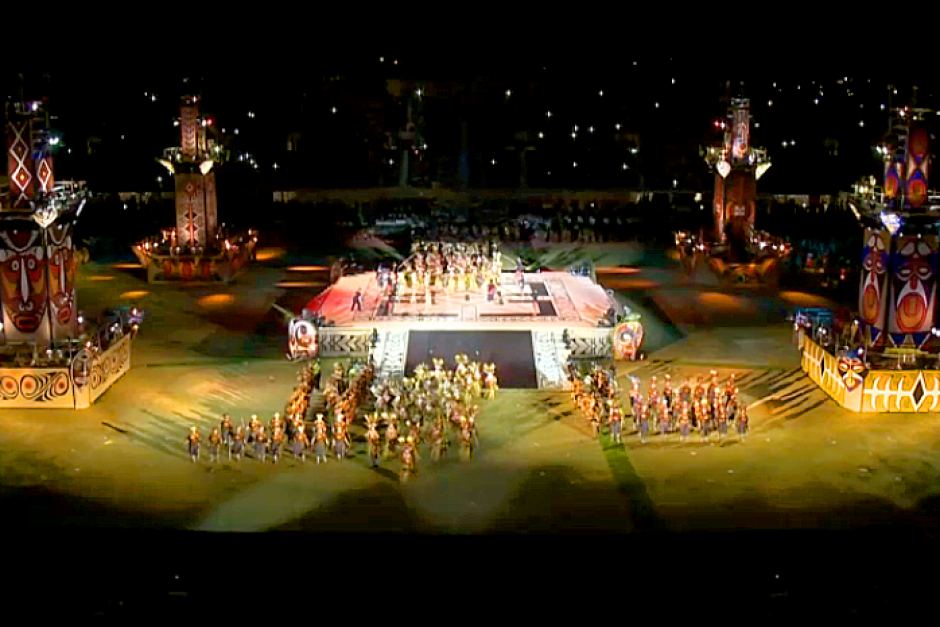
The South Pacific Games opens tonight in Port Moresby. After years of preparation by Papua New Guinea (PNG) and hundreds of regional athletes, the 15th South Pacific Games opening ceremony has begun in the nation’s capital. Australia and New Zealand participate for the first time ever. It is expected 24 South Pacific island countries will compete in the next two weeks. Citizens, visitors, and sportsmen and women at tonight’s opening will also witness the largest group of traditional dancers from across PNG. Up to 900 singsing groups will perform, according to organisers. Artistic director of tonight’s opening ceremony, Airleke Ingram, said it is a celebration of Papua New Guinea’s rich cultural history, while pointing to the country’s future direction. The ceremony’s theme is tied to the local region’s hiri trade, an important cultural influence. “It’s a really key part of our culture. There are a lot of songs, dances and tattoos,” said Mr Ingram, a music producer, traditional drummer and famed percussionist from Central Province. The ceremony pays homage to the trade relationship between the Motuan and Gulf Province people, and the role this played in shaping PNG. ABC News

The picture I waited from my home for: Byron Photographer


9-2859328-lis010715moon01_t620
Byron Bay photographer Dylan O’Donnell took this stunning photo of the International Space Station passing the moon on Tuesday. Photo Contributed

The media has called it the holy grail of astro-photography. The Cool Stuff of the week is Dylan O’ Donnell’s fantastic photograph of the full moon with the incredible capture of the space station on the top right.

The BYRON Bay (Australia) photographer who captured the shot on Tuesday with  International Space Station passing over the moon said this was his second attempt to take the stunning shot.

“I’ve only tried once before and I completely botched it, it looked like a blur,” he said.

The International Space Station ISS passes through the sky semi regularly, but for it to line up like it did with an almost full moon is quite rare.

“Some people go chasing around the world to try to line it up but I just waited from my home and it was about 12 months from the last time it lined up that way for me.”

Reported by Rodney Stevens

A Mundane Story – Vimeo


A Mundane Story – Loop Ring Chop Drink

Written, Directed & Animated by Nicolas Ménard
Sound & Music by Rich Vreeland
The mundane story of a heartbroken man,
an online gambling addict, an alcoholic kleptomaniac
and an anxious loner living in the same apartment building. Additional animation by Iris Abols, Anne-Louise Erambert, Nicole Kozak & Robert Loebel

Featuring a selection of abstract paintings by Samuel Jacques
Colouring by Mélanie Daigle, Oliver Hamilton, Sam Jones,
Jeanette Lee, Nicolas Ménard, Jonathan Reyes & Khylin Woodrow
Sound mix by Dayo James
With the voices of Clément Baptiste, Wallace McDougall & Alice Dunseath
Special thanks to Blinkink, Jean-Philippe Fauteux & Philip Hunt
© Royal College of Art, 2014

PNG Literary Competition Achieves Record Entries.


The Papua New Guinea Literary Competition The Crocodile Prize received the highest number of entries ever, this year.  On closing last night the Crocodile Prize fetched a total 826 entries from 132 writers & illustrators.

Poetry 355; Essay 196; Story 129; Children 52; Heritage 48; Illustration 21; Tourism Arts Culture 15; Book of the Year 10.

These numbers may not sound very much for writers in other countries, but for any Papua New Guinean writer, it is a very heart-warming news, especially coming from a literary culture that almost became extinct. In the early 70s, leading up to the country’s independence, passion for art, culture and heritage including the literary pursuits and publishing of works written by PNG writers were at their peak. It is not quite clear why the interests have fallen so much after independence. That culture may have been used because we were proud of our identity and we wanted independence so much or perhaps the general growth of consumerism and the wider issues of social, economic and political changes have contributed to this new – lack of passion of culture. I remember growing up with radio stories written by PNG writers, attending and being part of stage plays – written by PNG writers. Poetry, stories, essays as well as other forms of literary work were promoted and supported by the national government.

The lack of passion in the arts and the literary support to me is quite surprising and sad; our culture is based on oral history and story-telling.

As a PNG writer, a practicing artist and an arts curator, it seems very clear to me, that the PNG government’s priority is elsewhere and not the least in the arts. But to not even support the literary aspect and especially in developing educational content that is relevant to our children and educational for our people is wrong. We cannot just tell stories and pass them on – now we can write them down and keep for many years.

It is not how much minerals we export and logs we sell, but the natural beauty, our rich art, culture, languages and stories that set PNG apart, and gives us our unique identity.  The literary scene dwindled to almost non-existent, although that could have been easily combined with and taught through the education system. There are not many avenues and support nor funding where PNG writers could train or share their work, and even to sell. Most workshops, training and activities relating to creative writing or any literary work have been Aid funded or Privately sponsored in the past four decades. Now this is how things have started to change for the PNG literary scene.

THE CROCODILE PRIZE STORY
The Crocodile Prize was established in 2010 by Phil Fitzpatrick and Keith Jackson, (both Australians) worked for many years in Papua New Guinea; Fitzpatrick as a patrol officer, Jackson as a broadcaster and journalist.

The Prize evolved from the popular PNG Attitude blog, which has a policy of encouraging and publishing Papua New Guinean contributors.

The concept of a national literary competition was triggered by Fitzpatrick’s concern that creative writing in Papua New Guinea had fallen upon hard times, and that this was a cultural constraint needing to be addressed.

The first awards were presented in 2011, a year of determining whether or not a project of this kind could be managed successfully given geographical, financial and the constraints of a voluntary organisation.

Using PNG Attitude as a vehicle for publicity and initial publication, Fitzpatrick and Jackson soon discovered an enthusiastic and rapidly emerging body of Papua New Guinean writers.

They were assisted greatly in the early stages by material and financial support provided by the Australian High Commission in Port Moresby and later by a range of sponsors, most of them PNG-based.

This backing made it possible for a range of associated activities to be instituted in addition to the Prize, including an awards ceremony, the publication of an annual anthology and the initiation of writers’ forums.

After the first awards in September 2011, it was agreed the Prize should become a permanent part of the literary landscape of PNG. Now under the management of the Crocodile Prize Organisation, COG, 2015 will mark its fifth year of operations.

PHIL FITZPATRICK on 2015 Competition

Thus ends another year of the Crocodile Prize literary contest.

IT’S not every day that you get to influence the revival of literature in a whole country, unintentionally or otherwise.

I must admit to some surprise that it has happened at all. What started as a humble writing competition seems to have bloomed beyond all expectations.

There is a sense of pride in what has happened but, strangely, it’s not personal. Rather it is a sense of pride in the achievements of the writers involved.

At a personal level it has been more of a humbling experience. There is also a sense of awe and enrichment.

The enrichment comes from reading the works submitted to the competition and the sheer learning experience involved.

I think, despite nearly fifty years travelling back and forth to the country, I’ve really only learned to understand Papua New Guinea in the last few years of the Crocodile Prize.

There is also a tinge of anger involved, mostly through the fact that an uninterested government and lackadaisical education system could let such a promising and rich cultural emergence in the 1970s wilt on the vine and become moribund.

That aside, one of the ironies I really enjoy is the fact that the revival has only now been possible because of the advent of digital technologies that were supposed to see the demise and eventual extinction of books. Such are the shaky prognostications of the doomsayers.

The key factors in the Papua New Guinean revival have been the Internet and the availability of digital publishing and print-on-demand technologies.

These have underpinned the Crocodile Prize, firstly by providing a writers’ outlet in the form of PNG Attitude and secondly in offering a cheap way to publish the best in an annual anthology and then to go even further in publishing stand-alone individual books by Papua New Guineans.

The future of literature in Papua New Guinea is starting to look rosy but we need to remind ourselves that it is still extremely fragile.

The disastrous complacency of the 2013 competition organisers reminds us of what could still happen.

2014-15 has been a watershed year and there’s light at the end of the tunnel but sustainability is still a long way off and we aren’t there yet by any stretch of the imagination.

The winners of this year’s Crocodile Prize will be announced early September. The awards event will be held in Kundiawa on Saturday 19 September

Keith Jackson & Friends: PNG Attitude

Tribes from “I am a Temptress” Poem


A section from a free verse I have submitted for The Crocodile Prize: Papua New Guinea National Literary Awards

Tribes ©JK.Leahy

Tribes

Innocent children

New generation manufactured

Wear insanity clots in their brains

Pride and hate chokes their virtue

Tall, brave, strong the powerful warriors

Weak, tiny, gentle, still vow quiet achievers

Education’s location teaches disparity

Traditions and rituals are fading colours

Ancestors cringe and weep in graves

Chanting laments, many rhythms

Echoing songs 300 tongues

Traditions decomposed

Decrees derail

Lost

Click here to see other entries: The Crocodile Prize

The Beauty of Science and Art – Cool Stuff


Below is a self-explanatory video, my son Chris introduced me to. The Slow Mo Guys two often make some very interesting short films. I hope you enjoy the beauty of a few seconds of science and art in the clip called Droplet Collisions at 5000 fps.

West Papua Finally Gets a ‘Place’ in Melanesian Spearhead Group


SBS News June 26, 2015.

Australia’s nearest Pacific neighbours have taken the lead in trying to broker a peaceful future for Indonesia’s contested West Papuan provinces.

Fiji, Papua New Guinea, Vanuatu, Solomon Islands and New Caledonia’s FLNKS took the step at the 20th Melanesian Spearhead Group (MSG) summit in Honiara.

Since Indonesia took over the former Dutch colony in the 1960s, there has been a brutal conflict in West Papua that is estimated to have cost hundreds-of-thousands of lives.

The MSG leaders gave the West Papuan independence movement observer status, rejecting an application for full membership.

Indonesia has been an observer since 2011 and was upgraded to associated membership at the summit.

“The leaders approved the United Liberation Movement for West Papua (ULMWP) as an observer member under the regional and international category representing West Papuans living abroad,” said Solomon Islands prime minister and MSG chair Manasseh Sogavare.

“Associate membership is accorded to Indonesia representing the five Melanesian provinces in Indonesia. I have the greatest pleasure in welcoming them.”

The West Papuans were hoping for full membership of the MSG but accept observer status as a first step.

The Indonesians will be represented at the MSG by the governors of its five Papuan provinces.

“Building a strong Melanesia in the Pacific is certainly a desire for our every member country,” said PNG prime minister Peter O’Neill.

More on SBS

My Last Walk – Short Story.


This is my second entry into the short story category in PNG National Literary Awards. Some of you know this story. It has been cut down to 1000 word limit.   For more stories and entries into the competition, please visit the following links;

The Crocodile Prize

Keith Jackson & Friends: PNG Attitude

h-wp
Western Province, PNG.

My Last Walk  ©JK.Leahy

I felt his eyes piercing into my back as I struggled over the grassy hill. The air was tight and chilly so early in the morning.

“Walk faster!”

I needed my three-month-old baby Boni’s softness, and the laughter of his older siblings. I was exhausted and wished I could stop. A sudden breeze brushed over the tall grass. Shoosh. I shivered.

Usually, when we returned from the garden, Bomoga walked proudly ahead, carrying his prized spear with a small bilum strapped across his bare chest. The children and I fumbled behind him: me with a child on my shoulder, another in the bilum on my back together with our second bilum of food and pulling our eldest by the hand.

Today, I was in front. I wore my favourite red meri blouse. In haste, I had worn it inside out – its flimsy seams waved loosely.

We reached the top of Kasu Hill. I gasped for air.

“Hurry Up!”

My heart pumped. From the only hill in Domogu Village in the wallaby plains of the Western Province, pale yellow-green lowland laid before me. The grass had been burnt in patches to entrap wild game. The lowland was also known for Papuan black, a deadly snake.

I marched down the ridge, as ordered. Cold mud numbed my sore foot. We reached the place where the Ok Tedi Mining had caused hundreds of fish and plants to die along the riverbank. Usually, there were people here. But it was still early – no one was about as we passed.

My milk dripped down my blouse. Without bra, my breasts swung full and uncomfortable. It was feeding time for Boni. The rising sun cast faint shadows and the warm air caressed my face. We had crossed Domogu tribal land. Bomoga’s ancestors, nomads like mine, had decided to settle in this fertile land.

My eyes scanned the mountains that Ok Tedi had exploited. To the south, there was an airstrip where planes flew in weekly. Our village looked like a jewel, deep jade opal, festooned with glassy lakes of many sizes.

“Move!”

I stumbled forward.

We entered a forest. Strangely, the birds here were silent. I heard sorcerers came here for bush medicine and magic making. I searched for sunlight through the tree openings.

“Keep walking,” he hissed.

I had not looked once in Bomoga’s eyes. When his sweaty hands had touched me that morning, I thought he wanted sex, but instead he shook me roughly and ordered me out of the house. His shadow had loomed over me as I took Boni off my breast and put on my meri blouse and my rubber skirt. Boni nestled into his blanket, eyes still shut. He didn’t cry for more milk, thank God. My other children, Eka and Maria were asleep. I heard Bomoga pick up something in the house before closing the door behind us. He was quiet and cagey, which was not like him.

He was never a warm person, not even to his family members, though he was loud to his male friends. He liked sex that was rough and on demand. In any argument, a sudden punch to my face or stomach was a possibility. If the children screamed, he yelled at them. The beatings only worsened if he thought I challenged him. “No one will help you, because you are MY wife,” he said. I felt he was right and did not seek help, not even from his family or other villagers. Recently his best friend Tommy had returned from Port Moresby. I heard Bomogu now liked Tommy’s sister who was younger and prettier than me. He wanted her, I heard.

I stepped on a stump with my sore foot. The pain almost made me cry out. Two of my toes had broken when I fell in the last fight. We continued through the gloomy undergrowth into a flat area. Through an opening I saw sunlight sprinkling light of various colours onto leaves and moss. I saw a beautiful butterfly on a fern. Its brilliant blue wings and black outline set against the leafy greens. I felt a flash of hope.

We walked on and soon I could hear rapids and the forest thinned out as we reached a Y junction. At my feet a Papuan black, unaware, slithered quickly across my path.

“Turn to the river,” Bomoga commanded.

I turned towards the rapids. My throbbing foot distracted me and I was afraid to fall. The river frothed, full from recent rain. Watching water as it rushed away, a thought stirred my mind. Was he going to toss me into the river?

I imagined where my body would lay after death; my treasured red meri blouse, still inside out, clinging to my slim frame. Dragged ashore with a paddle shafted under the hem of my blouse, a trail would be imprinted on the sand on the silky Suki River banks. Villagers rushed to screaming children who discovered me. A woman bellowed my name, “Sulita!, Sulita!” But after hours in the muddy river, half-dressed and impaled by a black palm spear, I would no longer be Sulita.

“Stop!” he yelled.

I halted.

The ground looked easy to dig in places. I kept my face down. My feet were covered in mud and grass

“Turn around. Look at me!”

I turned and raised my eyes to the point of his most prized black palm spear.

With this spear Bomoga had speared the biggest pig, the fastest wallaby and driven the largest cull of deer. Many feared Bomoga because of his mastery with the weapon. My eyes shifted from the spear to my husband’s eyes for the first time that day. They were bulging and blood-rimmed. His nose flared and his sweat drenched eyebrows twitched. Ten long years and we still stared at each other like strangers.

He raised and pointed with the spear. “Where would you like to be buried?” he asked.

I dropped to my knees, closed my eyes and prayed.


This story is based on a true story set in Suki, Western Province. It is dedicated to the strong women and the survivors of domestic violence in Papua New Guinea and other Melanesian societies. 


The Hillside Find – A short story entry in Crocodile Prize.


The Hillside Find is a short story I wrote when I first started blogging  over a year ago.  It is based on my life as a young journalist working in my first job in Papua New Guinea’s leading daily, The Post Courier.

I have entered this story in the PNG’s annual literature competition which closes on June 30th. If you are interested, please visit also the two links below to see other entries from PNG writers. I will post my second entry tomorrow. The word limit is 1000 words.

The Crocodile Prize

Keith Jackson & Friends: PNG Attitude

47076981
Peter John Tate picture of a Kone settlement, Port Moresby


The Hillside Find

Joycelin Kauc Leahy© for Crocodile Prize Short Story

We climbed together, side by side. Chief Superintendent Roy Tiden and I stepped through the tall kunai grass and up the rocky Ranuguri hillside. The mid afternoon sun fought with its last strength, throwing an orangey tinge on the grass and on vibrant houses on the hillside. Ranuguri is in Konedobu. Below, the sound of traffic in Kone died down as we moved further up. It was a Tuesday in February 1985; the year Papua New Guinea would celebrate its ten years of independence from Australia. It was also the year the country recorded the highest crime rate in Port Moresby. Solving crimes excited me. At nineteen, and reporting for PNG’s leading daily, life was never dull.

My mother had called the night before from Lae, asking me to bring my little brother to Port Moresby and care for him. I was the eldest of four and Rivona was turning eleven. Port Moresby crime figures were escalating and living here was hardly safe enough for me. I wondered how a historical government post such as Kone boasting the best harbour and a bustling business centre could also be afflicted with such a high crime rate. In the newsroom the talk was that a state of emergency would be declared for Port Moresby. I stopped briefly to wait for Supt Tiden. As he got closer, I continued climbing.

I wanted to care for my brother, knowing how hard it was for my mother with three young children. But I was afraid journalism work would keep me away for long hours. This was my first job, and I wanted to do well. Maybe I could also bring my grandmother, so she could help me with my brother. With my mind absorbed, I didn’t realise I’d left the superintendent behind. Glancing down at him for directions, Supt Tiden pointed to the top of the hill. I headed there with my bag and notebook, stepping carefully over the loose gravel and scattered boulders.

Down the hillside, Mr Tiden’s blue uniform showed through the green swaying Kunai grass. Further past him I could see some of the old colonial buildings. Colourful clothes danced on makeshift lines and smoke escaped from open fires. Next to the police headquarters other old buildings had been converted into the mining department offices. Several dozen vehicles were parked there. I brushed the sweat off my forehead and wiped it on my skirt.

When I got the call, Mr Tiden had mentioned a rise in death amongst gang members, especially young boys. He said he’d been called out a week ago to a crime scene where the body had already decomposed. While moving the remains onto a stretcher, the rotting arm dropped onto the superintendent, and as it brushed him the fingernails came off. Thinking of that story and what we might discover today, I felt nauseous. I wanted to get it over and done with and return to the comforts of the Post Courier newsroom.  My workmates there have become my second family, away from my hometown Lae.

I neared the hilltop. Supt Tiden was several meters downhill. His large body restricted his speed up the hillside. He’d started puffing at the foot of Ranuguri and joked about racing me to the top, making light our reason for being there. By then he was already an astute detective with over 20 years of police work.

With the incident report descriptions of the crime location, I figured I would see a crime scene near where I stood. I expected the obvious: signs of damage to the land surface, a scrap of bloody clothing, and any kind of evidence. “Maybe, I am ON the scene,” I whispered to myself. The hairs on my skin stood. At my feet the ground was bare and uneven with rough limestone.

I called out, “Mr Tiden!’ Mr Tiden!” Out of respect I always referred to the superintendent as Mr Tiden. I could hear the wind blowing my voice down the valley. No response. My throat dried up as I hugged myself.

I looked around and across the hilltop trying to see where the sound of buzzing flies came from. I didn’t want to step on anything or anyone. I could not even see those damn flies, but I heard them very close. A crow soared and two others joined the circle, just metres above me. I held my notepad tight. I pulled my bag up to my chest and smelt the leather. Inside it were my no-brand cinnamon lipstick, an extra pen, a bunch of keys and the police issue can of chemical mace. Mr Tiden said I might need it one day.

“The mace!” I almost said out loud. But what help would it be? Apart from spurts of kunai, there was nothing else here. Whatever there was would not be too hard to find, but my legs refused to take me further. I waited. The flies buzzed and the grass shooed. I wished the police helicopter would blast up the hillside and break the silence.

I was about to call Mr Tiden again when I heard muffled cursing and knew he had arrived. “There you are, Joycelin.”

“Am I in the right place?”

“You are! That is great detective work,” he answered cheerfully.

I pretended to smile.

“Come this way.” He started turning down the opposite side of the hill then halted suddenly.

I walked up to him and looked down. Stretched out before us was a boy’s body. He had three large rocks weighing him down – on the neck, the abdomen and the legs. The head had a massive dent and the rock on his neck was covered in blood. “He can’t be more than 11 or 12 years old,” said Supt Tiden after a complete circuit around the body. I had not moved yet.

Supt Tiden looked up at me, waiting for a reaction. The only thing running through my head was my brother, Rivona.

It could have been him, I thought.


Thank you Isabel for all your help.  This story is a tribute to Chief Supt Roy Tiden and also my brother, Rivona who are both no longer with us. Roy died years later and Rivona lived to be a young man in Port Moresby. Almost 20 years later and two weeks before his 32nd birthday, Rivona died suddenly.