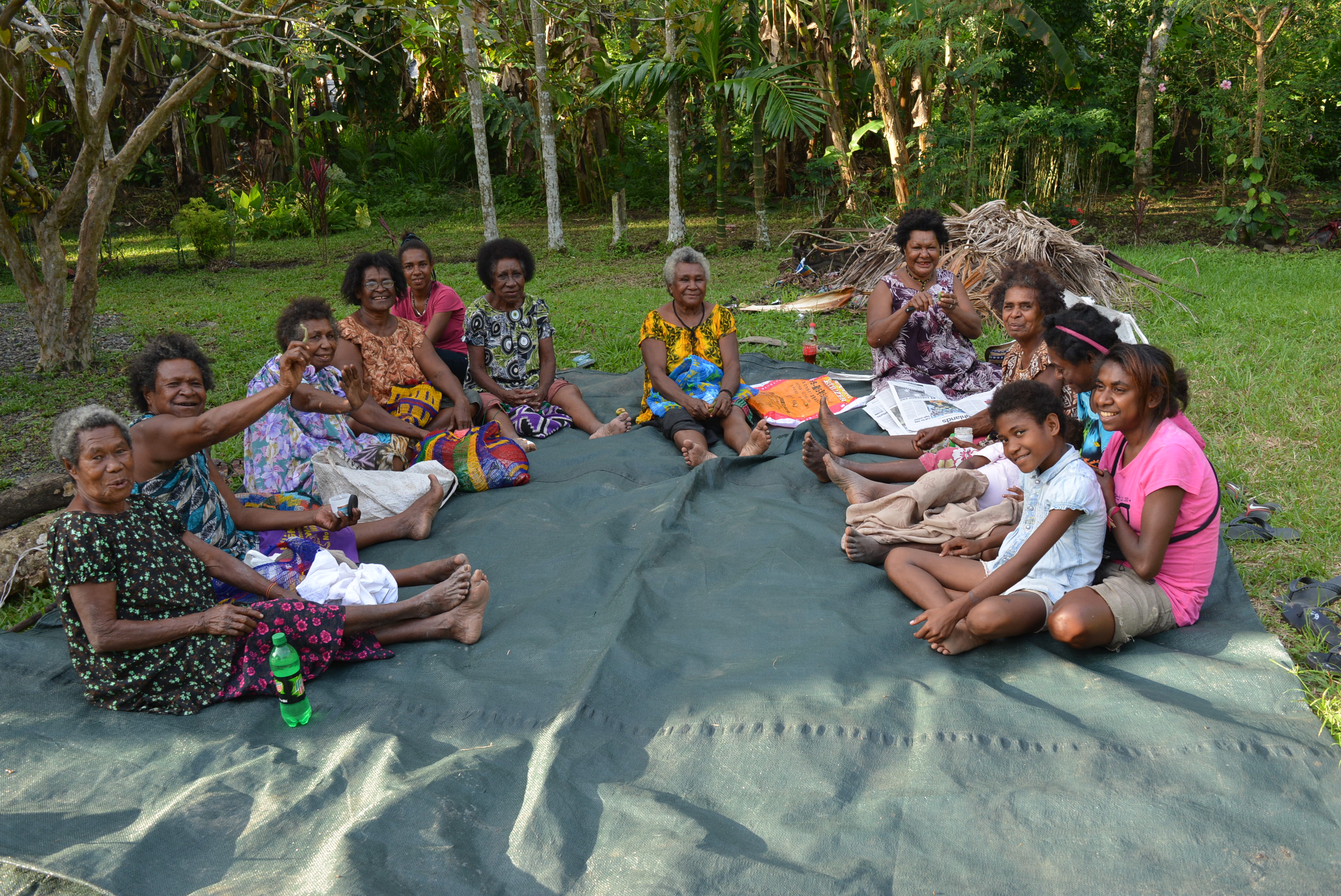
With my mother Freda on my right and my Aunt Ruth Tobias and my close friend Abuc Nagong in front. Bowali, Oct 2015.
My sons and I enjoyed our trip back to Lae, PNG – where we come from. I had not gone back to my village for seven and my sons for eight years. It was a long time. My reasons are too complicated to explain, but I could not wait any longer to return. The best part about our return was the story-telling and catching up. This was how we did it – sitting in a circle and chewing betel nut while we tell the stories. We tried to do this at least a few hours each day.
My mother and all my aunts chewing betel nut and story-telling on our lawn.
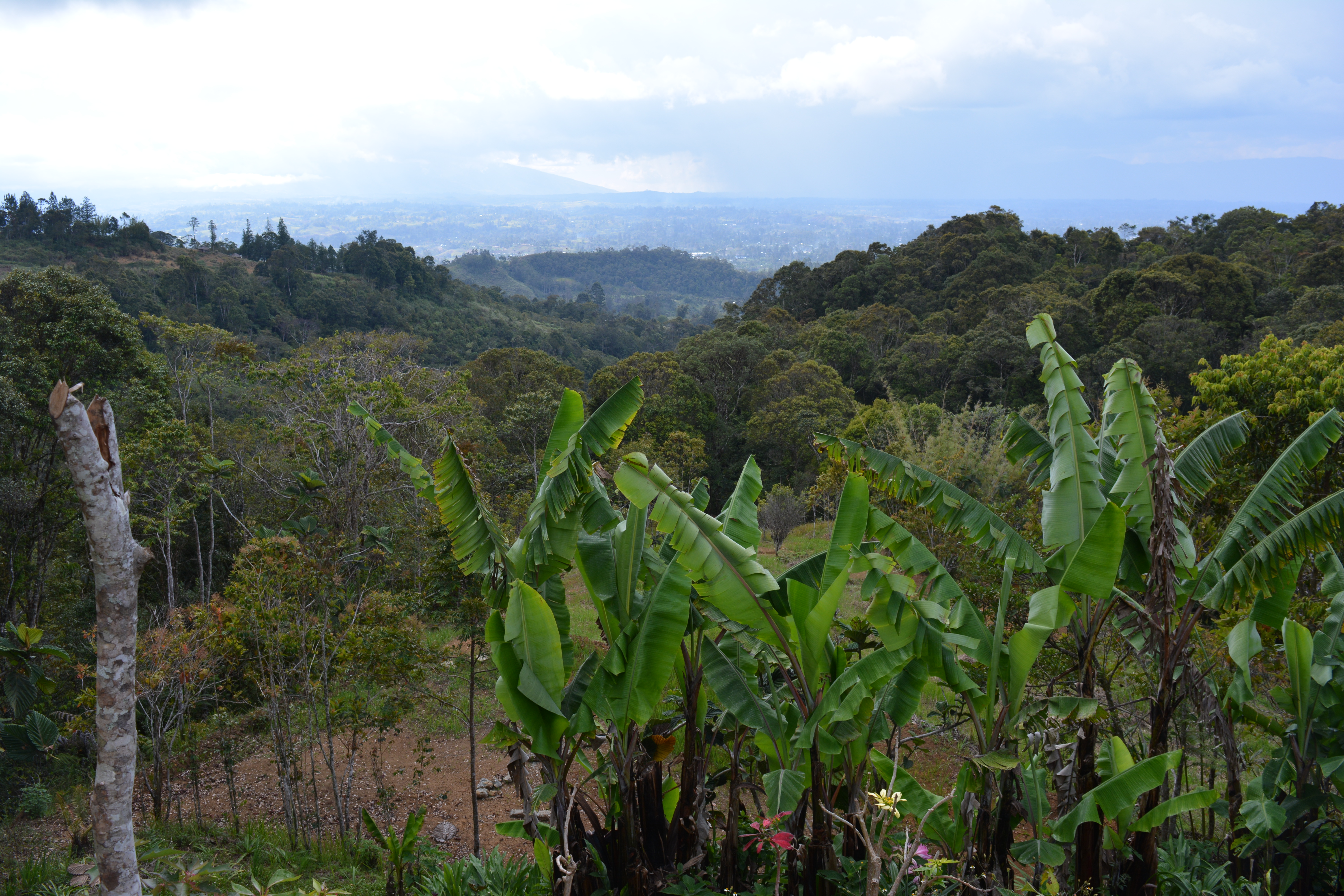
Mt Hagen town view from Mt Kuta – Papua New Guinea. Picture: JK.Leahy
Although it was under a sad circumstance, it was good to return to Mt Hagen town, Papua New Guinea, after almost 17 years to attend George Leahy’s funeral. The town had a dry spell, but the air was crisp and everything looked green and luscious.
This is the view from a beautiful house on the Kuta Ridge that I visited the last week. The house was built by my late cousin, Maggie Wilson. In partnership with her family and her people, she ran a successful world re-known guest house called the Haus Poroman (house of friends) for several years before she passed away a few years ago. Her eldest daughter Bernadine Danomira took me to the ridge to visit Maggie’s place and see the view once more. It was still as beautiful as I remember it.
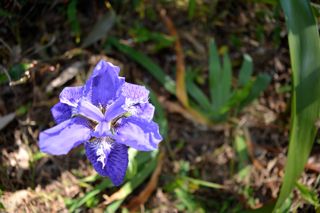
I share a picture of my blue iris to say thank you to all my readers. JKLeahy pic. 2015
Thank you to all my readers
I like small wins. Here, my blue iris bloomed for the first time in almost a year. Perhaps it was because I moved her from the edge of a small pond to the shade of a gum tree – I’m not sure what happened to her, but she came back. That makes me happy.
The other win was that this blog hit the highest number of visits per month ever. I had over 3000 visitors in July and the top performers were;
United States of America.
Australia
Papua New Guinea
United Kingdom
I appreciate ALL readers and visitors and look forward to your continued support. Thank you!
A camera means more new pictures will be seen on Tribalmystic stories. It also means I can share my garden with you, virtually.
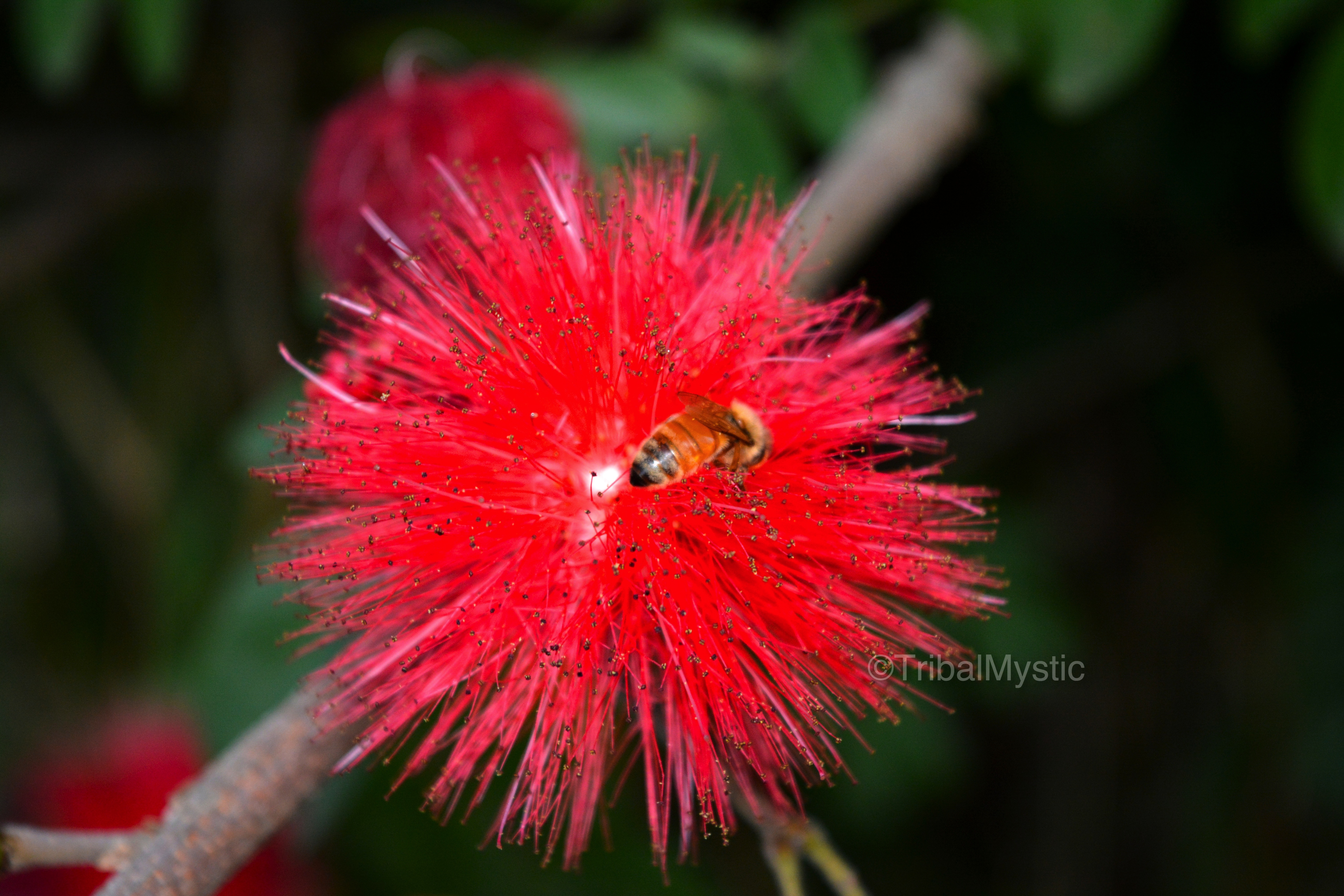
Samanea Saman bloom. It is also called False Powder Pluff.
I got myself a ‘real’ camera today. A Nikon D5200. It may not be a Pro level camera and not what I was aiming for, but I have not had an SLR for nearly twenty years so I am thrilled. My son Nathan loaned me some money for it. When my younger son Chris and I arrived home, guess who already had the package opened and was handling it – Chris!
Mum was cooking and giving stern instructions from the kitchen for Chris to wash his hands first and not leave any greasy prints on the lens or any part of the camera. Poor Chris…I’m sure he was just laughing inside his head. Who tells a 16-year-old what to do these days? Know the feeling when your kids play with your stuff?
Then, the little bugger went off and charged the battery and started taking pictures. Oh well…I guess he was just as excited as I was, even when he pretended he wasn’t.
There was some light left and I went for a quick walk in the garden to try the camera with some very curious bystanders. I shall show the ‘bystanders’ on Tribalmystic stories later. These are pictures of Salmanea Saman, often referred to as the false powder fluff – not the stuff you wear on your make-up though.
I have to get my photography grove back. Let me know what you think of my first pictures. Thank you.
The coconut is one of the most valuable trees in the islands across the Pacific, Asia, Latin America and Africa. The coconut tree has many uses. The nut, its husk and shells, the trunk, leaves, even the bone of a single leaf is used. Children use the leaf for toys and women weave and cook rice in the leaves. Hats, baskets, mats and many other useful items are also made from the coconut leaves.
The coconut juice, coconut oil and coconut cream have become a recent rage in nutrition and diets in the western world. Ask abungac (grandpa) Google about the many uses of the coconut.
What happens when you destroy the tree that gives life?
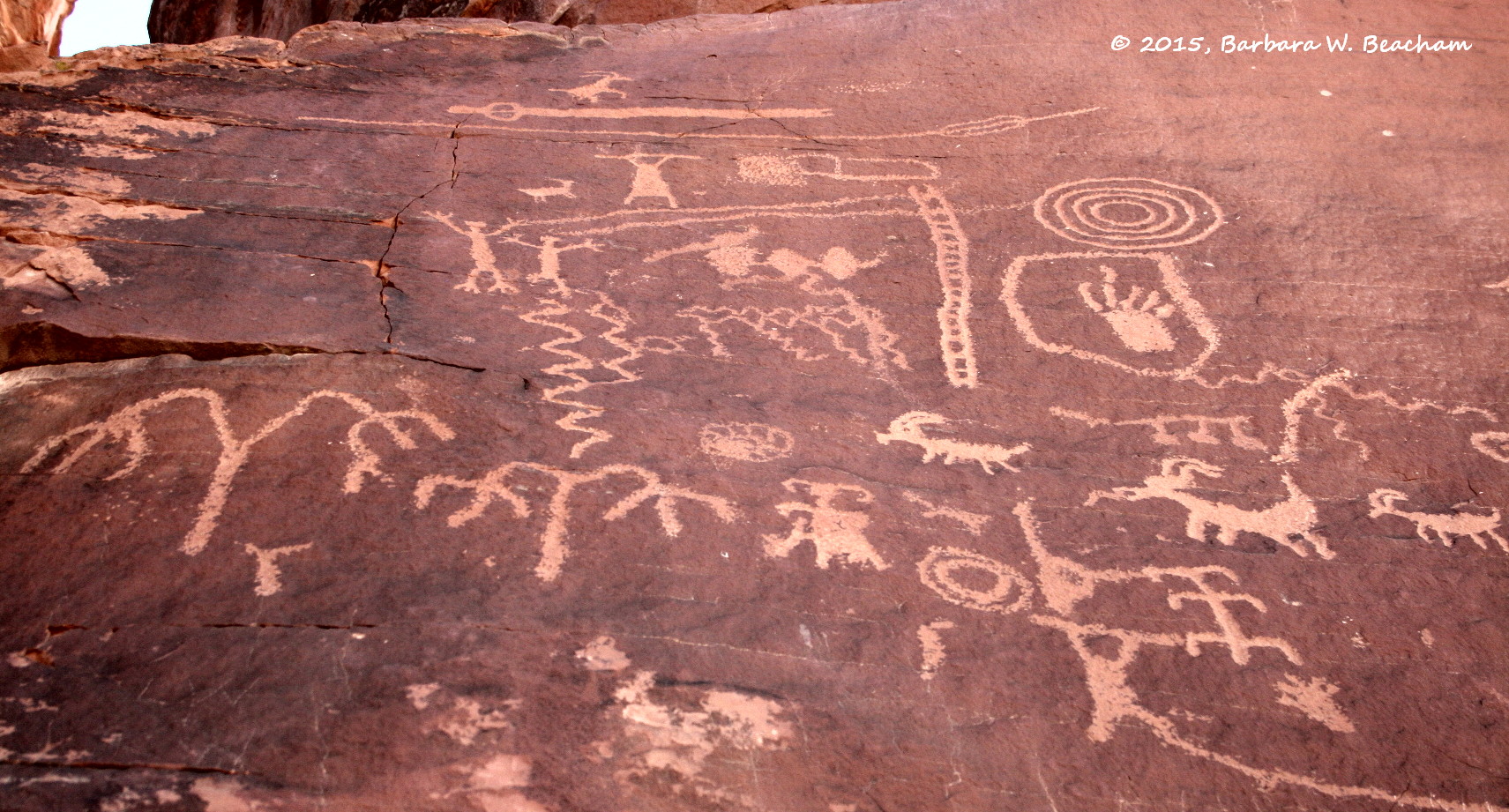
This is a unique flash fiction challenge where Barbara W. Beacham provides a new photo and the first sentence of a story each week. The challenge is to finish the story using 100-150 words. This challenge runs from Monday to Sunday.
The petroglyphs told the story of an unusual event.
The old man’s eyes widened. He blinked from the petroglyphs and stared into the sky. The interpretation led to the present. Something was happening. Yawing, seven, could sense the fear in his grandfather’s voice.
Yawing followed Old Manu’s eyes; the clouds gathered into a thick dark cover.
“What is it, grandpa?”
“There’s no time”
“No time for what?”
“Go! Get your mother!” Old Manu ordered Yawing. “We need to move quickly. It is coming for us”.
“What is coming for us?”, Yawing asked, wide-eyed. He reversed to the door.
“Go!”
Yawing quickly turned and ran to find his mother among the women at the river. He tripped and fell.
“Mother! We must leave, now”, Yawing shouted with a mouthful of sand. He spat.
“They are coming for us!”
Yawing’s alarmed voice chilled into silence, his three little sisters, playing outside their house. As they watched, he ran to their mother.
Geraniums flower beautifully, keep a lush appearance in some of the hottest, driest conditions, yet here she is blooming in the middle of Australian winter. JKLeahy pic.
The Melanesians including Papua New Guineans produced war shields they used to protect themselves but these shields have a great artistic value. While these large hand-carved rectangular, square or oval-shaped cultural objects were made for protection in tribal war, they are also very beautiful. It is hard to visualise a work of art being used to protect one’s life, but made of hard-wood, the shields serve their purpose.
A shield of the Melanesia is a fascinating object. Many are made from wood and carry intricate tribal and clan markings representing profound spiritual meanings. The maker ensures that the markings incised or painted on this shield would protect someone’s life. In all the cultural objects that come from my heritage (the Melanesia), fighting shields would be my favourite.
From the 80s, I started collecting shields whenever I travelled across PNG. Once the West Papua community had a trade show in Port Moresby and I was extremely delighted to visit and I purchased a couple of shields and a door which was carved with intricate shield designs. West Papua shields, the Asmat, top my list of favourites. Over time, my obsession with shields resulted in over 30 pieces collected.
I have some pictures tucked away in my old computer, unfortunately, I could not find them for this post. Most of the shields from my collection were displayed in a cafe I owned and ran with a friend.
From JKLeahy collection: Eastern Highlands shield-PNGBefore we migrated to Australia, there was a feud over lack of electricity and water to a cafe business I owned with a friend. The landlord kept charging us astronomical amounts when we had to operate the cafe without water nor electricity. We lost business and customers. When we demanded to pay less rent (with power and water), we were locked of the cafe. Th landlord took everything, exceeding the value of the disputed rent. It was not just losing $50,000 worth of cafe equipment and furniture, my shield collection were stolen from the cafe. All gone. What happened after is another story.
It has taken me all these years to put this memory behind me. The pain returns often when I gaze at a beautiful Melanesian shield in a gallery or the thousands of beautiful pictures on Google. While most of the best and unique pieces in my life have gone, I still have a few beautiful pieces to make me smile. And I have this book (pictured below).
With Harry Beran, my friend Dr Barry Craig, anthropologist and a longtime serving curator in Papua New Guinea published a comprehensive compilation on the war shields of Melanesia in their book, “Shields of Melanesia”. The volume illustrates more than one hundred types of shields from all culture areas of Melanesia that used fighting shields. Approximately eighty percent of the shields illustrated in the book have never appeared in print. The book has images of some of the best Melanesian shields.







![20150718_122849[1]](https://tribalmystic.me/wp-content/uploads/2015/07/20150718_1228491.jpg)

 Tribalmystic Stories