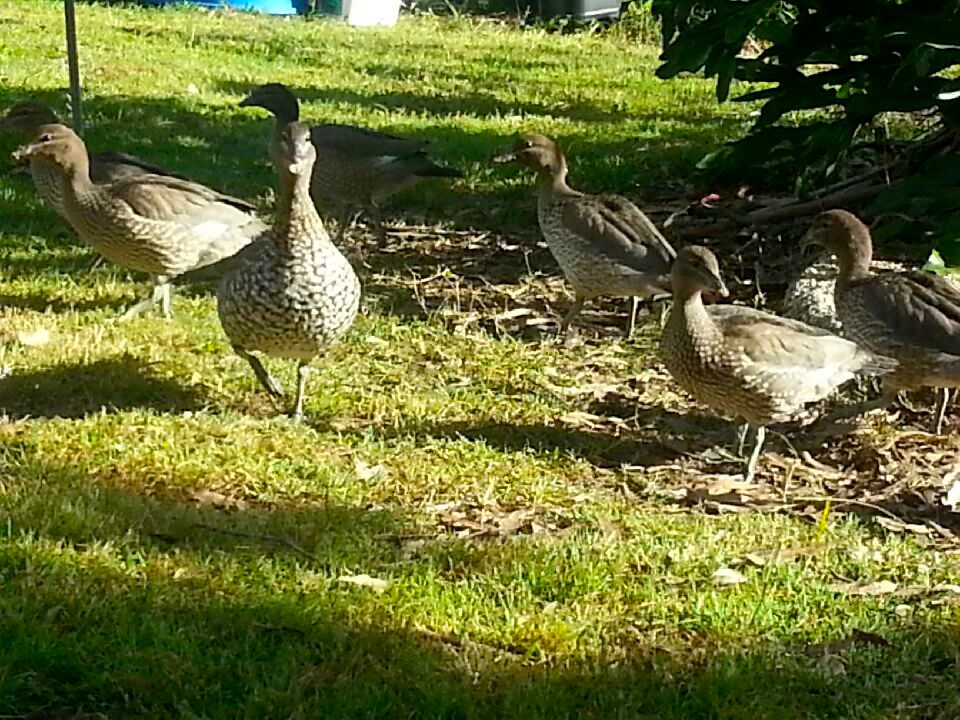
Good news. Princess, our home-raised wild duck who lost all her family members, returned with eight ducklings. More on her story in tomorrow’s post.

Good news. Princess, our home-raised wild duck who lost all her family members, returned with eight ducklings. More on her story in tomorrow’s post.

I personally love the cassowary bird because of its unique beauty.
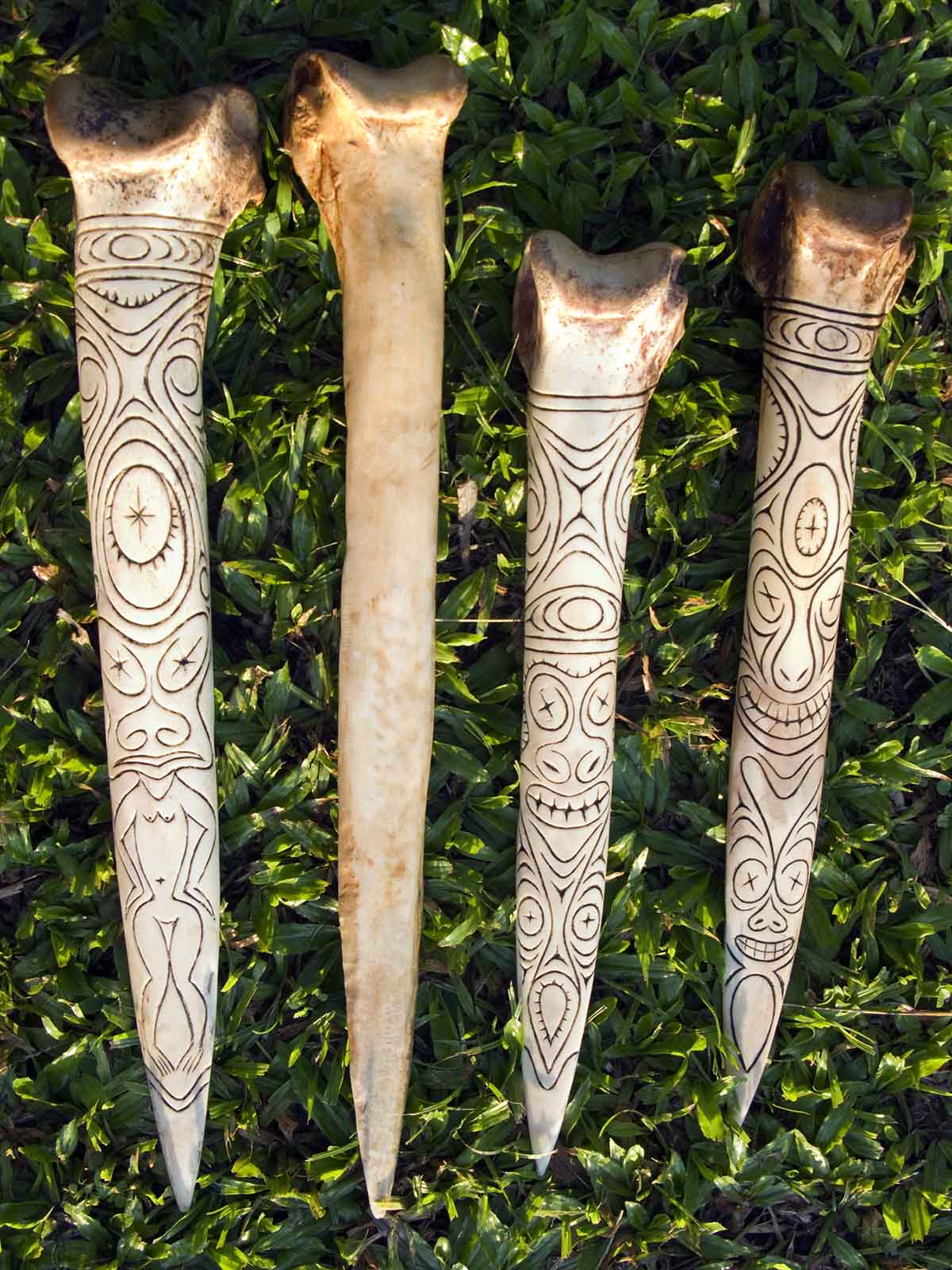
In Papua New Guinea(PNG), the cassowary is highly regarded in traditional myths as a source of life and spiritual energy. While cassowary is food in PNG cultures, it is also kept as a pet. Cassowary feathers are used for headdress and bones used for tools. I remember my grandfather (mother’s father) kept a cassowary wing bone he used to stitch sago leaves together for our roof. Some tribes, foe example the Abelam people in Sepik have used the femur of the cassowary birds to make weapons such as daggers (pictured below).
The cassowary lives in north of Australia and PNG. I constantly read articles about the near-extinction of this giant bird and I wanted to share the awareness that if we in Australia (and PNG) are not careful, we will lose this species.
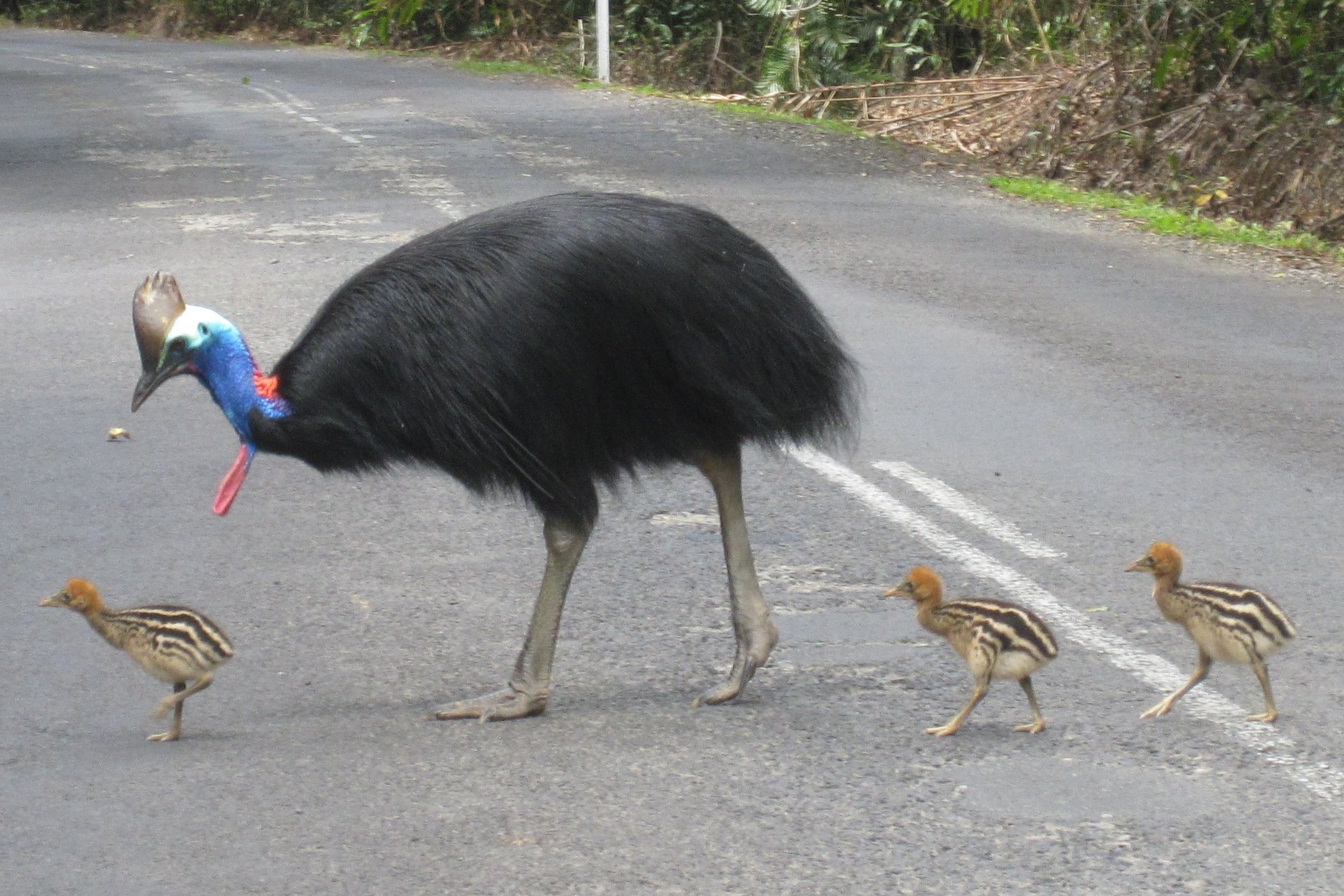
This question is no longer a joke.
According to Megan Neal at Houston Zoo website:
“Unfortunately, there’s no punch line and the situation is no laughing matter. Habitat loss and fragmentation have left the Australian population of cassowaries on the brink of extinction. These huge birds need large amounts of land to roam in search of food and to breed”.
Like other species, cassowaries’ habitat have been repeatedly destroyed by the boom in residential and commercial construction. Everyone wants to live near the rainforests of Australia, but there’s simply not enough room for everyone.
The Australian Conservation Foundation (ACF) answer to the question gives another example of the problem. The cassowary crossed the road because its habitat has been chopped in half by a freeway. So far this year, more cassowaries have died from speeding cars, dog attacks and habitat loss than in all of 2014.
ACF report said the modern-day hazards are now increasing the extinction risk.
“While local groups are doing great work to protect these gorgeous creatures, governments need to catch up! We need to transform our national nature protection framework so local, state and national laws work in together to protect life in Australia”.
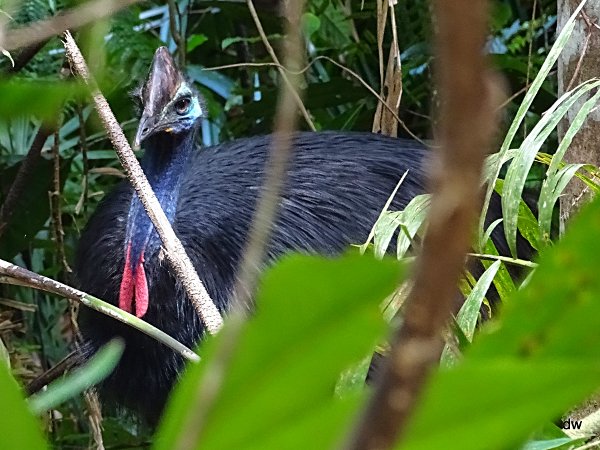
It is an iconic and unique species that deserves better than the devastating carnage it faces on regional roads throughout the Wet Tropics.
Sadly, 2015 is off to a particularly bad start for the endangered – and rather large – flightless bird with reports of at least six cassowaries killed between Mission and Bramston Beach this year.
Another cassowary was killed recently by domestic dogs on the Atherton Tableland.
Until recently, the remaining wild population was thought to be at around 2000. However, new research by the CSIRO estimates that the cassowary population may be more than double that at around 4400.
But this number is spread over 730,000 hectares of potential habitat with strong populations known in some areas and few or no records from other areas.
I asked one of my younger readers, aged 17, what I should do to my blog content to make it better for my readers. Should I write about the same thing? Should I allocate days for each topic or category?
She said, “No!, don’t change it. I like the variety and the surprise. I want to open the post and be surprised. I do not want to know what is going to come”.
I took that comment as a compliment and I appreciated the thought that this blog appealed to a wide range of age groups. I hope that more readers can give me feedback so I could improve the content and make this blog better this year.
In line with the discussions over content, I saw this article about blog content and it made me laugh initially, but, I thought this could be useful to apply to what I/we blog about. To fellow bloggers, I hope that this information is useful and it inspires you to add something new to your blogs in this new year. The article was written by Jason Miller.
Content Healthy – Blogging Food Groups
If you know me at all then you know that I am a huge fan of marketing analogies, said Jason Miller. One of my favorites, and most useful, is the blogging food groups. Originally coined by Hubspot’s Rick Burns back in 2009, I have been applying this strategy for years and I believe that it’s more relevant than ever now that content marketing is such a vital part of the marketing mix.
Many of us forget that the blog is the original social media channel. It’s the social media rug that ties the content marketing room together. As a major fuel source for social, it’s vital to mix up the content on the blog, after all variety is the spice of life. Just as anyone would quickly tire of eating from the same food group day after day, your customers and prospects can grow tired of the same type of content again and again.
The infographic below is inspired by the original blogging food groups post mentioned above but with a slight twist. My hope is that this infographic will inspire you to mix up the content on your blog by including some meaty posts, a side of vegetables, a serving of whole grains, a condiment or two, and everyone once in a while a sweet dessert.
To my readers, I wish you all a Happy and Prosperous 2015. I hope all your wishes and dreams come true in the new year. Thank you so much for your contributions to my blog. I would like to especially thank those of you that follow and others that consistently visit, like and share your thoughts on each post. That means a lot to me. Thank you WordPress and team for making it easy to blog and also to learn and share. Like other blogs, WordPress has sent me the statistics for this blog activity in 2014 and I would like to share it with my readers. As you read this, the blog will reach 10,000 hits in the next week. Once again, thank you with love from me.
The WordPress.com stats helper monkeys prepared a 2014 annual report for this blog.

Here’s an excerpt:
The concert hall at the Sydney Opera House holds 2,700 people. This blog was viewed about 9,500 times in 2014. If it were a concert at Sydney Opera House, it would take about 4 sold-out performances for that many people to see it.
Short story, JLeahy, Tribalmysicstories

I stepped outside the doctor’s room into the surgery. The air felt warm even though the air-condition was on. It smelt clinical and I felt nausea. My mouth dried and suddenly, I felt I needed to drink a whole tank of water. From the red seats, amongst the other sick patients, and their loved ones, Bill dutifully stood up. He walked to me. I saw the water cooler near the receptionist but resisted the urge to stop and drink. A toddler, covered in bandages was crying in pain. I needed to get out.
Bill wore a black T-shirt and a pair of old Levis. His hair was messy.
“Yes?”, he asked when his eyes met mine.
I didn’t reply. I walked past his glaring eyes to the lift. I felt his previous night’s anger slicing through my back as I stopped in front of the lift. The lift arrived on the 13th floor, and I stepped in. I pressed the green “G” button set on the silver squares inside the lift door. I tried to get a space as far from Bill as possible. It was close to midday and already the lift was full of office workers and sick people.
“What did the doctor say?” Bill asked as he squeezed next to me. He reeked of Old Spice and alcohol. I turned away.
“I’ll tell you at home”, I mumbled as I looked at the people in the lift.
A beautiful 5’ foot 7” blonde with popped China Red lipstick gave me a weak sympathetic smile. Her make-up was flawless. She had my height, but her red high heels put her at least two inches taller. An old Muslim lady, head covered in pink cotton stood next to the blonde. The old lady only reached three-quarters of the blonde’s height. In contrast to the blonde’s green slimline dress, the old lady wore a brilliant blue Mama-dress, and a pair of flat, soft, black shoes. The old lady was holding onto two girls, about three, and five years old. The three had beautiful olive skin and deep-set eyes. The girls were looking at the blonde. The old lady looked at me with no expression.
“Why don’t you tell me now?”, Bill broke my thoughts.
“I don’t want to”, I said.
The middle-aged man, Indian, dressed in a fine, light grey Cashmere suit stared at me. He was on the other side of the blonde, and directly opposite. I looked down. The Indian man’s right hand-held
a briefcase by his sleek pants. He should look at the blonde, not me, I thought. On the floor, next to the Indian man’s black Italian leather shoes, my eyes caught a pair of white crocodile-skinned shoes. It had a pointy tip, just like a real crocodile’s mouth. Who wears crocodile skin shoes?, I wondered. My eyes travelled back up his green tight vinyl pants into the eyes of some 17-year-old wacko with pink shirt. He had stood his pale two-inch blonde hair up in an attention with strong gel. He slipped me a fake smile when I caught him starring. Croc-shoe boy wore a small gold earring on one ear, and a diamond stud plunged into his narrow flat nostril. He exaggerated his eye lines with some make-up. The croc-shoe boy’s friend was twice his size. He seemed to be the same age but looked unhealthy. He was pimply, scruffy and dirty; a complete opposite to the croc-shoe boy. They were saying something and giggling. They both looked at me, mocking. Why is everyone looking at me?, I wondered and kept my eyes down.
“Is everything alright?” Bill asked me again, and the lift jerked off and glided down towards the front of Wickham Terrace, Brisbane.
I ignored Bill. I felt the lift stopped. A tall young man stepped in, and greeted the blonde awkwardly.
“Lunch?” he asked smiling. She blushed.
The lift took off and did not stop on the next level, nor the next. The Indian man in Cashmere tried to press the buttons. The lift kept going, and accelerated.
“It is not stopping!” he yelled.
It felt like the lift was falling into empty space and my gut was going in the opposite direction. I heard screams. My mind went into slow motion.
BANG! The lift crashed into something hard and stopped. We must have hit “G” Level. Everybody kept screaming. The lights went off and came back on. Some people fell on the floor. Bodies crashed onto me. The two girls screamed for their mother. They grabbed the old lady. The alarm went. I felt sick. I turned into the cold silver wall and let myself slide onto the floor. The last thing I saw were the white crocodile shoes.
“Jess! Jess!” I heard Bill calling.
“Jessica! Wake Up!”
I came to. It was very hot; I was drenched in sweat. It smelt. Different smells of people smell, both good and bad. I must have passed out. I could vaguely see the others in the room but they felt close. They were in various moving shapes. I didn’t know what had happened.
I felt like throwing up again and tried to focus. Slowly, everyone came back into form. I could hear the two little girls crying softly into the old woman’s dress. She was speaking very gently to the girls in a foreign language. The awkward young man, looking concerned, had his arms around the beautiful blonde. The blonde was pale. Her lipstick smeared. The Indian man had taken his jacket off, revealing a sky-blue cotton shirt teamed with a pin-stripe tie. In a large “V” shape, sweat soaked and darkened all his front chest. He looked crumpled on the floor with his briefcase in his lap and jacket rolled in a ball.
“Jess!”
My eyes turned to Bill’s face hanging over me and I looked away. I had leaned into the lift wall with my head resting on the croc-shoe boy’s shoulder. The croc-shoe boy and his friend were cursing nervously. I felt awkward. I could not move myself so I turned and looked at Bill. In place of his 40 years of age, I saw a sweaty 55-year-old wrinkled man. His unshaven face matched his salt and pepper hair. His eyes were bloodshot and his jaw line was tight. Now the Bourbon was obvious on his breath. His eyes continued to hold the question as he spoke.
“The lift is stuck. There is someone coming.”
There was no emotion in his recount.
“You have to stay awake,” he changed his tone.
What is wrong with you?”
I had no more strength to hold it back.
“I am pregnant!” I said aloud.
Bill’s jaw dropped. He stared at me in disgust, speechless. Everyone in the lift looked at me as if I had announced I had smallpox. I had kept this for three months. Bill and I have not had sex for at least three years.
My last post on my personal journey through domestic violence brought a lot of pain, anguish and fear. With the graphics being provided in the New York Times film by Carey Wagner, my mind took a long trip to many forgotten places where the monster lived.
I have taken some time to work through things I kept to myself for a long time but in response to the article, many kind words have been spoken by friends, family and even caring strangers both here, personal emails, phones and my Facebook Page. It is a long hard walk to the end of violence against women but we have to continue to talk about it and fight the monster.
I have two very important people in my life; my sons Nathan(18) and Chris(15). As a mother I always worry that whatever actions I take that the boys would be watching me and there would be consequences. I always worry I may hurt them emotionally. This is one of the things we need to teach our boys and young children in PNG if we are serious about starting at ground level.
For my own case, all these years, I did not speak much about my life with the monster. I felt very strongly about many things and my priority was always to protect sons. I knew they would soon learn about me and the culture they are part of. Because they were born into a combination of cultures and parents the responsibility comes back to their father and I to teach them about what is expected of them and how they should treat others.
My past did involve my sons but only just. I recall a confronting incident in 1999 that involved my children and my past. I had fled from the monster in 1988. I changed my life, settled several years later in a very happy relationship and had my sons.
Our family went to a friend’s place one day. My sons were barely 3 and six-months-old. We were invited to the friend’s place for Sunday brunch. When we arrived, the boys my partner and I, in front of my friend’s house was the man who had beat me for four years. He was invited! It was absurd. However, when you look at the big picture, which took me a long time to see was that – everything was ok. Even friends accepted that what this man did was ok.
I was shocked but having my baby (Chris) in my arms, I pretended to ignore the beast and proceeded forward. What I did not expect was he came forward, passing me, to pick up a ball my three-year-old had dropped. Stunned, I watched him hand the ball back to my son. Then the man did something that made me want to kill him. He gently touched my son’s head. I nearly fainted.
We left the party and returned home because my partner and the father of my sons could see that clearly, I became very ill. We never spoke about this incident but I knew that I could never let that person come near my children.
Like all families, life continues and we grow as people and as a family, we take on life’s challenges together. I believe as a parent, I must always do my best and show what is in my heart. Show love. This love that I teach and show is the greatest conqueror of all hardships and it teaches my sons to love others and treat them as they would want to be treated. That was what my late grandmother, Geyam Kauc always said. I tell my sons to always treat people with love and respect. And when they are older, especially in relationships, treat women with the same love and respect and the women will appreciate and reciprocate.
Thank you to all those people that commented on the “PNG Women: When can we be safe in our own country” post and I hope that what I wrote made a small contribution to help in creating more awareness and also give hope to victims of violence.
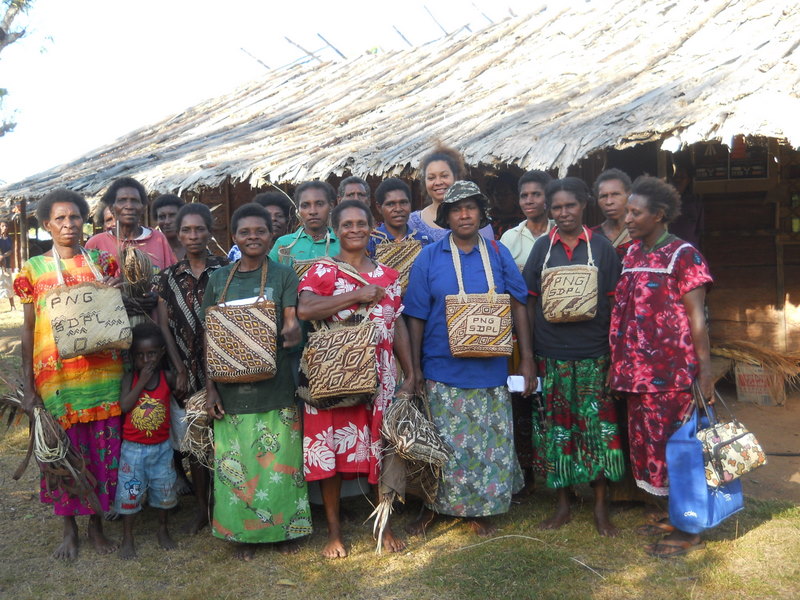
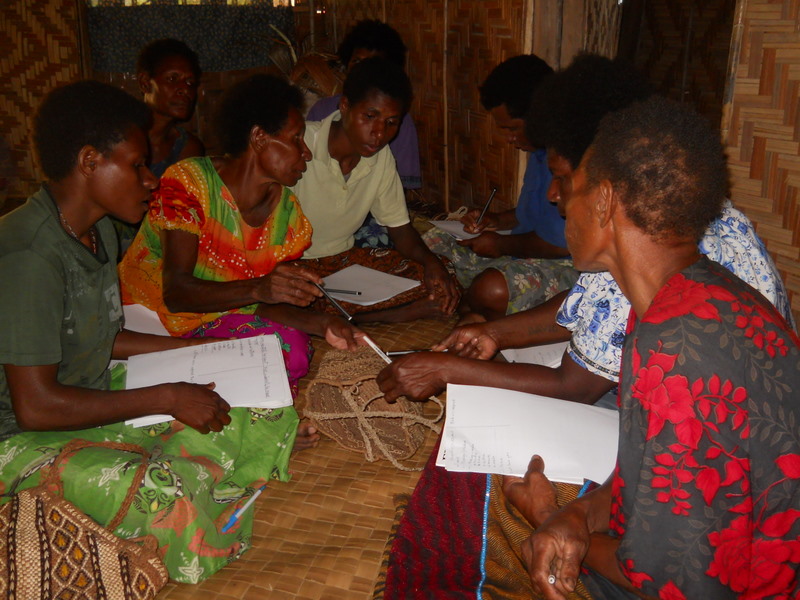
As promised, I am sharing a story I wrote based on a true story of another woman who was a victim at the hands of the monster. This story hopefully one day will be published in a book of short stories. I thank my teacher Isabel D’ Avila Winter for editing and formatting this story. If you have any comments about the story, please let me know. Pictured below is a picture of women I worked with in Eniyawa Village, Suki, PNG where I was told this story. I met several very talented women weavers, leaders and also victims of domestic violence relationships. It was in the evenings after our weaving workshop that we would sit and discuss some of our own personal triumphs and how we got away from the “the monster”.
My Last Walk
By Joycelin Leahy
I could feel his eyes burning into my back as I struggled uphill and over the grass stubs. The air was tight around me. It is almost four in the morning and chilly.
“Walk faster!”
This time I felt Bomoga’s heavy breathing, close and menacing. I longed for the day’s first warmth, for the softness of my three-month-old baby Boni and for the giggles of his older siblings. I felt extremely fatigued and wished I could stop walking. A sudden breeze brushed over the tall grass making a shoos sound. I shivered.
This was how Bomoga and I walked to the garden, except I walked behind him with a child on my shoulder, one in the bilum on my back, whilst pulling my eldest by the hand. Their father walked proudly in front with his spear, his small bag strung across his chest. This time I was in front, wearing my favourite red meri blouse. In haste, I had worn it inside-out. It hung loosely on me.
As I reached the top of Kasu Hill, I struggled for air.
“Hurry Up!”
I could feel myself sweat vigorously as my heart pumped wildly.
Kasu was the only hill in Domogu Village in the wallaby plains of Western Province in Papua New Guinea. The rest of the area was flat grassland hunters burnt often to entrap wild game.
As commanded, I marched a further three kilometers along the ridge and then descended gradually. I stopped feeling the mud and my sore right foot. Near Kasu Hill, NGO environmentalists were studying the tailings allegedly from Ok Tedi Mining. Along the river bank, hundreds of fish and plants had died. Usually there would be people here, but it’s too early – there is no-one.
I felt my milk starting to drip down my blouse. I hadn’t worn a bra, so my breasts were full and uncomfortable. My heart beat faster as I steered my thoughts from my baby. The sun rose and faint shadows began to form while warm air caressed my face. I was sure now: we had crossed the open country and left Domogu Village. Bomoga’s ancestors, nomads like mine, had decided to settle in this land because of its fertility.
We’re up high and it is clearer. My eyes scanned over the mountains where mining giant Ok Tedi explored. To the south, there was an airstrip; Airlines PNG flew in weekly. From the top, the village looked like an exquisite jewel, a deep jade opal, festooned with glassy lakes of various sizes.
“Move!” his voice cut through the silence.
I stumbled forward.
Soon, we entered a dark forest, the only obscure part of the land. Strangely, the birds were silent. I had never been here, but I knew sorcerers came here often for bush medicine. I looked for the outside light through the tree openings. I saw only the lingering fog, separating me further from my children.
“Keep walking,” he hissed behind me.
From the moment he’d woken me this morning, I had not looked once in Bomoga’s eyes. It was still dark and I had felt his sweaty hands touch my arm. His physical stench was almost invasive. I thought he wanted sex but he shook me roughly and ordered me up and out of the house. His shadow had loomed over me as I carefully took Boni off my breast and put my meri blouse on quickly. My baby stirred and nestled into his flannelette blanket, eyes still shut. Thank God, I thought, he didn’t wake up and cry for more milk. I hung on to the last touch of his tender little fingers. Eka and Maria were asleep. I heard Bomoga pick up something and then close the door behind us. The mood between us was chilling. He was quiet and cagey, unlike his usual loud and showy ways.
If we were not having sex, which was rough and unpleasant, we had arguments which would end with a sudden punch in my eye or stomach, sometimes causing me to blackout. I knew if I answered back or cried out, the beating would be worse.
He repeatedly told me no-one would help me because I was his wife. Not even his mother, sisters, or other villagers. I always felt like his prey, moving under his watchful eyes while I went about my daily chores.
My thoughts reached out to my children, then my mother. Our years of marriage had worked this way: while Bomoga ruled, I kept my mouth shut. My bride price had been paid and when my family left after the wedding ceremony, I knew I would never see my mother again. I ran after her. We cried and hugged for a long and last time.
The sobbing began from inside now, my eyes warmed and salted with tears.
I remembered a slight improvement in Bomoga at the birth of our first son. I’d made him a proud Melanesian man by having a first male child. Eka was my child of hope. I held this hope close to my chest along with the bible. Children can change a marriage, the village pastor had said. Sadly, Bomoga’s cousin came back from the city one day with SP beer and some other alcohol. The two had many days of stories. I saw a change aroused in Bomoga, followed by his old ways. When I had two more children and threatened that I would leave, I saw something new in his eyes. He started beating me.
Today his manners are different again. He is like a time-bomb, ready to go off at anytime. As I walked on, I remembered how no-one had seen us leave the house. Not even Tau, the old Papuan. I wish he had already opened his trade store. He was a kind man. If he or someone else saw us leave then, one day, they could tell my children. I did not leave willingly. It was not my choice to leave them behind.
As we descended through the gloomy thick undergrowth into a flatter area, I glanced across a small opening. I could finally see sunlight touching the mid canopy. It was a pretty sprinkle of luminosity touching various leaves and the moss. I caught a glimpse of a beautiful Bird Wing butterfly on a fern, just waking up. I felt a flash of hope.
We left the dense of the forest and approached a Y junction. I could hear rapids.
“Turn down towards the River,” Bomoga commanded.
I turned towards the sound of the rapids. My mind focused on the returning pain in my foot. In each step, I felt the sharpness of the rocks greeting me as I descended over each one. The rapids became louder. Before me was the belly of a fast flowing river and it was full from the rain last night. Is he going to drown me? Perhaps this was my last walk, I wondered.
I imagined villagers rushing to screaming children. My body laid there as the women rushed to the children. My laplap had been swept away and only my treasured meri blouse, still inside out, was clinging to my slim frame. I was dragged ashore with a paddle shafted under the hem of my blouse. Here, I was left on the pale silky banks of Suki River while everyone gathered to look. Then a woman ran up and started yelling and then, in a cry of recognition, she bellowed my name: “Sulita!, Sulita! It’s Suli!.” Everyone would turn and ask; “Who is Sulita?” They had not recognised me half dressed and impaled by a black palm spear. By then my corpse had been soaked pale and bloodless by the hours in the river.
“Stop!” he yelled over the rapids.
I stumbled and halted, snapping into reality.
On the river’s edge lies soft silky mud. The ground is pale and covered with smooth boulders of all kinds. In places there were no stones and the ground looked easy to dig. I kept my face down and turned away. My staggering feet were covered in mud and grass. I needed to relieve myself. Under my extreme state of duress, blood rushed to my head, causing a war of pins and needles.
“Turn around and face me. Look at me.”
Slowly, I raised my head, looking up into the point of his most prized black palm spear. In the background everything there was to see and hear faded.
Bomoga had speared the biggest pig, the fastest wallaby and driven the largest cull of deer. Many feared him because of his mastery with the weapon itself. My eyes shifted from the spear and held my husband’s eyes. Even after ten long years we stared at each other as if we were strangers. I finally felt at peace.
Bomoga’s eyes were wild, bulging and red. His nose flared and his eyebrows twitched in the anticipation of violence. He raised and pointed with the spear.
“Where would you like to be buried?” he asked.
Welcome and thank you for reading my blog. My name is Joycelin Leahy. My blog name is Tribal Mystic. I am an Ahe (pronounced: aah hee) woman from Morobe Province, Papua New Guinea (PNG); one of the most unique and diverse countries of many tribes, languages, cultures and natural beauty. I now live in Brisbane, Australia and work between the two countries.
Whether you come from PNG or not, we all come from tribes and we belong to some kind of tribal group and material objects or things that give us our identity. I believe each person and each thing has a story. I am hoping to share with you some of these stories about people, animals and things that have been part of my life. I hope that you would find these stories interesting and share them with others. I have been a journalist, artist, an arts curator, business woman, climate activist and story-teller and a mother of two amazing sons. I have also been a cleaner, house painter, body painter, sales person, renovator, telemarketer, campaigner – you name it, I have tried many things…As present, I write for pleasure and I paint and teach others to paint while I run my art gallery in Bellbowrie called Beyond Pacific Art.
I am very passionate about sustainable heritage particularly with the effects of climate change. I would also like to see more women in PNG and the Pacific Islands become self-sufficient by using their traditional heritage to do contemporary business and at the same time, not give in to too much commercialisation and losing their traditional skills. Teach your daughters and grand daughters your skills now. I only hope for eco-tourism in the future and I would like to see Pacific Island countries, particularly the Melanesians work extra hard to preserve their unique heritages. We are losing many languages. I support visual artists and embrace all the challenges that women face around the world and particularly in my country and the islands. There will be posts about many of my interests I have just mentioned as part of my introduction to this blog. I hope what I write would support, educate and be simply enjoyed. Please give me some honest feedback.
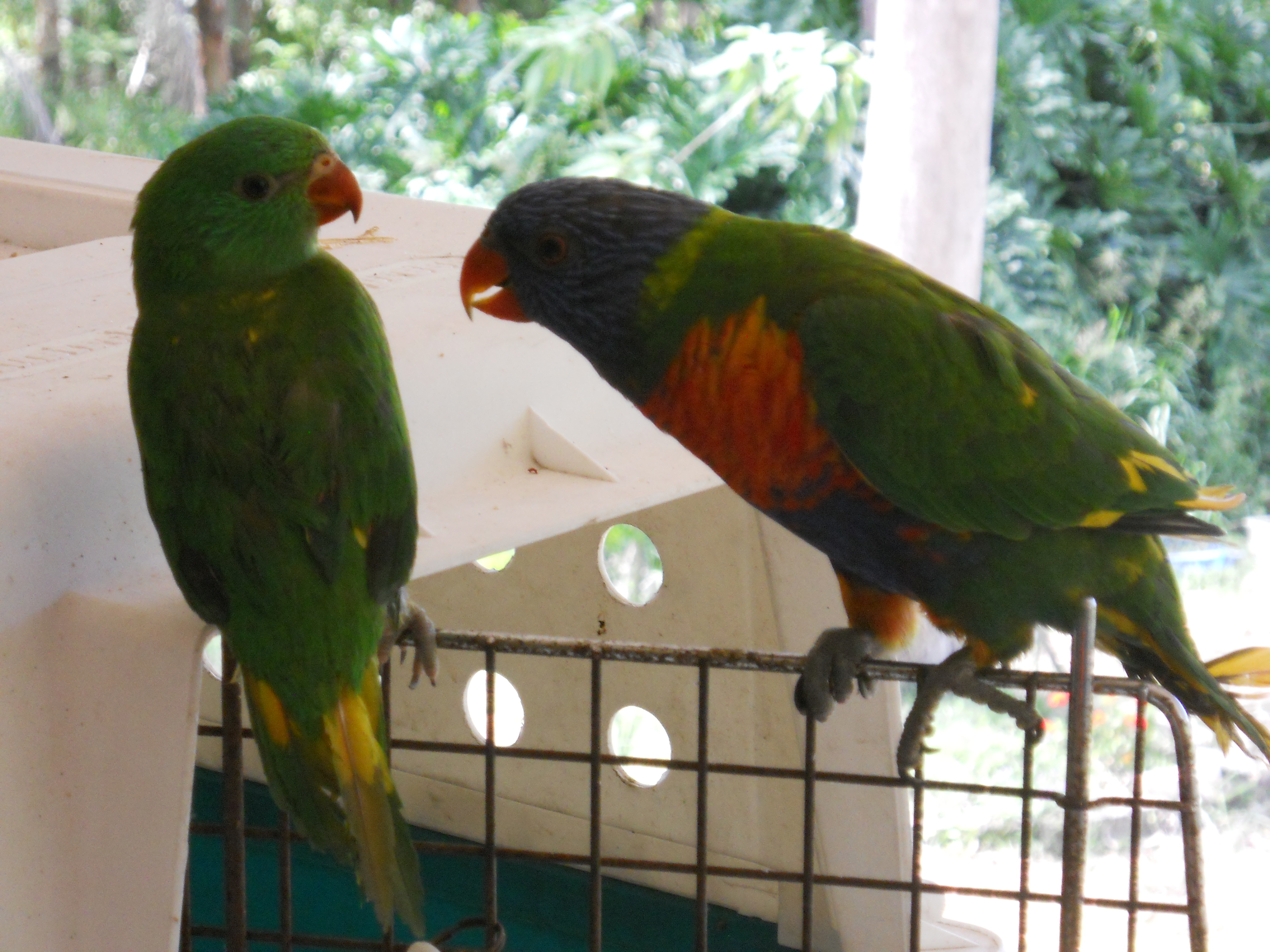
I have been contemplating this role as a blogger for almost three years and was always afraid and concerned that I would never have the right content or quantity to write about. Just writing this tonight makes me feel like a very excited small kid dying to play in a large playground with strangers. I took some time to speak to friends and family who are expert bloggers (thank you Mari Ellingson – Island Meri) and looked at veterans Malum Nalu and Masalai and after some research and feedback I have finally taken the giant step. I hope that I can stand comfortably on my feet in the coming months and make another step towards sharing extraordinary stories and pictures. I will write about art, culture, heritage, climate change, creative writing, nature, family women, business, music, beauty and fashion, but to name a few. Each post will be different and could be from any of these topics. In this first blog, I would like to share an image of two birds – both lorikeets that have come to live with us here on the outskirts of the city in Bellbowrie. Over the years my sons and I have loved and cared for animals and insects and I often get a shock when without warning I find a dead beetle in the freezer, waiting to be buried properly. I have also been deeply moved often when my sons make me stop at roadsides to pick up road-kills and take them home with us. Whether it be a possum or bird they wanted us to take the animals home to give them a good burial in our yard. Next blog I will share with you one of my short stories about life in Brisbane City. Tenk yu tumas na lukim yu! (Thank you very much and I’ll be seeing you!).
 tribalmystic
 Tribalmystic Stories