Tag Archives: Papua New Guinea

More Centrepieces from Papua New Guinea


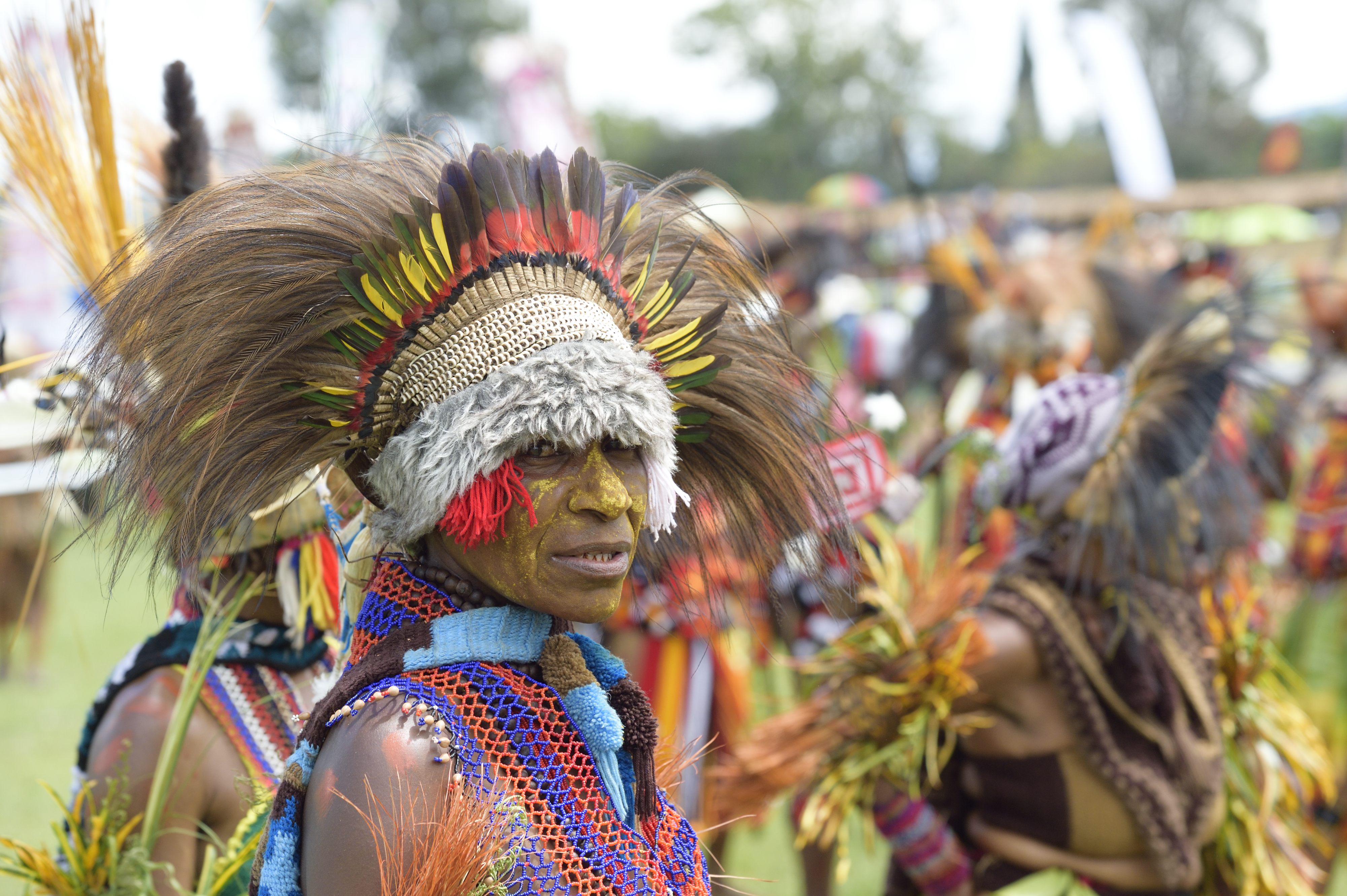
In my last post, The Centrepiece, I wrote about learning and making my own headdress. Here, I wanted to show in colour,  some of the most beautiful headdresses from Papua New Guinea (PNG).  There are too many to show but I have made a random selection of headdresses in these unpublished photos from a recent cultural show. Our culture, the art and body adornment are some of the most colourful things that attract photographers from across the world. In every tribe and the work we put into most of our traditional costume preparation before we show, the headdress remains the centrepiece.

These images were taken by a close friend and a well-known PNG-based photographer. Lucky for me, he had just returned from the annual Goroka Show where he captured these images.

For more pictures from this photographer, please visit: http://www.rockyroephotographics.com/


2014-09-13-11-18-59_01Roe


2014-09-13-10-52-49Roe            2014-09-13-11-04-03_02Roe


2014-09-13-11-12-57_01Roe             2014-09-13-11-20-27_01Roe


2014-09-13-11-22-31Roe            2014-09-13-11-07-52_01Roe


2014-09-13-11-08-21_02Roe

2014-09-13-11-14-21_03Roe


2014-09-13-11-05-41Roe              2014-09-13-11-16-54_01Roe


The Centrepiece


Photo_60566C60-CE42-23E0-C0CA-A5E03D03E32D
At the age of 15, in high school, I wore the same headdress my grandmother and I made. To date, I have this precious item with me. It has changed, lost some feathers but it still works as a centrepiece every time I wear it on my forehead.

Memoir series by JLeahy

Mother returned from the Lae city markets. It was a Saturday afternoon. Today, we were preparing for a big singsing in our village. We were preparing our best for the Annual Morobe Show. There would be hundreds of tribal groups and performers so, we had to wear only authentic costumes. We had to wear the costumes carrying markings and stories of our people and the costumes we inherited from our ancestors. I needed a centrepiece for my headdress.

As she came up to me, I searched Mother’s face for emotion. She teased my un-spoken questions with the twinkle and mystery she showed in her eyes. Finally, she was smiling. Her lips remained sealed more so because she was chewing but I knew she got it. I broke a smile at her and completed my task.

“There was only one Highlander selling two tiyeng ngawahu (Bird of Paradise plumes) and I bought one”, she said.

“Ohhh ngayam!” grandma responded in Bukawac, meaning “good”.
Grandma was pleased the mission was accomplished.

I sat next to Grandma, helping her to twist the sisal fibres on my thigh into strings. We twisted two separate bunches of single fibres which formed a string. Then, we dyed the strings yellow and orange with turmeric roots, and red from Mbuec, a tree that gave red dye in its seed pods. To get grey, we buried the other strings in the muddy banks for a few weeks. For the black we used crushed charcoal with coconut oil. Once dried, Grandma used a ‘needle’ made from a 15cm long re-cycled and sharpened wire. This ‘needle’ came from the inside of a broken umbrella bone. Grandma sewed the strings into bilums (string-bags). The new bilums will be worn in the dance on the day.

We used some of the strings to thread scented leaves and herbs for breast decoration. These same leaves were used for magic, but I was not allowed to know. Not yet, Grandma said.

As she tried to speak, Mother’s mouth was full of red chewed betel nut and she needed to spit. She eased her bilum of food down in a heavy thud. She fished in her smaller shoulder bilum and spat. She held out her hand with a crumpled newspaper wrap.
I jumped up to grab it.

“Careful!.. be careful!”

I was thrilled. Without searching her bag as I usually do for the market gifts of peanuts, green margarines and cucumbers, I turned away from Mother. I smiled at the faded newspaper as I bent and laid the small light bundle on the dry sand next to my twisted strings. I sat down and brought Mother’s parcel to my lap and un-wrapped it.

I was afraid to touch her at first. The bird was beautiful and so soft. A spot of black around her beak. Green velvet on her neck and breast. The rest of her body was a burnt butter yellow with a white centre and a beautiful pale yellow outer-feathers.  The base of the main feathers was an intense, vibrant golden-yellow which faded out into white. Her inside was gone. It was shallow. She had been dried, smoked and flattened.

I suddenly felt a pang of guilt and pain swept over me. I thought of the bird flying high and calling out in the trees and I wondered if she suffered. I felt more guilty about this bird than the chickens which I already had feathers from. I was seven and never held a real Bird of Paradise in my hand, even a dead one. I had seen many on headdresses during the festivals. I have held other birds and had parrots as pets. I looked at the bird a little more, each faint wiry piece that joined the next.  Then I reached out and touched her.

Of the 39 species of the Birds of Paradise in the island of New Guinea (PNG and West Papua), this one, known as “Greater Bird of Paradise” was the most precious centrepiece for our tribal headdress. The birds did not live in our bush. Our people traded and bought the feathers from the highlanders.
Mother had to seek out hunters from Western and Southern Highlands who rarely brought the feathers to the main market in Lae. She was very lucky today.

To have a Bird of Paradise as your centrepiece was the ultimate dream of every dancer in our tribe. Many other Papua New Guinean tribes wore numerous plumes in singsings. Many more longed for such honour but only settled for parrot, cassowary, and chicken feathers. This bird was our National emblem.
In our Wagang village singsing group, most people wore cockatoo, parrot, cassowary, turkey, guinea fowl and chicken feathers – all made into spectacular head pieces.

I laid out the Bird of Paradise plume and stitched it into my headdress. The headdress was made of feathers and shells, sewn onto a tapa cloth. Most of the headdress was completed days before. I was only waiting for the centrepiece. The cloth would be tied around my head. The Bird of Paradise would be the centre feature. When I wore the headdress, the golden-yellow, wispy and silky soft feathers would sit high above and dance. The beak would be looking down at me and her tail would move with me as I danced the we-e si-ing (war dance).

++++++++++++++++++++++++++++++++++++++++++++++++++

Protected Species – the Birds of Paradise are a protected species in both Papua New Guinea and West Papua (Indonesia)

Birds

Much sought after as pets or for their feathers, several birds of the forests of New Guinea such as parrots, lorries and birds of paradise are illegally exported for trade. But just the local use of a species can be detrimental to its survival; wildlife capture and trade of cassowary for traditional use has severely reduced their populations in some areas and where they remain, there is increased pressure for trade.7

Birds of paradise have also been historically traded, especially for their feathers. While West Papuans’ use of the birds’ feathers in cultural celebrations is part of their tradition, Europe was once the main market for the plumes, to be used for women’s hats and accessories. Trade peaked in the late 19th century, when plumes from more than 50,000 birds were exported every year, generally to Paris for capes and hats.8

Birds of paradise continue to be smuggled out of Papua Province, Indonesia. The trade in the birds adds to the pressure they already get from continued hunting and the destruction of their habitat by logging, road construction and conversion for human use. Although banned by the Indonesian government since 1990, trading in the feathers of the birds of paradise is still ongoing.9

http://wwf.panda.org/what_we_do/where_we_work/new_guinea_forests/problems_forests_new_guinea/wildlife_exploitation_new_guinea/wildlife_trade_forests_new_guinea/


Visiting ‘Old Friends’


In July (when it was pretty cold) I went to Adelaide to surprise my friend Anne Stanley who turned 50. I had known her since we were 16 and 17. We have lived in different countries for the past 30 years but whenever we spend time together, it seems like we have never parted. Anne, not only is my best friend, but a sister. I will feature her one day on this blog if she lets me. While I visited Anne, I went to South Australia Museum (SAM). http://www.samuseum.sa.gov.au

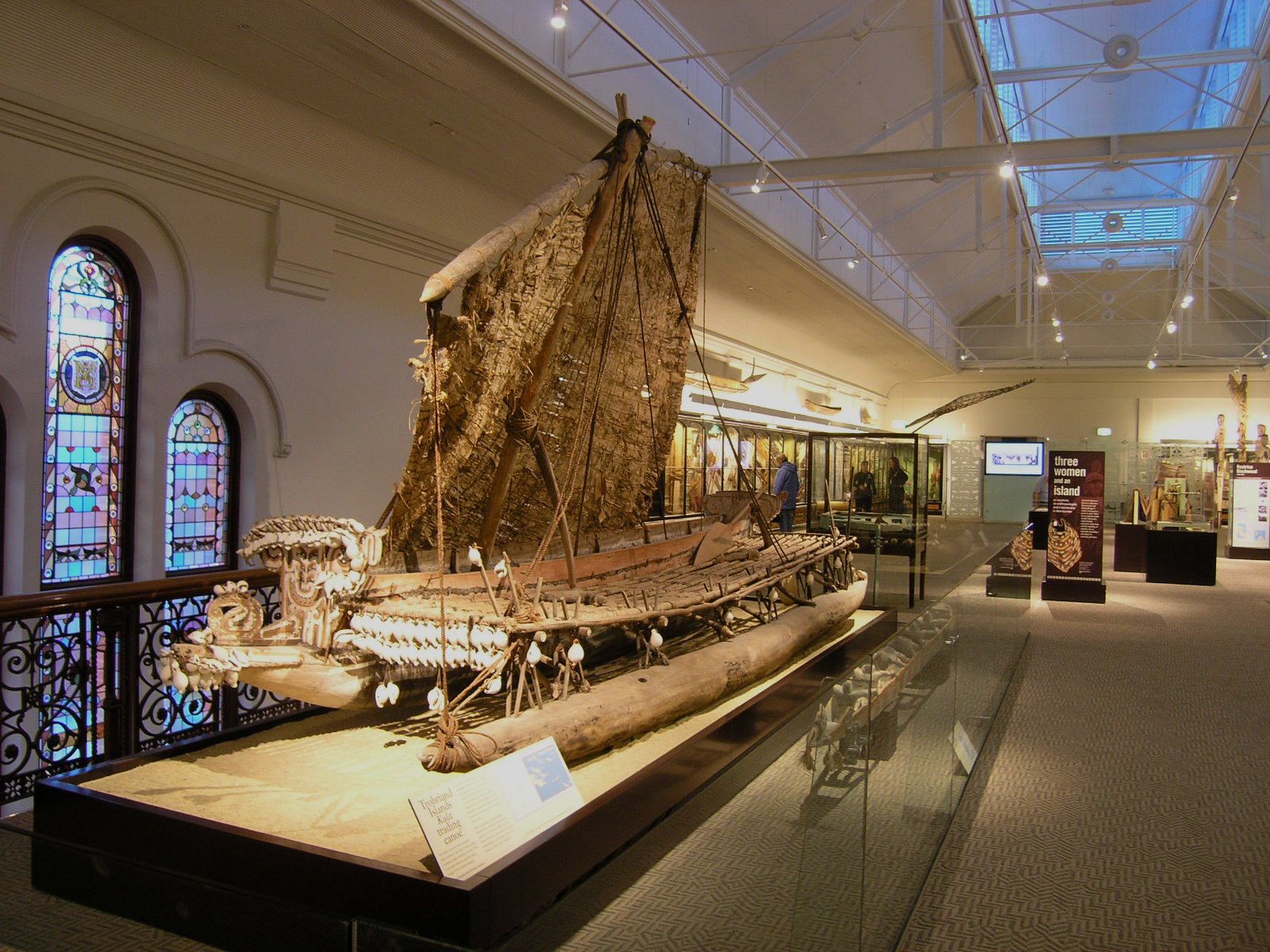
In a way, I have Anne to thank for my museum visit.  In fact it was Kolohie, Anne’s eldest who gave me a guided tour of the city and took me to SAM, but guess what, it was Aunty Joyce who gave Kolohie the guided tour of the Oceanic/Melanesian collection at SAM, so he could learn a little about his culture. While we were in SAM, it was an opportune time to visit an another ‘old’ friend, Sopikarin. Of course she is not a person but this outrigger canoe from the Trobriand Islands of Papua New Guinea. I had done some research and with tremendous help from Dr Barry Craig, written an article about the Sopikarin’s journey from PNG to Australia during my museum studies in University of Queensland 2008. I had never seen the canoe until I went to Adelaide. The funny thing was, all this time I had thought Sopikarin was a much larger canoe.

Can you just imagine the number of men with all their goods, trading in this canoe for weeks on open seas?

Photo_5223AAD4-3C5A-8BE2-0356-66DE2B3AC669

Photo_2446EA39-3C84-F09E-7BD0-3553A4D83FBA
Skull collection at South Australia Musuem (SAM) which I did not like personally but I love the two round shields positioned at the bottom of the skulls. I have never been a great fan of museums collecting skulls or other remains of humans.
OLYMPUS DIGITAL CAMERA
This is Sopikarin, the supposedly the last of the Kula trading canoes purchased by SAM which I featured on my blog in February 2014. https://tribalmystic.me/2014/01/09/sopikarins-new-journey/


Below are links to SAM and a picture of Dr Barry Craig taken during his field work in Papua New Guinea.

http://www.samuseum.sa.gov.au/collections/humanities/world-cultures

The Nightmare of Story-writing


I haven’t forgotten to publish a new short story. I have written a few for my Creative Writing workshop and my memoir. The thing with writing stories is that every time you read it, you want to re-write it. It is not verbal so you could just correct yourself as you tell the story. And, just like the critical eye of an artist about his or her work, I feel that the story is never finished. When I do attempt to re-write, I often lose the magical essence I applied during free writing. For example, a short story of 800 words may flow so well on my first draft but when I start to add more descriptions and enrich the content, I start to lose the tension building or the essence of the conflict.

Then, you still have the general structure and language of the story to worry about. I cringe sometimes when I read my writing that I have published and I had missed a typo, grammar or perhaps a paragraph could be better placed or written. You could pick up something in this piece of writing and I would be in trouble again. What a nightmare it must be for all writers. Thank goodness we have editors and ‘know-it-all’ friends who will point out our mistakes. Sometimes you feel like saying, “You think it is easy; why don’t you write it then?” But without them, these “auto-corrector assistants”, we would not be able to bring good stories out to our readers in good writing.

Anyway friends, that was really my reason for delaying a new short story on this page. I am still editing some of them but let’s just call this one a work-in progress so I can give it to you as promised. It is a non-fiction short story from what I am writing for my memoir.

The Windy Curse 

JLeahy Memoir

The wind was howling curses. Footsteps ran on gravel. People were rushing up the main road, away from Wagang, our small coastal village. It had stormed all night and all day. The waves rose in great heights over the far end of Wagang outside Lae, Papua New Guinea. It was 1972.

My uncle Sam said: “Yesterday morning, some houses were washed away with part of the coastline”. I could not go to school.

“The sea is coming!” I heard a woman call out. She half ran with two crying children behind her. Mounted on her back, the woman had three bilums filled with clothes and food. Dusk had approached when she threw that warning at Tinang, my grandma. There was panic in the woman’s voice as she hurried with her children up the road. We lived at the mouth of the main road to Lae town. Other men, women and children with bags walked quickly by, some dragging or carrying smaller children and animals.

I grabbed my clothes, towel and blanket then followed my own mother out of the room. Mother grabbed a few things. She packed them madly in a handbag and a large bilum. I was not sure what to take.

“Quick, come!” she called.

“Where are we going?” I said.

“We must leave now,” she said. I followed her out of our room.

The village was in danger. We had to follow the rest of the villagers inland. The wind had not stopped for two days. The dry coconut leaves and nuts dropped randomly, making it dangerous to walk outside our house. There was some flying debris of plastic, paper, Tuk and Abong leaves. I wanted to run to grandpa’s house, next to our big house but I was scared. I also thought our roof might fly off.

“I will get the mosquito net,” Mother said. She disappeared and returned with a white bundle with pink ropes and added it to my arms. She made eyes at me to go to Tinang.

I could hear the waves getting louder in the distance and heard my aunty Giuc screaming that the sea was coming in. She was also yelling curses at her cousins to leave the village and run up the road. Aunty Giuc was a few years older than I and tough.

“Hurry!” mother said. I had no idea where mother meant. There was no further instructions.

“Are we running up the road?”. It did not make sense to me, I thought – the road was too flat. The sea would get us.

Yesterday, the government radio said we needed to move quickly as the waves would be at the village on the second day.

“Where are we going?” I asked again.  Mother left me in the lounge and headed for grandpa’s house. I stood near the window and watched through the broken fly-wire. There were no louvres so I felt the wind.

Grandpa once dreamt that our village, less than a metre above sea level was going to sink into the sea. He told villagers that one day the water was coming in and we would disappear because the two rivers that surrounded our village joined on both ends.  Grandpa also told the villagers our house was built on the stone so even if the village sunk,  our house would remain standing, just like the biblical house that was built on the stones. I think that part made the villagers angry because they thought he meant our house was better than theirs. The villagers thought my grandpa’s dream was a crazy story.

As I watched everyone running past, I wondered if today was “The day” grandpa predicted. I walked to the front of the house to see where grandma was. I stopped at the top landing of our steps shocked at what was on our front yard.

There was sea-froth on the sand. The bubbles on the browny white foam slowly burst and disappeared into the sand. It left curly wet sandy trails. It was not normal for the sea to come this far, I thought. We were over 100 metres away from the beach. I scanned the ground to see if there would be fish. It was weird. In the last King tides, my cousins caught some tuna in the middle of our village soccer pitch.

I turned to look in our backyard; my eye caught the river rising. The river seemed angry like the wind. The dirty brown water twirled and rushed along debris and household rubbish.  I could smell the sea from my left and at the same time, from my right, I smelt the swamp coming to meet the sea. Watching it, the swamp swell drowned everything in its path as it spilt over the banks and leaked towards me rapidly. Mother’s garden of maa-le, a scented deep green waterlily used for curing fever, disappeared under the brown smelly water. Just like the swamp people’s houses, I saw our kitchen house posts and the fireplace disappearing into the water. Where grandma had planted the Chinese Kangkung and watercress, flotsam mixed with village rubbish of empty Marvolene bleach bottles, Ommo packets and old thongs pushed in, crushing the green healthy vegetable carpet with its filthy weight.

I looked to grandpa’s small house and I could not see mother. I wondered if father and daughter were praying. It made sense. Tamang (grandpa) believed in God.

“Mamaa!” I called out.

She did not answer. I looked at the people passing our house again. No-one waved goodbye or passed greetings. Everyone looked anxious. I decided they were going to walk to town and climb Mt Lunaman. That was the only high ground I knew.

“Mama! Mama!” I called. I sat on the cold timber floor and waited. The sand caught between the timber gaps caught my eye. There was so much sea-sand in the house.

In the past, the waves had come like a thief and took three village houses on the beach. Luckily no human lives but only pigs, dogs and some chickens went with the houses in the waves. The villagers became smarter and built away from the shoreline. On bad days like this one, we all left the village. The waves were left to what to do what they wanted.

“Yupla kisim ol samting na igo antap long rot”, the loud voice interrupted.

Get your things and move up the road. It was the village councillor. The village bell rang three times signalling emergency. Three times also meant someone died. I was confused.

“Hariap!” a loud voice called. I did not see my uncle Sam but he was barking instructions too at my family to hurry. He told them not to bring rubbish.  He also told his wife, his sisters, cousins and brothers to make sure they brought their underpants as he did not want anyone making pictures he did not want to see in the bush. This remark made everyone scream in laughter. It eased their tension only slightly.

I knew mother was with Grandpa. I stood up and looked out through the broken fly wire again. Then I saw Tinang, my grandma and ran down to her near the main road.

I waited near Tinang. My head reached her shoulders. I could smell lime and betel nut. I felt my way into her colourful nylon bilum to see if she had any betel nut. I was nervous and wanted to chew. In Tinang’s bilum, my hand touched empty nut skins, a towel, her Koala skin purse and other small things and not betel nut.

Tinang said, “it would be hard to move grandpa.”

“Why?”

“Because he is stubborn,” she said in Bukawac.

Grandpa can walk. I could not see how grandpa would walk all the way – but to where? The nearest mountain was miles away.

“Where are we going?” I asked Tinang.

“We are just going to go into the bush,” she finally told me. It finally made sense to me. In the bush, if we had to, we could climb up trees.

Soon, sea water ran in from the front of grandpa’s small house. It was made of bush material. There was froth and I knew more sea would come.

Then, I heard a truck coming. It was my grandma’s brother Mambu’s truck, Maac Kalac. A flat-top Mitsibishi with passenger seats. Its name, Maac Kalac in Yabem means the “proud bird”.

“Ampom!” I heard mother calling me and I ran to her. She came over to grab our things. She pulled my hand and took me to the truck and told me to get up. Someone lifted me and sat me on top of some clothes.

Below the truck engine, and all the chattering, I heard the village boys splashing and laughing in the distance and I knew they were having fun. I thought how silly they were to not see danger coming. Mother continued to madly pack food, matches and torch into our bag. Uncle Sam was giving final directions to all our family members to get on Awac Mambu’s truck.

This was a Public Motor Vehicle (PMV) licensed to transport the villagers into town for 10 cents. Tonight it was a free ride. Packed from top to bottom, it was loaded with bags, food, pots, pans, coconut. I could not believe it. Some people brought everything. There were dogs and chickens. Someone brought a duck! A duck could swim and fly. Why did they bring a duck?

“Tamang?” I turned my attention back to mother for my grandpa.

“He will come,” mother lied. Perhaps she was hoping he would come, I thought.

We loaded in less than an hour and the water started to sweep across the road to the tyres. Awac Mambu wanted to drive off and someone said grandpa was not on the truck. I sat up and looked back to the deserted house. I started crying and wanted to get off. Everyone started arguing. My mother ran back with the kerosine lantern. She disappeared behind our big house. Ten minutes later, mother ran back without the lantern and without grandpa. She whispered to me that we had to leave now and Uncle Sam would come back to get grandpa. We drove off. I thought about grandpa’s dream. I put my head on the bag of clothes next to the food and animals and closed my eyes.


Every Human’s Need


Every Human’s Need.

The Hillside Find


Port Moresby. PNG. The Ranuguri Hill is in far background. Picture: UK Telegraph.


A short background about “The Hillside Find“.

My work as a journalist in PNG took me to police work as the Public Relations Deputy. I was based in the Police Headquarters, Papua New Guinea (PNG). My job was to handle media, write press releases, write speeches for the Police Minister and Commissioner and handle all public relations for the Police Force. There I rose through the ranks to become the deputy of the Community Relations Directorate. The late Commissioner David Tasion pushed for me to become the head of the Community Relations. He set up a rigorous training committee and programme that ensured all my training was packed into 12 months. During this time, the crime rate in PNG was very high and the Police PR was not good. My main role would be to improve this negative image.

Among all my training, I completed an inspector training course at Bomana Police College to earn an inspector’s ranking; I spent time in various sections of the Royal Papua New Guinea Constabulary and worked in many squatter settlements throughout Port Moresby in community relations programmes. I also had an attachment with the Royal Hong Kong Police in 1986, whilst Hong Kong was under British rule.

I became the Director at the age of 21 and took over a staff of 400 civilians and trained policemen (mostly male and much older than I).   People like Beth Harding, an Australian, a very strong woman and a dedicated teacher in PNG for over 30 years was working in the constabulary training. Beth also pushed me to become a strong managerial contender in one of PNG’s most fragile disciplinary forces and we did it! We set up many community programmes that linked police and the public and they joined hands to fight crime together.

My years in PNG Police were very interesting, exciting and sometimes dangerous and challenging. Because my role was multi-faceted and complex, my friends often joked at parties, rather than giving a long explanation, that I was a police dog trainer.

We established very good networks with the people on the streets and we had police living amongst squatter settlement communities. I had the best, teach me and I pay my respects to many that have passed away. I will always remember that time in my life from 1985 – 1989.

It was one of those days that I went out on detective work with head of the Investigating Unit, Supt Roy Tiden that left permanent imagery in my mind. I wrote this short story, “The Hillside Find” mid year, in my Creative Writing Class. The story is part of my memoir that I am writing. If you like this true story, look out for my memoir next year. With my teacher, Isabel D’ Avila Winter guiding me, I hope to complete most of the writing for the memoir this year.

Please click on the link below to read The Hillside Find – by Joycelin K Leahy

The Hillside Find – Wk 2