One of the things I love about being older and having “been there, done that” is that I am beginning to understand what life is all about. Everything is starting to make a lot more sense. I keep learning and one of those things I have come to realise was, how much time I have spent/lost in a nine to five job. The nine to five job routine has never appealed to me. Sometimes I wonder if I had gained enough money doing that extra time in comparison to the living that I have lost.
Sadly, we are conditioned to believe that our nine to five job IS what life is all about. We often get stuck in the routine…forever! Before we know it, we are too old to enjoy what we truly aspire to do. I wasn’t going to blog about “overtime” tonight – really.
It was London Live celebrating the National Poetry Day and while listening to some poetry I came across Mr Gee’s interpretation of the 9 to 5 job and the More Overtime. I could not have put my view about a day job any better. Mr Gee’s spoken word inspired this post. I would like to put it out there that if there is something good you really want to do in life – go and do it!
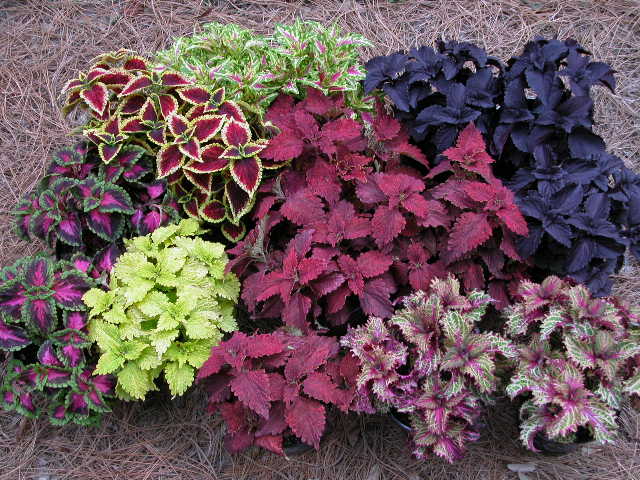
Coleus Canina (pictured above) is one of the most colourful tropical plants with almost every colour you can think of. It is my mother’s favourite plant. I grew up with in Lae, Papua New Guinea (PNG) seeing Coleus growing on the side of our house, along the main road at our village, in our food garden or in the cemetery. Everybody grew some kind of Coleus plant. They are gorgeous. We used Coleus to decorate ourselves when we danced. Sometimes, our people just stuck a small branch of the plant in their hair or hung in on their bags for decoration because it is pretty.
I knew the plant had a distinct smell, but I did not know, in Australia, Coleus was planted to repel animals such as cats and dogs from gardens. Perhaps it is a myth? This attractive perennial herb is actually an aromatic member of the Mint family. They’re native to southern Asia and eastern Africa, and they attract butterflies and bees.
In early 1990s, I was engaged by Peace Corp and the Conservation Melanesian to run some entrepreneur workshop and training for crafts people in the Crater Mountains in Eastern Highlands Province, PNG. I had volunteered to teach the artisans and spend some time learning about their art and the way of living. It was here that I discovered something new about the Coleus plant. Certain types of the plant had strong pigmentation. Women were using the leaves to rub into flax fibres as they twisted the fibres into ropes for making (bilum) bags as pictured below. As they twisted the ropes and rubbed with Coleus leaf, the rope would instantly turn from its natural colour into deep purple, blue and even black. I was amazed.
Dark blue, almost black dye from Coleus plant rubbed into the fibre on this bilum by the Herowana (Crater Mountains) women in PNG.
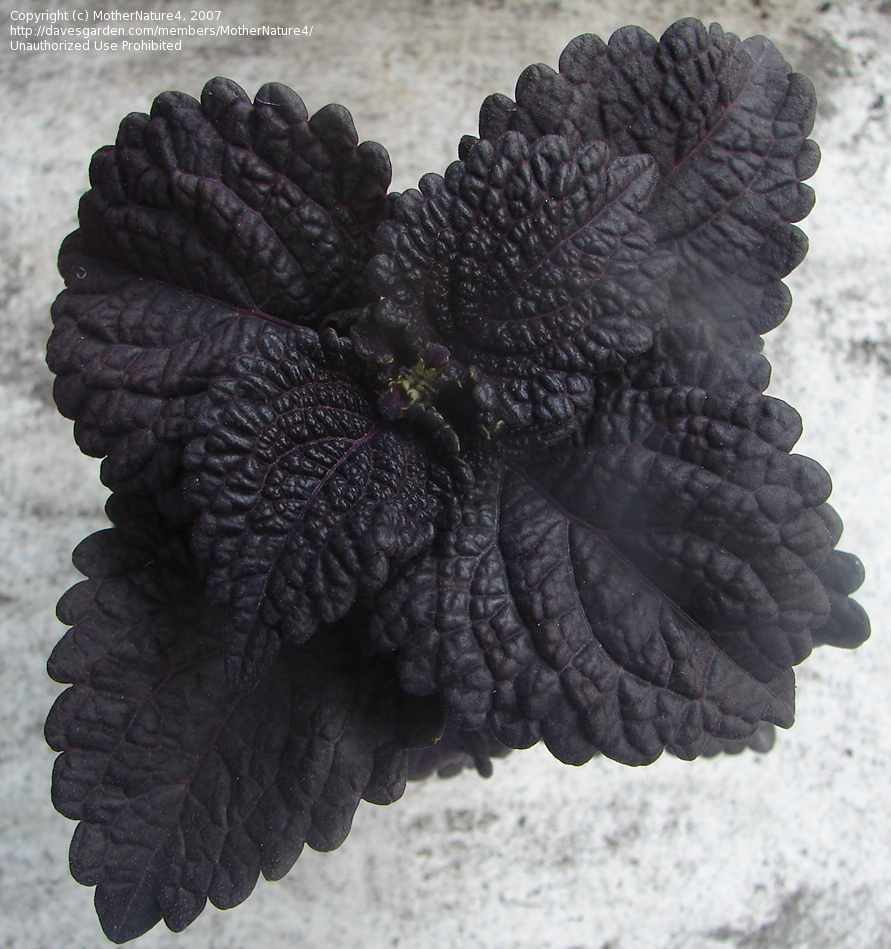
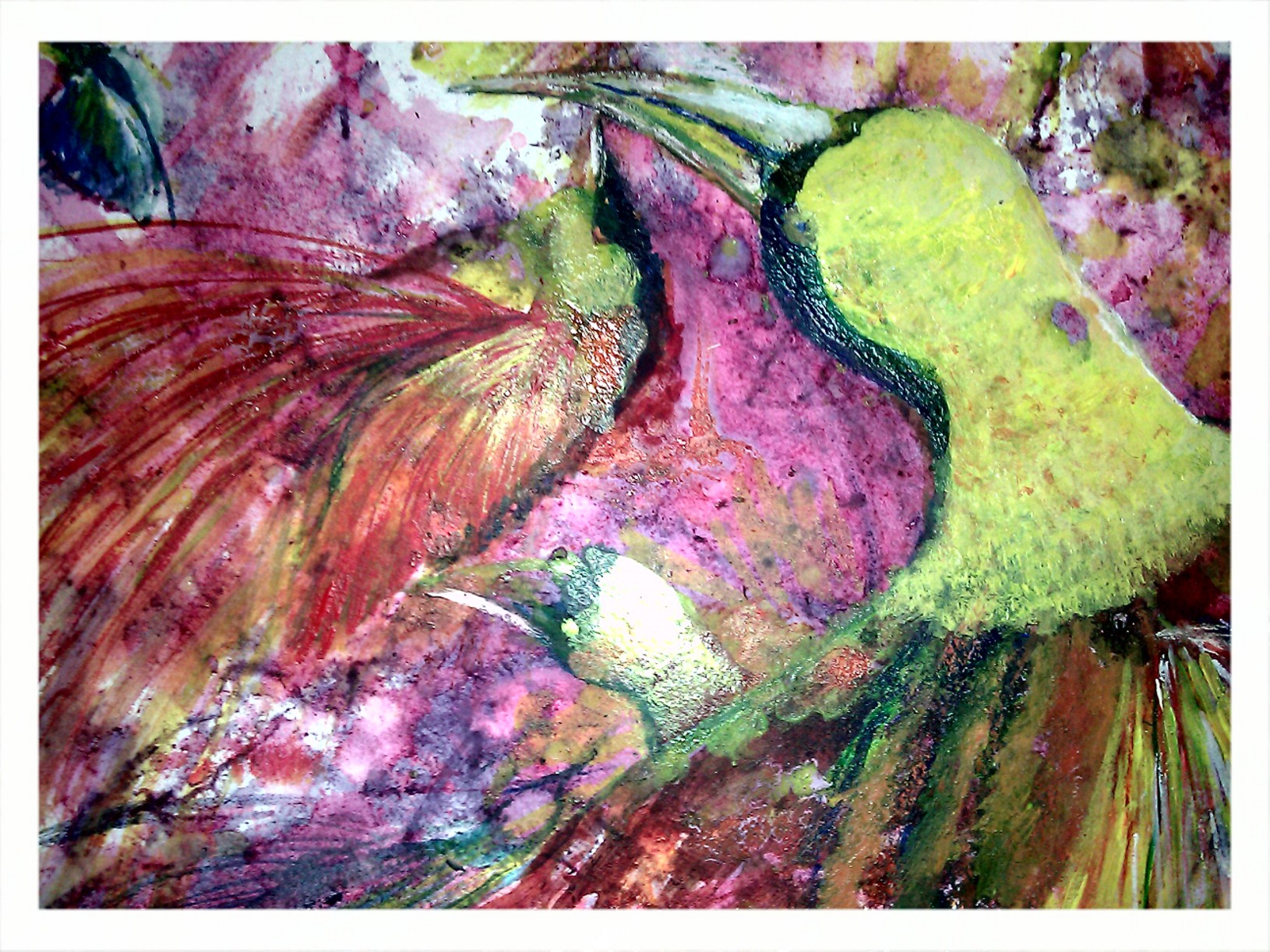
Years later, while living here in Brisbane (Australia) and experimenting with using natural dyes and pigments in my painting, I remembered the Coleus. I had already used coffee, tea, turmeric, beetroot, some grass seeds so it was a refreshing addition to my natural pigments. I had made a trip to the local Bunnings and started growing the Blackberry Waffle, pictured below which gives the strongest colour dye. I made good artistic use out of the plant all summer but unfortunately I lost the Coleus plants in winter. Spring is here so it is warming up and I will start again. That is why I am making this post. Below is an artwork, “Paradise Birds” I created from using a mixture of watercolour and natural pigments from my garden. The pink and purple background in the painting is the pigment/juice from the Coleus plant.
The Blackberry Waffle Coleus – the pigment king.My Art – I painted this mixed media called Paradise Birds with Coleus ‘Blackberry Waffles’ – it is the pink and purple background. I also used the blue seeds from grass and turmeric for the gold and yellow bird heads. This work is on paper.
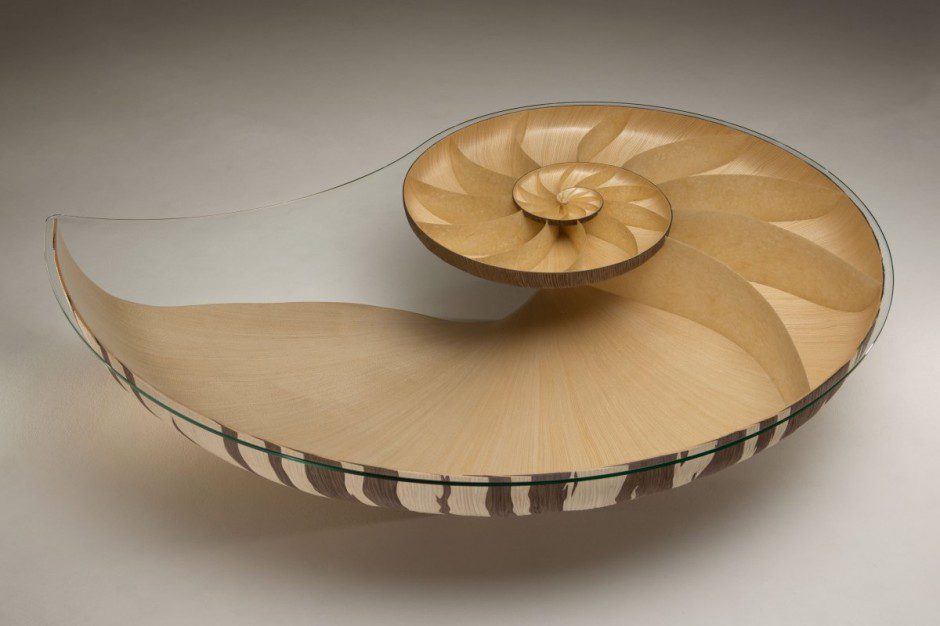
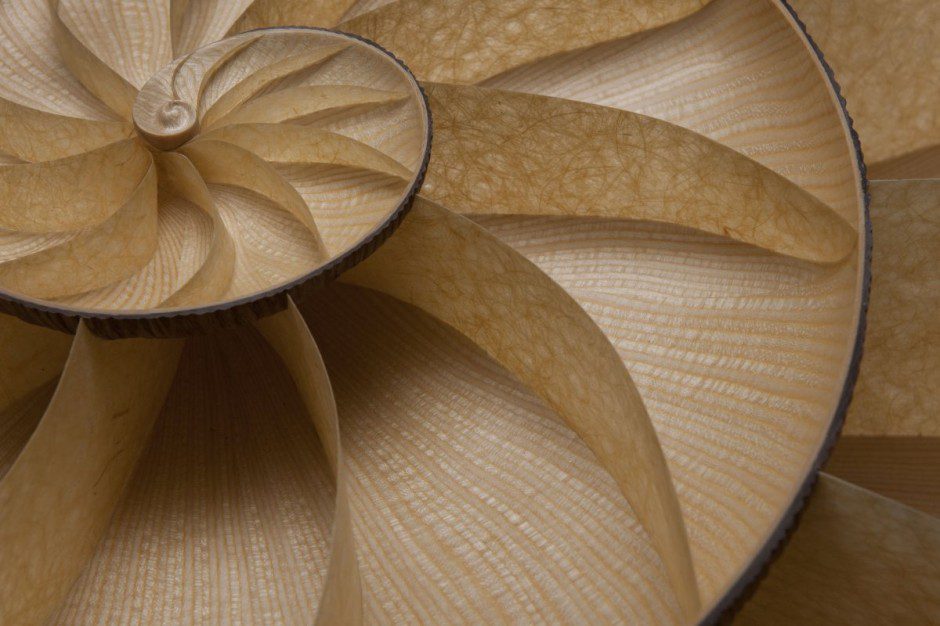
One of the things I love about great designers and creative minds is how they use sea creatures in the theme of their work – the delicate angles, look, colour, feel etc. I found this table on iCreative website and I wanted to share. It is one of Marc Fish’s art work. How magnificent it is that he could combine all the different types of wood and bend and shape to keep true to the Nautilus shell physical features.
Low table Nautilus II is the second edition of the artistic table shaped nautilus shell drawn by designer Marc Fish. The result is a simple piece of furniture and a very stylish lounge. I would be too afraid to eat on it; may be I would just sit and look at its beauty.
Marc Fish is a famous English designer who studied in Brighton, London, UK. Originally, the design of the Nautilus table was an experience, then the Nautilus room first was designed and built in 2010-2011. The second edition was created using computer-assisted technology combined with innovative construction techniques. The surface of Nautilus II resembles a shell perfectly and the bottom view of the table reveals an interesting contrast color resulting from the combination of different types of wood. It is manufactured with over 4000 individual parts walnut veneer sycamore in several layers in order to obtain the desired shape. The transparent glass plate has the same lines as the Nautilus. The result is a perfect logarithmic spiral of the nautilus shell.
This little girl takes a ride on a huge fish in Caras Ionut’s artwork.
If I had to show a visual story of my childhood, this would be it. This photograph by artist Caras Lonut. I remember often thinking about living underwater and swimming with the fish or getting a ride from one.
Growing up in a small village on the coastline of Lae, Papua New Guinea meant I spent many hours and days fishing. My early years were dedicated to catching fish for food. Most of my family fished. Sometimes, we would start at dawn and end at dusk.
We fished on the shoreline and in the swamps. I knew where to fish and where not to. I also knew when to fish. The climate and the weather patterns were our guide. Certain fish came when the moon rose. As early as I can remember I could make my own fishing equipment using nylon lines, small metal hooks, fishing net made from strings. These strings we made from bush ropes and vines. My aunts, mother and grandma and I would knit the ropes into nets. Like other children in my village, I kept a collection of empty coffee jars I lured fish into by putting a small portion of cooked rice at the bottom of the jars before placing the jar in the water. This was another kind of fishing but that is another story.
Fishing remains one of the most fun and rewarding experiences I have ever had.
Welcome and thank you for reading my blog. My name is Joycelin Leahy. My blog name is Tribal Mystic. I am an Ahe (pronounced: aah hee) woman from Morobe Province, Papua New Guinea (PNG); one of the most unique and diverse countries of many tribes, languages, cultures and natural beauty. I now live in Brisbane, Australia and work between the two countries.
Whether you come from PNG or not, we all come from tribes and we belong to some kind of tribal group and material objects or things that give us our identity. I believe each person and each thing has a story. I am hoping to share with you some of these stories about people, animals and things that have been part of my life. I hope that you would find these stories interesting and share them with others. I have been a journalist, artist, an arts curator, business woman, climate activist and story-teller and a mother of two amazing sons. I have also been a cleaner, house painter, body painter, sales person, renovator, telemarketer, campaigner – you name it, I have tried many things…As present, I write for pleasure and I paint and teach others to paint while I run my art gallery in Bellbowrie called Beyond Pacific Art.
I am very passionate about sustainable heritage particularly with the effects of climate change. I would also like to see more women in PNG and the Pacific Islands become self-sufficient by using their traditional heritage to do contemporary business and at the same time, not give in to too much commercialisation and losing their traditional skills. Teach your daughters and grand daughters your skills now. I only hope for eco-tourism in the future and I would like to see Pacific Island countries, particularly the Melanesians work extra hard to preserve their unique heritages. We are losing many languages. I support visual artists and embrace all the challenges that women face around the world and particularly in my country and the islands. There will be posts about many of my interests I have just mentioned as part of my introduction to this blog. I hope what I write would support, educate and be simply enjoyed. Please give me some honest feedback.
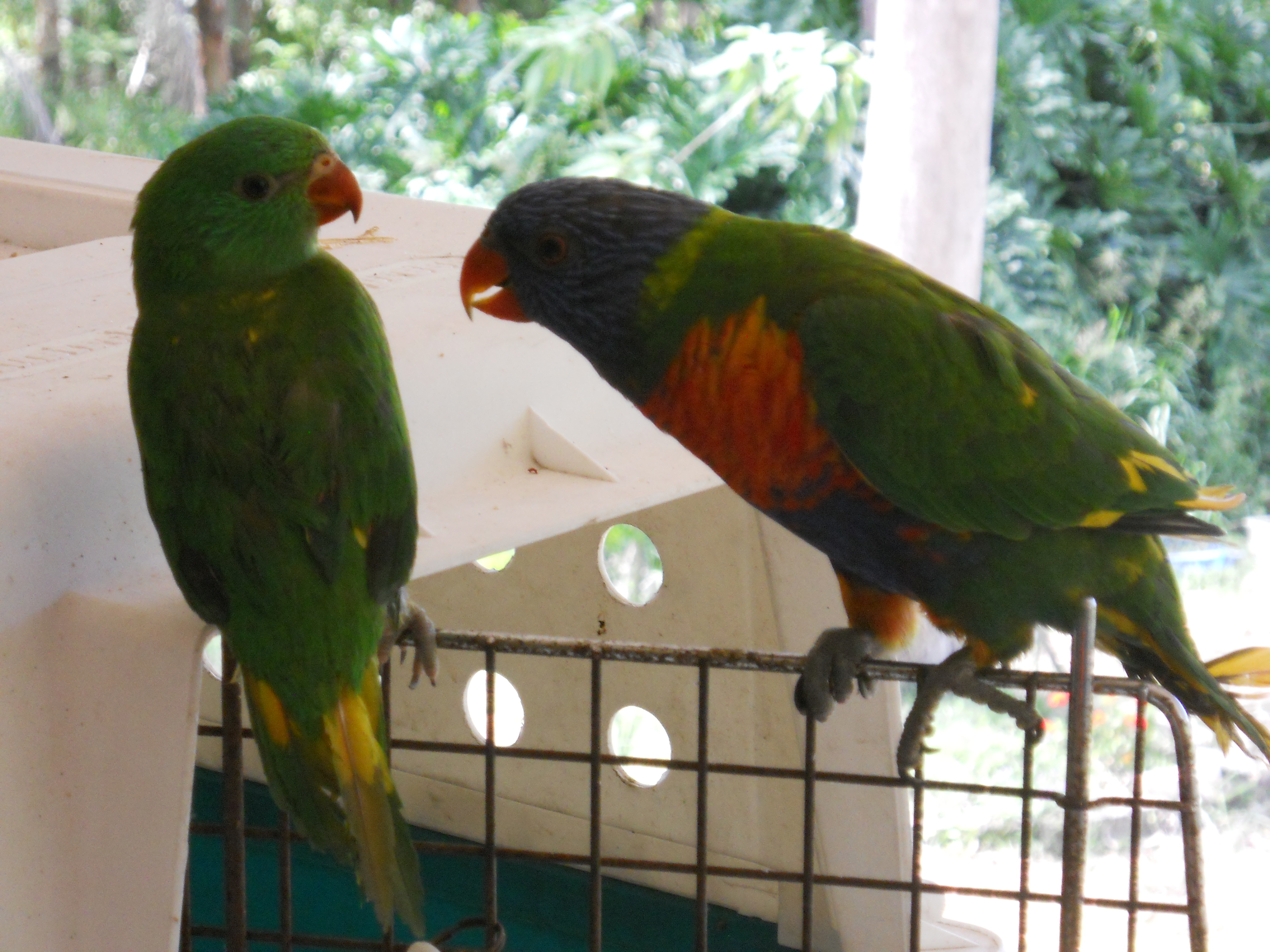
I have been contemplating this role as a blogger for almost three years and was always afraid and concerned that I would never have the right content or quantity to write about. Just writing this tonight makes me feel like a very excited small kid dying to play in a large playground with strangers. I took some time to speak to friends and family who are expert bloggers (thank you Mari Ellingson – Island Meri) and looked at veterans Malum Nalu and Masalai and after some research and feedback I have finally taken the giant step. I hope that I can stand comfortably on my feet in the coming months and make another step towards sharing extraordinary stories and pictures. I will write about art, culture, heritage, climate change, creative writing, nature, family women, business, music, beauty and fashion, but to name a few. Each post will be different and could be from any of these topics. In this first blog, I would like to share an image of two birds – both lorikeets that have come to live with us here on the outskirts of the city in Bellbowrie. Over the years my sons and I have loved and cared for animals and insects and I often get a shock when without warning I find a dead beetle in the freezer, waiting to be buried properly. I have also been deeply moved often when my sons make me stop at roadsides to pick up road-kills and take them home with us. Whether it be a possum or bird they wanted us to take the animals home to give them a good burial in our yard. Next blog I will share with you one of my short stories about life in Brisbane City. Tenk yu tumas na lukim yu! (Thank you very much and I’ll be seeing you!).
Kaz (rainbow lorikeet) breaking the ice on their first day they became friends. It was Christmas day 2013. Nisha (scale breasted Lorikeet) was not impressed but they got on better as the days progressed. Kaz has been with us four months and Nisha, just under a month. They both fell out of their nests and could not fly.





 tribalmystic
 Tribalmystic Stories