Category Archives: writing

Famished Eels – A Short Story Winner by Mary Rokonadravu


In partnership with Commonwealth Writers, Granta is publishing the 2015 winning stories for Africa and the Pacific: ‘Light’ by Lesley Nneka Arimah (Nigeria) and ‘Famished Eels’ by Mary Rokonadravu (Fiji). To listen to podcasts by all the regional winners and read the regional winning stories for Asia, Canada & Europe and the Caribbean, please visit the Commonwealth Writers website.

Podcast from the story-teller

I have read and wish to share the Pacific winner’s short-story. It is one of the most beautifully told short-story I have read. I would recommend you read the whole story from the link I have provided at the end of this passage.

Famished Eels

cropped-flying-eel-long

After one hundred years, this is what I have: a daguerreotype of her in bridal finery; a few stories told and retold in plantations, kitchens, hospitals, airport lounges. Scattered recollections argued over expensive telephone conversations across centuries and continents by half-asleep men and women in pyjamas. Arguments over mango pickle recipes on email and private messages on Facebook. A copper cooking pot at the Fiji Museum. Immigration passes at the National Archives of Fiji. It is 2011.

Fiji, with Guyana, Suriname and Trinidad and Tobago, had just registered the ‘Records of the Indian Indentured Labourers’ into the UNESCO Memory of the World Register, when my father, the keeper and teller of stories, suffered a stroke. Fate rendered his tongue silent. He cannot read or write – he first set foot in a classroom at fifteen, and was told by a nun he was too old. He ignores my journalist and doctor siblings to select me, the marine biologist, to finish his task. I am off the coast of Lifou in New Caledonia counting sea urchins when the call is relayed.

He hates me for not becoming a journalist, I say to myself.

I will be on the Thursday flight, I tell my older sister.

She meets me at the airport and drives me down to Suva. It is past midnight. We pass eleven trucks overloaded with mahogany logs between Nadi and Sigatoka. A DHL courier truck. A quiet ambulance. She smokes at the wheel, flicking ash into the cold highway wind. We pass a dim lamp-lit wooden shack before Navua. Someone is frying fish. We both know it is fresh cod. We remain silent as we are flung into the kitchen of our childhood at Brown Street in Toorak. We stop to sip sweet black tea from enamel pialas in Navua.

Come on tell me, she blurts. Who you seeing now? Is it a dark-skinned Kanak? Is that what’s keeping you in Lifou? Do you speak French now?

Screw you, I say from the back seat.

He wants you to do this because you won’t lie to him, she says. The rest of us may. Just to make him happy. Just give him what he wants to hear. But you won’t. You will find out and you will tell him.

Screw you, I say again, more to myself than her.

All his life, my father has sought one thing only – to know the woman in the photograph. To know the name of her city or town in India. To know that at some juncture in history, there was a piece of earth he could call his own. All he had had was a lifetime of being told he was boci. Baku. Taga vesu. Uncircumcised.

A hundred years was not enough. Another five hundred would not be either. In a land where its first peoples arrived a couple of thousand years before the first white man, the descendants of indenture would forever remain weeds on a forsaken landscape. A blight.

He had stubbornly remained in Fiji through three military coups and one civilian takeover. Everyone had left. He remained the one who rented out flats until his brothers’ houses were sold. He supervised brush-cutting boys on hot Saturday mornings. He was the one to call the plumber to change faucets in grimy, unscrubbed shower recesses. He was the one who kept receipts for oil-based butternut paint, bolts and drill bits; photocopied them faithfully at the municipal library and mailed them to Australia, Canada or New Zealand. Each envelope had a paper-clipped note: OK. It was the only word he learned to write. I received Christmas cards from him saying the same thing: OK. The handwriting on the envelope changed depending on who the postmaster was at the time.

His younger brothers send out family newsletters on email. There is only one photograph of my father they use, a blurred profile of him holding a beer. They use the same caption – ‘Still refuses to use email.’ I wish to click Reply All and say ‘fuck you’ but there is a distant niece in Saskatchewan on the list – she writes me regularly for shark postcards and she knows the scientific names of eleven types of nudibranch. She recorded herself reciting it like bad poetry and put it on YouTube. I am the only one who knows this. She insists I use real handwriting, real stamps. She hates pancakes, frogs, flatlands. Her handwriting yearns for water. Salt water. Sea. In her milk tooth grin I see the next storyteller – the one to replace the man who has gone silent. She is ten and wants three pet octopi.

I was born to be a bridge. All I see are connections. I bridge between time, people and places. I study migratory species. Tuna fish stocks. Whales. Sea urchins in between. Cephalopods. I was nine when I picked up my first cuttlefish bones on a tidal flat in Pacific Harbour. For years I thought it was a whistle. I wrote out the names of the world’s oceans, seas, currents and fish in longhand, unaware the lead scrawlings were placing miles between my father and me. He watched me from across the kitchen table. My mother had died bringing me into the world. He washed okra with patient fingers. Boiled rice. Warned me he was going to slice red onions.

Make sure you buy land, he whispers. When you grow up, buy a small piece of land. Build a house just for you. Promise me.

Promise. But my eyes were already on the Kuroshio Current. I was already reading the voyage of Captain James Cook and the transit of the planet Venus. Hearing the howl of winds at Tierra del Fuego. No one told me that as recently as one hundred years before, ships had cut through the rough straits with people carrying the makings of my teeth in their genes. They almost never happened. Almost.

Keep writing, he says in our old kitchen. As long as someone remembers, we live.

My sister drops me off at the Colonial War Memorial Hospital.

I won’t come in now, she says. I still smell of cigarettes.

My father is asleep when I reach out to hold his hand.

Famished Eels Continues here

The Call of Garamut


The garamut is a slit gong made out of wood. The instrument is widely used in Melanesian cultures. Garamuts are used for traditional dancing and performances. It is also used to call and gather. Communities used the garamut to call meetings, call school children to classrooms and congregations to churches.

182_0723
Picture by Pioneer Bible Translators. Calling his congregation to church; one of the most common uses of garamuts.

In Papua New Guinea the instrument, depends on its size and how shallow the slit is, gives a distinctive sound. It can also be played very rhythmically and the sounds makes you want to dance.

CUR.52.126a-c_print_front_bw
A garamut in Brooklyn Museum.

In the first video clip, I am delighted to show my own people dancing the siak, a slow motion dance in Salamaua, Morobe Province. A single and sometimes two garamuts would lead the siak accompanying kundu drums. Pay attention to the sound of the garamut – the largest wooden instrument in background.

The second video below is from Manus Province. For their performances, Manus dancing requires a collection of garamuts of various sizes and played together. The biggest drum (deepest) leads the rhythm and song.

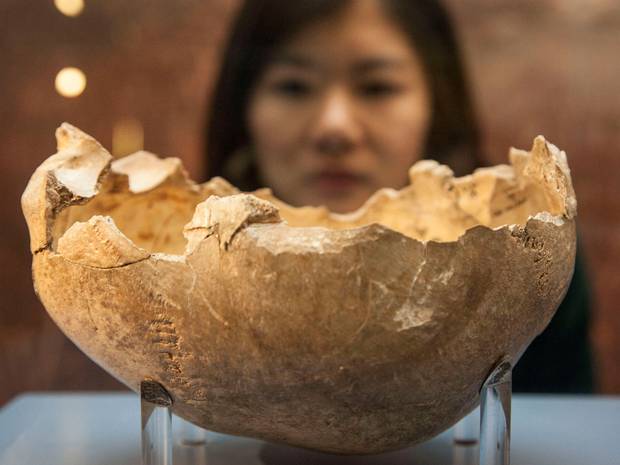
Discovered Human Bone Uses : Home-ware?


skull-cup-2-v2
New research offers the best evidence yet that cannibalism took place in Somerset’s Cheddar Gorge 15,000 years ago

The Independent UK reported that scientists investigating a system of caves in Somerset have found new evidence that shows our human ancestors engaged in cannibalism in Britain – and that no part of their victims was wasted.

A research team from the Natural History Museum and University College London have used modern carbon-dating techniques to establish that remains in Gough’s Cave at the mouth of Cheddar Gorge were all left there over just a few seasons around 15,000 years ago.

But more alarming is what was done to the bones before they were deposited. Find out here

The Sacrifice


Monday Finish the Story with host Barbara W. Beacham

2015-04-20-bw-beacham
Picture: Barbara Beacham

The Sacrifice © JLeahy  

They followed the buffaloes and their babies along the trail heading into the woods. At trail end Aka ran forward and sliced the youngest calf and wrenched out its heart.

The calf gave a horrifying shrill and fell back; the rest dashed for the woods.

Blood spurted in a red fountain, saturating the soft green bushes, ground and his shirt.

“Look! Look Ahwen, it’s still beating”, he said mesmerized by the throbbing organ in his bloody hand.

I staggered back against the old rain tree. I stared at the convulsing calf beside his leg.

“Why did you do that, why?” I shouted.

I AM a warrior,” he said.

“A warrior ONLY kills for food.”

“We can take this calf to eat.”

“It’s not ours, it belongs to the sanctuary”, I looked at the cluster of houses at the head of the trail. Soon, someone will know.

“Let’s leave!” I ordered.

(150 words)

Night Travels – Poem


alone1
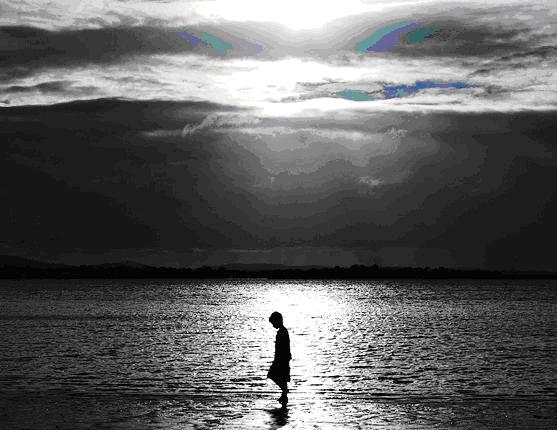
Public domain image.

Night Travels © JLeahy

In the black of the night

Mind’s curtain drops

A screen unfolds

Scenes after scenes

Words travel in echoes

Enemies captured

Friends laugh

A child cries

Someone screams

Emotions grip you

You are afraid

Someone holds you

In places only dreamers go

Shapes blend into pictures

And fades into nothing

Spirit walks, runs and flies

In just one night, a lifetime,

can become one story

Until dawn brings the ending

Satoyama


A Gardener’s Reward


image-4
Picture: Jaradeenah Danomira. 2015

One of my proudest moment as a gardener is when my Cattleya trianae tipo ‘Baronessa blooms. I have several on a poinciana tree and the grey-green mid truck bursts into speckles of translucent white, dabbed with bright pink and golden centres. The Cattleya orchids tell me Autumn is here.

The flowers remain for three and half to four weeks before they finally wilt. These pictures were taken by my niece Jaradeenah Danomira this morning.

image-3
Picture: Jaradeenah Danomira. 2015


Female Voices in Writers Festival Byron Bay


BYRON BAY WRITERS FESTIVAL IS THRILLED TO ANNOUNCE THE FIRST ROUND OF WRITERS APPEARING AT THE 2015 FESTIVAL.

Gillard_web
Julia Gillard

Five successful and talented Australian women have top-billing at the 2015 Byron Bay Writers Festival from August 7-9. In what is shaping up to be a Festival showcasing a line-up of strong, female Australian voices, the first five announced were former Australian Prime Minister Julia Gillard, Joan London, Helen Garner, Kate Grenville, and Jackie French. More writers will be announced soon.

EARLY BIRD TICKETS ON SALE FROM 17 APRIL!

Already the Festival is shaping up to deliver a diverse and eclectic program of stimulating and engaging conversations with some of Australia’s most celebrated writers and international guests in the Festival’s history.

Festival Director Edwina Johnson said she was delighted to be bringing the best writers and thinkers together to share stories, triumphs, challenges and ideas; to debate, laugh and cherish; to connect, nurture and celebrate literary talent and new friendships down by Byron Bay’s scenic ocean shore.

Read More

When A Man Loves A Woman


How many of us have felt the deep and painful meaning of love in this song? And sadly, the man who brought us this beautiful song is gone.

The Guardian: Percy Sledge, who recorded the classic 1966 soul ballad When a Man Loves a Woman, has died aged 73.

Louisiana coroner Dr William Clark confirmed that Sledge died early on Tuesday morning at his home in Baton Rouge. He had been diagnosed with liver cancer in early 2014.

Sledge’s first recording took him from hospital orderly to a long touring career averaging 100 performances a year and an induction into the Rock and Roll Hall of Fame in 2005.

Read More

Star-Crossed Lovers


Monday Finish the Story with host Barbara W Beacham

2015-04-13-bw-beacham
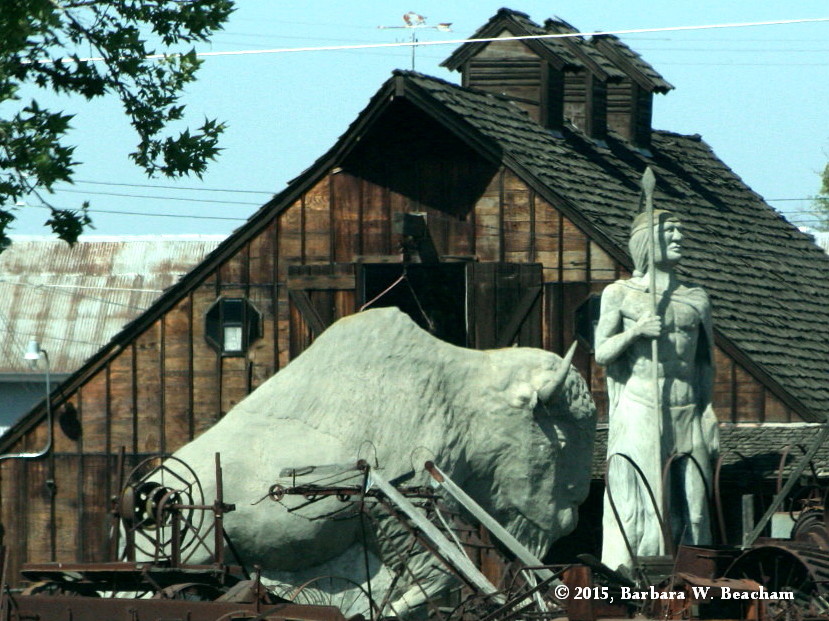
Picture by Barbara W. Beacham

Star-crossed Lovers © JLeahy

The neighbours were not happy about my choice of yard art. Beck shot me a look this morning before crossing to Mildred’s house.

I found the bison and hunter at a pawn shop. The owner wanted to get rid of them – cheap! He said it was an important reminder of our near-sighted ancestors killing all the bison.

“They’re special, you won’t find these anywhere”, the man assured. Sure, they looked ridiculous, but I wanted something like that for my stuffy neighbourhood. We moved here two months ago and I needed to get some laughs. My neighbours weren’t bad people, just very dull.

At 8pm, I heard Beck shouting over the TV.

“You have to get her to get rid of those stupid things. Mum keeps waking up at night to talk to the statue. She tells him how much she missed him while he was away hunting”.

“We are NOT going to remove the statues – make your mother take her medication!!”

(150 words)