Category Archives: Women

Burning Out – Short Story


Here is a draft of a potential chapter. I may use it in the memoir, but the story was prompted by Isabel D’Avila Winter in my creative writing workshop last week for the biggest lie I have ever told. I have not shared any memoir pieces lately, because I have not been writing much, but here it is for my readers who enjoy the memoir stories on Tribalmysticstories.
oil%20lamp
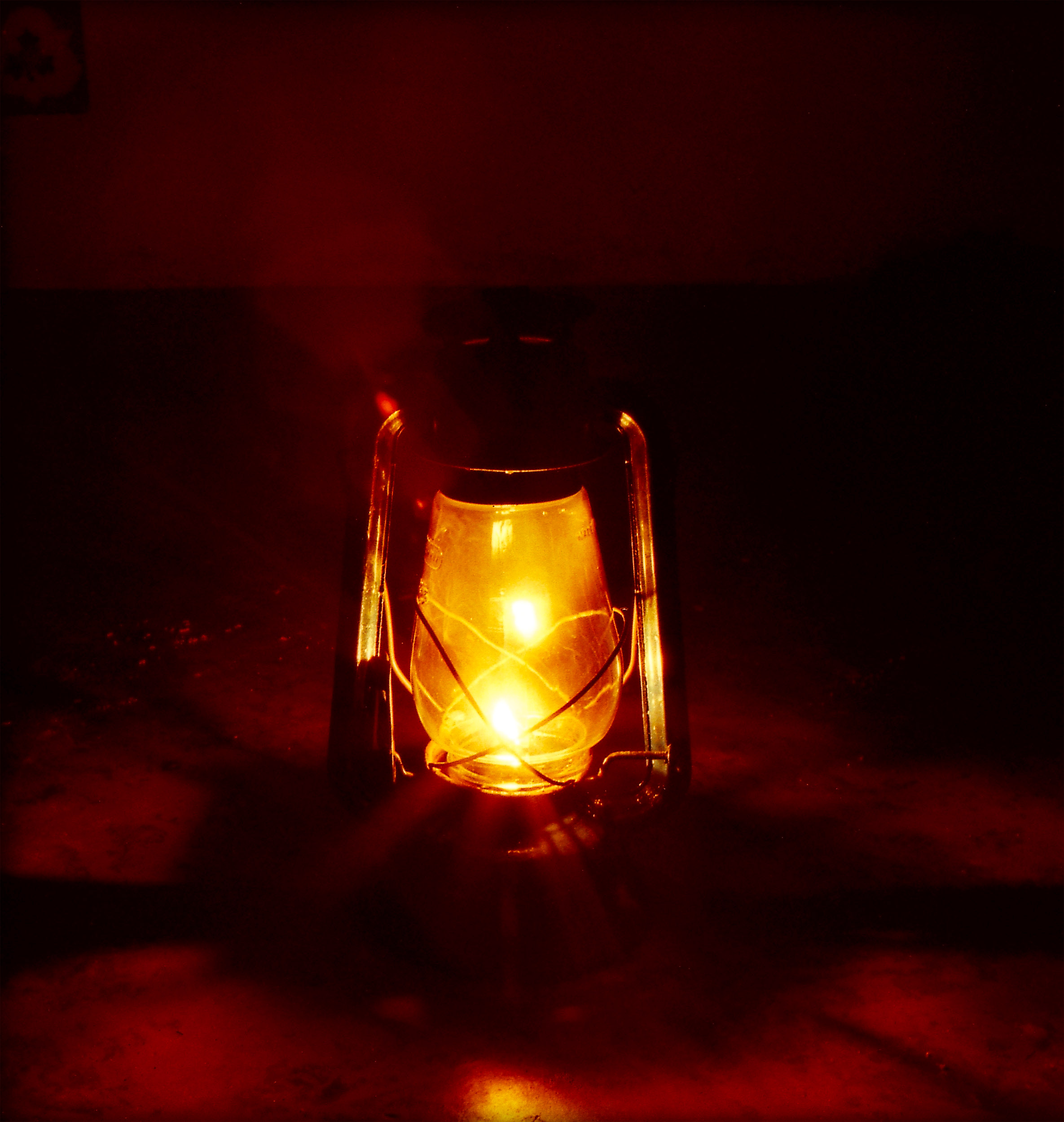
Kerosine/oil lattern: Public Domain image.

Burning Out – A short story

© JLeahy – Memoir series

The Chinese kerosene lamp burnt low. It was close to me and I smelt the kerosene cut into floral smells from the freshly washed bed sheet. In a continuous dance, its golden-yellow flame peaked in a steady poise and melted into the dark head of the small metal lamp. The lamp was barely taller than my school ruler but it gave enough light for me to see the print. The flame in the round clear glass, size of an orange, outlined the specs of paprika stains on the lamp. At the same time, the flame threw a soft orange ambiance under my sheet and even around the room.

If I moved too quickly, I could knock the lamp over and burn myself because the lamp was partially under the sheet, and next to my book I was reading. This was my private and peaceful space where I read my books. This was also against Mother’s rules.

Having a lamp to myself was a luxury I rarely had in a noisy, crowded house. My mother and I had a small room about three by three metres and my older uncle (of two uncles) and his wife shared another larger room with their five children. My grandmother and aunty shared the last one. My younger uncle was away at the University of Technology, about 20 minutes from my village. My uncle was the first man from our village to go to university.

It was a house where everyone knew everything that was going on. My family had this one Chinese lantern to use as an inside lamp and one Coleman lamp as the outside lamp. Both lamps burnt on ‘kero’ as the villagers referred to kerosene. Fire was the main source of light and there was a torch, which hardly had batteries because no one could afford them. The torch was mostly used for travelling between the village houses. It was also used to visit my aunts and uncles or for going to the pit toilet away from our house – not for reading or using as a room light. If we left the village to fish or camp, the Coleman and the torch came with us.

I knew I was using the 20 cents kerosene up but I was solving a mystery with Nancy Drew. I liked being a detective myself.

“Ampom” mother called and without saying, I knew she called me for dinner. She used one of my names that meant, light-skinned.

“Ok” I said, without moving.

In the village, kero sellers would buy wholesale in 44-gallon drums in Lae City and retail the kerosene to us in re-cycled wine or spirit bottles – charging 20 cents per bottle. It eventually became 50 cents and then a $1. That was in 1970s. Wholesalers bought kero from service stations and general stores. My cousin and I would take our bottle, a clear Vodka re-cycled bottle, and I did not remember which of my uncles drank the Vodka – to any village retailer for kero. We stood there while they pumped the kerb into our bottle but there was a special technique where the boys in the village mastered. The pump would be pressed a couple of times and stopped. The air would push the blue liquid from the drum through the transparent pump into our re-cycled bottle. You have to stop the pump quickly or it sprayed the kero everywhere. I always thought it was cool and I wanted to have a go at pumping the kero this way.

At home, every night, once the kero was put into our Coleman lamp and some in the Chinese lamp – my family gathered in our blackened old kitchen and ate their dinner.

The floor was uneven and with the weathered timber leaving gaps in between, we dropped the bones of chickens and pork to the village dogs and pigs, which fought over it. Sometimes the fights would become too aggressive and the animals would run into the fragile posts so it felt like the kitchen would drop off the side of the main house. My cousins and I would get scolded for dropping our scraps down the timber gaps. Tonight, my family were only a few metres away from me separated by a couple of walls. I turned the lantern wick higher for more light. I adjusted my bed.

Most of the kapok had fallen out or shrivelled in my pillow so I tucked some clothes under it and raised my head. I reached up with my book and turned the pages.

I knew Mother would place my food on the bench top, near the hot teapot, so it will stay warm. Sometimes grandma would place the covered food at the fireplace and they both would insist I go out and eat before bed. Both mother and daughter always respected my reading and schoolwork, but sometimes, my mother would agitate me with her calling. On this night, I wanted to finish my book.

“Ampom!” Mother called.

“Yes” I answered, annoyed.

“Come and eat”.

“I will”.

“Come now, the food is getting cold.”

“I am coming soon”. I turned to the next page and read faster. This was not fun, but I tried to go as fast as I could without skipping any pages.

A few minutes later, mother called again and I could tell she was getting angry. I was not ready to eat. I did not answer. I removed and turned the wick on the Chinese lamp so low, the room became dark. I shut my eyes and put Nancy Drew away. I was annoyed at my mother. I was hungry but only to find out what had happened in the story.

“Ampom!” I heard mother yell. I did not answer her.

Mother rose from the floor in the kitchen, and I heard her march to our bedroom.

She opened the door by pushing hard against the grating sand on the floor. The door did not have a lock. I had shut my eyes and twisted my body into an awkward position and pretended I was asleep.

Mother started calling my name and sat down and tried to shake me. I did not move.

“Ampom!, Ampom!,”

Mother lifted my shoulders and my head rolled back as if I was unconscious or dead. I was supposed to pretend I was asleep, but somehow, the idea of being dead entered my head – so I went with it.

“Ampom, tisa, tisa” – Mother begged in Bukawa for me to wake up.

“Giuc – Giuc!” mother started calling her sister. My aunt was shocked by the tone of my mother’s voice and tried to ask my mother what was going on. There was no time for mother to explain. By now my mother became hysterical and started calling her own mother for help because she thought I was dead.

In minutes – everyone rushed into the small space on my bed and started pulling my hair and calling all my four names. They would throw cold water on me next to try to wake me.

I finally ‘woke’ up to the relief of my mother – who was already crying. I told Mother I lied and I was pretending to be asleep and she did not believe me. I told her; I only wanted to have some peace and quiet – and even some light to read my book. Being a nurse, she was not convinced so she gave me a thorough check up; feeling the temple, checking the eye-balls, checking the ear and the throat. And then, I had no choice but to go outside and eat.
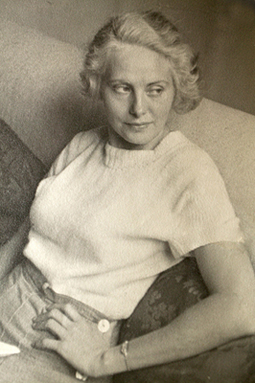
Re-Visiting The Journey of An Artist


Inspired by a true-life adventure, Headhunt Revisited: With Brush, Canvas and Camera is a documentary film, a book and exhibition about Caroline Mytinger and the power of her art to build connections across oceans and decades.

Images of research materials from the Monterey Museum of Art or Phoebe Hearst Museum of Anthropology Contact Information: Michele Westmorland 14128 - 11th Drive SE Mill Creek, WA  98012 (425) 401-2949 michele@westmorlandphoto.com
Caroline Mytinger: by Michele Westmorland (Images of research materials from the Monterey Museum of Art or Phoebe Hearst Museum of Anthropology)

The inspiration for Headhunt Revisited took shape in the 1920’s, when an intrepid American portrait artist, Caroline Mytinger, and her friend, Margaret Warner, traveled to Papua New Guinea and the Solomon Islands on a hunt to capture portraits of the indigenous peoples. Their four-year expedition resulted in 25 stunning paintings that depicted and preserved the culture of Melanesia in a way recorded by no other.

Read More 

True Love – A Scientific Equation? Finding Love Online


Here is how Amy Webb worked it out.


Brooding Storm – Short Story


Mondays Finish the Story by Barbara Beacham

This is a flash fiction challenge where Barbara W. Beacham offers a picture and the first sentence of the story. Based on the photograph and the first sentence, one must come up with a 100-150 word short story.

2015-05-18-bw-beacham1
Picture by Barbara W. Beacham

BROODING STORM © JK. Leahy

The crew of the Angel Flame received orders to head out. When Yakov and Marishka reach the secluded Russian base, most men had already boarded.

Marishka wiped her tired eyes as her husband walked to the submarine, leaving her, their newborn Polinka and their sick two-year-old, Boris. It was a dreary Friday at 5am; three lost seagulls skirted past Yakov, fleeing the brooding storm.

After Yakov’s head vanished into the submarine, Marishka left – four hours later the snowstorm hit. The radio announced that nobody was hurt. Marishka medicated and monitored Boris’s temperature.

The next day at 7am she heard a knock. It was persistent. Unwrapping herself from Polinka, she reached for her gown.

Marishka caught a glimpse of a man in uniform through the winter-frosted glass and threw open the door with a grin. Expecting to fall into Yakov’s arms, her stomach sank when instead she met the gaze of a stone-faced man carrying Yakov’s personal effects.

“Mrs Vladimir?”

“…Yes?”


Are We All Suspicious?


I took a walk yesterday in Bellbowrie, down our street on the edge of Brisbane River. I tend to walk on the grass because I like the soft- feel on my feet as I walk. Where we live, there is usually a piece of the city council land between the road and the various properties, enough for footpaths and walkers.

It was almost 5:45pm and with our winter, the place became dark quickly. I had a torch but I could still see so I did not use it.

“Are you right?” I heard a voice and saw a young man, about mid twenties, wearing white shorts and a polo coming towards me. I did not recognise him. He was walking on the road, going in the opposite direction.

Suddenly, I thought to myself, “why wouldn’t I be right?” And, “do I not look alright?” “Am I wrong?”

The tone of this young man’s voice did not seem friendly. I did not say any thing at first, just looked at him. I also wondered myself – if he was alright. I did not ask. My house was only four houses up the road.

Then, I calmly and with my best and warmest smile, I said, “I enjoy walking on the grass because it is soft and feet-friendly. I don’t like walking on hard surfaces”.

“Oh!” he responded with a puzzled look and then walked past me.

I don’t think it was the answer he expected. If that wasn’t the answer – what did he expect?

I re-told this random conversation to my younger son and he suggested, “may be the man thought you were ‘sus'”. (meaning suspicious).

“Do I look suspicious?”

To that question my son laughed and told me not to worry. How can I not?  It troubles me that given the world we live in today, you can never know what is well-meaning and what is not. Have we humans become allergic to each other?


Creating the Extraordinary – Cool Stuff


kristi-1-600x450-scaled1000
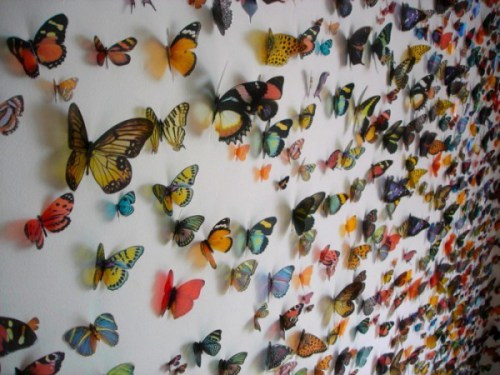
Swarm (detail) 2005/7 6000 color copies of butterflies on transparency material Dimensions variable

Making ordinary things become extra-ordinary is what artist Kristi Malakoff lives for.

Malakoff is a Canadian visual artist who has returned to Canada after time spent living abroad, most recently in Moscow, Russia, where she participated in a 2-month residency at Proekt Fabrika in the spring of 2010, and previously in Berlin, Germany, Reykjavík, Iceland and London, England where she attended the Chelsea College of Art and Design.

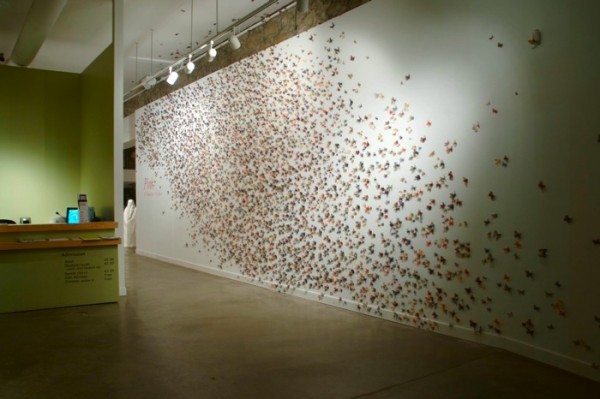
I particularly like her “swarmed” series. Visit her website to see more of her work. In the work displayed here, she used 6000 pictures of butterflies to create a vast swarm of butterflies.

kristi-2-600x399-scaled1000
Swarm 2005/7 6000 color copies of butterflies on transparency material Dimensions variable


The Missing – Short Story


2015-05-11-bw-beacham
Picture by Barbara W. Beacham

Mondays Finish the Story

Arriving at the beach, she reflected on her life. Mea searched the waves for two poles where the village bell hung. She had missed the bell sounds and the village gatherings. It has been 20 years since she left for Australia. The bell hung in the village centre; now, only seawater.

“I can’t see it,” she told her brother Tau.

“I don’t think it’s there anymore”.

“Right there” she pointed. “And what happened to Bubu Raga’s coconut trees?”

“The King tides, five years ago, took Moale’s family’s house, betel nut, breadfruit and the coconut trees. We dashed for the hill”.

“Oh My God! That would’ve been scary”.

“Yes, we lost everything. That was the day Chief Naka accepted the government’s offer to relocate us with other climate change refugees. It’s strange being on other people’s land. You are very restricted, but in the past 30 years, the water has raised so much. Our island will soon be completely submerged”.

Mind Games – Short Story


2015-05-04-bw-beacham

Picture by Barbara W. Beacham

 Mondays Finish the Story by Barbara W. Beacham

This is a unique flash fiction challenge where Barbara provides a new photo each week, and the first sentence of a story. The challenge is to finish the story using 100-150 words, not including the sentence provided. The challenge runs from Monday to Sunday! 

Mind Games  ©JLeahy

“After losing her head, she realised that the rest of her body was falling apart”, Joe would mimic a psychiatrist.

I sat by the window. The sun warmed my scalp and shadows danced on my hands. In hiding, I watched police take Joe away last night. He would have calmed down, but only he and I knew that; not our new neighbours.

We could have lasted in this abandoned house. If only Joe stayed quiet. My thoughts hurt my head.

“Ava! Ava! Where is your doll?”

Over the low white fence were a lilac doll pantsuit and two doll hands.

I had watched Ava at work yesterday. The toddler first ripped the doll’s head and legs, which she threw towards me. Ava caught me watching her. She laid the doll arms and pantsuit down, and dropping the body, she ran to the house. My eyes salted, thinking how scary I must have looked to her. I must leave before the Johnson Mental Health party arrives.

(150 words excluding the opening quote)

Female Voices in Writers Festival Byron Bay


BYRON BAY WRITERS FESTIVAL IS THRILLED TO ANNOUNCE THE FIRST ROUND OF WRITERS APPEARING AT THE 2015 FESTIVAL.

Gillard_web
Julia Gillard

Five successful and talented Australian women have top-billing at the 2015 Byron Bay Writers Festival from August 7-9. In what is shaping up to be a Festival showcasing a line-up of strong, female Australian voices, the first five announced were former Australian Prime Minister Julia Gillard, Joan London, Helen Garner, Kate Grenville, and Jackie French. More writers will be announced soon.

EARLY BIRD TICKETS ON SALE FROM 17 APRIL!

Already the Festival is shaping up to deliver a diverse and eclectic program of stimulating and engaging conversations with some of Australia’s most celebrated writers and international guests in the Festival’s history.

Festival Director Edwina Johnson said she was delighted to be bringing the best writers and thinkers together to share stories, triumphs, challenges and ideas; to debate, laugh and cherish; to connect, nurture and celebrate literary talent and new friendships down by Byron Bay’s scenic ocean shore.

Read More

Lessons from Audible Story-telling


Through my son Nathan and his friend Hamish, I got hooked on this audible storytelling a few days ago. After my day job and house-work, I found myself listening until I fell asleep with the episodes still running. The falling asleep part was not because of boredom, but early hours of the next day, which my human body could not stay awake until. The story was captivating. The way journalist Sarah Koenig told the story took me through several emotional states – fear, anger, frustrations and sadness. These emotions also wore me out, but I wanted more.

73

The Alibi

It’s Baltimore, 1999. Hae Min Lee, a popular high-school senior, disappears after school one day. Six weeks later detectives arrest her classmate and ex-boyfriend, Adnan Syed, for her murder. He says he’s innocent – though he can’t exactly remember what he was doing on that January afternoon. But someone can. A classmate at Woodlawn High School says she knows where Adnan was. The trouble is, she’s nowhere to be found.

Brought to you by Serial, a podcast from the creators of This American Life, and is hosted by Koenig. Serial tells one story – a true story – over the course of an entire season. Each season, they follow a plot and characters wherever it takes them. And they don’t know what happens at the end until they get there, not long before you get there with Serial. Each week the plot brings you the next chapter in the story, so it’s important to listen to the episodes in order, starting with Episode 1. Lucky The Alibi started at the end of 2014 and was completed early this year so that’s what I did for the last two days, between my day job and house-hold chores – listening. I was completely absorbed in the 12 episodes up to yesterday afternoon.  I cannot say what happens in episode 12, but do start from episode 1 to fully enjoy the effect of case-solving.

967ee5c3-0bcc-4c58-8b73-24badb3442d0-1020x612
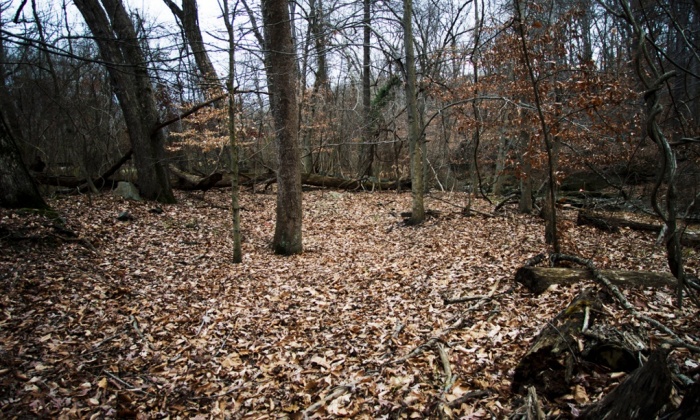
Leakin Park where, on February 9, a man known as “Mr S” came across Hae’s body, 127 feet back from the road, buried in a shallow grave behind a log.

Episode 1

On January 13, 1999, a girl named Hae Min Lee, a senior at Woodlawn High School in Baltimore County, Maryland, disappeared. A month later, her body turned up in a city park. She’d been strangled. Her 17-year-old ex-boyfriend, Adnan Syed, was arrested for the crime, and within a year, he was convicted and sentenced to spend the rest of his life in prison. The case against him was largely based on the story of one witness, Adnan’s friend Jay, who testified that he helped Adnan bury Hae’s body. But Adnan has always maintained he had nothing to do with Hae’s death. Some people believe he’s telling the truth. Many others don’t.

Koenig, who hosts Serial, first learned about this case more than a year ago. In the months since, she’s been sorting through box after box (after box) of legal documents and investigators’ notes, listening to trial testimony and police interrogations, and talking to everyone she can find who remembers what happened between Adnan Syed and Hae Min Lee fifteen years ago. What she realized is that the trial covered up a far more complicated story, which neither the jury nor the public got to hear. The high school scene, the shifting statements to police, the prejudices, the sketchy alibis, the scant forensic evidence – all of it leads back to the most basic questions: How can you know a person’s character? How can you tell what they’re capable of? In Season One of Serial, she looks for answers.

On October 3, 2014, a podcast unraveling the tale of the teenage girl’s murder in Baltimore aired. Barely a month into its release, the podcast broke download records and changed how audio journalism was perceived all over the world.

Podcasts are becoming the latest non-linear way of delivering the news, and some are applying the narrative format to explore—and expose—stories that have never been touched on before. The Alibi reached thousands over-night as Koenig took listeners through the scenes of what happened to Hae Min Lee and details of where her ex-boyfriend Adnan Syed was – on that fateful day.

I personally feel that this (podcast of a crime or any story) could be an interesting exercise for writers to learn how to describe scenes and structure different chapters in word imagery for their readers. It teaches you ways to keep your reader hooked in each chapter until the end.  Where you pause to ask questions in your story as Koenig did in Serial,  your readers will be asking these questions too as you take them with you through your plot.

I really enjoyed listening to The Alibi.

To listen to the story in all 12 episodes, click here.