Category Archives: Stories

Short Story “The Penthouse”


There is a story behind every person, every thing and every place. My friends Gary and Tammy visited us one night last year and over dinner they told us a story about their new cafe in Dutton Park, Brisbane, Queensland.

Across the road from their cafe is a subsidized government accommodation which housed people from all walks of life. These people also have their own stories. They frequented Gary and Tammy’s small cafe. Gary and Tammy provide a service that no government nor expert can provide for free. The two cafe owners know they will never make millions for the coffee nor Gary’s super home-made health juices. But what is NOT on the menu is Gary and especially Tammy’s open heart and good listening ears for the many desolate people. They come often to buy a cold drink or coffee but most times they just talk to another human who is prepared to listen.

Another dear friend, Ileen comes to mind when I wrote this short story. She is a lawyer and a very smart woman. She probably could be employed in some high flying legal firm or corporate office or even stand in a high court fighting an easy case and collecting fat cheques. Instead, she has chosen to work with a charity organisation that provides low cost housing for ex druggies, alcoholics, criminals, you name it. Her job entails fronting up to used needles on the floors, threatening tenants, tenants fighting each other and smashing the property or trying to attack her. She has to calm these people down, negotiate and talk some sense into them unless it becomes too violent, then and only then, she calls the police. I really admire what she does but sometimes I am very afraid for her. There is something good in all of these even if it may not seem that way sometimes.

“The Penthouse” is for Gary, Tammy, Ileen and all those unsung heroes out there, who give their love and dedication to helping the forsaken souls. This story is fiction and I wrote it as part of my exercise from looking at a picture my teacher Isabel D’Avila Winter showed us during my Creative Writing Workshop. In this exercise, you choose a picture and free-write what comes to your mind about the picture. In my case, I also related the picture (I chose) to people that I knew. May be you could guess what picture I chose in order to write this story. I hope you enjoy “The Penthouse”. And, feel free to suggest any improvements.

………………………………………………………….

The Penthouse

JLeahy Nov 4, 2013

I stepped forward. The wind gust slapped me. I swayed back and steadied myself. Then, calmly, I held my head up and gazed out over Brisbane’s Dutton Park. I held her note closer to me in my joint hands, cradling it like a precious gift. One single lined A5 sheet from an old doctor’s appointment with one sentence scrawled across the back in weak ball-point pen ink.

I was relieved there were no shakes today, the hands were calm. Otherwise the wind gust would snatch the note from me. I felt really good. Earlier, when I had left my apartment block on foot, my watch had told me it was 6pm. The block run by Church of Christ Queensland sat on Dutton Road, right opposite Café 169. The café was a place to sit, have Chinese; drink cheap coffee and talk.

Tonight, I was proud to have made it this far. I am on top of the world. She would have been proud of me too. I climbed up sixty unpolished concrete steps to The Penthouse. Lucky the stairway was almost completed and security lights were on. It would have been hellish trying to get to the ‘penthouse’ without steps and my poor eyesight.

Most of the buildings in the parklands and its surrounds were low. Coupled with an old pair of eyes and fading light I concentrated and re-arranged the shapes below me to my memory. From the top, each landmark gazed back in faded pastel of all shades.

From up here, and in this light, the houses below seemed fake and almost insignificant like a scene from a child’s story-book.  The large park spaces were gently turning into dark puddles.

Suddenly I had a moment of realization. My name is Jim Riley although mum and Mildred always called me “Jimmy”. I have lived in DuttonPark for 10 years. The Church of Christ Housing has been my home since Centrelink re-located me from Arthur Gorrie Corectional Centre. My one-bedroom apartment is full from top to bottom with things that people left on BrisbaneCity curbside collections. I like my things. In my lounge is a large black 40 inch Samsung TV. It doesn’t work but that doesn’t matter. Just like the black porcelain cat with the missing tail, whatever I collect looks good and adds character to my apartment. Everything I have collected is neatly arranged. But without Mildred to appreciate them, they have no use.

All these years, living amongst many that have been in and out of jails and those that have been on and off drugs added to the daily challenges of survival. The weekly state and church visits had attempted to sew many shredded lives together in one large tattered fabric. We were kept together. We lived quietly, separately. It is a different jail. No loved one comes to visit.

Sometimes a body would be found in an apartment and cops would turn up to take it away while we all watched. I am sure, across the road, the neighbors must think we are part of one big freak show. Mildred changed everything when she arrived.

Tonight I needed to rest my mind. It is a new beginning for Mildred and me. I needed to see the red bench where together Mildred and I sat every night. That was why I climbed up to The Penthouse. The eyes were not good but I barely made out the building that housed Cafe 169. Using that as a landmark, my eyes followed the road to Dutton Park and our red bench. In the dusk, there were only vivid outlines but I knew the red bench was there. The old oak next to the red bench is just a dark round mop now.

I had chosen the centre building out of the three construction sites. It is almost finished. Out of the three, Mildred and I had decided The Penthouse would have been built into this centre one.

I figured no-one noticed me leaving the block and no-one would find me once I sunk into the freshly dug ground. It was soft and my feet sunk into it when I made my way up here. With added mud from last night’s downpour, I could easily get swallowed by the soil. Any grader work would be perfect to seal any remaining evidence.

I caught the whiff of the surroundings. A concoction of wet soil, Chinese food and dog shit. My K-mart black socks were cleaned and felt comfy against the rotten old Stockman. I wore the Country Road gingham shirt mum gave me for my fiftieth. Mum got it second-hand but it was suave. Twenty five years later it still fitted. My black General Company pants from Vinnies came nicely over the shirt and under a matching leather belt. I had never felt better.

Two days before, Mildred and I sat in front of Cafe 169, discussing the three multi level construction sites. We watched them grow rapidly in the past 12 months. We planned to win the Lotto and share The Penthouse which we imagined would be right here on the top level where I am standing. The Penthouse would have a private pool and a Jacuzzi for late night hot tubs. We agreed it would be a fine change from sitting on the red bench and coping with the cold bites. I smiled. My eyes stung with salt and I blinked my tears back. My ears burnt at the thought of what could have happened. I felt a little awkward and stood at ease. I had never touched Mildred. At 75, I felt like a school boy all over again.

All I ever wanted was to see Mildred every day. That was enough. Even after three years, that was still enough.

I looked at her note again. “Dier Jimmy O-raali, if der wos any one I wud love and be with, it wud only be you”. She signed, “M”.

The note had come to me last night after the police found another body. I was told by a knock late in the night and the note handed to me. Police confirmed Mildred had another of her Schizophrenic fits, her very last one.

I was numbed. The Sergeant handed me the note. He said “Sir, this must be for you. Jamie across the street said Mildred was your friend”.

The cops left 24 hours ago.

I stood solemnly in The Penthouse.

The sun almost disappeared, dragging its last half yoke. I gazed out over Dutton Park once more and found myself looking right into Mildred’s hazel smiling eyes. Her ash grey wavy locks tucked over her ears and curved neatly under her ear-lobes, showing off her favourite red large heart-shaped drop earrings. At 52, she looked stunning. I starred at her. Her mouth remained in the smiling curve. I reached out and stepped forward to touch her. My foot was off the ledge, feeling nothing solid under me. As I almost touched Mildred’s face, I could hear Mildred whispering, “I’ve got you Jimmy”.
Creative Writing – “My Last Walk”


My last post on my personal journey through domestic violence brought a lot of pain, anguish and fear. With the graphics being provided in the New York Times film by Carey Wagner, my mind took a long trip to many forgotten places where the monster lived.

I have taken some time to work through things I kept to myself for a long time but in response to the article, many kind words have been spoken by friends, family and even caring strangers both here, personal emails, phones and my Facebook Page. It is a long hard walk to the end of violence against women but we have to continue to talk about it and fight the monster.

I have two very important people in my life; my sons Nathan(18) and Chris(15). As a mother I always worry that whatever actions I take that the boys would be watching me and there would be consequences. I always worry I may hurt them emotionally. This is one of the things we need to teach our boys and young children in PNG if we are serious about starting at ground level.

For my own case, all these years, I did not speak much about my life with the monster. I felt very strongly about many things and my priority was always to protect sons. I knew they would soon learn about me and the culture they are part of. Because they were born into a combination of cultures and parents the responsibility comes back to their father and I to teach them about what is expected of them and how they should treat others.

My past did involve my sons but only just. I recall a confronting incident in 1999 that involved my children and my past. I had fled from the monster in 1988. I changed my life, settled several years later in a very happy relationship and had my sons.

Our family went to a friend’s place one day. My sons were barely 3 and six-months-old. We were invited to the friend’s place for Sunday brunch. When we arrived, the boys my partner and I, in front of my friend’s house was the man who had beat me for four years. He was invited! It was absurd. However, when you look at the big picture, which took me a long time to see was that – everything was ok. Even friends accepted that what this man did was ok.

I was shocked but having my baby (Chris) in my arms, I pretended to ignore the beast and proceeded forward. What I did not expect was he came forward, passing me, to pick up a ball my three-year-old had dropped. Stunned, I watched him hand the ball back to my son. Then the man did something that made me want to kill him. He gently touched my son’s head. I nearly fainted.

We left the party and returned home because my partner and the father of my sons could see that clearly, I became very ill. We never spoke about this incident but I knew that I could never let that person come near my children.

Like all families, life continues and we grow as people and as a family, we take on life’s challenges together. I believe as a parent, I must always do my best and show what is in my heart.  Show love. This love that I teach and show is the greatest conqueror of all hardships and it teaches my sons to love others and treat them as they would want to be treated. That was what my late grandmother, Geyam Kauc always said. I tell my sons to always treat people with love and respect. And when they are older, especially in relationships, treat women with the same love and respect and the women will appreciate and reciprocate.

Thank you to all those people that commented on the “PNG Women: When can we be safe in our own country” post and I hope that what I wrote made a small contribution to help in creating more awareness and also give hope to victims of violence.

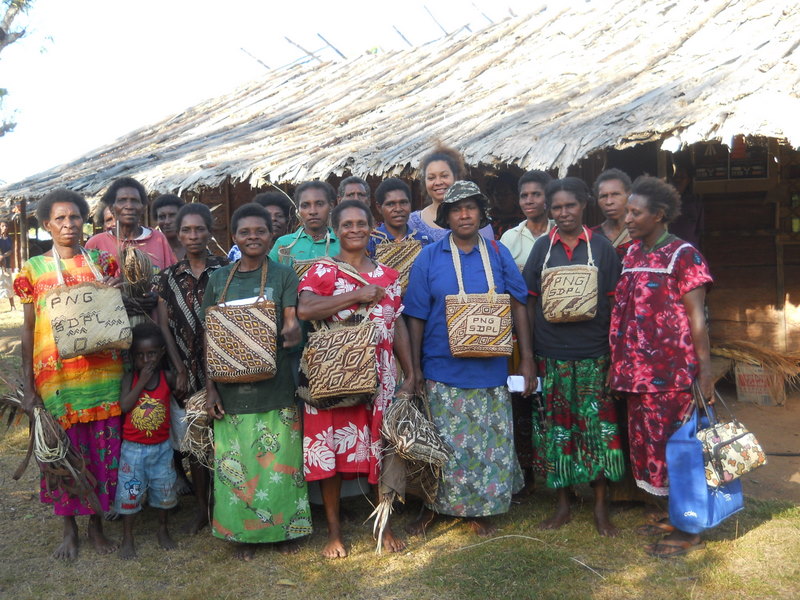
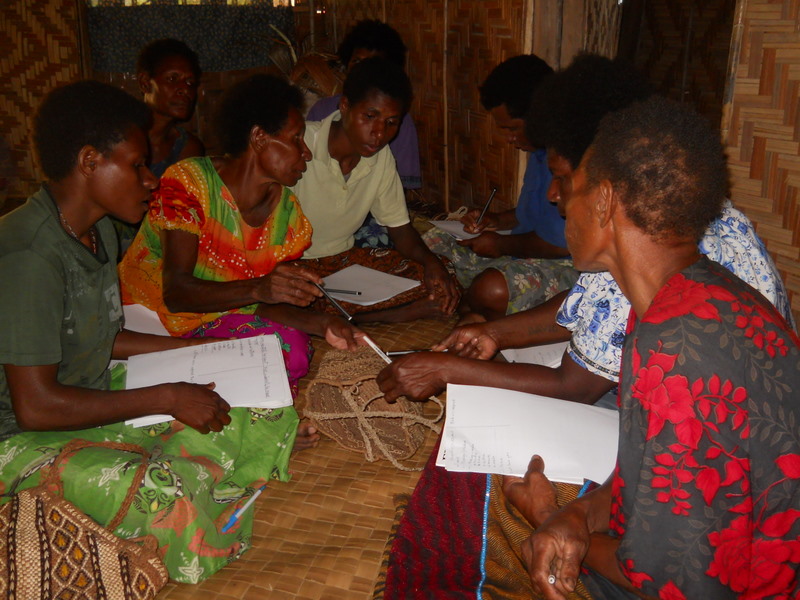
As promised, I am sharing a story I wrote based on a true story of another woman who was a victim at the hands of the monster. This story hopefully one day will be published in a book of short stories. I thank my teacher Isabel D’ Avila Winter for editing and formatting this story. If you have any comments about the story, please let me know. Pictured below is a picture of women I worked with in Eniyawa Village, Suki, PNG where I was told this story. I met several very talented women weavers, leaders and also victims of domestic violence relationships. It was in the evenings after our weaving workshop that we would sit and discuss some of our own personal triumphs and how we got away from the “the monster”.

DSCN3392DSCN3401

My Last Walk

By Joycelin Leahy

I could feel his eyes burning into my back as I struggled uphill and over the grass stubs. The air was tight around me. It is almost four in the morning and chilly.

“Walk faster!”

This time I felt Bomoga’s heavy breathing, close and menacing. I longed for the day’s first warmth, for the softness of my three-month-old baby Boni and for the giggles of his older siblings. I felt extremely fatigued and wished I could stop walking. A sudden breeze brushed over the tall grass making a shoos sound. I shivered.

This was how Bomoga and I walked to the garden, except I walked behind him with a child on my shoulder, one in the bilum on my back, whilst pulling my eldest by the hand. Their father walked proudly in front with his spear, his small bag strung across his chest. This time I was in front, wearing my favourite red meri blouse. In haste, I had worn it inside-out. It hung loosely on me.

As I reached the top of Kasu Hill, I struggled for air.

“Hurry Up!”

I could feel myself sweat vigorously as my heart pumped wildly.

Kasu was the only hill in Domogu Village in the wallaby plains of Western Province in Papua New Guinea. The rest of the area was flat grassland hunters burnt often to entrap wild game.

As commanded, I marched a further three kilometers along the ridge and then descended gradually. I stopped feeling the mud and my sore right foot. Near Kasu Hill, NGO environmentalists were studying the tailings allegedly from Ok Tedi Mining. Along the river bank, hundreds of fish and plants had died. Usually there would be people here, but it’s too early – there is no-one.

I felt my milk starting to drip down my blouse. I hadn’t worn a bra, so my breasts were full and uncomfortable. My heart beat faster as I steered my thoughts from my baby. The sun rose and faint shadows began to form while warm air caressed my face. I was sure now: we had crossed the open country and left Domogu Village. Bomoga’s ancestors, nomads like mine, had decided to settle in this land because of its fertility.

We’re up high and it is clearer. My eyes scanned over the mountains where mining giant Ok Tedi explored. To the south, there was an airstrip; Airlines PNG flew in weekly. From the top, the village looked like an exquisite jewel, a deep jade opal, festooned with glassy lakes of various sizes.

“Move!” his voice cut through the silence.

I stumbled forward.

Soon, we entered a dark forest, the only obscure part of the land. Strangely, the birds were silent. I had never been here, but I knew sorcerers came here often for bush medicine. I looked for the outside light through the tree openings. I saw only the lingering fog, separating me further from my children.

“Keep walking,” he hissed behind me.

From the moment he’d woken me this morning, I had not looked once in Bomoga’s eyes. It was still dark and I had felt his sweaty hands touch my arm. His physical stench was almost invasive. I thought he wanted sex but he shook me roughly and ordered me up and out of the house. His shadow had loomed over me as I carefully took Boni off my breast and put my meri blouse on quickly. My baby stirred and nestled into his flannelette blanket, eyes still shut. Thank God, I thought, he didn’t wake up and cry for more milk. I hung on to the last touch of his tender little fingers. Eka and Maria were asleep. I heard Bomoga pick up something and then close the door behind us. The mood between us was chilling. He was quiet and cagey, unlike his usual loud and showy ways.

If we were not having sex, which was rough and unpleasant, we had arguments which would end with a sudden punch in my eye or stomach, sometimes causing me to blackout. I knew if I answered back or cried out, the beating would be worse.

He repeatedly told me no-one would help me because I was his wife. Not even his mother, sisters, or other villagers. I always felt like his prey, moving under his watchful eyes while I went about my daily chores.

My thoughts reached out to my children, then my mother. Our years of marriage had worked this way: while Bomoga ruled, I kept my mouth shut. My bride price had been paid and when my family left after the wedding ceremony, I knew I would never see my mother again. I ran after her. We cried and hugged for a long and last time.

The sobbing began from inside now, my eyes warmed and salted with tears.

I remembered a slight improvement in Bomoga at the birth of our first son. I’d made him a proud Melanesian man by having a first male child. Eka was my child of hope. I held this hope close to my chest along with the bible. Children can change a marriage, the village pastor had said. Sadly, Bomoga’s cousin came back from the city one day with SP beer and some other alcohol. The two had many days of stories.  I saw a change aroused in Bomoga, followed by his old ways. When I had two more children and threatened that I would leave, I saw something new in his eyes. He started beating me.

Today his manners are different again. He is like a time-bomb, ready to go off at anytime. As I walked on, I remembered how no-one had seen us leave the house. Not even Tau, the old Papuan. I wish he had already opened his trade store. He was a kind man. If he or someone else saw us leave then, one day, they could tell my children. I did not leave willingly. It was not my choice to leave them behind.

As we descended through the gloomy thick undergrowth into a flatter area, I glanced across a small opening. I could finally see sunlight touching the mid canopy. It was a pretty sprinkle of luminosity touching various leaves and the moss. I caught a glimpse of a beautiful Bird Wing butterfly on a fern, just waking up. I felt a flash of hope.

We left the dense of the forest and approached a Y junction. I could hear rapids.

“Turn down towards the River,” Bomoga commanded.

I turned towards the sound of the rapids. My mind focused on the returning pain in my foot. In each step, I felt the sharpness of the rocks greeting me as I descended over each one. The rapids became louder. Before me was the belly of a fast flowing river and it was full from the rain last night. Is he going to drown me? Perhaps this was my last walk, I wondered.

I imagined villagers rushing to screaming children. My body laid there as the women rushed to the children. My laplap had been swept away and only my treasured meri blouse, still inside out, was clinging to my slim frame. I was dragged ashore with a paddle shafted under the hem of my blouse. Here, I was left on the pale silky banks of Suki River while everyone gathered to look. Then a woman ran up and started yelling and then, in a cry of recognition, she bellowed my name: “Sulita!, Sulita! It’s Suli!.” Everyone would turn and ask; “Who is Sulita?” They had not recognised me half dressed and impaled by a black palm spear. By then my corpse had been soaked pale and bloodless by the hours in the river.

“Stop!” he yelled over the rapids.

I stumbled and halted, snapping into reality.

On the river’s edge lies soft silky mud. The ground is pale and covered with smooth boulders of all kinds. In places there were no stones and the ground looked easy to dig. I kept my face down and turned away. My staggering feet were covered in mud and grass. I needed to relieve myself. Under my extreme state of duress, blood rushed to my head, causing a war of pins and needles.

“Turn around and face me. Look at me.”

Slowly, I raised my head, looking up into the point of his most prized black palm spear. In the background everything there was to see and hear faded.

Bomoga had speared the biggest pig, the fastest wallaby and driven the largest cull of deer. Many feared him because of his mastery with the weapon itself. My eyes shifted from the spear and held my husband’s eyes. Even after ten long years we stared at each other as if we were strangers. I finally felt at peace.

Bomoga’s eyes were wild, bulging and red. His nose flared and his eyebrows twitched in the anticipation of violence. He raised and pointed with the spear.

“Where would you like to be buried?” he asked.

A Different Perspective on the Kula Trade


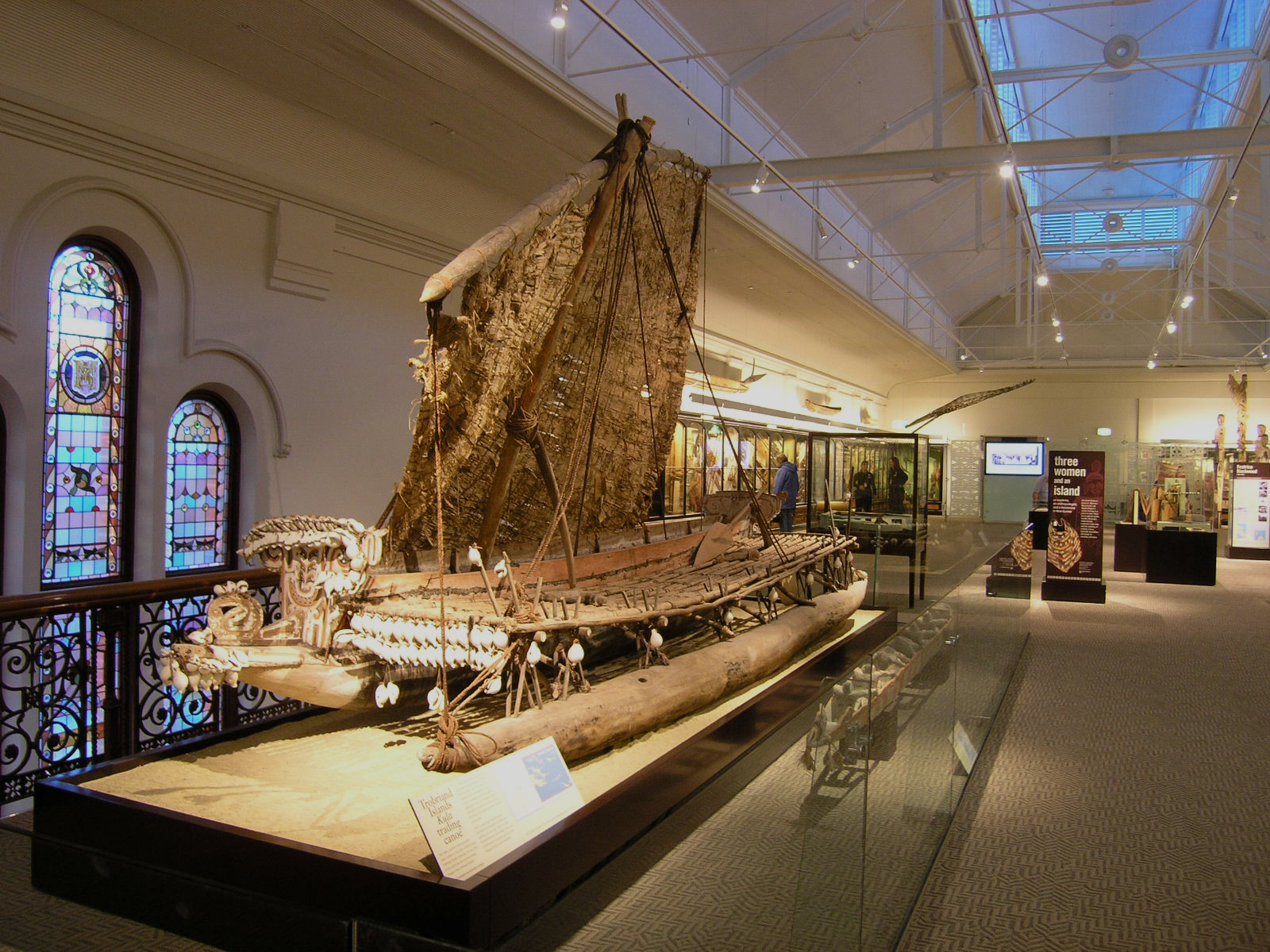
One of my earlier posts was about Sopikarin, a Kula Trading canoe from the Trobriand Islands in Papua New Guinea. This canoe was acquired by the South Australian Museum. In this story I gave some insight into the Kula Trade and what it means. While researching other work tonight, I found this article which I thought some of you may find interesting as it offers a different perspective on the reasons behind the Kula Trade.

The article was written by Anthropologist Mike Reid on Mises Daily.

Kula canoe

Anticapitalists like to use examples of supposedly selfless gift exchanges in “primitive” societies to contrast with the greedy behavior of modern markets. But a closer look at one famous exotic gift exchange, the Trobriand Islanders’ Kula, actually reinforces libertarians’ claims about the universal power of the profit motive.

In the elaborate Kula trade among the islands off the eastern tip of New Guinea, men sailed for many miles to receive ceremonial gifts of shell jewellery, apparently for the sole purpose of giving those gifts away again within a year or two.

Such a journey was both costly and dangerous. Men hired craftsmen to build special seagoing canoes sturdy and swift enough for the task. And the Trobrianders’ Kula journeys took them as far as the home of the Dobuans, who lived on an island 60 miles away, spoke a different language, and were regarded as cannibals.

When the visitors arrived, if all went well, their hosts greeted them with ceremonial gifts, “dirty, greasy, and insignificant looking native trinkets,” as one anthropologist jokingly called them.[1] The most coveted of these were shell necklaces and armbands, which belonged to the special category of valuables called vaygu’a.

But despite having come all that way to acquire these trinkets, the visitors did not plan to keep them for very long. Instead, the Trobrianders intended to give all the vaygu’a away within a year or two when they acted as hosts in turn to their own visitors from other islands.

In fact, men who held on to vaygu’a for much longer than that were “universally recognised as reprehensible and discreditable,” and called “slow” or “hard in the Kula.”[2]

Can all that risk and effort really have been undertaken just for the joy of giving the grimy baubles away again?

“Obvious Pointlessness”?

The socialist economist Karl Polanyi seems to have believed just that. And he admired the islanders for it. Polanyi praised the Kula exchange as “a gain-less and market-less economy … one of the most elaborate trading transactions known to man,” in which “no profit is involved, either in money or in kind.”[3]

In an informal memo, Murray Rothbard ridiculed the Kula and Polanyi’s love of it:

He is apparently enchanted by the “Kula trade.” … What Polanyi especially likes about this is its lack of true mutual gain — or is it its obvious pointlessness?[4]

“Gainless”? “Marketless”? Obviously pointless? What was really happening in the Kula trade?

When anthropologist Bronislaw Malinowski travelled to the Trobriands in the 1910s, he found that the Kula was the consuming passion of men’s everyday life. Gaining vaygu’a was proof of a man’s “luck, daring, and enterprise.”[5]

Indeed,

the temporary ownership allows him to draw a great deal of renown, to exhibit his article, to tell how he obtained it, and to plan to whom he is going to give it. And all this forms one of the favorite subjects of tribal conversation and gossip, in which the feats and the glory in Kula of chiefs or commoners are constantly discussed.

These “dirty, greasy” bits of shell were in fact prestige goods, just as valuable and just as arbitrary as Rolex watches, luxury cars, and sports trophies. Such goods attract attention and advertise your achievements. They say, “I am powerful enough to have this.”

In North America, when a team in the National Hockey League wins the Stanley Cup, it brings the team members enormous fame (at least in Canada). But instead of making a new cup each year, the NHL uses the same trophy over and over; so the winning team holds the Stanley Cup only until the next team wins it away. The cup is a storied artifact that brings fame to any man who possesses it, even though no man can possess it forever.

The vaygu’a were the same. The point was not to have them permanently, but to get them for a time.

Giving to Receive

Within the Kula, each act of generosity was in fact a careful investment. Whomever you gave a vaygu’a to was obligated to repay you later with a “counter-gift” of a different artifact he owned. So a man planned out whom to give things to in order to control whom he would get things from. In this way, a patient and clever giver of vaygu’a could maneuver the most famous artifacts into his own hands.

The Kula was not pointless (contra Rothbard) and definitely not gainless (contra Polanyi). It was an organized search for personal profit. True, the profit was reputational, not strictly material. But ultimately, every “profit” — whether in fiat dollars, or NHL trophies, or shell necklaces — is a mental phenomenon, a fulfillment of our subjective whims greater than the costs we paid to achieve it. The remarkable thing about free exchanges like the Kula is that in every exchange both parties make a profit.

But what about Polanyi’s claim that the Kula was “marketless”? In one sense, he is right: the Kula itself was just an elaborate gift exchange, not a market.

Yet the Kula also protected and encouraged extensive barter between the Trobrianders, the Dobuans, the Amphlett Islanders, and the several other cultures who took part in it. In each Kula journey, the visitors’ canoes came packed full of food, or pottery, or artwork — whatever goods their community made best. And after the initial gift-giving ceremony on the hosts’ beach, the visitors remained for several days of bartering over this stuff with their hosts.

As in much of Melanesia, the islands off the east coast of New Guinea were rife with the danger of warfare, which certainly threatened to disrupt trade and force each village into economic isolation. But the Kula mitigated this threat by providing a kind of “peace-making ceremony” between men of different communities and cultures.[6]

A good Kula partnership between two men could provide a steady flow of vaygu’a through numerous gifts and counter-gifts over decades; the relationship could even be passed down as an inheritance to a son. Each man thus had good reason to protect his partners against theft or violence when they came to visit his island.

In short, the decentralized network of Kula gift exchanges provided the social scaffolding for international trade protected from robbery and warfare. No state required.

The Power of Profits

Western socialists like Polanyi are often eager to use a romantic interpretation of traditional cultures to attack markets or profits as unnecessary or unnatural. The rhetorical strategy is to cast the “primitives” in the role of generous, uncalculating tropical pixies, and then compare us very real, selfish, scheming apes unfavorably to them.

Caught in this rhetorical battle, Rothbard can hardly be blamed for hastily dismissing the Kula as “obvious pointlessness.” Indeed, if Polanyi’s nonsensical account of a profitless Kula were accurate, Rothbard’s characterization would be perfectly correct.

But the truth is this: every human in every culture chooses the best means he can imagine to achieve the ends he desires. Each participant in the Kula carried it on because he expected to make some kind of profit. And the net result of the Kula, like that of all systems of truly voluntary exchange, was mutual gain and international peace through private profit.

Comment on this article.

Mike Reid is primus inter pares at Invisible Order, a libertarian publishing-solutions company. He also teaches anthropology at the University of Winnipeg. Send him mail. Follow him on Twitter. See Mike Reid’s article archives.

You can subscribe to future articles by Mike Reid via this RSS feed.

Copyright © 2012 by the Ludwig von Mises Institute. Permission to reprint in whole or in part is hereby granted, provided full credit is given.

Notes

[1] Bronislaw Malinowski, Argonauts of the Western Pacific (London: Routledge, 1922) p. 351.

[2] Malinowski, pp. 360, 94.

[3] Karl Polanyi, The Great Transformation: The Political and Economic Origins of Our Time, 2nd ed. (Boston, MA: Beacon Press, 2001) p. 52.

[4] Murray N. Rothbard, “Down with Primitivism: A Thorough Critique of Polanyi,” 1961. Republished in 2004 onMises Daily.

[5] Malinowski, p. 352.

[6] Reo Fortune, Sorcerors of Dobu (London: Routledge, 1932) p. 209.

The Hillside Find


Port Moresby. PNG. The Ranuguri Hill is in far background. Picture: UK Telegraph.


A short background about “The Hillside Find“.

My work as a journalist in PNG took me to police work as the Public Relations Deputy. I was based in the Police Headquarters, Papua New Guinea (PNG). My job was to handle media, write press releases, write speeches for the Police Minister and Commissioner and handle all public relations for the Police Force. There I rose through the ranks to become the deputy of the Community Relations Directorate. The late Commissioner David Tasion pushed for me to become the head of the Community Relations. He set up a rigorous training committee and programme that ensured all my training was packed into 12 months. During this time, the crime rate in PNG was very high and the Police PR was not good. My main role would be to improve this negative image.

Among all my training, I completed an inspector training course at Bomana Police College to earn an inspector’s ranking; I spent time in various sections of the Royal Papua New Guinea Constabulary and worked in many squatter settlements throughout Port Moresby in community relations programmes. I also had an attachment with the Royal Hong Kong Police in 1986, whilst Hong Kong was under British rule.

I became the Director at the age of 21 and took over a staff of 400 civilians and trained policemen (mostly male and much older than I).   People like Beth Harding, an Australian, a very strong woman and a dedicated teacher in PNG for over 30 years was working in the constabulary training. Beth also pushed me to become a strong managerial contender in one of PNG’s most fragile disciplinary forces and we did it! We set up many community programmes that linked police and the public and they joined hands to fight crime together.

My years in PNG Police were very interesting, exciting and sometimes dangerous and challenging. Because my role was multi-faceted and complex, my friends often joked at parties, rather than giving a long explanation, that I was a police dog trainer.

We established very good networks with the people on the streets and we had police living amongst squatter settlement communities. I had the best, teach me and I pay my respects to many that have passed away. I will always remember that time in my life from 1985 – 1989.

It was one of those days that I went out on detective work with head of the Investigating Unit, Supt Roy Tiden that left permanent imagery in my mind. I wrote this short story, “The Hillside Find” mid year, in my Creative Writing Class. The story is part of my memoir that I am writing. If you like this true story, look out for my memoir next year. With my teacher, Isabel D’ Avila Winter guiding me, I hope to complete most of the writing for the memoir this year.

Please click on the link below to read The Hillside Find – by Joycelin K Leahy

The Hillside Find – Wk 2

Nature – Feeling The Heat


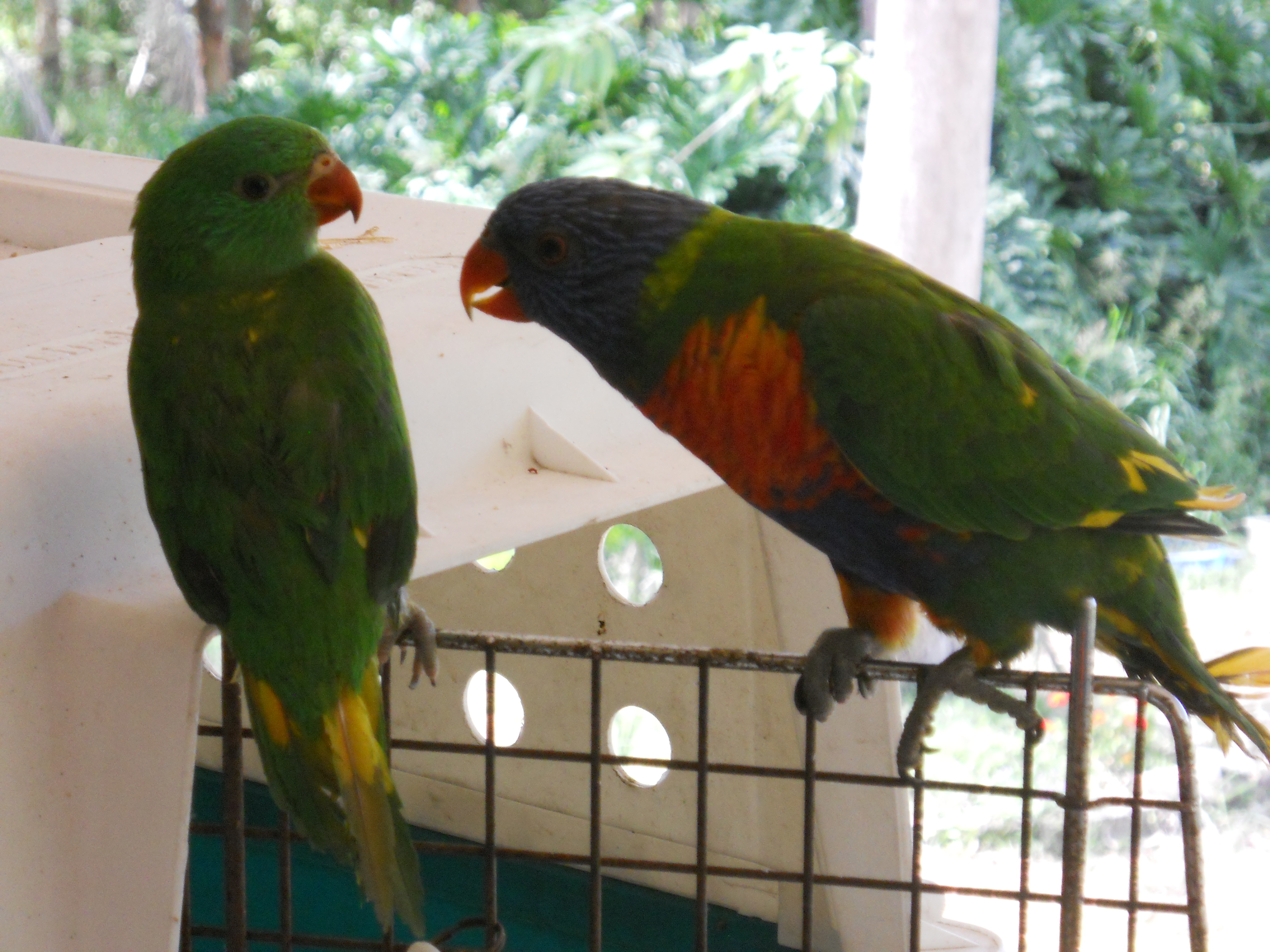
DSCN1430        Lorikeets in the Gym          Joycelin Leahy Pictures 363                                 

A few days ago, the temperature in Brisbane was a blistering 44 degrees.  Our average is about 27 degrees but summer averages are about 35.

Seeing my sons had gone down south to see their father, and boyfriend gone to Papua New Guinea, I was on my own with our pet lorikeets, Kaz and Nisha and in the backyard were our six chickens and a rooster.

We have a tin roof so imagine how hot the house was. Fortunately the house is two stories and brick in lower level kept the bottom half of the house cool. I moved quickly downstairs with the lorikeets. Not one to watch TV and being in the middle of the morning, I switched the TV on to see what was happening around Brisbane and Queensland with the very high temperature. I was also concerned about bushfire.

Within hours that morning, the heat was cruel. The ever so proud looking greenery and tropical plants and flowers in our surroundings slowly weakened and started browning and shrivelling right before my eyes. I made sure the chickens had a lot of water and the lorikeets and I settled into the cool comfort of downstairs and before I knew it, I felt drowsy and then had fallen asleep. The heat had taken its toll.

It must have been at least an hour before I heard loud shrieking and flapping of wings and woke up to the two piercing bird cries. I had thought the two lorikeets were fighting initially. Then I left the couch and moved to the window and there was the head of a metre long green tree snake trying to squeeze through the closed door.  It must have been desperate to get off the burning concrete floor it was on. Its long green back and yellow belly slithered very quickly as it glided over the glass door and falling off at all attempt. I felt sad but afraid at the same time. They were harmless, but what about the birds? There was a small gap which only the snake’s head could fit. It tried a few times to enter. I guess in this heat, all living things feel the temperature.

Quickly and out of my sleep, I jumped up and down and made a lot of banging noise against the glass door, my turn as by this time, the lorikeets were quiet and starring at me. The snake turned and quickly slithered away. I praised the two birds and returned to the couch and drifted off again. Half an hour later, the same thing happened. The snake had come back. This time, I closed the gap with tape and went outside and with a stick, chased the snake into the bush. I was running as the ground and grass was so hot, it burnt my feet. The interesting thing about the situation was, while I was outside; I spotted another scale-breasted male lorikeet bopping up and down in our swimming pool, almost on its last breath.

I ran across the yard to the pool and gave the drowning bird a stick to climb on. Not far from him were six dead ducklings floating in a small group in the pool. I felt sad. By the look on the lorikeet’s face, the wild bird seemed so relieved and did not make a single sound. I took him with me downstairs and fed him some food and water. Within minutes, the new bird met and became acquainted with Kaz and Nisha (our two lorikeets) and we stayed in the cool room for nearly three hours. The three lorikeets shared the food and water. With its beak, Kaz tried to comb and groom the new lorikeet’s feathers but he did not like that. Nisha being the scale breasted lorikeet and still a baby was excited and became very chirpy with the ‘visitor’. By the end of the day, the ‘visitor’ started getting restless so I opened the taped door and the “visitor” flew away. I re-taped the door and went outside to inspect the sun’s damage and bury the ducklings.

Pictured above Kaz and Nisha and later with the “Visitor”. A similar Green Tree snake tried to get into my art gallery last year and when I disturbed it, it tried to hide in the bricks. As in the Google Image photo, they are very common in our area, Bellbowrie, Western Suburbs and Queensland.

The WAF – Wearable Art &Fashion


The WAF – Wearable Art &Fashion.

Sopikarin’s New Journey


OLYMPUS DIGITAL CAMERA massimap

It is going up to 5pm here in Brisbane and I am almost feeling better after my old girl (computer) crashed this morning. Thank you Gary Hall for having the “puri puri”, (magic) of conducting a tech recovery process without being present. I still don;t get it Gary, but anyway, my old girl is up and running and groaning less so I am grateful. I had promised an article I wrote about the Kula canoe, Sopikarin. South Australia Museum has now purchased this canoe which sat in their museum lobby for a few years. Pictured above, it is an exquisite piece of history, all kept in one piece. It represents the amazing Kula Ring as shown in the map, a trading area and a highly organised system that lasted for many generations and the Milne Bay people in Papua New Guinea should be very very proud of this canoe and their rich heritage. Sopikarin carries with it, all it’s ornaments and markings of your ancestors and many stories, many untold can only be imagined by many people from many cultures and tribes around the world.

I have always loved the stories behind canoes and in Papua New Guinea and other Pacific Island countries, it was our only transportation for many centuries – for trade and as a means of getting from one place to another. Each canoe is build from a unique tree and often there are several rituals associated with the preparation and launching to ensure that our ancestors protect us while we travel. We have always been seafarers long before the western ships and boats came.

I wrote the article about Sopikarin, the last Kula trading canoe as part of my research for my Masters in Museum studies at University of Queensland. There may be other ‘last ones’ out there and I hope I can here from you, the Masawa people. This article has been published in the Paradise Magazine (Air Niugini In-flight Magazine) and I would like to thank Dr Barry Craig and SAM – the South Australia Museum for the contribution to my research and the story.

Following the ppublication in Paradise Dr Harry Beran wrote this email to Dr Craig about the name of the canoe. I would be grateful for any Masawa people in Milne Bay Province to contribute to the discussion on what is the true meaning of the name “Sopikarin.

Email from Dr Beran: 
I’ve just seen the article on the masawa canoe on display at the SAM. Nice piece.

I have a copy of a typescript by Kiriwinans and ralph lawton which gives the terminology of the components of a masawa canoe. I can send you a copy if you don’t have one already.

I find the reason for its name implausible. Would Trobrianders use a wood that doesn’t float for the hull? I do know that the wood called meku in Kiriwina and kwila in tok pisin doesn’t float but would they use this for canoes? (I think it’s used for the tables made for sale) Nor can I see why the log the hull is carved from would end up in the water before it was carved into the hull. Nor why the water near the land would be so deep that divers bled from ears and nose. Anyhow Peter Hallinans’ notes on Sopikarin make it clear that the explanation of the canoe’s name is part of a legend and legends don’t have to make sense.

If you look at Hallinan’s notes, at the end of the explanation of the name, there is a much more plausible explanation. apprentice carvers drink water over which magic has been performed. sopi = water. One could ask ralph whether he knows what karin(a) means; it’s not in his dictionary of 2002

cheers

harry

Harry Beran (Dr)
6 The Square
Horningsea
CAMBS CB25 9JJ
UK

Please click on the link below to read my  story about Sopikarin’s new journey – to Australia.

76-82 Paradise Vol. 5, 2013

Creative Writing


Thank you all for your comments and encouragement for my very first post yesterday. As promised here is one of my short stories. I belong to a Creative Writing workshop group at Kenmore School in the Western Suburbs of Brisbane City, QLD Australia. We meet once a week during school term to workshop our stories under the master story-teller and author Isabel D’ Avila Winter.  Here is a story I wrote under the category short-story fiction. It was based on events of a real situation but characters and scenes have been changed. I hope that it would be published later in my short story book. Please click on the highlighted link below to download or read the story.

The Price of a Small Change – JK.Leahy short story

“Any small change?”

Dit held out his right palm as he expectantly traced the bus queue at Kelvin Grove, Brisbane. It was Thursday, almost seven. For Late Night Shopping in the suburbs, not too many people were around. The wind was cold.

Visitors to the Royal Brisbane Hospital were leaving; visiting hours ended at 8pm.

“Excuse me, any small change?”, he asked the fifth person, a pale-faced peroxide blonde woman, in her fifties. Standing nearly as tall as him in a black three inch high heel and, wrapped warmly in a red coat, her heavily made-up face took a long stare at Dit’s ripped blue poly-cotton long-sleeve shirt. Clearly, Dit’s appearance did not fit. She scoffed and looked away.

Dit pressed forward without a flinch or loss of courage.

His left shirt pocket had ripped to its base and flew about like a kite in the wind. He was barefooted. His dirty blonde strands flapped in the same direction the wind took his pocket.

“Small change?” he asked the next three people. No-one gave him a thing. No-one said anything.

I could hear him coming towards my sister and I as the crust on his trouser hem swept the floor as he walked. I started to feel around for coins in my pockets, my bag and my purse, my eyes on him. Being a pensioner, I had only spent my last $20 for that week on a bus ticket and dropped the change somewhere in my bag. I had not planned for this situation. I could identify with this man’s desperation and I wanted to help.

In a few seconds, I could see his dirty brown denims sweep into view and two very dirty feet peeked at me. His toe nails, soiled, uncut and ugly. My eyes followed the awkwardly hung trouser legs up his thin frame to his face.

“Any lose coins”, he asked, standing tall and looking down at me with steel blue eyes.  Nothing could be piercing and clearer than those eyes, set in a ruffle of stringy long hair. The bus terminal overhanging casted a shadow over his face but I could see less than half a dozen teeth and a wide smile outlined by a scanty moustache.

I held up our lose change, both my sister’s and mine and he grabbed it, touching my hand. I pulled away.

“Hi, I’m Dit” he said as he pocketed our coins.

I smiled at him. He stood there, smiled back and then asked: “Don’t I know you?”

My sister stared at him, alarmed.

“No, I don’t think so”, I said.

“Oh… I KNOW YOU’, he insisted. “You helped me before”.

I was embarrassed that I could not remember. I hoped he did not think I pretended to not know him.

“Ah, maybe I did help you in the city or the Valley”, I said.

He flashed a big toothy grin and coughed. “Oh well, I better get going”.

“Alright, you take care now” I said and watched him disappear into the dimly lit street.

At that moment, Bus 333 arrived and everyone piled into it. My sister and I took the seats at the back door.  We had the view of the front but we could get off quickly to catch Bus 444 to Moggill at the city stop.

As the bus drew out,  a man in a long black coat ran and jumped on just before the bus door slammed shut. He carried something.

Stopping briefly to check the main road traffic, the driver eased Bus 333 onto the road and headed for Brisbane City.

Every passenger was sitting with their heads pointing down engrossed on their smart phones, tablets and other electronic devices. A woman in the seat near us read the paper. At the front of the bus, my eye caught that last passenger. He leaned against the metal post near the driver and there was something about his stance and his face was familiar but he was covered and his coat had a hood.

As I watched, the passenger approached the driver; we were only five minutes away from Adelaide Street Central Bus Terminal. The man leaned over and the bus driver suddenly stepped on his brakes two stops before the city and a few metres short of the next stop.

All the passengers’ eyes came up briefly and then they returned to their phones and what they were doing before. I felt something strange was about to happen.

I kept looking at the passenger. Then he stood stand up again. I saw him drop a piece of cloth revealing a gun, which he pointed at the driver. The driver slammed the brakes and everybody swayed forward and some even screamed. We had stopped in a quiet dark street.

Some passengers started crying and many tried to get up, but the stranger cocked the gun and said in a firm voice as he walked towards us: “Everyone, please stay where you are, do not move and do not try to scream, I have a loaded gun”. His voice was familiar.

The man stopped in front of my sister and me; I was shocked.

It was the same toothless smile I had only seen earlier this evening. “You two can leave”, he said, nodding his head towards the door.

Trembling and holding on to each other, we stepped down and just as we got out, he leaned over and said: “You take care now”.

The door slammed shut and Bus 333 drove away.


Introduction – About Tribalmystic Blog


Welcome and thank you for reading my blog. My name is Joycelin Leahy. My blog name is Tribal Mystic. I am an Ahe (pronounced: aah hee) woman from Morobe Province, Papua New Guinea (PNG); one of the most unique and diverse countries of many tribes, languages, cultures and natural beauty. I now live in Brisbane, Australia and work between the two countries.

Whether you come from PNG or not, we all come from tribes and we belong to some kind of tribal group and material objects or things that give us our identity. I believe each person and each thing has a story. I am hoping to share with you some of these stories about people, animals and things that have been part of my life. I hope that you would find these stories interesting and share them with others. I have been a journalist, artist, an arts curator, business woman, climate activist and story-teller and a mother of two amazing sons. I have also been a cleaner, house painter, body painter, sales person, renovator, telemarketer, campaigner – you name it, I have tried many things…As present, I write for pleasure and I paint and teach others to paint while I run my art gallery in Bellbowrie called Beyond Pacific Art.

I am very passionate about sustainable heritage particularly with the effects of climate change. I would also like to see more women in PNG and the Pacific Islands become self-sufficient by using their traditional heritage to do contemporary business and at the same time, not give in to too much commercialisation and losing their traditional skills. Teach your daughters and grand daughters your skills now. I only hope for eco-tourism in the future and I would like to see Pacific Island countries, particularly the Melanesians work extra hard to preserve their unique heritages.  We are losing many languages. I support visual artists and embrace all the challenges that women face around the world and particularly in my country and the islands. There will be posts about many of my interests I have just mentioned as part of my introduction to this blog. I hope what I write would support, educate and be simply enjoyed. Please give me some honest feedback.

I have been contemplating this role as a blogger for almost three years and was always afraid and concerned that I would never have the right content or quantity to write about. Just writing this tonight makes me feel like a very excited small kid dying to play in a large playground with strangers. I took some time to speak to friends and family who are expert bloggers (thank you Mari Ellingson – Island Meri) and looked at veterans Malum Nalu and Masalai and after some research and feedback I have finally taken the giant step. I hope that I can stand comfortably on my feet in the coming months and make another step towards sharing extraordinary stories and pictures. I will write about art, culture, heritage, climate change, creative writing, nature, family women, business, music, beauty and fashion, but to name a few. Each post will be different and could be from any of these topics. In this first blog, I would like to share an image of two birds – both lorikeets that have come to live with us here on the outskirts of the city in Bellbowrie. Over the years my sons and I have loved and cared for animals and insects and I often get a shock when without warning I find a dead beetle in the freezer, waiting to be buried properly. I have also been deeply moved often when my sons make me stop at roadsides to pick up road-kills and take them home with us. Whether it be a possum or bird they wanted us to take the animals home to give them a good burial in our yard. Next blog I will share with you one of my short stories about life in Brisbane City. Tenk yu tumas na lukim yu! (Thank you very much and I’ll be seeing you!).

DSCN1424
Kaz (rainbow lorikeet) breaking the ice on their first day they became friends. It was Christmas day 2013. Nisha (scale breasted Lorikeet) was not impressed but they got on better as the days progressed. Kaz has been with us four months and Nisha,  just under a month. They both fell out of their nests and could not fly.

Tribal Mystic tribalmystic