Geraniums flower beautifully, keep a lush appearance in some of the hottest, driest conditions, yet here she is blooming in the middle of Australian winter. JKLeahy pic.
The Guardian Picture: In 2009, the crater of the extinct volcano Mount Bosavi, in the Eastern Highlands Province, PNG was found. The green beetle pictured was one amongst many species discovered, except that this specie is iridescent.
The green beetle is one of my favourites and the insect possesses a beautiful rainbow shine. The beetles come out in millions during fruit seasons. In Papua New Guinea beetles are eaten as food, but the green beetle is so beautiful that tribal dancers use the insect as part of their fashion. The fashion or their traditional dress, especially headbands and headdresses are worn in singsings. A singsing is a performance of song and dance by a group and it is one of many living rituals, handed down through generations.
An Eastern Highlander (PNG) spotting a row of green beetle in his headdress. The beetles are woven intricately into the golden orchid fibre in diamond patterns.
I have seen the beetles myself in Goroka, Eastern Highlands Province and found these ones on headdresses in Simbai, Madang Province, which prompted this post.
Simbai tribesmen (Madang, Papua New Guinea) wearing their fashionable head wigs made from the green beetle.
Unsolved Mysteries: The secret of Easter Island. YouTube.
In the most isolated place on Earth a tiny society built world-class monuments. Easter Island (Rapa Nui) is 1,000 miles from the nearest Pacific island, 3,000 miles from the nearest continent. It is just six by ten miles in size, with no running streams, terrible soil, occasional droughts, and a relatively barren ocean. Yet there are 900 of the famous statues (moai), weighing up to 75 tons and 40 feet high. Four hundred of them were moved many miles from where they were quarried to massive platforms along the shores.
Terry Hunt and Carl Lipo began their archeological work on Easter Island in 2001 expecting to do no more than add details to the standard morality tale of the collapse of the island’s ecology and society—Polynesians discovered Rapa Nui around 400-800AD and soon overpopulated the place (30,000 people on an island the size of San Francisco); competing elites cut down the last trees to move hundreds of enormous statues; after excesses of “moai madness” the elites descend into warfare and cannibalism, and the ecology collapses; Europeans show up in 1722. The obvious lesson is that Easter Island, “the clearest example of a society that destroyed itself“ (Jared Diamond), is a warning of what could happen to Earth unless we learn to live with limits.
A completely different story emerged from Hunt and Lipo’s archaeology. Polynesians first arrived as late as 1200AD. There are no signs of violence—none of the fortifications common on other Pacific islands, no weapons, no traumatized skeletons. The palm trees that originally covered the island succumbed mainly to rats that arrived with the Polynesians and ate all the nuts. The natives burned what remained to enrich the poor soil and then engineered the whole island with small rocks (“lithic mulch”) to grow taro and sweet potatoes. The population stabilized around 4,000 and kept itself in balance with its resources for 500 years until it was totally destroyed in the 18th century by European diseases and enslavement. (It wasn’t Collapse; it was Guns, Germs, and Steel.)
The world-class monuments of Rapa Nui
What was up with the statues? How were they moved? Did they have a role in the sustainable balance the islanders achieved? Hunt and Lipo closely studied the statues found along the moai roads from the quarry. They had D-shaped beveled bottoms (unlike the flat bottoms of the platform statues) angled 14 ° forward. The ones on down slopes had fallen on their face; on up slopes they were on their back. The archeologists concluded they must have been moved upright—”walked,” just as Rapa Nuians long had said. No tree logs were required. Standard Polynesian skill with ropes would suffice.
Archaeologists Terry Hunt and Carl Lipo attempt to solve the mystery in this documentary. Easter Island is also called Rapa Nui.
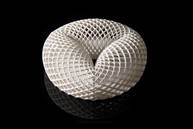
The Cool Stuff this week is a multi-functional exhibition space called Kreod Pavilion. Inspired by nature and organicin its form, this beautiful space was designed by London Architect Chun Qing Li.
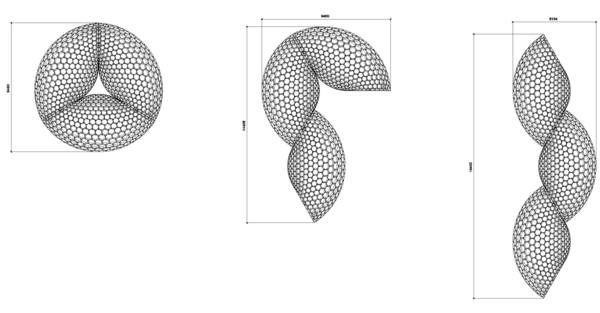
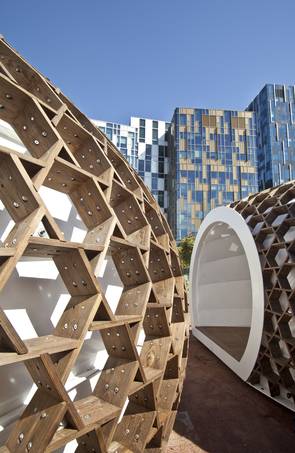
Environmentally friendly the Kreod pavilion combines three 20 m² capsules in a variety of spatial configurations. The hexagonal structure is based on a simple recurrent joint connection detail as seen in Chun Qing Li’s sketches below.
Architect: Chun Qing Li & Pavilion Architecture
Location: Greenwich Peninsula, GB-London SE10 0PE (until early 2013)
Kreod is a multi-functional pavilion – its three pods can be combined in a variety of configurations or installed as free-standing forms. It is portable and easily demountable. The wooden structure of KREOD is made of Kebony, a certified sustainable alternative to tropical hardwood. The product is dark, acquiring a silver-grey patina over time if left untreated.
The wood was impregnated with a liquid produced from crop biowaste. The treatment with furfuryl alcohol forms stable furan polymers, which are locked in the wood cell walls and increase the dimensional stability as well as durability and hardness of the wood, giving exceptionally good decay resistance and long life span was obtained after kebonization. This durability was achieved without the disadvantages of traditional impregnation methods using toxic chemicals.
Together We Can, a music video from Papua New Guinea.
I had a request by fellow blogger Annette from Beauty Along the Road for some singsing (dancing) when I posted a story last Saturday about the South Pacific Games opening in Port Moresby, Papua New Guinea. I could not find any material on the web, You Tube and other avenues, however I found this video, released on July 3rd, 2015 which is about the 2015 SP Games. The video was released to celebrate the opening of the 2015 South Pacific Games. I am proud to share this video not only for its content, but it was created by two of PNG’s amazing talents, Jamie Lee and Jagarizzar. The video features a collection of traditional singsing from across PNG and some of PNG’s pop and contemporary singers. I hope you enjoy the video.
Artist: Jamie-Lee
Featured Artists: Jagarizzar, Briena Micah, Tinzy Mau, Henry & Santanya Gewang
Choir: Emirau Praise
Directed by Karl Bouro & Andrew Bouro of Torn Parachute
Written & Composed by Jagarizzar & Jamie-Lee
Produced, Mix & Mastered by Bryan B of Tune Studios, Malaysia
Aerial/Drone Footage: Robert Weber & MASALAI
Video Producers: Motsy David & Kamuna Consultancy
Production Assistants: Floyd Manata, Roan Paul, Graham Robinson
Cultural Groups: Aroma, Morobe, Huli Duna, Asoro Mudman, Paluai SookSook, Kiwai Dancers, Buka Bamboo Band
Potato prints using acrylic and plant dyes from the gardenPlant dyes from my garden on watercolour paper and digital graphic outlines (black). Below – work in progress and starting to look like birds.
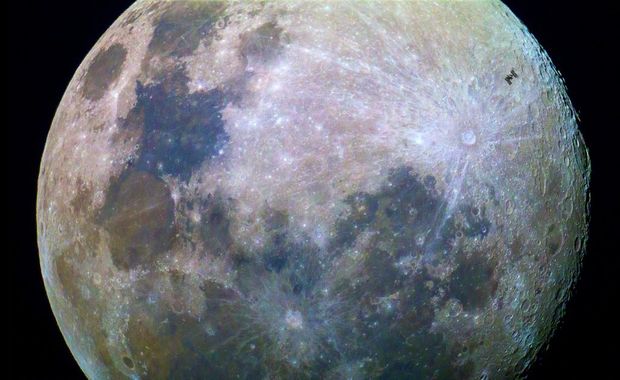
Byron Bay photographer Dylan O’Donnell took this stunning photo of the International Space Station passing the moon on Tuesday. Photo Contributed
The media has called it the holy grail of astro-photography. The Cool Stuff of the week is Dylan O’ Donnell’s fantastic photograph of the full moon with the incredible capture of the space station on the top right.
The BYRON Bay (Australia) photographer who captured the shot on Tuesday with International Space Station passing over the moon said this was his second attempt to take the stunning shot.
“I’ve only tried once before and I completely botched it, it looked like a blur,” he said.
“The International Space Station ISS passes through the sky semi regularly, but for it to line up like it did with an almost full moon is quite rare.
“Some people go chasing around the world to try to line it up but I just waited from my home and it was about 12 months from the last time it lined up that way for me.”
https://www.youtube.com/watch?v=7xVb5pW6Ess AFP News Agency: On the Pacific islands of New Caledonia, it’s feared many of the 28 indigenous languages are dying out. But the success of a local band scoring hits in a native tongue is giving traditionalists cause for hope. Here is one of my own New Caledonian favourites. Ok!Ryos – Kini Kinibut https://www.youtube.com/watch?v=E6y-uCME1Ts
While described as one of the most dangerous birds in the world, cassowaries are beautiful large flightless birds. I have posted a story about threats to cassowaries in Northern Queensland due to their habitat destruction. Read Here. I had mentioned the value of cassowaries in Papua New Guinea (PNG) in that post and I wanted to show what this bird means to our people. This legend comes from Garaina, in Morobe Province. I also come from Morobe. The legend was contributed to a national high school collection of legends told Stephen Suij.
How the Cassowary became a Flightless Bird – A Legend from the Morobe Province, Papua New Guinea.
Long ago, the cassowary was a big bird with a long neck, large legs and big wings which enabled it to fly like all other birds of the forest.
At that time, the cassowary and the hornbill were best friends, and spent most of their time flying around together, feeding on the delicious fruits at the top of the trees.
They were very close friends, but as time passed, the hornbill became increasingly jealous of the cassowary, who with his long neck could stretch and reach the best of the fruit pickings. The poor hornbill had to be content with leftovers.
While the hornbill hid his jealousy, he began to plan a trick to punish the cassowary.
A Hornbill Picture by Waterdragon62 – Flickr Photo-sharing
One day the hornbill broke two dried sticks off a tree branch, placed them beneath each wing, under its feathers, and then flew off meet the cassowary.
“I have an idea”, the hornbill said to the cassowary.
“After we have fed on the fruit and are fully satisfied, let us do some stylish tricks in the air to see who is more brave and skilled.”
“Sure”, the cassowary said – liking the idea.
“But”, added the hornbill, “each of us must break his wings to see how far he can fly with broken wings.”
The cassowary had no objection to this ‘idea’, so when they had eaten enough fruit, they were ready for the game. The hornbill volunteered to go first.
Pretending to break his two wings, he snapped the two dry sticks beneath his wings and then flew away. He performed some stylish tricks in the air and then flew to a nearby tree to perch. The hornbill then called the cassowary to try to outwit his tricks.
The cassowary, ignoring the pain he had to suffer, broke his wings, one by one. Then he stretched the wings to fly away but he only crashed to the ground. He could not lift his weight with broken wings.
The hornbill broke into laughter at the top of his voice he said, “you have always had the most and the best of the fruit, but now you can stay on the ground and feed on my waste while I enjoy the best of the forest.”
From that day until today, the cassowary has been a bird of the ground, with wings that could not fly.
Flightless Feathered Family
The cassowaries are ratites, very large flightless birds in the genus Casuarius native to the tropical forests of Papua New Guinea, nearby islands and northeastern Australia. There are three extant species recognized today.
The most common of these, the Southern Cassowary, is the third tallest and second heaviest living bird, smaller only than the ostrich and emu.
Cassowaries (from the Malay name kesuari)[3] are part of the ratite group, which also includes the Emu, rheas, ostriches, and kiwis, and the extinct moas and elephant birds. The other two species are the Northern Cassowary, Casuarius unappendiculatus and Dwarf Cassowary, Casuarius bennetti. They are also found in Papua New Guinea.
A PNG warrior wearing a cassowary feather headdress. Picture by Brent Stirton
Cassowaries are very important to the native people of New Guinea both economically and ritually. Cassowaries have been traded for pigs and even as bride price for a wife and compensation payment especially in the highlands provinces .
Some tribes hunt them for their meat which is considered a delicacy. They use the feathers to decorate headdresses, and the feather quills for earrings. The sharp claws are often placed at the tips of arrows, while the strong leg bones are used as daggers.
For many native people, cassowaries are full of legends and mystical powers. Some tribes believe that cassowaries are reincarnations of female ancestors, while others believe that the cassowary is the primal mother. These tribes do not hunt or deal in trade with cassowaries.
Breakfast at Bellbowrie – Princess and partner stand on guard while their daughters eat first. The life of a duck in our backyard.
Princess celebrated motherhood yesterday when her eight babies learnt to fly for the first time on our lawn in Bellbowrie, Queensland (Australia). She is a wild wood duck who grew up in our family home. I have written three stories about her on this blog, see the links below to bring you up to date with her life story.
You could say – after all she has been through, she deserved one happiness, and that she has. She literally grew up inside the house – in my son Nathan’s bedroom – she lived in a crate at night and during the day, we watched her wander around the yard, and making friends with other adult wild ducks and our laying chickens. She would always come back upstairs when it got dark.
I had rescued Princess in 2013 just after Christmas with five other ducklings in our back-yard. During the course of raising the ducklings my sons and I became parents as well as students, learning how we could help the ducklings grow and then release them back into the wild. Goodness knows what was going on in the communication from duck to human language, but soon, the ducklings fell into a pattern of eating, playing, swimming and just following each other and anyone of the three of us, in a line when we walked around the property. When we decided to name the ducklings, she stood out because she was the smallest and had a nervous twitch – everything had to be done for her. She would just wait to be served.
Family snack time on the front lawn.
Princess’ four siblings died in the process of growing – the vet said, it could be anything – the stress, cold, fright, and drowning. There were two ducklings left. Princess and her sister. They continued to live with us inside the house in one of the spare bathrooms at night and much to the disgust of our visiting friends and family who sometimes accidentally stepped on duck poop. As they got older and stronger, we let the two sisters swim in a small water tank which was deeper than the bath. Later they took to our swimming pool and we could see them really enjoying themselves. When they became taller and their wings got bigger we knew they were ready to fly; my son trained them to fly off our balcony into the pool (15 metres away) and also fly onto the lawn from the two story house.
With her nervous twitch, we noticed, her big sister became protective of Princess any time she found things difficult. She would nuzzled Princess and peck her gently to settle her. I became very attached to the confident big sister. She was a very smart and a caring big sister, She always tried new things and places before involving Princess. The two ducks bonded closely and were almost ready to be trained back into the wild together. Early one evening while we were having dinner with the two ducks tucked into their large box on our verandah, a python came up, unexpectedly, slipped into the box and coiled around one duck – the confident sister.
Flight practice. I caught them on my phone after work yesterday.
From that day onwards, Princess remained in the house with us, less confident to fly and became very attached. A few weeks later she started to regain her confidence. Then she tried to fly so Nathan took her to the window and she flew into the pool – about 30 metres away. She was natural. Swimming, diving and fluttering her wings. She loved it and started there all day – we had to bring her food to her, like a true Princess. She also flew a complete circle around our neighbours yard and took a swim in their brand new swimming pool. I jokingly told Princess, it was okay as long as she did not poop in their pool or get caught.
Then, one day a bunch of young male ducks that were hanging around our pool flew off and we saw her go. We followed her through a few neighbour’s property and decided, she was ready to go.
She returned to our property regularly and pretended she did not know us when we called her name. Sometimes, her twitch would become obvious – perhaps from worrying, we were trying to get her back. Amongst other wild ducks, when her name was called, Princess would be the only duck turning to look at us. It was funny. She had many suitors who often fought over her in the front lawn and the pool.
It was only a short time before Princess established herself with a pack of wild ducks that frequented our yard. Then Princess fell in love. Earlier this year, I posted a story about Princess and her first ducklings.
On their first day, she brought her babies out for a walk and played in our yard and then a swim in the pool. Within a few days, she decided to leave our property and cross the main road into a vacant block which led into the wild, a creek and then Brisbane River. I followed them to the edge of the bush concerned she had made a grave decision. There was a big storm, the next day. The mother, partner and babies – did not show up for two days.
Seven weeks ago, my son Nathan was very excited about new ducklings in our yard. Ducks don’t always have babies in winter so we were surprised. We rushed out and counted eight baby ducks. Sure enough, someone had been busy, it was Princess and her partner with their ducklings. She had also lost the nervous twitch. The ducklings were not newborn. They were at least two-three weeks old. She had hid her babies until they grew up. It was clearly a clever plan by Princess. We could not work out where they were before they came home.
The new girls marching in for morning tea by the poolside.
Attentive and followed by her partner and their babies, Princess headed for the chicken’s feed. Even the chickens let the ducks eat. We were all overjoyed.
I decided to buy some duck food from our local produce store. I did not post a story about the new arrivals earlier, just to let Princess have the quiet life she wanted and raise her eight daughters. Our family tried to keep our distance and no paparazzi were allowed. It has been almost five weeks since they arrived and adding the first few weeks in hiding, they have grown rapidly and are now ready to fly. Usually the babies grow their strong feathers by six weeks and fly at eight weeks.
The mother got them started in the pool – flapping wings and lifting off – then falling on the water. The training also takes place in the water and on our lawn – just as we tried to teach her. It is quite funny and heart-warming to watch. Ten days ago, wild foxes got into our chicken coop and took Lady Stella. (That’s another story). After the midnight drama and the shock of losing the toughest hen – we raced about our property trying to find Princess and her family. We discovered, after all this time, she had cleverly nested her family in the thick layers of my flowers just on the water’s edge in our fenced swimming pool where no large animal can get in. She family planned well in the sense that being winter, even the snakes would be hibernating. So…they are safe for now and it is only days before the new girls will fly. Then, they will all be in the wild together.
I feel that Princess has truly achieved motherhood and as her mother, I am very proud of her.







 Tribalmystic Stories