Category Archives: My Art

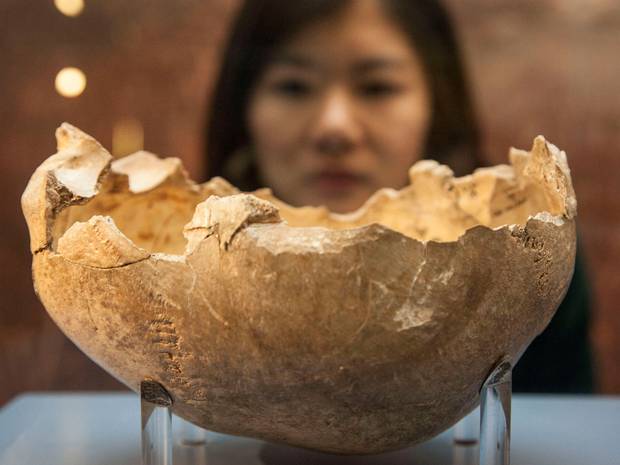
Discovered Human Bone Uses : Home-ware?


skull-cup-2-v2
New research offers the best evidence yet that cannibalism took place in Somerset’s Cheddar Gorge 15,000 years ago

The Independent UK reported that scientists investigating a system of caves in Somerset have found new evidence that shows our human ancestors engaged in cannibalism in Britain – and that no part of their victims was wasted.

A research team from the Natural History Museum and University College London have used modern carbon-dating techniques to establish that remains in Gough’s Cave at the mouth of Cheddar Gorge were all left there over just a few seasons around 15,000 years ago.

But more alarming is what was done to the bones before they were deposited. Find out here

Indigenous Australia Exhibition Opens in British Museum


Discover the remarkable story of one of the world’s oldest continuing cultures in this major exhibition.

The show is the first major exhibition in the UK to present a history of Indigenous Australia through objects, celebrating the cultural strength and resilience of both Aboriginal peoples and Torres Strait Islanders. This culture has continued for over 60,000 years in diverse environments which range from lush rainforest and arid landscapes to inland rivers, islands, seas and urban areas today. Hundreds of different Indigenous groups live across this vast continent, each with their own defined areas, languages and traditions. The exhibition runs from 23 April – 2 August 2015.

And here is another view of the exhibition has sparked.

Exhibition Sparks Protests

Published on Apr 23, 2015 (YouTube)
On 21 April 2015, the British Museum’s BP-sponsored ‘Indigenous Australia: enduring civilisation’ press launch was disrupted by activists, criticising oil sponsorship and calling for the repatriation of stolen indigenous objects.

British Museum Link

Cool Stuff: Living Grass Art


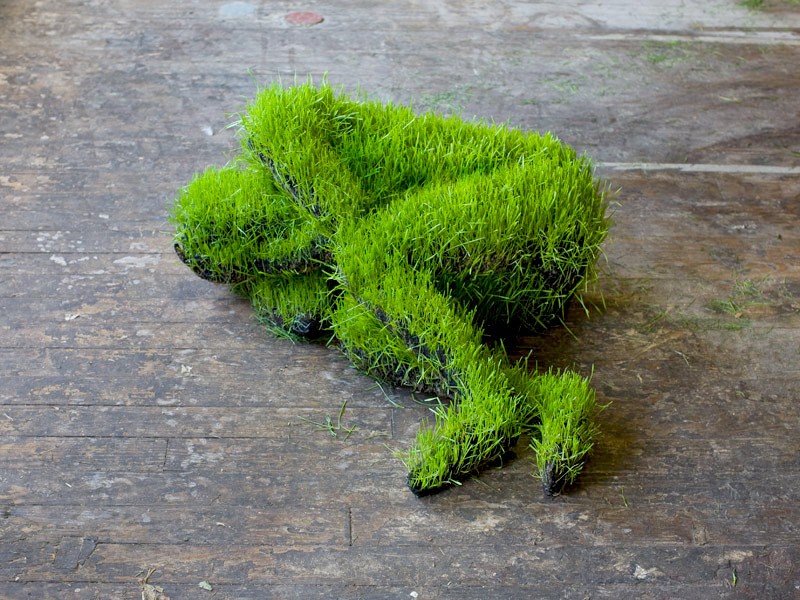
23_mathilde_roussel_240879_01
25.08.79 #2, 2010, soil, wheat seeds, recycled metal, fabric, 110 x 90 x 40 cm. Exhibited at The Invisible Dog Art Center, NY.

Mathilde Roussel is a French artist. Based in Paris, Roussel works in various materials for her sculptures but one of her most remembered work is the Living Grass. This collection shows the transformation of soil wheat and seeds, fabric and recycled material to show the effects of transformation of material as a metaphor of the human body. After installation, the figures transform over the period of exhibition showing. Time sculpts the forms, makes them change and then decay.

For more of the grass sculptures. The artist’s statement can be read here

23_mathilde_roussel_240879_03
25.08.79 #1 and #2, 2010, soil, wheat seeds, recycled metal, fabric, 170 x 150 x 60 cm and 110 x 90 x 40 cm. Exhibited at The Invisible Dog Art Center, NY.

25

Mathilde Roussel

Writing On The Wall


https://www.youtube.com/watch?v=5tlHY8NgmxY

Graffiti – is it art, writing, or both? A freedom of expression. I have posted this question on this blog before. Here a documentary explores the work of street painters and gives them an opportunity to speak about what motivates them to colour the streets.

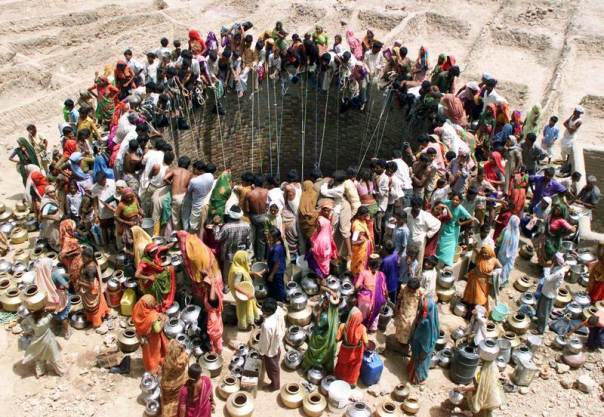
Celebrating Life Water Gives Us


271

Every year on 22 March we celebrate World Water Day. But this year is different. It will go to history as the year when we set the course for the future.

When the post-2015 development agenda is finalized this fall, it will shape the global agenda for water. But not only for the 10 to 15 years to come: the decisions we make this year and the paths we choose will influence generations to come.

604

Today, freshwater resources and their ecosystems are being degraded and depleted at an alarming speed – this despite our awareness of their pivot role to life on earth and the production of food, energy, goods and services.

960

http://www.trust.org/spotlight/World-Water-Day-2015

Old Precious Things…


r1396715_19902761
The Llareta is a flowering plant as much as 2,000 years old.

I am about to celebrate one of my big birthdays and today was a mix bag of events. It started with a premature but a lovely morning tea birthday party from fellow staff. We ate ice-cream cake. Weird, but ok. The morning tea was followed by a reprimand from my ordinary boss, he was throwing a tantrum that is not worth mentioning. Then, I caught up with special friends from PNG during the course of X-rays and scans and medical tests leading to my doctor at 2pm, telling me, I must have surgery. I decided to return to work after the doctor’s visit and take a deep breath and keep going until the end of the day.

I have left that day and I decided that I will forget everything ordinary that happened.  I only want to remember the extraordinary things and prepare a huge party for my birthday next week. And speaking of ageing, you may know, I enjoy art, reading and writing when I am not outdoors. I have been working on some art projects and looking at art. I found an interesting story about an artist who documented old things from around the world in the last ten years. I am not posting this because I am getting old, it just happened to be something I unexpectedly discovered and somehow, it made sense to link it to age. Aged things always interest me and it was part of my purpose in completing a Masters programme in Museum Studies. Rachel Sussman is a contemporary artist based in Brooklyn. Her photographs and writing have been featured in Smithsonian  in The New York Times, Wall Street Journal, The Guardian, and NPR’s Picture Show. Her book The Oldest Living Things In The World sells for $1500 per copy.

From ABC Environment

8 things in nature so old you’ll feel young

THERE IS SOMETHING about extreme age that fills us with awe.

It’s hard not to feel it, when standing in the presence of a huge eucalypt that has raised its branches to the sun since long before European settlement. Or when watching the silent majestic form of an immense whale, which has outlived several generations of humans, glide through the dark blue.

Sometimes it takes a little more intellectual investment to find that awe, like when staring at a grey-green patch of lichen that grows just one centimetre every century and which has weathered the harsh climate of Southern Greenland for more than 3,000 years.

“In thinking about the natural sublime and awe and that sort of thing, a lot of it is tied to scale and to time,” says Rachel Sussman, a New York-based contemporary artist who has spent 10 years researching and photographing some of our planet’s oldest living entities.

Sussman has taken an extraordinary series of photographic portraits, published in her book The Oldest Living Things In The World.

Read More

The Spirit of Tema


h2_1979.206.1519
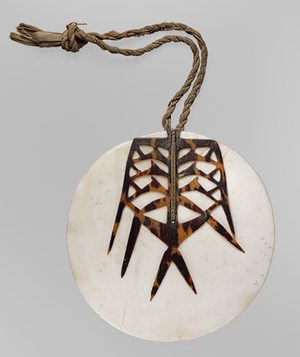
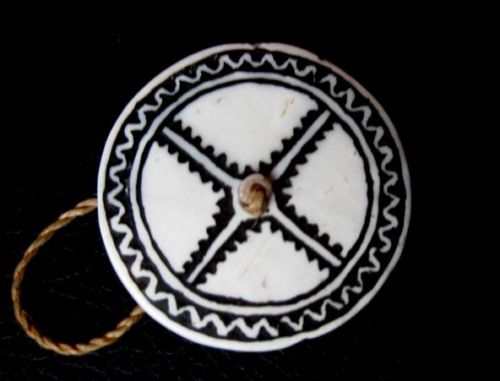
Breastplate (Tema, Tambe, or Tepatu), late 19th–early 20th century Santa Cruz Islands, Solomon Islands Tridacna shell, turtle shell, trade cloth, fiber; Diam. 7 3/8 in. (18.7 cm) The Michael C. Rockefeller Memorial Collection, Bequest of Nelson A. Rockefeller, 1979 (1979.206.1519)

The tema or kapkap are flat, round breast plates or disks made and worn as men’s chest or forehead ornament in the Solomon Islands. Tema is one of my favourite ornaments from the Melanesian region.

Tema from Malaita
Tema from Malaita. Public domain image.

I particularly like the tema because of its spiritual meaning,  its stunning appearance and temas take a long time to make, by hand. A A tema in the Melanesian culture is regarded as a spiritual object. They are worn as a protective shield during tribal warfare and for general well-being. The white part of the tema represents the moon. It is made from the giant clam shell. In the Santa Crus Islands, the traditional symbol of the frigate bird, shark or dolphin is intricately carved out of the turtle shell and embedded or attached to the clam shell base. The brown necklace is made from bark and bush ropes.

eaeb5cceef254b0a77ee580d3069e4a1
http://www.victoriaginn.com/solomon-islands Photographer Victoria Ginn. Malaita man dressed with his tema.


Freda


IMG_8591
Freda, watercolour. JLeahy. January, 2015.

I have been painting “Josephine”, the woman from my head in watercolours on paper.

With several layers of pigment on heavy paper, she has taken some time to surface.  In almost three weeks, and working with three other artwork at the same time, I took no notice of how she was looking. I knew “Josephine” was due to finish soon.

My sons had been away south. My younger son returned today and wanted to see what I had been up to. I showed him the gardens, told him about the chickens, the paper thief, and how my blog was going. He could see I had been painting. As usual, he went through my paintings, telling me which ones he liked. When he saw “Josephine”, he asked me if I was painting “Bubu”. Bubu is a shortened Motuan (Papua New Guinea) word for grandmother/father. Chris was referring to my mother, Freda.

I laughed. Chris was right. This woman in the painting is what my mother looked like in her younger days. Apart from her hair, most of Freda’s looks have not changed much over the years, so much so, my 16-year-old recognised her. I had not realised Josephine’s resemblance to my mother before.

How did I paint my mother without knowing? (Maybe, I miss her).


When the word was silence


Joy Cowley
Picture by Loren Dougan/Fairfax NZ. Joy Cowley talks about the 30-day silent retreat she just completed in Wellington.

What do you do to get your creative juices flowing?

I spend time in solitude in my garden.  There is something exciting about the rhythm of plants living, rooting, shedding and flowering. I also paint to get my inspiration to write. I was commenting on MilliThom’s blog today and thought, how many times have I spent trying to create stories and even artwork, when my heart was not in it. Sometimes, shutting down and walking away or diverting my mind to something else helps me come back to story-telling and the story gets even better. I have set a goal to blog each day. On top of that, I am writing my memoir and a collection of short stories. I also write magazine articles which I have not done in a while. Daily chores and the day job takes a lot of that time and numbs the brain. My mind has to travel and seek new things to write about all the time so I read too. When my brain slows down and I become forgetful, I go to the garden and start again.

There is a meditation place in Brisbane my cousin and I had once discussed going to for a week of silence and meditation. I cannot imagine how one month of silence would be like, although, I have spent a lot of days on my own when my sons have been away. I do speak with the animals so it is not complete silence. Being in complete silence for one month would be quite an achievement, especially when you are around people, eating and sitting with them and even looking at them. I think people who choose to live alone or live away from others, being in silence for a long time would seem quite normal.

Here is a story about a writer who finds her own way to “sharpen” her brain through silence in an old tradition.

When the word was silence by Nikki MacDonald

In a suburban Wellington dining room 10 people sit silently. Condiments pass across the table at the raising of an eyebrow or flick of a finger. One diner sees a neighbouring table’s empty water jug and rises quietly to fill it.

A mix of religious and non-religious, the group had never met until a month ago. Most of them had never visited this place. Now, 30 days later, they share a close connection but can scarcely remember the sound of each other’s voices.

When their voice boxes are finally awoken after a month of disuse, one man declares “silence has become my friend”. Another calls it the most radical experience of her life.

After a hugely busy year, writer Dame Joy Cowley was feeling “about as sharp as a wet cornflake”. So she switched on her email out-of-office – and disappeared for a month. But her email bounce-back message wasn’t the Rarotonga beach break brag.

“Terry and I will be on a silent retreat from Nov 2 to Dec 7. We will not have internet contact at this time. Joy,” was the message.

For a month Cowley and her husband lived at Island Bay’s Home of Compassion, which functions as an urban monastery. The mission was rest, renewal and reflection, in the oldest tradition of the Catholic Church. The twist was that it all had to be achieved in complete silence, save for a 15-minute daily chat with a spiritual director.

For Cowley, spirituality and creativity are inextricable.

“I wouldn’t know the difference between meditation and writing.”

She already wakes at 4am every day to savour half an hour of quiet before the emails begin and the phone starts ringing. But even for her, spending an entire month in silence was hard work.

“You really have to look at yourself very closely. There are always bits of ourselves that we would like to discard and you have to accept those.”

Cowley and Terry were two of a group of 10 who came from around the country to the retreat. Some were religious, others were not. They had three days of orientation to get to know each other and the home’s glorious garden setting, before stilling their vocal chords and beginning 30 days of exercises in reflection. To read more, click on the link below.

http://www.stuff.co.nz/dominion-post/64156983/When-the-word-was-silence

The Angels’ Trail – for Robert


JKLeahy (I wrote this poem yesterday for my cousin Robert) 

The Angels’ Trail

In your journey, after the earth

at distant shore, you will berth

The end of Angels’ Trail you will see

Lifeless as dust in the wind, we will be

Vibrant and free as a bird, you will soar

In Godspeed your wings find you sooner

No blood, pain, or will you suffer

Here, bounded in grief from tragedy, earth life quiver

Trapped in naked depth of sorrow, we linger

Cloth, wood, soil and stones enfold remains

In earth, we buried with your shell are our souls

In wind, as a dandelion you will lift higher

Earth’s gravity draws darkness, we see death

Hold back tears, your brothers’ will

Hear their songs, when the wind is still

In dirge and tears, sisters call you fond epithets

Where you, dandelion rests, is where Angels’ Trail begins

Follow beside where the lights glow

for darkness, as deep dark wine bestow

swallows where the shadows go

Seek your mother, for she seeks you

Your brother, aunts, uncles, your sister too

In patience, expect they will be for you

at a place where they had once passed Angels’ Trail

Gaze ahead; leave earth with your memories

Be light on your feet for them you will meet

Drowned in sorrow, our heart bleats

Softness is your voice, abound to share among our kin

Rejoice will be, the angels in triumphant

and kin spirits who had long passed The Angels’ Trail


Robert was a handsome, healthy, living young man in his mid twenties. He was buried today in my village, Wagang. His life was taken tragically last week in a car accident, leaving behind his two young children – aged 14 months and 4 years old, and a young wife. Robert went for a ride with our other cousins. They were all sober and picking up another cousin sister at Nadzab Airport, 40 minutes from Lae City, Papua New Guinea where he met his death in the tragic accident. The details of the accident are not known to me nor my brother who made the call to me. Four others are in  critical condition at Angau General Hospital, Lae. Those of you that follow my blog, Robert was the third son of my Aunty Yellow (Yang Yang) who died last year. She was instrumental in my upbringing and specifically, my traditional fishing and dancing skills. Robert was a little brother.