When you are growing up, and as a child, it is not always clear what your parents tell you, and often, you end up learning the lesson the hard way. How To Catch a Bird is one of those tough lessons Vera van Wolferen learnt as a child.
In Vera van Wolferen‘s own words: “How To Catch a Bird is a stop motion short film based on a childhood memory. It’s the graduation film I made for my masters in animation at AKV St. Joost Breda. When I was eight; my dad taught me how to fish. He told me to take the worm off the hook after fishing, but I had no idea why. After fishing I forgot about the worm and left it dangling on the hook. If I only knew then what the consequence of this action would be.”
Animation by Vera van Wolferen
Music by Gerard van Wolferen
The Guardian Picture: In 2009, the crater of the extinct volcano Mount Bosavi, in the Eastern Highlands Province, PNG was found. The green beetle pictured was one amongst many species discovered, except that this specie is iridescent.
The green beetle is one of my favourites and the insect possesses a beautiful rainbow shine. The beetles come out in millions during fruit seasons. In Papua New Guinea beetles are eaten as food, but the green beetle is so beautiful that tribal dancers use the insect as part of their fashion. The fashion or their traditional dress, especially headbands and headdresses are worn in singsings. A singsing is a performance of song and dance by a group and it is one of many living rituals, handed down through generations.
An Eastern Highlander (PNG) spotting a row of green beetle in his headdress. The beetles are woven intricately into the golden orchid fibre in diamond patterns.
I have seen the beetles myself in Goroka, Eastern Highlands Province and found these ones on headdresses in Simbai, Madang Province, which prompted this post.
Simbai tribesmen (Madang, Papua New Guinea) wearing their fashionable head wigs made from the green beetle.
An oiled wood coaster made by Chris Harris. 15/7/2015
Three nights ago, it was one of the coldest nights ever recorded in Brisbane in 103 years. It was very cold in the office all day and we increased the heat several times, but I had no idea it was six degrees. It was one degree in one of the suburbs – that morning. Up the river, near our home, it was below two degrees at Ipswich. This may not be cold for some of you readers that have temperatures measuring below zero at all times, but here, Brisbane is supposed to be one of the warmer states of Australia so we are feeling the cold.
Tonight was predicted to be another cold night, but so far, it has been around eight degrees celsius in Bellbowrie. On return from my evening walk, my 16-year-old son Chris brought me these little wood coasters he made while cutting firewood for our fireplace. The wood came from a tree that fell in a previous storm in our yard. We have been slowly using the tree up for various projects. And despite the cold, Chris was out making art.
A set of six wood coasters from Chris Harris. 15/7/2015
Each coaster is large enough to place under a hot cup and has beautiful grains of the hardy Acacia tree (a native to Brisbane) running through them in various shades. I decided to oil some to really bring out the grain.
A Report from Radio New Zealand International’s Johnny Blades.
Papua New Guinea is at a juncture, experiencing unprecedented economic growth but still mired by poverty, tribalism and parlous human development outcomes. Exxon Mobil’s $US19 billion Liquefied Natural Gas project in PNG began exports last year, marking a major milestone in the country’s development as a foreign investment destination and energy hub.
Yet the benefits from development of PNG’s abundant natural resources – mineral, oil, forestry, fisheries and others – appear mainly confined to a tiny part of the population. RNZI’s Johnny Blades travelled to PNG and, in this video report, he asks if PNG can convert its significant resources wealth into tangible gains for its burgeoning population.
Unsolved Mysteries: The secret of Easter Island. YouTube.
In the most isolated place on Earth a tiny society built world-class monuments. Easter Island (Rapa Nui) is 1,000 miles from the nearest Pacific island, 3,000 miles from the nearest continent. It is just six by ten miles in size, with no running streams, terrible soil, occasional droughts, and a relatively barren ocean. Yet there are 900 of the famous statues (moai), weighing up to 75 tons and 40 feet high. Four hundred of them were moved many miles from where they were quarried to massive platforms along the shores.
Terry Hunt and Carl Lipo began their archeological work on Easter Island in 2001 expecting to do no more than add details to the standard morality tale of the collapse of the island’s ecology and society—Polynesians discovered Rapa Nui around 400-800AD and soon overpopulated the place (30,000 people on an island the size of San Francisco); competing elites cut down the last trees to move hundreds of enormous statues; after excesses of “moai madness” the elites descend into warfare and cannibalism, and the ecology collapses; Europeans show up in 1722. The obvious lesson is that Easter Island, “the clearest example of a society that destroyed itself“ (Jared Diamond), is a warning of what could happen to Earth unless we learn to live with limits.
A completely different story emerged from Hunt and Lipo’s archaeology. Polynesians first arrived as late as 1200AD. There are no signs of violence—none of the fortifications common on other Pacific islands, no weapons, no traumatized skeletons. The palm trees that originally covered the island succumbed mainly to rats that arrived with the Polynesians and ate all the nuts. The natives burned what remained to enrich the poor soil and then engineered the whole island with small rocks (“lithic mulch”) to grow taro and sweet potatoes. The population stabilized around 4,000 and kept itself in balance with its resources for 500 years until it was totally destroyed in the 18th century by European diseases and enslavement. (It wasn’t Collapse; it was Guns, Germs, and Steel.)
The world-class monuments of Rapa Nui
What was up with the statues? How were they moved? Did they have a role in the sustainable balance the islanders achieved? Hunt and Lipo closely studied the statues found along the moai roads from the quarry. They had D-shaped beveled bottoms (unlike the flat bottoms of the platform statues) angled 14 ° forward. The ones on down slopes had fallen on their face; on up slopes they were on their back. The archeologists concluded they must have been moved upright—”walked,” just as Rapa Nuians long had said. No tree logs were required. Standard Polynesian skill with ropes would suffice.
Archaeologists Terry Hunt and Carl Lipo attempt to solve the mystery in this documentary. Easter Island is also called Rapa Nui.
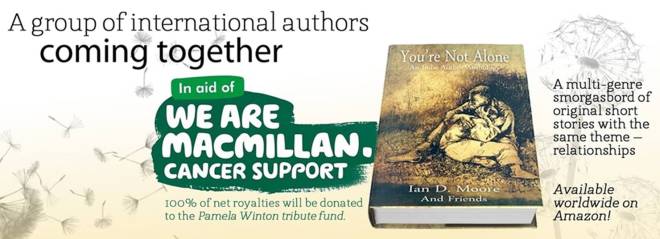
“You’re Not Alone” an anthology in aid of MacMillan Cancer Care has been released. A paperback version is also available! Get your copy now!
Twenty-seven writers from around the world, including myself have entered an assortment of short stories for your pleasure, show your support by liking the new page on Facebook and expressing an interest in buying the book.
100% of the royalties earned or accrued in the purchase of this book, in all formats, will go to the Pamela Winton tribute fund, which is in aid of Macmillan Cancer Support.
An anthology, themed on relationships, of more than 20 authors
from around the world – from urban fantasy to stories that bring tears to the…
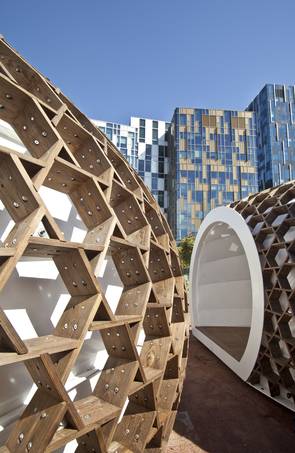
The Cool Stuff this week is a multi-functional exhibition space called Kreod Pavilion. Inspired by nature and organicin its form, this beautiful space was designed by London Architect Chun Qing Li.
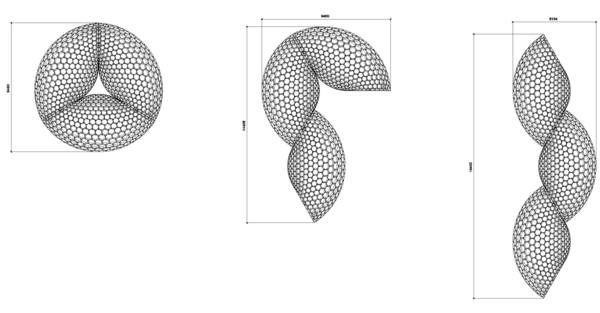
Environmentally friendly the Kreod pavilion combines three 20 m² capsules in a variety of spatial configurations. The hexagonal structure is based on a simple recurrent joint connection detail as seen in Chun Qing Li’s sketches below.
Architect: Chun Qing Li & Pavilion Architecture
Location: Greenwich Peninsula, GB-London SE10 0PE (until early 2013)
Kreod is a multi-functional pavilion – its three pods can be combined in a variety of configurations or installed as free-standing forms. It is portable and easily demountable. The wooden structure of KREOD is made of Kebony, a certified sustainable alternative to tropical hardwood. The product is dark, acquiring a silver-grey patina over time if left untreated.
The wood was impregnated with a liquid produced from crop biowaste. The treatment with furfuryl alcohol forms stable furan polymers, which are locked in the wood cell walls and increase the dimensional stability as well as durability and hardness of the wood, giving exceptionally good decay resistance and long life span was obtained after kebonization. This durability was achieved without the disadvantages of traditional impregnation methods using toxic chemicals.
“New Portraits” is primarily made up of Instagram pictures of women, many in sexually charged poses
I found this story quite disturbing and in my opinion, it has a huge impact on intellectual property laws and what we own (or not own) as artists or people in general, once the property becomes virtual. In this story by Jessica Contrera, Washington Post – your Instagram photos aren’t yours: Someone can sell them as art for $90,000, which raises the questions once more about what is truly yours once it goes virtual. The Internet is the place where nothing goes to die. Those embarrassing photos of your high school dance you marked “private” on Facebook? The drunk Instagram posts? The NSFW snapchats? If you use social media, you’ve probably heard a warning akin to “don’t post anything you wouldn’t want your employer (or future employer) to see.” We agree, and are adding this caveat: Don’t post anything you wouldn’t want hanging in an art gallery. (What about what other people post of you, without you knowing?) This month, painter and photographer Richard Prince reminded us that what you post is public, and given the flexibility of copyright laws, can be shared — and sold — for anyone to see. As a part of the Frieze Art Fair in New York, Prince displayed giant screenshots of other people’s Instagram photos without warning or permission. The collection, “New Portraits,” is primarily made up of pictures of women, many in sexually charged poses. They are not paintings, but screenshots that have been enlarged to 6-foot-tall inkjet prints. According to Vulture, nearly every piece sold for $90,000 each. Read more here
Together We Can, a music video from Papua New Guinea.
I had a request by fellow blogger Annette from Beauty Along the Road for some singsing (dancing) when I posted a story last Saturday about the South Pacific Games opening in Port Moresby, Papua New Guinea. I could not find any material on the web, You Tube and other avenues, however I found this video, released on July 3rd, 2015 which is about the 2015 SP Games. The video was released to celebrate the opening of the 2015 South Pacific Games. I am proud to share this video not only for its content, but it was created by two of PNG’s amazing talents, Jamie Lee and Jagarizzar. The video features a collection of traditional singsing from across PNG and some of PNG’s pop and contemporary singers. I hope you enjoy the video.
Artist: Jamie-Lee
Featured Artists: Jagarizzar, Briena Micah, Tinzy Mau, Henry & Santanya Gewang
Choir: Emirau Praise
Directed by Karl Bouro & Andrew Bouro of Torn Parachute
Written & Composed by Jagarizzar & Jamie-Lee
Produced, Mix & Mastered by Bryan B of Tune Studios, Malaysia
Aerial/Drone Footage: Robert Weber & MASALAI
Video Producers: Motsy David & Kamuna Consultancy
Production Assistants: Floyd Manata, Roan Paul, Graham Robinson
Cultural Groups: Aroma, Morobe, Huli Duna, Asoro Mudman, Paluai SookSook, Kiwai Dancers, Buka Bamboo Band
Photograph: Winsome Bonham – Macquarie lighthouse in Sydney was the first Australian Lighthouse.
Monday 6 July 2015 8:28AM
I have always been fascinated by lighthouses.As a child I’ve often wondered what happens inside these small but very tall, peculiar houses, even though I understood their purpose (to prevent accidents and save lives). I have been in a few lighthouses over the years and I think my curiosity is somewhat satisfied that not much goes on in them. I know it could not be a very comfortable place to live, but lighthouses do have amazing views. The other thing that always holds my interest in lighthouses are their architectural designs.
In this ABC story by Ann Jones writes about the anniversary of the Australian lighthouses and I have added a few more pictures of the historical architects I have found on the public domain.
This week marks the 100th anniversary of the formation of the Commonwealth Lighthouse Service. With its enormous coastline, Australia plays host to more than 300 lighthouses, and as Ann Jones learns, many of them are architecturally and technologically unique.
The first lighthouse in Australia was the Macquarie Lighthouse at the entrance to Port Jackson (otherwise known as Sydney Harbour), first lit in 1818, well before federation.
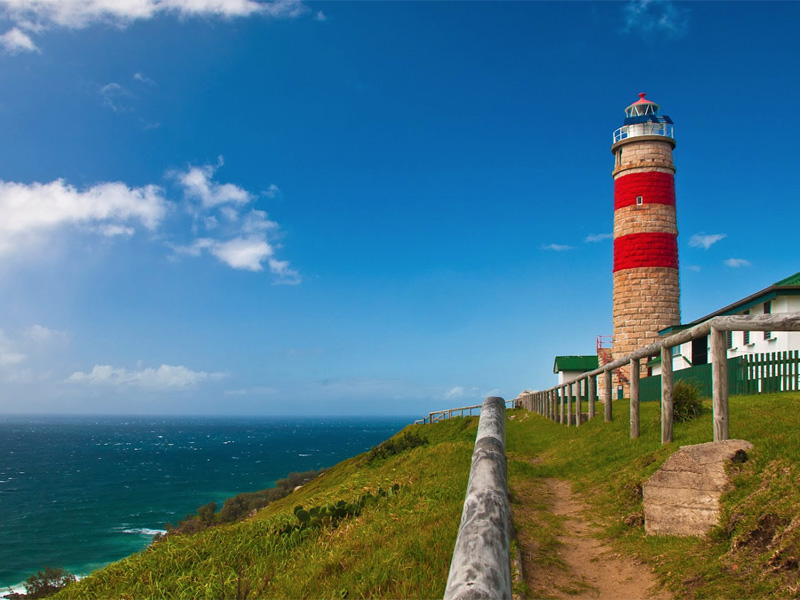
Cape Moreton, Queensland lighthouse (1857) designed by Edmund Blacket. Public Domain
It’s not the one you see there today, though it was very much like it. Apparently the stone they built it on was a bit soft and the lighthouse had some structural issues, so they rebuilt it later in the 1800s.
Cleveland Point. Another Queensland light house. The original lighthouse was established in 1864 -1865 as a wooden hexagonal tower. Wikipedia
It’s charming. A tower plonked on a rectangle, a quintessential lighthouse perhaps; it’s easy to imagine a lighthouse keeper wandering out of the downstairs accommodation with a storm light and winding his way to the top of the tower to light a whale oil lamp.
Photograph by Annette Flotwell of the Hornby lighthouse in South Head, NSW.






 Tribalmystic Stories