Category Archives: Life

Salman Rushdie reads Donald Barthelme


executive-protection-business-trip
Picture: Google images – Executive Protection Business

I was introduced to this new way of story-telling in our creative writing workshop this week and I loved it. It is new to me, but some of you may already know about Donald Barthelme’s “Concerning the Bodyguard” and how this work told that story.

As a former journalist I was used to asking the questions, collecting all the answers and then writing the story from the answers. I found it fascinating that you can tell almost a whole story by only asking questions. I found this technique much nicer in listening to the podcast, rather than trying to read the questions. The one below, introduced to me by Isabel D’Avila Winter in our creative writing workshop, Salman Rushdie reads Donald Barthelme’s “Concerning the Bodyguard“.

Storytelling 

Salman Rushdie also discusses Concerning the Bodyguard with The New Yorker’s fiction editor, Deborah Treisman. “Concerning the Bodyguard” was published in the October 16, 1978, issue of The New Yorker, and was collected in “Forty Stories.” Salman Rushdie’s most recent book is “Luka and the Fire of Life.”
Listen to the podcast

A Rare Beauty Found In Melbourne


The rarest kind of one of the world’s most common birds found in Melbourne

1432478134068
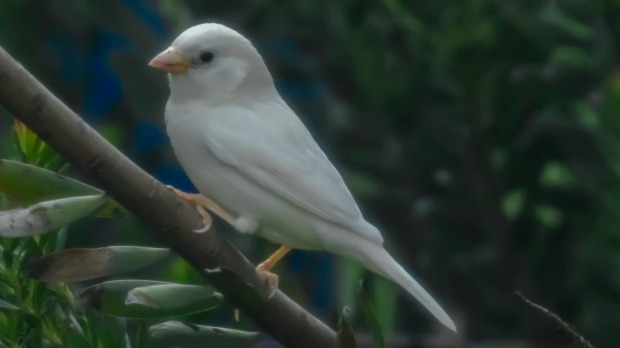
The rare white sparrow spotted in Melbourne. Photo: Bob Winters

The Age Technology reported a pure white sparrow, the rarest incarnation of one of the world’s most common birds, has been spotted in suburban Melbourne.

A regular visitor to select gardens in Sanctuary Lakes in Melbourne’s west, locals have nicknamed the bird the “little white angel”.

Keen bird watcher Bob Winters, who worked as an environmental educator for the Gould League for 20 years, says the sparrow is a “one in a million neighbour” with only a handful of white sparrow sightings reported worldwide.

Read more here

A Creative Genius That Lives With Me


IMG_8630
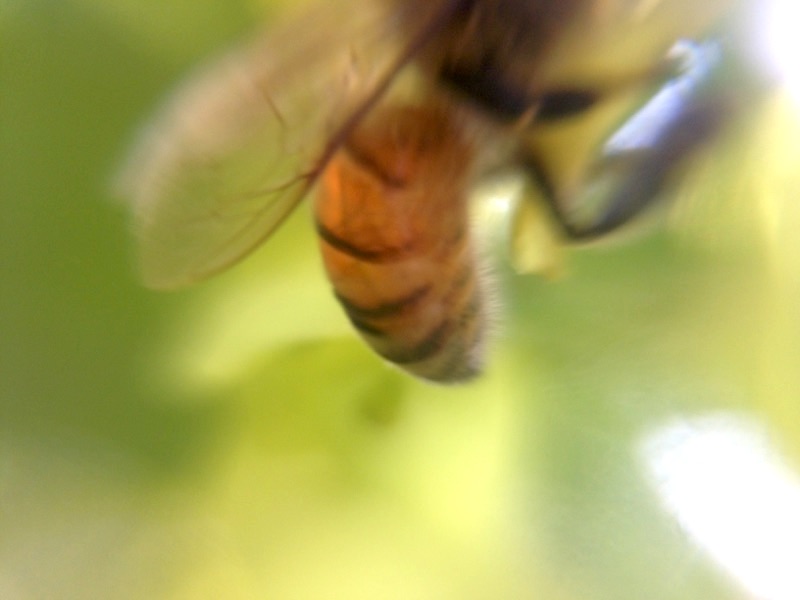
Chris Harris Picture. Bee. May 25, 2015

A little creative genius lives with me and is sometimes called my younger son, Chris. He is over one 190 cm tall so he is not that little, but this 16-year-old always comes up with amazing ideas. One of his discoveries was how to magnify or shoot micro pictures with his iPhone using a recycled attachment from an old torch. Here are a couple of images Chris was excited to share with me for their artistic value – he deliberately softened the lines. 

IMG_9120
Chris Harris Picture. Bee. May 25, 2015

When I asked him what camera he had used to take the pictures, he showed me his phone and explained, he took apart an old torch and stuck a glass lens from the old torch on his iPhone camera lens to take the super micro images. I was so excited, we went everywhere in the garden to take more pictures from deep inside centre of petals to the eye-balls of family members so we could see the colour spectrums. It is quite incredible. The bee pictures are two of Chris’s images.


True Love – A Scientific Equation? Finding Love Online


Here is how Amy Webb worked it out.


“Never judge a book by its movie” – The Mystery


books

How many times have we heard this comment and seen the quote on the web? We also hear friends or family members complain that ‘the movie was not as good as the book’?  How wonderful is it to have so much more in a book?… and I am talking about a good book.

Have you ever wondered who J.W. Eagan is? He or she is supposed to be the author of the quote.

“Never judge the book by its movie” is one of the most popular book quotes on the web – but do you know its author?

She or he must be a writer. Or maybe a literary critic. A screenwriter? Hollywood-based reporter? A charismatic lecturer or passionate librarian?

The web including Google and Wikipedia, do not know this clever person. You won’t find J.W. Eagan bio on the internet.

It’s interesting that one of the most quoted persons of the Internet is so astonishingly anonymous. The quote has been shared hundreds of thousands of times each day in social media. It’s being reused on posters, t-shirts, mugs, and endless number of quote pictures.

Read more of this interesting story here.

Art + Climate = Change


Article Lead - wide996235664gh4s84image.related.articleLeadwide.729x410.gh4scw.png1432004258077.jpg-620x349
Rosemary Laing’s “The Paper”. Photo: Supplied SMH

VISUAL ART JAPANESE ART AFTER FUKUSHIMA: RETURN OF GODZILLA ​RMIT Gallery Until May 30

Japanese Art After Fukushima is part of an excellent festival, Art + Climate = Change, which gathers local and international artists working with environmental ideas. It has spanned numerous venues across the state and is an important initiative of Guy Abrahams from the non-profit-making Climarte​.

Read more

Brooding Storm – Short Story


Mondays Finish the Story by Barbara Beacham

This is a flash fiction challenge where Barbara W. Beacham offers a picture and the first sentence of the story. Based on the photograph and the first sentence, one must come up with a 100-150 word short story.

2015-05-18-bw-beacham1
Picture by Barbara W. Beacham

BROODING STORM © JK. Leahy

The crew of the Angel Flame received orders to head out. When Yakov and Marishka reach the secluded Russian base, most men had already boarded.

Marishka wiped her tired eyes as her husband walked to the submarine, leaving her, their newborn Polinka and their sick two-year-old, Boris. It was a dreary Friday at 5am; three lost seagulls skirted past Yakov, fleeing the brooding storm.

After Yakov’s head vanished into the submarine, Marishka left – four hours later the snowstorm hit. The radio announced that nobody was hurt. Marishka medicated and monitored Boris’s temperature.

The next day at 7am she heard a knock. It was persistent. Unwrapping herself from Polinka, she reached for her gown.

Marishka caught a glimpse of a man in uniform through the winter-frosted glass and threw open the door with a grin. Expecting to fall into Yakov’s arms, her stomach sank when instead she met the gaze of a stone-faced man carrying Yakov’s personal effects.

“Mrs Vladimir?”

“…Yes?”


Antarctic Melting Giant Ice – Will Be Gone Sooner


antarctica-melting-ice-2ylxelxlyfixrlgety5bm2

The  earth will be re-shaped forever, once the Antarctic giant melting ice disappears. Does that not sound scary? It sounds very scary to me. And the water that is melting from the ice is enough to fill 1.3 million Olympic swimming pools.

Scientists say the antarctica’s once-massive Larsen B Ice Shelf is melting rapidly, and will likely be entirely gone by the end of this decade, according to a new report from NASA. A team led by Ala Khazendar of NASA’s Jet Propulsion Laboratory (JPL) found the shelf is developing large cracks while its tributary glaciers rapidly disintegrate.

Giant melting ice

Water is eating away at the Antarctic ice, melting it where it hits the oceans. As the ice sheets slowly thaw, water pours into the sea — 130 billion tons of ice (118 billion metric tons) per year for the past decade, according to NASA satellite calculations. That’s the weight of more than 356,000 Empire State Buildings, enough ice melt to fill more than 1.3 million Olympic swimming pools. And the melting is accelerating. See more 

Are We All Suspicious?


I took a walk yesterday in Bellbowrie, down our street on the edge of Brisbane River. I tend to walk on the grass because I like the soft- feel on my feet as I walk. Where we live, there is usually a piece of the city council land between the road and the various properties, enough for footpaths and walkers.

It was almost 5:45pm and with our winter, the place became dark quickly. I had a torch but I could still see so I did not use it.

“Are you right?” I heard a voice and saw a young man, about mid twenties, wearing white shorts and a polo coming towards me. I did not recognise him. He was walking on the road, going in the opposite direction.

Suddenly, I thought to myself, “why wouldn’t I be right?” And, “do I not look alright?” “Am I wrong?”

The tone of this young man’s voice did not seem friendly. I did not say any thing at first, just looked at him. I also wondered myself – if he was alright. I did not ask. My house was only four houses up the road.

Then, I calmly and with my best and warmest smile, I said, “I enjoy walking on the grass because it is soft and feet-friendly. I don’t like walking on hard surfaces”.

“Oh!” he responded with a puzzled look and then walked past me.

I don’t think it was the answer he expected. If that wasn’t the answer – what did he expect?

I re-told this random conversation to my younger son and he suggested, “may be the man thought you were ‘sus'”. (meaning suspicious).

“Do I look suspicious?”

To that question my son laughed and told me not to worry. How can I not?  It troubles me that given the world we live in today, you can never know what is well-meaning and what is not. Have we humans become allergic to each other?


The Missing – Short Story


2015-05-11-bw-beacham
Picture by Barbara W. Beacham

Mondays Finish the Story

Arriving at the beach, she reflected on her life. Mea searched the waves for two poles where the village bell hung. She had missed the bell sounds and the village gatherings. It has been 20 years since she left for Australia. The bell hung in the village centre; now, only seawater.

“I can’t see it,” she told her brother Tau.

“I don’t think it’s there anymore”.

“Right there” she pointed. “And what happened to Bubu Raga’s coconut trees?”

“The King tides, five years ago, took Moale’s family’s house, betel nut, breadfruit and the coconut trees. We dashed for the hill”.

“Oh My God! That would’ve been scary”.

“Yes, we lost everything. That was the day Chief Naka accepted the government’s offer to relocate us with other climate change refugees. It’s strange being on other people’s land. You are very restricted, but in the past 30 years, the water has raised so much. Our island will soon be completely submerged”.