Category Archives: Culture and Heritage

Stories about the arts, cultural projects, festivals, costumes, exhibitions, intangible skills

The Hideous Beauty of Plastic


r1390581_19769523
Tim Pearn art

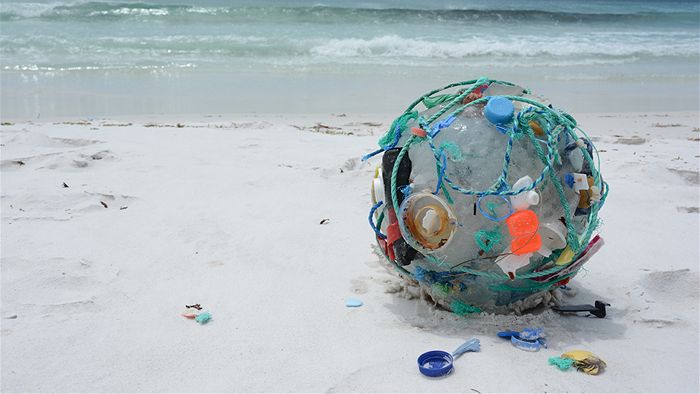
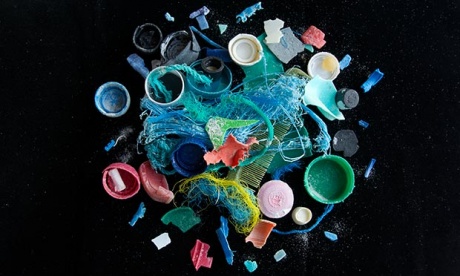
On an isolated stretch of Western Australian beach, artist Tim Pearn creates works from washed-up plastic waste collected over the course of a year on Albany’s Goode beach. The resulting artworks, both beautiful and disturbing, are on show during the Great Southern festival, part of the 2015 Perth festival.

The Great Southern conjures images of pristine coastline and unspoilt beaches. The Western Australian artist is challenging this picture by sculpting with artificial materials found on an Albany beach.40 beach walks. 40 bags of plastic rubbish. That’s all it took for Pearn to collect enough material for his exhibition, On the Beach.
Tim-Pearn-On-the-Beach-012
Tim Pearn art

Featuring sculpture, photography and video work, the display uses plastics collected from Goode Beach to create eerily beautiful images of artificial materials in the natural environment.

“I lived on Goode Beach for over a year and started to notice little, tiny specs of plastic and started collecting it. I was amazed how every time I walked down the beach I could pick up a small bag,” says Mr Pearn.
Speaking to the ABC Great Southern Morning show, the artist was struck by the sheer volume of waste he encountered on his regular walks.
“I started picking up stuff to throw away and it just kept coming and kept coming. I started to think ‘What could I do with this?’ and I was amazed that it never stopped really”.
Mr Pearn hopes that his exhibition will draw attention the problem of plastic pollutants.
“It really is a provocative exhibition. I think we’re being very irresponsible in how we use plastic. It’s very useful material if it’s used properly, but we’re really having an awful impact on the environment,” he said.
“The impact of plastic waste is affecting us severely in the Great Southern like everywhere else.”
No place left untouched

Dr Jennifer Lavers knows more about ocean plastics than the average beach goer. A marine biologist at the Institute for Marine and Antarctic Studies, Hobart, she has spent considerable time researching the impact of plastic pollutants on marine birds in the Great Southern.
Dr Lavers says the problem cannot be understated.
“It’s absolutely everywhere. Nowhere is immune. From the top of the world to the bottom, from the Antarctic to the Arctic, plastic is absolutely everywhere.”
Dr Lavers studies the health of marine birds, including local mutton birds, to paint a picture of the health of the ocean.
“Seabirds are really reliable indicators to gather the data that we need of what’s happening,” she said.
Ocean plastics feature heavily in her research.
“It’s the main component of what I work on,” said Dr Lavers, who considers the pollutants one of the biggest threats to the environment.
Her research has demonstrated the biological impact of plastic pollutants ingested by ocean birds.
“Once ingested, more toxins such as mercury and arsenic can be found in the bird tissues.”
“The ability of plastic to act as a vector for pollutants is accepted.”
Ocean plastics in humans?

If plastic pollutants are being ingested by marine life, could this be impacting humans higher up on the food chain?

“That’s the million dollar question. That has not yet been proven, but there are various lines of evidence that are moving in that direction,” said Dr Lavers.
“Whilst no one has made a direct link, other independent lines of evidence are quite strong and suggest that we should be worried,” she said.

On the Beach is showing the Western Australian Museum, Albany until March 7, as a part of the Great Southern Festival 2015.

Click Here to watch the artist interview

ABC

Island Living in Papua New Guinea


I found this short documentary made by Planet Doc and presented in Spanish. I tried to watch it and work out what the narrator is saying (without the sub-titles). Don’t worry, for you, there are English sub-titles. There is a sequel to this film which I can post later. I believe a cultural heritage of a person can influence what they value is important and how they present that value in a story. There were certain practices of intangible cultures from Papua New Guinea island tribes presented in this film. It stretched from the Trobriand Islands to the islands of New Britain. I don’t understand what the language (Spanish) the narrator is speaking, but watching the pictures, and knowing the culture, I can see what he is trying to show. Perhaps some Spanish speakers here can figure it out what the narrator is trying to say about the shell money he is showing , from both island traditions.  

This is the magic of story-telling. Simply, what you can show your readers. As good writers, we need every possible word that can draw a picture well in our reader’s mind.

Sokushinbutsu: Mummified Japanese Monks


I have found these stories very fascinating. One story is about the Japanese monks and the other story is about ancient Chinese statues and an interesting discovery.

Sokushinbutsu4[4]

Scattered throughout Northern Japan around the Yamagata Prefecture are two dozen mummified Japanese monks known as Sokushinbutsu, who caused their own deaths in a way that resulted in their mummification. The practice was first pioneered by a priest named Kuukai over 1000 years ago at the temple complex of Mount Koya, in Wakayama prefecture. Kuukai was founder of the Shingon sect of Buddhism, which is the sect that came up with the idea of enlightenment through physical punishment. A successful mummification took upwards of ten years. It is believed that many hundreds of monks tried, but only between 16 and 24 such mummifications have been discovered to date.

The elaborate process started with 1,000 days of eating a special diet consisting only of nuts and seeds, while taking part in a regimen of rigorous physical activity that stripped them of their body fat. They then ate only bark and roots for another thousand days and began drinking a poisonous tea made from the sap of the Urushi tree, normally used to lacquer bowls. Read more

Here is another story relating to the same.

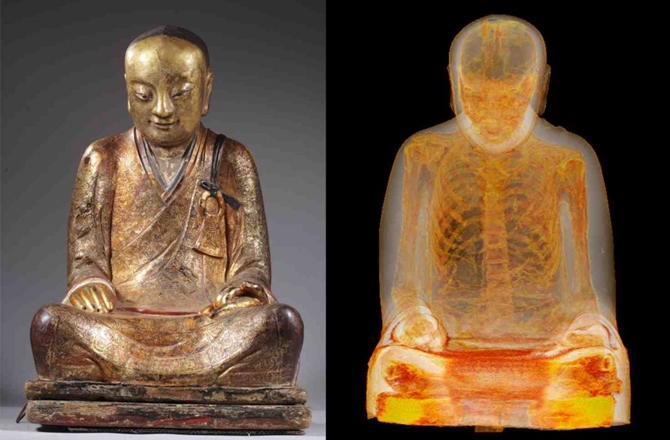
dnews-files-2015-02-mummy-found-inside-buddha-statue-150223-jpg

Researchers at the Drents Museum in the Netherlands made a shocking discovery when they imaged an ancient Chinese statue and found a nearly 1,000-year-old mummy inside.

Sitting in the lotus position, the mummy fits within the statue perfectly.

“On the outside, it looks like a large statue of Buddha,” the museum said in a release. “Scan research has shown that on the inside, it is the mummy of a Buddhist monk who lived around the year 1100.”

Read More

Blogging your book away – how much is too much?


Will posting chapters and parts of your book on your blog take away from your publishing success?

My_Memoir_Tuesday_Cartoon

I have been told often that I should save more of my blog posts to include in my memoir. Usually this advice comes from people who love and care for me. I really appreciate that concern. I know this concern was not expressed for the fear of copyright, although I should be concern about that too; I am told I am ‘giving away’ a section of writing that may be building up tension or crucial to the climax of a chapter or even the memoir itself.

We choose what we share on our blogs. I know I could be just giving away the important parts in my memoir without realising it, but as I write the story evolves. I also feel the need to challenge my self even more by improving that story after I have posted it. Often I feel that if I re-write as much as I can, I like it more and the story becomes another story – an even better story. I remember things and add them. I show what I am saying better, with the right words. I enjoy details, sound, smell, how it feels and colours. When I re-write often, I speak the English word better, because it is not my first language and I need the practice. This may sound confusing, but it is about the evolution of the story and how the story journeys through its form until it becomes the one invention I and hopefully the editor is satisfied with.

I am grateful for the good advice, and without being too cocky, I must admit, my other fault lies in wanting to share immediately. My enthusiasm and thrill of a draft completion leads to, the need to read the story to someone. I want to tell the story.  This may not be what other aspiring authors do. And, I am not advising anyone on what they should do with their potential best-seller. I wanted to make a point that whatever bits and pieces you read of my memoir is a piece of the story. I hope by the time I complete the memoir, I would still offer you a whole story and not six chapters of what I have left – from blog posts. Perhaps some of the blogger/author friends can share in the comments, how they manage this issue. Now, I have another story to tell…..

Recently through my friend and fellow WordPress blogger hiMe, I found another Papua New Guinea/Australia woman writer, June Perkins. As we bloggers do, we socialise while we write. For me to find a wantok, someone from your place, it is quite special. Perkin’s work has been published on Australia Broadcasting Commission(ABC Open) that hiMe writes for.  Once hiMe gave me the link and I reached out, it did not take long for June to come to the meeting place – this blog.

I am very happy to get to know June (virtually) and read some of her stories. It is also wonderful to find stories between us that have similarities and that common place. Reading through June’s posts, I found this piece of writing and I was thrilled that it was related to my post tonight about how much is too much to share on blogs. I hope you enjoy June’s post and have time to visit June Perkins‘ blog in the future.

dancingintoslipstreamlarge
A possible cover for an upcoming book – bringing my poetry on Art and Spirituality together – June Perkins

My blog is the place where the journey to my books has begun.

I have fed them continuously like journals with drafts and polished works.

Blogs have helped me make writing, remembering, reflecting and imagining a regular practice.

Blogs have encouraged me to make photography a regular practice.

Through reading other blogs I have found storytellers, poets, writers, travellers, film makers, and people who want to bring peace to the world through art. These people have inspired me with their journeys, writing, and photographs in their blogs.

Blogs have helped me so much so that when I have lived in the outer/country, I sometimes felt cut off from this larger creative world.

Blogs helped me heal from the damage of a cyclone to my old home and become a community journalist.

My own blogs have become a resource, full of roughly cut books. They have become archives for my family and friends to search our shared history.

Now I begin another journey. On this one, I take the rough cuts and unstructured writings shared the blogs and begin to place them into book structures.

It is time for me to polish more.

I move beyond the relatively free form of my blog and start to create anthologies and memoirs with sections, and chapters, and titles. I edit my blogs and add and subtract from them.

I create new pieces to connect blogs posts, and put them in these books, and save up for when they go public. They are held back from my blog to be surprises. My blog increasingly becomes a place for sharing the process of what I am up too rather than the final product.

The most inspiring things about blogs are:

1- The way they can potentially connect with the writer with readers and invite an immediate response.

2- The way blogs can respond to national and international events in the moment.

3- Their cheap access to a publishing platform for many in the world.

4- Their global reach.

5- Their capacity to build an audience for an emerging storyteller.

The challenges of a blog can be:

1- Blogging becomes addictive. You keep feeding your blog and not get on with sending off works for publication.

2- You share work you could or should be publishing as a book or article.

3- Copyright protection.

4-Some blogs focus too much on sales and not enough on content or connection. These blogs concentrate more on sale pitches and some are scammers.

5-Blogging can be challenging to build a large audience for your blog, and requires time, good quality content and social skills.

I will still blog when I have something I don’t want to forget, or something that moves my heart, or maybe a photo to share, but now I truly have to share a little less on my blog, and make you some SURPRISES.

More soon…..

(c) June Perkins

The Spirit of Tema


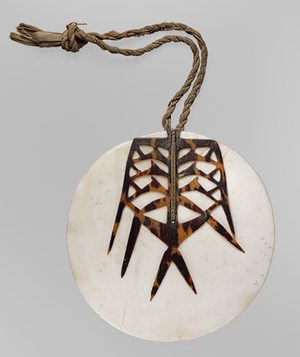
h2_1979.206.1519
Breastplate (Tema, Tambe, or Tepatu), late 19th–early 20th century Santa Cruz Islands, Solomon Islands Tridacna shell, turtle shell, trade cloth, fiber; Diam. 7 3/8 in. (18.7 cm) The Michael C. Rockefeller Memorial Collection, Bequest of Nelson A. Rockefeller, 1979 (1979.206.1519)

The tema or kapkap are flat, round breast plates or disks made and worn as men’s chest or forehead ornament in the Solomon Islands. Tema is one of my favourite ornaments from the Melanesian region.

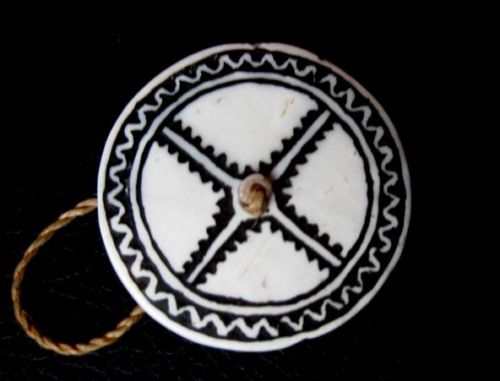
Tema from Malaita
Tema from Malaita. Public domain image.

I particularly like the tema because of its spiritual meaning,  its stunning appearance and temas take a long time to make, by hand. A A tema in the Melanesian culture is regarded as a spiritual object. They are worn as a protective shield during tribal warfare and for general well-being. The white part of the tema represents the moon. It is made from the giant clam shell. In the Santa Crus Islands, the traditional symbol of the frigate bird, shark or dolphin is intricately carved out of the turtle shell and embedded or attached to the clam shell base. The brown necklace is made from bark and bush ropes.

eaeb5cceef254b0a77ee580d3069e4a1
http://www.victoriaginn.com/solomon-islands Photographer Victoria Ginn. Malaita man dressed with his tema.


The Chivoko Stories of Nature’s Offerings


According to the Chivoko people, anything and everything you need comes from the forest and the sea. Food, building materials, things they could wear, are all provided by Mother Nature. If Mother Nature was destroyed, that would be the end of life. This is a story about a community coming together to make a conservation effort to protect their land, sea, environment, and their heritage for their further generation. What is great about this short film is that the future generation are taking action and are part of this effort.

Written and filmed by the storytellers themselves from Chivoko Village, Northwest Choiseul,  the Solomons Islands. Choiseul Province is the northernmost island in the Solomon Islands double chain archipelago and lies approximately 45 kilometres southeast of Bougainville, Papua New Guinea.  

The Musical Water Maidens


2013-06-05-06b_water_music_2011
Huntington Post Photo

It is not often that you find musicians using nature to aid in their musical performances. In the Melanesian culture, a rare tradition passed down from generation to generation of women still lives on.  Lakes, rivers or the sea water is used as a percussion in this tradition, to provide the music with singing. In recent years, this beautiful tradition has been shared with the world through international tours and festival performances. The performers of the Vanuatu Women’s Water Music group (two pictured) hail from the remote northern tropical islands of Vanuatu. They travel the world performing the Na Mag and Ne Lang dances as a prelude to the mystical water music, dressed in their traditional costumes of Gaua and Mere Lava made from flowers and leaves, coconuts and pandanus. Their performance is truly mesmerizing as they reimagine the old with contemporary expressions of Matto – bringing together traditional beats and rhythms with ukulele-led melodies and soaring vocal harmonies.

“And in an age when most bands are dominated by just a handful of instruments — drums, bass and guitar — I encounter a new way of making music every year at the RWMF. In 2011, women from a village in Vanuatu turned the lake of the cultural village into their instrument, cupping their hands under the water to make booming percussion sounds”, wrote Michael Switow when reviewing the women’s performance at the Rainforest World Music Festival.

To listen to one of their songs, click here

http://youtu.be/vUUVEvffzSI

Wantok Musik Foundation

The Tufi Tattoos


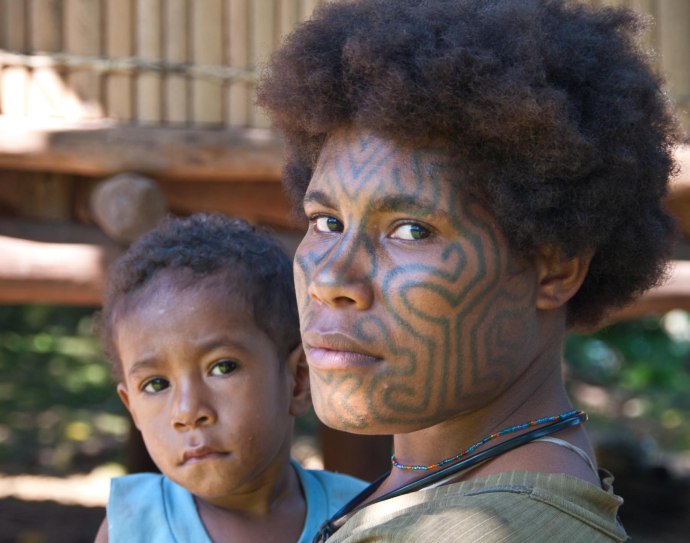
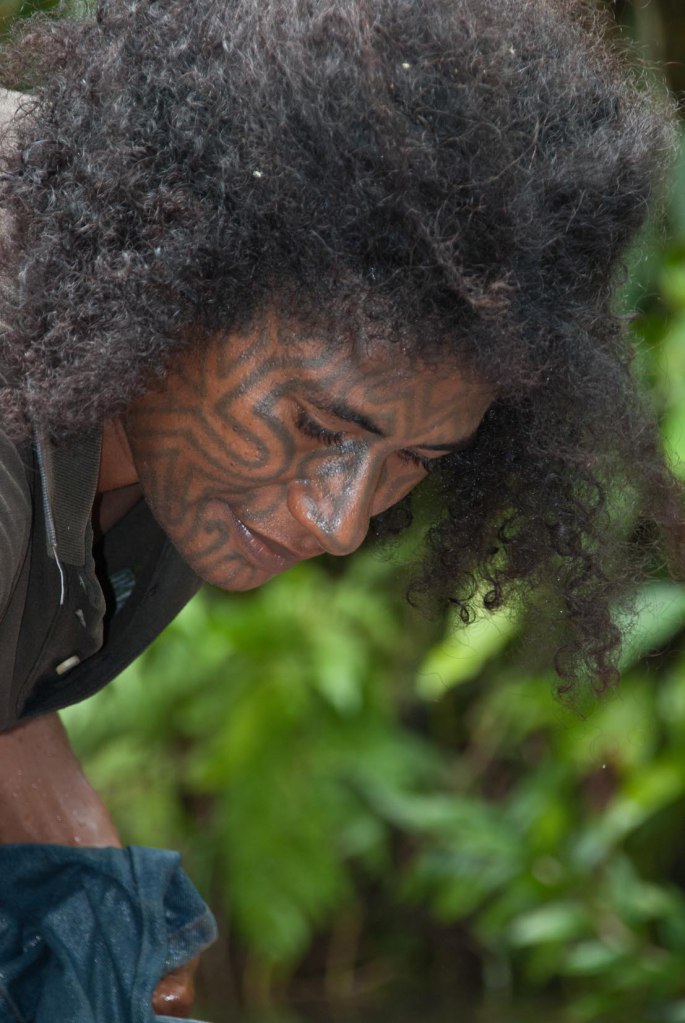
The Tufi tattooing is a beautiful tradition that remains alive in Oro Province.  The art of traditional tattooing is dying, but, traditional artists and master tattooist in Tufi have kept the tradition alive for women in this culture. Tufi is known world-wide for its enchanting natural beauty. The town of Tufi is surrounded by reefs. It is one of the top diving spots in the world and a place of rich cultural heritage. The Tapa cloth also comes from Tufi. The town is located in the Eastern Peninsula of Cape Nelson in Oro Province, Papua New Guinea. 

Ramona at Kasiawa
Picture from Mr Jan in PNG


janhass's avatarMr Jan in PNG

Ramona at Kasiawa Ramona at Kasiawa

When a Tufi girl is ready for marriage she might, for some weeks, enter the hibernating process of getting a facial tattoo. The tattooing is an old traditional practice that has faded away and disappeared in most communities, but there are some areas where the tradition lives on.

Ethel is proud of her tattoo Ethel is proud of her tattoo

The girl stays in seclusion during the time of the application, which is made by a qualified tattooist – sometimes a relative; always a woman. First the pattern is drawn in black, and when the girls’ parents have expressed their appreciation the tattooist starts the actual process. Dulcie at Kafuaruru village and Levinia at Angorogho, two of the still active tattooists, use a modern needle instead of the bush needle that was tapped by a stick, which was the old way. The dyes today are also mixed with modern ingredients that give a stronger…

View original post 198 more words

The High Man


A full documentary about ancient Ireland’s myths and monuments

Some of you know about this archeology site in Ireland. I found its story and the artwork very intriguing.  The High Man documentary is about a fascinating giant figure of a warrior god in the ancient landscape of Ireland.

The Spirit of Mambesak


From: the garamut

Spirit of Mambesak was initially formed in the 70’s and 80’s by West Papuan artists Arnold Ap and Eddie Mofu. They understood the importance of culture and strove to use music as a medium to convey their basic human right: the freedom of expression.

Mambesak was formed to revitalise traditional West Papuan dance, music and song and eventually provided a certain colour, form and inspiration for the birth of music and dance groups throughout Papua, actively promoting and strengthening West Papuan identity. However, Arnold Ap and Eddie Mofu’s popularity and the conscious pride in being Papuan Mambesak’s music engendered, brought them to the attention of the Indonesian military who accused them of being separatists. They were finally murdered. Today, the spirit of Mambesak endures with new faces and new songs. This album was released in 2004.

You can listen to more or purchase their music here