Category Archives: blogging

The Missing Shoes


I really liked the story about the missing shoes and I accidentally came across it while having a conversation with my son. I enjoy conversations with both my sons because I learn a lot from them. When they were younger I still learnt from them, but, it is nothing like the age now where they are growing into young adults and they have their own views and interests. Nathan, my eldest (19) is a storyteller so he often suggests some interesting topics for my readers. While I bring you some of these interesting topics, I have personally learnt a lot from reading these topics myself.  In a way, life as a parent starts by being a teacher, and eventually your children become your teacher and you are their student.

Together,  Nathan and I watched a show called the Drunk History this afternoon. It is a comedy about drunk actors re-telling history. The show was quite funny. One of the historical features in this show caught my attention, and in a more serious way. It was a story about the Native American super athlete, Jim Thorpe. Now some of you may know that Thorpe was celebrated for his legendary achievements in athletics and football. Thorpe’s life before he became an athlete was quite moving. What caught my attention and I found to be truly inspiring, was a story about Thorpe’s participation in the 1912 Olympics and what he did (as pictured) when his running shoes went missing.

jim-thorpe
And, yes, he’s wearing unmatched , different sized shoes he found in a garbage bin at the Olympics. This didn’t stop him from winning two gold medals.

THE MISSING SHOES

By Taylor Eldridge

As Wheeler details in Jim Thorpe’s biography, Thorpe’s sneakers went missing before the final event of the 1912 three-day Olympic competition.

Thorpe’s emergency plan led him to burrow through the trash for a shoe too small then borrow a shoe so oversized he had to stuff it for his foot to fit.
What the mismatched pair produced was his magnum opus in the finale, winning the 1,500 meters in 4 minutes, 40.1 seconds – a time that a gold medalist decathlete wouldn’t beat until Mykola Avilov ran a 4:22 at the 1972 Munich Olympic Games.
“That story always evokes the greatest response when I share it,” Wheeler said. “I think it can still inspire generations to come. I think in the case of Jim Thorpe, the true story is just as good, or better, than the mythology.”

Story by Matt Blitz

When people make lists of the greatest athletes of the 20th century, they are populated with the usual suspects: Michael Jordan, Babe Ruth, Muhammad Ali, Serena Williams, Wayne Gretzky, Jim Brown, Pele… but there is one name that should always make the list even though many people, even the biggest sports fans, may not recognize it, or if they do, they know little about the man- Jim Thorpe.

The story of Jim Thorpe is one of determination, triumph, tragedy, racial prejudice, controversy, and extraordinary athletic achievement. Born approximately May 28, 1887 (the exact date has been disputed) in a small one-room cabin near the town of Prague, Oklahoma, Jim was the son of a farmer named Hiram and a Potawatomie Indian named Mary James, who was a descendant of the famed Native American warrior Black Hawk.

Jim, or by his Native American name Wa-Tho-Huk meaning “Bright Path,” grew up on Native American land fishing, hunting, playing sports, and learning from tribal elders. He was actually born a twin, having a built-in best friend and brother to play with. Unfortunately, when Jim was only nine, his twin brother died from pneumonia.

The stress of losing his brother caused Jim to act out and he was sent to an “Indian” boarding school in Lawrence, Kansas. A few years later, his mother would die while giving birth. Shortly thereafter, his father died as well.

Left an orphan, Jim fled his hometown and began attending Carlisle Indian Industrial School in Carlisle, Pennsylvania. The school was founded by United States General Richard Henry Pratt in 1879 with the purpose of integrating Native Americans into the American way of life by “eliminating their Indianness.”

It was there that a 17-year old, depressed Jim Thorpe walked by the school’s track & field practice on the way back to his dorm. He saw all the boys running and jumping and later said he thought to himself “I can do that better than they can.”

Read More Here

Dame Josephine Abaijah: Flying Solo in a Man’s World


I personally have always admired Dame Josephine. She has lived an extraordinary life and will continue to inspire the women of Papua New Guinea and other Pacific islands. Thank you Veronica Peek for writing this story and sharing it with us.

Veronica Peek's avatarColonial Days in Papua New Guinea

Josephine-Abajah

When I look back now on those seventies years in Papua New Guinea, there is one politician who stands out as personal favourite, and that is Dame Josephine Abaijah. In those days when she had no title, Josephine and I were neighbours of sorts. She owned a news agency in the Port Moresby suburb of Boroko and it was at street level, of course. Up one flight of stairs and directly above her shop was a suite of rooms where I had my photography studio and darkroom. If the acrid chemical smells emanating from said darkroom ever troubled her, she didn’t say so.

My memory of Josephine, then, is of a dainty, impeccably groomed lady behind a counter who served me my copies of Australian newspapers and magazines. Thing is though, she wasn’t always there. This little lady had bigger fish to fry.

Dame Josephine Abaijah, as hopefully any Papuan…

View original post 339 more words

The Chivoko Stories of Nature’s Offerings


According to the Chivoko people, anything and everything you need comes from the forest and the sea. Food, building materials, things they could wear, are all provided by Mother Nature. If Mother Nature was destroyed, that would be the end of life. This is a story about a community coming together to make a conservation effort to protect their land, sea, environment, and their heritage for their further generation. What is great about this short film is that the future generation are taking action and are part of this effort.

Written and filmed by the storytellers themselves from Chivoko Village, Northwest Choiseul,  the Solomons Islands. Choiseul Province is the northernmost island in the Solomon Islands double chain archipelago and lies approximately 45 kilometres southeast of Bougainville, Papua New Guinea.  

The Musical Water Maidens


2013-06-05-06b_water_music_2011
Huntington Post Photo

It is not often that you find musicians using nature to aid in their musical performances. In the Melanesian culture, a rare tradition passed down from generation to generation of women still lives on.  Lakes, rivers or the sea water is used as a percussion in this tradition, to provide the music with singing. In recent years, this beautiful tradition has been shared with the world through international tours and festival performances. The performers of the Vanuatu Women’s Water Music group (two pictured) hail from the remote northern tropical islands of Vanuatu. They travel the world performing the Na Mag and Ne Lang dances as a prelude to the mystical water music, dressed in their traditional costumes of Gaua and Mere Lava made from flowers and leaves, coconuts and pandanus. Their performance is truly mesmerizing as they reimagine the old with contemporary expressions of Matto – bringing together traditional beats and rhythms with ukulele-led melodies and soaring vocal harmonies.

“And in an age when most bands are dominated by just a handful of instruments — drums, bass and guitar — I encounter a new way of making music every year at the RWMF. In 2011, women from a village in Vanuatu turned the lake of the cultural village into their instrument, cupping their hands under the water to make booming percussion sounds”, wrote Michael Switow when reviewing the women’s performance at the Rainforest World Music Festival.

To listen to one of their songs, click here

http://youtu.be/vUUVEvffzSI

Wantok Musik Foundation

Darwin’s Dream


The war was not over for Onoda


article-2541104-1ABABE9A00000578-907_634x617
Onoda (second left) walking from the jungle where he had hidden since World War II, on Lubang island in the Philippines

I found this story deeply moving.

Hiroo Onoda was the last Japanese imperial soldier to emerge from hiding. He finally surrendered in 1974 on Lubang island in the Philippines. Onoda’s imperial army uniform, cap and sword were still in good condition.

Two weeks ago, one of the most fascinating story about the war came to an end when a former imperial soldier, Hiroo Onoda died at the age of 91 in Japan. When the war had ended in 1945, and his troops surrendered, Onoda had refused to surrender and hid in the jungles of the Philippines for 30 years. He was accidentally discovered by a traveller, and through conversation, the traveller returned and reported Oneda’s existence to the Japanese army.

When approached, Mr Onoda still could not believe, the war was over. Only his own superior and commander from 30 years ago, had to go to the Philippines and convince Mr Onoda – the war was truly over.

Onoda struggled to adapt to normal life on his return to Japan and he emigrated to Brazil in 1975 to become a farmer. He finally returned and settled in his homeland in 1984 and opened nature camps for children.

He did not consider his 30 years in the jungle to have been a waste of time.
‘Without that experience, I wouldn’t have my life today’ he said. ‘I do everything twice as fast so I can make up for the 30 years. I wish someone could eat and sleep for me so I can work 24 hours a day.’

Read more: The Daily Mirror


The Tufi Tattoos


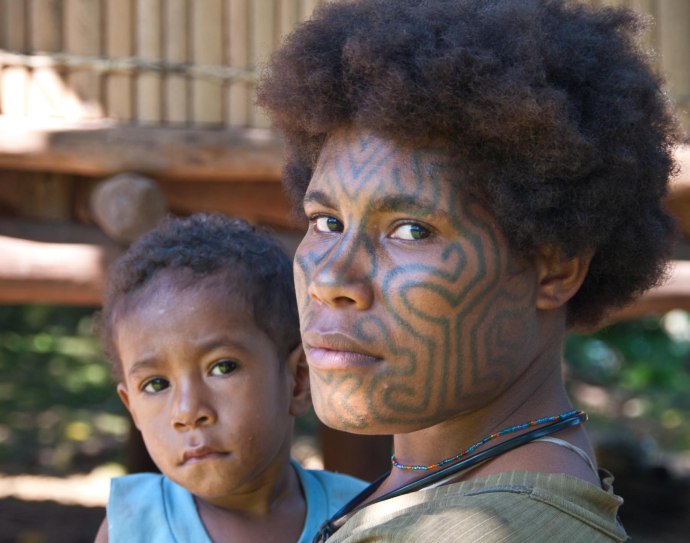
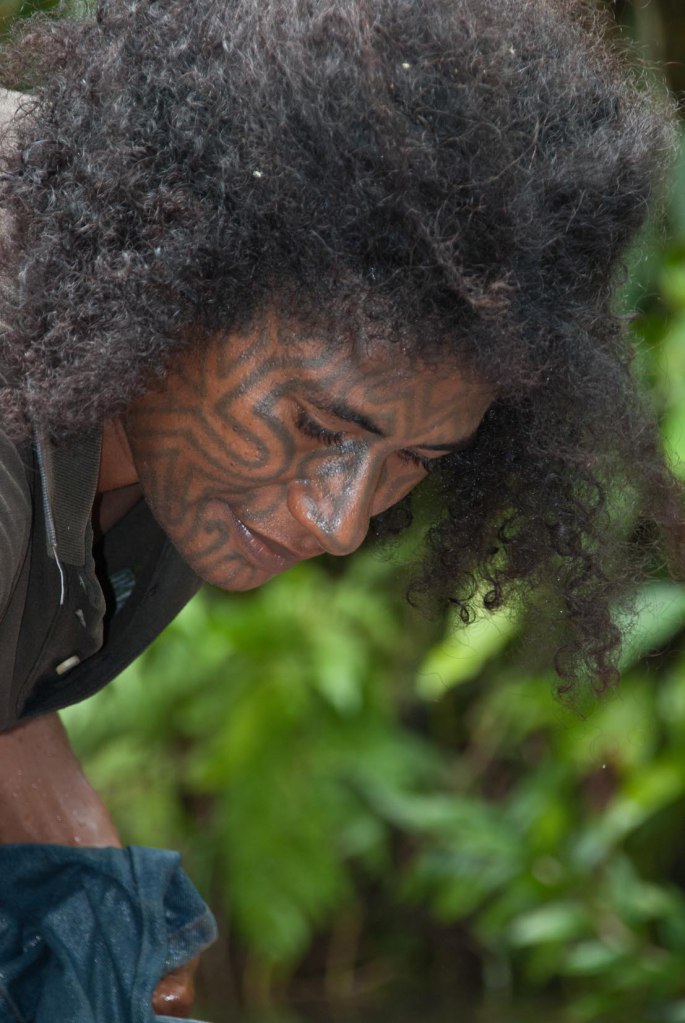
The Tufi tattooing is a beautiful tradition that remains alive in Oro Province.  The art of traditional tattooing is dying, but, traditional artists and master tattooist in Tufi have kept the tradition alive for women in this culture. Tufi is known world-wide for its enchanting natural beauty. The town of Tufi is surrounded by reefs. It is one of the top diving spots in the world and a place of rich cultural heritage. The Tapa cloth also comes from Tufi. The town is located in the Eastern Peninsula of Cape Nelson in Oro Province, Papua New Guinea. 

Ramona at Kasiawa
Picture from Mr Jan in PNG


janhass's avatarMr Jan in PNG

Ramona at Kasiawa Ramona at Kasiawa

When a Tufi girl is ready for marriage she might, for some weeks, enter the hibernating process of getting a facial tattoo. The tattooing is an old traditional practice that has faded away and disappeared in most communities, but there are some areas where the tradition lives on.

Ethel is proud of her tattoo Ethel is proud of her tattoo

The girl stays in seclusion during the time of the application, which is made by a qualified tattooist – sometimes a relative; always a woman. First the pattern is drawn in black, and when the girls’ parents have expressed their appreciation the tattooist starts the actual process. Dulcie at Kafuaruru village and Levinia at Angorogho, two of the still active tattooists, use a modern needle instead of the bush needle that was tapped by a stick, which was the old way. The dyes today are also mixed with modern ingredients that give a stronger…

View original post 198 more words

The High Man


A full documentary about ancient Ireland’s myths and monuments

Some of you know about this archeology site in Ireland. I found its story and the artwork very intriguing.  The High Man documentary is about a fascinating giant figure of a warrior god in the ancient landscape of Ireland.

The Spirit of Mambesak


From: the garamut

Spirit of Mambesak was initially formed in the 70’s and 80’s by West Papuan artists Arnold Ap and Eddie Mofu. They understood the importance of culture and strove to use music as a medium to convey their basic human right: the freedom of expression.

Mambesak was formed to revitalise traditional West Papuan dance, music and song and eventually provided a certain colour, form and inspiration for the birth of music and dance groups throughout Papua, actively promoting and strengthening West Papuan identity. However, Arnold Ap and Eddie Mofu’s popularity and the conscious pride in being Papuan Mambesak’s music engendered, brought them to the attention of the Indonesian military who accused them of being separatists. They were finally murdered. Today, the spirit of Mambesak endures with new faces and new songs. This album was released in 2004.

You can listen to more or purchase their music here


“Life is Easy”


Jon+Jandai
Jon Jandai http://www.bartphoto.nl/

“Life is easy” says Jon Jandai. “Why do we have to make it so difficult?”

After pursuing “success” in Bangkok for several years, Jon dropped out of university to return to village life. There, he went back to the life he knew as a child, working two months of the year to grow rice (with an additional 15 minutes a day to grow vegetables), dug a couple of fish ponds, built his own homes using earthen bricks, and gave up buying clothes (he has so many clothes from friends and visitors that he has to give them away). Jo contends that to be happy, we cannot just rely on money; we have to reconnect with each other.

“Before I thought that stupid people like me … cannot have a house… because people who are cleverer than me and get a job need to work for 30 years to have a house. But for me, who cannot finish university, how can I have a house. It’s hopeless for people who have low education like me. But when I start to do earthen buildings, it’s so easy! I spent two hours per day… and in 3 months I have a house. A friend who was the most clever in the class he has a house too but he has to be in debt for 30 years, so compared to him I have 29 years and 10 months of free time. I feel life is so easy.”

Jon runs Pun Pun an organic farm, seed-saving operation, and sustainable living and learning center. At Pun Pun they use ancient natural building techniques with readily available, local, natural materials with little embodied energy and salvaged materials to make homes, a practical and affordable alternative to resource intensive conventional building.