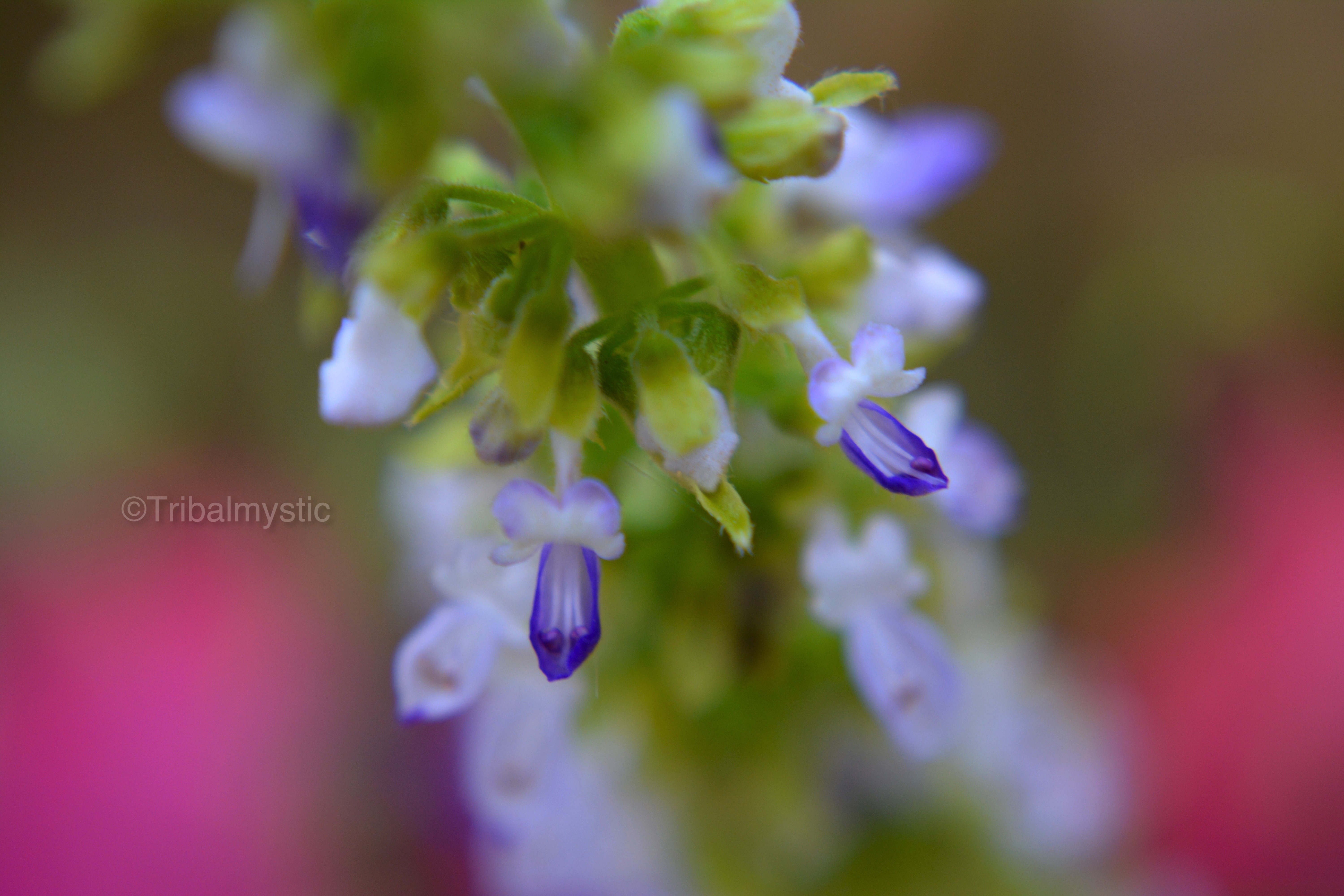
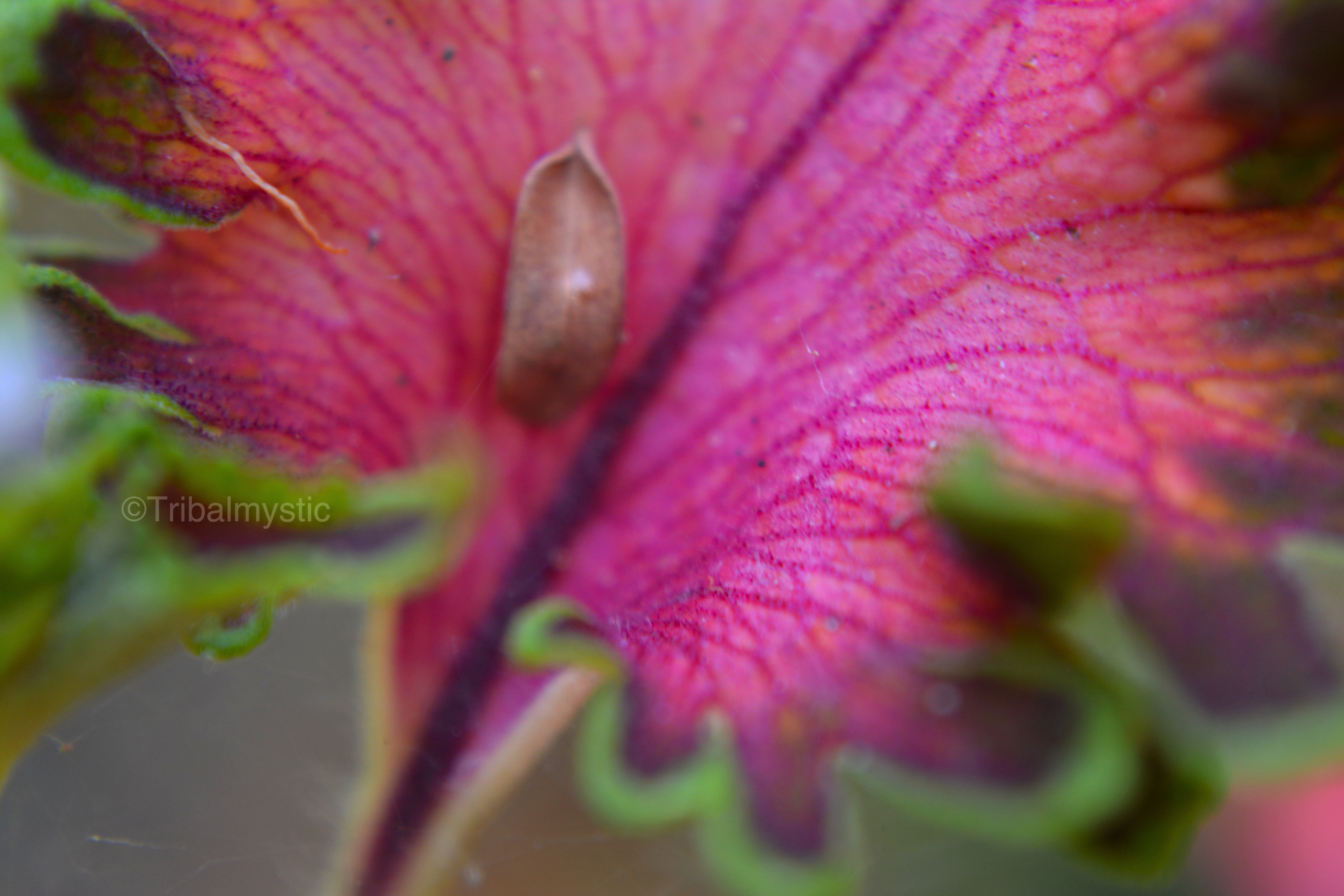
I photographed the Coleus up close today. The coleus has always been a favourite of my mother and I. My mother has propagated several varieties of coleus at a time around our house and in all the food gardens where I grew up. We used coleus for singsing (traditional dancing).
The flower is also called the painted nettle and poor man’s croton. They grow fast and survive better is partial shade. I am fascinated by the way nature combines the colours in coleus.
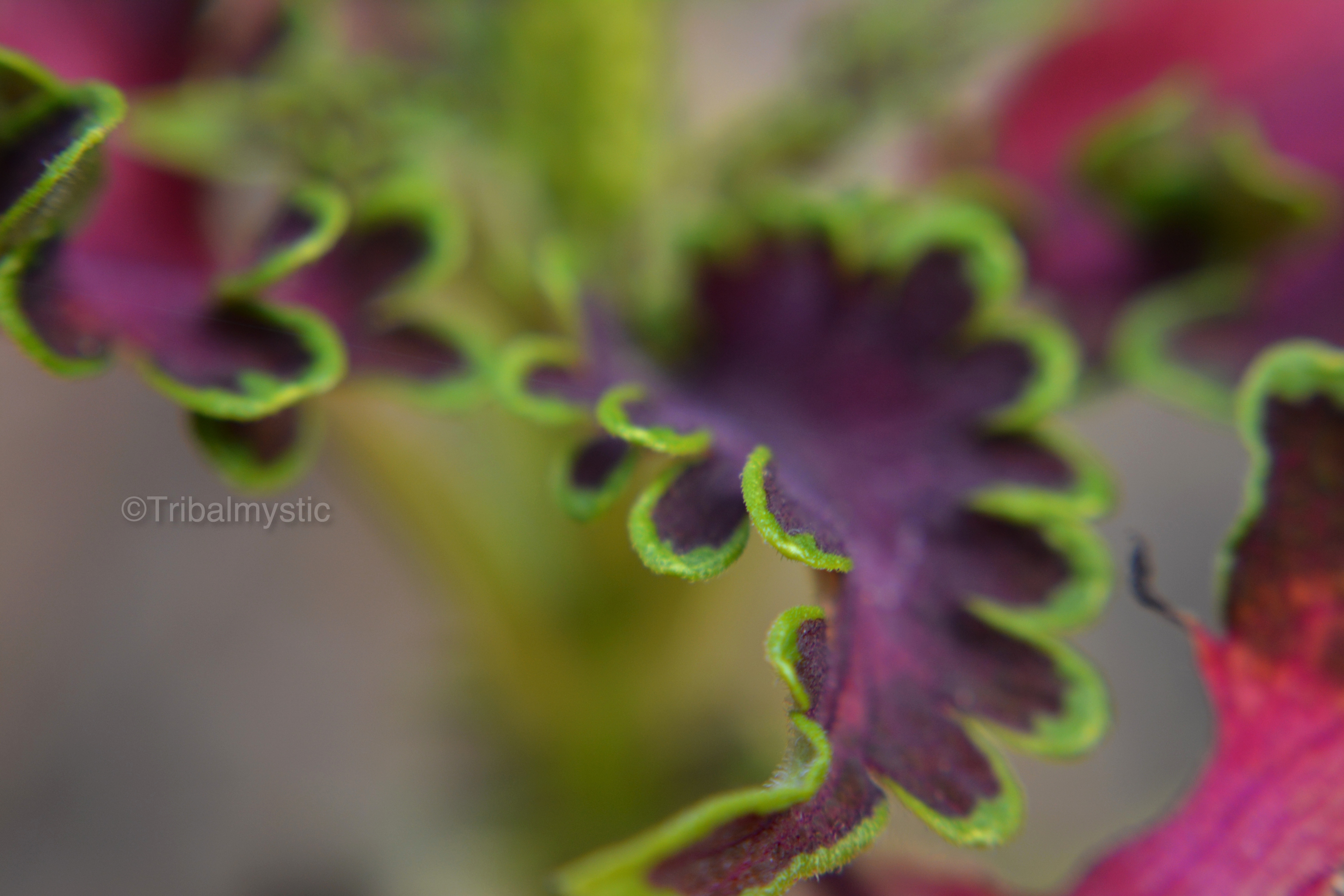
There are so many different colour combinations on this flower and the colours are surprisingly complementary. For example, the lime green and the pink in the pictured leaf above and the green and purple in the young leaf pictured below.
I love coleus especially because I can get natural dyes from some of the varieties for my art. See previous post.
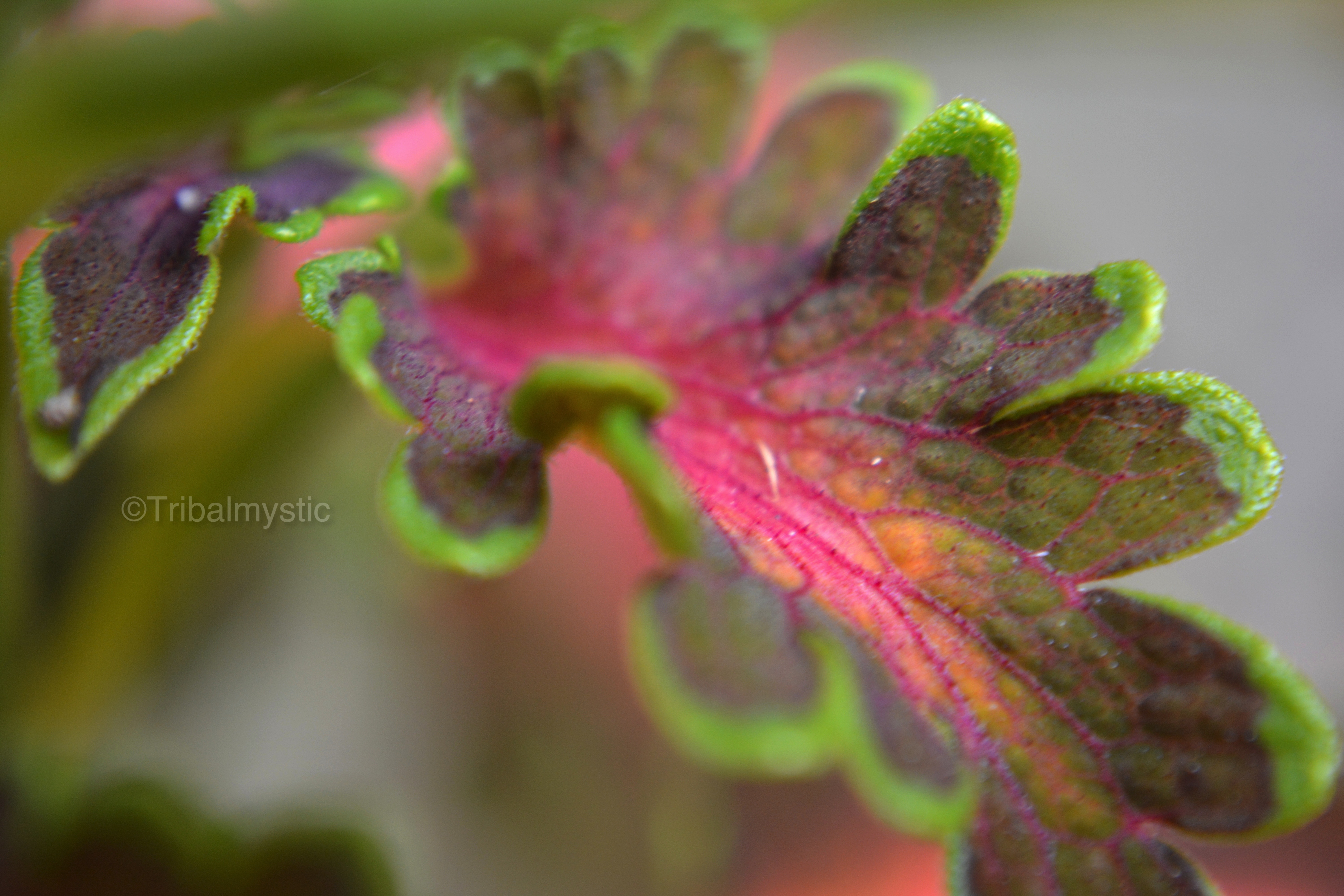
Even when the leaves get a little older in this variety, the orange is added to the green on the picture below. Again, another complimentary colour to what the plant already has. It is almost as if to say that the Coleus knows how to dress – she is very fashionable. She does ‘read’ the colour chart very well.
A mother takes her son outside to blow bubbles in the snow and gets inspired to produce one of the most amazing photographic series of frozen bubbles. Found on DNA Art is our cool stuff – a collection of bubble photographs by Washington-based photographer Angela Kelly. The bubbles were created using a simple solution of dish soap, karo syrup, and water blown into a minus 9 degree temperature.
“We blew the bubbles across the top of our frozen patio table and also upon the hood of my car and then we watched in awe as each individual bubble froze with their own unique patterns”. Kelly said.
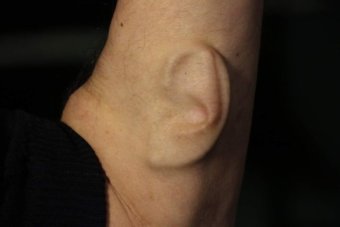
Perth artist Stelarc grows ear on his arm, plans to connect it to internet.
Hear for art
Image: ABC Copyright: Can you hear what I hear? Stelarc’s implanted ear up close
ABC News Courtney Bembridge reported it has been 20 years in the making and involves the growth of a human organ, but for Perth-based artist Stelarc, it is just another project.
The Curtin University professor is growing a human ear on his arm.
“People’s reactions range from bemusement to bewilderment to curiosity, but you don’t really expect people to understand the art component of all of this,” Stelarc said.
“I guess I’ve always got something up my sleeve, but often my sleeve is rolled down.”
Stelarc first conceived the idea in 1996, but it took another decade to find the medical team willing to make it a reality. Click on ABC link to watch the video – please be warned, some images are graphic.
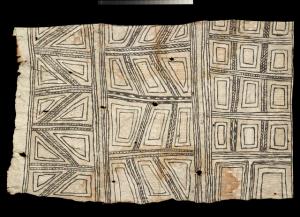
Image copyright: TePapa Museum, Wellington, New Zealand.
Papua New Guinea has one of the most unusual collections of bark cloth (tapa) in the world. The art of making tapa is a timeless tradition in PNG and many Pacific Island countries. A cultural heritage handed down from generation to generation, tapa making has survived western influences and is still worn by its makers.
While the tapa cloth is made in different parts of the country, the Oro Province is known world-wide for its distinctive designs and patterns. More on tapa in a future post.
A camera means more new pictures will be seen on Tribalmystic stories. It also means I can share my garden with you, virtually.
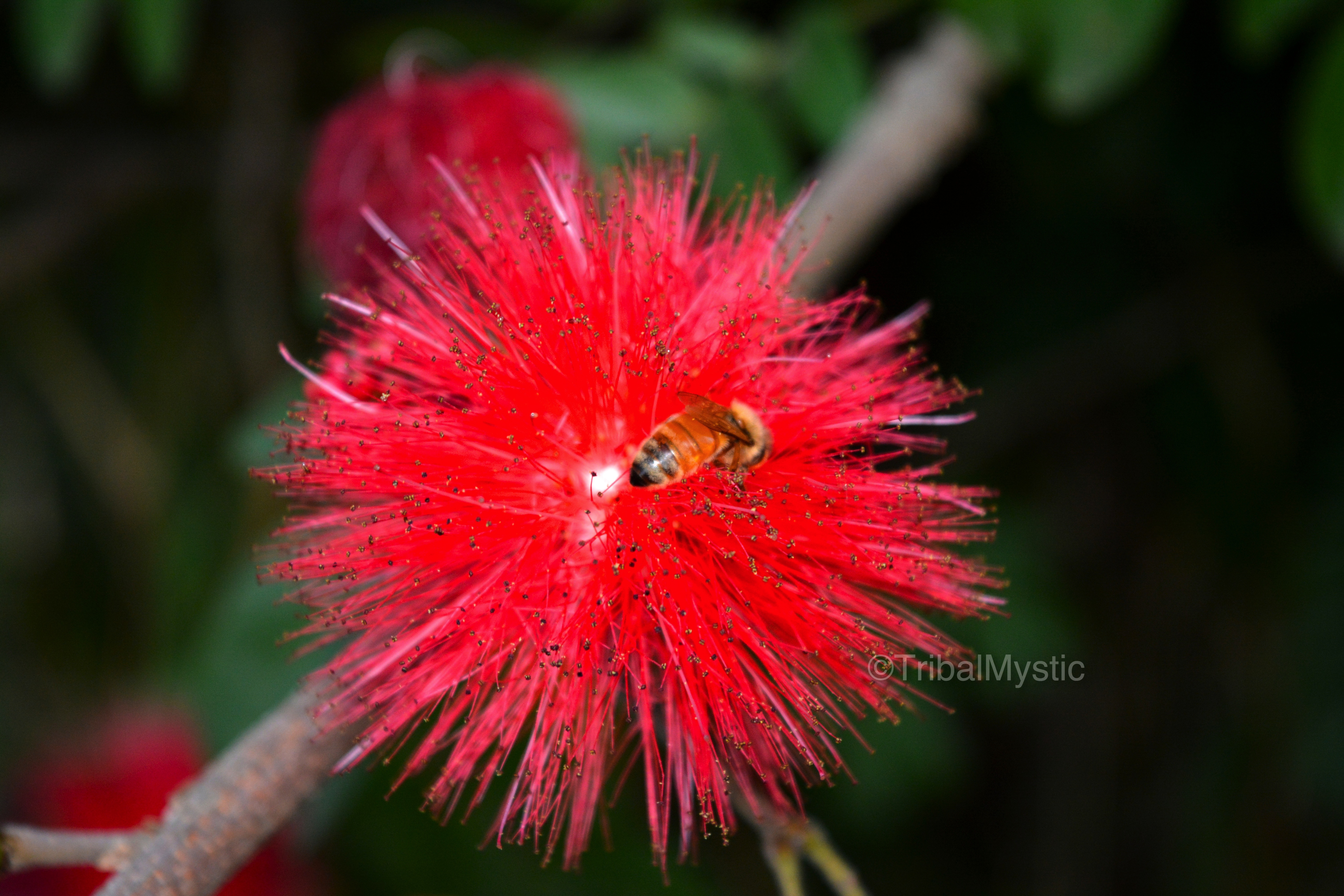
Samanea Saman bloom. It is also called False Powder Pluff.
I got myself a ‘real’ camera today. A Nikon D5200. It may not be a Pro level camera and not what I was aiming for, but I have not had an SLR for nearly twenty years so I am thrilled. My son Nathan loaned me some money for it. When my younger son Chris and I arrived home, guess who already had the package opened and was handling it – Chris!
Mum was cooking and giving stern instructions from the kitchen for Chris to wash his hands first and not leave any greasy prints on the lens or any part of the camera. Poor Chris…I’m sure he was just laughing inside his head. Who tells a 16-year-old what to do these days? Know the feeling when your kids play with your stuff?
Then, the little bugger went off and charged the battery and started taking pictures. Oh well…I guess he was just as excited as I was, even when he pretended he wasn’t.
There was some light left and I went for a quick walk in the garden to try the camera with some very curious bystanders. I shall show the ‘bystanders’ on Tribalmystic stories later. These are pictures of Salmanea Saman, often referred to as the false powder fluff – not the stuff you wear on your make-up though.
I have to get my photography grove back. Let me know what you think of my first pictures. Thank you.
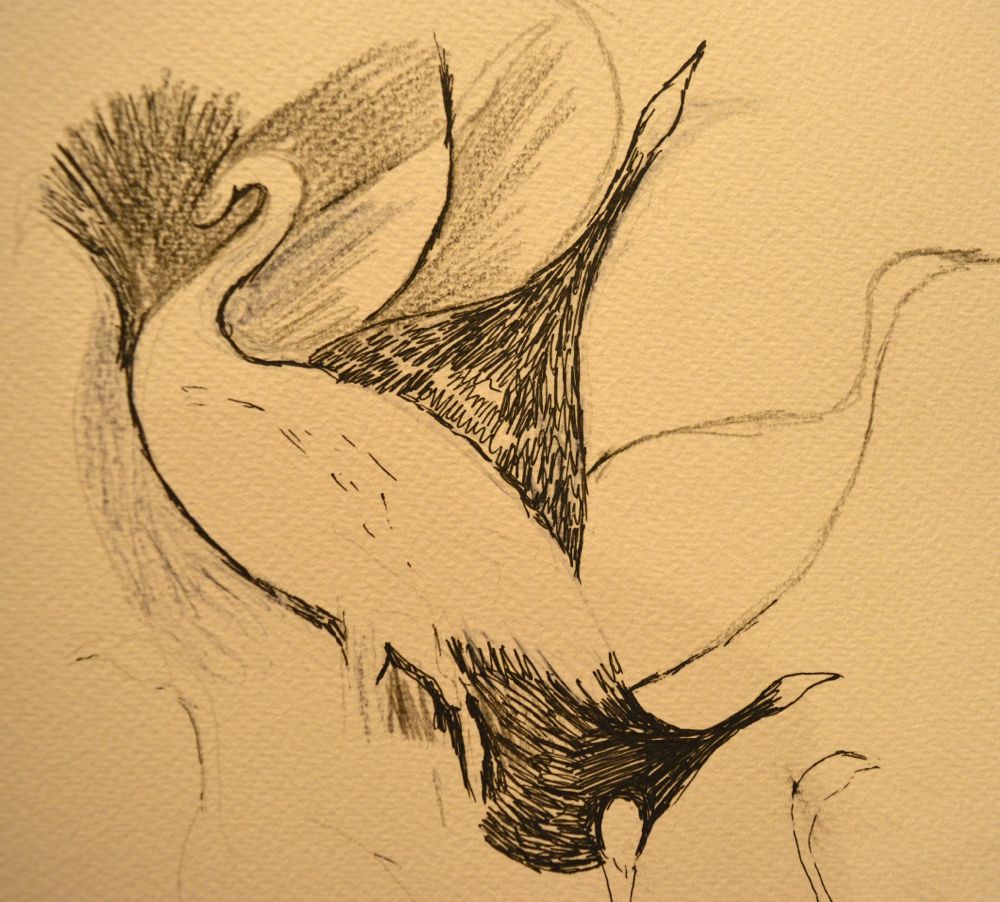
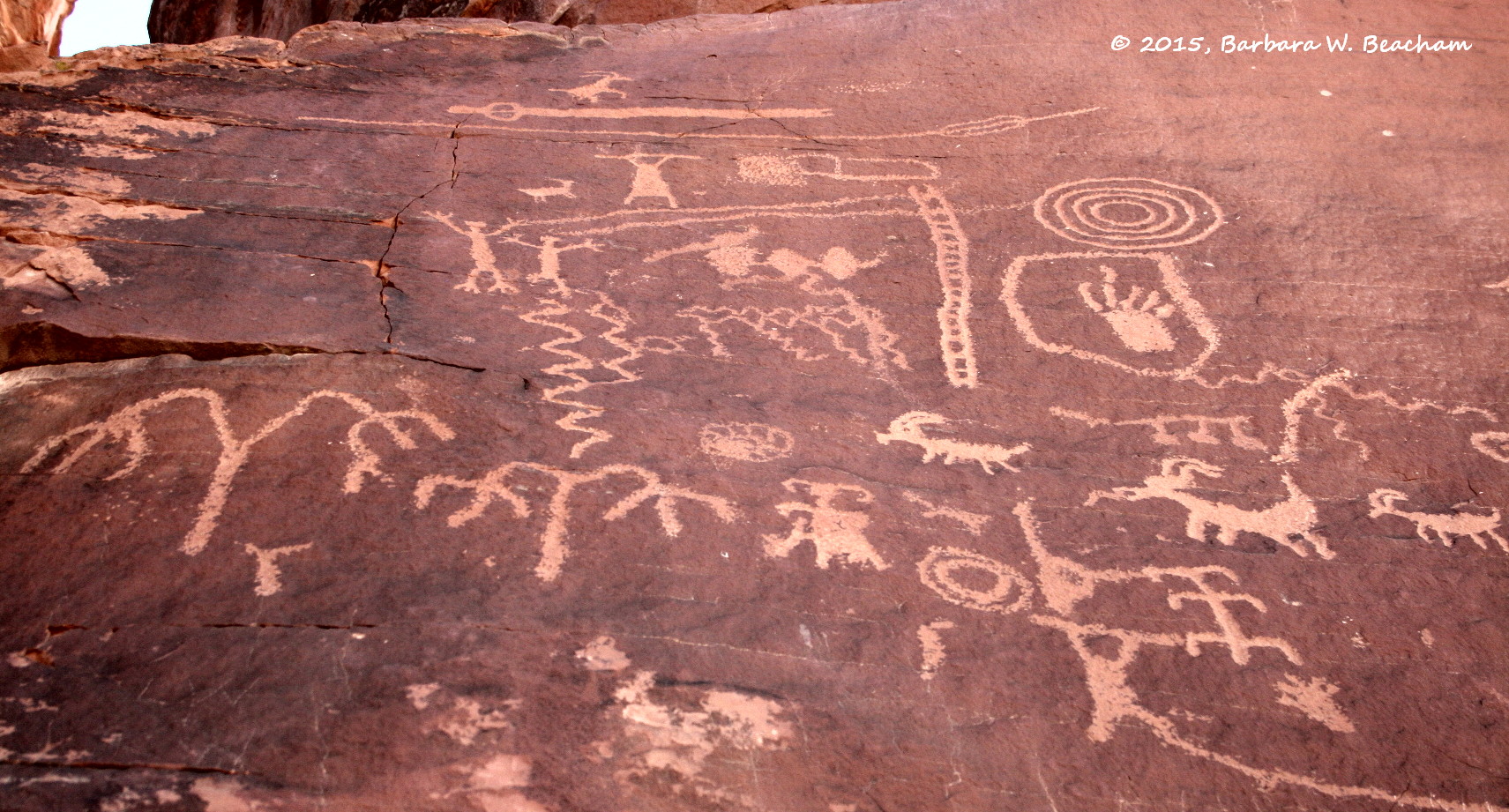
This is a unique flash fiction challenge where Barbara W. Beacham provides a new photo and the first sentence of a story each week. The challenge is to finish the story using 100-150 words. This challenge runs from Monday to Sunday.
The petroglyphs told the story of an unusual event.
The old man’s eyes widened. He blinked from the petroglyphs and stared into the sky. The interpretation led to the present. Something was happening. Yawing, seven, could sense the fear in his grandfather’s voice.
Yawing followed Old Manu’s eyes; the clouds gathered into a thick dark cover.
“What is it, grandpa?”
“There’s no time”
“No time for what?”
“Go! Get your mother!” Old Manu ordered Yawing. “We need to move quickly. It is coming for us”.
“What is coming for us?”, Yawing asked, wide-eyed. He reversed to the door.
“Go!”
Yawing quickly turned and ran to find his mother among the women at the river. He tripped and fell.
“Mother! We must leave, now”, Yawing shouted with a mouthful of sand. He spat.
“They are coming for us!”
Yawing’s alarmed voice chilled into silence, his three little sisters, playing outside their house. As they watched, he ran to their mother.
The Melanesians including Papua New Guineans produced war shields they used to protect themselves but these shields have a great artistic value. While these large hand-carved rectangular, square or oval-shaped cultural objects were made for protection in tribal war, they are also very beautiful. It is hard to visualise a work of art being used to protect one’s life, but made of hard-wood, the shields serve their purpose.
A shield of the Melanesia is a fascinating object. Many are made from wood and carry intricate tribal and clan markings representing profound spiritual meanings. The maker ensures that the markings incised or painted on this shield would protect someone’s life. In all the cultural objects that come from my heritage (the Melanesia), fighting shields would be my favourite.
From the 80s, I started collecting shields whenever I travelled across PNG. Once the West Papua community had a trade show in Port Moresby and I was extremely delighted to visit and I purchased a couple of shields and a door which was carved with intricate shield designs. West Papua shields, the Asmat, top my list of favourites. Over time, my obsession with shields resulted in over 30 pieces collected.
I have some pictures tucked away in my old computer, unfortunately, I could not find them for this post. Most of the shields from my collection were displayed in a cafe I owned and ran with a friend.
From JKLeahy collection: Eastern Highlands shield-PNGBefore we migrated to Australia, there was a feud over lack of electricity and water to a cafe business I owned with a friend. The landlord kept charging us astronomical amounts when we had to operate the cafe without water nor electricity. We lost business and customers. When we demanded to pay less rent (with power and water), we were locked of the cafe. Th landlord took everything, exceeding the value of the disputed rent. It was not just losing $50,000 worth of cafe equipment and furniture, my shield collection were stolen from the cafe. All gone. What happened after is another story.
It has taken me all these years to put this memory behind me. The pain returns often when I gaze at a beautiful Melanesian shield in a gallery or the thousands of beautiful pictures on Google. While most of the best and unique pieces in my life have gone, I still have a few beautiful pieces to make me smile. And I have this book (pictured below).
With Harry Beran, my friend Dr Barry Craig, anthropologist and a longtime serving curator in Papua New Guinea published a comprehensive compilation on the war shields of Melanesia in their book, “Shields of Melanesia”. The volume illustrates more than one hundred types of shields from all culture areas of Melanesia that used fighting shields. Approximately eighty percent of the shields illustrated in the book have never appeared in print. The book has images of some of the best Melanesian shields.
When you are growing up, and as a child, it is not always clear what your parents tell you, and often, you end up learning the lesson the hard way. How To Catch a Bird is one of those tough lessons Vera van Wolferen learnt as a child.
In Vera van Wolferen‘s own words: “How To Catch a Bird is a stop motion short film based on a childhood memory. It’s the graduation film I made for my masters in animation at AKV St. Joost Breda. When I was eight; my dad taught me how to fish. He told me to take the worm off the hook after fishing, but I had no idea why. After fishing I forgot about the worm and left it dangling on the hook. If I only knew then what the consequence of this action would be.”
Animation by Vera van Wolferen
Music by Gerard van Wolferen
The Guardian Picture: In 2009, the crater of the extinct volcano Mount Bosavi, in the Eastern Highlands Province, PNG was found. The green beetle pictured was one amongst many species discovered, except that this specie is iridescent.
The green beetle is one of my favourites and the insect possesses a beautiful rainbow shine. The beetles come out in millions during fruit seasons. In Papua New Guinea beetles are eaten as food, but the green beetle is so beautiful that tribal dancers use the insect as part of their fashion. The fashion or their traditional dress, especially headbands and headdresses are worn in singsings. A singsing is a performance of song and dance by a group and it is one of many living rituals, handed down through generations.
An Eastern Highlander (PNG) spotting a row of green beetle in his headdress. The beetles are woven intricately into the golden orchid fibre in diamond patterns.
I have seen the beetles myself in Goroka, Eastern Highlands Province and found these ones on headdresses in Simbai, Madang Province, which prompted this post.
Simbai tribesmen (Madang, Papua New Guinea) wearing their fashionable head wigs made from the green beetle.







![20150718_122849[1]](https://tribalmystic.me/wp-content/uploads/2015/07/20150718_1228491.jpg)


 Tribalmystic Stories