All posts by tribalmysticstories, lazylittlefrog.com

Author, Artist, Arts Curator, Climate Activist, Anti - Violence against Women, and Entrepreneur

My favourite time as a child – fishing


article-2487704-1932F51E00000578-531_470x470
This little girl takes a ride on a huge fish in Caras Ionut’s artwork.

If I had to show a visual story of my childhood, this would be it. This photograph by artist Caras Lonut. I remember often thinking about living underwater and swimming with the fish or getting a ride from one.

Growing up in a small village on the coastline of Lae, Papua New Guinea meant I spent many hours and days fishing. My early years were dedicated to catching fish for food. Most of my family fished. Sometimes, we would start at dawn and end at dusk.

We fished on the shoreline and in the swamps. I knew where to fish and where not to. I also knew when to fish. The climate and the weather patterns were our guide. Certain fish came when the moon rose. As early as I can remember I could make my own fishing equipment using nylon lines, small metal hooks, fishing net made from strings. These strings we made from bush ropes and vines.  My aunts, mother and grandma and I would knit the ropes into nets. Like other children in my village, I kept a collection of empty coffee jars I lured fish into by putting a small portion of cooked rice at the bottom of the jars before placing the jar in the water. This was another kind of fishing but that is another story.

Fishing remains one of the most fun and rewarding experiences I have ever had.

The Truth: Australia does not give a shit!


IMG_0862
In my 2008 research into climate change and how intangible cultures of indigenous people in the Pacific islands would be affect many were afraid to see that their future could be in someone else’s land. Here we had a light moment in our discussions about sea level rise and where they would move to; women leaders of Kalal Village, Tami Island, Papua New Guinea. Another low lying island in the South Pacific.
IMG_0799
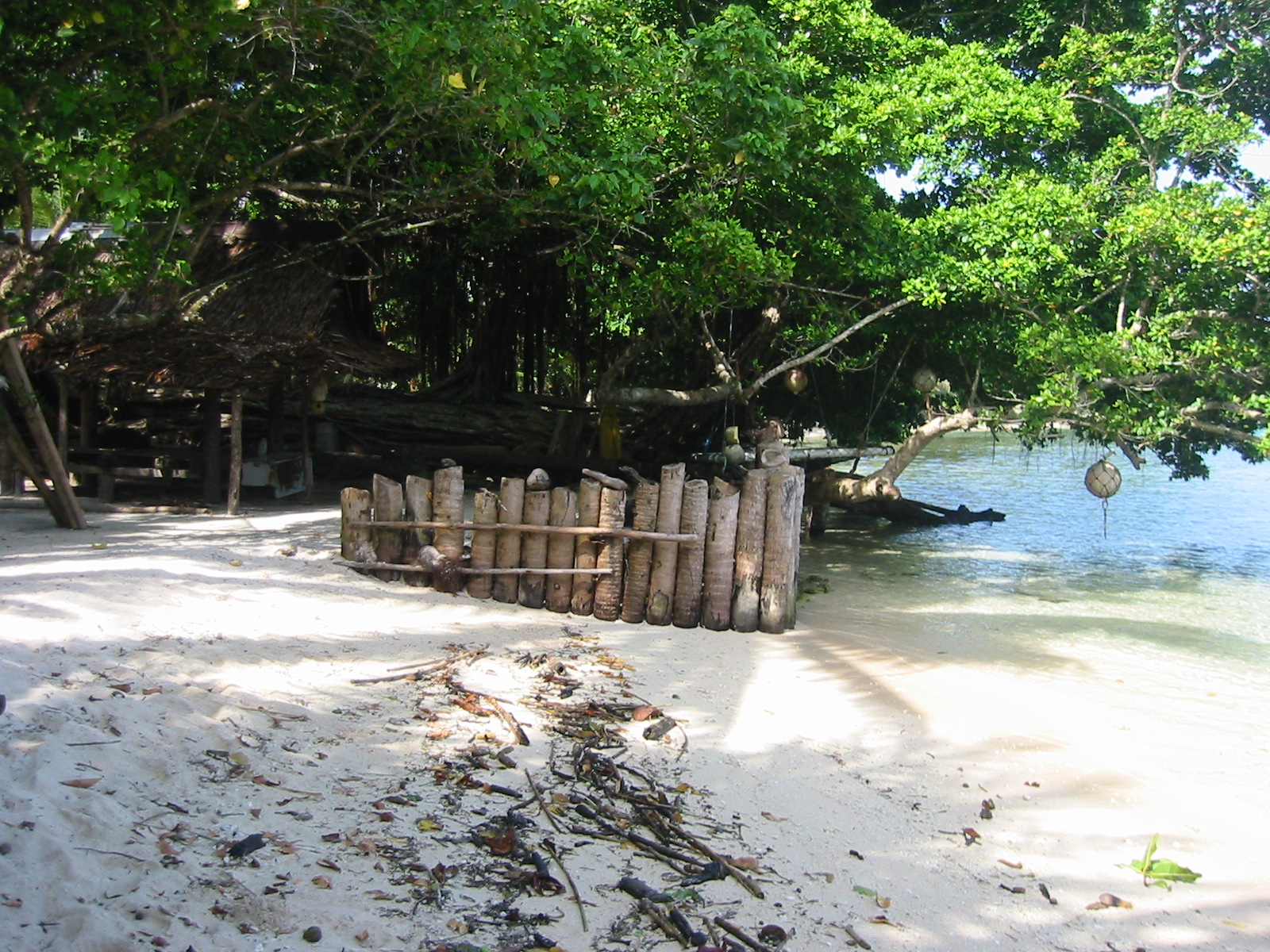
A house in Wanam Village Tami Islands at low-tide showing a basic safety wall made from chopped coconut trunks.


image002
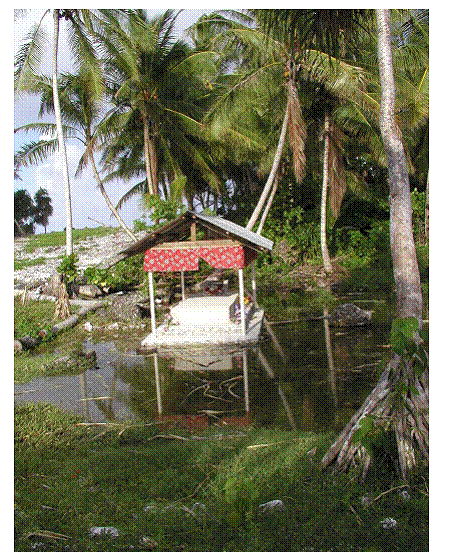
Picture of a graveyard in the Micronesia by one of the leading Climate Change Experts, Dr Chalapan Kaluwin.

Pacific Islands in Climate Change

We in the Pacific Islands, especially small islands less than two metres above sea level, can cry all we want about the 2 degrees change and what we hope to achieve in United Nations Assembly to discuss Climate Change this week but we must accept the truth – Australia does not give a shit. Recent changes in the government and its future goals have clearly ignored all global discussions and actions and in particular, the voices of many small island countries such as Tuvalu, Marshall Islands, and Kiribatis. These countries have always looked up to Australia as the big brother.
Nick O’ Malley wrote this article for the Sydney Morning Herald,  pointing out the fact that Australia has a responsibility.
Messages in support of action to combat climate change are projected onto the side of the UN building in New York on September 20, ahead of the international summit on the issue that begins on Tuesday.Messages in support of action to combat climate change are projected onto the side of the UN building in New York on September 20, ahead of the international summit on the issue that begins on Tuesday. Photo: AP

New York: Before it became dominated by the United States’ effort to build a coalition for war with Islamic State, this week’s General Assembly of the United Nations was to have focused on climate change.

So far Australia has been as vocal about the former as it has been silent on the latter.

Speaking in the offices of his nation’s mission to the United Nations on Saturday afternoon, Marshall Islands Foreign Minister Tony de Brum said he and the leaders of other Pacific island nations were bewildered by what he called “backsliding” on climate change by Australia, which the region had considered to be its “big brother down south”.

“Probably one of the most frustrating events of the past year for Pacific islanders is Australia’s strange behaviour when it comes to climate change,” he said.

Island nations had watched with dismay not only the abolition of the carbon tax in Australia, but also the defunding of scientific advisory bodies, said Mr de Brum.

“It just does not make sense, it goes against the grain of the world.

“Not only [is Australia] our big brother down south, Australia is a member of the Pacific Islands Forum and Australia is a Pacific island, a big island, but a Pacific island. It must recognise that it has a responsibility.

“The problems that have befallen the smaller countries are also Australia’s problems. You cannot remove Australia from the life and blood of the Pacific.”

He said Pacific island nations no longer have time to debate climate change or even to engage in dialogue about how it might be mitigated – they need immediate action.

“[Failure to act] for us would mean disappearance under the sea by the turn of the century.”

Read more: http://www.smh.com.au/world/australia-is-a-pacific-island–it-has-a-responsibility-20140921-10jwdw.html#ixzz3E2SN20IS

West Papua Needs Peace – Do we care?


Where is West Papua? »

I made a post about some American surfers making a discovery in West Papua and wanted to explain my connection to that story. West Papua is the western half of the island of New Guinea, just 200 km north of Australia. The Eastern half is Papua New Guinea, where I come from. Visit links to many sites that show West Papua and how its people have been treated and decide for yourselves.

It is important to get as many people as possible world-wide to become aware of the violence and oppression in West Papua (http://en.wikipedia.org/wiki/West_Papua_(region)). We can never do enough. I am sure by now, even the Melanesian people from other countries such as my own (PNG), Fiji, Vanuatu, Solomon Islands, New Caledonia and South Sea Islanders must feel that there is nothing more they can do to help their fellow-Melanesians.

The people of West Papua deserve peace. They do not deserve the continued violence. (http://freewestpapua.org).

Why am I interested in West Papua? I have been an advocate against the violence against West Papua, Indonesia for over 30 years. Firstly as a journalist in Papua New Guinea, I have known of and seen the victims of the atrocities. Secondly, I am a Melanesian woman and I share the ancestry with West Papuans.

If it means sharing information, publicising atrocities and showing films as in the case of the surfers’ film “Isolation”, then let’s join hands and do it for West Papua. We must keep fighting.


Letting the world know about the killings in West Papua


These Pro Surfers Went Looking for Untouched Waves in West Papua and Found Genocide Instead

By Ben Roffee ryot.org

It all started with a simple surf trip, just a few world class big wave surfers trying to find an unclaimed break in a world where they’ve all but vanished.

They are modern day explorers — feral surfers as they’re known — and they step off the well-trodden path to seek out surfing at its purest.

But Travis Potter, Jenny Useldinger, Andrew Mooney, Josh Fuller, and Jimmy Rotherham headed to West Papua looking for massive, unsullied waves, they discovered an alarming truth that would radically upend their priorities.

Read and see more,  click on the links:

http://www.filmsforaction.org/articles/these-pro-surfers-went-looking-for-untouched-waves-in-west-papua-and-found-genocide-instead/?utm_content=bufferac8f7&utm_medium=social&utm_source=facebook.com&utm_campaign=buffer

Mother Loses a Son In Bullying


A painful story of bullying and a devastating ending in Brisbane, Australia.


Joshua Taylor - known as Josh - who killed himself after being bullied. Picture: Che...

Joshua Taylor – known as Josh – who killed himself after being bullied. Picture: Cherie Taylor Source: Supplied


I received a note this afternoon to sign a petition to the Queensland and Australian government to introduce anti-bullying laws. I am a mother and I have two sons. I don’t know Cherie or Josh but their story touched me deeply. I am against all forms of bullying. Like many, I have experienced bullying myself as a child of two cultures, as an adult and a woman.

You would all have your own stories about bullying.  If you think about it, really, deep down, do you remember how you felt helpless and alone?

The petition I received today was about a young man named Joshua Taylor. He was a Brisbane boy, deeply loved by his mother, sister and father. He was talented and had a bright future ahead of him. I would like to call this evil of bullying – the “dark society’. This negative spirit and its servants always seem to single you out and it is not long before you are made to feel and believe that you are a lesser human being.

To the parents of children that bully, I say, if you as a parent cannot see how your own child is hurting others, you are part of it. You are servants to this dark society and I mean dark in your heart and mind. Perhaps you don’t know or don’t care. Unfortunately – you as a parent are just as responsible for the bullying behaviours and ultimately, the consequences – such as the tragedy of Josh Taylor.

The Queensland government needs to make this law. Other states already have anti-bullying laws.  To read more of Joshua Taylor’s story and sign the petition, click links below.

http://www.news.com.au/lifestyle/parenting/mum-of-joshua-taylor-who-killed-himself-after-being-bullied-asks-wheres-the-justice-for-my-beautiful-boy/story-fnjco7gt-1226815590580

https://www.change.org/p/my-son-was-bullied-to-death-it-s-time-for-anti-bullying-laws?utm_source=action_alert&utm_medium=email&utm_campaign=142975&alert_id=MjsZnkAoRw_qP6VsPSdJcNKNwWQ1jFwsBxu5pNjC52LZETJKgoJJFmmynmXiSK5PizV2pe6fWxN

Woman Bites Dog? Was that what she thought?


I placed my foot cautiously as I walked down Lather Rd and then to Birkin Street. Birkin three years ago was completely under water when Bellbowrie and most of Queensland flooded. Out on my regular walks, I passed a house three kilometres from where I lived. It was getting late and the day slipped by gently. I did not want to trip.

Children were in the park and packing up to go home; people arrived home from work and the nearby shopping centre was busy. I could hear someone in the shower singing. A black cat meowed and ran into the back of a house. It must have been frightened.

Next, a young couple walked towards me and I heard him. “The Job is guaranteed and I know that I will get it”. She looked at him and smiled. She did not look so sure. The young man kept boasting and the young woman smiled and held his hand. I tried not to think about what kind of relationship they had. I needed to keep my pace steady to keep my heart rate up.

I walked on the grey dirty concrete footpath passed three more houses. They were all brick and tile with dark colours. No light. The gardens outside were ordinary. Most were rental properties. The houses signalled, the owners were not home yet. It was almost 6pm.

I took Birkin because it did not have too many dogs. If I went up Lather, I would get barked at all the way to the three kilometre end and back.

One two-level designed opened-planned and a duplex came into my view and I could hear people shouting on the crickets field opposite to me. I looked over and they cheered as someone ran up with the bat. The flood lights were on and the field looked as bright as day. In contrast the free wide open field looked beautiful.

The next house was dark but the following house which was ten meters ahead of me was surrounded by tall trees and thick brush. A grey station wagon car parked in front of the driveway with its lights still on. I could hear the car engine running. There was another white car parked in front of it. As I came up to cross the driveway, I changed my direction and walked away from the car onto the main road. In that instant I heard female voices,  the house door opened and I heard a dog bark and run out of the door towards me.

“Troy! Troy!, a woman was desperately calling and running behind the dog.

TROY! TROY! she called. When the woman could not stop the dog anymore she changed to : “Don’t touch him! Don’t touch him!” as she yelled at me and ran behind the dog towards me.

I froze. Having been bitten twice by dogs as a child I had been permanently scared physically and emotionally. The yelling kept going and I was totally confused by what this woman meant. I kept still while my head and eyes followed the dog as it missed my legs. I starred at the raging dog as it barked and circled me like a hungry little beast.

“Do not touch him,” she yelled at me.

I could not help but wonder who was more afraid – the dog, the woman or me?

I guess it was me.

WordPress I Need Tech – Help Please


Yesterday, Australian time (September 16th) I was looking at my blog, this one you are reading and I noticed that my number of followers dropped from some 3008 to 68. Minutes before that, I had tried to re-blog a post from a fellow blogger. I am not sure how I deleted the rest of my followers. Unless of course there was a mass exodus. These are the email followers I have gained since I started blogging early this year.  I was told recently by a reader that I did not have any SEO fields on my page to allow navigation. Thank you very much, I do not know what the heck that means, but I am actually enrolled in a course to teach myself on what to do.

I have to complain and please do not laugh…all these tech things you need to worry about. I just want to write.

I do want to apologise to the people that are not following anymore – this was not meant to be. I hope you can come back again and please if anyone out there knows what has happened – let me know how I can fix the problem. I am sure these 2940 followers are tucked under something on my blog. I just can’t see them with my amateur tech-eyes.


First Voice in Climate Change


Video: People’s Climate March Lays Out the Science, Dovetailing With Traditional Knowledge

by Oscar Hokeah

 disruption-peoples_climate_march-vimeo
Article by ICTMN Staff at Indian Country Today
9/14/14
There is but one week to go until what’s being billed as the biggest climate march in history occurs, in New York City, as world leaders converge to talk at the United Nations on the crisis facing our planet. Will they listen to the people thronging the streets? The People’s Climate March organizers hope so. They, and the scientists, say our survival as a species depends on it. This powerful hour-long documentary, Disruption, details the science behind the push to get the world’s politicians to listen and take action. Although the Native voices are not front and center in this film, Indigenous Peoples are mentioned here and are among the organizers and sponsors of the planned mass protest. RELATED: Indigenous Peoples at Forefront of Historic People’s Climate March in New York City “Indigenous Peoples’ traditional teachings have long warned that if human beings failed to protect and care for Mother Earth and the natural world, the survival of humanity would be threatened,” notes the indigenous section of the People’s Climate March website. “Today, increasingly severe impacts of climate change threaten ecosystems and food production around the world and Indigenous Peoples are on the frontlines of climate change impacts. Indigenous Peoples are participating in the People’s Climate March to bring attention to the devastating impacts of climate change and to share our hopes and teachings for living in harmony with Mother Earth.” Watch the video below; it will not feel like an hour.

Read original article at http://indiancountrytodaymedianetwork.com/2014/09/14/video-peoples-climate-march-lays-out-science-dovetailing-traditional-knowledge-156884

http://hokeahoscar.wordpress.com/2014/09/16/video-peoples-climate-march-lays-out-the-science-dovetailing-with-traditional-knowledge/#like-1490

The Nightmare of Story-writing


I haven’t forgotten to publish a new short story. I have written a few for my Creative Writing workshop and my memoir. The thing with writing stories is that every time you read it, you want to re-write it. It is not verbal so you could just correct yourself as you tell the story. And, just like the critical eye of an artist about his or her work, I feel that the story is never finished. When I do attempt to re-write, I often lose the magical essence I applied during free writing. For example, a short story of 800 words may flow so well on my first draft but when I start to add more descriptions and enrich the content, I start to lose the tension building or the essence of the conflict.

Then, you still have the general structure and language of the story to worry about. I cringe sometimes when I read my writing that I have published and I had missed a typo, grammar or perhaps a paragraph could be better placed or written. You could pick up something in this piece of writing and I would be in trouble again. What a nightmare it must be for all writers. Thank goodness we have editors and ‘know-it-all’ friends who will point out our mistakes. Sometimes you feel like saying, “You think it is easy; why don’t you write it then?” But without them, these “auto-corrector assistants”, we would not be able to bring good stories out to our readers in good writing.

Anyway friends, that was really my reason for delaying a new short story on this page. I am still editing some of them but let’s just call this one a work-in progress so I can give it to you as promised. It is a non-fiction short story from what I am writing for my memoir.

The Windy Curse 

JLeahy Memoir

The wind was howling curses. Footsteps ran on gravel. People were rushing up the main road, away from Wagang, our small coastal village. It had stormed all night and all day. The waves rose in great heights over the far end of Wagang outside Lae, Papua New Guinea. It was 1972.

My uncle Sam said: “Yesterday morning, some houses were washed away with part of the coastline”. I could not go to school.

“The sea is coming!” I heard a woman call out. She half ran with two crying children behind her. Mounted on her back, the woman had three bilums filled with clothes and food. Dusk had approached when she threw that warning at Tinang, my grandma. There was panic in the woman’s voice as she hurried with her children up the road. We lived at the mouth of the main road to Lae town. Other men, women and children with bags walked quickly by, some dragging or carrying smaller children and animals.

I grabbed my clothes, towel and blanket then followed my own mother out of the room. Mother grabbed a few things. She packed them madly in a handbag and a large bilum. I was not sure what to take.

“Quick, come!” she called.

“Where are we going?” I said.

“We must leave now,” she said. I followed her out of our room.

The village was in danger. We had to follow the rest of the villagers inland. The wind had not stopped for two days. The dry coconut leaves and nuts dropped randomly, making it dangerous to walk outside our house. There was some flying debris of plastic, paper, Tuk and Abong leaves. I wanted to run to grandpa’s house, next to our big house but I was scared. I also thought our roof might fly off.

“I will get the mosquito net,” Mother said. She disappeared and returned with a white bundle with pink ropes and added it to my arms. She made eyes at me to go to Tinang.

I could hear the waves getting louder in the distance and heard my aunty Giuc screaming that the sea was coming in. She was also yelling curses at her cousins to leave the village and run up the road. Aunty Giuc was a few years older than I and tough.

“Hurry!” mother said. I had no idea where mother meant. There was no further instructions.

“Are we running up the road?”. It did not make sense to me, I thought – the road was too flat. The sea would get us.

Yesterday, the government radio said we needed to move quickly as the waves would be at the village on the second day.

“Where are we going?” I asked again.  Mother left me in the lounge and headed for grandpa’s house. I stood near the window and watched through the broken fly-wire. There were no louvres so I felt the wind.

Grandpa once dreamt that our village, less than a metre above sea level was going to sink into the sea. He told villagers that one day the water was coming in and we would disappear because the two rivers that surrounded our village joined on both ends.  Grandpa also told the villagers our house was built on the stone so even if the village sunk,  our house would remain standing, just like the biblical house that was built on the stones. I think that part made the villagers angry because they thought he meant our house was better than theirs. The villagers thought my grandpa’s dream was a crazy story.

As I watched everyone running past, I wondered if today was “The day” grandpa predicted. I walked to the front of the house to see where grandma was. I stopped at the top landing of our steps shocked at what was on our front yard.

There was sea-froth on the sand. The bubbles on the browny white foam slowly burst and disappeared into the sand. It left curly wet sandy trails. It was not normal for the sea to come this far, I thought. We were over 100 metres away from the beach. I scanned the ground to see if there would be fish. It was weird. In the last King tides, my cousins caught some tuna in the middle of our village soccer pitch.

I turned to look in our backyard; my eye caught the river rising. The river seemed angry like the wind. The dirty brown water twirled and rushed along debris and household rubbish.  I could smell the sea from my left and at the same time, from my right, I smelt the swamp coming to meet the sea. Watching it, the swamp swell drowned everything in its path as it spilt over the banks and leaked towards me rapidly. Mother’s garden of maa-le, a scented deep green waterlily used for curing fever, disappeared under the brown smelly water. Just like the swamp people’s houses, I saw our kitchen house posts and the fireplace disappearing into the water. Where grandma had planted the Chinese Kangkung and watercress, flotsam mixed with village rubbish of empty Marvolene bleach bottles, Ommo packets and old thongs pushed in, crushing the green healthy vegetable carpet with its filthy weight.

I looked to grandpa’s small house and I could not see mother. I wondered if father and daughter were praying. It made sense. Tamang (grandpa) believed in God.

“Mamaa!” I called out.

She did not answer. I looked at the people passing our house again. No-one waved goodbye or passed greetings. Everyone looked anxious. I decided they were going to walk to town and climb Mt Lunaman. That was the only high ground I knew.

“Mama! Mama!” I called. I sat on the cold timber floor and waited. The sand caught between the timber gaps caught my eye. There was so much sea-sand in the house.

In the past, the waves had come like a thief and took three village houses on the beach. Luckily no human lives but only pigs, dogs and some chickens went with the houses in the waves. The villagers became smarter and built away from the shoreline. On bad days like this one, we all left the village. The waves were left to what to do what they wanted.

“Yupla kisim ol samting na igo antap long rot”, the loud voice interrupted.

Get your things and move up the road. It was the village councillor. The village bell rang three times signalling emergency. Three times also meant someone died. I was confused.

“Hariap!” a loud voice called. I did not see my uncle Sam but he was barking instructions too at my family to hurry. He told them not to bring rubbish.  He also told his wife, his sisters, cousins and brothers to make sure they brought their underpants as he did not want anyone making pictures he did not want to see in the bush. This remark made everyone scream in laughter. It eased their tension only slightly.

I knew mother was with Grandpa. I stood up and looked out through the broken fly wire again. Then I saw Tinang, my grandma and ran down to her near the main road.

I waited near Tinang. My head reached her shoulders. I could smell lime and betel nut. I felt my way into her colourful nylon bilum to see if she had any betel nut. I was nervous and wanted to chew. In Tinang’s bilum, my hand touched empty nut skins, a towel, her Koala skin purse and other small things and not betel nut.

Tinang said, “it would be hard to move grandpa.”

“Why?”

“Because he is stubborn,” she said in Bukawac.

Grandpa can walk. I could not see how grandpa would walk all the way – but to where? The nearest mountain was miles away.

“Where are we going?” I asked Tinang.

“We are just going to go into the bush,” she finally told me. It finally made sense to me. In the bush, if we had to, we could climb up trees.

Soon, sea water ran in from the front of grandpa’s small house. It was made of bush material. There was froth and I knew more sea would come.

Then, I heard a truck coming. It was my grandma’s brother Mambu’s truck, Maac Kalac. A flat-top Mitsibishi with passenger seats. Its name, Maac Kalac in Yabem means the “proud bird”.

“Ampom!” I heard mother calling me and I ran to her. She came over to grab our things. She pulled my hand and took me to the truck and told me to get up. Someone lifted me and sat me on top of some clothes.

Below the truck engine, and all the chattering, I heard the village boys splashing and laughing in the distance and I knew they were having fun. I thought how silly they were to not see danger coming. Mother continued to madly pack food, matches and torch into our bag. Uncle Sam was giving final directions to all our family members to get on Awac Mambu’s truck.

This was a Public Motor Vehicle (PMV) licensed to transport the villagers into town for 10 cents. Tonight it was a free ride. Packed from top to bottom, it was loaded with bags, food, pots, pans, coconut. I could not believe it. Some people brought everything. There were dogs and chickens. Someone brought a duck! A duck could swim and fly. Why did they bring a duck?

“Tamang?” I turned my attention back to mother for my grandpa.

“He will come,” mother lied. Perhaps she was hoping he would come, I thought.

We loaded in less than an hour and the water started to sweep across the road to the tyres. Awac Mambu wanted to drive off and someone said grandpa was not on the truck. I sat up and looked back to the deserted house. I started crying and wanted to get off. Everyone started arguing. My mother ran back with the kerosine lantern. She disappeared behind our big house. Ten minutes later, mother ran back without the lantern and without grandpa. She whispered to me that we had to leave now and Uncle Sam would come back to get grandpa. We drove off. I thought about grandpa’s dream. I put my head on the bag of clothes next to the food and animals and closed my eyes.


World Music – A tribute to Mama Yangyang


I love music from all over the world. Having grown up in a small fishing village outside Lae, Papua New Guinea, music and dance is part of our rhythmic flow of planting, gathering and harvesting for our families. Songs are composed in dreams. They talk about people, our ancestors, and our life.  Music and dance celebrates us as people. It creates and reassures us of our cultural identity.

From as early as three-years-old I had my own dancing costumes. I sang and danced We-e Si-ing, Bu-sim Awe-e, and Sabic. These are types of dancing. I was already learning to make my own costumes from leaves, shells and other natural materials. I was singing and dancing with my aunties. My aunty Yangyang, her nickname for “Yellow” because she was born with pale skin; was one of the best dancers and singers in our village.

My aunty Yellow died two weeks ago. I pay tribute to her and her amazing life which I was part of. Like most women in my family, she could take and master tasks meant for men as well as women. She was fit and strong and very hard-working. Mama Yangyang taught me so many skills; from fishing, gardening, crafting to dancing and singing.

My life is rich with knowledge and skills because Aunty ‘Yellow’, my mother, grandmother and many others have taught me so much about our culture.  These women gave me the fabric of my being and my passage which connects me to nature and the earth. Living in a western society is so different. It feels lonely and isolated sometimes. I miss those days when we all, three generation of girls and women, singing and dancing together.

In the past month, I have been taking two courses in the arts, one being World Music. World Music is a term which may evolve as time passes, but at the moment, it refers to music that is not western. The term “foreign” was used, but to me, western music is “foreign” so it just depends on who you are and how you look at it. World Music stirs a unique emotion in me. The music, whichever culture it comes from, reminds me of who I am and it connects me to my own people that I do not see often enough. All I need to do is close my eyes and I am there.

As past of daily rituals, people in many indigenous cultures sing and dance. This is such an uplifting and exhilarating part of life’s journey.

Here is a dedication to my Aunty Yellow and a small taster for those of you that do not know the African kora. In this clip the kora is being played by one few (rare) women players from Ghana, Sona Jobarteh. I hope you like her music.