Lessons from Audible Story-telling


Through my son Nathan and his friend Hamish, I got hooked on this audible storytelling a few days ago. After my day job and house-work, I found myself listening until I fell asleep with the episodes still running. The falling asleep part was not because of boredom, but early hours of the next day, which my human body could not stay awake until. The story was captivating. The way journalist Sarah Koenig told the story took me through several emotional states – fear, anger, frustrations and sadness. These emotions also wore me out, but I wanted more.

73

The Alibi

It’s Baltimore, 1999. Hae Min Lee, a popular high-school senior, disappears after school one day. Six weeks later detectives arrest her classmate and ex-boyfriend, Adnan Syed, for her murder. He says he’s innocent – though he can’t exactly remember what he was doing on that January afternoon. But someone can. A classmate at Woodlawn High School says she knows where Adnan was. The trouble is, she’s nowhere to be found.

Brought to you by Serial, a podcast from the creators of This American Life, and is hosted by Koenig. Serial tells one story – a true story – over the course of an entire season. Each season, they follow a plot and characters wherever it takes them. And they don’t know what happens at the end until they get there, not long before you get there with Serial. Each week the plot brings you the next chapter in the story, so it’s important to listen to the episodes in order, starting with Episode 1. Lucky The Alibi started at the end of 2014 and was completed early this year so that’s what I did for the last two days, between my day job and house-hold chores – listening. I was completely absorbed in the 12 episodes up to yesterday afternoon.  I cannot say what happens in episode 12, but do start from episode 1 to fully enjoy the effect of case-solving.
967ee5c3-0bcc-4c58-8b73-24badb3442d0-1020x612
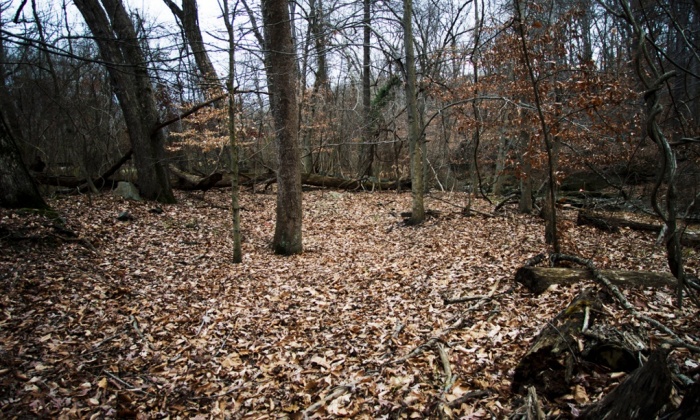
Leakin Park where, on February 9, a man known as “Mr S” came across Hae’s body, 127 feet back from the road, buried in a shallow grave behind a log.

Episode 1

On January 13, 1999, a girl named Hae Min Lee, a senior at Woodlawn High School in Baltimore County, Maryland, disappeared. A month later, her body turned up in a city park. She’d been strangled. Her 17-year-old ex-boyfriend, Adnan Syed, was arrested for the crime, and within a year, he was convicted and sentenced to spend the rest of his life in prison. The case against him was largely based on the story of one witness, Adnan’s friend Jay, who testified that he helped Adnan bury Hae’s body. But Adnan has always maintained he had nothing to do with Hae’s death. Some people believe he’s telling the truth. Many others don’t.

Koenig, who hosts Serial, first learned about this case more than a year ago. In the months since, she’s been sorting through box after box (after box) of legal documents and investigators’ notes, listening to trial testimony and police interrogations, and talking to everyone she can find who remembers what happened between Adnan Syed and Hae Min Lee fifteen years ago. What she realized is that the trial covered up a far more complicated story, which neither the jury nor the public got to hear. The high school scene, the shifting statements to police, the prejudices, the sketchy alibis, the scant forensic evidence – all of it leads back to the most basic questions: How can you know a person’s character? How can you tell what they’re capable of? In Season One of Serial, she looks for answers.

On October 3, 2014, a podcast unraveling the tale of the teenage girl’s murder in Baltimore aired. Barely a month into its release, the podcast broke download records and changed how audio journalism was perceived all over the world.

Podcasts are becoming the latest non-linear way of delivering the news, and some are applying the narrative format to explore—and expose—stories that have never been touched on before. The Alibi reached thousands over-night as Koenig took listeners through the scenes of what happened to Hae Min Lee and details of where her ex-boyfriend Adnan Syed was – on that fateful day.

I personally feel that this (podcast of a crime or any story) could be an interesting exercise for writers to learn how to describe scenes and structure different chapters in word imagery for their readers. It teaches you ways to keep your reader hooked in each chapter until the end.  Where you pause to ask questions in your story as Koenig did in Serial,  your readers will be asking these questions too as you take them with you through your plot.

I really enjoyed listening to The Alibi.

To listen to the story in all 12 episodes, click here.
 

Australian Aid Cuts Will Affect Four Continents


60872-3x2-940x627
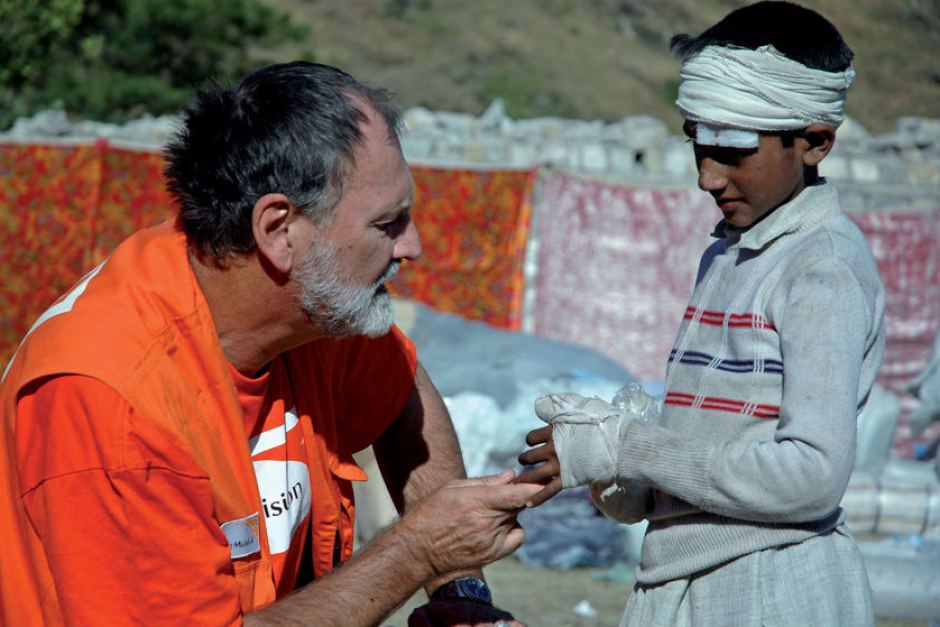
World Vision photo.

Australian aid agencies have begun the first wave of cuts to overseas projects, as they start to feel the effects of the Government’s budget decreases to foreign aid. The cuts would heavily affect poverty-stricken children and youth  across the world.

Plan Australia and World Vision have settled on more than a dozen projects, worth around $6.5 million between them, after negotiations with the Department of Foreign Affairs and Trade over the foreign aid cuts announced in last December’s Mid-Year Economic and Fiscal Outlook.

The projects being axed are only the first instalment of what will be a $1 billion slice out of the foreign aid budget, affecting four continents.

World Vision estimates up to 1.31 million people will miss out on services affected by the cuts.

Projects include:

Senegal – Child Protection and Participation Project: $459,000
South Sudan – South Sudan Education Project: $966,000
Uganda – Urban Youth Livelihoods Project: $432,000
India – Child Protection Project: $700,000
India – Delhi HIV/Aid Mitigation Project phase two: $80,000
Jerusalem/West Bank/Gaza – North Gaza Community Resilience Project: $765,000
Pacific Timor-Leste – Clean water, gender-based violence eradication, health, education: $591,000
World Vision’s total cuts are valued at $5,574,012.

Read More on ABC News

Raising Sancho


https://www.youtube.com/watch?v=oOiGr6D_u00

This is a very moving BBC Natural World documentary about a friendship between a woman and a giant otter orphan.


Scatterings of Blood River


Mondays Finish the Story by Barbara W. Beacham

2015-04-06-bw-beacham1
The Kingdom Behind the Fog – Photo by Barbara W. Beacham

Scatterings of Blood River ©JLeahy Memoirs

Once upon a time in a land far, far away, beyond the blue fog of Torrest Straits lived many tribes in Papua New Guinea. Amongst them, a fierce warrior named Katham led the Ahe people.

Seeking fertile land Katham attacked Tikeleng, Apo and Aluki tribes for the Lahe coastline. The early 1900s battle took place near a large river. Positioned in the thick tropical forest Katham and his warriors fought till his last coastal enemy fell. Katham and two ardent followers returned inland. They crossed the river, which they named Bu-dac, meaning Blood River, because it was red and filled with floating bodies. The three heard loud splashing. Katham approached the shallow bank cautiously thinking an injured enemy was still alive.

To his astonishment, he found a toddler struggling for air and Katham picked up and hugged the baby boy. The baby threw up water and cried. Without other survivors, Katham returned home, named and raised the toddler as his son.

Based on our (Ahe people’s) history as told by my grandmother, Geyamlamuo Poaluawe Baim. Budac remains a river where our people wash daily. The toddler’s three generations are still part of our family. Our village Wagang remains in the position Katham fought for.  Thank you Barbara for a perfect picture to inspire my oral history.

A Creative Genius


For Cool Stuff I want to introduce Jimmy Diresta, one of my son Christopher’s favourite contemporary artist and craftsman. Being a craftsman himself, Chris follows Jimmy’s work and admires some of the unique objects and art pieces that Jimmy has re-created from ordinary things he found in junk and re-cycled yards. One such beautiful creation is Jimmy’s collection of guitars he has crafted.

Jimmy_DiResta_guitar7
A Jimmy DiResta guitar

As Jimmy tells it, “I have been using tools and making things for over 40 years. And teaching for over 20. I started learning how to make things while working with my dad in his wood shop. He put me in the environment to keep experimenting and learning. Through out my school years every job I had pertained to making things: carpentry, sign making, florist and props. I went to School of Visual Arts in NYC to earn my BFA where I have been teaching since 94’. Over the last 20 years I have been designing and fabricating many things including guitars, toys, furniture, clothes and more.” See more on Video Wood Workers. https://www.youtube.com/watch?v=eLmKrXjTwIo#t=49

A Rope Ambush


PNG xmas holidays 2006 097
Tinang and I in 2006, Wagang Village, PNG.

My grandmother Geyamlamuo Poaluawe Baim (Geyam) was born on 4/4/1919. She died in 2008 while I was away in Vietnam on a university field trip. Like many others she raised, I called her Tinang which means mother. I miss her so much even though I know, she is always with me.

A Rope Ambush – Short Story (JLeahy Memoirs ©)

Dew glistened on blades and seed pockets as we walked through the thick wet grass. My sun-tanned legs were studded in pale green grass seeds. I wore my brown shorts and an old white T-shirt,  ripped on the shoulders with pin holes all over. It was cooler and easier to work in. I was turning eight and tall.

“Jesus loves me this I know, for the bible tells me so”, I sang quietly as grandma and I headed for our garden. Tinang sang with me and then stopped. The morning was cool and the humidity took its time to arrive. I tried pushing the grass apart with a stick before stepping into the track so I would not step on toads, snakes or get wet.  My feet were covered in mud. If we did not go to the main market in Lae town, Papua New Guinea on Saturdays, I would be out fishing or gardening with Tinang. I was glad Tinang’s elephantiasis leg did not swell up today and I knew even if her foot bothered her, she would have never mentioned it.

We had left the main road to Wagang village and were crossing the wet over-grown track to our old garden. The old and new gardens were side by side. We needed to pick up some young banana shoots, tapioca sticks and kaukau (sweet potato) leaves for the new garden. It was almost 8am. I knew the time because the ambulance had come to pick up my uncle for work at 7am and we had walked an hour from the village. We stopped to visit my aunt; otherwise it would have taken us half hour to 45 minutes. Our garden was further away than other gardens.

“Ampom Mamang!” grandma whispered suddenly.

Tinang 2006
Tinang at her home in Lae 2006.

That was a very quiet order, telling me to stop singing.

Over the birds’ songs and the wind rustling the leaves, I could hear voices and wood chopping.

“They are close” grandma said.

“Who were they?” “What were they chopping on our land?” I needed clarity but grandma’s eyes indicated – now was not the time.

We both stood still and listened. We could not see anyone yet. I knew the noisemakers were not our villagers. They spoke a different language and sometimes in conversation, they would speak pidgin. This meant, “they” were outsiders, most likely the squatter settlers. We called them Kaii. This word means foreigners. Tinang and I had no idea how many they were.

Tinang signed that we would take a short cut through the trees and hide in the bushes near our coconut trees. The trees were planted as a landmark close to the boundary of the Martin Luther Seminary. This spot had some vines and thick undergrowth. Beyond the seminary, our tribal land was occupied by hundreds of illegal squatter settlers. They came from Morobe Province and the highlands of Papua New Guinea. Many settlers had lived there for up to three generations and claimed the land as theirs. Often, there were fights between villagers and the settlers.

As grandma and I got closer, the sound of chopping became distinct. People were talking and laughing. They joked and laughed as they went about their business.

Through the thick undergrowth and heavily entwined creepers, we counted seven adult male. Three had ‘weapons’ – two knives and one axe. Grandma and I only had one bush knife. I looked at her and then I watched the others break the dry firewood and stacked them on bush vines – prepared to be tied into a bundle.

Tinang made eyes to be quiet and move quickly. She was almost sixty, but she could move quickly even with her bad leg. She cut a long creeper and removed all the leaves. It was strong and several metres long. Then grandma cut the second one and did the same thing.

Two of the men started playing and chased each other and one jumped almost into our secret hiding place under the vines. I froze. The man fell two metres away, got up and ran and playfully pushed his friend over.

His friend tripped over some Hessian bags and fell. It was the first time I noticed the old brown bags were filled with food. We called these bags “copra bags” because our people sold their copra in the bags. I counted seven bags and four bundles of bananas. They could not get anymore bananas because I knew from last week, only four were ready to harvest. They did take a lot of sweet potatoes and tapioca. They also had taros that I could see from the open bags. They men harvested our gardens for themselves and now to top it off, they helped themselves to our firewood. They must have begun this thieving trip very early this morning I thought and I felt very angry.

I looked at grandma and she was very busy tying ropes in different parts of the bush – it was like, she was setting up a rope trap. I wondered how we would catch these grown men in our rope traps. I was afraid.

I lifted my chin in a question to grandma and made eyes at the ropes. She signalled me to wait and see. Once she tied the two creepers on all the small Aducbo trees, she brought their ends to one spot and told me to stand there and get ready to pull. I grabbed the robes and took my position. She worked under the vines and tied all the trunks of small trees in a semicircle.

Tinang cut two more strong thick vines and quietly under the cover of the vines, she creeped around to the opposite of the spot where I was. She winked at me and smiled. I knew she was up to something and although I was afraid of the men, I was confident she had a good plan.

After she tied the ropes at her side, grandma returned to me and asked.

“Are you afraid?”

“No Tinang” I said and smiled at her.

She hugged me. Then she whispered in my ear that she will give me a queue when she starts yelling abuses – I must, in my loudest and scariest voice scream and be very abusive as well and pull the two ropes at the same time.

The words I was to scream out were; ”What are you doing? What are you doing on my land?” “We will kill you, we will get you! We are coming for you!”

Grandma returned to her position and she stared hard at me and nodded, I nodded back and she started pulling the trees and screaming abuses. All the trees became alive in a semi-circle. I was surprised.

Caught off guard too, the men ran in my direction and I started doing the same thing. The ropes yanked the small trees – making noise and in an ambush, leaving only two escape routes. One gap led back to the garden and one led to the opening facing the Martin Luther seminary. Fleeing back in the direction to the garden, the men realised their mistake, turned and ran to the seminary. Tinang and I kept screaming and shaking pulling the trees and bushes until we were sure the thieves were gone. Then we hugged and laughed until we cried.

We inspected and confirmed the bags of food were harvested from our gardens. The thieves also left their two bush-knives and an axe. There were some dirty ripped smelly shirts, which we threw into the trees to hang as flags to celebrate our successful ambush.

Together, grandma and I carried the bags to new hiding places. Then we took the axe and bush knives and went to get my uncles to help carry our harvest home.

Pizza Anyone? Short Story


2015-03-30-bw-beacham
Barbara W. Beacham

Mondays Finish the Story (Host: Barbara W. Beacham)

“Pizza anyone?” James grinned and set the pizza on the table.

“Rusty!” I called my Chihuahua.

Rusty chewed all of James’ shoes yesterday. Last night, James threatened to drop him off at RSPCA. I lost my appetite for 24-hours. Starving, I grabbed the pizza.

“Wait, I need to cut it” he said and produced a large kitchen knife. He sliced the pizza and I noticed an odd smell. Perhaps it was our compost that smelt. I quickly ate three slices. It was delicious, yet I could taste something else apart from the cheesy mushroom.

“You having any?” I asked reaching for the fourth slice. “I’m not hungry”. Then, I stopped. There was brown fur on the meaty medallions. I picked it with my fingernail. “What’s this?”

“It’s Rusty! He tastes good huh?” James said. I dropped the slice and ran with my hands on my mouth. (150 words)

Big Beautiful Books by Wendy Wahl


ArtPrize
Branches Unbound, Wendy Wahl’s work at the Grand Rapids Art Museum, Photo by: Jim West

It’s not news that the world of printed text on paper is challenged in the 21st century by digital media and the reorganization of how information is created, distributed and accessed. Knowledge saving and sharing continues to be reinvented – 5000 years ago the Incans used a device called a quipu made of string and knots for communication, 3000 years ago the Sumerians had libraries containing clay tablets while the Egyptians used papyrus and parchment scrolls.

photo-5.ww_
Kansas City Public Library, Missouri. photo by Mike Sinclair

During the Han Dynasty the Chinese invented paper to write on and in the 15th century Europeans began printing with movable type to create a codex. In the 1970s computers were incorporated into the printing process.Social and environmental conditions along with technological developments influence the structure of books that are produced. These objects evolve to fit the needs of the cultures that use them. Today there are e-readers with names like kindle, nook and ibook. For nearly a decade my response to the current transformation has been to use discarded encyclopedias as a material to create art works and large scaled installations as an expression of the significance and potency of the printed word on paper. Read More

Life Has Left Me


Life Has Left Me  © JKLeahy 2015

In The Fog
Paddling In The Fog by Tim Curtis


A proud, strong and phenomenal woman

The time awaits me for what I am to become

Across the dark lake the fog has hung

To shield my journey I obeyed to take

Like many a journeys I have taken

I push the boat into the lake

Paddle cuts thick in life’s oblique

Each stride reaching for the end

I break the fog as it consumes me

Heart not willing to let go, I know I must

Upon reaching the other side, body shivers in cold

Darkness encloses, waters still

Life pushes back against the will

The shadow arrives and becomes me

My life has come to decease for now

In a fleeting glance I see my daughters and son

The grand children and friends

My heart swells in love and happiness

What a legacy I have constructed

Living on, the beauty of life and its greatness

Unto him I will see – the final release lifts me

I drift to the heavens, where my final resting place


Written in loving memory of Mum Kathy by Joycelin K Leahy. (copyright)

Sunday March 29th 2015.

For a woman who was beautiful in and out. My friend Belinda’s mother Kathy Moeder who died peacefully after illness. We buried her today in Brisbane after a wonderful funeral where there was sadness and pain, but many stories of Kathy’s life with happiness, humour and celebration. Kathy Moeder believed in love, family, rights and safety of others. She was a Peace and Women’s advocate and a dedicated Christian. She was truly loved.