Tag Archives: Poetry

Moon Games – Poetry


DSC_0261
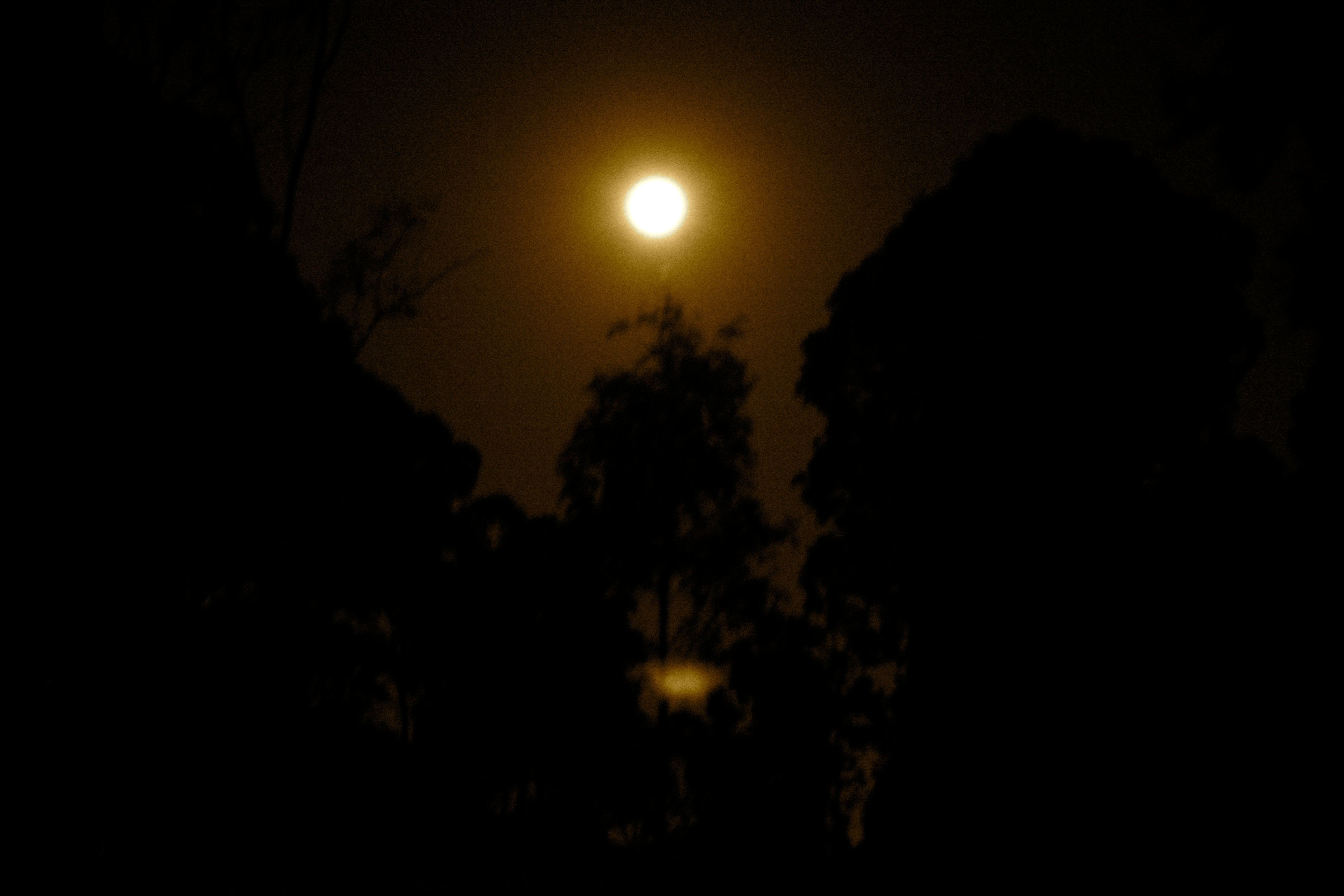
Moon in Bellbowrie. JK.Leahy picture©

Moon Games – JK.Leahy© Poetry

She waits for the day’s end

To let her luminous games begin

When yoke slips beyond horizon,

where naked eyes sees reflection,

she watches the day’s lingering torment

In his reluctance to let go of moment

The day throws hues of fire and gold,

across the massive body of water

And tiny fallen stars appear

where sand banks glisten sapphire

Dusk performs and summons night

to what we call evening.

She smiles, time is right

As shadows define, reaching tall,

the moon reveals herself, but only,

to be captured by wandering clouds


Surrounding Beauty – Poem


comet-panstarrs-and-crescent-moon-charles-hite
Crescent Moon by Charles Hite – Free Stock Photography, Public Domain

Surrounding Beauty – JK. Leahy Poem

Life is surrounding beauty

Where crescent moon casts enough light

Your footsteps drum their own music

While walking gives life to your heart

Dead leaves dance in the breeze

Snail trail glistening in light’s reflections

Shadows creating their own art

An owl hoots and swoops low; you hear

A bat screeches that night is near

Before darkness swallows and hides you

Until new day seeks and finds you


Birds Talking – Poetry – Drawing


DSC_0135
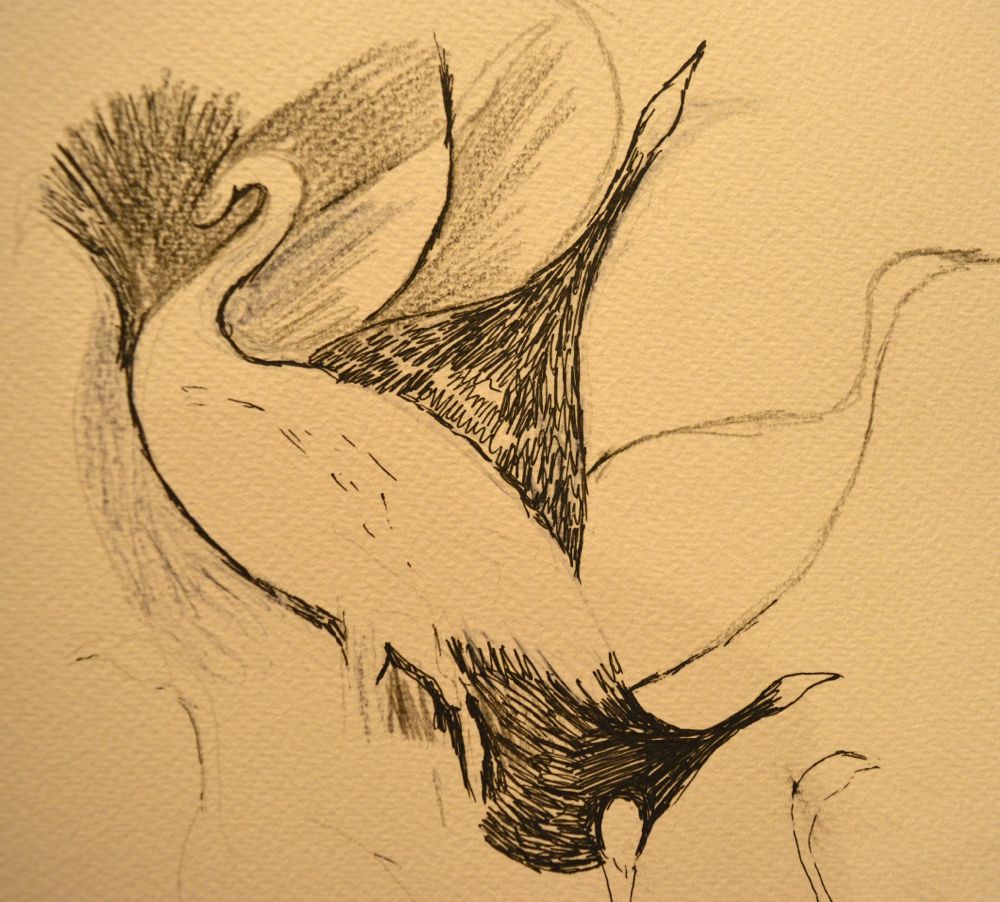
JK.Leahy © – Sketch in pencil and ink on paper. 2015.


Birds Talking – Poem JK.Leahy©

Birds Talking

Silent words, only seen

Scratching, screeching and bursting to surface

Extending wings, feathers, beaks and necks

Swooping, flying, walking and talking

Birth by imagination

Birds taking forms

Living on paper


AUTUMN LEAVES Recited by Peter O’Shaughnessy


I recently found this website poetryreincarnations and the links to videos of the poetry. The videos are beautiful and the animation are quite strange and amusing at the same time. I hope you can visit and enjoy.

Jim Clark, the creator of poetry reincarnations writes, here is a virtual movie of the great Charles Dickens reading his beautiful melancholic poem “Autumn Leaves” This poem likens the aging process with the season of Autumn was published under the title “George Edmund’s Song” around 1858. The poem is read superbly by the celebrated veteran Australian actor director Peter O’Shaughnessy. Peter has a brilliant website full of biographical and theatrical content and numerous recitals of poetry and plays spoken by him.

All rights are reserved on this video recording copyright Jim Clark 2011

autumn-leaves-backgrounds-wallpapers
George Edmunds’ Song…………
Autumn leaves, autumn leaves, lie strewn around he here;
Autumn leaves, autumn leaves, how sad, how cold, how drear!
How like the hopes of childhood’s day,
Thick clust’ring on the bough!
How like those hopes in their decay-
How faded are they now!
Autumn leaves, autumn leaves, lie strewn around me here;
Autumn leaves, autumn leaves, how sad, how cold, how drear!
Wither’d leaves, wither’d leaves, that fly before the gale:
Withered leaves, withered leaves, ye tell a mournful tale,
Of love once true, and friends once kind,
And happy moments fled:
Dispersed by every breath of wind,
Forgotten, changed, or dead!
Autumn leaves, autumn leaves, lie strewn around me here!
Autumn leaves, autumn leaves, how sad, how cold, how drear!

Here is another video. If you like it, visit here to see more.

A Smile For Labour – Poem


A smile for the labour ©JK.Leahy

20150719_141147
Geraniums flower beautifully, keep a lush appearance in some of the hottest, driest conditions, yet here she is blooming in the middle of Australian winter. JKLeahy pic.

A smile for labour

Her hands once tender

Cultivated hardened soil

Hardening her soft hands

In labour she offered you

Tired, dried, and withered

Kept in safe, warmth and fed

In her heart’s tender glow

She watched you grow

Watching growth take you

Blossomed and robust you

Moist, fed and comforted you

Then a gift arrived, packaged

In reward, for a hand tendered

You surprised her

Your first smile, a glorious bloom

For the hardened hand

Her heart lifted

And smiled

PNG Literary Competition Achieves Record Entries.


The Papua New Guinea Literary Competition The Crocodile Prize received the highest number of entries ever, this year.  On closing last night the Crocodile Prize fetched a total 826 entries from 132 writers & illustrators.

Poetry 355; Essay 196; Story 129; Children 52; Heritage 48; Illustration 21; Tourism Arts Culture 15; Book of the Year 10.

These numbers may not sound very much for writers in other countries, but for any Papua New Guinean writer, it is a very heart-warming news, especially coming from a literary culture that almost became extinct. In the early 70s, leading up to the country’s independence, passion for art, culture and heritage including the literary pursuits and publishing of works written by PNG writers were at their peak. It is not quite clear why the interests have fallen so much after independence. That culture may have been used because we were proud of our identity and we wanted independence so much or perhaps the general growth of consumerism and the wider issues of social, economic and political changes have contributed to this new – lack of passion of culture. I remember growing up with radio stories written by PNG writers, attending and being part of stage plays – written by PNG writers. Poetry, stories, essays as well as other forms of literary work were promoted and supported by the national government.

The lack of passion in the arts and the literary support to me is quite surprising and sad; our culture is based on oral history and story-telling.

As a PNG writer, a practicing artist and an arts curator, it seems very clear to me, that the PNG government’s priority is elsewhere and not the least in the arts. But to not even support the literary aspect and especially in developing educational content that is relevant to our children and educational for our people is wrong. We cannot just tell stories and pass them on – now we can write them down and keep for many years.

It is not how much minerals we export and logs we sell, but the natural beauty, our rich art, culture, languages and stories that set PNG apart, and gives us our unique identity.  The literary scene dwindled to almost non-existent, although that could have been easily combined with and taught through the education system. There are not many avenues and support nor funding where PNG writers could train or share their work, and even to sell. Most workshops, training and activities relating to creative writing or any literary work have been Aid funded or Privately sponsored in the past four decades. Now this is how things have started to change for the PNG literary scene.

THE CROCODILE PRIZE STORY
The Crocodile Prize was established in 2010 by Phil Fitzpatrick and Keith Jackson, (both Australians) worked for many years in Papua New Guinea; Fitzpatrick as a patrol officer, Jackson as a broadcaster and journalist.

The Prize evolved from the popular PNG Attitude blog, which has a policy of encouraging and publishing Papua New Guinean contributors.

The concept of a national literary competition was triggered by Fitzpatrick’s concern that creative writing in Papua New Guinea had fallen upon hard times, and that this was a cultural constraint needing to be addressed.

The first awards were presented in 2011, a year of determining whether or not a project of this kind could be managed successfully given geographical, financial and the constraints of a voluntary organisation.

Using PNG Attitude as a vehicle for publicity and initial publication, Fitzpatrick and Jackson soon discovered an enthusiastic and rapidly emerging body of Papua New Guinean writers.

They were assisted greatly in the early stages by material and financial support provided by the Australian High Commission in Port Moresby and later by a range of sponsors, most of them PNG-based.

This backing made it possible for a range of associated activities to be instituted in addition to the Prize, including an awards ceremony, the publication of an annual anthology and the initiation of writers’ forums.

After the first awards in September 2011, it was agreed the Prize should become a permanent part of the literary landscape of PNG. Now under the management of the Crocodile Prize Organisation, COG, 2015 will mark its fifth year of operations.

PHIL FITZPATRICK on 2015 Competition

Thus ends another year of the Crocodile Prize literary contest.

IT’S not every day that you get to influence the revival of literature in a whole country, unintentionally or otherwise.

I must admit to some surprise that it has happened at all. What started as a humble writing competition seems to have bloomed beyond all expectations.

There is a sense of pride in what has happened but, strangely, it’s not personal. Rather it is a sense of pride in the achievements of the writers involved.

At a personal level it has been more of a humbling experience. There is also a sense of awe and enrichment.

The enrichment comes from reading the works submitted to the competition and the sheer learning experience involved.

I think, despite nearly fifty years travelling back and forth to the country, I’ve really only learned to understand Papua New Guinea in the last few years of the Crocodile Prize.

There is also a tinge of anger involved, mostly through the fact that an uninterested government and lackadaisical education system could let such a promising and rich cultural emergence in the 1970s wilt on the vine and become moribund.

That aside, one of the ironies I really enjoy is the fact that the revival has only now been possible because of the advent of digital technologies that were supposed to see the demise and eventual extinction of books. Such are the shaky prognostications of the doomsayers.

The key factors in the Papua New Guinean revival have been the Internet and the availability of digital publishing and print-on-demand technologies.

These have underpinned the Crocodile Prize, firstly by providing a writers’ outlet in the form of PNG Attitude and secondly in offering a cheap way to publish the best in an annual anthology and then to go even further in publishing stand-alone individual books by Papua New Guineans.

The future of literature in Papua New Guinea is starting to look rosy but we need to remind ourselves that it is still extremely fragile.

The disastrous complacency of the 2013 competition organisers reminds us of what could still happen.

2014-15 has been a watershed year and there’s light at the end of the tunnel but sustainability is still a long way off and we aren’t there yet by any stretch of the imagination.

The winners of this year’s Crocodile Prize will be announced early September. The awards event will be held in Kundiawa on Saturday 19 September

Keith Jackson & Friends: PNG Attitude

Sea Creatures


PaperArtist_2015-05-02_19-34-11
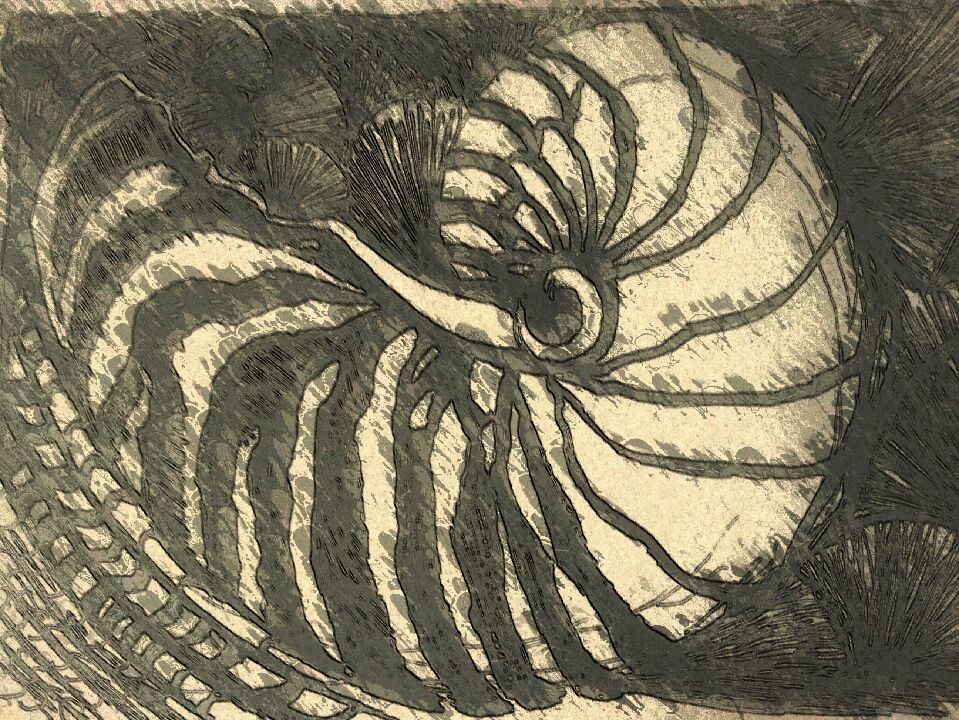
Sea Creatures – JLeahy Pen Drawing

SEA CREATURES © JLeahy

Sleepless

Sea creatures

Stalking

Ocean shelves

Sustenance

Awaits capture

Abundance

Nature offers

Life Has Left Me


Life Has Left Me  © JKLeahy 2015

In The Fog
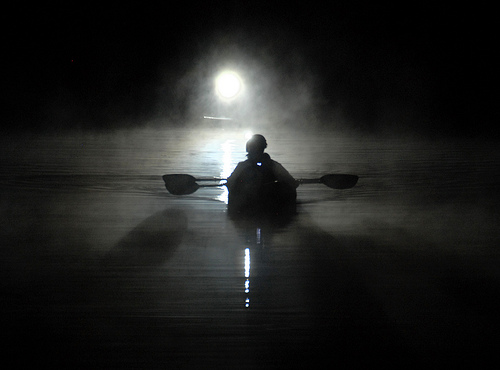
Paddling In The Fog by Tim Curtis


A proud, strong and phenomenal woman

The time awaits me for what I am to become

Across the dark lake the fog has hung

To shield my journey I obeyed to take

Like many a journeys I have taken

I push the boat into the lake

Paddle cuts thick in life’s oblique

Each stride reaching for the end

I break the fog as it consumes me

Heart not willing to let go, I know I must

Upon reaching the other side, body shivers in cold

Darkness encloses, waters still

Life pushes back against the will

The shadow arrives and becomes me

My life has come to decease for now

In a fleeting glance I see my daughters and son

The grand children and friends

My heart swells in love and happiness

What a legacy I have constructed

Living on, the beauty of life and its greatness

Unto him I will see – the final release lifts me

I drift to the heavens, where my final resting place


Written in loving memory of Mum Kathy by Joycelin K Leahy. (copyright)

Sunday March 29th 2015.

For a woman who was beautiful in and out. My friend Belinda’s mother Kathy Moeder who died peacefully after illness. We buried her today in Brisbane after a wonderful funeral where there was sadness and pain, but many stories of Kathy’s life with happiness, humour and celebration. Kathy Moeder believed in love, family, rights and safety of others. She was a Peace and Women’s advocate and a dedicated Christian. She was truly loved.


New Love


I turned 50 a few days ago and I got asked how I felt and what were my plans etc. I have had a good life so far. To be honest, I felt nothing different physically nor mentally. My present goal is to publish my memoir and a book of short stories. I also want my boys to complete university and do what they love.

20150319_205431
At half my age I had travelled and seen over 50 countries. Here in Geneva, in 1989, I was eating strawberries and ice-cream. If you had asked me then, how my life would be in the next half – I would have had no idea. Life is full of surprises. I love it.

When I look back at it, I have led a life that has not been ordinary and I am so grateful for many things. One thing worth mentioning is that I do know now as I have grown older, life is not complete without  love. Every human craves love and nothing can replace love. I treasure the love in bonds I have with my sons and my family and friends. My belief in love came from those who loved me and the ones who continue to love me. Every human deserves to be loved.

I am a ‘closet poet’ that writes love poems sometimes.  I was asked recently if I could write poetry (and I guess I can) and if I had any. I have never been taught, but I love to read poems and I have written a few as gifts over the past decades for friends and family. I believe poetry is one great way to express love.  Lucky for those men I have loved and written free poems for, I hope they still appreciate the verses, even if they don’t want to remember…

Here is one such collection of lines which you may call poetry if you wish to. I am happy for my blogger friends and the real poets out there to critique me. 

(JLeahy copyright)

New Love      

A mess of feelings

Soft strings twisted and tangled

Intoxication

A lore to be unfold soon

Waiting, yearning the unknown

Once for-warned heart dazed

Consumed in immense chaos

Riddled with beauty

Warmed and rendered with lightness


The Song in Gwen’s Sonnet


I was recently asked by my younger son Chris to read with him some Australian poetry. Chris wrote a critique for two of the poems for his Year 12 English studies. Chris and I found Critically Acclaimed Gwen Harwood’s words and her life fascinating so I wanted to share her story.  Gwen Harwood also grew up in our neighbourhood in Brisbane’s western suburbs. Below is part of Chris’s critique.

1367157941403
Sydney Morning Herald image: Gwen Harwood

Gwen Harwood was born in 1942 and grew up in Taringa, in Western Suburbs Brisbane. She went to Brisbane Girls Grammar School and All Saint High. Harwood had studied music and completed a Diploma to teach music but found herself in a typist job at the War Damage Commission. Although early in her life she had developed an interest in literature, philosophy and music, she was limited to what the society enabled her to do in her career. She would later be described in our time as brilliant but was understated.

Harwood’s father taught her music and her grandmother introduced her to poetry. For years, Harwood could not publish her work under her own name because she was a woman. The society, male editors mostly, thought a woman should not be a writer or get published. As a woman poet in a largely male dominated place, Harwood used Pseudonyms to be allowed or belong to the publishing world. A local Brisbane publisher, Minjiin first published her poem in 1944. From 1960s, Harwood started to publish more of her writings in journals and books. Her discreet life in the literary world reflected the place expected of a woman during that time (from 1940s). Poems such as the Suburban Sonnet reflected Harwood’s strong views about how the society’s view of women was.
Generally in a sonnet, the poem is about a beautiful woman in love. In this case, Harwood depicts a woman in a chaotic household in contrast to the traditional rule of a sonnet.
Drawing from her own experiences, she wrote poems that question the status of women and the right to be whatever a woman aspired to be. She portrayed the suburbia woman to boring and ordinary. In the Suburban Sonnet, Harwood showed the restricted society she and other women belonged to by challenging the norm of the social and cultural ideologies on suburban women, especially mothers.
The dead mouse could be interpreted as her dream of teaching music being dead. In her society, a woman’s artistic ambitions may as well be dead, because her society expected her to do things in certain ways. “The Stale bread” could refer to a woman’s domestic life, which she saw as boring. Harwood was accepted as belonging to the male dominated publishing world only after she made a startling publication. 1961, The Bulletin accepted a sonnet from Walter Lehmann, and after it was published it was brought to the editor Donald Horne that the initial of each line formed the phrase “Fuck All Editors”.

The Suburban Sonnet : Boxing Day (Gwen Harwood)

She practices fugue, though it can matter

to no one now if she plays well or not.

Beside her on the floor two children chatter,

then scream and fight. She hushes them. A pot

boils over. As she rushes to the stove

too late, a wave of nausea overpowers subject and counter subject

drain out with soapy water as she scours

the crusted milk. Her veins ache.

Once she played for Rubinstein, who yawned. The children caper round a sprung mousetrap where a mouse lies dead.

When the soft corpse won’t move they seem afraid.

She comforts them; and wraps it in a paper

featuring: Tasty dishes from stale bread.