Tag Archives: Cool stuff

A Tribute to Paper – Cool Stuff


4

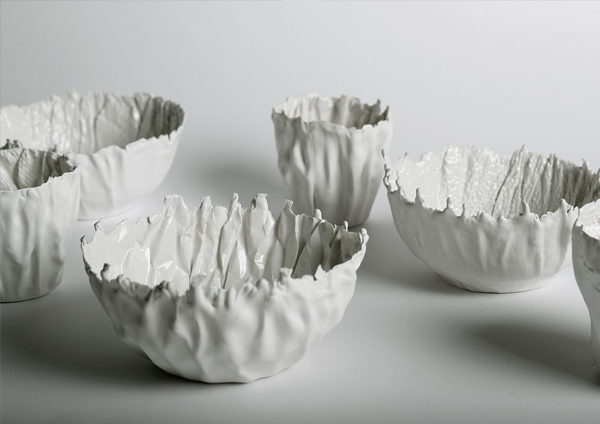
Artist and industrial designer Lilian van Daal makes exquisite things from various materials. Her collection made cool stuff this time. Here, she pays tribute to paper by showing it in ‘delicate textures’ to remind us of how we give little value to paper when we use it, perhaps sometimes irrationally in our every day lives.

3

Lilian says: ‘Delicate Textures’  she hopes, would make us think about the everyday use of products and materials. In this collection paper is immortalized in an exclusive porcelain object. It is a tribute to paper and its origin. It makes us aware of the self-evident use of paper, since it appears and disappears again and again in our daily lives.

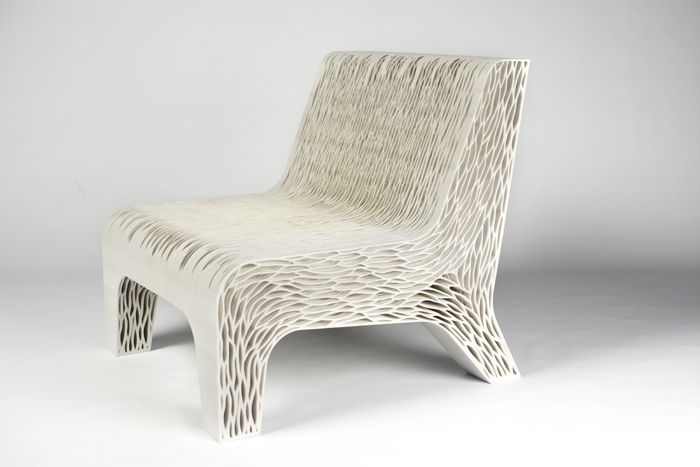
Here are some of Lillian’s other fascinating creations. A 3D printed soft seat.

bio04

Lilian van Daal (1988), graduated from Industrial Product Design HAN – Arnhem in 2010 and in January 2014 she graduated from the Postgraduate Course Industrial Design at the Royal College of Art – The Hague.

Besides her own work, she has worked for Studio Drift, Feiz Design and Bleijh Concept & Design. She started in 2010 with working as junior designer at StudioMOM, where she still works.
bio01


Made of the Printed Words – Cool Stuff


home-4.jpg2

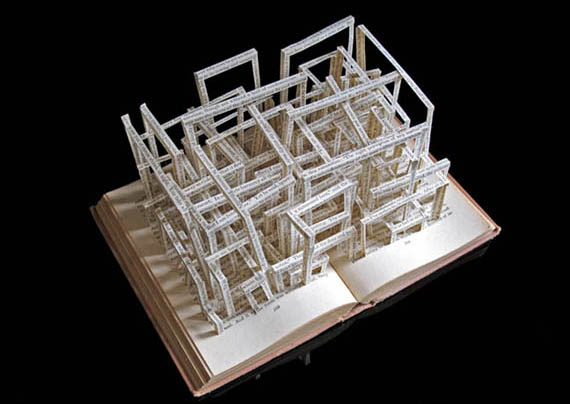
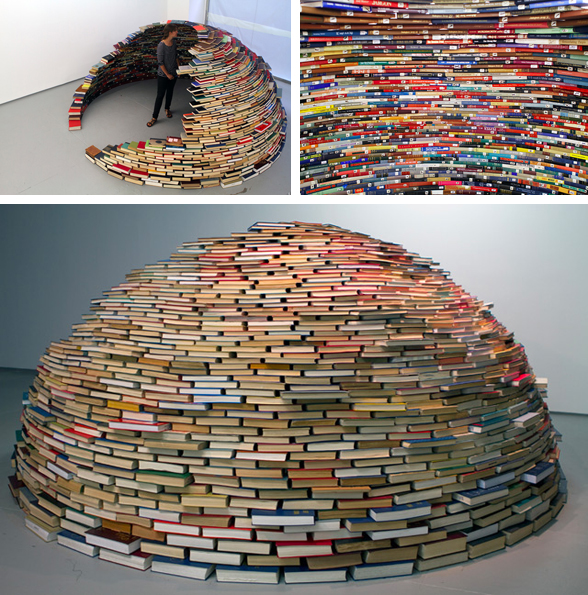
A book igloo  by Colombian artist Miler Lago was constructed cleverly with their titles/spines face inside. The entire art is created by material of the printed words.

14095591647041-book-igloo-miler-lagos-4

Miler was born in 1973 and lives and works in Bogota, Colombia. He is known for his other famous work, Fragments of Time – an attempt on the artist’s part to slow things down, but the form of the work itself goes further still: these are branch-like forms composed entirely of sheets of newspaper and books, densely stacked together and sanded at the edges, which generates both a mottled, trunk-like surface and a wood effect colour, (see pictures below).

MilerLagos_ex


The Serpentine Pavilion – Cool Stuff


Serpentine-Pavilion2-PA-Philip-Toscano
The Serpentine 2015: Public Domain images

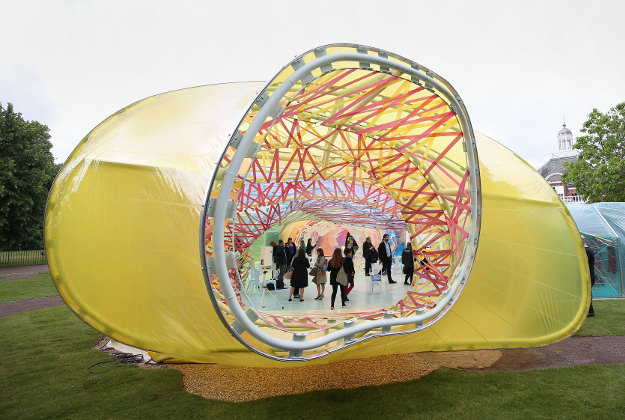
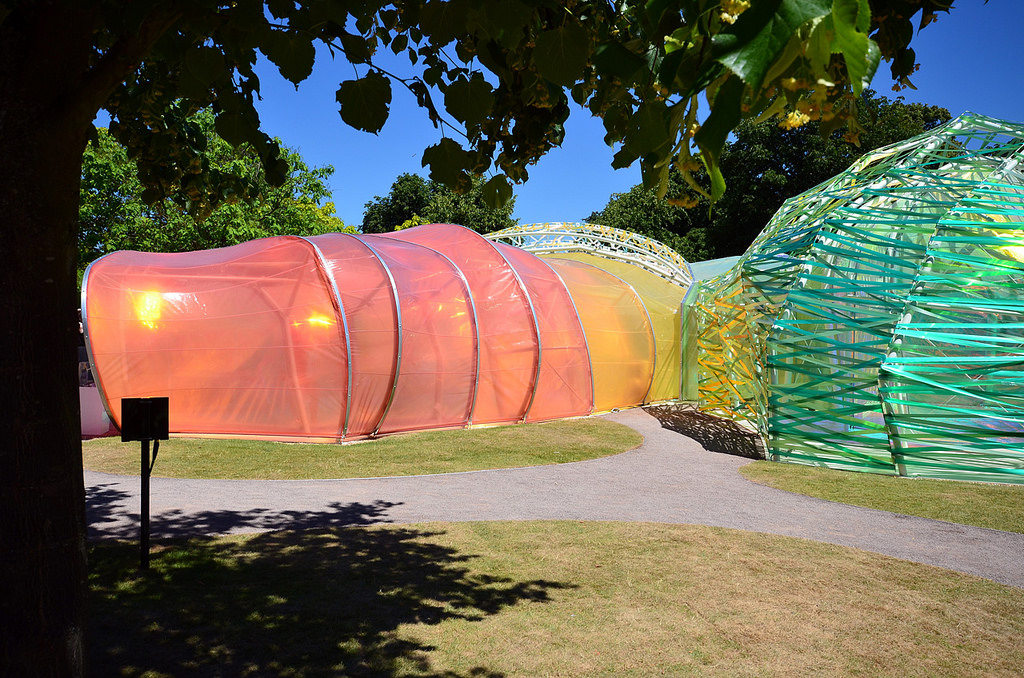
The Serpentine Pavilion made my Cool Stuff list. What does the serpentine pavilion look like? Below is the 2014 The Serpentine Pavilion. But, check out this year’s pavilion (above) which looks just like a rainbow caterpillar. Spanish creators José Selgas and Lucía Cano explained that this year’s serpentine pavilion was an experiment that plays with coloured,  translucent and mirrored plastic sheets.

“We want to test different materials and in this case it is EFTE (plastic)” Selgas said. The architects  want visitors to use it, walk through, sit in it and interpret the serpent – freely.

14325677738_2fcb9f4e17_b
The Serpentine 2014. Public Domain images

The Guardian called the 2015 serpentine pavilion London’s psychedelic maze that drew colours from summer and rainbow.

Serpentine-Gallery-Pavilion-2015-SelgasCano-photo-by-Jim-Stephenson_dezeen_05
Inside The Serpentine 2015. Public Domain image

Selgas Cano are never shy about experimenting with wild colours, and their summer structure for the Serpentine Pavilion is no exception. This strange rainbow cocoon looks like a childish scribble that has been enlarged, changes colour as you wander through it – and is a perfect party pavilion for the annual Serpentine commission’s 15th birthday.

18682721264_8aa32f6d5f_b
The Serpentine 2015 Picture by George Rex.

Those interested and if you are in London – you can step into London’s psychedelic new maze now. If you are not able to see it, click on the link below to watch the video.

The Guardian

IkeaDecoration

The Beauty of Science and Art – Cool Stuff


Below is a self-explanatory video, my son Chris introduced me to. The Slow Mo Guys two often make some very interesting short films. I hope you enjoy the beauty of a few seconds of science and art in the clip called Droplet Collisions at 5000 fps.

Living in the Trees – The Korowai People


A life of contentment in the rainforest. The Korowai People of West Papua in Melanesia.

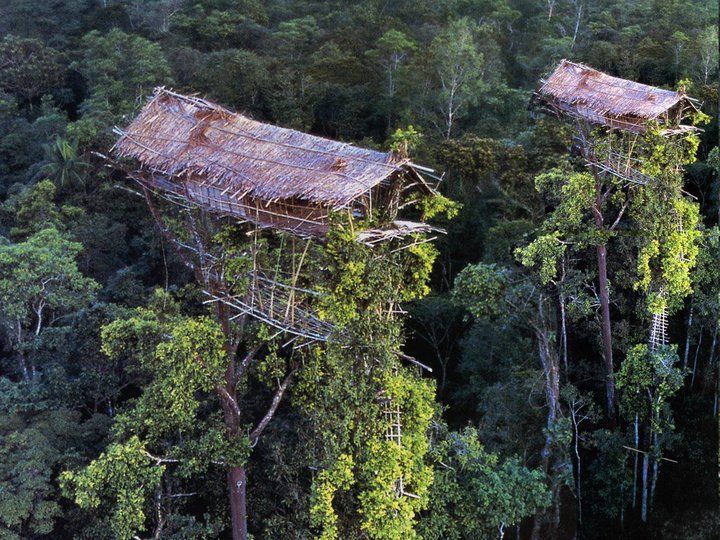
Irian Jaya's Kombai and Korowai people live in houses built in the treetops.
Irian Jaya’s Kombai and Korowai people live in houses built in the treetops.

Living in the trees is natural for the Korowai and Kombai people in  the southern eastern Papua. These tribal Melanesians are one of the last people on the planet who survive purely on their natural environment. The Korowai’s are also referred to as the Kolufo and have become known to the world through pictures and documentaries as one of the most amazing architects of tree houses.

The tree house builders survive in the basin of the Brazzan River in large areas of deep rainforest and swampy lowland. They are hunter-gatherers and horticulturists who practice shift-cultivation and have a very rich and an extraordinary oral tradition. They live together in small communities.

44f8056a45b290241653afa3fa02c1ef
Image: BBC Documentary

The higher they built a house, the more prestigious it is. The reason behind this amazing architecture which often reaches up to 100 feet or more off the ground is to avoid floods, insects and diseases. It was also a way to spot tribal enemies as the Korowai themselves had practiced cannibalism in the past.

Sowayen climbing down a “yambim” or ironwood tree after knocking loose a nest of black ants that he uses for fish bait. The Korowai are superb climbers, and get up thick trees like this by gripping vines with their hands and splayed toes. It took him about a minute to get up this tree, and it took Neeld Messler, a rope expert, over an hour to rig this tree with ropes so the photographer could climb it safely. In the lower left corner Sayah is watching. One of their fishing methods is to put a piece of an ant nest in the water and wait for the fish to come and eat the drowning ants. The fisherman hides behind foliage on the river bank, and shoots the fish with a four-pointed arrow. This picture was taken as part of an expedition for GEO Magazine and National Geographic Magazine to document the way of life of the Korowai tribe. Most of the Korowai in these photos had never had prior contact with anyone outside of their language group, and have no material goods from the outside world. They live in tree houses built above the forest floor to protect themselves from outsiders. The Korowai believe that contact with outsiders will bring an end to their culture. Cannibalism has been part of their traditional system of criminal justice to avenge the death of their clansmen, but the practice is dying out and is outlawed by the Indonesian government. The Korowai believe that most natural deaths are caused by sorcery, and must be avenged by the death (and consumption) of the person responsible.
Sowayen climbing down a “yambim” or ironwood tree after knocking loose a nest of black ants that he uses for fish bait. The Korowai are superb climbers, and get up thick trees like this by gripping vines with their hands and splayed toes. This picture was taken as part of an expedition for GEO Magazine and National Geographic Magazine to document the way of life of the Korowai tribe.

The Korowai people build their houses high above the forest floor, and deep in the swampy lowland jungles of Papua.

In the BBC documentary below, you can watch from start to finish, how a Korowai tree house is built.

Johnny Colours Miami Streets – Cool Stuff


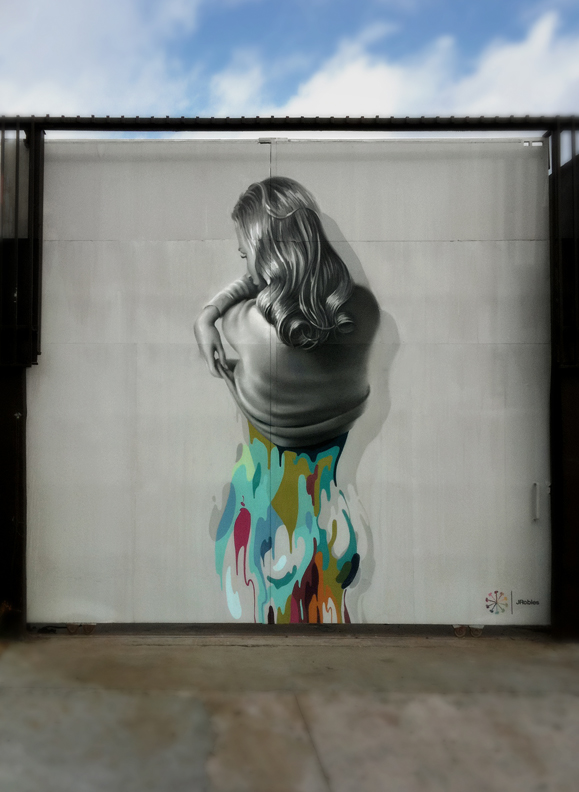
streetartrobles03    streetartrobles02

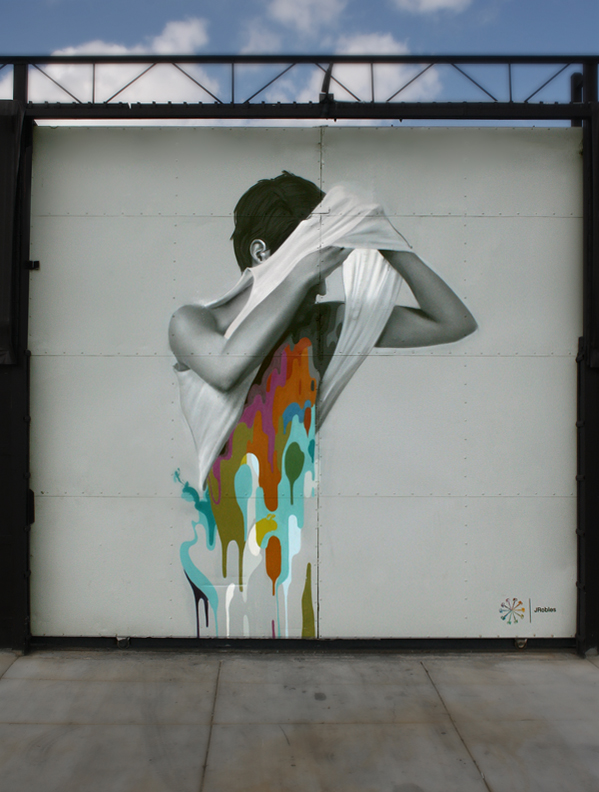
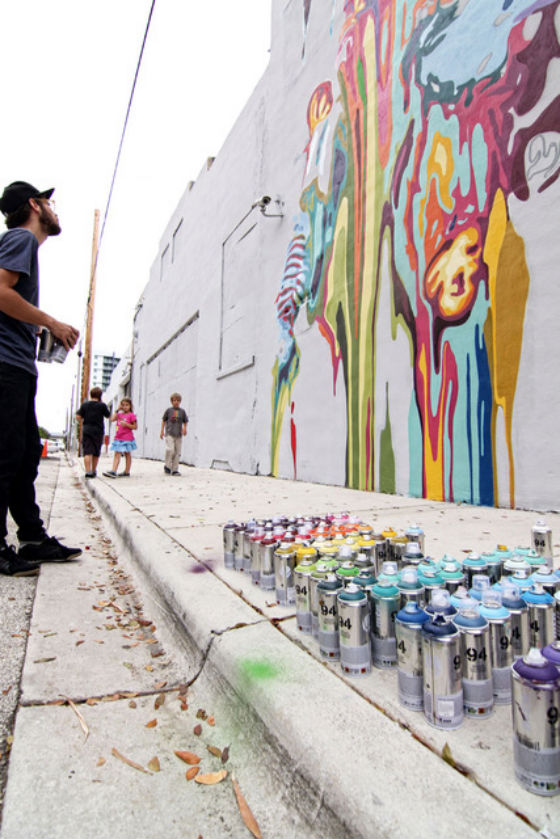
Johnny Robles an artist, creates cool street art in the streets of Miami. With a mixture of cartoon and pop style drawings and graffiti techniques, he gives color to the streets. Residents say they love it..and so do I.

Featured here at work where some of his cool stuff happens.

streetartrobles04     streetartrobles05

Read more: 

Cool Stuff: Living Grass Art


23_mathilde_roussel_240879_01
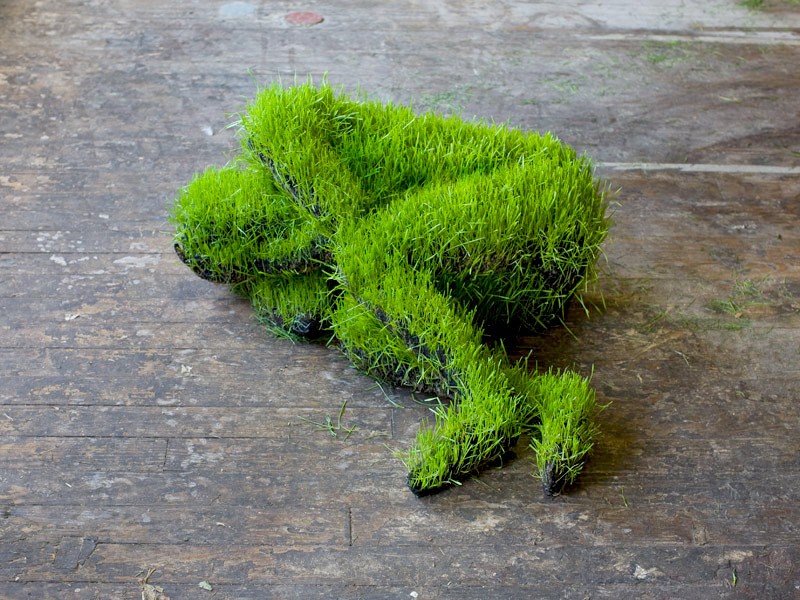
25.08.79 #2, 2010, soil, wheat seeds, recycled metal, fabric, 110 x 90 x 40 cm. Exhibited at The Invisible Dog Art Center, NY.

Mathilde Roussel is a French artist. Based in Paris, Roussel works in various materials for her sculptures but one of her most remembered work is the Living Grass. This collection shows the transformation of soil wheat and seeds, fabric and recycled material to show the effects of transformation of material as a metaphor of the human body. After installation, the figures transform over the period of exhibition showing. Time sculpts the forms, makes them change and then decay.

For more of the grass sculptures. The artist’s statement can be read here

23_mathilde_roussel_240879_03
25.08.79 #1 and #2, 2010, soil, wheat seeds, recycled metal, fabric, 170 x 150 x 60 cm and 110 x 90 x 40 cm. Exhibited at The Invisible Dog Art Center, NY.

25

Mathilde Roussel

A Creative Genius


For Cool Stuff I want to introduce Jimmy Diresta, one of my son Christopher’s favourite contemporary artist and craftsman. Being a craftsman himself, Chris follows Jimmy’s work and admires some of the unique objects and art pieces that Jimmy has re-created from ordinary things he found in junk and re-cycled yards. One such beautiful creation is Jimmy’s collection of guitars he has crafted.

Jimmy_DiResta_guitar7
A Jimmy DiResta guitar

As Jimmy tells it, “I have been using tools and making things for over 40 years. And teaching for over 20. I started learning how to make things while working with my dad in his wood shop. He put me in the environment to keep experimenting and learning. Through out my school years every job I had pertained to making things: carpentry, sign making, florist and props. I went to School of Visual Arts in NYC to earn my BFA where I have been teaching since 94’. Over the last 20 years I have been designing and fabricating many things including guitars, toys, furniture, clothes and more.” See more on Video Wood Workers. https://www.youtube.com/watch?v=eLmKrXjTwIo#t=49

Marrying Words With Images in Stephen Doyle’s Style


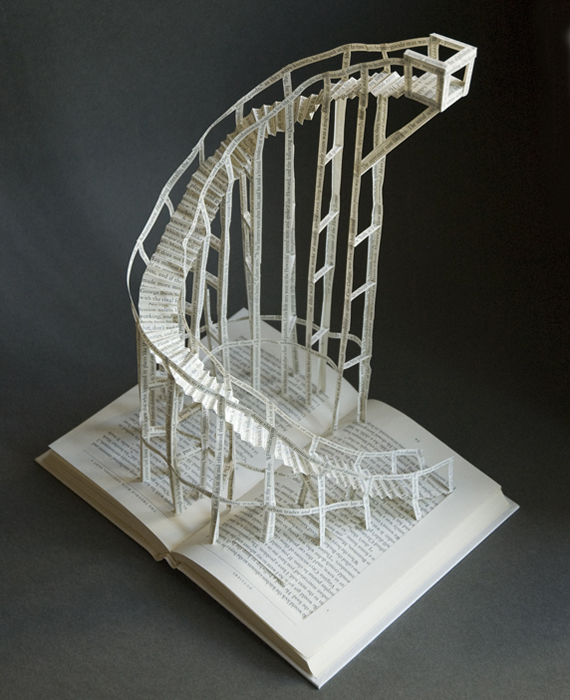
“I make these things as an escape from the world of problem-solving.” Stephen Doyle said. His paper sculptures are exquisite.

I make things from paper myself and I am obsessed with paper. I was fascinated when recently I found this article about Stephen Doyle’s work. I wanted to share it in Cool Stuff.

TheTrial
The Trial

Stephen Doyle’s vision unites words and images in unforgettable ways. The design firm of which he is a principal, Doyle Partners in New York, creates acclaimed identities and all means of conveying them (and he always gets the colors right). He’s also recognized for his visual contributions to the Op-Ed page of The New York Times. Here he talks about another artistic pursuit: creating astonishing paper sculptures. Read More on Impressions from the paper-obsessed

The_Trouble_With_Geniuses
The Trouble With Geniuses

Doyle Partners

Cool Stuff – Glow in the Dark


glowing-resin-table-mike-warren-8
“I thought of this project after browsing the aisles at a lumber store and seeing Pecky Cypress,” Mike Warren told Bored Panda. “I’ve never seen anything like it and knew I wanted to make something with it”

For his year 12 school project for his Technology class, my son Chris and his friends are making a piece of furniture for the school and the school pays for the materials. Chris has suggested a large drawing and planning table for the technology room.  The classroom only has a work area so the table would be an asset to the programme. Chris’s group decided to go with a glow in the dark table which also looks just as pretty in normal lights. That was how, I learnt about the glow in the dark table. This short story shows you what they look like.

Our Cool Stuff for the week is the Glow in the Dark table by Mike Warren. You can use the same technic for chairs and other furniture but I think the resin is more effective on a larger piece.

Mike Warren is a furniture designer and enthusiast. He created this table that illuminates at night after being exposed to light during the day. The illumination comes from mixing the photoluminescent powder with the resin and using it to fill the holes that form naturally in Pecky cypress wood.

“The type of wood I used for this table is known as ‘pecky cypress’, which is regular cypress that has been naturally damaged with a fungal growth inside causing sections to rot” Warren said.

Warren removes the damaged pockets and leaves cavities in the wood  for the resin and glow powder filling. The pockets of damaged (rotten) cypress are soft and can easily be removed with compressed air and some light digging with a hand tool as shown in the video below.

https://www.youtube.com/watch?v=KeskG-bFG9o#t=19