Here is how Amy Webb worked it out.

Here is how Amy Webb worked it out.

How many times have we heard this comment and seen the quote on the web? We also hear friends or family members complain that ‘the movie was not as good as the book’? How wonderful is it to have so much more in a book?… and I am talking about a good book.
Have you ever wondered who J.W. Eagan is? He or she is supposed to be the author of the quote.
“Never judge the book by its movie” is one of the most popular book quotes on the web – but do you know its author?
She or he must be a writer. Or maybe a literary critic. A screenwriter? Hollywood-based reporter? A charismatic lecturer or passionate librarian?
The web including Google and Wikipedia, do not know this clever person. You won’t find J.W. Eagan bio on the internet.
It’s interesting that one of the most quoted persons of the Internet is so astonishingly anonymous. The quote has been shared hundreds of thousands of times each day in social media. It’s being reused on posters, t-shirts, mugs, and endless number of quote pictures.

VISUAL ART JAPANESE ART AFTER FUKUSHIMA: RETURN OF GODZILLA RMIT Gallery Until May 30
Japanese Art After Fukushima is part of an excellent festival, Art + Climate = Change, which gathers local and international artists working with environmental ideas. It has spanned numerous venues across the state and is an important initiative of Guy Abrahams from the non-profit-making Climarte.
Mondays Finish the Story by Barbara Beacham
This is a flash fiction challenge where Barbara W. Beacham offers a picture and the first sentence of the story. Based on the photograph and the first sentence, one must come up with a 100-150 word short story.

BROODING STORM © JK. Leahy
The crew of the Angel Flame received orders to head out. When Yakov and Marishka reach the secluded Russian base, most men had already boarded.
Marishka wiped her tired eyes as her husband walked to the submarine, leaving her, their newborn Polinka and their sick two-year-old, Boris. It was a dreary Friday at 5am; three lost seagulls skirted past Yakov, fleeing the brooding storm.
After Yakov’s head vanished into the submarine, Marishka left – four hours later the snowstorm hit. The radio announced that nobody was hurt. Marishka medicated and monitored Boris’s temperature.
The next day at 7am she heard a knock. It was persistent. Unwrapping herself from Polinka, she reached for her gown.
Marishka caught a glimpse of a man in uniform through the winter-frosted glass and threw open the door with a grin. Expecting to fall into Yakov’s arms, her stomach sank when instead she met the gaze of a stone-faced man carrying Yakov’s personal effects.
“Mrs Vladimir?”
“…Yes?”

I personally love the cassowary bird because of its unique beauty.
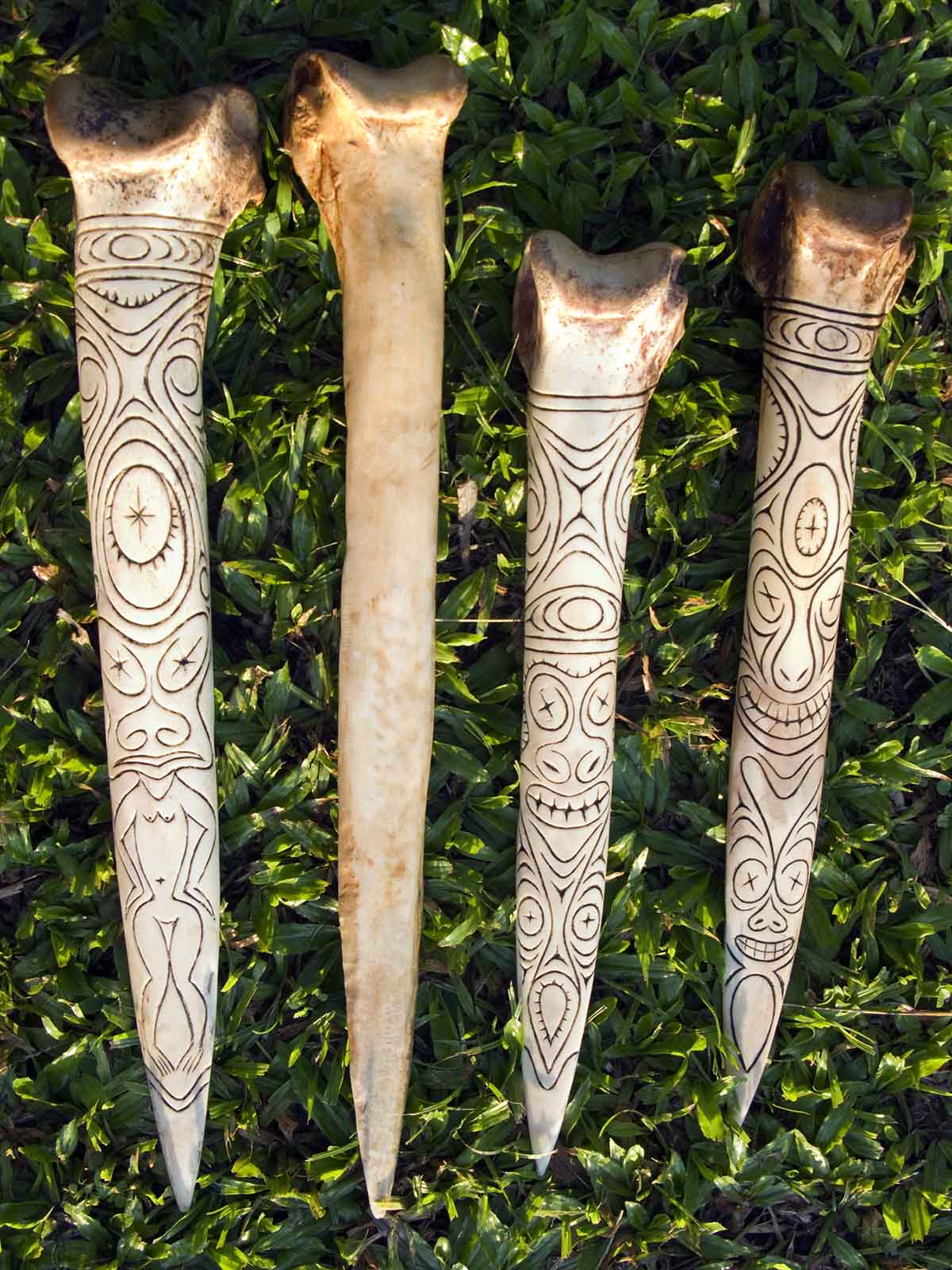
In Papua New Guinea(PNG), the cassowary is highly regarded in traditional myths as a source of life and spiritual energy. While cassowary is food in PNG cultures, it is also kept as a pet. Cassowary feathers are used for headdress and bones used for tools. I remember my grandfather (mother’s father) kept a cassowary wing bone he used to stitch sago leaves together for our roof. Some tribes, foe example the Abelam people in Sepik have used the femur of the cassowary birds to make weapons such as daggers (pictured below).
The cassowary lives in north of Australia and PNG. I constantly read articles about the near-extinction of this giant bird and I wanted to share the awareness that if we in Australia (and PNG) are not careful, we will lose this species.
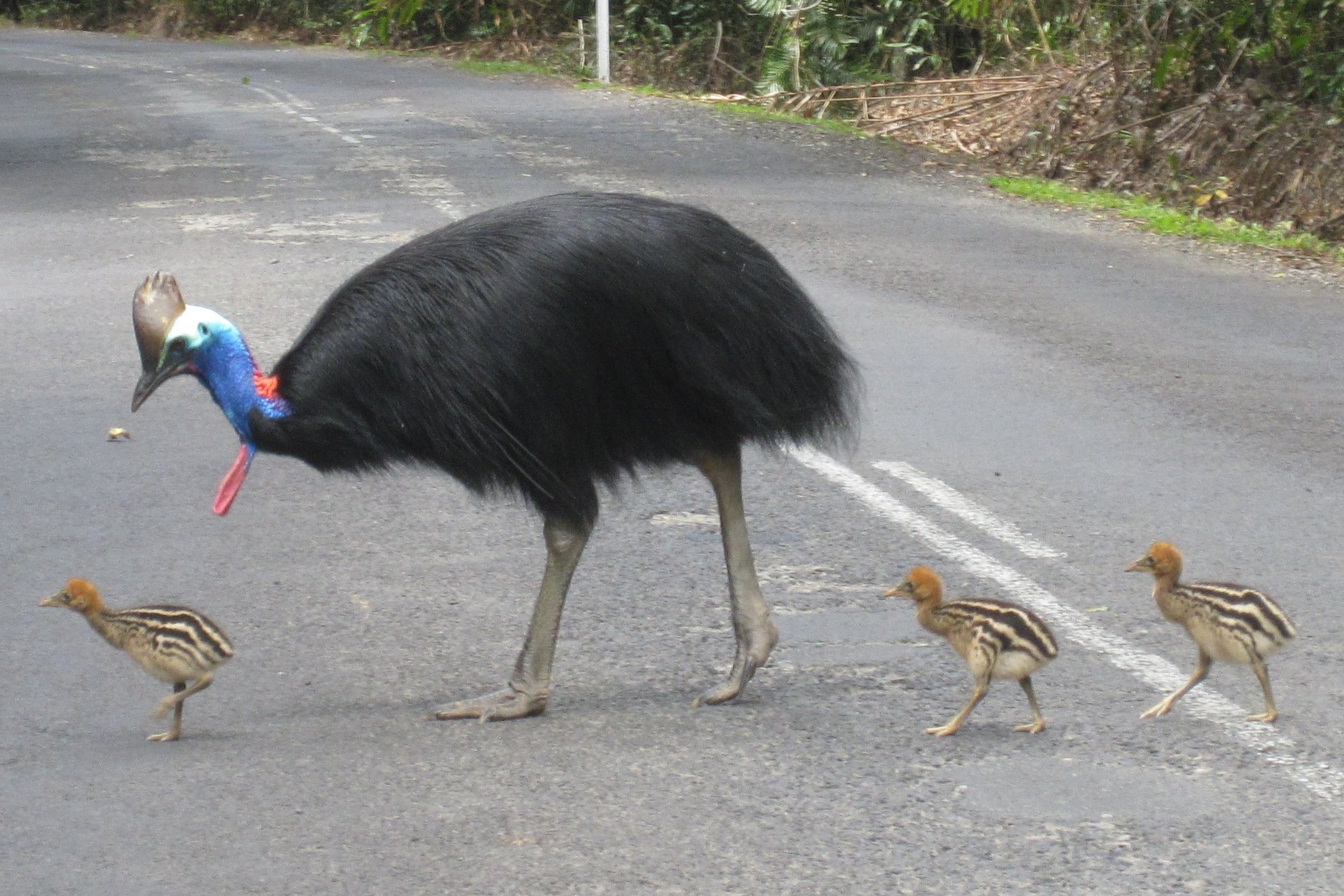
This question is no longer a joke.
According to Megan Neal at Houston Zoo website:
“Unfortunately, there’s no punch line and the situation is no laughing matter. Habitat loss and fragmentation have left the Australian population of cassowaries on the brink of extinction. These huge birds need large amounts of land to roam in search of food and to breed”.
Like other species, cassowaries’ habitat have been repeatedly destroyed by the boom in residential and commercial construction. Everyone wants to live near the rainforests of Australia, but there’s simply not enough room for everyone.
The Australian Conservation Foundation (ACF) answer to the question gives another example of the problem. The cassowary crossed the road because its habitat has been chopped in half by a freeway. So far this year, more cassowaries have died from speeding cars, dog attacks and habitat loss than in all of 2014.
ACF report said the modern-day hazards are now increasing the extinction risk.
“While local groups are doing great work to protect these gorgeous creatures, governments need to catch up! We need to transform our national nature protection framework so local, state and national laws work in together to protect life in Australia”.
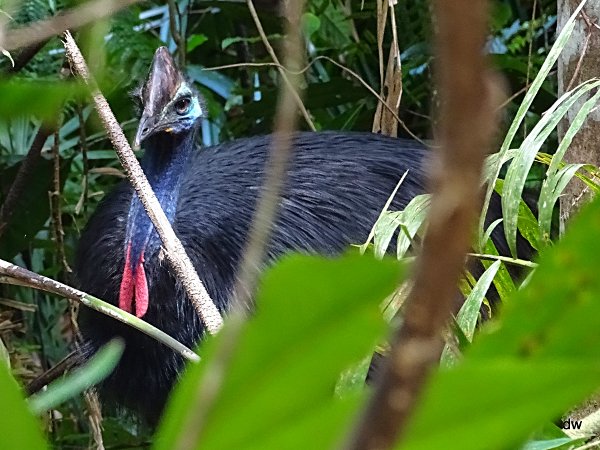
It is an iconic and unique species that deserves better than the devastating carnage it faces on regional roads throughout the Wet Tropics.
Sadly, 2015 is off to a particularly bad start for the endangered – and rather large – flightless bird with reports of at least six cassowaries killed between Mission and Bramston Beach this year.
Another cassowary was killed recently by domestic dogs on the Atherton Tableland.
Until recently, the remaining wild population was thought to be at around 2000. However, new research by the CSIRO estimates that the cassowary population may be more than double that at around 4400.
But this number is spread over 730,000 hectares of potential habitat with strong populations known in some areas and few or no records from other areas.
I took a walk yesterday in Bellbowrie, down our street on the edge of Brisbane River. I tend to walk on the grass because I like the soft- feel on my feet as I walk. Where we live, there is usually a piece of the city council land between the road and the various properties, enough for footpaths and walkers.
It was almost 5:45pm and with our winter, the place became dark quickly. I had a torch but I could still see so I did not use it.
“Are you right?” I heard a voice and saw a young man, about mid twenties, wearing white shorts and a polo coming towards me. I did not recognise him. He was walking on the road, going in the opposite direction.
Suddenly, I thought to myself, “why wouldn’t I be right?” And, “do I not look alright?” “Am I wrong?”
The tone of this young man’s voice did not seem friendly. I did not say any thing at first, just looked at him. I also wondered myself – if he was alright. I did not ask. My house was only four houses up the road.
Then, I calmly and with my best and warmest smile, I said, “I enjoy walking on the grass because it is soft and feet-friendly. I don’t like walking on hard surfaces”.
“Oh!” he responded with a puzzled look and then walked past me.
I don’t think it was the answer he expected. If that wasn’t the answer – what did he expect?
I re-told this random conversation to my younger son and he suggested, “may be the man thought you were ‘sus'”. (meaning suspicious).
“Do I look suspicious?”
To that question my son laughed and told me not to worry. How can I not? It troubles me that given the world we live in today, you can never know what is well-meaning and what is not. Have we humans become allergic to each other?
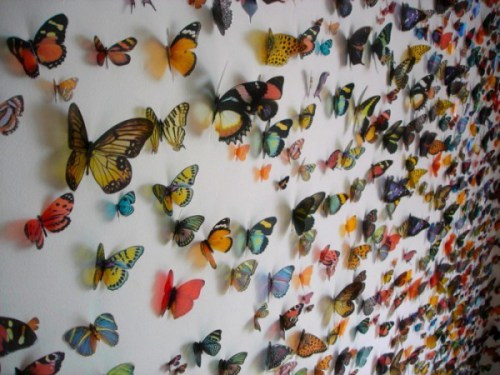
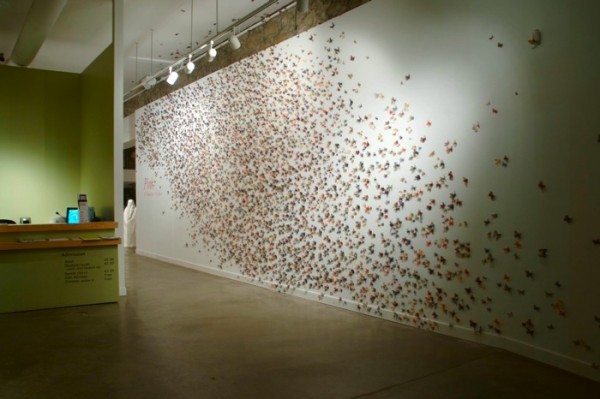
Making ordinary things become extra-ordinary is what artist Kristi Malakoff lives for.
Malakoff is a Canadian visual artist who has returned to Canada after time spent living abroad, most recently in Moscow, Russia, where she participated in a 2-month residency at Proekt Fabrika in the spring of 2010, and previously in Berlin, Germany, Reykjavík, Iceland and London, England where she attended the Chelsea College of Art and Design.
I particularly like her “swarmed” series. Visit her website to see more of her work. In the work displayed here, she used 6000 pictures of butterflies to create a vast swarm of butterflies.

Arriving at the beach, she reflected on her life. Mea searched the waves for two poles where the village bell hung. She had missed the bell sounds and the village gatherings. It has been 20 years since she left for Australia. The bell hung in the village centre; now, only seawater.
“I can’t see it,” she told her brother Tau.
“I don’t think it’s there anymore”.
“Right there” she pointed. “And what happened to Bubu Raga’s coconut trees?”
“The King tides, five years ago, took Moale’s family’s house, betel nut, breadfruit and the coconut trees. We dashed for the hill”.
“Oh My God! That would’ve been scary”.
“Yes, we lost everything. That was the day Chief Naka accepted the government’s offer to relocate us with other climate change refugees. It’s strange being on other people’s land. You are very restricted, but in the past 30 years, the water has raised so much. Our island will soon be completely submerged”.

I had been keeping an eye out for my Giant Apostles to bloom in my garden. Two weeks ago, I thought the flower buds were showing in two of my beds, but when I got there, I realised the flowers had already bloomed and wilted. Today, three sets opened. You can imagine the joy of the anticipating gardener. Each flower opens only for one day. If I did not spot these beauties from my bedroom window today, I would have missed them completely.

Extra large, richly colored, fragrant flowers distinguish the versatile walking iris ‘Regina.’ Native to Brazil, this tender perennial is very easy to grow and propagate. It grows and spreads from underground stems or rhizomes, and plantlets form at the end of the flower stems after blooming. As the plantlets grow in size and weight, the stems bend down to the ground and they root.
The Walking iris is clump-forming and its leaves are broad, sword-shaped and pointed at the ends. They grow in flat, fan-like arrangements, as do most members of the Iris family. The brilliant purple-blue iris flowers are marked with white and burgundy-brown spots and borne in clusters on leafy stems held above the foliage. This species tends to bloom in succession from summer to spring, but ‘Regina’ may bloom for longer than average. My collection only bloomed this Autumn.


Picture by Barbara W. Beacham
Mondays Finish the Story by Barbara W. Beacham
This is a unique flash fiction challenge where Barbara provides a new photo each week, and the first sentence of a story. The challenge is to finish the story using 100-150 words, not including the sentence provided. The challenge runs from Monday to Sunday!
Mind Games ©JLeahy
“After losing her head, she realised that the rest of her body was falling apart”, Joe would mimic a psychiatrist.
I sat by the window. The sun warmed my scalp and shadows danced on my hands. In hiding, I watched police take Joe away last night. He would have calmed down, but only he and I knew that; not our new neighbours.
We could have lasted in this abandoned house. If only Joe stayed quiet. My thoughts hurt my head.
“Ava! Ava! Where is your doll?”
Over the low white fence were a lilac doll pantsuit and two doll hands.
I had watched Ava at work yesterday. The toddler first ripped the doll’s head and legs, which she threw towards me. Ava caught me watching her. She laid the doll arms and pantsuit down, and dropping the body, she ran to the house. My eyes salted, thinking how scary I must have looked to her. I must leave before the Johnson Mental Health party arrives.
(150 words excluding the opening quote)
 Tribalmystic Stories