Category Archives: Nature and Environment

Snake Catcher is Romance Author’s Husband


DSC_0515
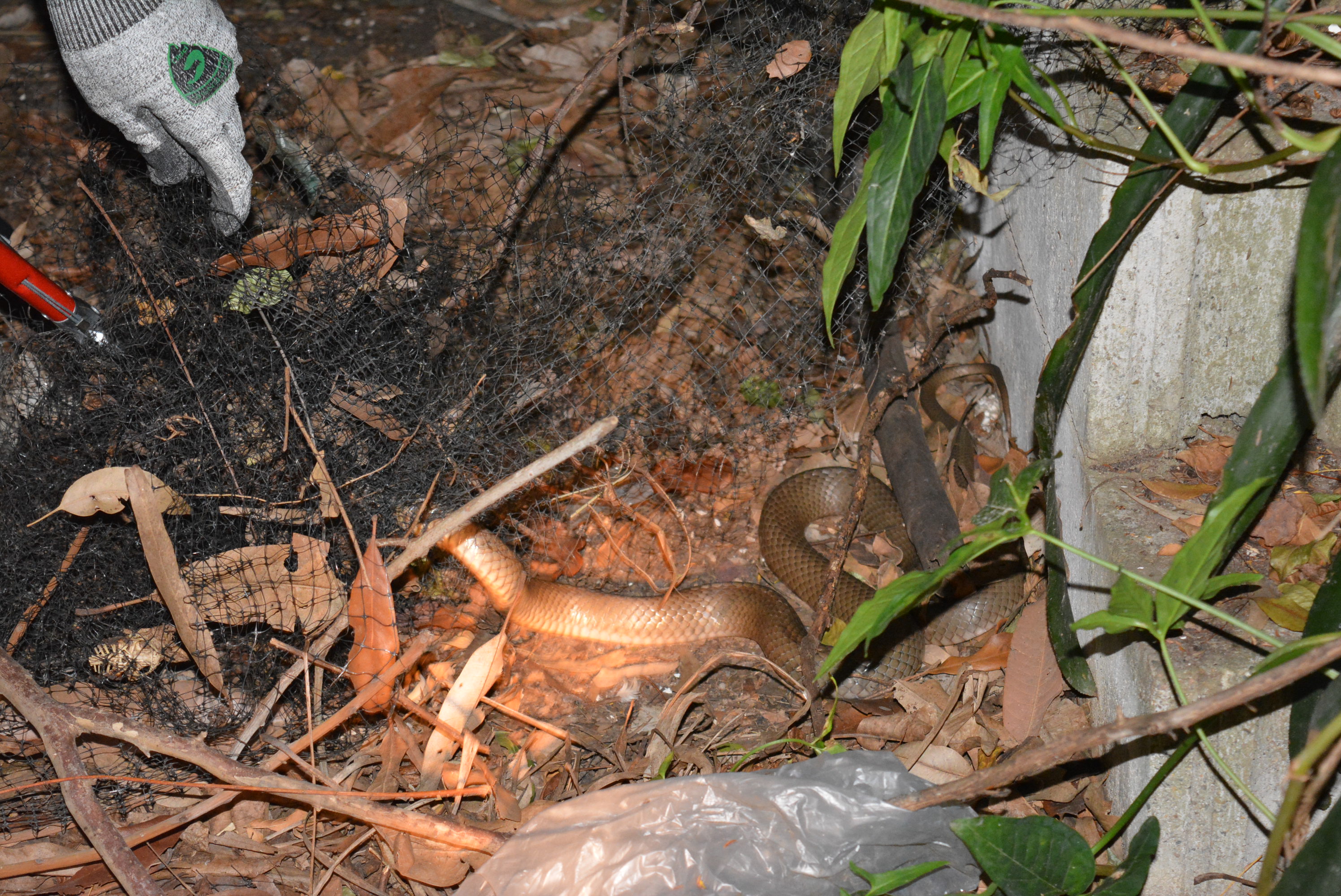
An Eastern Brown snake caught in the net – before it was set free. JK.Leahy picture.

This evening, when I called a Brisbane snake catcher to save an Eastern Brown’s life, I did not expect him to be married to one of Australia’s top romance authors, Ally Blake.

…………..

My younger son Chris had told me on Saturday night he had seen a large snake by the house, but it had gone. I wanted to check the surroundings but it was too dark when I returned from my recent trip to Papua New Guinea. After work today, I checked around the house to make sure no slithering kinds were lurking in the dark corners outside the house. This is the season for hibernators to emerge. Sure enough, at the back of the house, in the shady leafy spot among layers of fallen leaves and a stone wall, the fish net moved from side to side when I approached.

I knew it was alive, and I could see the beautiful long golden tail tuck away instinctively. The head was locked into the nylon knots in an awkward angle. It was an Eastern Brown, about a metre and a half long. We had caught a large male two years ago in the same spot and freed him into the Brisbane City Council wildlife reserve. This one was surprisingly alive and strong after several days in the net. The Eastern Brown snake accounts for more fatalities than any other Australian Snake. It is the second most poisonous land snake in the world and the most poisonous in South east Queensland.

pseudonaja-textilis-2
The snake we caught looked exactly like this Eastern Brown. Picture courtesy of Queensland Museum.

I quickly ran back into the house to phone for help. From 5:30pm today, I called six snake catchers, one after the other – they were all busy. Finally, the fifth snake catcher who was heading three hours out-of-town told me to call Mark, the Bellbowrie snake catcher.

Mark told me he was away, but he would get to Bellbowrie in half hour, and if I had not found anyone else, he would set the snake free or take it away for a small fee. Mark also said he lived in Bellbowrie. I told Mark, I just wanted to make sure, the snake did not die.

After 45 minutes, Mark arrived. Armed with my torch, camera and his hoop, net and snake-catching equipment, we ventured into the back of the house where the snake was. Mark is an environment scientist and like me, he was more concerned about saving the snake’s life. I was relieved when he told me that.

As Mark tried to undo the feisty Eastern Brown, we had a conversation about other things and I mentioned casually that I had to leave soon to attend a creative writing workshop.

“Really! My wife writes romance novels. She has written 32 books”. Mark beamed.

“Who is your wife?”

“Ally Blake”.

“Wow!” – that was all I could say. Mark’s wife, Ally Blake is one of Australia’s top romance authors with over 4 million copies sold world-wide. She has published through Harlequin Mills and Boon, Entangled Publishing and Tule Publishing.

DSC_0520
Mark catches snakes part-time, and only because he loves them, and he wants to protect them. He said most people he helps to catch snakes or removes snakes for – want the reptiles dead.

When Mark could not untangle the snake, he suggested it was safer to take the reptile with part of the net to his house. There, he was better equipped to relax the reptile and properly treat its injuries and rest it before releasing the snake into the local reserve.

Mark said the snake was a female of a few years and that females tended to stay at a favourite spot and the males come to visit.

“If you see two snakes wrestling, those will be two males fighting for her,” Mark said.

That was not really the news I wanted to hear – but a lot of changes will be happening this weekend to the snake’s favourite hiding place.

I have to also check out some of those romance novels by Ally Blake.
 

Endangered List – Australian species


6705640-3x2-940x627
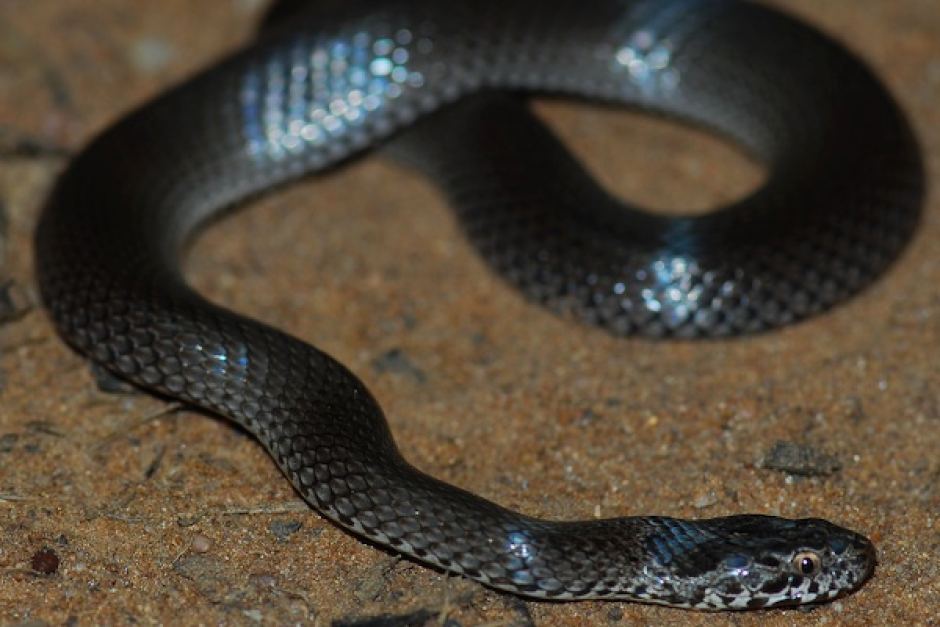
Picture: Wikipedia: The ornamental snake

How many species are extinct?

The Australian Government keeps track of endangered and extinct species through the Environment Protection and Biodiversity Conservation (EPBC) Act list. Australia is home to one million diverse species in the world.

The above slithering creature’s safety has caused a stop to a coal mine in Queensland.

ABC News reported a recent Federal Court decision setting aside approval of the Carmichael coal mine in Queensland has sparked debate about whether courts should have that kind of power.

The court was sidelined because the government had not properly considered environmental advice for two vulnerable species in the areas.

The pictured ornamental snake (Denisonia maculata) is on the EPBC list as vulnerable. It is one of two animals that were the cause of this court decision to overturn the mine approval in Queensland.

The fact check has confirmed of the 266 extinct species in the world, Australia lost 25. Pictured below, the Tasmanian Tiger is one of them.

5002422-3x2-340x227
From ABC News File: The Tasmanian tiger was declared extinct in the 1930s. Surveys to determine whether the Tasmanian tiger (Thylacine) was extinct or not began in the 1930s.

Extinct species
USA 266
French Polynesia 89
Mauritius 46
Saint Helena, Ascension and Tristan da Cunha 36
Australia 35
Source: IUCN Red List tables 6a & 6b


The Coleus Up Close


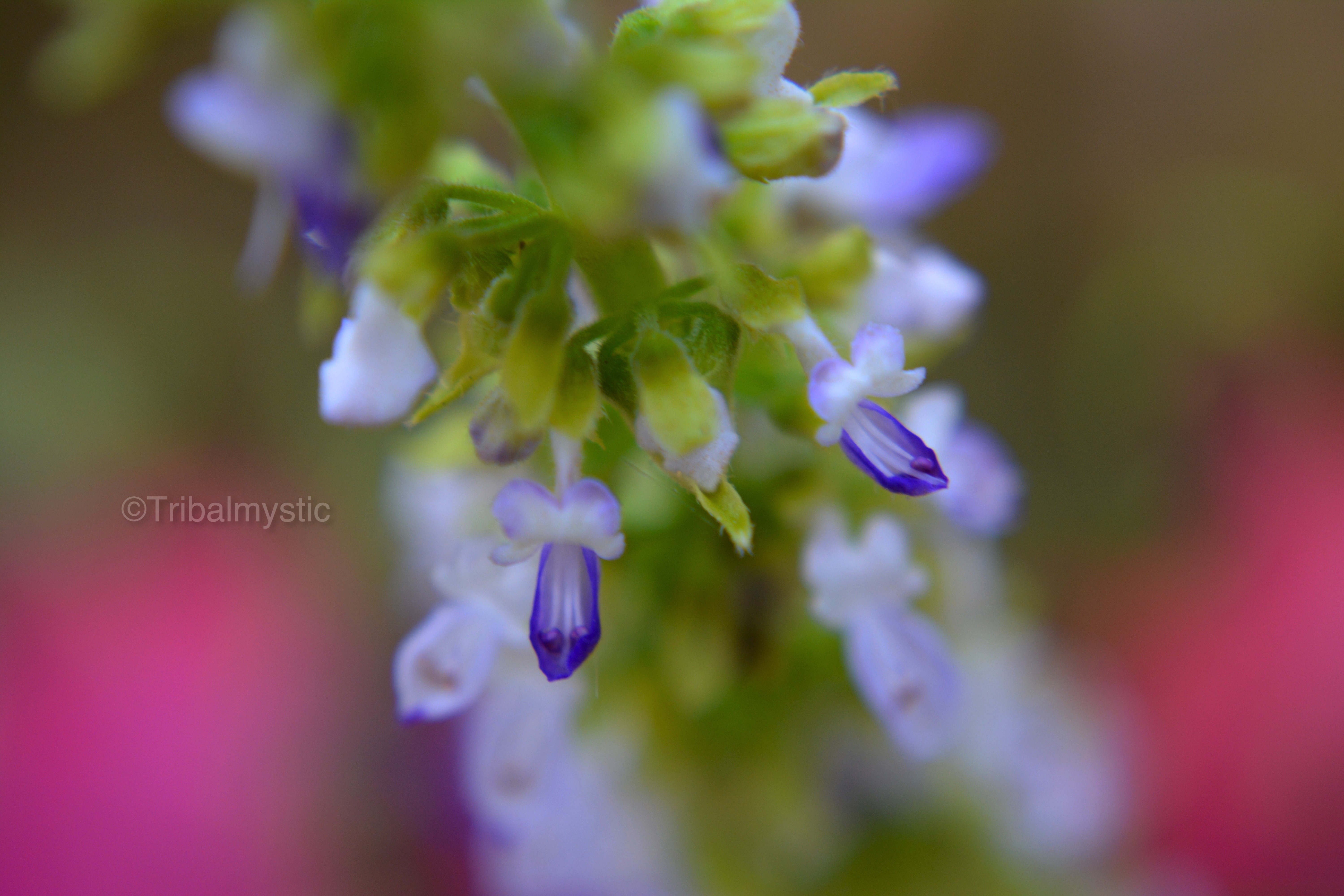
-3
Flowering, a Coleus from my garden. JK.Leahy Photo©

I photographed the Coleus up close today. The coleus has always been a favourite of my mother and I. My mother has propagated several varieties of coleus at a time around our house and in all the food gardens where I grew up. We used coleus for singsing (traditional dancing).

The flower is also called the painted nettle and poor man’s croton. They grow fast and survive better is partial shade. I am fascinated by the way nature combines the colours in coleus.

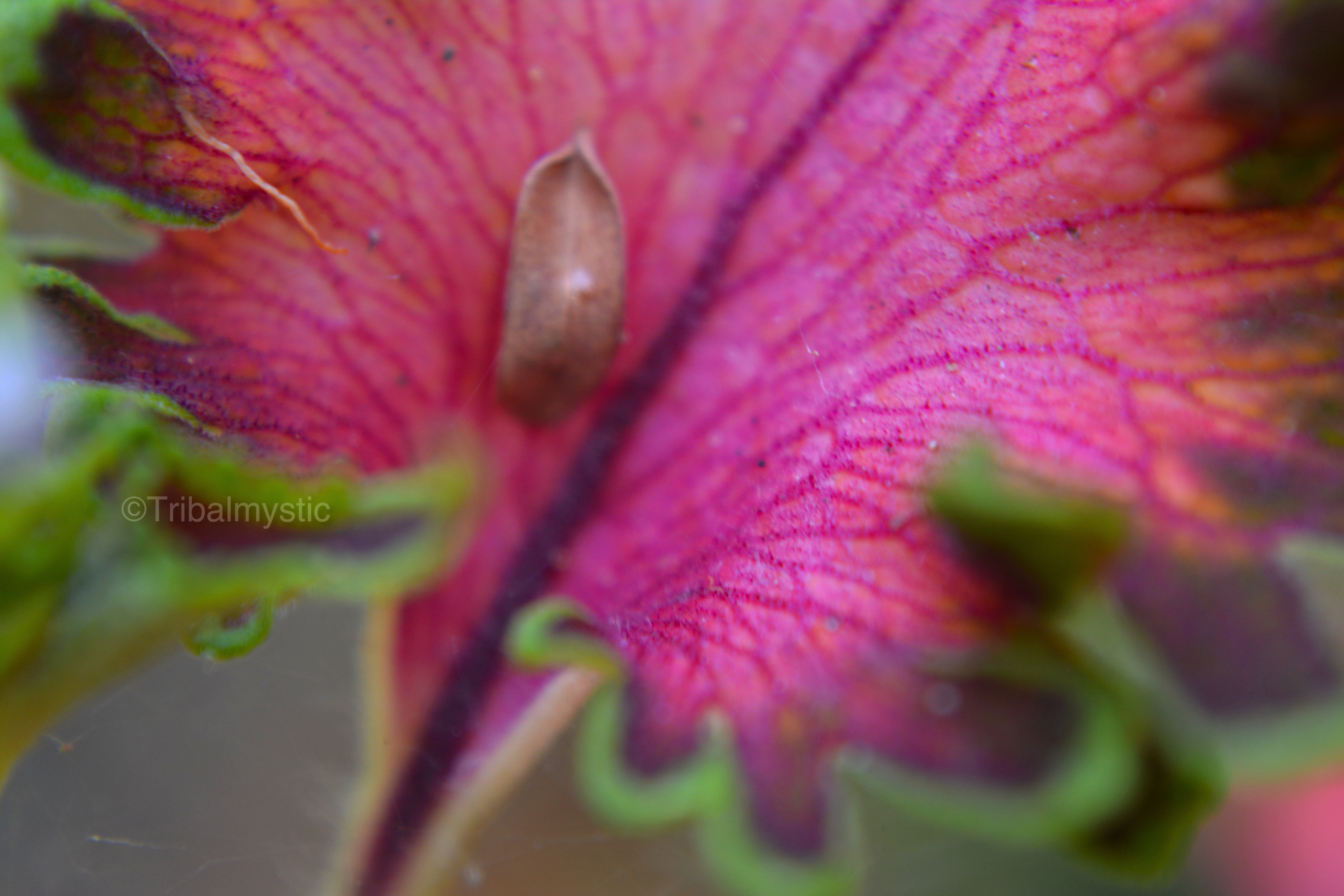
-4
Coleus leaf. JK.Leahy Photo©

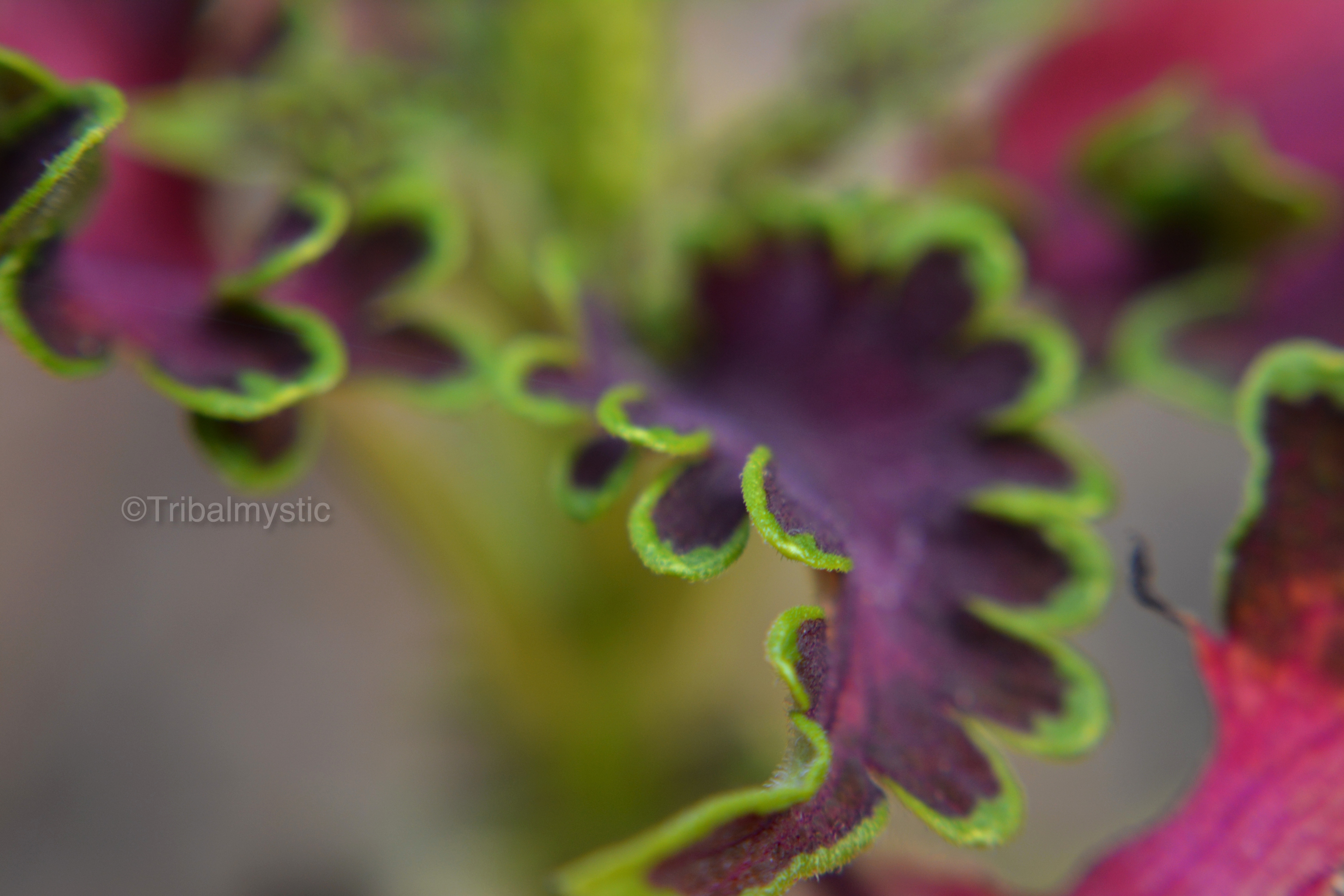
There are so many different colour combinations on this flower and the colours are surprisingly complementary. For example, the lime green and the pink in the pictured leaf above and the green and purple in the young leaf pictured below.

I love coleus especially because I can get natural dyes from some of the varieties for my art. See previous post

-1
A young Coleus leaf. JK.Leahy Photo©

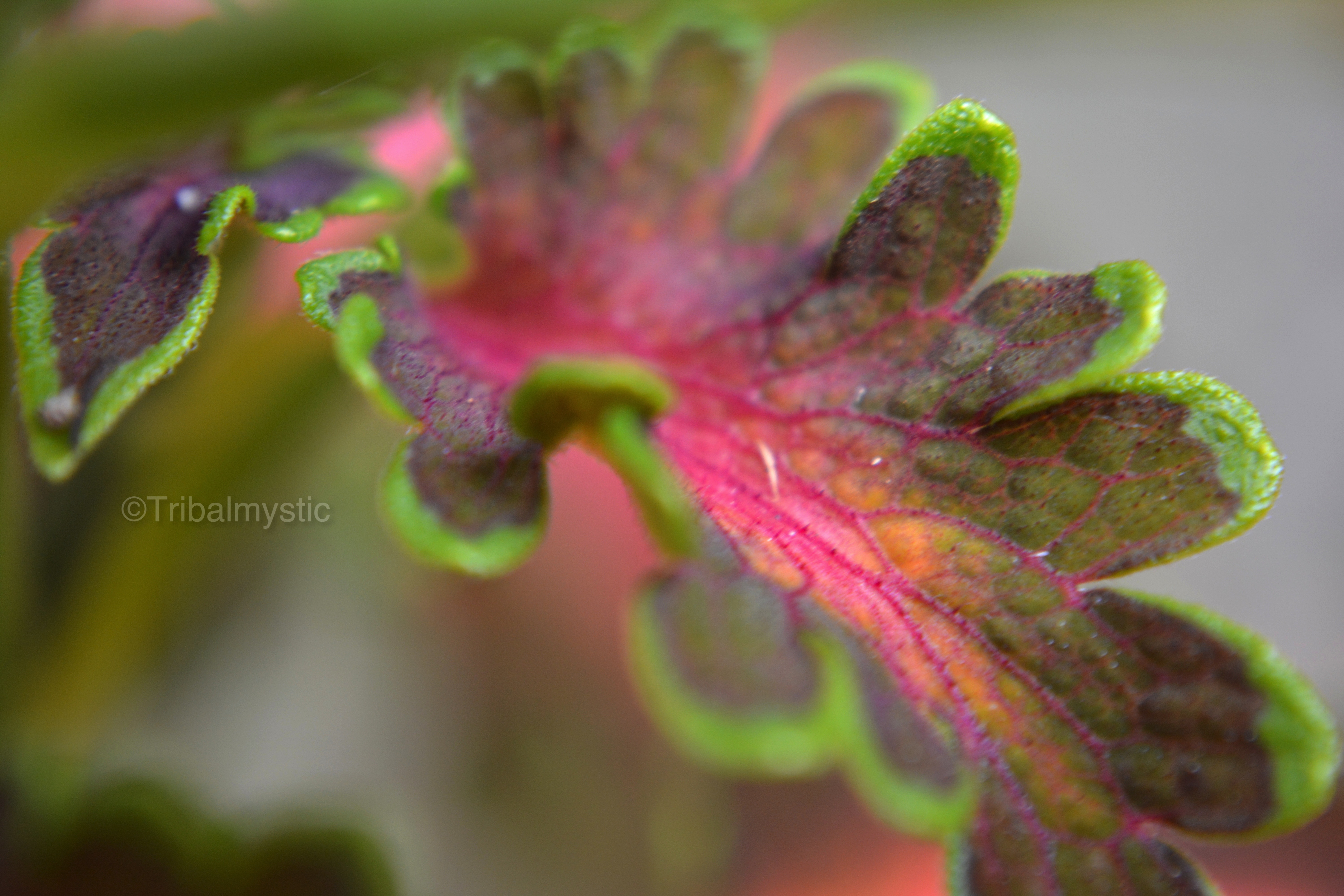
Even when the leaves get a little older in this variety, the orange is added to the green on the picture below. Again, another complimentary colour to what the plant already has. It is almost as if to say that the Coleus knows how to dress – she is very fashionable. She does ‘read’ the colour chart very well.

-2
Aging Coleus leaf. JK.Leahy picture©

This pictures were taken with a Nikon D5200

The Song of the Turtle – Children’s Story


Winner of the Paga Hill Development Company Award for Writing for Children in The 2015 Crocodile Prize.

PaperArtist_2015-06-28_15-18-25
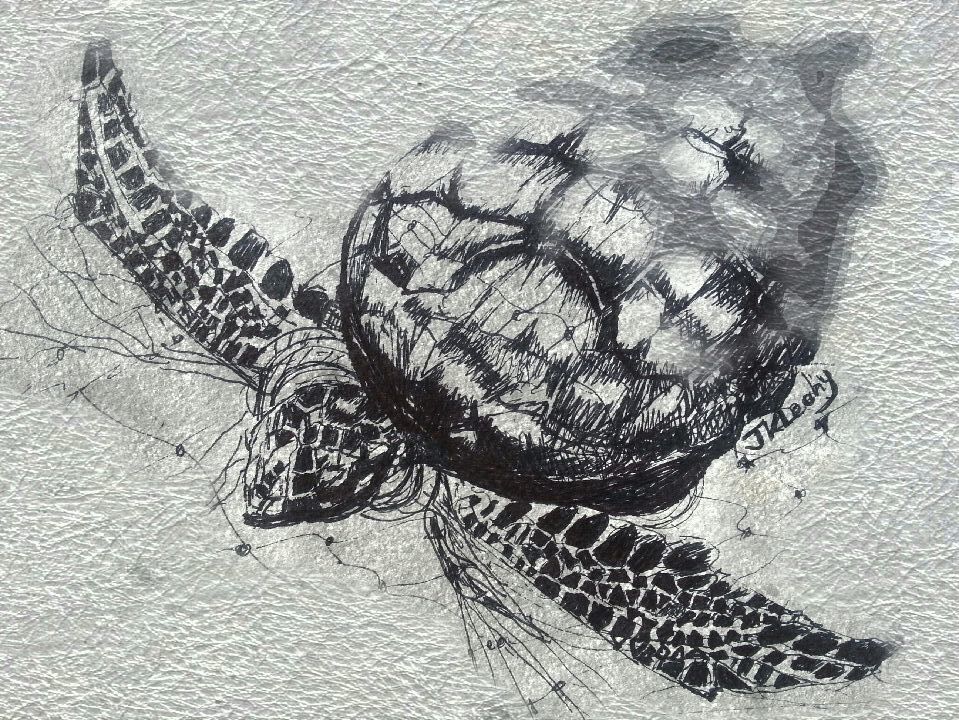
JK.Leahy© Illustration in Pen on paper. 2015.

The Song of the Turtle – ©JK.Leahy Children’s Story

THE night was still and dark. Dogs did not bark. The wind blew gently.

Children and babies had stopped crying and laid their heads to rest. Even the night birds were silent around the coastal Morobe village.

Below the whistle of the gentle breeze, Kalem heard a song. It was soft, beautiful and so sad it almost made her cry. It sounded very familiar.

Lying still on her woven pandanus mat that grandma made for her, she searched through her memories – where has she heard this song? Her grandma had passed away last year. She missed her. After tossing and turning for what seemed like forever, Kalem knew she had to find out.

She picked up her mother’s torch. Beside the torch was a piece of hard shell, a turtle shell she found on the beach. She kept it for good luck. Suddenly she remembered – the song! It was the song of the turtles. Their nesting time happens near Kalem’s birthday, but they have not come to her village for a long time.

Tonight, something was wrong. Grandma said only the mother turtle sang the turtle song. No one in the village knew that song except her grandmother, mother and now her. Grandma sung and taught the song to Kalem while they were fishing. “Who is singing it now?” Kalem wondered.

Afraid but excited, Kalem headed to the beach. As she walked, she remembered Grandma’s words: “Our people are connected to the ocean, we fish to survive but we must respect the lives in the ocean. We must never kill for nothing.”

Not many people can connect to the animals and fish, but grandma said their family had a special gift because their ancestors came from the sea and are tied to the ways of the sea. Kalem walked quickly along the beach as she listened for the song.

“If you ever hear the song Kalem, you know, Mother Turtle needs you”, her grandmother told her. When Kalem was born in the turtle season, grandma told her mother – “this girl would one day meet Mother Turtle”.

Kalem followed the song out of her village and along the shores, further and further away from her house. Her heart beat faster when she arrived at the river where the villagers washed. Where the river met the sea, villagers set fishing nets along the shoreline. Kalem heard a loud splash. She slowly stepped forward, flashing the torch.

Tied to a large driftwood stump on the beach was a long, green fishing net. On the calm water surface, a big red buoy floated just offshore, and at the end of the net.

Something had been caught in the net. The thing splashed again. It rippled and frothed the seawater in a circle. It was large, dark and nearby the shore. It did not look like any fish or crocodile Kalem knew.

6a00d83454f2ec69e201b8d131573c970c-400wi
Photo Digital illustration image JKLeahy ©

When she flashed the torch at the dark shape, she was shocked to find a very large sea turtle tangled in the net. It was so large, Kalem was sure it must have been the mother of all turtles. Kalem flashed the torch on the water.

She could see smaller turtles floating about, their heads bobbing in the water. The turtles circled the net. They were all making strange noises like they were crying too. The mother turtle was bigger than Kalem’s ten-year-old body, but Kalem had to try save to her.

Even with no strength left, the mother turtle kept singing her song. Weakly, her tired flippers hit the net and her voice faded to almost a whisper. Kalem’s tears flowed down as she waded through the water quickly and tried to set the turtle free. After struggling with the net and the weight of the turtle, Kalem ran back to the village and woke her mother.

“Help, wake up!” Kalem cried. “It’s Mother Turtle – we must help her”.

Kalem’s mother was confused. Often she thought her daughter was a daydreamer. After Kalem calmed herself and explained, she grabbed her mother’s arm and led her back to the beach. They took a knife and cut the net to set the mother turtle free. The large turtle swam up to Kalem and her mother. She bumped them with her nose before she and the other turtles disappeared into the deep, dark waters.

Kalem remembered grandma telling her about the life of the mother turtle. Grandma said it took many years before the turtle was ready to make babies. Every two or three years, the mother turtle leads her group to her own nesting beach, where she was born. Sometimes she travelled long distances to get there. Usually she would lay over a hundred eggs, but only a few survived.

Other animals, people and large fish eat the eggs and baby turtles. Kalem’s people loved eating turtle eggs and meat. Their village was once a nesting ground for turtles. Lately, less and less turtles have come to lay eggs. Standing silently in the dark with her mother, Kalem thought of how scared the turtles were tonight.

“They might never return…we must teach our people to protect the turtles”, she whispered to her mother.

“I am so proud of you Kalem. The turtles will head to a safe place to lay their eggs. Maybe this was not the right place for them, but they will find a perfect home some day”.

Her mother held Kalem close as they headed back to the village.

Crocodile Prize Anthology cover

The Crocodile Prize 2015 Anthology is out on Amazon

The Song of the Turtle – A Winner in the Crocodile Prize


PaperArtist_2015-06-28_15-18-25
The Song of the Turtle – JK.Leahy Illustration, 2015. Pen and Ink on paper.

My entry into the The Crocodile Prize, Papua New Guinea’s National Literature Awards,  won the children’s category. “The Song of the Turtle” is a fiction based on events that happened when I was growing up in Wagang Village, Lae, Papua New Guinea. I will post the story here, tomorrow.

I had watched turtle eggs being found and gathered on our beach and watched sea turtles captured and eaten. Today, the large sea turtles do not lay on our beach anymore.

Across the Huon Gulf on coastline Labu, turtles are being protected and a certain coastline has been declared as a protected habitat. The locals are part of the turtle protection programme. I am glad this has happened. Read More on the Labu Turtle project here.

I hoped that “The Song of the Turtle” will teach Papua New Guinea children about how important it is to care for wild-life and wild-life habitat in our country. PNG is lucky to have so many beautiful species and with effects of climate change and human development, numbers of species and wildlife habitat is becoming fewer and soon, some will disappear forever.

There were over 800 entries in the Crocodile Prize this year. 160 entries including The Song of the Turtle has been published in the 2015 Crocodile Prize Anthology. It is on sale on Amazon.

Crocodile Prize Anthology cover

Crocodile Prize Anthology 2015

………………………………………………………….

Writers from across PNG are 2015 Prize winners

Keith Jackson & Friends PNG Attitude

WRITERS from seven provinces feature in the nine prizes awarded in this year’s Crocodile Prize – Papua New Guinea’s national literary awards.

And one of the winners, 20-year old medical student Hazel Kutkue, not only won the Martens’ Award for Young Writers but the national short story prize – a prodigious achievement at such an early age and against some very stiff competition.

The Ok Tedi Mining Award for Book of the Year saw Baka Bina’s Man of Calibre triumph in a strong field of 10 contenders while the inaugural SP Brewery Award for Illustration went to another Eastern Highlander, Emmanuel Landu, brother of two-time Crocodile Prize winner, poet Lapieh Landu.

Other provinces represented in the prize winners are Enga, Simbu, Milne Bay, Morobe, Madang and the National Capital District.

The other winners include Philip Kaupa Gena (poetry), Busa Wenogo (essay), Joycelin Leahy (writing for children), Ronnie Dotaona (heritage) and Daniel Kumbon (tourism, arts & culture).

The writers’ ages range from 20 to 56, averaging 36, and their professions include economist, teacher, court officer, journalist, artist and student.

In the following section we present the names and profiles of the winners and links to their winning entries together with the judges’ comments.

The art and life of the leaves


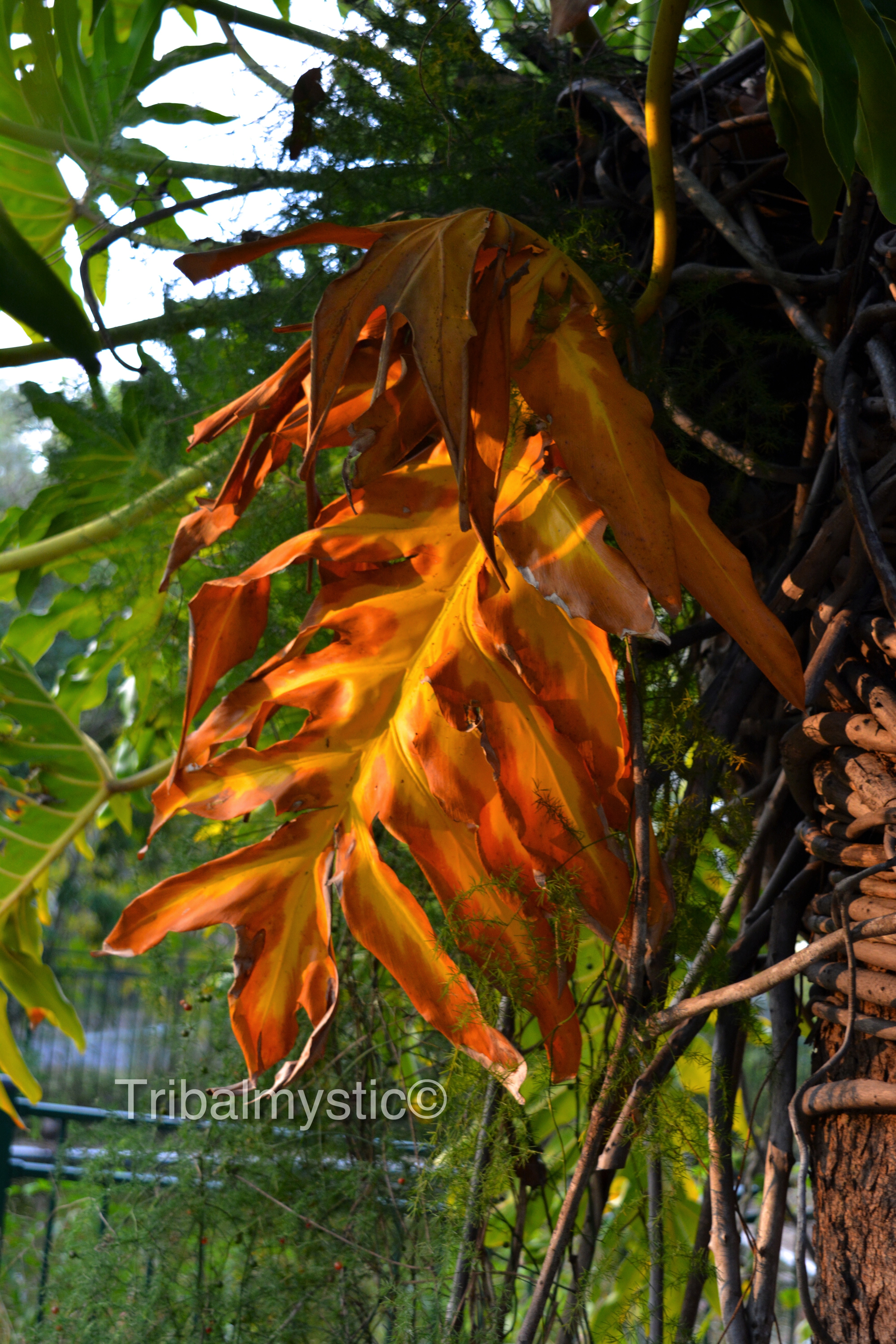
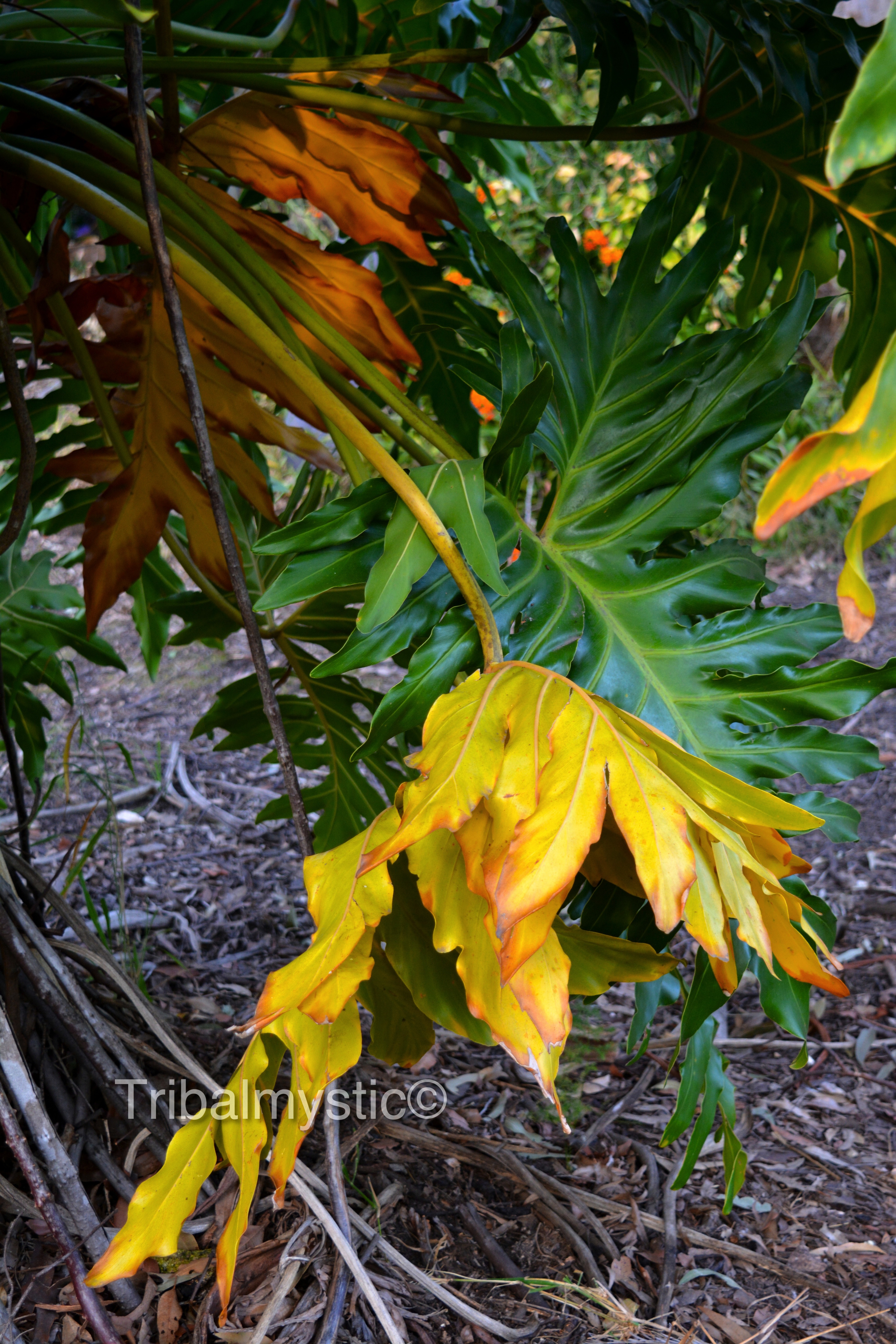
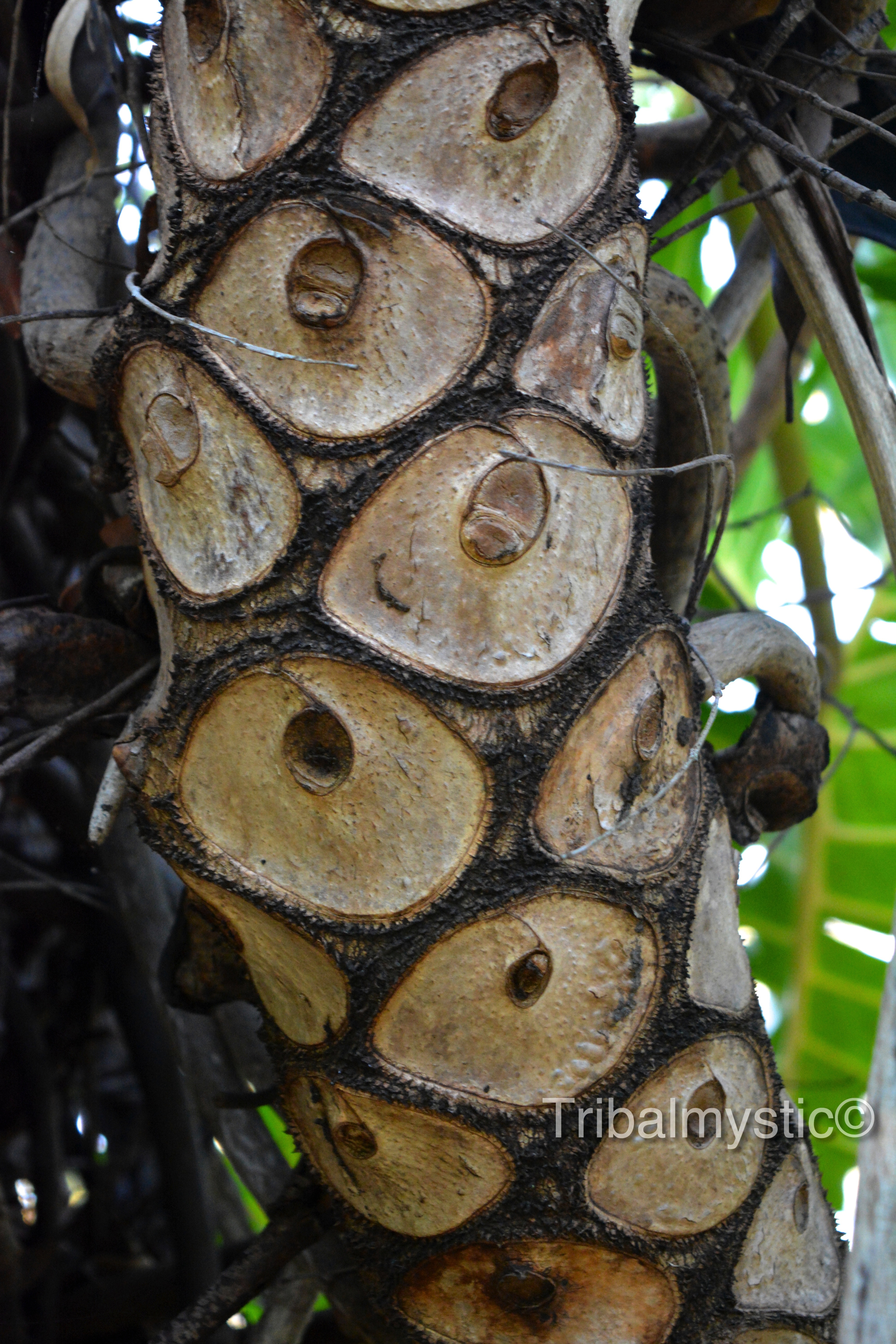
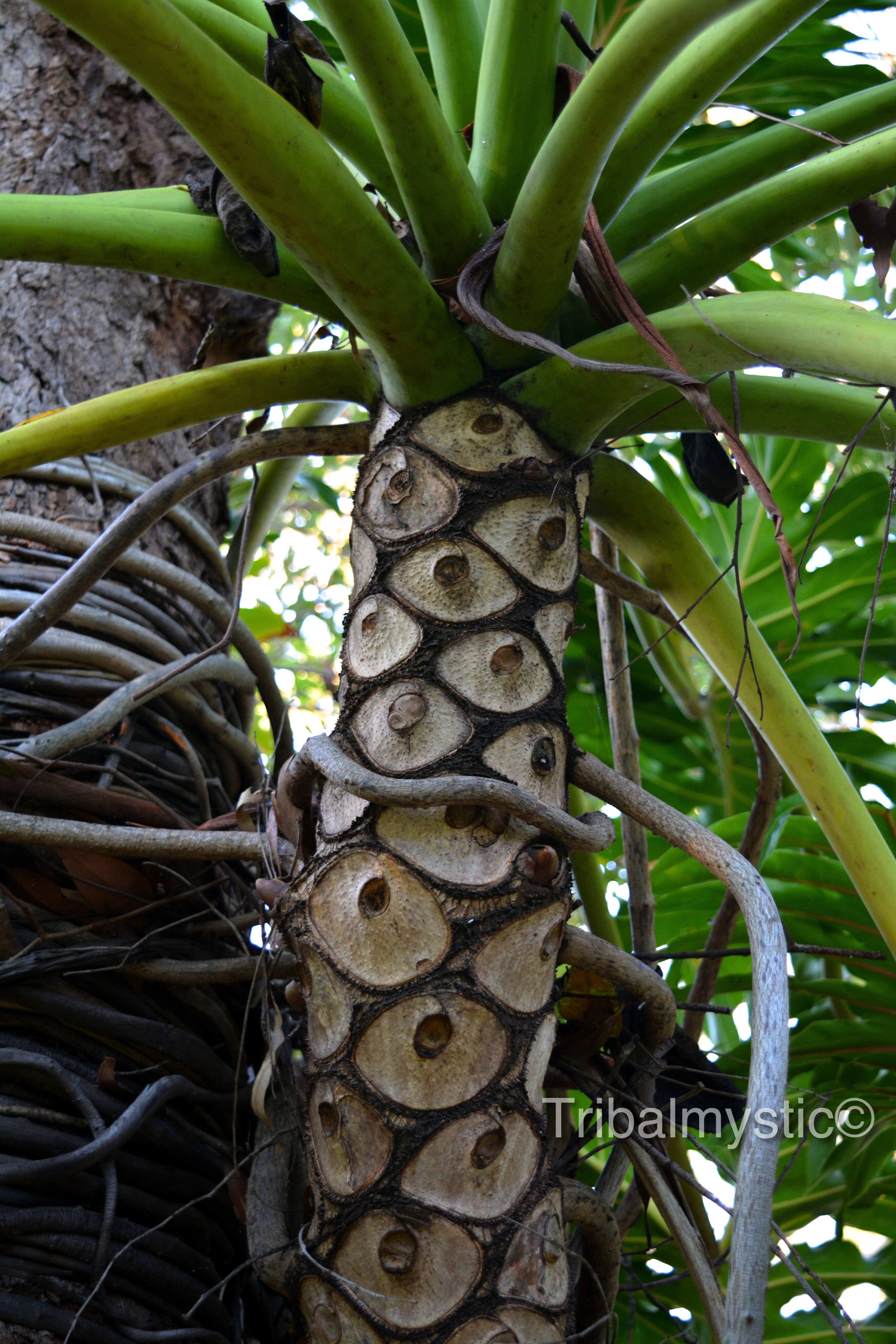
Let’s explore the anatomy of the slow, steady growing and long-lasting tortoise-like leaves. I just happened to photograph one of my favourite subjects, the Philodendron which has tortoise-like leaves.

A study by Dr. Peter Reich is looking at the different responses of tortoise-like leaves versus hare-like leaves to changing environments, such as higher levels of carbon dioxide in the air caused by climate change. As each generation of leaves reproduces, new genetic combinations are created.

Tribalmystic©-9    Tribalmystic©-10.

Dr Reich studies leaves.  Basically a study of leaf takes into account the longevity, productivity and nitrogen content. The University of Minnesota Professor compares the life-patterns of leaves to the fable of the Hare and the Turtle. In the race, the hare is winning the race, but he gets too confident and takes a nap. The turtle passes the hare while the hare is asleep and wins the race. In the case of the leaves, Dr Reich compares the tortoise-like leaves to be slow and steady growers that live longer. The leaves that are hare-like are speedy growers and do not last long.

.Tribalmystic©-8     Tribalmystic©-10

According to this study tortoise leaves such the Philodendron’s leaves will grow slowly and steadily.  But sciences also prove that the leaves in the tropics live fewer years than leaves on trees in cold climates such as the spruce in Canada.

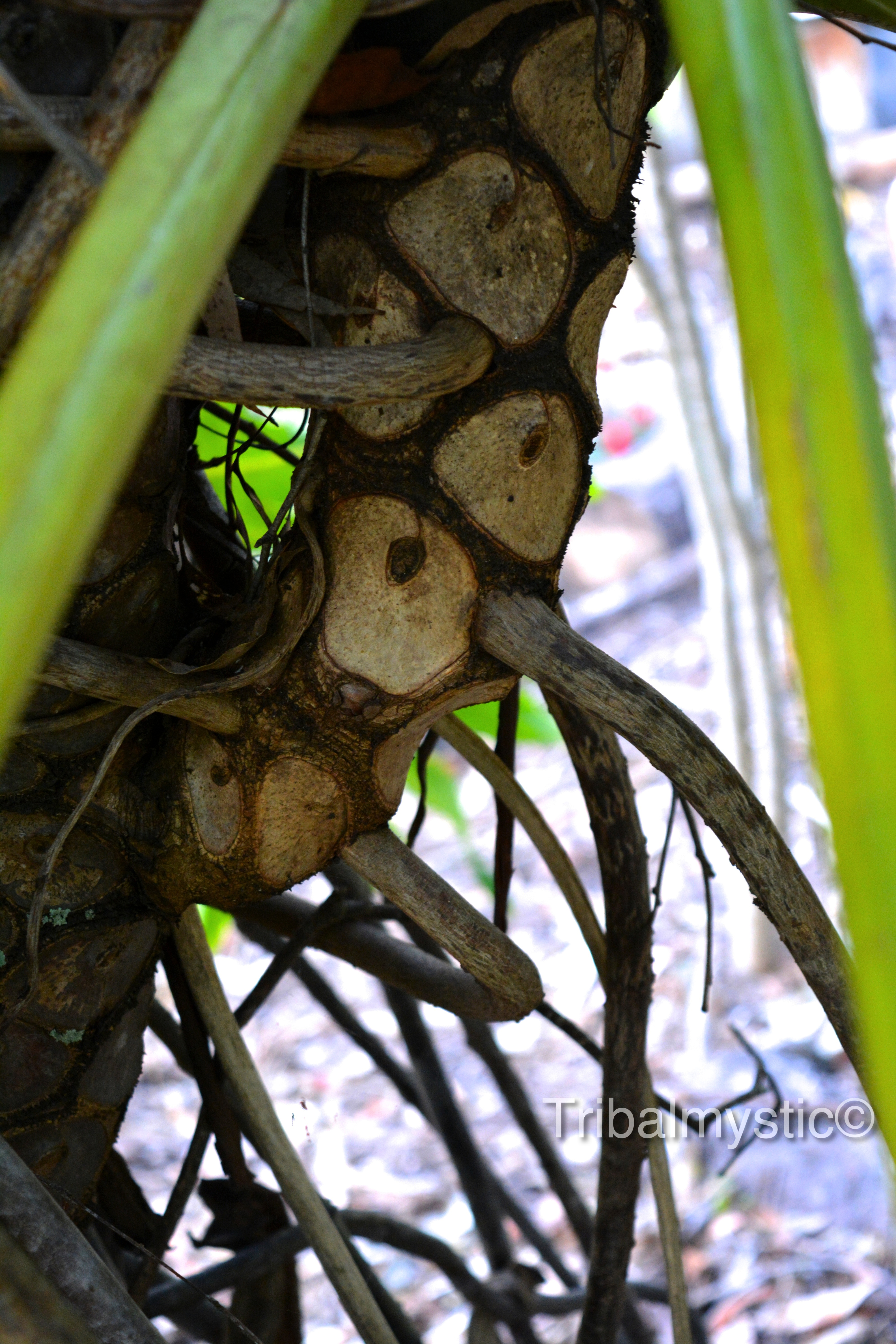
Below is the trunk of the Philodendron.

DSC_0045-1     DSC_0041-1

Even a Philodendron’s trunk has tortoise-like patterns. This part of the plant is where my art inspiration comes from.

DSC_0042-1     DSC_0040-1


Blue-eyed Object – A Strange Find


blue eye
BIG BLUE EYE: It washed ashore on a South Florida Beach to become one of the year’s weird stories. Now we know: It came from a swordfish. CREDIT: FLORIDA FISH AND WILDLIFE CONSERVATION COMMISSION

Gino Covacci was walking peacefully by the sea on December 9, 2012 when he found this gigantic, monstrous eye still oozing blood. He contacted police and then the Florida Fish and Wildlife Conservation. Eventually the mystery was solved that it was a swordfish’s eye. Covacci’s find became known in the media as the Big Blue Eye.

A Camera Opens New Doors – Tribalmystic Blog


A camera means more new pictures will be seen on Tribalmystic stories. It also means I can share my garden with you, virtually.

Watermarked Photos-1
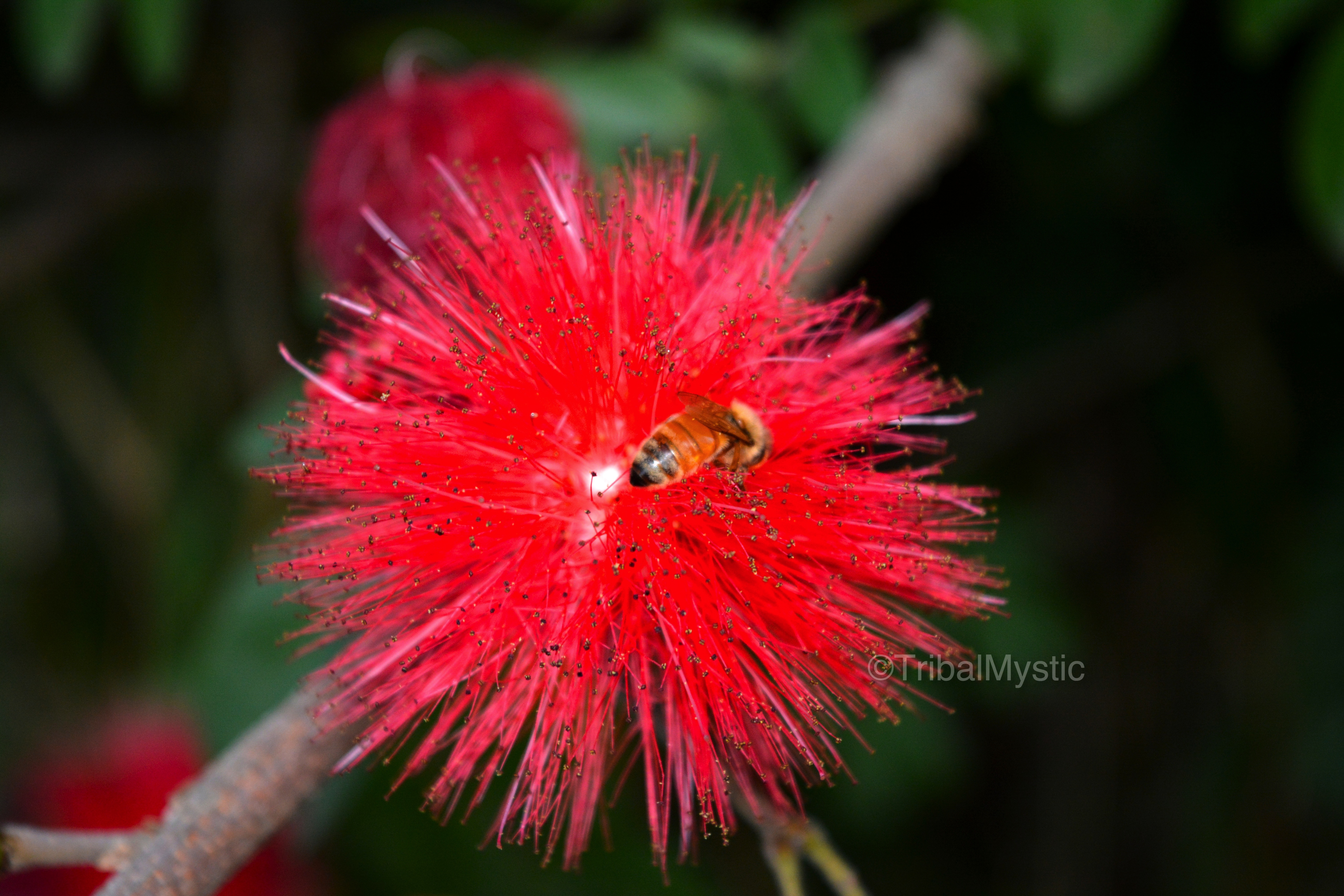
Samanea Saman bloom. It is also called False Powder Pluff.

I got myself a ‘real’ camera today. A Nikon D5200. It may not be a Pro level camera and not what I was aiming for, but I have not had an SLR for nearly twenty years so I am thrilled. My son Nathan loaned me some money for it. When my younger son Chris and I arrived home, guess who already had the package opened and was handling it – Chris!

Watermarked Photos

Mum was cooking and giving stern instructions from the kitchen for Chris to wash his hands first and not leave any greasy prints on the lens or any part of the camera. Poor Chris…I’m sure he was just laughing inside his head. Who tells a 16-year-old what to do these days? Know the feeling when your kids play with your stuff?

Then, the little bugger went off and charged the battery and started taking pictures. Oh well…I guess he was just as excited as I was, even when he pretended he wasn’t.

Watermarked Photos-2

There was some light left and I went for a quick walk in the garden to try the camera with some very curious bystanders. I shall show the ‘bystanders’ on Tribalmystic stories later. These are pictures of Salmanea Saman, often referred to as the false powder fluff – not the stuff you wear on your make-up though.

I have to get my photography grove back. Let me know what you think of my first pictures. Thank you.

Kinabuhi: A film on the Survival of the Coconut Farmers


The coconut is one of the most valuable trees in the islands across the Pacific, Asia, Latin America and Africa. The coconut tree has many uses. The nut, its husk and shells, the trunk, leaves, even the bone of a single leaf is used. Children use the leaf for toys and women weave and cook rice in the leaves. Hats, baskets, mats and many other useful items are also made from the coconut leaves.

The coconut juice, coconut oil and coconut cream have become a recent rage in nutrition and diets in the western world. Ask abungac (grandpa) Google about the many uses of the coconut.

What happens when you destroy the tree that gives life?

Watch this story in “Kinabuhi“, a Vimeo video made by Kapuluan.

Vimeo

Coconut as disease cure

101 uses for coconut oil


The Looming – Short Story


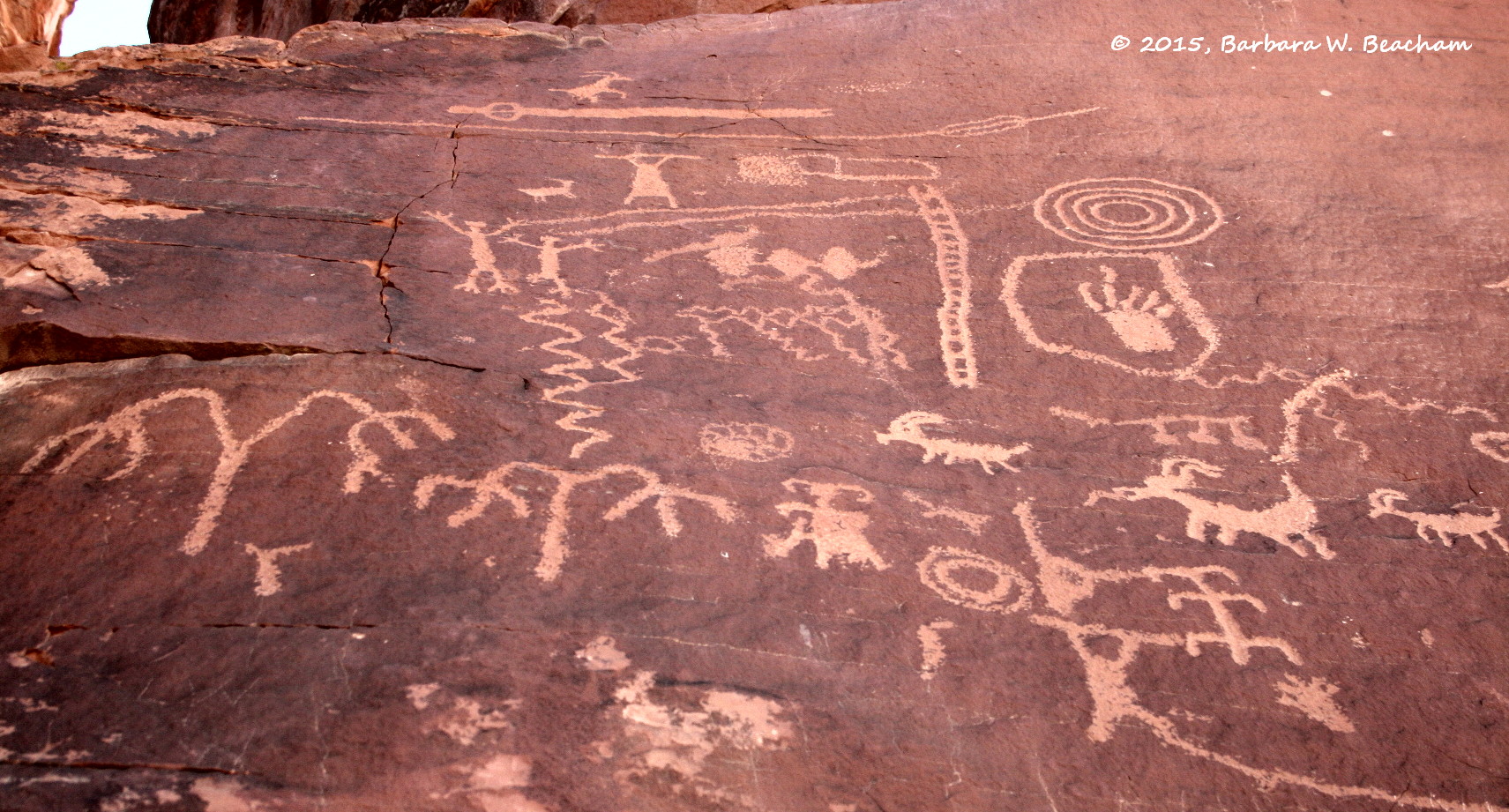
2015-07-20-bw-beacham
Picture by Barbara W. Beacham

Mondays Finish the Story

This is a unique flash fiction challenge where Barbara W. Beacham provides a new photo and the first sentence of a story each week. The challenge is to finish the story using 100-150 words. This challenge runs from Monday to Sunday.

The Looming JK.Leahy short story ©

The petroglyphs told the story of an unusual event.

The old man’s eyes widened. He blinked from the petroglyphs and stared into the sky. The interpretation led to the present. Something was happening. Yawing, seven, could sense the fear in his grandfather’s voice.

Yawing followed Old Manu’s eyes; the clouds gathered into a thick dark cover.

“What is it, grandpa?”

“There’s no time”

“No time for what?”

“Go! Get your mother!” Old Manu ordered Yawing. “We need to move quickly. It is coming for us”.

“What is coming for us?”, Yawing asked, wide-eyed. He reversed to the door.

“Go!”

Yawing quickly turned and ran to find his mother among the women at the river. He tripped and fell.

“Mother! We must leave, now”, Yawing shouted with a mouthful of sand.  He spat.

“They are coming for us!”

Yawing’s alarmed voice chilled into silence, his three little sisters, playing outside their house. As they watched, he ran to their mother.