My art: A study of snowy owl in ink and wash.My Art – Owl. Acrylic on canvas.
Above are two of many artwork I created, purely because I love owls and I find them very interesting.
Growing up in my culture, owls have been linked to death. If you hear an owl consistently calling or crying then, death is near. This was the belief. An owl crying or calling is quite rare but when it does happen, it is quite scary.
Unusual visitors
In some Brisbane (Australia) suburbs and out where we live, there are a few species of owls. The most common one is the Frogmouth. My family and I have had several occurrences with owl visits that I find very interesting and hard to understand. Once we had three owls come into our garden and sit for three days in the same spot. There was another incident where two large owls appeared at the front of our house and sat on a very low dead tree. They must have arrived before we woke up. At first, we thought they were part of the branches of the dried tree trunk. These two sat in the same position for almost a week. I went up very close to them one day and the taller of the two opened its eyes and glared at me – so I left. I hope to find their photos that I took that day and post it here in the future. Despite my cultural learning and spiritual beliefs about these birds, I find them especially interesting because of how quiet and often secretive they are. Sometimes, you don’t know they are there. They can camouflage very well.
Many owl species have developed specialized plumage to effectively eliminate the aerodynamic noise from their wings — allowing them to hunt and capture their prey in silence. Almost a year ago, a research group started working to solve the mystery of exactly how owls achieve this acoustic stealth — work that may one day help bring “silent owl technology” to the design of aircraft, wind turbines, and submarines. I found this small clip on reddit.com. Click the link below to see the wing action.
In the first moon of the coffee season, the bees would have long gone from the sweetness in the coffee blossom. The delicate petals of coffee blossoms would wither, turn brownie-yellow and drop to carpet the base of the trees. Here, under the tree, other insects such as ants would gather around the sticky rotting pulp. This was the picking time. My mother and her sisters would prepare to harvest grandpa’s coffee.
This is my mother’s Coffee Land story.
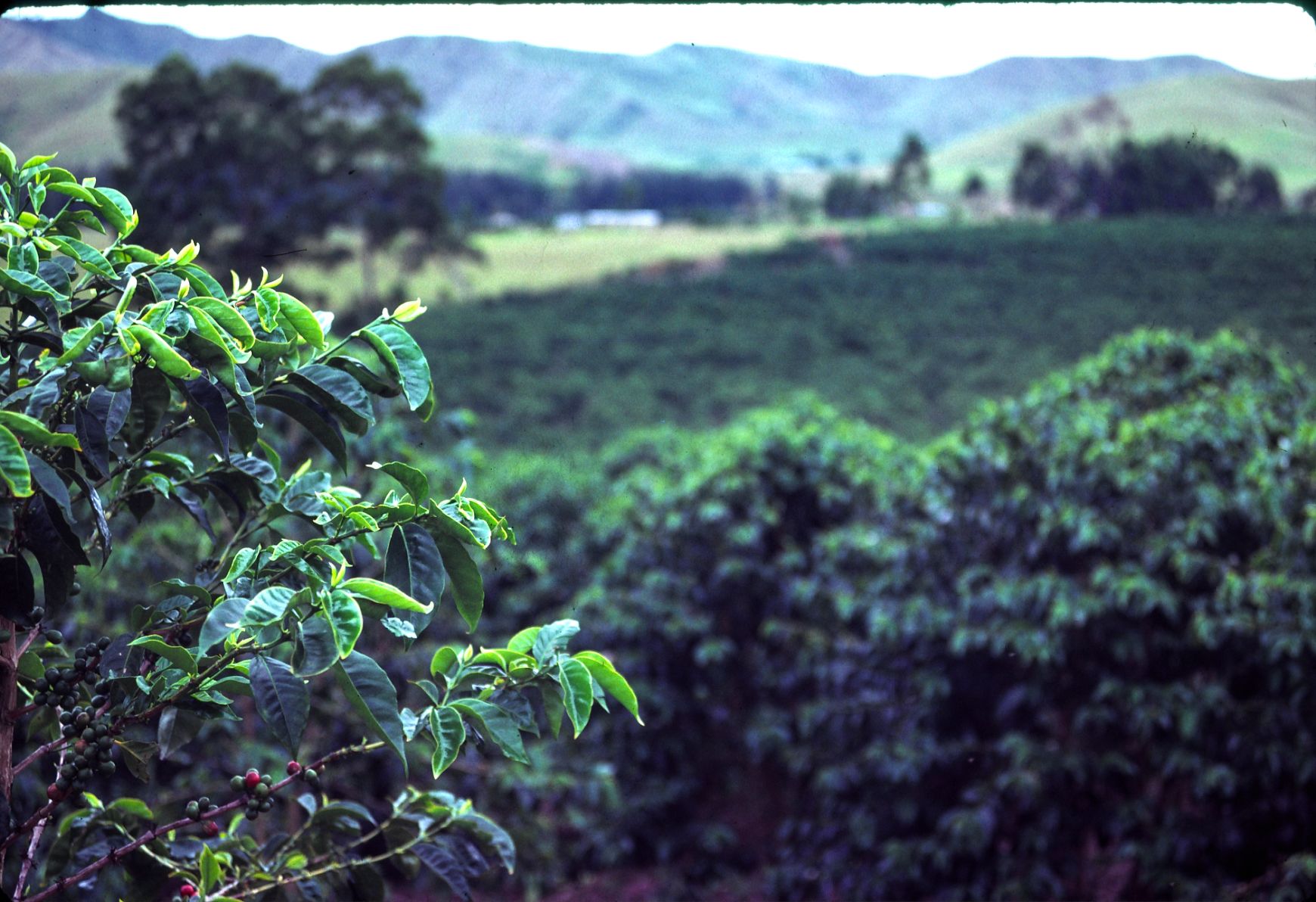
A coffee plantation in Morobe Province
My grandfather’s name means “intelligent” and so he was. Kauc’s coffee garden was planted on his father’s land, miles away from our village.
To harvest the coffee beans; equipment, food, bags, water and all other necessities for processing had to be carried to the garden on foot. It was a labour-intensive method in which cherries are picked, selected and pulped by hand all day and for several weeks.
The remaining flesh from the pulping process was used as composting material for both the coffee and food gardens. Once the bean was dried, it was shelled. The coffee was now ready to sell and grandpa took it to town and in exchange, he bought sugar, rice and a small stick of tobacco. The tobacco was his treat, although he rarely smoked. My mother often wondered why he spent his hard-earned money on tobacco he did not really smoke. She said perhaps he shared it with his friends.
The coffee garden was Kauc’s pride and joy. Being a male and the second eldest in his family, Kauc owned a large piece of land. He was a devout Lutheran and a teacher. Kauc loved the land and he tried some cocoa and his coffee garden for cash.
The coffee garden, near our food garden, was situated less than an hour walking distance from our small coastal village outside Lae, Morobe Province, Papua New Guinea. Kauc grew Arabicas. With a high rainfall and good soil, the trees grew well and produced top quality beans. The family did not drink this coffee. They drank tea which came from Garaina, a sub-district in our province. This coffee garden was purely cultivated as a cash crop.
When the coffee berries ripened they developed a glossy sheen on its deep red shades. My mother, her sisters and my grandparents would go to the garden to pick the coffee and spend the whole day sorting and processing.
Sometimes, they would take a break and make a fire in nearby kunai (grassland) to surround and trap bandicoots for lunch. This made the long day interesting.
My mother said she would feed me milk and lay me down in a bilum (string bag) and hang the bag on a Rosewood branch. Under the shade, the cool breeze kept me asleep while she and her sisters picked coffee. My grandfather washed and peeled the red skins, revealing pale beans. The sisters would pick and bring bags of the red cherries and pour them into my grandpa’s pulper.
“He would stand there in his laplap and T shirt and just turn the handles until the machine skinned and spit the pale brown seeds out the other end. The seeds were collected and dried in the sun. He was in charge of this machine” my mother said.
The trees and in particular, the Rosewood tree became the landmark. Memories of the coffee garden surfaced in a family argument over land allocation eight years ago. My grandfather and his brother were the head of our family and clan. Both men had died three decades ago. Their sons, my two uncles who became head of our clan and land had also died. My mother remains the eldest of the family and clan. Her being a woman brought another cultural and customary argument about where she would live.
According to my cousin brothers, my mother should not have any land. Fortunately for my mother, and for the fact that she was born the daughter of an intelligent man, she stood up for her share. My mother made sure she had spoken to my uncles and got both their approvals before they died. When my uncles asked her to choose, she had marked the land where she used to hang me in a bilum, while she picked coffee with her father. This coffee garden became her land. In memory of her father, my mother named her son Kauc and I named my son Kauc.
ABC reported that the Pacific Climate Warriors have arrived in Australia today to mount a protest against the Australian coal industry and call for action on climate change. The group made up of young Pacific Islanders represent 13 countries. They brought five specially made traditional canoes, which will lead a fleet of boats to blockade the coal port of Newcastle. In the group is the daughter of Marshall Islands president Christopher Loeak.
“The coal port is the largest in the world and there are plans for it to expand and we want to bring the message that the expansion is definitely going to have an effect on the islands, not just in the Marshalls but all over the Pacific,” said Milan Loeak.
“We just want to share our stories and make sure that people are aware that the decisions that are being made over here are directly affecting our islands back home.”
The Warriors are in Australia as part of 350.org’s protest of the port, which will culminate in a flotilla of the Warriors and Australian volunteers blocking coal exports for a day on Friday.
Fiji Climate Warrior George Nacewa said he had already seen villagers displaced by rising sea levels. He said the expansion of the port would have wide-ranging effects.
“These expansions will affect us and I live in a generation that has inherited a perfect environment but I am not too sure if I can pass this on to my kids and future generations to come,” he said.
Getting their send-off in Vanuatu, Iasoa Chief Kawea Sausiara told the Warriors the canoes carry a vital message.
“If climate change is not stopped we will lose our cultural activities. This is the message that we must remember. If not, Vanuatu will be nothing more than a wasteland,” he said.
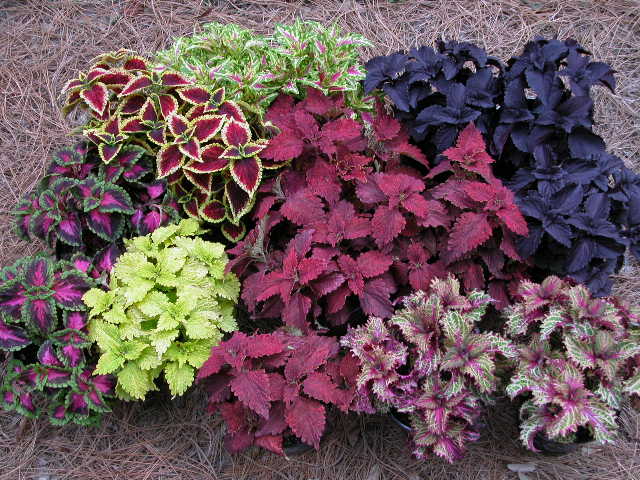
Coleus Canina (pictured above) is one of the most colourful tropical plants with almost every colour you can think of. It is my mother’s favourite plant. I grew up with in Lae, Papua New Guinea (PNG) seeing Coleus growing on the side of our house, along the main road at our village, in our food garden or in the cemetery. Everybody grew some kind of Coleus plant. They are gorgeous. We used Coleus to decorate ourselves when we danced. Sometimes, our people just stuck a small branch of the plant in their hair or hung in on their bags for decoration because it is pretty.
I knew the plant had a distinct smell, but I did not know, in Australia, Coleus was planted to repel animals such as cats and dogs from gardens. Perhaps it is a myth? This attractive perennial herb is actually an aromatic member of the Mint family. They’re native to southern Asia and eastern Africa, and they attract butterflies and bees.
In early 1990s, I was engaged by Peace Corp and the Conservation Melanesian to run some entrepreneur workshop and training for crafts people in the Crater Mountains in Eastern Highlands Province, PNG. I had volunteered to teach the artisans and spend some time learning about their art and the way of living. It was here that I discovered something new about the Coleus plant. Certain types of the plant had strong pigmentation. Women were using the leaves to rub into flax fibres as they twisted the fibres into ropes for making (bilum) bags as pictured below. As they twisted the ropes and rubbed with Coleus leaf, the rope would instantly turn from its natural colour into deep purple, blue and even black. I was amazed.
Dark blue, almost black dye from Coleus plant rubbed into the fibre on this bilum by the Herowana (Crater Mountains) women in PNG.
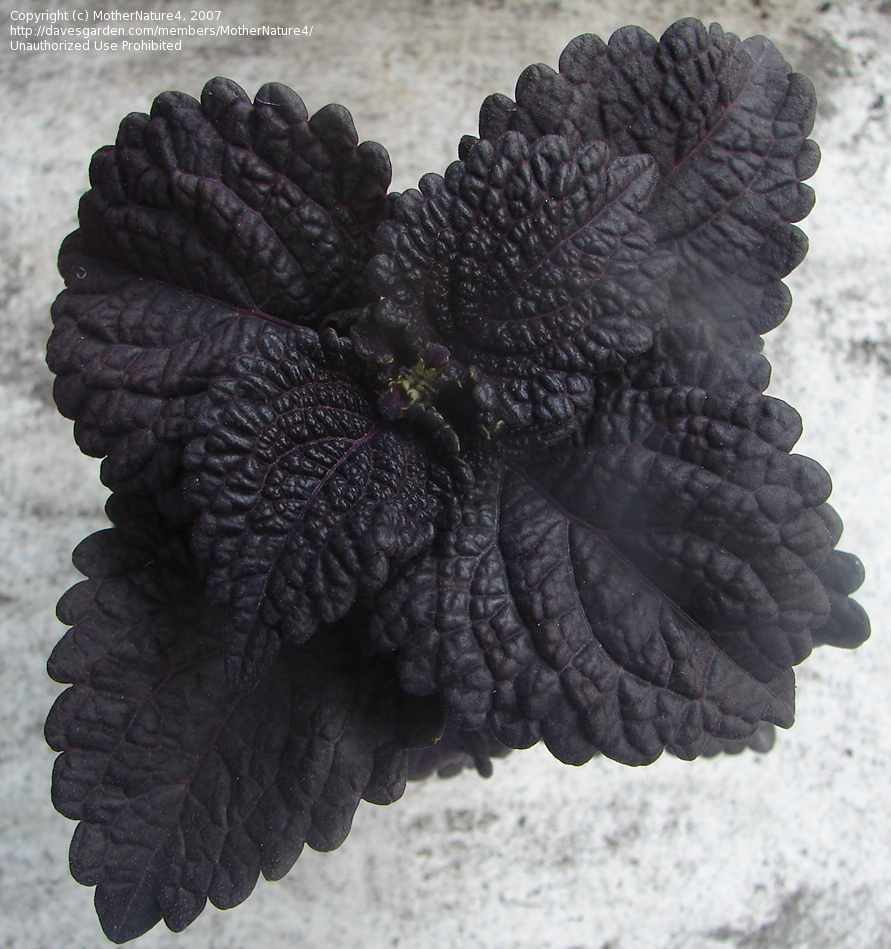
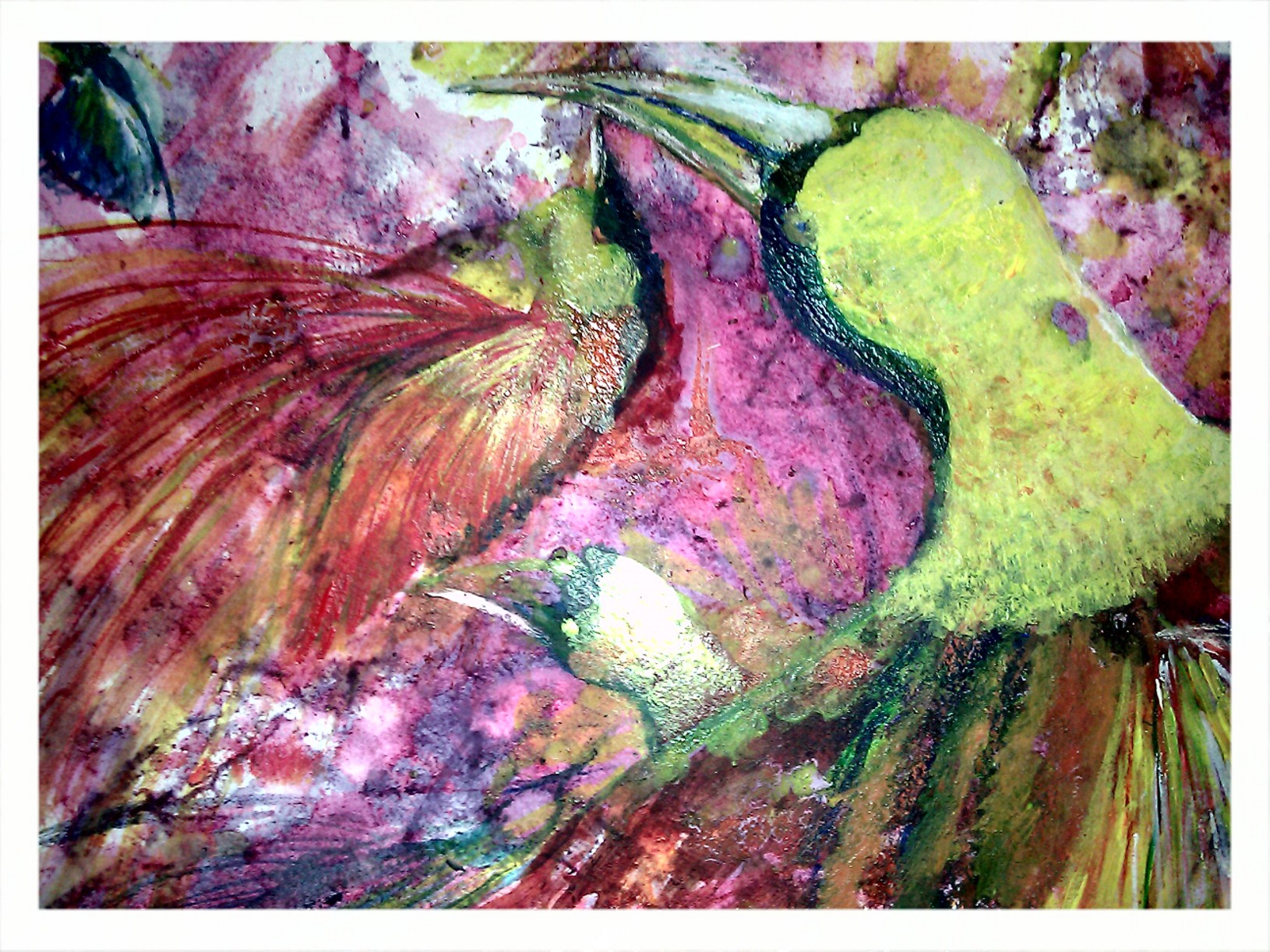
Years later, while living here in Brisbane (Australia) and experimenting with using natural dyes and pigments in my painting, I remembered the Coleus. I had already used coffee, tea, turmeric, beetroot, some grass seeds so it was a refreshing addition to my natural pigments. I had made a trip to the local Bunnings and started growing the Blackberry Waffle, pictured below which gives the strongest colour dye. I made good artistic use out of the plant all summer but unfortunately I lost the Coleus plants in winter. Spring is here so it is warming up and I will start again. That is why I am making this post. Below is an artwork, “Paradise Birds” I created from using a mixture of watercolour and natural pigments from my garden. The pink and purple background in the painting is the pigment/juice from the Coleus plant.
The Blackberry Waffle Coleus – the pigment king.My Art – I painted this mixed media called Paradise Birds with Coleus ‘Blackberry Waffles’ – it is the pink and purple background. I also used the blue seeds from grass and turmeric for the gold and yellow bird heads. This work is on paper.
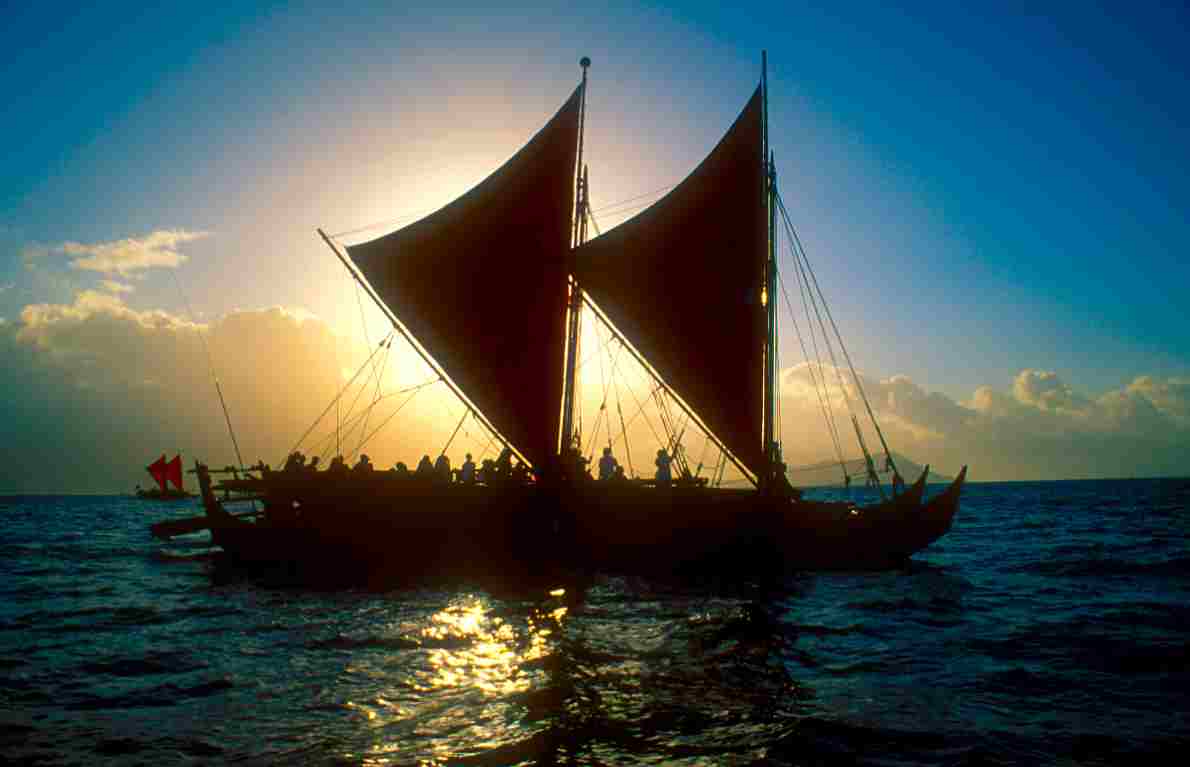
In 1978 Hōkūle‘a set out for Tahiti again. The heavily loaded canoe capsized in stormy seas off of Moloka‘i. The next day, crew member Eddie Aikau (pictured below) on a surfboard to get help. Crew member Kiki Hugho remembers, “We were hours away from losing people. Hypothermia, exposure, exhaustion. When he paddled away, I really thought he was going to make it and we weren’t.” But the crew was rescued; Eddie was lost at sea. After the tragedy, Nainoa Thompson recalls, “we could have quit. But Eddie had this dream about finding islands the way our ancestors did and if we quit, he wouldn’t have his dream fulfilled. He was saying to me, ‘Raise Hawaiki from the sea.’”
Read more in this legendary quest by the Polynesian Voyaging Society to re-live and hold on to a significant intangible culture of the Polynesian people.
I have heard about the Hokulea and recently saw a post in LinkedIn by a friend, Rob Bryan which peaked my interest to make a post. Rob had mentioned that Nainoa Thompson, of the Polynesian Voyaging Society and chief of Hokulea, was back in Hawaii after the first leg of Hokulea’s journey around the world this time (2014). Some of you that read my blog may not know about the story of this great canoe.
Polynesians, Melanesians and Micronesians have for many centuries sailed across the Pacific Ocean on journeys for goodwill and cultural exchange. If you make comparisons to the canoes used in the olden days to our time, you may think that it is much easier, but it isn’t. Even with better ships and technology and better information and transportation systems, sailing across the Pacific ocean is dangerous. Many of us ask the question; why do it when it is so dangerous?
For one man, even when lives are at risk the significance of this voyage is very clear. Thompson said, this voyage is not about the canoe itself but the message of peace and love Hokulea brings. Watch his interview in the link below where Thompson speaks about what it is that Hokulea does and how his crew connect and strengthen relationships with many other cultures with a common object – to safeguard the planet.
Founded on a legacy of Pacific Ocean exploration, the Polynesian Voyaging Society seeks to perpetuate the art and science of traditional Polynesian voyaging and the spirit of exploration through experiential educational programs that inspire students and their communities to respect and care for themselves, each other, and their natural and cultural environments. (http://www.hokulea.com/vision-mission/)
There is a lot of information on the web about Hokulea and her sister canoe Hikianalia. Here are links to view an insight into what takes place on the journeys and meet some of the people onboard. The other link is the important interview with Nainoa Thompson about the significance of Hokulea and what the journey and its culture means to his family, Hawaii people and other Polynesians. The links also provide some background about the history of Polynesian voyaging canoes.
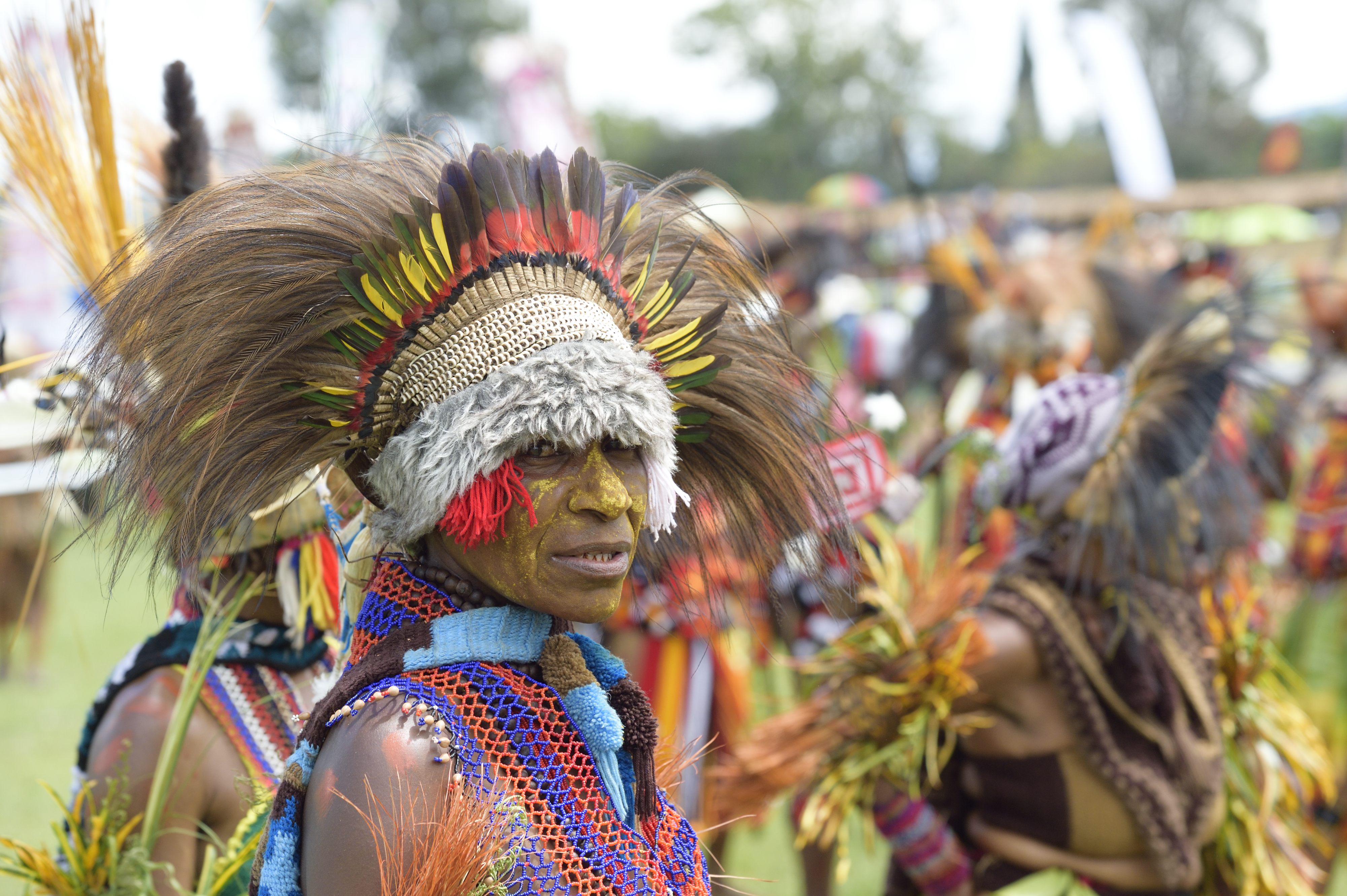
In my last post, The Centrepiece, I wrote about learning and making my own headdress. Here, I wanted to show in colour, some of the most beautiful headdresses from Papua New Guinea (PNG). There are too many to show but I have made a random selection of headdresses in these unpublished photos from a recent cultural show. Our culture, the art and body adornment are some of the most colourful things that attract photographers from across the world. In every tribe and the work we put into most of our traditional costume preparation before we show, the headdress remains the centrepiece.
These images were taken by a close friend and a well-known PNG-based photographer. Lucky for me, he had just returned from the annual Goroka Show where he captured these images.
For more pictures from this photographer, please visit: http://www.rockyroephotographics.com/
At the age of 15, in high school, I wore the same headdress my grandmother and I made. To date, I have this precious item with me. It has changed, lost some feathers but it still works as a centrepiece every time I wear it on my forehead.
Memoir series by JLeahy
Mother returned from the Lae city markets. It was a Saturday afternoon. Today, we were preparing for a big singsing in our village. We were preparing our best for the Annual Morobe Show. There would be hundreds of tribal groups and performers so, we had to wear only authentic costumes. We had to wear the costumes carrying markings and stories of our people and the costumes we inherited from our ancestors. I needed a centrepiece for my headdress.
As she came up to me, I searched Mother’s face for emotion. She teased my un-spoken questions with the twinkle and mystery she showed in her eyes. Finally, she was smiling. Her lips remained sealed more so because she was chewing but I knew she got it. I broke a smile at her and completed my task.
“There was only one Highlander selling two tiyeng ngawahu (Bird of Paradise plumes) and I bought one”, she said.
“Ohhh ngayam!” grandma responded in Bukawac, meaning “good”.
Grandma was pleased the mission was accomplished.
I sat next to Grandma, helping her to twist the sisal fibres on my thigh into strings. We twisted two separate bunches of single fibres which formed a string. Then, we dyed the strings yellow and orange with turmeric roots, and red from Mbuec, a tree that gave red dye in its seed pods. To get grey, we buried the other strings in the muddy banks for a few weeks. For the black we used crushed charcoal with coconut oil. Once dried, Grandma used a ‘needle’ made from a 15cm long re-cycled and sharpened wire. This ‘needle’ came from the inside of a broken umbrella bone. Grandma sewed the strings into bilums (string-bags). The new bilums will be worn in the dance on the day.
We used some of the strings to thread scented leaves and herbs for breast decoration. These same leaves were used for magic, but I was not allowed to know. Not yet, Grandma said.
As she tried to speak, Mother’s mouth was full of red chewed betel nut and she needed to spit. She eased her bilum of food down in a heavy thud. She fished in her smaller shoulder bilum and spat. She held out her hand with a crumpled newspaper wrap.
I jumped up to grab it.
“Careful!.. be careful!”
I was thrilled. Without searching her bag as I usually do for the market gifts of peanuts, green margarines and cucumbers, I turned away from Mother. I smiled at the faded newspaper as I bent and laid the small light bundle on the dry sand next to my twisted strings. I sat down and brought Mother’s parcel to my lap and un-wrapped it.
I was afraid to touch her at first. The bird was beautiful and so soft. A spot of black around her beak. Green velvet on her neck and breast. The rest of her body was a burnt butter yellow with a white centre and a beautiful pale yellow outer-feathers. The base of the main feathers was an intense, vibrant golden-yellow which faded out into white. Her inside was gone. It was shallow. She had been dried, smoked and flattened.
I suddenly felt a pang of guilt and pain swept over me. I thought of the bird flying high and calling out in the trees and I wondered if she suffered. I felt more guilty about this bird than the chickens which I already had feathers from. I was seven and never held a real Bird of Paradise in my hand, even a dead one. I had seen many on headdresses during the festivals. I have held other birds and had parrots as pets. I looked at the bird a little more, each faint wiry piece that joined the next. Then I reached out and touched her.
Of the 39 species of the Birds of Paradise in the island of New Guinea (PNG and West Papua), this one, known as “Greater Bird of Paradise” was the most precious centrepiece for our tribal headdress. The birds did not live in our bush. Our people traded and bought the feathers from the highlanders.
Mother had to seek out hunters from Western and Southern Highlands who rarely brought the feathers to the main market in Lae. She was very lucky today.
To have a Bird of Paradise as your centrepiece was the ultimate dream of every dancer in our tribe. Many other Papua New Guinean tribes wore numerous plumes in singsings. Many more longed for such honour but only settled for parrot, cassowary, and chicken feathers. This bird was our National emblem.
In our Wagang village singsing group, most people wore cockatoo, parrot, cassowary, turkey, guinea fowl and chicken feathers – all made into spectacular head pieces.
I laid out the Bird of Paradise plume and stitched it into my headdress. The headdress was made of feathers and shells, sewn onto a tapa cloth. Most of the headdress was completed days before. I was only waiting for the centrepiece. The cloth would be tied around my head. The Bird of Paradise would be the centre feature. When I wore the headdress, the golden-yellow, wispy and silky soft feathers would sit high above and dance. The beak would be looking down at me and her tail would move with me as I danced the we-e si-ing (war dance).
Protected Species – the Birds of Paradise are a protected species in both Papua New Guinea and West Papua (Indonesia)
Birds
Much sought after as pets or for their feathers, several birds of the forests of New Guinea such as parrots, lorries and birds of paradise are illegally exported for trade. But just the local use of a species can be detrimental to its survival; wildlife capture and trade of cassowary for traditional use has severely reduced their populations in some areas and where they remain, there is increased pressure for trade.7
Birds of paradise have also been historically traded, especially for their feathers. While West Papuans’ use of the birds’ feathers in cultural celebrations is part of their tradition, Europe was once the main market for the plumes, to be used for women’s hats and accessories. Trade peaked in the late 19th century, when plumes from more than 50,000 birds were exported every year, generally to Paris for capes and hats.8
Birds of paradise continue to be smuggled out of Papua Province, Indonesia. The trade in the birds adds to the pressure they already get from continued hunting and the destruction of their habitat by logging, road construction and conversion for human use. Although banned by the Indonesian government since 1990, trading in the feathers of the birds of paradise is still ongoing.9
In July (when it was pretty cold) I went to Adelaide to surprise my friend Anne Stanley who turned 50. I had known her since we were 16 and 17. We have lived in different countries for the past 30 years but whenever we spend time together, it seems like we have never parted. Anne, not only is my best friend, but a sister. I will feature her one day on this blog if she lets me. While I visited Anne, I went to South Australia Museum (SAM). http://www.samuseum.sa.gov.au
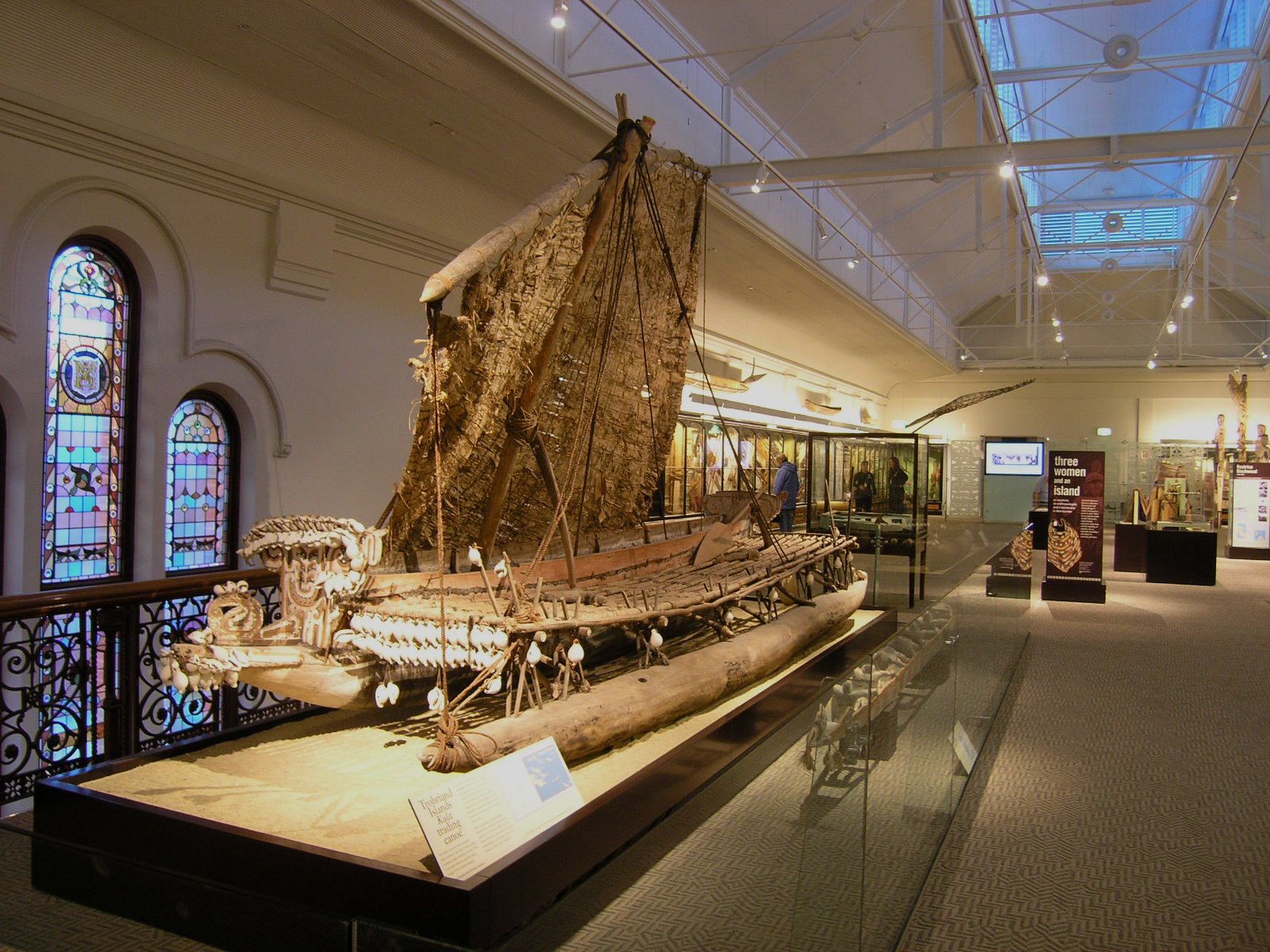
In a way, I have Anne to thank for my museum visit. In fact it was Kolohie, Anne’s eldest who gave me a guided tour of the city and took me to SAM, but guess what, it was Aunty Joyce who gave Kolohie the guided tour of the Oceanic/Melanesian collection at SAM, so he could learn a little about his culture. While we were in SAM, it was an opportune time to visit an another ‘old’ friend, Sopikarin. Of course she is not a person but this outrigger canoe from the Trobriand Islands of Papua New Guinea. I had done some research and with tremendous help from Dr Barry Craig, written an article about the Sopikarin’s journey from PNG to Australia during my museum studies in University of Queensland 2008. I had never seen the canoe until I went to Adelaide. The funny thing was, all this time I had thought Sopikarin was a much larger canoe.
Can you just imagine the number of men with all their goods, trading in this canoe for weeks on open seas?
Skull collection at South Australia Musuem (SAM) which I did not like personally but I love the two round shields positioned at the bottom of the skulls. I have never been a great fan of museums collecting skulls or other remains of humans.This is Sopikarin, the supposedly the last of the Kula trading canoes purchased by SAM which I featured on my blog in February 2014. https://tribalmystic.me/2014/01/09/sopikarins-new-journey/
Below are links to SAM and a picture of Dr Barry Craig taken during his field work in Papua New Guinea.
A Turkish fashion designer has been accused of “misappropriating” Pacific Island designs in her collection at London Fashion Week recently.
Gul Agis’s “Tribal Attitude” is said to have been inspired by Turkey’s heritage and recent protests in Istanbul.
Some of the designs are based on the Ottoman Empire and Turkey, many others bear a strong resemblance to Maori design.
The accusation comes less than a month after global sports giant, Nike was forced to stop production on a women’s line of tights.
The Samoan tattoo-inspired collection caused a huge global backlash from the Pacific community worldwide.
Aroha Mead, Program Director of Maori Business at Wellington’s Victoria University told Pacific Beat Gul Agis’s collection stole from Maori culture.
“We are all inspired by the beauty of other cultures,” Ms Mead said.
“But there’s a big difference between being inspired by something and then outright stealing it.”
Unfortunately Pacific designs are not protected by intellectual property laws or copyright, so international designers have been able to use them without permission.
“You can prove in quite tangible ways that the ownership of them is retained by the community,” Ms Mead said.
“There’s enough work that’s been done that you can track a design down to the artist or to the community that it comes from.”
Sports brand Nike makes public apology
Nike recently found itself at the centre of controversy over a pattern of women’s tights that closely resembled a traditional Samoan tattoo reserved only for male chiefs.
The collection sparked an uproar within Pacific communities around the world who protested on social media and rallied together by signing a global petition.
Samoans found the range exploitative and succeeded in getting it pulled off the shelf.
Samoan Prime Minister Tuilaepa Sailele Malielegaoi told the Savali newspaper “Those are our Samoan measina (cultural treasures). It’s our heritage and our cultural property. We should all be protective of it.”
“It should not be randomly exploited for commercial use as it has been in this case. Especially when we are getting absolutely nothing from Nike.”
Nike made a public apology to the Pacific community worldwide saying the collection was inspired by tattoo graphics and they did not mean to be insensitive or offensive to any specific culture.
Samoan prime minister has since instructed the Ministry of Commerce and Industry to look at how they can protect their traditional designs.
Alongside Nike, New York designer Nanette Lepore also apologised on Facebook for a collection of dresses she had designed featuring Fijian kesakesa motifs.
The apology came after Fijians around the world protested on the brand’s Facebook page.
What seems to be particularly offensive within Pacific communities is international designers appear to have not bothered researching the background of the designs they are using.
“[Nanette Lepore] took those Fijian prints and didn’t even bother finding out where they came from before she called them Aztec – she promoted those designs as Aztec designs.” Ms Mead said.
Samoans around the world were upset about their traditional tatau designs being exploited but were more angered by the fact that the cultural meaning behind the design was disregarded.
One petitioner on change.org complained that seeing women wear a tattoo specifically designed only for a male chief was both wrong and offensive.
Another wrote: “This reduces [tatau] to patterned tights rather than assigning it the mana (strength/respect) that it warrants.”
Hollywood star Dwayne ‘The Rock’ Johnson alongside Rugby heroes like Sonny Bill Williams have added to the growing popularity of Pacific tattoo designs.
In many creative industries there is a common misconception that some traditional cultural expressions are public domain.
World Intellectual Property Organisation are currently in negotiations to arrange an international convention on intellectual property and genetic resources as well as traditional knowledge and folklore.
Museum Loan Network: Pacific Instruments Collection
For over a century, The Field Museum of Natural History has amassed a world-class permanent collection of over 55,000 objects that represent the varied cultures of the Pacific. The Field Museum’s Pacific Musical Instrument Collection includes over 1,000 specimens from a number of different localities, the majority of which (4/5 of the collection) come from Papua New Guinea. Also represented in the collection are musical instruments from Vanuatu,IrianJaya / West Papua, Indonesia, Fiji, Hawaii, New Zealand, Samoa, the Solomon Islands, New Caledonia, Tahiti, the Marquesas Islands, Palau, Micronesia, and the Austral Islands.The musical instruments in the Pacific collection represent all 4 classifications of musical instruments:Aerophones (wind instruments),Chordophones (string instruments),Idiophones (percussion instruments), andMembranophones (drums with membranes). The 384aerophones in the collection include a number of bamboo flutes, panpipes, whistles, shell and wooden trumpets, and a variety of woodenbullroarers. The 11 chordophones in the collection include a few musical bows and tubezithers. The 249idiophones in the collection include large wooden slit drums, friction blocks, rattles made from shells and nutshells, and a number of bamboo mouth harps. The 381membranophones in the collection include an impressive number of 330kundu, or hourglass-shaped drums, usually topped with a reptile-skin head, from Papua New Guinea.As with many of The Field Museum’s collections, the first musical instruments in the Pacific Collection, 21 in number, were acquired in 1893 for the Chicago World Columbian Exposition. The largest addition to the Pacific Musical Instrument Collection (approximately 335 specimens) came to the Museum in 1913 when curator A.B. Lewis returned from the South Pacific. Having joined The Field Museum’s Department of Anthropology in 1908 as Assistant Curator of African and Melanesian Ethnology, Albert B. Lewis immediately went to Melanesia to lead the Joseph N. Field South Pacific Expedition. The four-year long expedition netted some 12,000 objects of Pacific material culture that Lewis spent most of the rest of his career cataloguing. A complete analysis of the expedition was recently published by The Field Museum’s Adjunct Curator Robert Welsch (1998; An American Anthropologist in Melanesia: A.B. Lewis and the Joseph N. Field South Pacific Expedition, 1909-1913. University of Hawai’i Press). An early proponent of systematic anthropological research, A. B. Lewis left behind a richly documented ethnographic collection. The most recent additions to the Pacific Musical Instrument collection include the donation by Eugene Giles of a rare pottery drum with reptile-skin head from Morobe, Papua New Guinea and an impressive collection of instruments, 55 in total, donated by ethnomusicologist Dr. Vida Chenoweth, who between the years of 1959 and 1975 amassed a collection of 700 artifacts in the Usarufa community in the Eastern Highlands of Papua New Guinea.
Museum Loan Network: Pacific Instruments Collection
For over a century,The Field Museum of Natural History has amassed a world-class permanent collection of over 55,000 objects that represent the varied cultures of the Pacific. The Field Museum’s Pacific Musical Instrument Collection includes over 1,000 specimens from a number of different localities, the majority of which (4/5 of the collection) come from Papua New Guinea. Also represented in the collection are musical instruments from Vanuatu, Irian Jaya / West Papua, Indonesia, Fiji, Hawaii, New Zealand, Samoa, the Solomon Islands, New Caledonia, Tahiti, the Marquesas Islands, Palau, Micronesia, and the Austral Islands.
The musical instruments in the Pacific collection represent all 4 classifications of musical instruments: Aerophones (wind instruments),
Chordophones (string instruments), Idiophones (percussion instruments), and Membranophones (drums with membranes). The 384 aerophones in the collection include a number of bamboo flutes, panpipes, whistles, shell and wooden trumpets, and a variety of wooden bullroarers. The 11 chordophones in the collection include a few musical bows and tube zithers. The 249 idiophones in the collection include large wooden slit drums, friction blocks, rattles made from shells and nutshells, and a number of bamboo mouth harps. The 381 membranophones in the collection include an impressive number of 330 kundu, or hourglass-shaped drums, usually topped with a reptile-skin head, from Papua New Guinea.
As with many of The Field Museum’s collections, the first musical instruments in the Pacific Collection, 21 in number, were acquired in 1893 for the Chicago World Columbian Exposition. The largest addition to the Pacific Musical Instrument Collection (approximately 335 specimens) came to the Museum in 1913 when curator A.B. Lewis returned from the South Pacific. Having joined The Field Museum’s Department of Anthropology in 1908 as Assistant Curator of African and Melanesian Ethnology, Albert B. Lewis immediately went to Melanesia to lead the Joseph N. Field South Pacific Expedition. The four-year long expedition netted some 12,000 objects of Pacific material culture that Lewis spent most of the rest of his career cataloguing. A complete analysis of the expedition was recently published by The Field Museum’s Adjunct Curator Robert Welsch (1998; An American Anthropologist in Melanesia: A.B. Lewis and the Joseph N. Field South Pacific Expedition, 1909-1913. University of Hawai’i Press). An early proponent of systematic anthropological research, A. B. Lewis left behind a richly documented ethnographic collection. The most recent additions to the Pacific Musical Instrument collection include the donation by Eugene Giles of a rare pottery drum with reptile-skin head from Morobe, Papua New Guinea and an impressive collection of instruments, 55 in total, donated by ethnomusicologist Dr. Vida Chenoweth, who between the years of 1959 and 1975 amassed a collection of 700 artifacts in the Usarufa community in the Eastern Highlands of Papua New Guinea.











 Tribalmystic Stories
