Category Archives: Art

Museum of Digital Fine Arts


MODFA

at-the-modfa

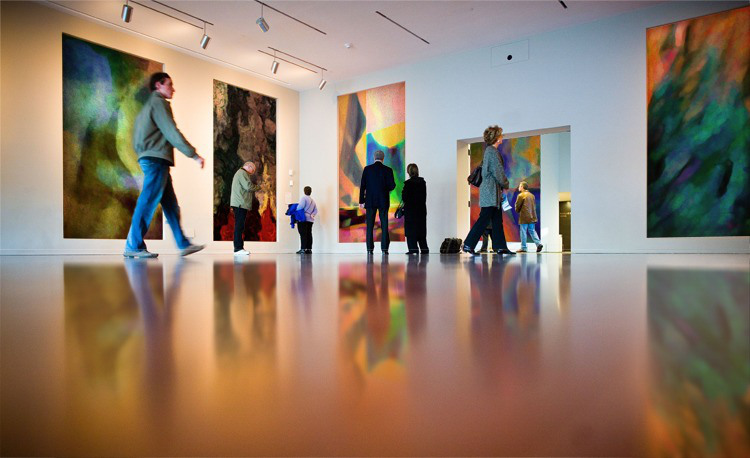
I recently met (virtually) Solomon Walker, Canadian Artist and owner of the Museum of Digital Fine Arts(MoDFA). A virtual museum was something I had been thinking about and was excited to find MoDFA and how well Solomon has set it up.  An Australian curator friend, Jenny Fraser has had several; digital curatorial projects for Pacific Arts and I thought it would be a great idea for some of the projects I was involved in. A digital museum provides an opportunity for those of us that are limited by location, time and money to go and see some wonderful art. For  curators, a digital space requires less funding and all the  hassles that come with running a real exhibition. One can argue that nothing beats the real thing, but if you cannot travel to Paris or New York to see something beautiful and amazing work, digital space is the place to go in this day and age.

“I was really looking for a place to show my own artwork, and that’s how I thought of establishing the virtual museum”, Walker said.

Established in 2008, Walker through the museum, quickly filled a void in establishing a collective space for online art world, showcasing some of the very best work rendered in the new Digital Medium. The MoDFA provides essential exhibition opportunities for both emerging and established artists and photographers on an international scale. Artists who create stunning works of art primarily with modern electronic tools that includes computers, tablets, scanners and digital cameras can show their work in this space. Though existing virtually online, the MoDFA provides a unique public exhibition space and forum for introducing and displaying brilliant contemporary Art and Photographic images from some of today’s most creative individuals across the globe.The MoDFA is dedicated to Digital medium creativity. To show or to curate or volunteer for the museum, visit link below and speak with Solomon Walker.

http://museumofdigitalfinearts.wordpress.com/at-the-modfa/

Shakuhachi – One Man’s Meditation


I found this beautiful story on Jonnathan Dunnemann blog.

I come from Papua New Guinea where traditional bamboo flutes are played in most of our regions. My mother plays the flute. It was a beautiful sound I grew up with.  The Shakuhachi is a Japanese bamboo end-blown flute, which has a rich culture and history associated with it. It is believed the Chinese brought Shakuhachi to Japan in 6th Century.

Blind New Zealander Kevin Falconer has made the sound of bamboo his own by developing his own relationship with bamboo, the craft and the Shakuhachi music. I found his story very moving and at the same time very inspiring. We are only limited by what we set for ourselves.

Kelvin Falconer walks through his bamboo groves, with tall shoots of bamboo towering over him. The bamboo littered with beautiful hand-made terracotta tags that Kelvin has made for knowing how long each culm has been growing for.
Once he finds a suitable shoot he proceeds to patiently craft the bamboo using only his senses of touch and hearing. At a glance Shakuhachi appear to be simple instruments but the understanding and skill in shaping even a basic flute is something which requires Kelvin to have an acute knowledge of the physics of sound and a finesse to fine tune each unique culm of bamboo.
Through playing the Shakuhachi, Kelvin is able to develop a calmness which he describes as ‘Meditation through Sound and Breath’. Through watching him craft a flute from beginning to end we are witness also to a craftsman putting his all into every detail.
Kelvin shows us that the Shakuhachi is a tool that can bring calm and focus to distracted and stressed Minds. His flute becomes a metaphor for what we ‘make’ in our own lives and through his craft he transcends his perceived disability and the limitations of Blindness.
Type: Documentary
Country: New Zealand
Year: 2012
Filmmaker: Michael Hobbs
Format: Digital 1080
Language: English
Subtitles: N/A
Colour: Colour
Film Ratio: 16:9
Sound Type: Stereo
Running Time: 11m38s

Crocodile scarification: An ancient Chambri Initiation


Crocodile scarification is an ancient initiation practised by the Chambri tribe of Papua New Guinea.

591002-b7a7b3b6-2111-11e4-9066-0beb7f687196
The Chambri tribe believe they evolved from the mighty crocodile. Source: Supplied

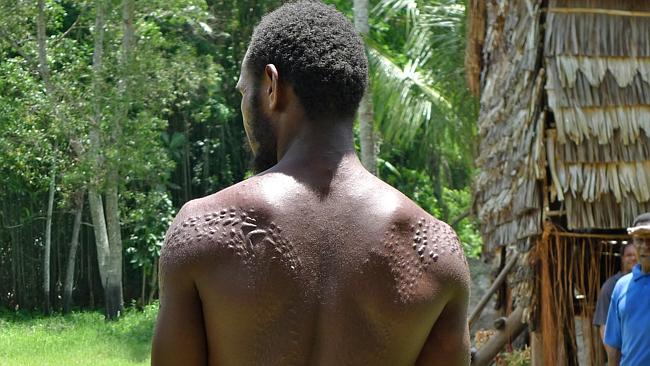
DEEP within the jungle of Papua New Guinea (PNG), there is an ancient initiation tradition that turns boys not into men, but into crocodiles. The men of the Chambri tribe in the East Sepik province of PNG practise crocodile scarification, an initiation for boys entering manhood during which their skin is cut and scarred to represent the scales of a crocodile.

The Significance of the Crocodile

The crocodile is a significant spiritual and symbolic animal in PNG, and the Chambri tribe believes it descends from the powerful predator. The ancient myth tells the story of how crocodiles migrated from the Sepik River onto land to eventually become humans.

563191-03e737bc-2115-11e4-9066-0beb7f687196
In Papua New Guinea it is thought men evolved from crocodiles. Picture: Nina L. Chang.

In recognition of this ancestral connection, the young men of the tribe are inflicted with hundreds of deep cuts in cascading patterns down their backs, arms, chest and buttocks to give their skin the look and feel of a crocodile’s body.

The Scarring Procedure

The intensely painful scarring procedure involves discipline, focus and dedication. The young initiate first joins his uncle in a spirit house, where he is held down while tribal leaders make hundreds of slices roughly, two centimetres long, into the boy’s skin with a bamboo sliver.

There is no pain relief other than the chewing of the leaf of a medicinal plant, as the young boy must show enough strength to prove he is a man. The Chambri people believe that by suffering immense pain at a young age, they will be better equipped to withstand pain later in their lives.

Croc-3(pp_w570_h379)
Photo: David Kirkland

Once the cuts have been made, the boy lies near a fire where smoke is blown into the wounds and clay and tree oil pushed into the cuts to sculpt the scars so that they remain raised when healed.
Then the initiates are adorned in an ornate headdress and jewellery at a big tribal ceremony, where the boys officially become not men, but crocodiles.

http://www.news.com.au/travel/world-travel/crocodile-scarification-is-an-ancient-initiation-practised-by-the-chambri-tribe-of-papua-new-guinea/story-e6frfqai-1227021565106?utm_source=outbrain&utm_medium=cpc&utm_campaign=travel


“Let’s sit and talk”


Arabic Letters As Sculptural Loungers

Azure-Arabic-Letters-As-Sculptural-Loungers-02
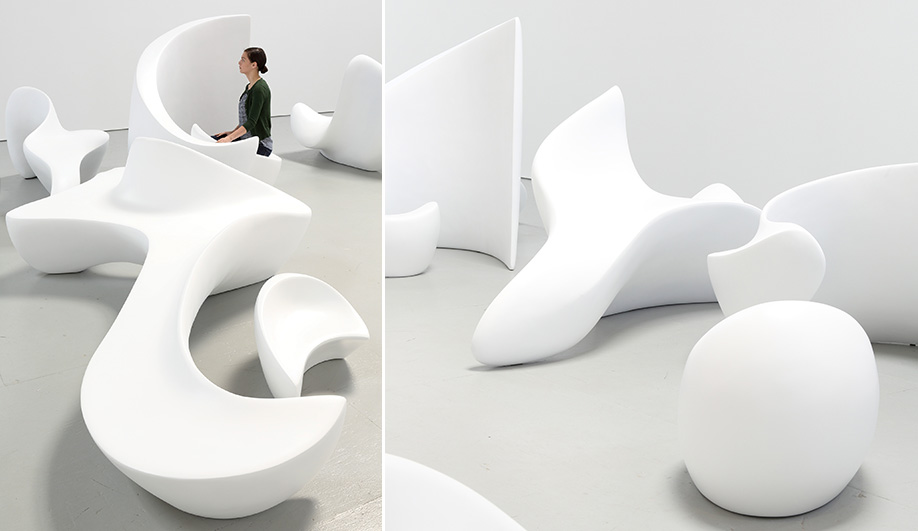
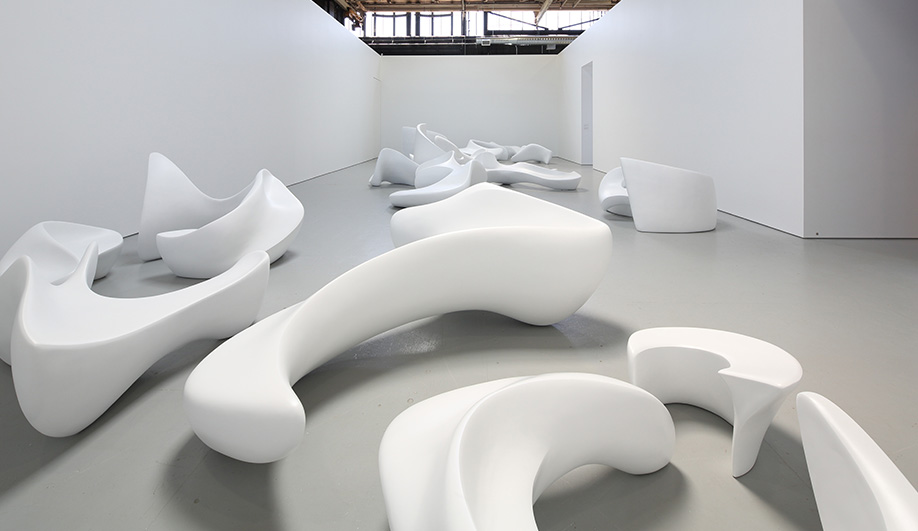
Made of ultra-dense Styrofoam coated with polyethylene, the furniture-like sculptures are three-dimensional renditions of Arabic script.

My Cool Stuff feature for this week are these 3D sculptures by Marie Khouri. I fell in love with these lounges, a design truly created for dialogue. The beautiful pieces are on a touring exhibition. Look at them, aren’t they exquisite? What a clever design!

Azure-Arabic-Letters-As-Sculptural-Loungers-01

Story by Adele Weder 

The sensual shapes in Marie Khouri’s installation, recently on view at Vancouver’s Equinox Gallery, spell out “Let’s Sit and Talk” in Arabic. 

Design speaks to us on the most visceral level, but few can render its language as literally as Vancouver-based artist Marie Khouri. Her latest installation, Let’s Sit and Talk, exhorts us, in word and form, to connect with one another. Each of the 15 pieces is a sculpture you can sit on.

Azure-Arabic-Letters-As-Sculptural-Loungers03

Together, they spell out the exhibition’s title, sculpted in beautiful cursive Arabic script. The quintilingual Khouri, born in Egypt, raised in Lebanon and trained in Paris, has made a career of conflating art with function: through her design studio, she also makes and sells jewellery, wine racks, benches, chaises longues and planters – all of which double as discrete sculptures.

Read more here:

Arabic Letters As Sculptural Loungers

http://www.westender.com/arts/sculptor-marie-khouri-explores-art-of-dialogue-1.1080457

Dragonflies can see it ALL


They have Super Sights

Photo_B60AD23C-4342-E4A5-C87E-42294D6E87CB
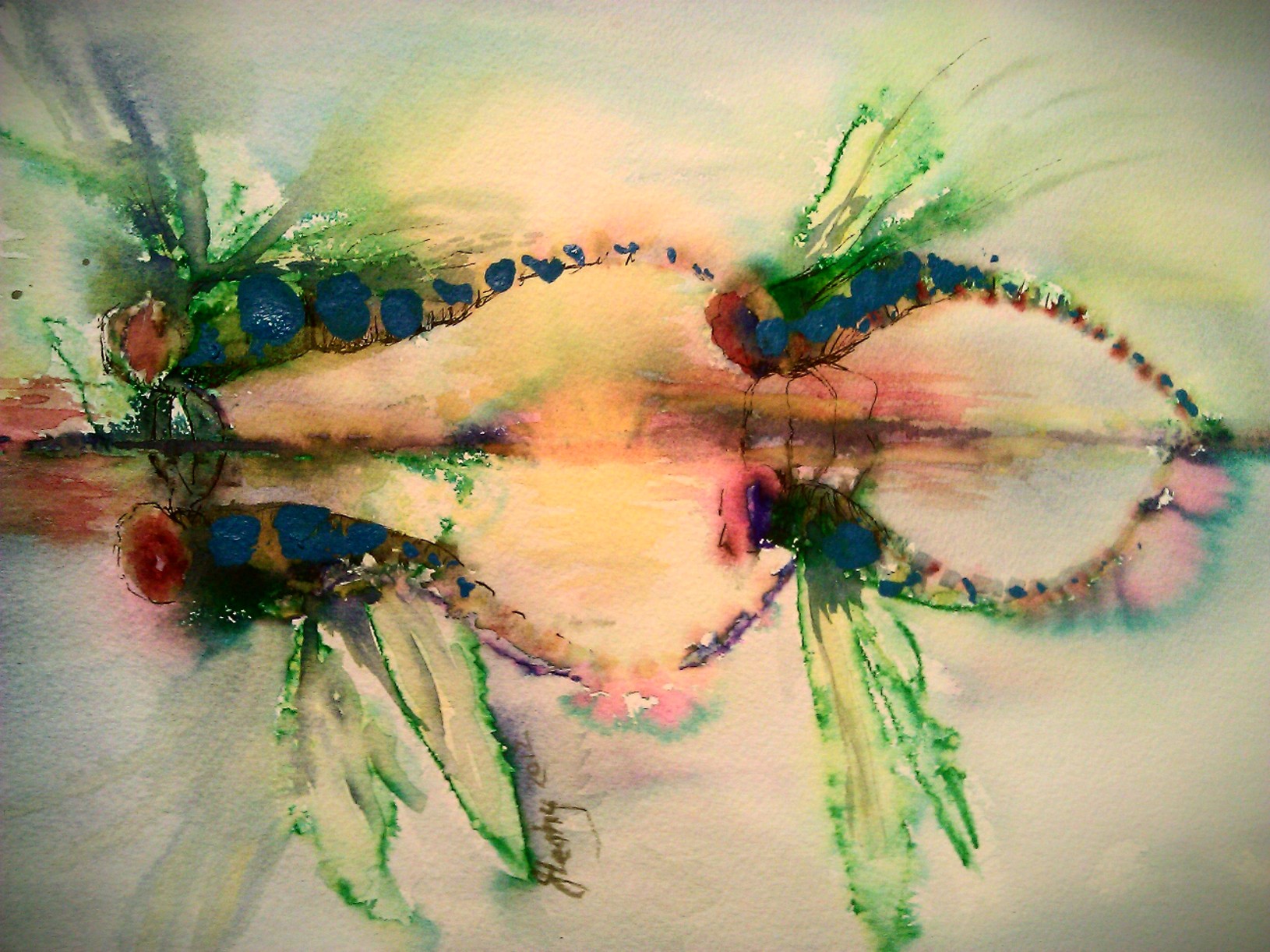
Mating dragonflies on water. Watercolour and inks on paper. J.Leahy. 2012

Dragonflies are loved by most humans. They are very fast, roam free, and live for a short time. They make the most of their lives; something we humans are not often known for. I absolutely love the insect myself. I have done numerous studies (as in art form) on dragonflies, and in the process of researching dragonflies, found a lot of interesting information about them. They are said to be lucky omens in some cultures. I wanted to share this story from Andrew Handley about dragonflies, although, his article implies the insect is monstrous. See the YouTube video for more insight into their habits.

They’re Efficient Hunters

https://www.youtube.com/watch?v=zNbTByRGPmI

That example did serve a purpose though—dragonflies are incredibly efficient at what they do, bringing in close to 95 percent of the prey they set out to capture. For comparison, sharks, one of nature’s fiercest predators, only manage to catch about half of the prey they hunt. Lions, the shark of the land, are lucky to get their claws on a quarter of their targets. See, even lions don’t calculate to intercept—they chase, zigzagging through the savanna in response to the movement of their prey. If dragonflies were large enough to eat gazelle, lions would be starved into extinction through sheer inefficiency.When a dragonfly sets its sights on a target, it will almost always end up with a meal. 

e716e7467a9271ac8d0561f24e2c4497

The dynamics of capturing an object in mid-air are staggeringly complex, so much so that it’s usually something that’s only done by animals with complex nervous systems, like seagulls, or humans. To intercept something moving with its own velocity, you have to be able to predict where it will be in the future. When researchers began studying dragonflies in 1999, they found that rather than “track” their prey—follow it through the air until they caught up with it—they would actually intercept it. In other words, dragonflies ensure a kill by flying to where their prey is going to be. That indicates that dragonflies calculate three things during a hunt: the distance of their prey, the direction it’s moving, and the speed it’s flying. In the space of milliseconds, the dragonfly calculates its angle of approach and, like a horror movie monster, it’s already waiting while the hapless fly stumbles right into its clutches.

Read more from the link below: http://listverse.com/2013/04/18/10-surprisingly-brutal-facts-about-dragonflies/

Cool Stuff – Female torsos made from re-cycled materials


female-torsos-recycled-material-12_VCJmZ_18770

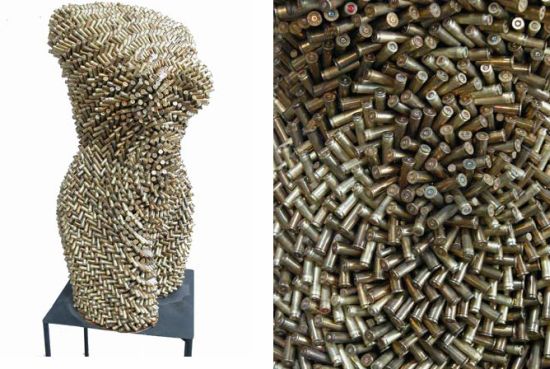
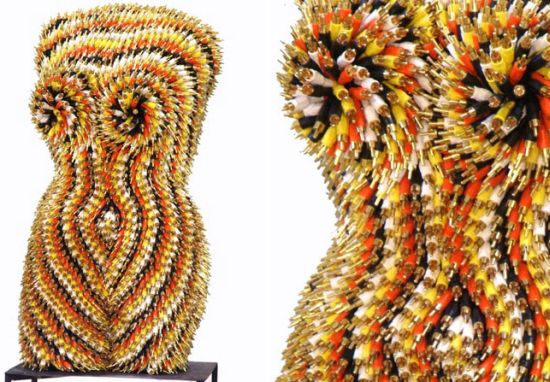
This collection of Columbian artist Federico Uribe’s work may be classified more as a “hot stuff” as well as a cool one. Federico is one of my favourite artists in the world. He is known for his great paintings and other art forms but I chose this collection for “Cool Stuff”. How exquisite is this collection, giving life back into discarded day to day materials?

Federico Uribe

Crafting human form in recycled objects defines Federico’s salvaging act of rediscovering use in things abandoned. Uribe randomly selects material raging from keyboards, coins, locks, dominoes, padlocks, paperclips, plastic fruits etc to transform them into beautifully shaped female torsos with enticing sensual presence.

female-torsos-recycled-material-1_HAHJQ_18770

 Art in recycling

The magical pieces of art imbued with great aesthetics assert usefulness in objects discarded. His creative assemblage affirms recycling to save our environment by realizing useful permanence in what had had been sidestepped as throw away.

female-torsos-recycled-material-11_UXQkg_18770


http://www.greendiary.com/diyer-assembles-recycled-materials-to-create-sensually-enticing-female-torsos.html

Work

More on this amazing artist’s work on this blog soon.

The Momentum Of Life


There is momentum in good deeds that create ripples and also momentum in good intentions that are never appreciated.

Life is like that.

Special CG short from animation studio HouseSpecial – More of our work: housespecial.com/all/
Portland, Oregon
Follow us – twitter.com/housespecialpdx & instagram.com/housespecialpdx
Kirk Kelley, Creative Director
Kameron Gates, Director
From an Original Story by Allan Turner and Kameron Gates