I have been writing less to allow my right arm and shoulder to heal. It seems to have taken forever.
With making artwork, I use different muscles and the work takes my mind of pain. I returned to some of my old paintings. These were mostly unfinished artwork, to see if I can finish some. Here is one of my work from 2014, “Liklik Meri” which means little girl in Papua New Guinea (PNG) pidgin. She is from the highlands. I enjoy painting our highlanders because they have gorgeous and colourful dresses. Often these traditional dresses are completed with absolutely stunning headdresses. (See my earlier post on head piece).
I should have taken a ‘before’ picture, but I didn’t. I began painting her six months ago with watercolours. I tried to keep the same medium but after working on the young lady for a few months now, I decided to use inks, mostly black ink pens for the outlines. I hope you like the end result.
I found this short documentary made by Planet Doc and presented in Spanish. I tried to watch it and work out what the narrator is saying (without the sub-titles). Don’t worry, for you, there are English sub-titles. There is a sequel to this film which I can post later. I believe a cultural heritage of a person can influence what they value is important and how they present that value in a story. There were certain practices of intangible cultures from Papua New Guinea island tribes presented in this film. It stretched from the Trobriand Islands to the islands of New Britain. I don’t understand what the language (Spanish) the narrator is speaking, but watching the pictures, and knowing the culture, I can see what he is trying to show. Perhaps some Spanish speakers here can figure it out what the narrator is trying to say about the shell money he is showing , from both island traditions.
This is the magic of story-telling. Simply, what you can show your readers. As good writers, we need every possible word that can draw a picture well in our reader’s mind.
I personally have always admired Dame Josephine. She has lived an extraordinary life and will continue to inspire the women of Papua New Guinea and other Pacific islands. Thank you Veronica Peek for writing this story and sharing it with us.
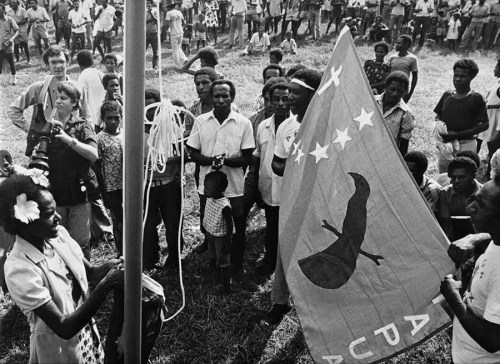
When I look back now on those seventies years in Papua New Guinea, there is one politician who stands out as personal favourite, and that is Dame Josephine Abaijah. In those days when she had no title, Josephine and I were neighbours of sorts. She owned a news agency in the Port Moresby suburb of Boroko and it was at street level, of course. Up one flight of stairs and directly above her shop was a suite of rooms where I had my photography studio and darkroom. If the acrid chemical smells emanating from said darkroom ever troubled her, she didn’t say so.
My memory of Josephine, then, is of a dainty, impeccably groomed lady behind a counter who served me my copies of Australian newspapers and magazines. Thing is though, she wasn’t always there. This little lady had bigger fish to fry.
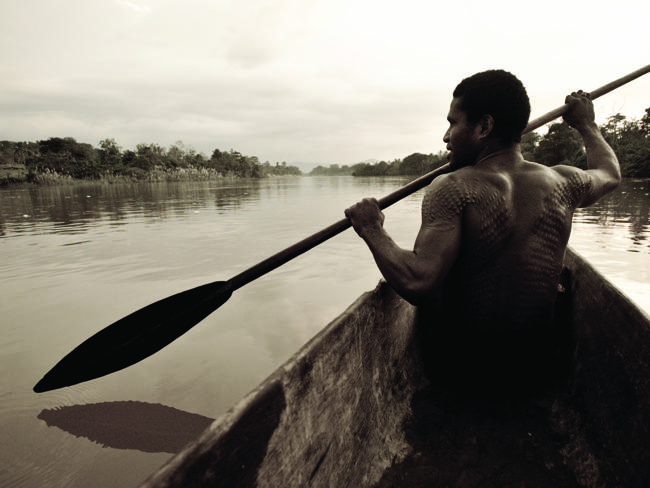
Crocodile scarification is an ancient initiation practised by the Chambri tribe of Papua New Guinea.
The Chambri tribe believe they evolved from the mighty crocodile. Source: Supplied
DEEP within the jungle of Papua New Guinea (PNG), there is an ancient initiation tradition that turns boys not into men, but into crocodiles. The men of the Chambri tribe in the East Sepik province of PNG practise crocodile scarification, an initiation for boys entering manhood during which their skin is cut and scarred to represent the scales of a crocodile.
The Significance of the Crocodile
The crocodile is a significant spiritual and symbolic animal in PNG, and the Chambri tribe believes it descends from the powerful predator. The ancient myth tells the story of how crocodiles migrated from the Sepik River onto land to eventually become humans.
In Papua New Guinea it is thought men evolved from crocodiles. Picture: Nina L. Chang.
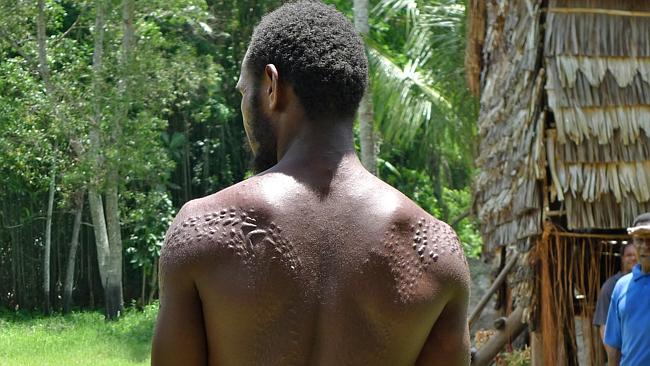
In recognition of this ancestral connection, the young men of the tribe are inflicted with hundreds of deep cuts in cascading patterns down their backs, arms, chest and buttocks to give their skin the look and feel of a crocodile’s body.
The Scarring Procedure
The intensely painful scarring procedure involves discipline, focus and dedication. The young initiate first joins his uncle in a spirit house, where he is held down while tribal leaders make hundreds of slices roughly, two centimetres long, into the boy’s skin with a bamboo sliver.
There is no pain relief other than the chewing of the leaf of a medicinal plant, as the young boy must show enough strength to prove he is a man. The Chambri people believe that by suffering immense pain at a young age, they will be better equipped to withstand pain later in their lives.
Photo: David Kirkland
Once the cuts have been made, the boy lies near a fire where smoke is blown into the wounds and clay and tree oil pushed into the cuts to sculpt the scars so that they remain raised when healed.
Then the initiates are adorned in an ornate headdress and jewellery at a big tribal ceremony, where the boys officially become not men, but crocodiles.
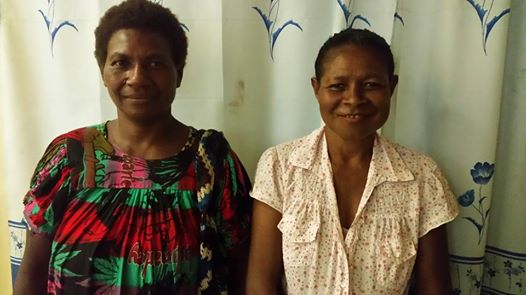
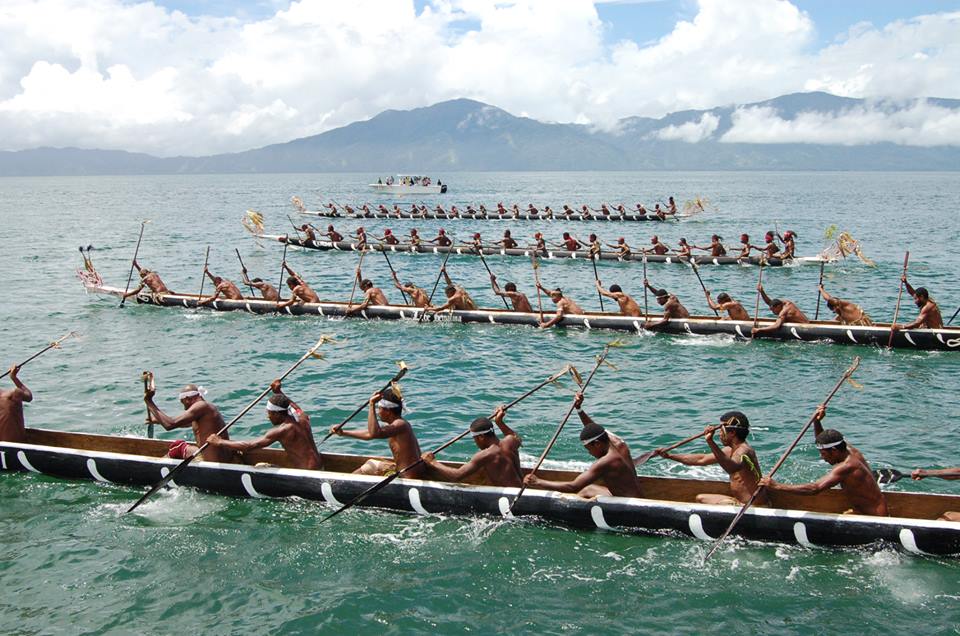
Two women are the first female canoe coordinators in the male dominated National Canoe and Drum Festival next week in Milne Bay Province, Papua New Guinea (PNG). Some of you may think this is “not a big deal” but it is. Nellie George ( left) is organizing five sailaus or traditional canoes from the South Duau area of Esa’ala District and Vicky Lodi will lead in organising bogama canoes from the Maramatana area of Alotau District.
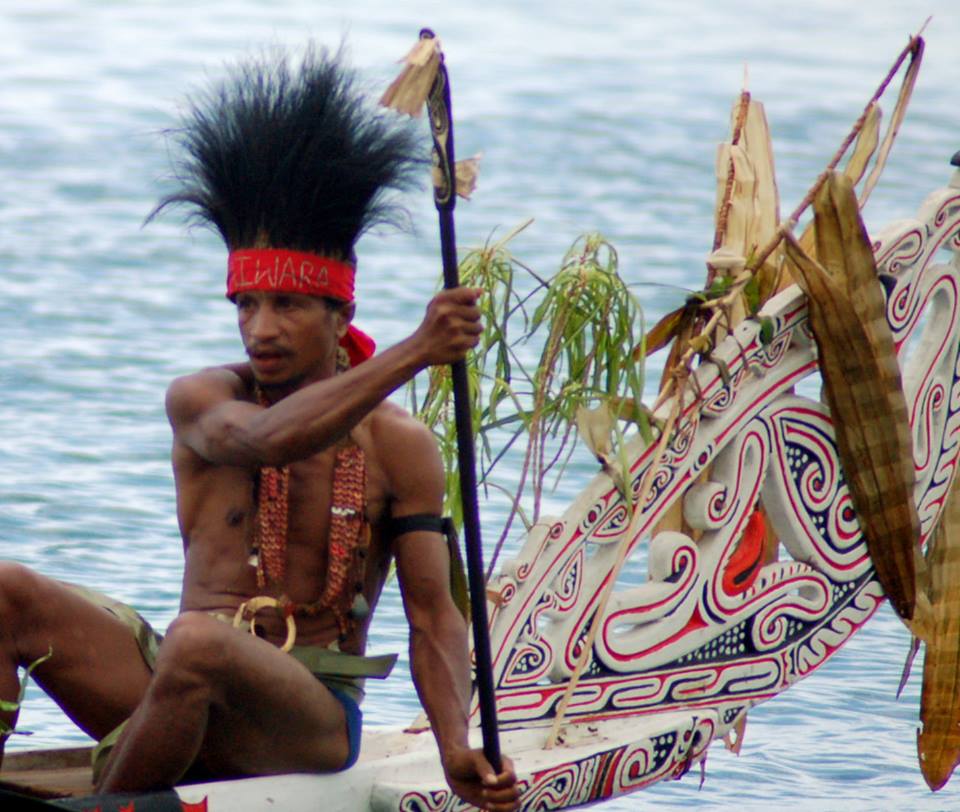
Each canoe will have its own tribal and ancestry markings and other decorations carrying special meaning and luck.
Sacred Culture
This part of PNG culture is sacred to men. Canoes and drums are used mostly by males in the Melanesian societies. Although it is dominated by males, we do have some females using drums in other parts of the PNG. From the start canoes especially are prepared by men. Men choose the tree, carve and design the canoe. The canoes can be used by the whole family when it is completed.
Last year’s canoe racers.
Annual Event
The festival is an annual event that happens every first weekend of November in the sleepy seaside township of Alotau. This festival is the southern region’s major event of the year and showcases the coastal communities’ way of life particularly through traditional sailing canoes. Kundu (traditional drums) have been included in this year’s festival.
Men launch a brand new canoe.
To visit the festival and see other information, contact the PNG Office of Tourism and Culture.
On October 14, I posted a story about 30 Pacific Climate Warriors heading to Newcastle, Australia on Friday October 17 to stage a blockade on Australia coal exporters. The warriors were joined by many Australians on the shores on Newcastle to protest.
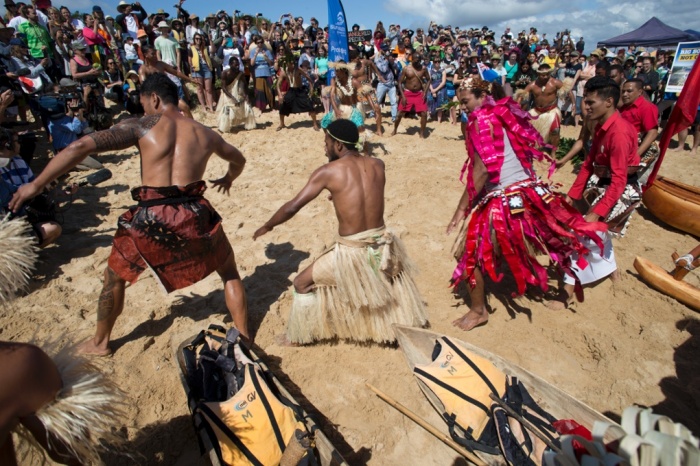
In a true Pacific Island spirit the warriors prepare to launch their vessels with traditional Polynesian war dances. Photograph: Mike Bowers/Guardian
Written and from the point of view of one of the protestors and fellow Papua New Guinean, Arianne Kassman, this is an update on what took place last Friday. Arianne wrote this story for Reuters, Thurs, 23, Oct 2014.
Author Arianne Kassman. Photograph: Mike Bowers/Guardian
Over 700 islands, more than 800 languages and cultures and some 1500 bird species – Papua New Guinea’s diversity is without a doubt unique and the country is home to some of the world’s most beautiful flora and fauna.
Land is one of the most valuable assets in PNG. More than 90 percent of the land is customary land and owned by the people.
I was born and raised in the capital city of Papua New Guinea, Port Moresby. I was brought up in a strong Christian family and my traditions and my culture were also a part of my upbringing. I also learned the importance of different cultural obligations I had to my people and the land.
Today, all of this continues to be threatened by climate change. Rising sea levels, coastal flooding and king tides are all too common along the coast and for many of the islands.
This month, I travelled to Australia together with my 30 brothers and sisters from the Pacific to bring a message to Australia that decisions being made are having serious consequences on my home.
Even though it is one of our closest neighbours, Australia’s continued commitment to expanding the fossil fuel industry is destroying my home. Australia is the world’s second largest coal exporter – with plans to triple those exports in the coming years.
Protestors try to block the Rhine as police try to clear a path. Photograph: Mike Bowers/Guardian
It is also one of the world’s largest gas exporters, with plans underway to make Australia the largest exporter in the world. These are plans that are distant from me, but ones that are felt by me and my people.
For Pacific Island communities the connection to the land, and to the sea, is paramount. The land plays a central role in our culture. But now, as sea levels rise, storms increase, and droughts hit, we are losing that connection. The sea, which used to play a central, calming role, in our community has now become a force to be feared.
For the Cartaret Islands this loss couldn’t be felt more. Their entire connection to their land has been lost. And that is the fate being faced by communities all across the Pacific. Just recently king tides hit Tuvalu, Kiribati and the Marshall Islands.
When a king tide hits in those countries there is nowhere to go – the land is literally flooded. These are nations that have already been given a death sentence, told by scientists that within decades their entire land will be under water, that the only connection they will have to their land, and their culture, will be a passport.
This is what the fossil fuel industry is doing to us. Through their reckless plans to massively expand the mining of coal and gas they are trying to lock us into a future of disaster, one of rising sea levels, floods, storms and the destruction of livelihoods and places we call home. It is a future of destruction based on a shallow desire for greater profits.
This year, however, we have decided to no longer let this future be dictated for us. For years we have tried to negotiate with global leaders to halt emissions and stop climate change. But it has fallen on deaf ears.
Traditionally dressed representatives from South Pacific nations push their canoes into the water as they prepare to participate in a protest aimed at ships leaving the Newcastle coal port, located north of Sydney, on October 17, 2014. REUTERS/David Gray
That’s why I joined 30 Pacific Climate Warriors who travelled to Australia, leading a peaceful blockade of the Newcastle Coal Port on October 17. We are calling out the industry for their plans to drown our Islands. And we were joined by thousands of other Australians – those who joined us in Newcastle, or the others who led peaceful occupations of the headquarters of the fossil fuel industry in the week that followed.
We are refusing to drown; we are fighting for our islands, and for a safe climate for all of us. We’re creating a line not in the sand but in the port with traditional canoes that we have built, which no coal ships shall pass.
It is not too late. We can save the Pacific. We must save the Pacific and we must stand up, not only for the Pacific, but for all those around the world impacted by climate change. But to do so we need to stand up to the industry that is willfully destroying our home. We need to stop these destructive plans in their track.
I came to Australia not because I wanted to, but because I had to do whatever it takes to preserve my culture, my traditions, my home, the birth place of my heritage and my identity. I am proud to join the 30 Pacific Climate Warriors, and the hundreds of Australians who are standing up in support.
This is the action we need to take to save our islands. This is the action we need to take to keep our islands above water.
…………………………………………
(refer to link below for my previous post on the same subject)
My art: A study of snowy owl in ink and wash.My Art – Owl. Acrylic on canvas.
Above are two of many artwork I created, purely because I love owls and I find them very interesting.
Growing up in my culture, owls have been linked to death. If you hear an owl consistently calling or crying then, death is near. This was the belief. An owl crying or calling is quite rare but when it does happen, it is quite scary.
Unusual visitors
In some Brisbane (Australia) suburbs and out where we live, there are a few species of owls. The most common one is the Frogmouth. My family and I have had several occurrences with owl visits that I find very interesting and hard to understand. Once we had three owls come into our garden and sit for three days in the same spot. There was another incident where two large owls appeared at the front of our house and sat on a very low dead tree. They must have arrived before we woke up. At first, we thought they were part of the branches of the dried tree trunk. These two sat in the same position for almost a week. I went up very close to them one day and the taller of the two opened its eyes and glared at me – so I left. I hope to find their photos that I took that day and post it here in the future. Despite my cultural learning and spiritual beliefs about these birds, I find them especially interesting because of how quiet and often secretive they are. Sometimes, you don’t know they are there. They can camouflage very well.
Many owl species have developed specialized plumage to effectively eliminate the aerodynamic noise from their wings — allowing them to hunt and capture their prey in silence. Almost a year ago, a research group started working to solve the mystery of exactly how owls achieve this acoustic stealth — work that may one day help bring “silent owl technology” to the design of aircraft, wind turbines, and submarines. I found this small clip on reddit.com. Click the link below to see the wing action.
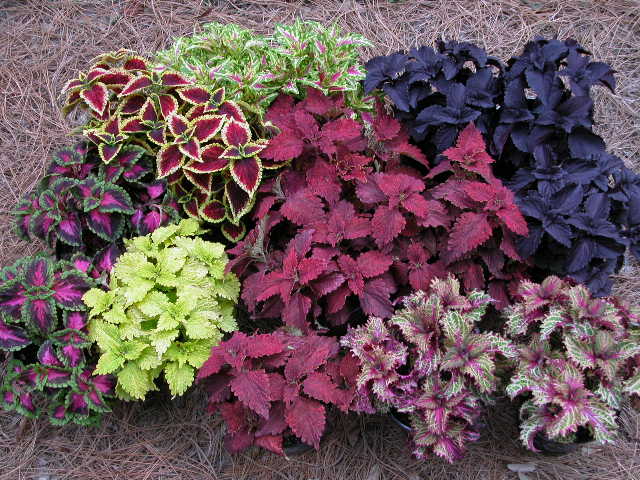
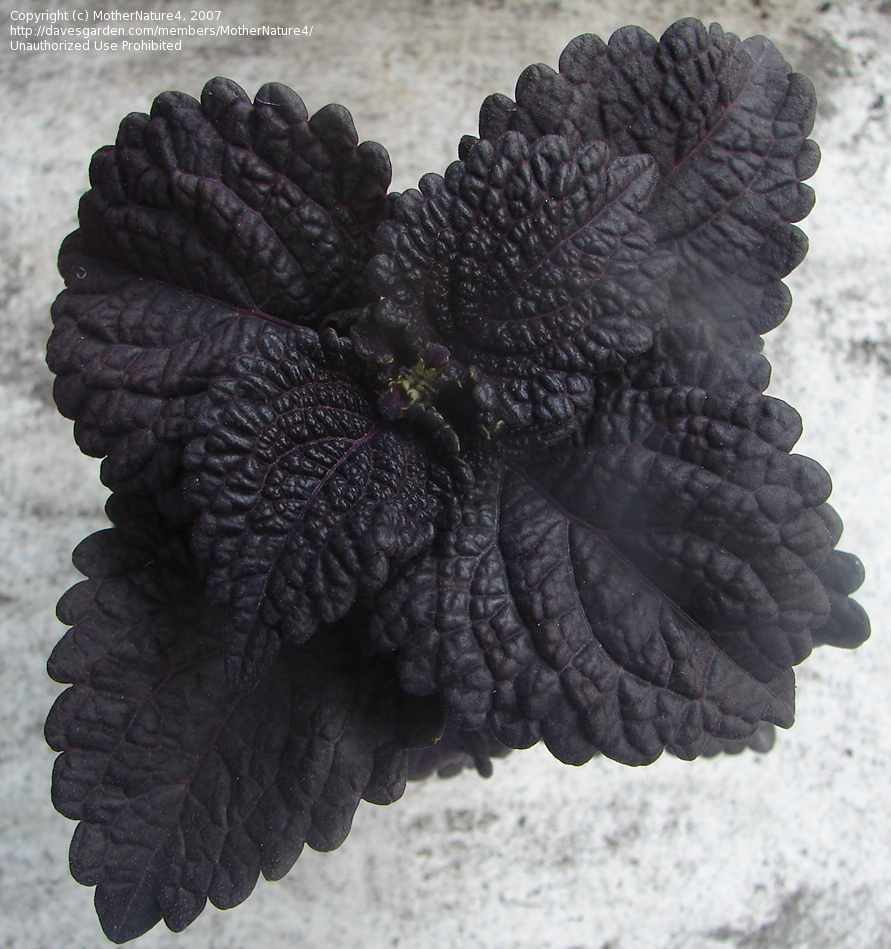
Coleus Canina (pictured above) is one of the most colourful tropical plants with almost every colour you can think of. It is my mother’s favourite plant. I grew up with in Lae, Papua New Guinea (PNG) seeing Coleus growing on the side of our house, along the main road at our village, in our food garden or in the cemetery. Everybody grew some kind of Coleus plant. They are gorgeous. We used Coleus to decorate ourselves when we danced. Sometimes, our people just stuck a small branch of the plant in their hair or hung in on their bags for decoration because it is pretty.
I knew the plant had a distinct smell, but I did not know, in Australia, Coleus was planted to repel animals such as cats and dogs from gardens. Perhaps it is a myth? This attractive perennial herb is actually an aromatic member of the Mint family. They’re native to southern Asia and eastern Africa, and they attract butterflies and bees.
In early 1990s, I was engaged by Peace Corp and the Conservation Melanesian to run some entrepreneur workshop and training for crafts people in the Crater Mountains in Eastern Highlands Province, PNG. I had volunteered to teach the artisans and spend some time learning about their art and the way of living. It was here that I discovered something new about the Coleus plant. Certain types of the plant had strong pigmentation. Women were using the leaves to rub into flax fibres as they twisted the fibres into ropes for making (bilum) bags as pictured below. As they twisted the ropes and rubbed with Coleus leaf, the rope would instantly turn from its natural colour into deep purple, blue and even black. I was amazed.
Dark blue, almost black dye from Coleus plant rubbed into the fibre on this bilum by the Herowana (Crater Mountains) women in PNG.
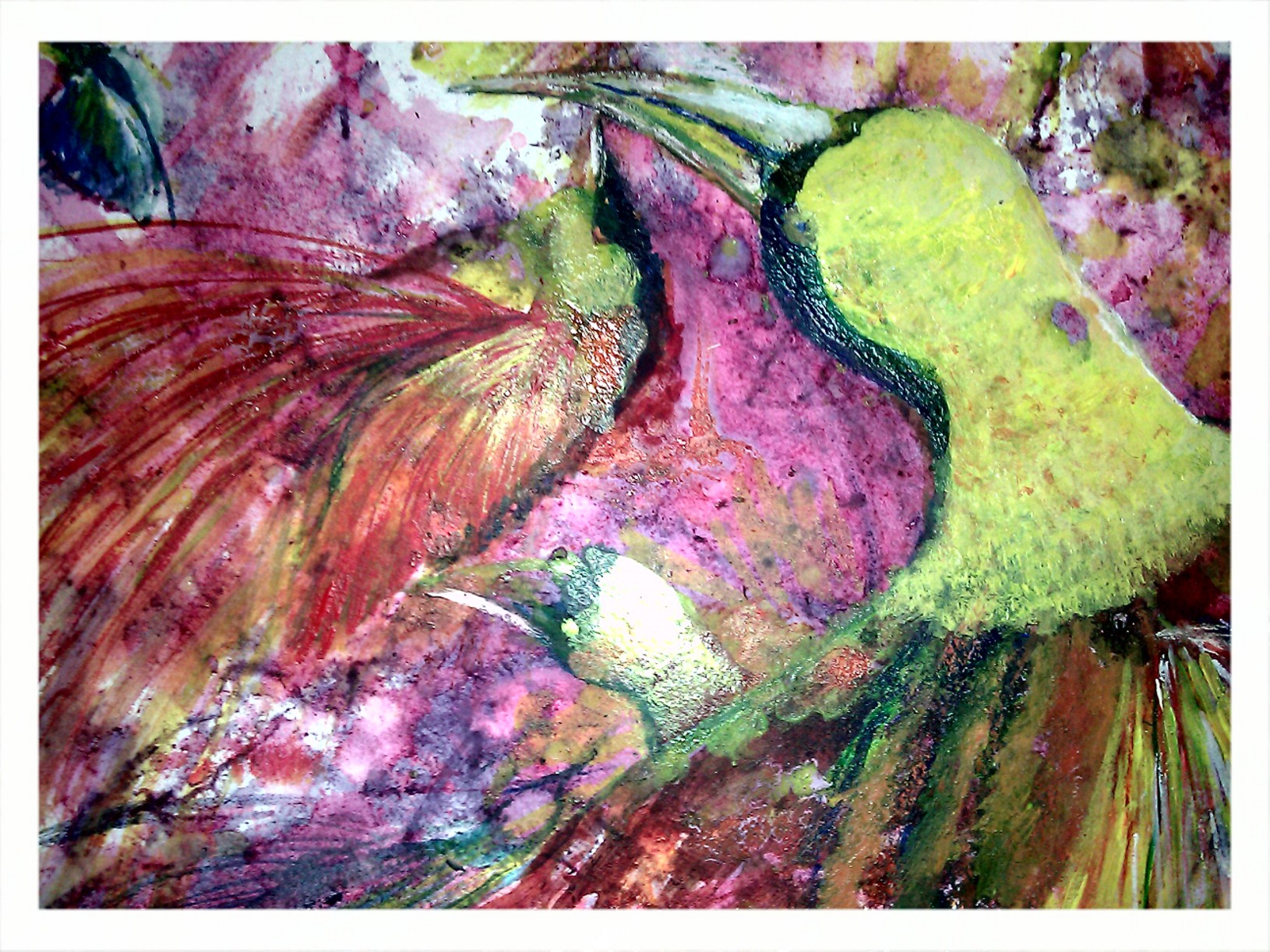
Years later, while living here in Brisbane (Australia) and experimenting with using natural dyes and pigments in my painting, I remembered the Coleus. I had already used coffee, tea, turmeric, beetroot, some grass seeds so it was a refreshing addition to my natural pigments. I had made a trip to the local Bunnings and started growing the Blackberry Waffle, pictured below which gives the strongest colour dye. I made good artistic use out of the plant all summer but unfortunately I lost the Coleus plants in winter. Spring is here so it is warming up and I will start again. That is why I am making this post. Below is an artwork, “Paradise Birds” I created from using a mixture of watercolour and natural pigments from my garden. The pink and purple background in the painting is the pigment/juice from the Coleus plant.
The Blackberry Waffle Coleus – the pigment king.My Art – I painted this mixed media called Paradise Birds with Coleus ‘Blackberry Waffles’ – it is the pink and purple background. I also used the blue seeds from grass and turmeric for the gold and yellow bird heads. This work is on paper.







 Tribalmystic Stories
