Sugar Slaves; Australian South Sea Islander Story

Melanesian Wantok Showcase
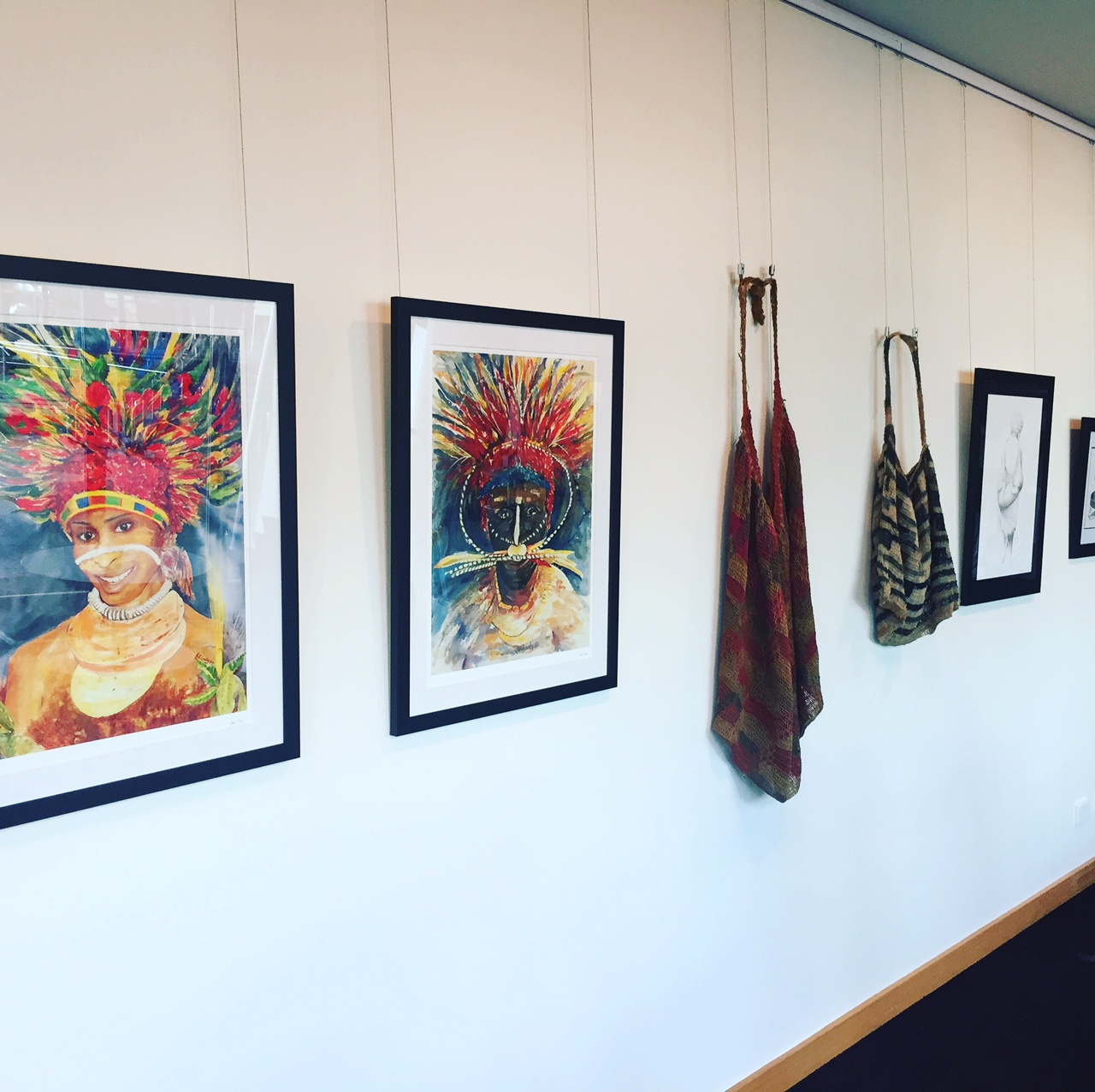
I am proud to announce that a collection of my artwork (art, textiles and pencil drawing) will be in a community art exhibition to celebrate the Melanesian Wantok Showcase. This exhibition opens in the Redland Performing Art Centre in Cleveland tomorrow. The music concert and will be on September 17, featuring musicians from Papua New Guinea and other Melanesian countries.
Contemporary Textile Art – Papua New Guinea
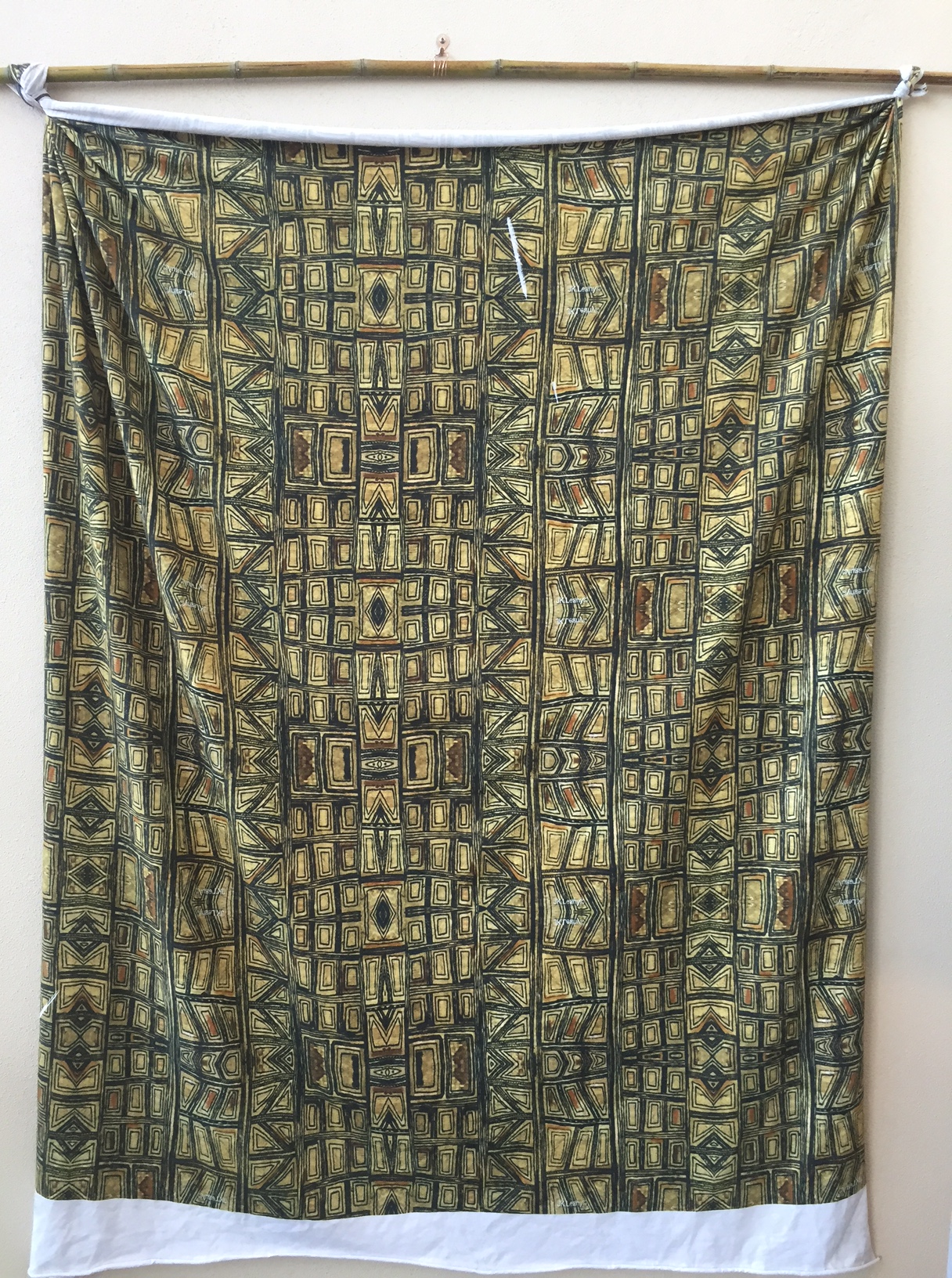

Kalem – Warrior Woman fashion. Designed by J.K.Leahy. A selection of leather handbags and silk dresses on exhibition with natural fibre woven bags in Wantok Melanesian Showcase. Redland Performing Art Centre, Queensland.
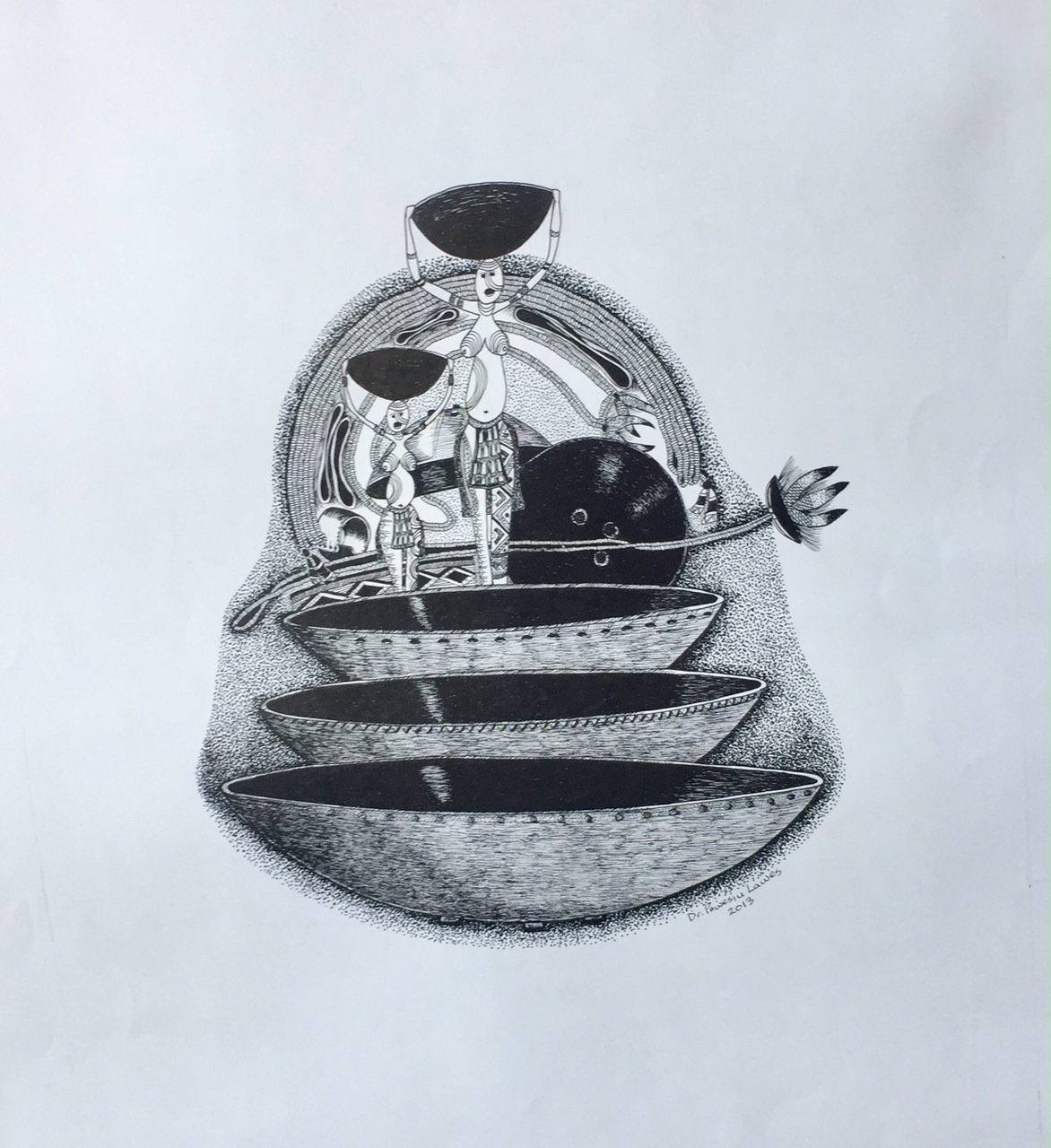
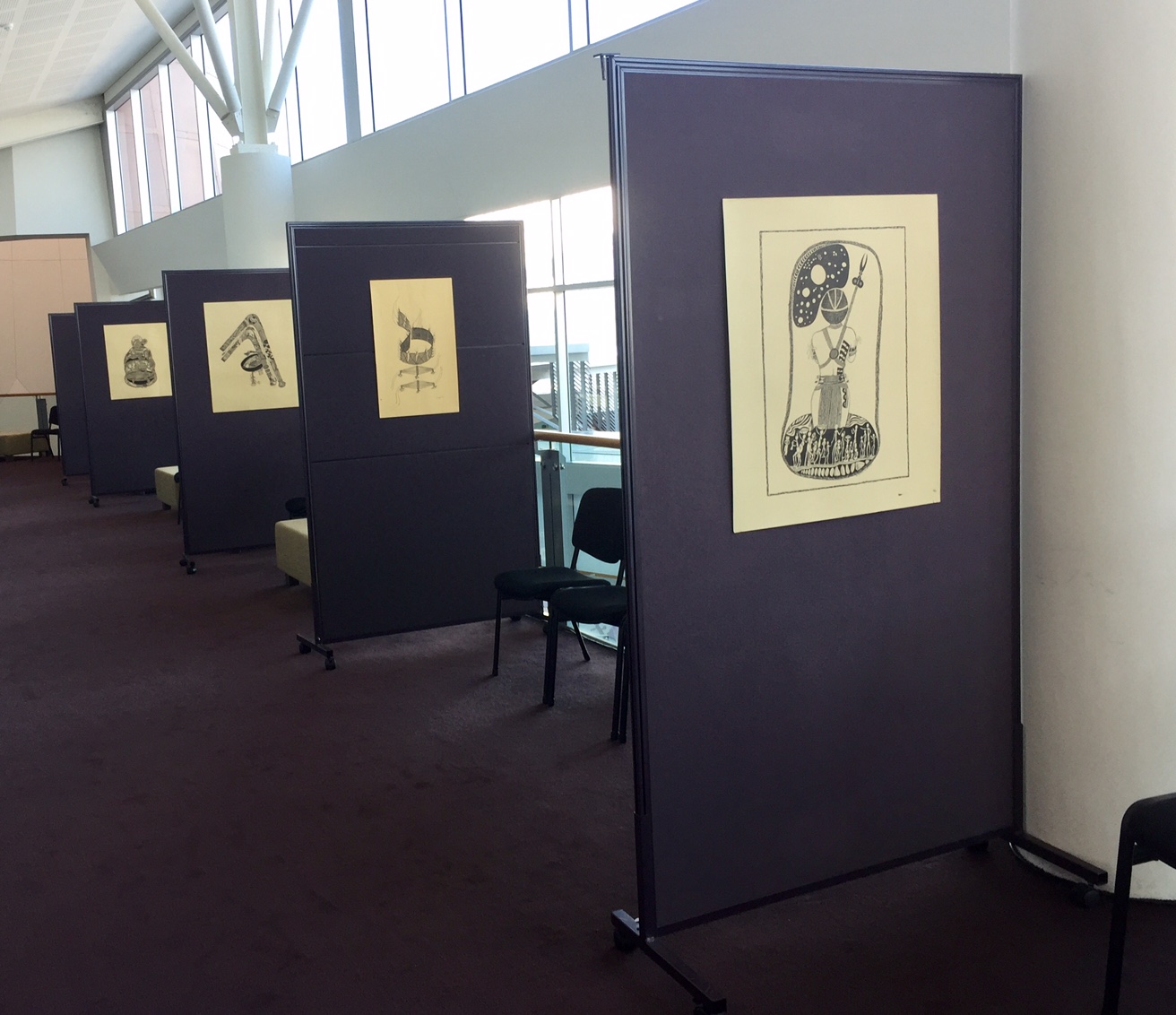
Pen and Ink Drawings – Dr Pomasiu Lawes
A taste of Melanesia in Cleveland
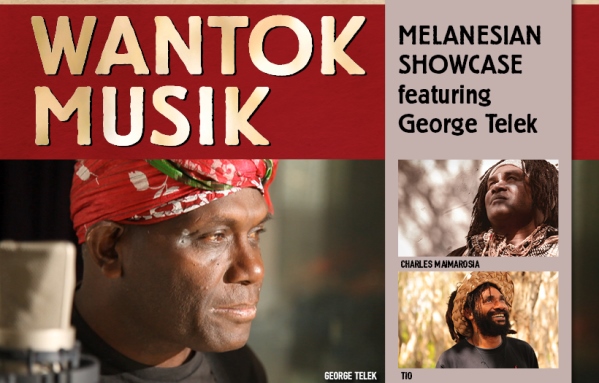
Head along to Redland Performing Arts Centre (RPAC) for a night of Melanesian music and culture when WANTOK Musik performs on Sunday 17 September, on the weekend of Papua New Guinea’s (PNG) Independence. This showcase celebration is a partnership in community cultural development with the Quandamooka Festival and is an exciting opportunity to experience a coming together of Quandamooka and Melanesian communities, artists and musicians.
The evening will feature a fabulous line-up of contemporary and traditional Melanesian musicians. George Telek from PNG will headline the concert, bringing his signature blend of contemporary and traditional Melanesian rhythms to the RPAC stage. Telek will be joined by Charles Maimarosia from the Solomon Islands who will astound you with his talent on the pan pipes, Tio from Vanuatu with his amazing vocals, ukulele, guitar and violin skills, and Ben Hakalitz from PNG who will bring 30 years of musical experience and amazing technique on the drums to the night of celebration. They will be joined by a number of other musicians from PNG and West Papua, for an amazing night of indigenous music and culture.
There will also be the opportunity to enjoy some Melanesian food on the RPAC Piazza, and browse the art and craft display in the Concert Hall Foyer, to complete your night of Melanesian indulgence. This art and craft display curated by PNG artist/curator Joycelin Leahy in partnership with RPAC’s Elaine Seeto will be open to the public throughout the month of September, to give you more opportunity to enjoy the pieces on display. The exhibition opens tomorrow (September 4).
Don’t miss this coming together of Melanesian, Quandamooka and wider Redland communities at RPAC Sunday 17 September at 6.30pm. Tickets are $30 and can be booked via www.rpac.com.au or by calling the RPAC Box Office on 3829 8131 (booking fees are $4.10 by phone and $5 online per transaction).

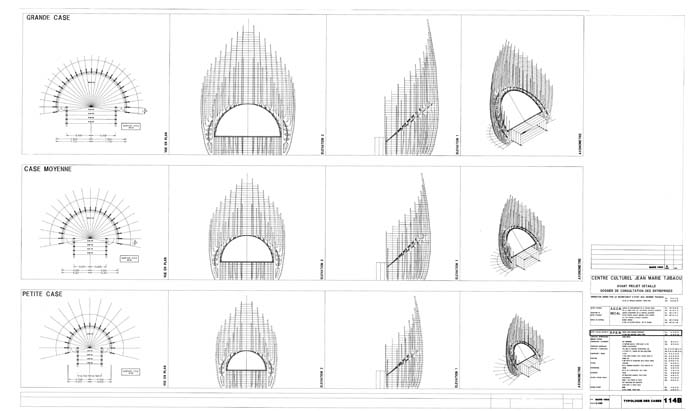
A few years ago, with other artists in Melanesia, I was invited to create artwork in memory of a Melanesian hero, Jean Marie Tjibaou who was assassinated in New Caledonia in 1989.
Above was a doodle of two ink drawings that I worked into two larger pieces for the exhibition. Read more on Tjibaou Cultural Centre here. This link provides an excellent interview with Emmanuel Kasarherou, Cultural Director at the Tjibaou centre.
I just found the drawings tonight, while going through some boxes from the storage. The ink on the left drawing was smudged from some water drops. Otherwise, the two images were still intact. The drawings brought back the story of this amazing man and an architectural phenomena that was built in his memory. You can Google both – a lot has been written about the man, the Kanak movement and the building, designed by Italian architect, Remzo Piano.
Briefly, Jean-Marie Tjibaou (January 30, 1936 – May 4, 1989) a son of a tribal leader, was also the leader of the Kanak independence movement and a politician in New Caledonia. I have visited this cultural centre more than once and would recommend it to anyone travelling through New Caledonia. It is a beautiful space.


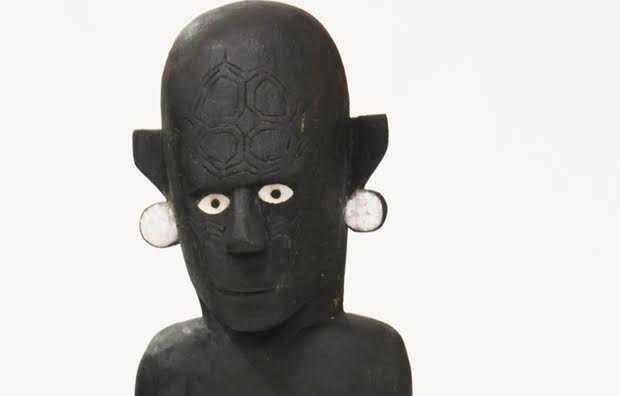
A training programme to enhance the business, marketing and product development skills of cultural producers in Solomon Islands began this week in the capital Honiara. The Solomon Islands is part of the Melanesian region of the South Pacific. The secretariat of Pacific Community (SPC) reported in its newsletter Culture Talk that cultural industries in Solomon Islands represent an important economic sector as well as the country’s rich heritage and culture.
Although there are increasing numbers of cultural producers in Solomon Islands, only a few training programmes target this sector to assist producers to export their cultural goods.
Supported by European Union, the training called “Enhancing the Pacific Cultural Industries: Fiji, Samoa and Solomon Islands” project, was implemented by the Secretariat of the Pacific Community (SPC) and the Pacific Islands Forum Secretariat (PIFS). The training is held in partnership with the Solomon Islands Ministry of Culture and Tourism and the Solomon Islands Arts Alliance.
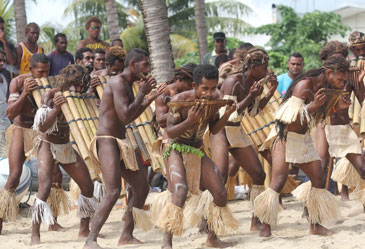
https://www.youtube.com/watch?v=7xVb5pW6Ess AFP News Agency: On the Pacific islands of New Caledonia, it’s feared many of the 28 indigenous languages are dying out. But the success of a local band scoring hits in a native tongue is giving traditionalists cause for hope. Here is one of my own New Caledonian favourites. Ok!Ryos – Kini Kinibut https://www.youtube.com/watch?v=E6y-uCME1Ts
A life of contentment in the rainforest. The Korowai People of West Papua in Melanesia.

Living in the trees is natural for the Korowai and Kombai people in the southern eastern Papua. These tribal Melanesians are one of the last people on the planet who survive purely on their natural environment. The Korowai’s are also referred to as the Kolufo and have become known to the world through pictures and documentaries as one of the most amazing architects of tree houses.
The tree house builders survive in the basin of the Brazzan River in large areas of deep rainforest and swampy lowland. They are hunter-gatherers and horticulturists who practice shift-cultivation and have a very rich and an extraordinary oral tradition. They live together in small communities.
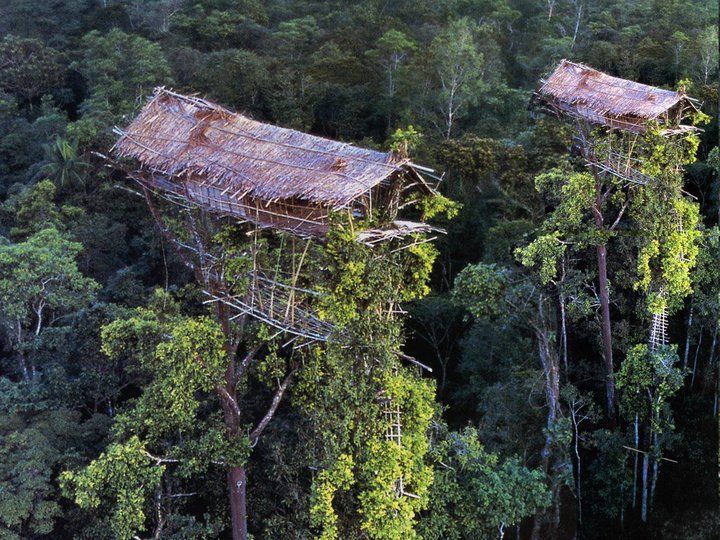
The higher they built a house, the more prestigious it is. The reason behind this amazing architecture which often reaches up to 100 feet or more off the ground is to avoid floods, insects and diseases. It was also a way to spot tribal enemies as the Korowai themselves had practiced cannibalism in the past.

The Korowai people build their houses high above the forest floor, and deep in the swampy lowland jungles of Papua.
In the BBC documentary below, you can watch from start to finish, how a Korowai tree house is built.
 Tribalmystic Stories
