Tag Archives: indigenous cultures

PNG Literary Competition Achieves Record Entries.


The Papua New Guinea Literary Competition The Crocodile Prize received the highest number of entries ever, this year.  On closing last night the Crocodile Prize fetched a total 826 entries from 132 writers & illustrators.

Poetry 355; Essay 196; Story 129; Children 52; Heritage 48; Illustration 21; Tourism Arts Culture 15; Book of the Year 10.

These numbers may not sound very much for writers in other countries, but for any Papua New Guinean writer, it is a very heart-warming news, especially coming from a literary culture that almost became extinct. In the early 70s, leading up to the country’s independence, passion for art, culture and heritage including the literary pursuits and publishing of works written by PNG writers were at their peak. It is not quite clear why the interests have fallen so much after independence. That culture may have been used because we were proud of our identity and we wanted independence so much or perhaps the general growth of consumerism and the wider issues of social, economic and political changes have contributed to this new – lack of passion of culture. I remember growing up with radio stories written by PNG writers, attending and being part of stage plays – written by PNG writers. Poetry, stories, essays as well as other forms of literary work were promoted and supported by the national government.

The lack of passion in the arts and the literary support to me is quite surprising and sad; our culture is based on oral history and story-telling.

As a PNG writer, a practicing artist and an arts curator, it seems very clear to me, that the PNG government’s priority is elsewhere and not the least in the arts. But to not even support the literary aspect and especially in developing educational content that is relevant to our children and educational for our people is wrong. We cannot just tell stories and pass them on – now we can write them down and keep for many years.

It is not how much minerals we export and logs we sell, but the natural beauty, our rich art, culture, languages and stories that set PNG apart, and gives us our unique identity.  The literary scene dwindled to almost non-existent, although that could have been easily combined with and taught through the education system. There are not many avenues and support nor funding where PNG writers could train or share their work, and even to sell. Most workshops, training and activities relating to creative writing or any literary work have been Aid funded or Privately sponsored in the past four decades. Now this is how things have started to change for the PNG literary scene.

THE CROCODILE PRIZE STORY
The Crocodile Prize was established in 2010 by Phil Fitzpatrick and Keith Jackson, (both Australians) worked for many years in Papua New Guinea; Fitzpatrick as a patrol officer, Jackson as a broadcaster and journalist.

The Prize evolved from the popular PNG Attitude blog, which has a policy of encouraging and publishing Papua New Guinean contributors.

The concept of a national literary competition was triggered by Fitzpatrick’s concern that creative writing in Papua New Guinea had fallen upon hard times, and that this was a cultural constraint needing to be addressed.

The first awards were presented in 2011, a year of determining whether or not a project of this kind could be managed successfully given geographical, financial and the constraints of a voluntary organisation.

Using PNG Attitude as a vehicle for publicity and initial publication, Fitzpatrick and Jackson soon discovered an enthusiastic and rapidly emerging body of Papua New Guinean writers.

They were assisted greatly in the early stages by material and financial support provided by the Australian High Commission in Port Moresby and later by a range of sponsors, most of them PNG-based.

This backing made it possible for a range of associated activities to be instituted in addition to the Prize, including an awards ceremony, the publication of an annual anthology and the initiation of writers’ forums.

After the first awards in September 2011, it was agreed the Prize should become a permanent part of the literary landscape of PNG. Now under the management of the Crocodile Prize Organisation, COG, 2015 will mark its fifth year of operations.

PHIL FITZPATRICK on 2015 Competition

Thus ends another year of the Crocodile Prize literary contest.

IT’S not every day that you get to influence the revival of literature in a whole country, unintentionally or otherwise.

I must admit to some surprise that it has happened at all. What started as a humble writing competition seems to have bloomed beyond all expectations.

There is a sense of pride in what has happened but, strangely, it’s not personal. Rather it is a sense of pride in the achievements of the writers involved.

At a personal level it has been more of a humbling experience. There is also a sense of awe and enrichment.

The enrichment comes from reading the works submitted to the competition and the sheer learning experience involved.

I think, despite nearly fifty years travelling back and forth to the country, I’ve really only learned to understand Papua New Guinea in the last few years of the Crocodile Prize.

There is also a tinge of anger involved, mostly through the fact that an uninterested government and lackadaisical education system could let such a promising and rich cultural emergence in the 1970s wilt on the vine and become moribund.

That aside, one of the ironies I really enjoy is the fact that the revival has only now been possible because of the advent of digital technologies that were supposed to see the demise and eventual extinction of books. Such are the shaky prognostications of the doomsayers.

The key factors in the Papua New Guinean revival have been the Internet and the availability of digital publishing and print-on-demand technologies.

These have underpinned the Crocodile Prize, firstly by providing a writers’ outlet in the form of PNG Attitude and secondly in offering a cheap way to publish the best in an annual anthology and then to go even further in publishing stand-alone individual books by Papua New Guineans.

The future of literature in Papua New Guinea is starting to look rosy but we need to remind ourselves that it is still extremely fragile.

The disastrous complacency of the 2013 competition organisers reminds us of what could still happen.

2014-15 has been a watershed year and there’s light at the end of the tunnel but sustainability is still a long way off and we aren’t there yet by any stretch of the imagination.

The winners of this year’s Crocodile Prize will be announced early September. The awards event will be held in Kundiawa on Saturday 19 September

Keith Jackson & Friends: PNG Attitude

My Last Walk – Short Story.


This is my second entry into the short story category in PNG National Literary Awards. Some of you know this story. It has been cut down to 1000 word limit.   For more stories and entries into the competition, please visit the following links;

The Crocodile Prize

Keith Jackson & Friends: PNG Attitude

h-wp
Western Province, PNG.

My Last Walk  ©JK.Leahy

I felt his eyes piercing into my back as I struggled over the grassy hill. The air was tight and chilly so early in the morning.

“Walk faster!”

I needed my three-month-old baby Boni’s softness, and the laughter of his older siblings. I was exhausted and wished I could stop. A sudden breeze brushed over the tall grass. Shoosh. I shivered.

Usually, when we returned from the garden, Bomoga walked proudly ahead, carrying his prized spear with a small bilum strapped across his bare chest. The children and I fumbled behind him: me with a child on my shoulder, another in the bilum on my back together with our second bilum of food and pulling our eldest by the hand.

Today, I was in front. I wore my favourite red meri blouse. In haste, I had worn it inside out – its flimsy seams waved loosely.

We reached the top of Kasu Hill. I gasped for air.

“Hurry Up!”

My heart pumped. From the only hill in Domogu Village in the wallaby plains of the Western Province, pale yellow-green lowland laid before me. The grass had been burnt in patches to entrap wild game. The lowland was also known for Papuan black, a deadly snake.

I marched down the ridge, as ordered. Cold mud numbed my sore foot. We reached the place where the Ok Tedi Mining had caused hundreds of fish and plants to die along the riverbank. Usually, there were people here. But it was still early – no one was about as we passed.

My milk dripped down my blouse. Without bra, my breasts swung full and uncomfortable. It was feeding time for Boni. The rising sun cast faint shadows and the warm air caressed my face. We had crossed Domogu tribal land. Bomoga’s ancestors, nomads like mine, had decided to settle in this fertile land.

My eyes scanned the mountains that Ok Tedi had exploited. To the south, there was an airstrip where planes flew in weekly. Our village looked like a jewel, deep jade opal, festooned with glassy lakes of many sizes.

“Move!”

I stumbled forward.

We entered a forest. Strangely, the birds here were silent. I heard sorcerers came here for bush medicine and magic making. I searched for sunlight through the tree openings.

“Keep walking,” he hissed.

I had not looked once in Bomoga’s eyes. When his sweaty hands had touched me that morning, I thought he wanted sex, but instead he shook me roughly and ordered me out of the house. His shadow had loomed over me as I took Boni off my breast and put on my meri blouse and my rubber skirt. Boni nestled into his blanket, eyes still shut. He didn’t cry for more milk, thank God. My other children, Eka and Maria were asleep. I heard Bomoga pick up something in the house before closing the door behind us. He was quiet and cagey, which was not like him.

He was never a warm person, not even to his family members, though he was loud to his male friends. He liked sex that was rough and on demand. In any argument, a sudden punch to my face or stomach was a possibility. If the children screamed, he yelled at them. The beatings only worsened if he thought I challenged him. “No one will help you, because you are MY wife,” he said. I felt he was right and did not seek help, not even from his family or other villagers. Recently his best friend Tommy had returned from Port Moresby. I heard Bomogu now liked Tommy’s sister who was younger and prettier than me. He wanted her, I heard.

I stepped on a stump with my sore foot. The pain almost made me cry out. Two of my toes had broken when I fell in the last fight. We continued through the gloomy undergrowth into a flat area. Through an opening I saw sunlight sprinkling light of various colours onto leaves and moss. I saw a beautiful butterfly on a fern. Its brilliant blue wings and black outline set against the leafy greens. I felt a flash of hope.

We walked on and soon I could hear rapids and the forest thinned out as we reached a Y junction. At my feet a Papuan black, unaware, slithered quickly across my path.

“Turn to the river,” Bomoga commanded.

I turned towards the rapids. My throbbing foot distracted me and I was afraid to fall. The river frothed, full from recent rain. Watching water as it rushed away, a thought stirred my mind. Was he going to toss me into the river?

I imagined where my body would lay after death; my treasured red meri blouse, still inside out, clinging to my slim frame. Dragged ashore with a paddle shafted under the hem of my blouse, a trail would be imprinted on the sand on the silky Suki River banks. Villagers rushed to screaming children who discovered me. A woman bellowed my name, “Sulita!, Sulita!” But after hours in the muddy river, half-dressed and impaled by a black palm spear, I would no longer be Sulita.

“Stop!” he yelled.

I halted.

The ground looked easy to dig in places. I kept my face down. My feet were covered in mud and grass

“Turn around. Look at me!”

I turned and raised my eyes to the point of his most prized black palm spear.

With this spear Bomoga had speared the biggest pig, the fastest wallaby and driven the largest cull of deer. Many feared Bomoga because of his mastery with the weapon. My eyes shifted from the spear to my husband’s eyes for the first time that day. They were bulging and blood-rimmed. His nose flared and his sweat drenched eyebrows twitched. Ten long years and we still stared at each other like strangers.

He raised and pointed with the spear. “Where would you like to be buried?” he asked.

I dropped to my knees, closed my eyes and prayed.


This story is based on a true story set in Suki, Western Province. It is dedicated to the strong women and the survivors of domestic violence in Papua New Guinea and other Melanesian societies. 


Speak it, Sing it or Lose it – Melanesian Languages Under Threats of Extinction


https://www.youtube.com/watch?v=7xVb5pW6Ess AFP News Agency: On the Pacific islands of New Caledonia, it’s feared many of the 28 indigenous languages are dying out. But the success of a local band scoring hits in a native tongue is giving traditionalists cause for hope. Here is one of my own New Caledonian favourites. Ok!Ryos – Kini Kinibut https://www.youtube.com/watch?v=E6y-uCME1Ts

Living in the Trees – The Korowai People


A life of contentment in the rainforest. The Korowai People of West Papua in Melanesia.

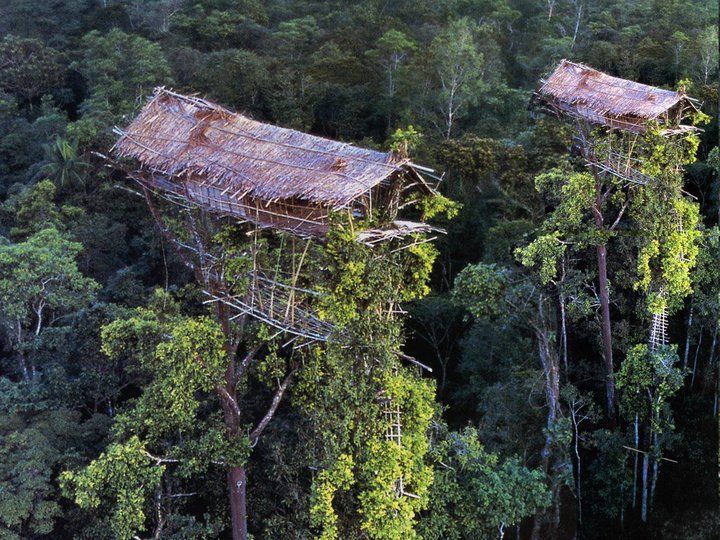
Irian Jaya's Kombai and Korowai people live in houses built in the treetops.
Irian Jaya’s Kombai and Korowai people live in houses built in the treetops.

Living in the trees is natural for the Korowai and Kombai people in  the southern eastern Papua. These tribal Melanesians are one of the last people on the planet who survive purely on their natural environment. The Korowai’s are also referred to as the Kolufo and have become known to the world through pictures and documentaries as one of the most amazing architects of tree houses.

The tree house builders survive in the basin of the Brazzan River in large areas of deep rainforest and swampy lowland. They are hunter-gatherers and horticulturists who practice shift-cultivation and have a very rich and an extraordinary oral tradition. They live together in small communities.

44f8056a45b290241653afa3fa02c1ef
Image: BBC Documentary

The higher they built a house, the more prestigious it is. The reason behind this amazing architecture which often reaches up to 100 feet or more off the ground is to avoid floods, insects and diseases. It was also a way to spot tribal enemies as the Korowai themselves had practiced cannibalism in the past.

Sowayen climbing down a “yambim” or ironwood tree after knocking loose a nest of black ants that he uses for fish bait. The Korowai are superb climbers, and get up thick trees like this by gripping vines with their hands and splayed toes. It took him about a minute to get up this tree, and it took Neeld Messler, a rope expert, over an hour to rig this tree with ropes so the photographer could climb it safely. In the lower left corner Sayah is watching. One of their fishing methods is to put a piece of an ant nest in the water and wait for the fish to come and eat the drowning ants. The fisherman hides behind foliage on the river bank, and shoots the fish with a four-pointed arrow. This picture was taken as part of an expedition for GEO Magazine and National Geographic Magazine to document the way of life of the Korowai tribe. Most of the Korowai in these photos had never had prior contact with anyone outside of their language group, and have no material goods from the outside world. They live in tree houses built above the forest floor to protect themselves from outsiders. The Korowai believe that contact with outsiders will bring an end to their culture. Cannibalism has been part of their traditional system of criminal justice to avenge the death of their clansmen, but the practice is dying out and is outlawed by the Indonesian government. The Korowai believe that most natural deaths are caused by sorcery, and must be avenged by the death (and consumption) of the person responsible.
Sowayen climbing down a “yambim” or ironwood tree after knocking loose a nest of black ants that he uses for fish bait. The Korowai are superb climbers, and get up thick trees like this by gripping vines with their hands and splayed toes. This picture was taken as part of an expedition for GEO Magazine and National Geographic Magazine to document the way of life of the Korowai tribe.

The Korowai people build their houses high above the forest floor, and deep in the swampy lowland jungles of Papua.

In the BBC documentary below, you can watch from start to finish, how a Korowai tree house is built.

The Call of Garamut


The garamut is a slit gong made out of wood. The instrument is widely used in Melanesian cultures. Garamuts are used for traditional dancing and performances. It is also used to call and gather. Communities used the garamut to call meetings, call school children to classrooms and congregations to churches.

182_0723
Picture by Pioneer Bible Translators. Calling his congregation to church; one of the most common uses of garamuts.

In Papua New Guinea the instrument, depends on its size and how shallow the slit is, gives a distinctive sound. It can also be played very rhythmically and the sounds makes you want to dance.

CUR.52.126a-c_print_front_bw
A garamut in Brooklyn Museum.

In the first video clip, I am delighted to show my own people dancing the siak, a slow motion dance in Salamaua, Morobe Province. A single and sometimes two garamuts would lead the siak accompanying kundu drums. Pay attention to the sound of the garamut – the largest wooden instrument in background.

The second video below is from Manus Province. For their performances, Manus dancing requires a collection of garamuts of various sizes and played together. The biggest drum (deepest) leads the rhythm and song.

Indigenous Australia Exhibition Opens in British Museum


Discover the remarkable story of one of the world’s oldest continuing cultures in this major exhibition.

The show is the first major exhibition in the UK to present a history of Indigenous Australia through objects, celebrating the cultural strength and resilience of both Aboriginal peoples and Torres Strait Islanders. This culture has continued for over 60,000 years in diverse environments which range from lush rainforest and arid landscapes to inland rivers, islands, seas and urban areas today. Hundreds of different Indigenous groups live across this vast continent, each with their own defined areas, languages and traditions. The exhibition runs from 23 April – 2 August 2015.

And here is another view of the exhibition has sparked.

Exhibition Sparks Protests

Published on Apr 23, 2015 (YouTube)
On 21 April 2015, the British Museum’s BP-sponsored ‘Indigenous Australia: enduring civilisation’ press launch was disrupted by activists, criticising oil sponsorship and calling for the repatriation of stolen indigenous objects.

British Museum Link

Pidil: A Small but Powerful Instrument


Published on Sep 17, 2014 by komnairima

I love interesting sounds, particularly  unusual musical instruments from Papua New Guinea. Here is the Pidil, a rare instrument belonging to the Gunantuna of The Blanche Bay Area of New Britain. I have read that this instrument is played by men during ritual ceremonies to attract young women into the bush. We can guess what that means. 

I do not have any more information on the object except for the sound of it which is on the YouTube link below. The brown, almost finely polished seed, (it’s naturally like that), is common in PNG in coastal areas. In my province we remove the inside and hollow the seed before we use it as a decoration on string bags (bilum). We also  string a bunch of the seeds together to make it another musical instrument, that sounds like a shaker. The women and men carry the bunch and shake them to create the sounds that accompany the kundu drums, singing and dancing.

Rabaul is the famous centre of New Britain. It is known for the Japanese occupation during the world  war and also for its volcanoes. Since January 1942 the Japanese had held Rabaul on Blanche Bay, the flooded crater of an extinct volcano which gives deep water almost to the shore. The regional area and the province itself is rich in culture and heritage. The Pidil in New Britain has a longer story behind it. I dare not ask, I am a woman, but, someone from this area may offer us some follow-up story for this blog in the future. For now, click on the link to listen to its sound.

I Am Wale, Respect Me


1802248249-Patrick_Willocq-Lagos-2014-3
I Am Wale Respect Me, series of photos depicting women of Congo returning to society and gaining their rightful status. Photo by Patrick Willocq.

I Am Wale Respect Me. Personally, I think this is an awesome title for a body of art. This work celebrates motherhood, fertility and femininity. Photographer Patrick Willocq’s recent projects explore non-western narratives and mise-en-scenes in collaboration with local communities in the Democratic Republic of Congo. After spending a portion of his adolescence in Congo, Willocq returned to document indigenous culture and customs through carefully composed performative images. In “I Am Walé Respect Me”, female subjects stage their return to society through a lyrical account of their isolation. Willocq’s photographs are in the Lagos Photo Festival which opened yesterday(Saturday Oct 25th) with 39 artists from 15 nations.  Thank you Art Living for sharing this story.

468538325-Patrick_Willocq-Lagos-2014-1


Owls: The Silent Aerodynamic Hunters


White Owl - wash and ink
My art: A study of snowy owl in ink and wash.
Photo_36753DD6-2554-92BC-5038-7B51BC3AF9FF
My Art – Owl. Acrylic on canvas.


Above are two  of many artwork I created, purely because I love owls and I find them very interesting.

Growing up in my culture, owls have been linked to death. If you hear an owl consistently calling or crying then, death is near. This was the belief. An owl crying or calling is quite rare but when it does happen, it is quite scary.

Unusual visitors

In some Brisbane (Australia) suburbs and out where we live, there are a few species of owls. The most common one is the Frogmouth. My family and I have had several occurrences with owl visits that I find very interesting and hard to understand. Once we had three owls come into our garden and sit for three days in the same spot. There was another incident where two large owls appeared at the front of our house and sat on a very low dead tree. They must have arrived before we woke up. At first, we thought they were part of the branches of the dried tree trunk. These two sat in the same position for almost a week. I went up very close to them one day and the taller of the two opened its eyes and glared at me – so I left. I hope to find their photos that I took that day and post it here in the future. Despite my cultural learning and spiritual beliefs about these birds, I find them especially interesting because of how quiet and often secretive they are. Sometimes, you don’t know they are there. They can camouflage very well.

Xyli_Snowy_Owl
Snowy owl picture from http://www.sodahead.com

Many owl species have developed specialized plumage to effectively eliminate the aerodynamic noise from their wings — allowing them to hunt and capture their prey in silence. Almost a year ago, a research group started working to solve the mystery of exactly how owls achieve this acoustic stealth — work that may one day help bring “silent owl technology” to the design of aircraft, wind turbines, and submarines. I found this small clip on reddit.com. Click the link below to see the wing action.

http://i.minus.com/iOdEkaHhIXl2b.gif

131124093515-large

To read more: 

http://www.sciencedaily.com/releases/2013/11/131124093515.htm

The Colours of Coleus


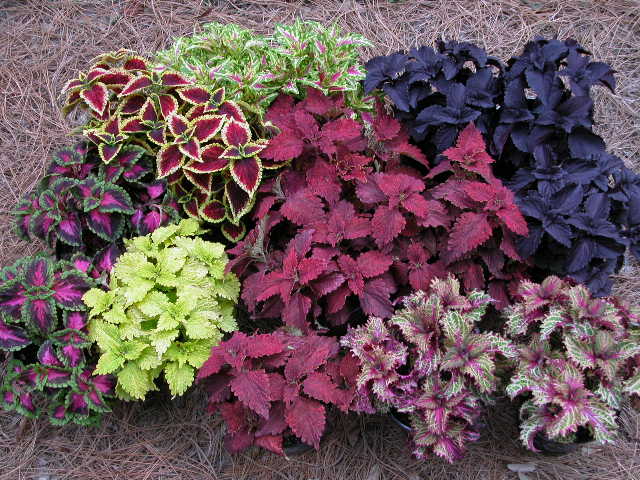
Coleus Canina (pictured above) is one of the most colourful tropical plants with almost every colour you can think of. It is my mother’s favourite plant. I grew up with in Lae, Papua New Guinea (PNG) seeing Coleus growing on the side of our house, along the main road at our village, in our food garden or in the cemetery. Everybody  grew some kind of Coleus plant.  They are gorgeous. We used Coleus to decorate ourselves when we danced. Sometimes, our people just stuck a small branch of the plant in their hair or hung in on their bags for decoration because it is pretty.

I knew the plant had a distinct smell, but I did not know, in Australia, Coleus was planted to repel animals such as cats and dogs from gardens.  Perhaps it is a myth? This attractive perennial herb is actually an aromatic member of the Mint family. They’re native to southern Asia and eastern Africa, and they attract butterflies and bees. 

In early 1990s, I was engaged by Peace Corp and the Conservation Melanesian to run some entrepreneur workshop and training for crafts people in the Crater Mountains in Eastern Highlands Province, PNG. I had volunteered to teach the artisans and spend some time learning about their art and the way of living. It was here that I discovered something new about the Coleus plant. Certain types of the plant had strong pigmentation. Women were using the leaves to rub into flax fibres as they twisted the fibres into ropes for making (bilum) bags as pictured below. As they twisted the ropes and rubbed with Coleus leaf, the rope would instantly turn from its natural colour into deep purple, blue and even black.  I was amazed.

FullSizeRender
Dark blue, almost black dye from Coleus plant rubbed into the fibre on this bilum by the Herowana (Crater Mountains) women in PNG.


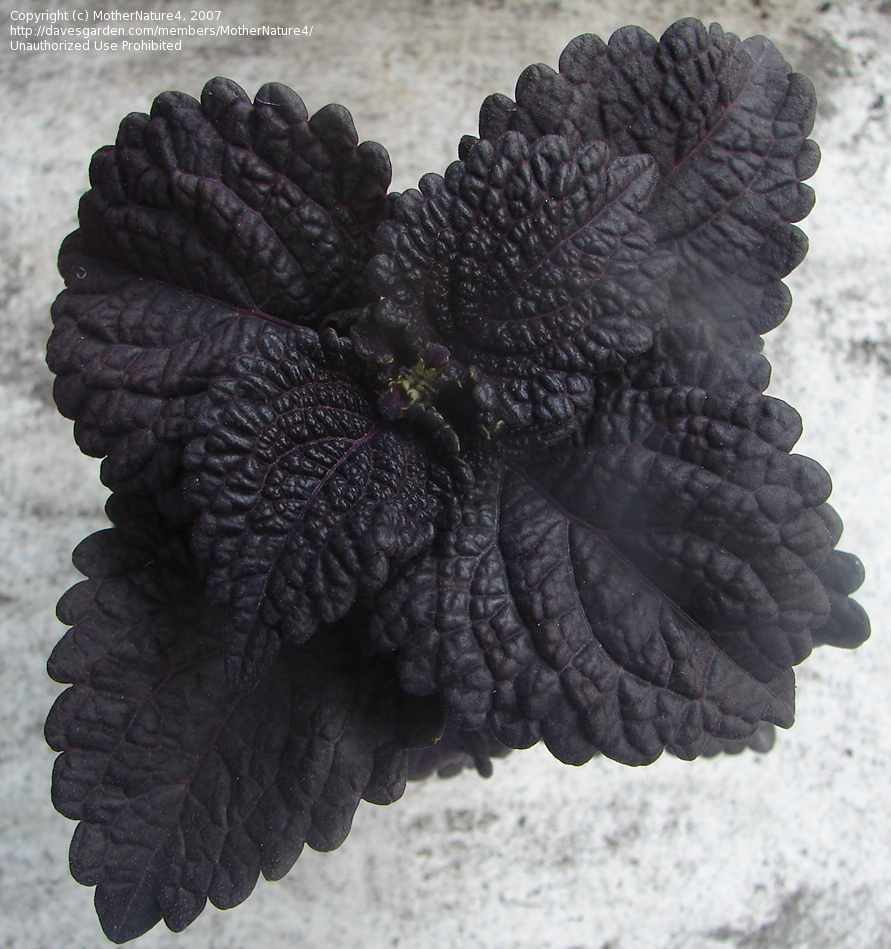
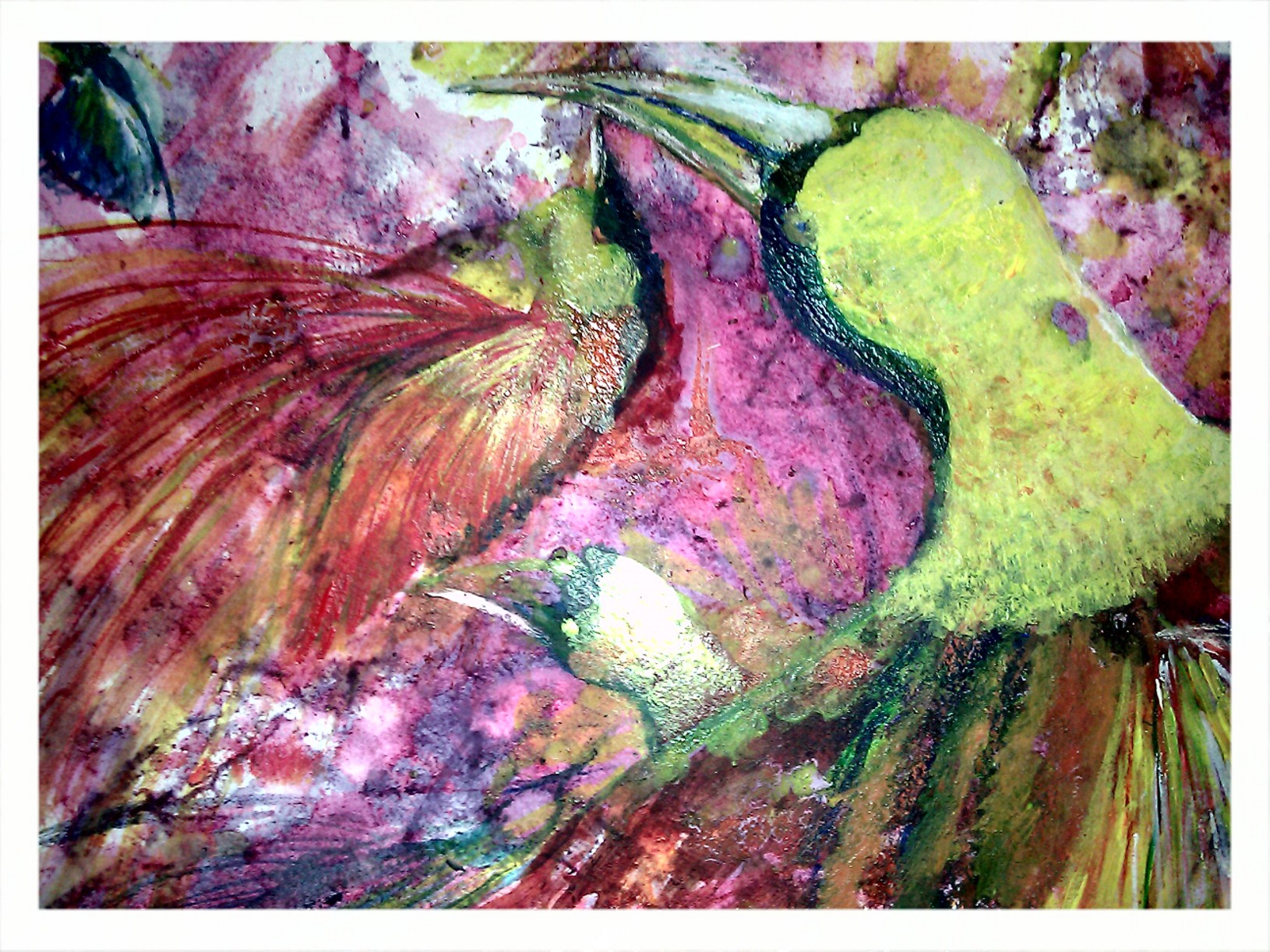
Years later, while living here in Brisbane (Australia) and experimenting with using natural dyes and pigments in my painting, I remembered the Coleus. I had already used coffee, tea, turmeric, beetroot, some grass seeds so it was a refreshing addition to my natural pigments. I had made a trip to the local Bunnings and started growing the Blackberry Waffle, pictured below which gives the strongest colour dye.  I made good artistic use out of the plant all summer but unfortunately I lost the Coleus plants in winter. Spring is here so it is warming up and I will start again. That is why I am making this post. Below is an artwork, “Paradise Birds” I created from using a mixture of watercolour and natural pigments from my garden. The pink and purple background in the painting is the pigment/juice from the Coleus plant. 

65c4f0
The Blackberry Waffle Coleus – the pigment king.
Photo_831EB53F-C19F-EA8F-5AE8-A7A77F315166
My Art – I painted this mixed media called Paradise Birds with Coleus ‘Blackberry Waffles’ – it is the pink and purple background. I also used the blue seeds from grass and turmeric for the gold and yellow bird heads. This work is on paper.