I recently visited my home town, Lae, the greenest city of Papua New Guinea. Lae is the capital of Morobe Province and is the second-largest city in PNG. It is located near the delta of the Markham River and at the main highway into the highlands of PNG.
Lae is very hot and humid, although when we were visiting in September, the weather was cool and very pleasant. It rained 50 per cent of our three-week visit which was a change from nightly rainfall.
I love Lae because it is home and my family lives there. Lae also offers some of the best organic food you can get anywhere in the world. In Lae market, you can also get any kind of meat and fish you want.
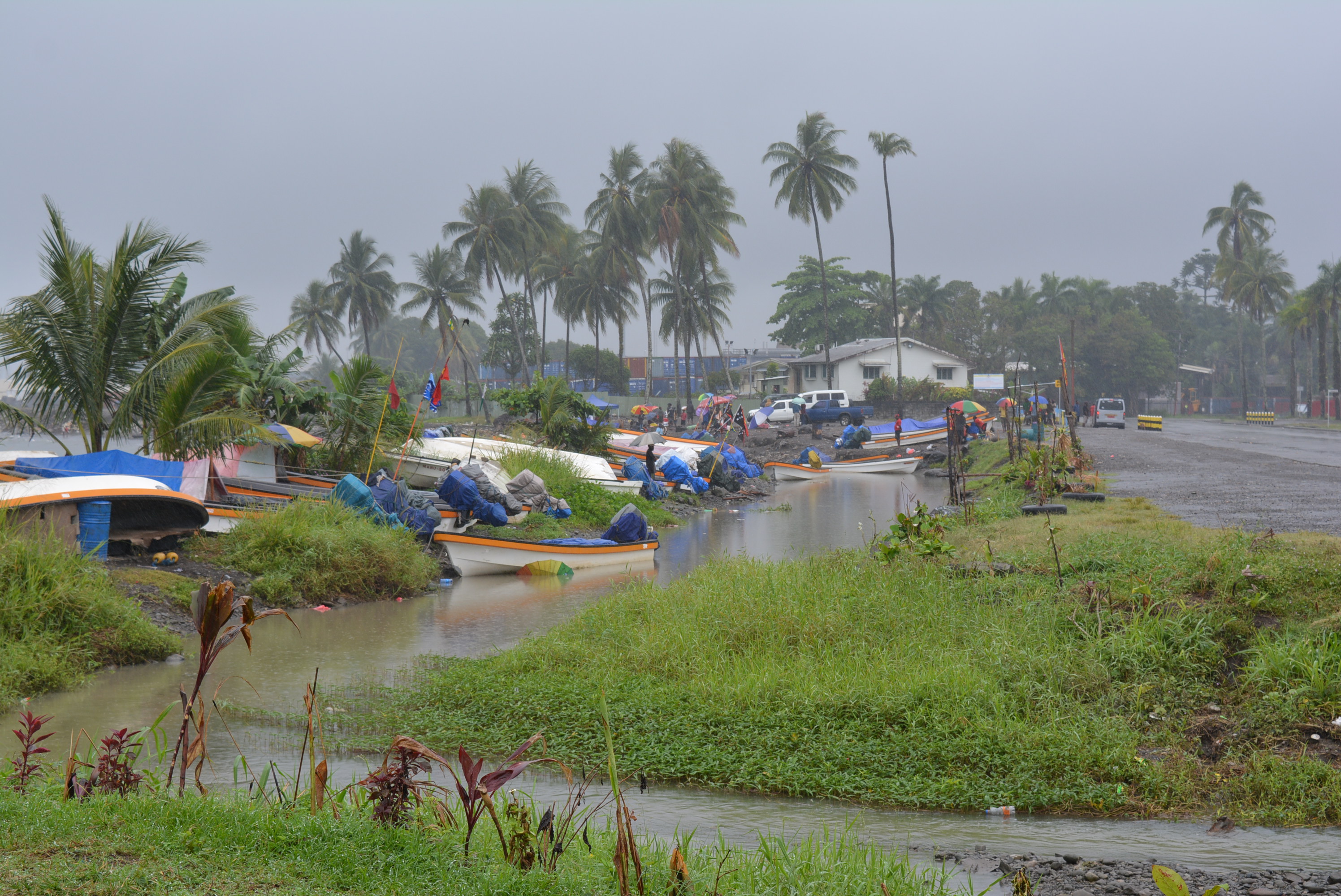
It rains most of the year in Lae City, Papua New Guinea. Everything is grey, weather is over-casted, but when it stops raining and the sun comes out, Lae is green. The Kuanua ran aground and storms installed it just off the edge of former Lae airport.
Kuanua’s rusts make her stand out in the wet weather.
Once upon a time in a land far, far away, beyond the blue fog of Torrest Straits lived many tribes in Papua New Guinea. Amongst them, a fierce warrior named Katham led the Ahe people.
Seeking fertile land Katham attacked Tikeleng, Apo and Aluki tribes for the Lahe coastline. The early 1900s battle took place near a large river. Positioned in the thick tropical forest Katham and his warriors fought till his last coastal enemy fell. Katham and two ardent followers returned inland. They crossed the river, which they named Bu-dac, meaning Blood River, because it was red and filled with floating bodies. The three heard loud splashing. Katham approached the shallow bank cautiously thinking an injured enemy was still alive.
To his astonishment, he found a toddler struggling for air and Katham picked up and hugged the baby boy. The baby threw up water and cried. Without other survivors, Katham returned home, named and raised the toddler as his son.
Based on our (Ahe people’s) history as told by my grandmother, Geyamlamuo Poaluawe Baim. Budac remains a river where our people wash daily. The toddler’s three generations are still part of our family. Our village Wagang remains in the position Katham fought for. Thank you Barbara for a perfect picture to inspire my oral history.






 Tribalmystic Stories