Category Archives: Women

Inspiring stories about people – women in particular

Blogging your book away – how much is too much?


Will posting chapters and parts of your book on your blog take away from your publishing success?

My_Memoir_Tuesday_Cartoon

I have been told often that I should save more of my blog posts to include in my memoir. Usually this advice comes from people who love and care for me. I really appreciate that concern. I know this concern was not expressed for the fear of copyright, although I should be concern about that too; I am told I am ‘giving away’ a section of writing that may be building up tension or crucial to the climax of a chapter or even the memoir itself.

We choose what we share on our blogs. I know I could be just giving away the important parts in my memoir without realising it, but as I write the story evolves. I also feel the need to challenge my self even more by improving that story after I have posted it. Often I feel that if I re-write as much as I can, I like it more and the story becomes another story – an even better story. I remember things and add them. I show what I am saying better, with the right words. I enjoy details, sound, smell, how it feels and colours. When I re-write often, I speak the English word better, because it is not my first language and I need the practice. This may sound confusing, but it is about the evolution of the story and how the story journeys through its form until it becomes the one invention I and hopefully the editor is satisfied with.

I am grateful for the good advice, and without being too cocky, I must admit, my other fault lies in wanting to share immediately. My enthusiasm and thrill of a draft completion leads to, the need to read the story to someone. I want to tell the story.  This may not be what other aspiring authors do. And, I am not advising anyone on what they should do with their potential best-seller. I wanted to make a point that whatever bits and pieces you read of my memoir is a piece of the story. I hope by the time I complete the memoir, I would still offer you a whole story and not six chapters of what I have left – from blog posts. Perhaps some of the blogger/author friends can share in the comments, how they manage this issue. Now, I have another story to tell…..

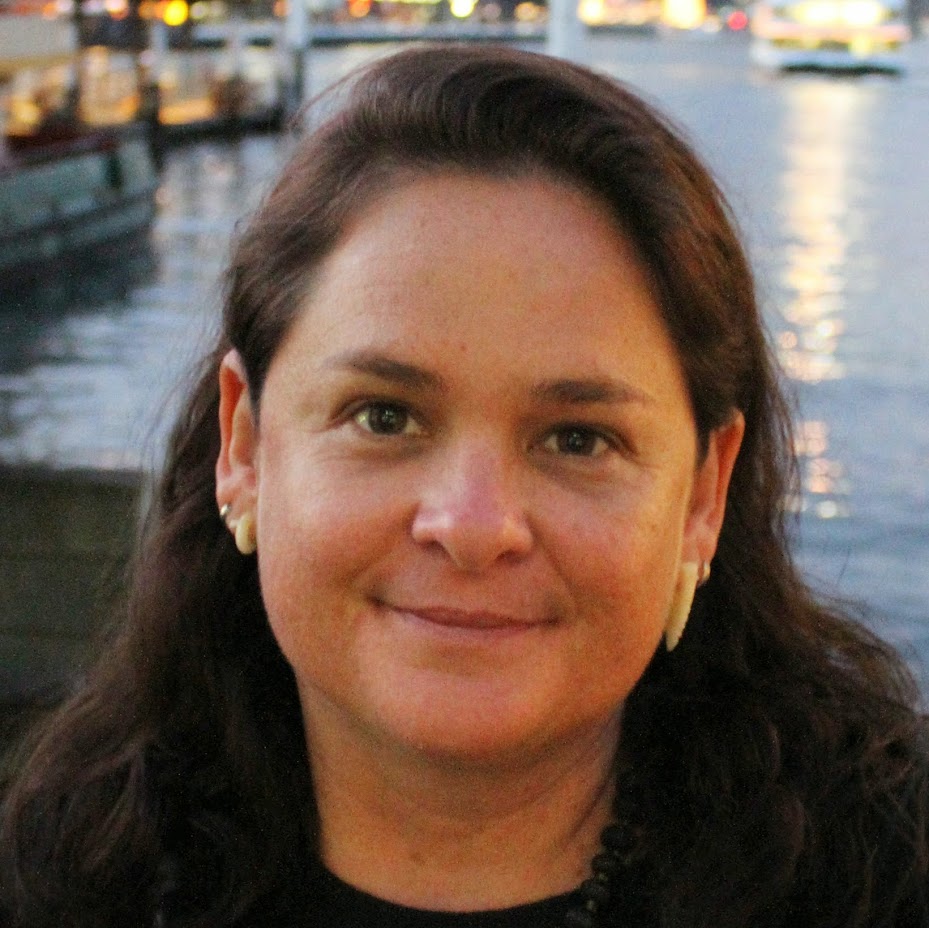
Recently through my friend and fellow WordPress blogger hiMe, I found another Papua New Guinea/Australia woman writer, June Perkins. As we bloggers do, we socialise while we write. For me to find a wantok, someone from your place, it is quite special. Perkin’s work has been published on Australia Broadcasting Commission(ABC Open) that hiMe writes for.  Once hiMe gave me the link and I reached out, it did not take long for June to come to the meeting place – this blog.

I am very happy to get to know June (virtually) and read some of her stories. It is also wonderful to find stories between us that have similarities and that common place. Reading through June’s posts, I found this piece of writing and I was thrilled that it was related to my post tonight about how much is too much to share on blogs. I hope you enjoy June’s post and have time to visit June Perkins‘ blog in the future.

dancingintoslipstreamlarge
A possible cover for an upcoming book – bringing my poetry on Art and Spirituality together – June Perkins

My blog is the place where the journey to my books has begun.

I have fed them continuously like journals with drafts and polished works.

Blogs have helped me make writing, remembering, reflecting and imagining a regular practice.

Blogs have encouraged me to make photography a regular practice.

Through reading other blogs I have found storytellers, poets, writers, travellers, film makers, and people who want to bring peace to the world through art. These people have inspired me with their journeys, writing, and photographs in their blogs.

Blogs have helped me so much so that when I have lived in the outer/country, I sometimes felt cut off from this larger creative world.

Blogs helped me heal from the damage of a cyclone to my old home and become a community journalist.

My own blogs have become a resource, full of roughly cut books. They have become archives for my family and friends to search our shared history.

Now I begin another journey. On this one, I take the rough cuts and unstructured writings shared the blogs and begin to place them into book structures.

It is time for me to polish more.

I move beyond the relatively free form of my blog and start to create anthologies and memoirs with sections, and chapters, and titles. I edit my blogs and add and subtract from them.

I create new pieces to connect blogs posts, and put them in these books, and save up for when they go public. They are held back from my blog to be surprises. My blog increasingly becomes a place for sharing the process of what I am up too rather than the final product.

The most inspiring things about blogs are:

1- The way they can potentially connect with the writer with readers and invite an immediate response.

2- The way blogs can respond to national and international events in the moment.

3- Their cheap access to a publishing platform for many in the world.

4- Their global reach.

5- Their capacity to build an audience for an emerging storyteller.

The challenges of a blog can be:

1- Blogging becomes addictive. You keep feeding your blog and not get on with sending off works for publication.

2- You share work you could or should be publishing as a book or article.

3- Copyright protection.

4-Some blogs focus too much on sales and not enough on content or connection. These blogs concentrate more on sale pitches and some are scammers.

5-Blogging can be challenging to build a large audience for your blog, and requires time, good quality content and social skills.

I will still blog when I have something I don’t want to forget, or something that moves my heart, or maybe a photo to share, but now I truly have to share a little less on my blog, and make you some SURPRISES.

More soon…..

(c) June Perkins

Short Story: Swamped


Pneumatophore_overkill_-_grey_mangrove
From Wikimedia Commons, the free media repository

If you have missed the story opening published last week, click here

Although peeking through the pale mud with life and vibrancy, the young mangrove regrowth looked naked and vulnerable against the open swamp, and without the mother-tree nearby. In the distant, under the long shadows, piles of de-skinned fallen mangrove laid like stacked cadavers. This was part of an extensive wetland area used for fishing and gathering food like sugo, small snails and Kina, a fresh water mussel. There was some kind of an order in the distribution of the mangrove shoots along the random waterways. It was a peculiar, and neat arrangement. Amongst this orderly disarray, I stood out like the tallest cross in a dwarfed graveyard. The young mangrove shoots only came to my knees, just like the old stumps.

I must remove myself from here, I had thought although this had always been our favourite fishing spot. Today, the place felt strange, unlike before. Before, we would fish for hours and take our breaks on the logs. We ate with one hand and smacking of mosquitoes, then wiping their blood off and scratching the small bite mounds with the other hand. I had been to this place with my Grandma and Aunty Yellow. I also came here with my cousin Alison before she lost her mind to Malaria. I should not have been here alone today.

Once when Alison was eleven and I twelve we spotted a stranger here. On that day, we had brought with us Tinang’s (grandma) bush knife, which we were forbidden to use. The bush knife had cost a lot of money and one bush knife served many families in many ways. It turned out, the man we had seen was not a stranger, nor was he real. From his actions and the way the Sockwing (a type of wag-tail) birds were calling, my cousin and I became alarmed and we ran off, leaving grandma’s bush knife behind. I had to run back and get it. If we had left the knife there, we would have been punished for taking the bush knife. We were told that same evening, the man we had seen was a spirit of a dead great-uncle. This too was his favourite fishing spot.

I thought I saw a movement and my eyes tried to focus. Nothing seemed out-of-place, and everything around me looked like it had always been.

The Japanese bombing in the Second World War left a large gap in the wetlands. The bombs opened the place as wide as a soccer field, and made it lifeless; right in the middle of the thick mangrove that was relished by fish, birds, snakes, lizards and all kinds of insects. My Aunty Yellow said, in the open centre, mangrove regeneration since the bombing struggled for decades. The bomb explosions took both natural and human lives; our great-uncle was amongst those.

Apart from the war, this place was a landmark because the mouths of many small creeks gathered into the head of the largest one, which flowed into the main river, named Bu-dac. Budac meant Blood River, a name that reminded us of our history.

Our house was built along the river near its centre and at the entrance to our village. In pidgin, it is called, maus-rot which means mouth road.

I was standing at the head of Budac. There was a large T-junction, where the main creek met the river. The swamp clay was very soft and pale and covered with dead rotting leaves. In the dark river, life existed; a place where fresh-water fish feeding, spawning and nursery took place. Fish gathered daily to feast on other fishes and debris collected and deposited by the creek as well as the river at this meeting point. Not today, I had not seen fish movement breaking the water rhythm nor its surface. I could not understand nor remember why I was here today, and alone – only a few kilometres away from our village, just outside Lae, Papua New Guinea.

(© JLeahy, 2015)

More Swamped soon…

Seeking Humanity


Asylum Seekers centre and Wendy Sharp Project
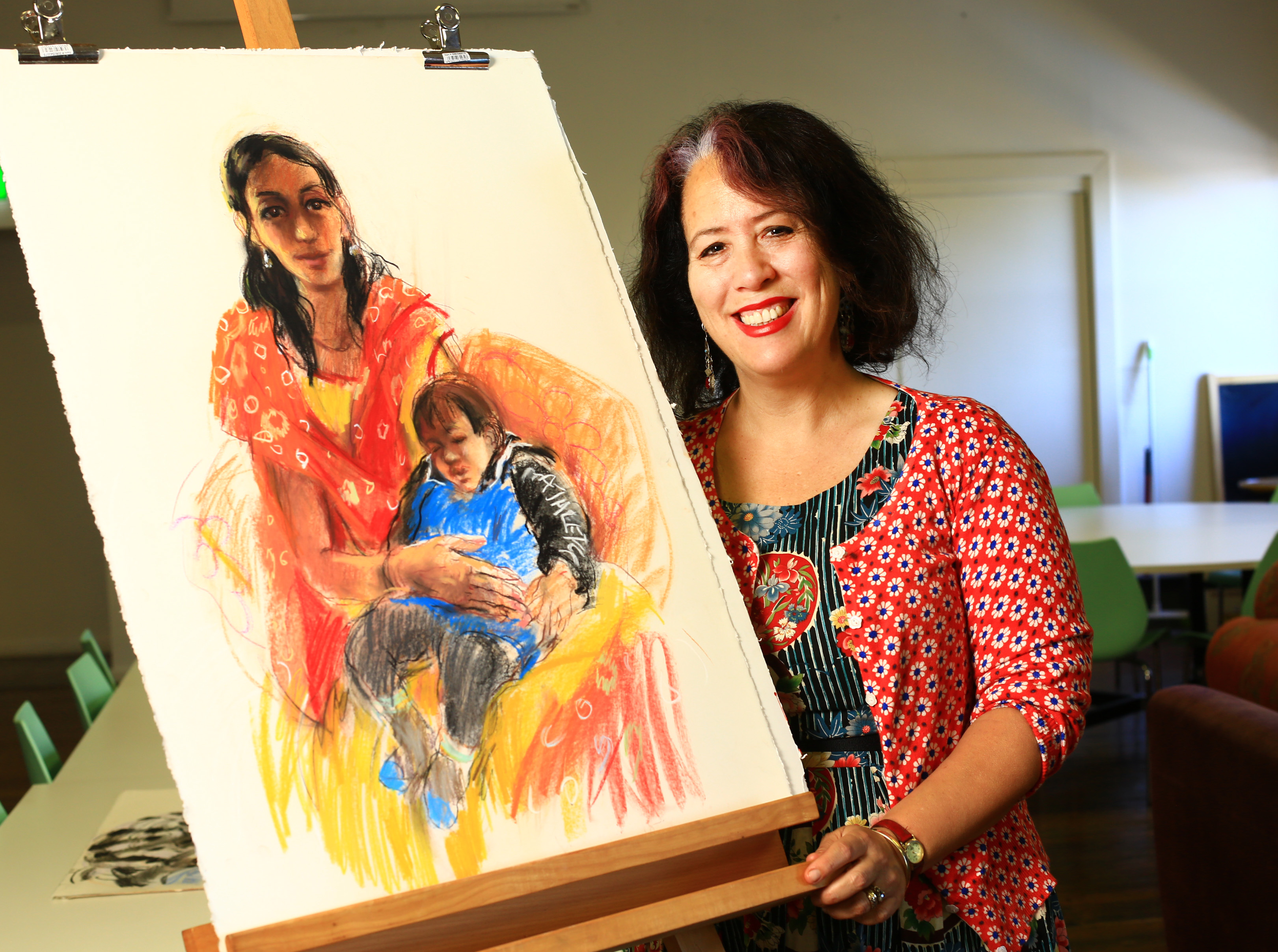
The artist, Wendy Sharpe.

Seeking Humanity’ is an art exhibition by renowned Australian artist, Wendy Sharpe. It is not about politics, but puts a human face to those who have fled situations of great danger in their home country in search of safety and freedom in Australia.

A previous Archibald winner and 2014 finalist, Wendy has drawn portraits of 39 asylum seekers and refugees. Through her art, she shares their lives with us to show that underneath all the troubles and politics around the issue, we are all the same; we all have the same hopes and dreams. The show will start on February 17 and end on May 24 in Penrith, Sydney and Canberra.

‘Seeking Humanity’ is brought to you by the Asylum Seekers Centre. All portraits will be on sale with proceeds going to the Centre to help provide practical and personal support for asylum seekers.

Click on the link and press play to watch Wendy draw live.

http://asylumseekerscentre.org.au/seeking-humanity/


Dame Josephine Abaijah: Flying Solo in a Man’s World


I personally have always admired Dame Josephine. She has lived an extraordinary life and will continue to inspire the women of Papua New Guinea and other Pacific islands. Thank you Veronica Peek for writing this story and sharing it with us.

Veronica Peek's avatarColonial Days in Papua New Guinea

Josephine-Abajah

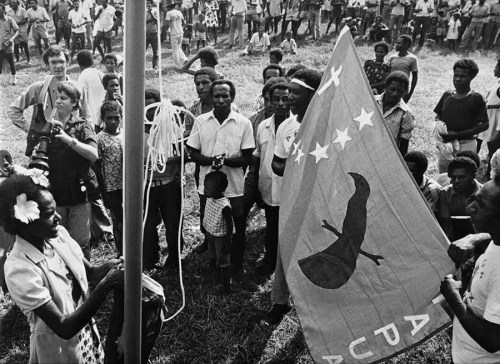
When I look back now on those seventies years in Papua New Guinea, there is one politician who stands out as personal favourite, and that is Dame Josephine Abaijah. In those days when she had no title, Josephine and I were neighbours of sorts. She owned a news agency in the Port Moresby suburb of Boroko and it was at street level, of course. Up one flight of stairs and directly above her shop was a suite of rooms where I had my photography studio and darkroom. If the acrid chemical smells emanating from said darkroom ever troubled her, she didn’t say so.

My memory of Josephine, then, is of a dainty, impeccably groomed lady behind a counter who served me my copies of Australian newspapers and magazines. Thing is though, she wasn’t always there. This little lady had bigger fish to fry.

Dame Josephine Abaijah, as hopefully any Papuan…

View original post 339 more words

The Musical Water Maidens


2013-06-05-06b_water_music_2011
Huntington Post Photo

It is not often that you find musicians using nature to aid in their musical performances. In the Melanesian culture, a rare tradition passed down from generation to generation of women still lives on.  Lakes, rivers or the sea water is used as a percussion in this tradition, to provide the music with singing. In recent years, this beautiful tradition has been shared with the world through international tours and festival performances. The performers of the Vanuatu Women’s Water Music group (two pictured) hail from the remote northern tropical islands of Vanuatu. They travel the world performing the Na Mag and Ne Lang dances as a prelude to the mystical water music, dressed in their traditional costumes of Gaua and Mere Lava made from flowers and leaves, coconuts and pandanus. Their performance is truly mesmerizing as they reimagine the old with contemporary expressions of Matto – bringing together traditional beats and rhythms with ukulele-led melodies and soaring vocal harmonies.

“And in an age when most bands are dominated by just a handful of instruments — drums, bass and guitar — I encounter a new way of making music every year at the RWMF. In 2011, women from a village in Vanuatu turned the lake of the cultural village into their instrument, cupping their hands under the water to make booming percussion sounds”, wrote Michael Switow when reviewing the women’s performance at the Rainforest World Music Festival.

To listen to one of their songs, click here

http://youtu.be/vUUVEvffzSI

Wantok Musik Foundation

The Tufi Tattoos


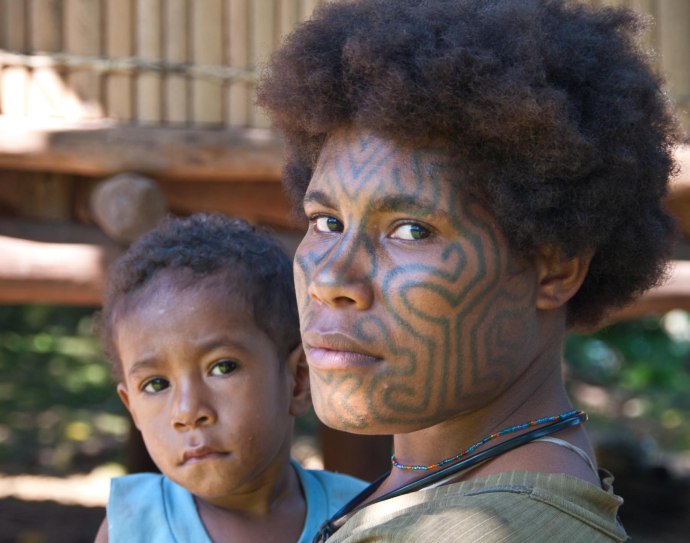
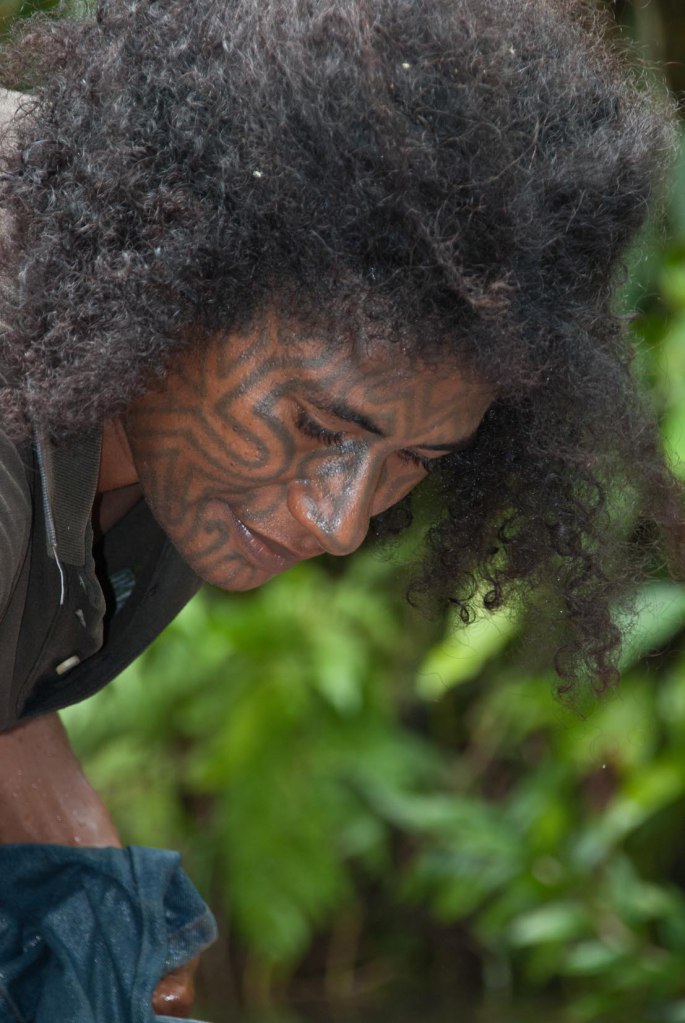
The Tufi tattooing is a beautiful tradition that remains alive in Oro Province.  The art of traditional tattooing is dying, but, traditional artists and master tattooist in Tufi have kept the tradition alive for women in this culture. Tufi is known world-wide for its enchanting natural beauty. The town of Tufi is surrounded by reefs. It is one of the top diving spots in the world and a place of rich cultural heritage. The Tapa cloth also comes from Tufi. The town is located in the Eastern Peninsula of Cape Nelson in Oro Province, Papua New Guinea. 

Ramona at Kasiawa
Picture from Mr Jan in PNG


janhass's avatarMr Jan in PNG

Ramona at Kasiawa Ramona at Kasiawa

When a Tufi girl is ready for marriage she might, for some weeks, enter the hibernating process of getting a facial tattoo. The tattooing is an old traditional practice that has faded away and disappeared in most communities, but there are some areas where the tradition lives on.

Ethel is proud of her tattoo Ethel is proud of her tattoo

The girl stays in seclusion during the time of the application, which is made by a qualified tattooist – sometimes a relative; always a woman. First the pattern is drawn in black, and when the girls’ parents have expressed their appreciation the tattooist starts the actual process. Dulcie at Kafuaruru village and Levinia at Angorogho, two of the still active tattooists, use a modern needle instead of the bush needle that was tapped by a stick, which was the old way. The dyes today are also mixed with modern ingredients that give a stronger…

View original post 198 more words

A Digital Master Attuned to Healing


jenny-fraser
Jenny Fraser

My next story to celebrate Australia Day is about an exceptional woman. She is an artist, an advocate for the rights of the aboriginal people and also a very clever curator. Recently, Jenny Fraser has decided to move from making art and digital films into traditional and natural healing.

I first met Jenny in Bundaberg during my curatorial project “Pacific Storms Contemporary Art Exhibition“.

Jenny Fraser is a digital native working within a fluid screen-based practice. Because of the diverse creative media Fraser uses, much of her work defies categorization, taking iconic and everyday symbols of Australian life and places them into a context that questions the values they represent. With a laconic sense of humour she picks away at the fabric of our society, exposing contradictions, absurdities, and denial. Her practice has also been partly defined through a strong commitment to Artist / Curating as an act of sovereignty and emancipation.

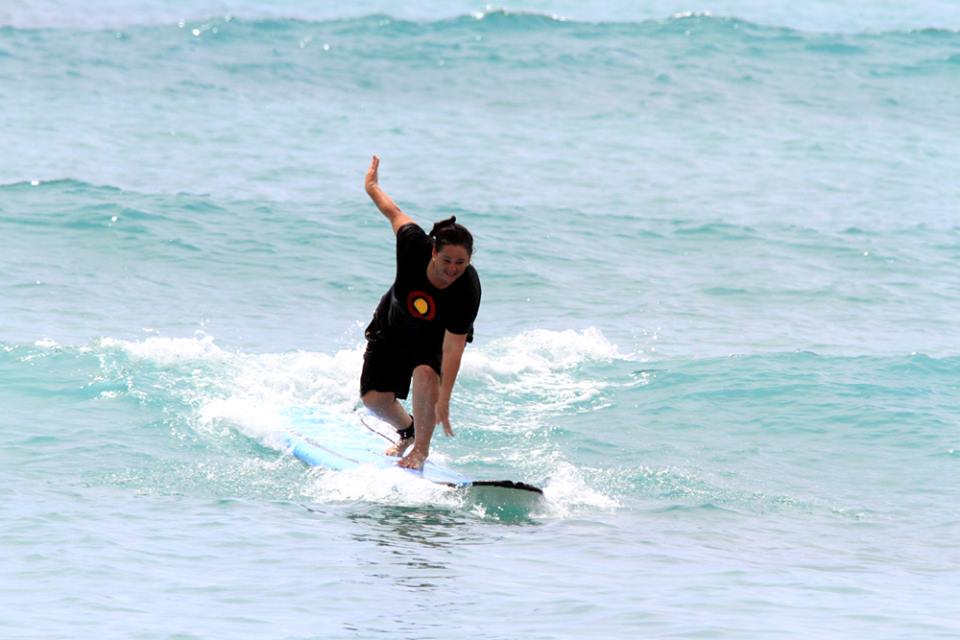
unnamed Jenny on surf board
On the waves, Jenny Fraser

A Murri, she was born in Mareeba, Far North Queensland in 1971 and her old people originally hailed from Yugambeh Country in the Gold Coast Hinterland on the South East Queensland / Northern New South Wales border. She has completed a Master of Indigenous Wellbeing at Southern Cross University in Lismore, New South Wales and is currently completing a PhD in the Art of Aboriginal healing and Decolonisation at Batchelor Institute in the Northern Territory. Jenny is the eldest of three girls.

Jenny spent her early years with one of her sisters, driving across Australia. This is where she learnt to be comfortable with the lifestyle, be that in the Australian bush, city or by the ocean.

“I have always known that I would be an artist. Although I am a trained Art / Film and Media Educator, I resigned from that in 2000. The artists lifestyle suits me much better.”

As a child, Jenny had a keen interest in many cultural approaches towards different lifestyle choices, practising and maintaining traditional knowledges, and relaxation techniques.

The curator’s transition into Natural medicine was a defining moment for her when she was making films and speaking with some of the healers in natural medicine. Jenny felt that was something that greatly interested her, she had only realised it when she spent more time with the people in that natural medicine.

“This awareness became more solid for me, when I worked on some films and witnessed the way people work so hard in that industry, which often drives them to sickness. But some have learnt from the hard work and have opened their own businesses in Natural medicine instead”.

Jenny is also a spearhead for Aboriginal Media Arts, founding cyberTribe online Gallery in 1999 and the Blackout Collective in 2002. More recently she was the first Aboriginal Curator to present a Triennial exhibition in Australia: ‘the other APT’ coinciding and responding to the Asia Pacific Triennial which was then accepted for inclusion into the 2008 Biennale of Sydney.

She has travelled extensively and completed residency programs from remote communities in Queensland and the Northern Territory to the Rocky Mountains in Canada and also Raw Space and New Flames in Brisbane.

The best way to see some of Jenny’s work is to click on some of the links below:

http://www.cybertribe.culture2.org/jennyfraser/

A Diary to Remember


I had kept diaries in the past. Over the years, some have been lost by accident, or the diaries were deliberately destroyed under difficult circumstances. With the digital age, I keep notes on my phone, a tablet or a laptop. Some of these notes often do not make sense after a while but sometimes I find some little gems I could use in my stories or important information I need to keep. There are websites you can write a diary on these days. In my search to find Australian stories to celebrate Australia Day, I found a story about another fascinating historical character. Ethel Turner was an Edwardian woman and writer who kept diaries for 62 years. She later wrote for the Sydney newspaper and eventually published books.  I believe that maintaining a habit of writing consistently, sometimes with meaningless notes, apart from writing for the love of it, has made it natural for Ethel to progress into a published writer. Ethel’s diary entries which seemed vain and meaningless at that time of entry, also later became part of history.  In addition, Ethel’s grand-daughter Philippa Poole was able to bring together and use these valuable entries as threads for all her grandmother’s writings.

Here is a review on The Diaries of Ethel Turner & Seven Little Australians” found on a blog called, Tell Me a Story.

ethel_turner

For 62 years, Ethel Turner kept a diary. Ethel’s diary entries which begin in 1889 at aged 17 were only a simple record of each day of shopping, tennis and picnics, garden parties and balls.

“This morning I made myself a black lace hat. Idled in afternoon. At night went to Articled Clerks dance and wore my white liberty again, this time with crimson flowers and snowdrops. M.Backhouse asked me for a dance and then did not account for it. I shall never notice him again. He was a bit intoxicated last night, I think, it is pity, he might be a very nice boy. I’m awfully sorry for him.”

If the endless round of social gaiety was enough for most girls Ethel and her sister Lilian had other ideas. Having gained experience editing their school magazine, in 1889 they launched their own monthly publication called the Parthenon which would have considerable success during the next three years. Her love of literature and writing becomes more noticeable in the diary entries as she records the books she buys and reads…

” I read the loveliest book or part of it after 11pm last night Not All In Vain by Ada Cambridge – I think I like better than any book I have read.’

She began writing stories, poems and articles for a Sydney newspaper, recognising that she had a talent that could earn her money and help her gain independence.

seven little australians

In 1894 Seven Little Australians was accepted for publication.

Set in Sydney in the 1880’s it tells the story of the seven children of a very authoritarian father and a flighty stepmother. By informing her young readers at the beginning that they are about to hear the tale of ‘very naughty children’ Ethel Turner immediately grasps their interest.

She was also ahead of her time with her writing by capturing a warm relationship between parents and children and by going against the ‘happy ever after’ ending. This is a story of fun, adventure and a tear-jerking tragedy.

Despite warnings that marriage would mean the end of her writing career , in 1896 Ethel married her long-time suitor Herbert Curlewis and bore two children, Jean and Adrian early in the new century.
She continued to write prolifically – more than 40 novels, short stories and poems for children.

In 1928 her beloved daughter was diagnosed with tuberculosis and after a prolonged illness died in 1930. Ethel was heartbroken and never wrote again.

Ethel Turner died in 1958.

http://cat-bookmagic.blogspot.com.au/2014/11/the-diaries-of-ethel-turner-seven.html

Born to Sing


I love World Music and have always found the South African music very lifting. Recently, I discovered the music of Peki Emelia Nothembi Mkhwebane from South Africa. She is an award-winning Ndebele musician. Her singing, dancing and dressing embraced a multifaceted picture of the culture of the Ndebele in South Africa. The origins of the Ndebele tribe are not known, although they are generally recognised as forming part of the Nguni tribes of Southern Africa. Nothembi has travelled the world with her beautiful music. It is the right moment for me to share a beautiful thing (her music) with you because I have to return to work tomorrow.

Profile of Peki Emelia “Nothembi” Mkhwebane

Peki Emelia “Nothembi” Mkhwebane was born in Carolina in Mpumalanga on 1 January 1953. Orphaned at the age of five, she was raised by her grandparents who could not afford her formal education. Most of her early life was spent looking after her grandfather’s cattle and sheep – their limited means of livelihood at that time. It was no mean task for a girl.

Mkhwebane’s family loved music and nurtured her first love for Ndebele songs. Her grandmother taught her to play a reed flute, while her sister exposed her to isikumero. Her uncle taught her to play a home-made guitar. In this hub of Ndebele music and culture, Mkhwebane learned a lot about the richness of her culture and later started a musical group called “Izelamani zako Nomazilyana”, which performed at cultural gatherings and weddings.

With time, she bought a keyboard and guitar to compose songs, which she recorded. Despite her burgeoning achievements, she still struggled to find a recording company, particularly as one of the major snags was her illiteracy, which proved to be a hindrance in securing proceeds from the recording breakthroughs.

Never one to despair, and propelled by her passion and talent, Mkhwebane subsequently defeated most of these obstacles to become a world-renowned, prolific singer and performer of Ndebele music. She has travelled extensively abroad, performing in countries such as the United States of America (USA), Austria, Germany, Portugal, Australia and France. In 1988, she performed in New York and London and received an award for the Best Ndebele Song.

(Information courtesy of The Presidency)

Freda


IMG_8591
Freda, watercolour. JLeahy. January, 2015.

I have been painting “Josephine”, the woman from my head in watercolours on paper.

With several layers of pigment on heavy paper, she has taken some time to surface.  In almost three weeks, and working with three other artwork at the same time, I took no notice of how she was looking. I knew “Josephine” was due to finish soon.

My sons had been away south. My younger son returned today and wanted to see what I had been up to. I showed him the gardens, told him about the chickens, the paper thief, and how my blog was going. He could see I had been painting. As usual, he went through my paintings, telling me which ones he liked. When he saw “Josephine”, he asked me if I was painting “Bubu”. Bubu is a shortened Motuan (Papua New Guinea) word for grandmother/father. Chris was referring to my mother, Freda.

I laughed. Chris was right. This woman in the painting is what my mother looked like in her younger days. Apart from her hair, most of Freda’s looks have not changed much over the years, so much so, my 16-year-old recognised her. I had not realised Josephine’s resemblance to my mother before.

How did I paint my mother without knowing? (Maybe, I miss her).