Category Archives: Nature and Climate Change

The Nightmare of Story-writing


I haven’t forgotten to publish a new short story. I have written a few for my Creative Writing workshop and my memoir. The thing with writing stories is that every time you read it, you want to re-write it. It is not verbal so you could just correct yourself as you tell the story. And, just like the critical eye of an artist about his or her work, I feel that the story is never finished. When I do attempt to re-write, I often lose the magical essence I applied during free writing. For example, a short story of 800 words may flow so well on my first draft but when I start to add more descriptions and enrich the content, I start to lose the tension building or the essence of the conflict.

Then, you still have the general structure and language of the story to worry about. I cringe sometimes when I read my writing that I have published and I had missed a typo, grammar or perhaps a paragraph could be better placed or written. You could pick up something in this piece of writing and I would be in trouble again. What a nightmare it must be for all writers. Thank goodness we have editors and ‘know-it-all’ friends who will point out our mistakes. Sometimes you feel like saying, “You think it is easy; why don’t you write it then?” But without them, these “auto-corrector assistants”, we would not be able to bring good stories out to our readers in good writing.

Anyway friends, that was really my reason for delaying a new short story on this page. I am still editing some of them but let’s just call this one a work-in progress so I can give it to you as promised. It is a non-fiction short story from what I am writing for my memoir.

The Windy Curse 

JLeahy Memoir

The wind was howling curses. Footsteps ran on gravel. People were rushing up the main road, away from Wagang, our small coastal village. It had stormed all night and all day. The waves rose in great heights over the far end of Wagang outside Lae, Papua New Guinea. It was 1972.

My uncle Sam said: “Yesterday morning, some houses were washed away with part of the coastline”. I could not go to school.

“The sea is coming!” I heard a woman call out. She half ran with two crying children behind her. Mounted on her back, the woman had three bilums filled with clothes and food. Dusk had approached when she threw that warning at Tinang, my grandma. There was panic in the woman’s voice as she hurried with her children up the road. We lived at the mouth of the main road to Lae town. Other men, women and children with bags walked quickly by, some dragging or carrying smaller children and animals.

I grabbed my clothes, towel and blanket then followed my own mother out of the room. Mother grabbed a few things. She packed them madly in a handbag and a large bilum. I was not sure what to take.

“Quick, come!” she called.

“Where are we going?” I said.

“We must leave now,” she said. I followed her out of our room.

The village was in danger. We had to follow the rest of the villagers inland. The wind had not stopped for two days. The dry coconut leaves and nuts dropped randomly, making it dangerous to walk outside our house. There was some flying debris of plastic, paper, Tuk and Abong leaves. I wanted to run to grandpa’s house, next to our big house but I was scared. I also thought our roof might fly off.

“I will get the mosquito net,” Mother said. She disappeared and returned with a white bundle with pink ropes and added it to my arms. She made eyes at me to go to Tinang.

I could hear the waves getting louder in the distance and heard my aunty Giuc screaming that the sea was coming in. She was also yelling curses at her cousins to leave the village and run up the road. Aunty Giuc was a few years older than I and tough.

“Hurry!” mother said. I had no idea where mother meant. There was no further instructions.

“Are we running up the road?”. It did not make sense to me, I thought – the road was too flat. The sea would get us.

Yesterday, the government radio said we needed to move quickly as the waves would be at the village on the second day.

“Where are we going?” I asked again.  Mother left me in the lounge and headed for grandpa’s house. I stood near the window and watched through the broken fly-wire. There were no louvres so I felt the wind.

Grandpa once dreamt that our village, less than a metre above sea level was going to sink into the sea. He told villagers that one day the water was coming in and we would disappear because the two rivers that surrounded our village joined on both ends.  Grandpa also told the villagers our house was built on the stone so even if the village sunk,  our house would remain standing, just like the biblical house that was built on the stones. I think that part made the villagers angry because they thought he meant our house was better than theirs. The villagers thought my grandpa’s dream was a crazy story.

As I watched everyone running past, I wondered if today was “The day” grandpa predicted. I walked to the front of the house to see where grandma was. I stopped at the top landing of our steps shocked at what was on our front yard.

There was sea-froth on the sand. The bubbles on the browny white foam slowly burst and disappeared into the sand. It left curly wet sandy trails. It was not normal for the sea to come this far, I thought. We were over 100 metres away from the beach. I scanned the ground to see if there would be fish. It was weird. In the last King tides, my cousins caught some tuna in the middle of our village soccer pitch.

I turned to look in our backyard; my eye caught the river rising. The river seemed angry like the wind. The dirty brown water twirled and rushed along debris and household rubbish.  I could smell the sea from my left and at the same time, from my right, I smelt the swamp coming to meet the sea. Watching it, the swamp swell drowned everything in its path as it spilt over the banks and leaked towards me rapidly. Mother’s garden of maa-le, a scented deep green waterlily used for curing fever, disappeared under the brown smelly water. Just like the swamp people’s houses, I saw our kitchen house posts and the fireplace disappearing into the water. Where grandma had planted the Chinese Kangkung and watercress, flotsam mixed with village rubbish of empty Marvolene bleach bottles, Ommo packets and old thongs pushed in, crushing the green healthy vegetable carpet with its filthy weight.

I looked to grandpa’s small house and I could not see mother. I wondered if father and daughter were praying. It made sense. Tamang (grandpa) believed in God.

“Mamaa!” I called out.

She did not answer. I looked at the people passing our house again. No-one waved goodbye or passed greetings. Everyone looked anxious. I decided they were going to walk to town and climb Mt Lunaman. That was the only high ground I knew.

“Mama! Mama!” I called. I sat on the cold timber floor and waited. The sand caught between the timber gaps caught my eye. There was so much sea-sand in the house.

In the past, the waves had come like a thief and took three village houses on the beach. Luckily no human lives but only pigs, dogs and some chickens went with the houses in the waves. The villagers became smarter and built away from the shoreline. On bad days like this one, we all left the village. The waves were left to what to do what they wanted.

“Yupla kisim ol samting na igo antap long rot”, the loud voice interrupted.

Get your things and move up the road. It was the village councillor. The village bell rang three times signalling emergency. Three times also meant someone died. I was confused.

“Hariap!” a loud voice called. I did not see my uncle Sam but he was barking instructions too at my family to hurry. He told them not to bring rubbish.  He also told his wife, his sisters, cousins and brothers to make sure they brought their underpants as he did not want anyone making pictures he did not want to see in the bush. This remark made everyone scream in laughter. It eased their tension only slightly.

I knew mother was with Grandpa. I stood up and looked out through the broken fly wire again. Then I saw Tinang, my grandma and ran down to her near the main road.

I waited near Tinang. My head reached her shoulders. I could smell lime and betel nut. I felt my way into her colourful nylon bilum to see if she had any betel nut. I was nervous and wanted to chew. In Tinang’s bilum, my hand touched empty nut skins, a towel, her Koala skin purse and other small things and not betel nut.

Tinang said, “it would be hard to move grandpa.”

“Why?”

“Because he is stubborn,” she said in Bukawac.

Grandpa can walk. I could not see how grandpa would walk all the way – but to where? The nearest mountain was miles away.

“Where are we going?” I asked Tinang.

“We are just going to go into the bush,” she finally told me. It finally made sense to me. In the bush, if we had to, we could climb up trees.

Soon, sea water ran in from the front of grandpa’s small house. It was made of bush material. There was froth and I knew more sea would come.

Then, I heard a truck coming. It was my grandma’s brother Mambu’s truck, Maac Kalac. A flat-top Mitsibishi with passenger seats. Its name, Maac Kalac in Yabem means the “proud bird”.

“Ampom!” I heard mother calling me and I ran to her. She came over to grab our things. She pulled my hand and took me to the truck and told me to get up. Someone lifted me and sat me on top of some clothes.

Below the truck engine, and all the chattering, I heard the village boys splashing and laughing in the distance and I knew they were having fun. I thought how silly they were to not see danger coming. Mother continued to madly pack food, matches and torch into our bag. Uncle Sam was giving final directions to all our family members to get on Awac Mambu’s truck.

This was a Public Motor Vehicle (PMV) licensed to transport the villagers into town for 10 cents. Tonight it was a free ride. Packed from top to bottom, it was loaded with bags, food, pots, pans, coconut. I could not believe it. Some people brought everything. There were dogs and chickens. Someone brought a duck! A duck could swim and fly. Why did they bring a duck?

“Tamang?” I turned my attention back to mother for my grandpa.

“He will come,” mother lied. Perhaps she was hoping he would come, I thought.

We loaded in less than an hour and the water started to sweep across the road to the tyres. Awac Mambu wanted to drive off and someone said grandpa was not on the truck. I sat up and looked back to the deserted house. I started crying and wanted to get off. Everyone started arguing. My mother ran back with the kerosine lantern. She disappeared behind our big house. Ten minutes later, mother ran back without the lantern and without grandpa. She whispered to me that we had to leave now and Uncle Sam would come back to get grandpa. We drove off. I thought about grandpa’s dream. I put my head on the bag of clothes next to the food and animals and closed my eyes.


A Physical Stance Counts


Among many talents, skills and expertise they have on environment, my dear friends Rae and John Sheridan are scientists and climate activists. Last week I posted a picture and brief story about their new pup Chaos who they adopted while fighting to protect the environment in New South Wales, Australia. This protest event took place in July. Here is a short factual account by Rae Sheridan about the events that took place when Rae, John and the members of 350.org took a stance on the establishment of a coal mine in Whitehaven Coal’s Maules Creek mine site.


Rae arrested1JPG

Above, Rae Sheridan on the scene of the protest when she got arrested.

P1300117-2

Far right and in front, Rae and John Sheridan hold banners with members of the 350.org.


A Physical Stance Counts

by Rae Sheridan

The police road block two kilometres from camp was our first taste of being part of a ‘suspect’ group. After the road-block, we were welcomed at camp and immediately given a tour of the very considerable facilities; kitchen, information tent, campfire gathering circle, farm barn-cum meeting hall, solar recharging nook, communications unit, toilets, showers and a little further  the tepee belonging to indigenous activist Muzz the owner of an impressive part dingo Mother, Dubi, and her irresistible ten 7-week-old pups.

The NSW convoy arrived as we put up our tents.  A flurry of activity followed with a walk up a nearby hill led by Muzz and Dubi.  From a craggy summit lookout we had a good view of the surrounding rural farms and in the glancing rays of a winter sunset we learnt of what was at stake with the clear felling of the critically endangered Grassy Whitebox woodland, and cultural heritage sites of the Gomeroi people, the traditional owners of the Leard State Forest.

There were around 200 people in camp.  Before dinner we met in the barn for a basic briefing which covered some of the history of the campaign, legal aspects and an outline of the two planned actions for the next day.  We decided along with about 40 others to be in the band that would seek to trespass on Whitehaven Coal’s Maules Creek mine site to disrupt the logging operations knowing that if successful we would be arrested.  Others planned to blockade a mine approach road.  Dinner was a buzz with folk meeting and sharing stories. There was a sense of anticipation and excitement.  For many of us, this was our first foray into deliberate arrestable illegality.  Further planning followed.   Our band was asked to form sub groups to devolve care, making checking on each other and monitoring of the whole group easier.  We choose intrepid as our foursome’s name … fitting for the most senior of the smaller groups. We put together our provisions for the next day in our back packs and set alarms for 1:30am. With a 2am start planned we realised that the moon would have set and we’d be walking in the dark.

The trip to the mine site had to be overland as the roads were policed on every approach. As our 12 kilometre route passed houses and crossed roads we had to walk in silence and without lights. Led by three local ‘scouts’ we evaporated in single file into the darkness …along tracks, across recently sewn fields, along fence lines, across creeks and finally into forest.  For our subgroup of veteran bushwalkers this was an unusual variant in which a loftier purpose added to the fun. Our timing was spot on. At dawn we crossed onto the mine site and past the Whitehaven Coal signage warning of trespassing. Within minutes flickering orange lights announced the arrival of 2 ‘security’ utes. Both ‘sides’ knew their ‘rights’.  The security guards could not touch us, just advise. We marched on shepherded by security fore and aft, stopping to plant eucalypt seedlings and greet the dawn with photographs of the landscape intact on one side of the road and levelled on the other. Girt by pink plastic ribbons, some isolated ‘habitat’ trees still stood erect.  Their wild inhabitants had 24 hours to evacuate before their homes would also be felled.

We moved to a road junction attracting more security officers on all sides.  They warned us to be careful, not to venture off the road in case we should ‘trip’. More sapling planting was accompanied by singing, a banner display and a bite to eat.  Eventually three police vehicles arrived stimulating another round of photography on both ‘sides’. We were charged with trespassing, our packs examined and as two Greenpeace paragliders sailed overhead, each of us was photographed, our details taken and, in groups, we were ferried off the site in paddywagons to a road junction near our camp.  The entire 4 hour standoff was marked with civility touched with a cast of theatricality.  John’s request for a senior’s discount on the fine was taken in good spirits. Back at camp we learnt that the other larger party had made a colourful ‘act up’ on one of the roads leading to the mine site.  There was a short debrief after lunch.

How do you assess the impact of the protest?  Social media, local media and some mainstream news outlets reported the action. The deforestation ceased the next week after the company was threatened with a court injunction. The fight will be back in court in September. Meanwhile the site is being thoroughly cleansed of trashed forest in preparation for explosion-driven excavation. The fight to save what remains of this unique forest is ongoing.

The experience left me convinced that physically taking a stand counts. I feel it is a necessary frontline strategy to combat environmental injustice.  For me it is the logical next line of action – a restorer of mental health in the face of so much frustration and it was fun.  Taking action has had a ripple effect. In my immediate circle of friends and relatives taking direct action has raised awareness of the threat of coal mining. It has stimulating self reflection in others leading to a reassessment of what getting arrested means.  My 70th birthday could not have been spent in a better way for a better cause.  On a less personal level non-violent direct action definitely feeds the voracious media and brings wide awareness.

I was impressed with the organisation, preparation and the monitoring of this direct action by the numerous supporting groups especially 350.org.  I was impressed by the commitment of the wonderful local farming families. My quandary is why more ‘affected’ people are not involved?  I’m convinced that the arrest of one popular ‘famous’ person such as a football player or singer would overcome a crucial hiatus in changing attitudes to non-violent direct action. More folk would be motivated and mobilised. It is reassuring to hear that there is a growing demand for non-violent direct action workshops. I cannot help but feel that the more  the public  hear  stories from individuals at the protest line the more non-violent direct actions will be seen as an effective, risk adverse and safe form of protest…. especially for the retired who do not have the threat of a career being compromised by having a ‘record’.

It is now two weeks after the action. I have been fined $100 and not the $350 that was expected. John, as yet, has not received notification. A collateral benefit is that we have become besotted parents to one of Dubi’s pups.

We look forward to being part of further non violent direct actions as an effective way to support farmers such as Rick Laird and the climate change movement.

Rick Laird, fifth-generation farmer from Maules Creek, said, “We have exhausted every legal and political avenue to make our voices heard. Whitehaven’s mine will destroy our community and our livelihood. We’ve seen this happen in mining areas all over the country – eventually the farmers will be forced to move out. My family has lived here for generations: we are prepared to fight for this place.”

(https://www.greenleft.org.au/node/55615)

http://350.org

Rae Sheridan

7th  July, 2014


Tavurvur Erupts Again


Over a decade ago, I lost one of my closest friends, Anzac Rabbie. He was a talented Papua New Guinean banker who was very well respected amongst his peers and the community. Anzac, named after the famous Anzac Day was from Rabaul. We took Anzac back to Rabaul to bury him. His wife Delma, children Rachael and William and their families who lived in capital Port Moresby, all travelled back to Rabaul for Anzac’s funeral. While we were in Rabaul, the Tavurvur Volcano erupted. It was one of the scariest things I had ever experienced in my life. Anzac’s village was position quite high and inland on a hilltop. However, the eruption shook and destroyed houses, schools and other structures. We were completely covered in ashes. This natural disaster left a very significant memory for me. In PNG we do cover ourselves in some of our regional cultures to show respect for the dead. For the case of my dear friend Anzac, even nature gave him it quite a ‘send off’.

Today I read, Tavurvur erupted again this morning. Here is the story from ABC.

http://www.abc.net.au/news/2014-08-29/papua-new-guineas-mount-tavurvur-volcano-erupts-back-to-life/5705032

Papua New Guinea’s Mount Tavurvur volcano erupts back to life

By PNG correspondent Liam Cochrane

Updated about 6 hours agoFri 29 Aug 2014, 2:28pm

A major volcanic eruption in Rabaul on Papua New Guinea’s East New Britain Island has left the local community concerned for their safety, as residents flee and businesses close.

The eruption came from Mount Tavurvur, which destroyed the town of Rabaul when it erupted simultaneously to nearby Mount Vulcan in 1994.

Authorities said the most recent eruption began in the early hours of Friday morning.

“An eruption commenced from Tavurvur form between 3:30am and 4:00am,” a bulletin from the Rabaul Volcanological Observatory said.

“The eruption started slow and slowly developed in a stromblian eruption with incandescent projections accompanied by explosion noises and ongoing loud roaring and rumbling noises.

“Stronger explosions are generating air phases and rattling windows.”

A strombolian eruption is characterized by short-lived, explosive outbursts of fluid lava ejected tens or hundreds of meters into the air.

Local resident David Flinn described the eruption of lava and rocks as savage and said lightning strikes could be seen amongst the ash cloud.

He said the volcano is currently emitting light steam and occasional booms, with about one centimetre of light brown ash covering surrounding areas.

Mr Finn said locals on nearby Matupit Island, about one kilometre from Mt Tavurvur have fled and yachts have left the harbour.

Authorities have not yet issued an evacuation order for Rabaul residents.

Schools and some shops have been closed, but Rabaul Hotel employee Susie McGrade said locals just want to get on with their lives.

“People still live here, we have to get on with our daily lives,” she said.

“We’re up on the rooves, cleaning off the ash, we’ve got to save our property, try and get back to normal, so what can we do? We’ve got no where else to go.”

It is yet to be confirmed whether the eruption will disrupt local or international flight plans.

Rabaul was the provincial capital in 1994, but after the town was destroyed by volcanic ash the capital was moved to Kokopo.

By comparison this eruption is a relatively small event.

Mount Tavurvur is considered one of the most active volcanos in the region, most recently erupting in early 2013 and recording other erruptions in 2011, 2010, 2006, 2005 and 2002, since the major 1994 explosion.

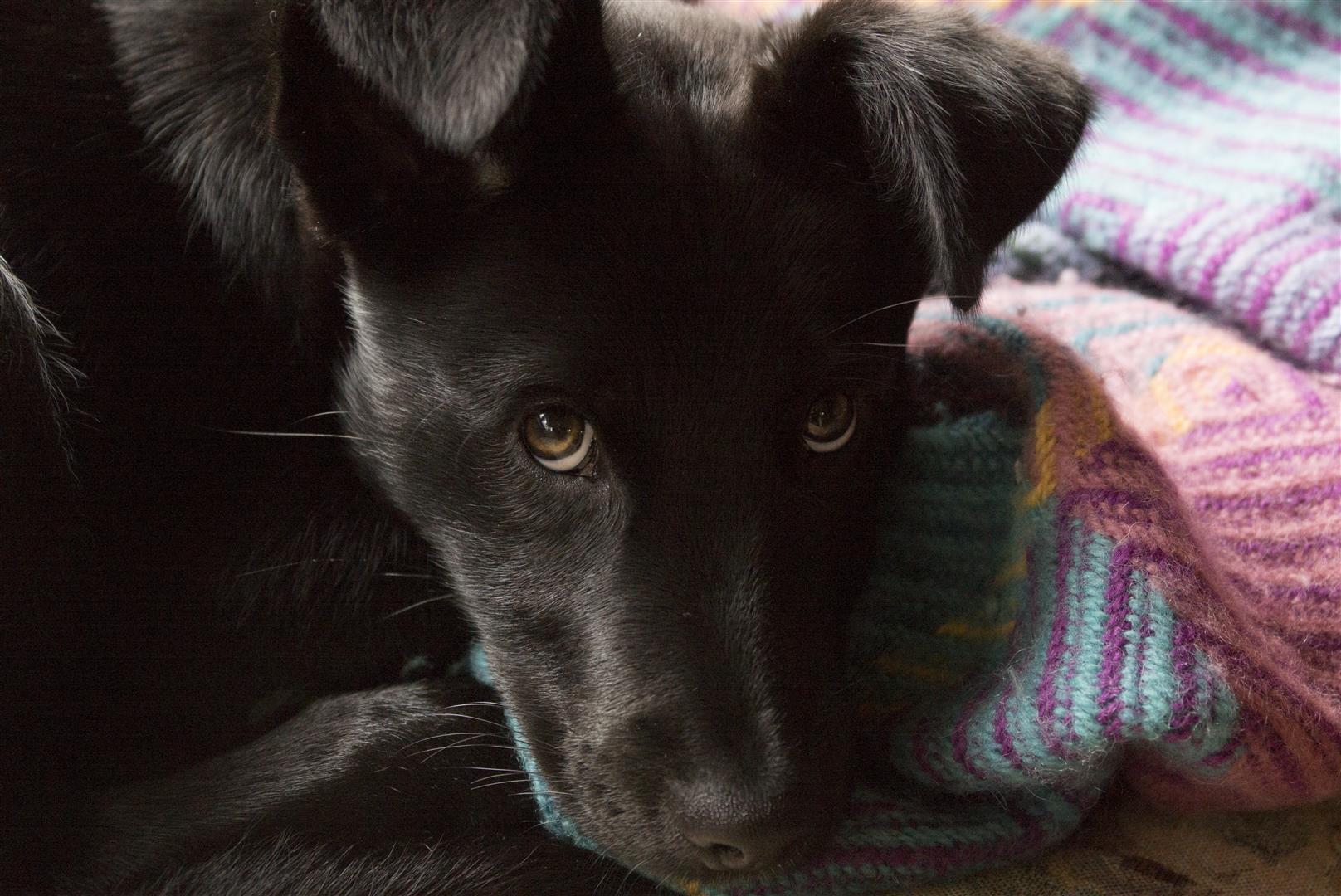
Chaos, A Climate Activist


Chaos at 14 weeks

This was Chaos at 14-weeks old and photographed by his owner, John Sheridan. I met Chaos a few days ago at my house. He is half dingo. Chaos is a Climate Activist.  Chaos’ mother was a climate activist (with owner and indigenous activist Muzz) before Chaos was born in Maules Creek, close to a new coal mine project currently underway in regional NSW. The project construction costs are estimated to total $767 million. When operating at full capacity Maules Creek is expected to employ about 450 people.

Being an activist meant being present and taking part in marches which often result in police interventions and arrests.

In June this year Chaos’s new owners and friends of mine, Rae and John Sheridan were amongst protestors against the Maules Creek coal mine project who got arrested. Just before they were arrested Rae Sheridan recalls how she and John met Chaos.

“The police road block a couple of kilometres from the base camp gave us our first taste of being part of a ‘suspect’ group. We were welcomed at camp and immediately given a tour of the very considerable facilities; kitchen, information tent, campfire gathering circle, farm barn-cum meeting hall, solar recharging nook, communications unit, toilets, showers and a little further  the tepee belonging to indigenous activist Muzz the owner of an impressive part dingo Mother, Dubi, and her irresistible ten puppies, all seven-week-old”.

This weekend, on this Blog – read more of the Maules Creek incident and a brief insight into the life that Rae and John Sheridan live as Climate Change activist.


Re-cycled Birthing Suites


Photo_0EAF98DF-F286-2068-7B58-294B7B7174D2-2


This morning, I heard scratching noises and thought of snakes. We get a few snakes and since we are almost on the end of winter, it is time to come out of hibernation. My friend Heather at work lives in the western suburbs of Brisbane, Australia like me. Heather said she and husband Gary found a python on their dining table when they got home last week.  My family lives about 15 minutes away from Heather so snakes have been on my mind.

The scratching noises seemed to only come from one place, unlike snakes which move and travel  fairly quickly. I followed the sound outside to our flood lights and found a Butcherbird. She was re-arranging one of two nests outside my son’s bedroom. The nests are on our floodlights so they are at least 15 feet off the ground. I smiled, feeling good about this nesting effort because this would be the third time the magpies used these nests. They had cleverly positioned the nests away from everything, including snakes.

The twig nests have been sitting on those lights for almost two years since the first two magpies build them. They served almost like a magpie birthing suite.

I had thought the Butcherbirds would be territorial and build their nests new. The previous Butcherbird babies live in the yard. They sit on the verandah rail and sing their hearts out for food. While we live in an rural suburb, and there are still a lot of trees they could build their nests on, these birds preferred the existing nests. I was curious about these nests being re-used so I Googled to see if it was normal for Butcherbird to re-cycle nests. Here is a link I found that did not have much information on the re-cycled nests but provides an in-dept information on the bird’s life.

http://www.wildlifeqld.com.au/bird-conflicts/butcherbird.html

While searching, I also spotted something similar with re-cycling and crows. Similar in the sense of using what they can find to make their nests. This made me more curious about birdlife and how they adapt to the way we humans live and destroy many of their natural habitation. I also wondered about how much we really understand about the re-cycling and controlling our wastes.

In Japan, crows have taken nesting to a somewhat artistic and highly intelligent way of using wire clothes hangers to build strong nests. It could also be a case of doing the best with what is on hand.

crow-nest-hanger-1[2]

Picture by Goetz Kluge

http://www.amusingplanet.com/2014/04/city-crows-build-nests-out-of-coat.html


RIP Nisha


DSCN1430DSCN1353DSCN1342DSCN1274

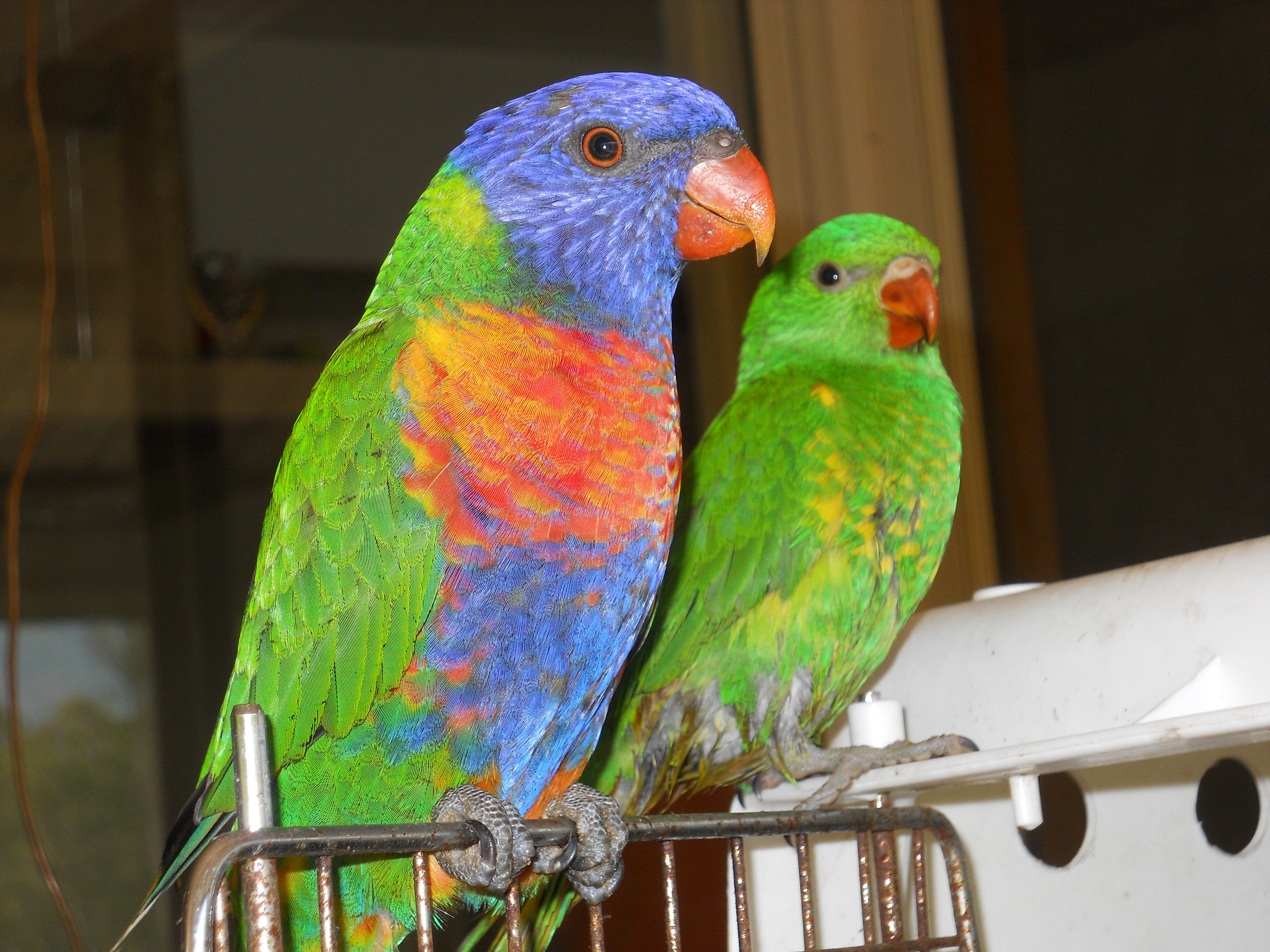
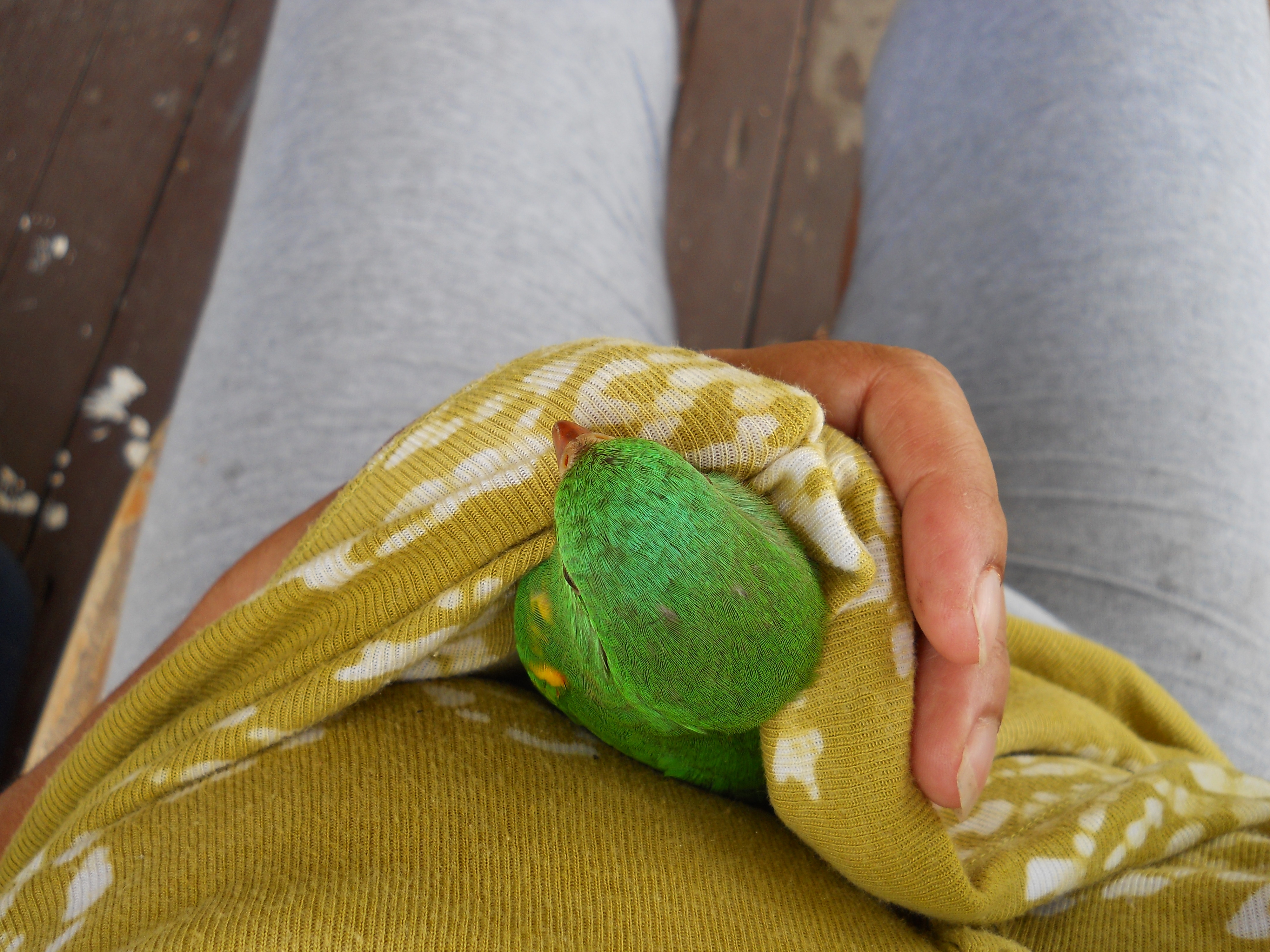
Some of the sweet memories of Nisha.


A few days ago on a beautiful Saturday morning, my son announced that Nisha our pet scale-breasted lorikeet had died. I had just woken up. I did not believe Nathan.

Nisha was a talkative little thing, just three-four inches tall and an inch and a half wide if you were to measure her.  Her body was tiny enough to fit through a thump and a pointer when you made a ring with your fingers. We often played this game where I would make a ring with these two fingers and she would climb though that ring.

Nisha loved to be held close. From the beginning when her parents would visit her on our veranda, she would snuggle up close after they deposit her meals.

My son Nathan(18) had found Nisha dead on the floor that morning. Nathan wrapped her and waited for me to wake.

“What happened?” was my initially reaction thinking that something killed her.  Immediately I was suspicious of our Rainbow lorikeet “Kaz” who was bigger and stronger and quite capable of harming Nisha.

“I don’t know” was only what Nathan could say. Nisha had died at night. Her tiny feathered body was too stiff. I examined her and saw some scratches but it was not easy to determine the cause of death.  She had some scab on her neck but I don’t think it was a tick. I could not tell.

I was deeply saddened and after re-wrapping Nisha, I held her for a while and then placed her in a quiet place for Nathan to bury her. I could not bury Nisha myself.

I took my coffee outside and sat on our back steps; a place where I always found comfort.  Here, I could look out to the bush. I could also see and hear the birds. It always reminded me of ‘home’, especially the bush I grew up in, in Papua New Guinea.

Nathan said before I woke up, Kaz, the other lorikeet apparently had became very vocal that morning and behaved wildly when Nathan picked up Nisha’s body from the floor. Kaz flew into the glass wall and may have hurt himself. Jaz then flew aimlessly across the living room a few times before he exited through the back door. He would be gone for two days straight as we found out.

The two lorikeets had become very close. But two weeks ago, Kaz had started flying properly and often would disappeared into the wild,  joining other lorikeets. At the same time, our pet duckling who had survived the snake attack last month, also flew away with the visiting flock. I wondered if Nisha died of heartbreak. Nisha had become very moody and often she would bite when we took her outside to play. Both lorikeets lived on-top of the cage – not IN the cage, so they could go anywhere any time.

The idea was that the birds had come from the wild. They had fallen out of their nests and we saved them so when they were strong and fit to return, they would go back to the wild.

For Nisha, we had hoped she would blossom and fly away. It was not to be. Nisha never grew her wings strong enough to fly, like Kaz. Nisha lost a lot of feathers. The new feathers did not grow. But all these last two months Nisha continued to be happy and talkative voice. She would walk across the living room to the music speakers and hang out. Often she would cross over to the edge of the fish tanks and watch the fish, while kicking all their food onto the floor. And she was always up for a cuddle.

Whatever happened to her that night, we will never know. Nathan burried Nisha next to the duckling in my pineapple.  Today, I was startled by the cry of a scale-breasted lorikeet right near my window at work. I looked at her. It was not Nisha. RIP Nisha.


Mine Affected Get Control of Assets


IMG_1936IMG_2029-1IMG_1918IMG_1933IMG_2021

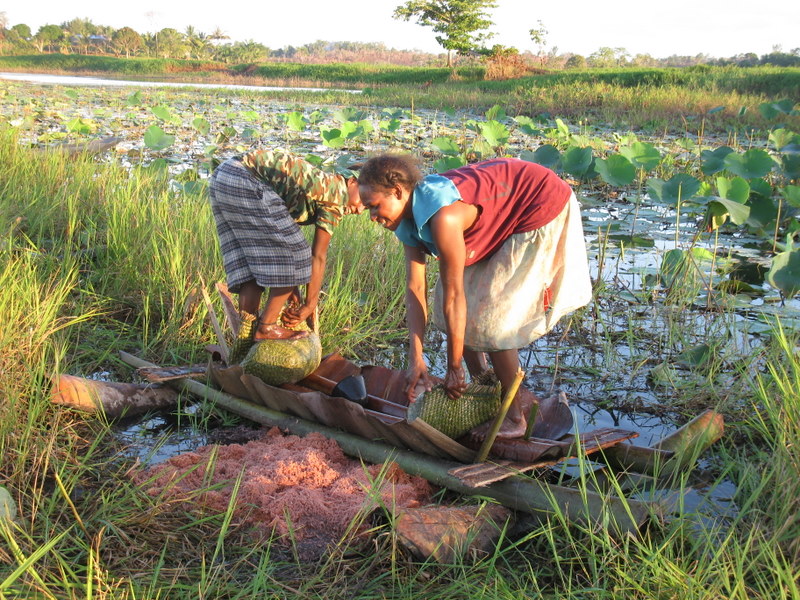
Like many indigenous people, we in PNG are totally dependent on our land and our environment. In the picture on the top left, the women make sago. Most of their livelihood including fishing and other staple food such as sago is dependent on their rivers.  On the right (above) I sit with women leaders who gathered at Puka Duka Village to discuss the craft and capacity building workshop I run.

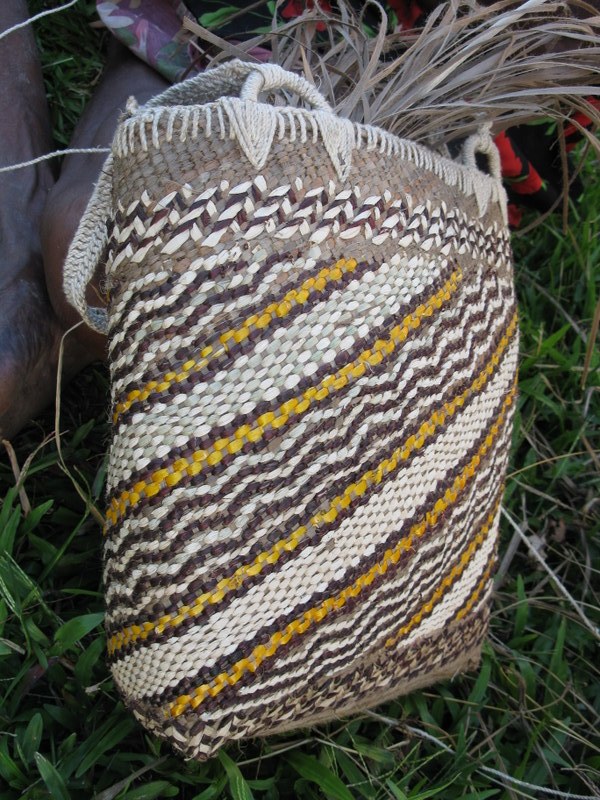
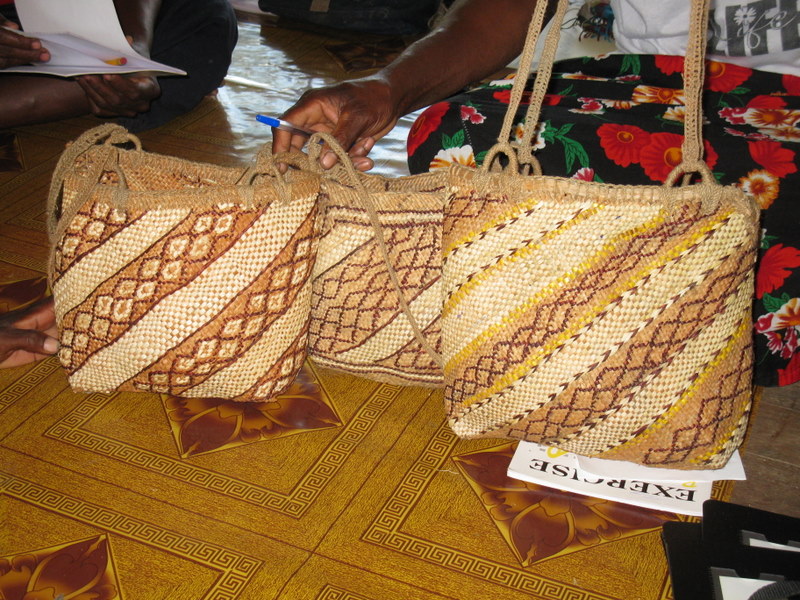
I wanted to re-blog this post (below) on PNG Mine Watch because I work with women in the mine affected areas in Western Province. Much of these mine affected areas have been in the news in Papua New Guinea lately. Earlier in this blog, I posted personal stories about women and violence. Some of the women I have worked with in these areas were in those stories. Under the project I am working with, there are a total of 64 villages. These women are very hard workers and they are also producers of some of the most beautiful and intricate arts and crafts in Papua New Guinea.

The project I work in is part of the Mine Closure and mine affected projects run by Ok Tedi Development Fund and PNG Sustainable Development with a contribution from the Women’s Association. The story below shows the “big picture” of what we are dealing with right now in these areas – the mine affected areas. I have watched the news keenly with a heavy heart that there are some good things happening in the affected areas and they should continue.

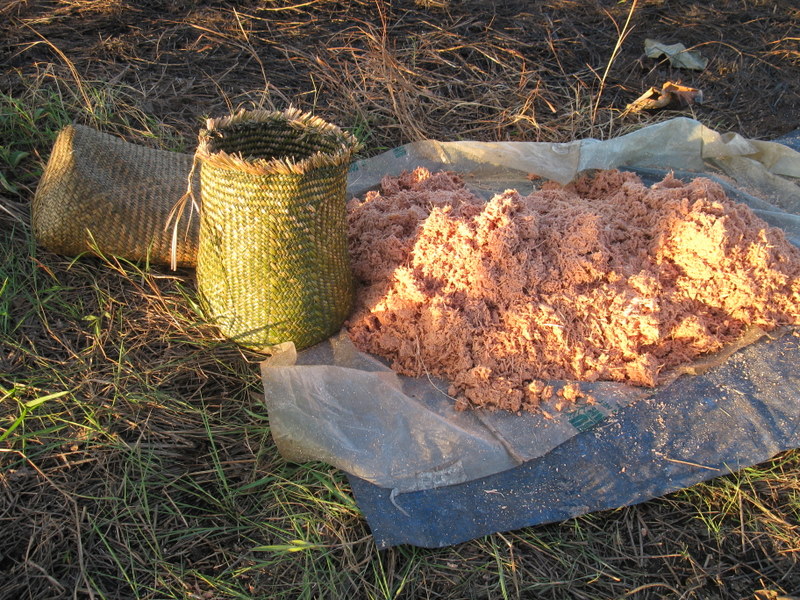
My role here was to research and find crafts (conducting cultural mapping) and run workshops to develop these crafts with the women craft makers so that the crafts are suitable for the export market. This job is not easy. Most of the creators of the crafts are traditional craft makers and they randomly produce items such as baskets, mats and other small crafts they use themselves. Sometimes they make some for the markets. However, markets being so far away, like a day to two days trip in the dinghy or half a day in a small aircraft. They women in the mine affected areas have very little access to – EVERYTHING!

By setting up goals and small steps we could take, I take the participants through a training where we set up a network to produce the crafts, plant raw materials, teach intangible skills (such as weaving) to younger generation and record and keep techniques that may die as part of a sustainable approach. One of the things I discovered was that many traditional raw materials were destroyed by the tailings but the women have moved seedlings and planted in new locations. We also looked for and brought back many traditional pigments which are no longer used. Instead, Western and Chinese dyes have been used to colour some of their baskets. After our last workshop in Eniyawa Village, South Fly, I can proudly say that some of the women are finding, using the old dyes and also re-planting them for the future. Once we sort out the materials, production and the preservation part; we then develop the product itself for the world market.

The recent concerns have been that many projects such as craft development may be stopped as a result of the dispute between all parties concerned – Landowners, Government of PNG, Ok Tedi, PNG Sustainable Development, and Mine Affacted Communities.

It is bad enough being far from all basic services but when the environment is also destroyed, your food, your water, your livelihood and even your art is destroyed. You become dependent on outside help.

Recent developments and court actions against the OK Tedi Mine and the PNG Sustainable Development has brought a lot into light about the people that live in these places. Now we can talk about the people, not just nameless, faceless humans whose livelihoods have been destroyed by the tailings. Here is the ABC Radio interview posted earlier by the PNG Mine Watch. I am very happy to hear that the people can now access more money and help.  This need for development and improvement to the livelihood of this area and the province as a whole has been long over-due.

………………………………………………………

ABC Radio Australia

The people affected by Papua New Guinea’s Ok Tedi mine have gained direct control of key assets created by the mine’s wealth, for the first time.

On Friday, Sir Mekere Morauta, Chairman of the PNG Sustainable Development Program handed over million’s of dollars worth assets to mine affected communities and to the government of Western Province.

It is part of the continuing fall-out from the PNG government decision to take over the Ok Tedi mine.

Presenter: Jemima Garrett

Speaker: Martyn Namorong, Western Province Blogger who has worked for both Ok Tedi Mining Ltd and the PNG Sustainable Development Program

GARRETT: When the PNG government took control of the giant Ok Tedi copper mine in it starved the Papua New Guinea Sustainable Development Program, until then Ok Tedi’s biggest shareholder, of income.

PNGSDP was forced to shed the vast majority of its close to 80 staff.

Now, unable to continue its work as a development agency working on behalf of the people of Western Province, it has been forced to handover its assets.

PNGSDP still has legal action pending challenging the government takeover but in a statement Chairman Sir Mekere Morauta said he was aware of the desperate need for development to continue in Western Province and so wanted to gift the assets to the people in an orderly and planned way so they do not go to waste.

The mine area communties take control of almost 6 million dollars worth of housing in the Star mountains town of Tabubil.

PNGSDP’s 25 per cent share in the Ok Tedi Developoment Foundation goes to the wider group affected by the mine – more than 100,000 people living in 156 villages.

PNG blogger Martyn Namorong who is from Western province applauds the move.

NAMORONG: It was the right thing to do. Those assets in the end belong to the people of western province and had to be transferred over otherwise they deteriorate without funding coming to PNGSDP.

GARRETT: Martyn Namorong says the community control of the 25 per cent stake or one share in the Ok Tedi Development Foundation (or OTDF), is particularly significant.

NAMORONG: It will mean communities will have direct board representation on OTDF whereas previously they only had associated directors on the board of the Ok Tedi Development Foundation. That will also have an impact on decisions that are being made on development programs throughout the Fly River communities.

GARRETT: Do the communities have the resources they need to get the advice they need to run these institutions effectively?

NAMORONG: Yes, they do have money in their trust funds. They can get the right people. The interesting thing has been the transfer of one share in OTDF, which means the communities will now have a director on OTDF and have a direct say in the application of their resources. They do have the financial capacity to get the experts that are necessary to run those projects. So if it is done properly it should work out well for those communities.

GARRETT: Control over the biggest asset PNGSDP’s 100 per cent equity in Western Power – which provides mobile phone and television transmission, as well as electricty – was given to the Western Province government.

In recent months blackouts have become more frequent and and Western Power’s ambitious expansion plans have been on hold.

In his acceptance speech, Western Province Governor Ati Wobiro promised to use the company to extend electricity supplies across the province.

Sir Mekere Morauta says there is ample income from the Ok Tedi mine for all the projects PNGSDP to continue but that may not happen, especially with the Western Province government short on staff and expertise.

Five million dollars has been spent by PNGSDP on design and equipment for a water and sewerage system for the people on Daru Isalnd and piles have been laid for the Tawao’o Point wharf.

Martyn Namorong says the continuation of the water and sewerage project is particularly important.

There is money in the Western province dividend trust fund, there is hundreds of millions there that the provincial government can apply for the benefit of the people of Western province.

GARRETT: Why is that water and sewerage program so important?

NAMORONG: Around 2010-11 there was a cholera outbreak in Papua New Guinea and the impacts were worse around daru because at the moment there is a night-soil waste disposal system. Basically, human waste is collected in buckets and then transferred out. There is no proper sewerage. The water supply is iregularly, irregular. we have about one hour of the water being turned on on the island. People collect the water and then for the rest people don’t have water going to the island. So it creates a huge public health risk. That is a very vital project that needs to get off the ground to improve the quality of life of the people of Daru island.

Nature – Feeling The Heat


DSCN1430        Lorikeets in the Gym          Joycelin Leahy Pictures 363                                 

A few days ago, the temperature in Brisbane was a blistering 44 degrees.  Our average is about 27 degrees but summer averages are about 35.

Seeing my sons had gone down south to see their father, and boyfriend gone to Papua New Guinea, I was on my own with our pet lorikeets, Kaz and Nisha and in the backyard were our six chickens and a rooster.

We have a tin roof so imagine how hot the house was. Fortunately the house is two stories and brick in lower level kept the bottom half of the house cool. I moved quickly downstairs with the lorikeets. Not one to watch TV and being in the middle of the morning, I switched the TV on to see what was happening around Brisbane and Queensland with the very high temperature. I was also concerned about bushfire.

Within hours that morning, the heat was cruel. The ever so proud looking greenery and tropical plants and flowers in our surroundings slowly weakened and started browning and shrivelling right before my eyes. I made sure the chickens had a lot of water and the lorikeets and I settled into the cool comfort of downstairs and before I knew it, I felt drowsy and then had fallen asleep. The heat had taken its toll.

It must have been at least an hour before I heard loud shrieking and flapping of wings and woke up to the two piercing bird cries. I had thought the two lorikeets were fighting initially. Then I left the couch and moved to the window and there was the head of a metre long green tree snake trying to squeeze through the closed door.  It must have been desperate to get off the burning concrete floor it was on. Its long green back and yellow belly slithered very quickly as it glided over the glass door and falling off at all attempt. I felt sad but afraid at the same time. They were harmless, but what about the birds? There was a small gap which only the snake’s head could fit. It tried a few times to enter. I guess in this heat, all living things feel the temperature.

Quickly and out of my sleep, I jumped up and down and made a lot of banging noise against the glass door, my turn as by this time, the lorikeets were quiet and starring at me. The snake turned and quickly slithered away. I praised the two birds and returned to the couch and drifted off again. Half an hour later, the same thing happened. The snake had come back. This time, I closed the gap with tape and went outside and with a stick, chased the snake into the bush. I was running as the ground and grass was so hot, it burnt my feet. The interesting thing about the situation was, while I was outside; I spotted another scale-breasted male lorikeet bopping up and down in our swimming pool, almost on its last breath.

I ran across the yard to the pool and gave the drowning bird a stick to climb on. Not far from him were six dead ducklings floating in a small group in the pool. I felt sad. By the look on the lorikeet’s face, the wild bird seemed so relieved and did not make a single sound. I took him with me downstairs and fed him some food and water. Within minutes, the new bird met and became acquainted with Kaz and Nisha (our two lorikeets) and we stayed in the cool room for nearly three hours. The three lorikeets shared the food and water. With its beak, Kaz tried to comb and groom the new lorikeet’s feathers but he did not like that. Nisha being the scale breasted lorikeet and still a baby was excited and became very chirpy with the ‘visitor’. By the end of the day, the ‘visitor’ started getting restless so I opened the taped door and the “visitor” flew away. I re-taped the door and went outside to inspect the sun’s damage and bury the ducklings.

Pictured above Kaz and Nisha and later with the “Visitor”. A similar Green Tree snake tried to get into my art gallery last year and when I disturbed it, it tried to hide in the bricks. As in the Google Image photo, they are very common in our area, Bellbowrie, Western Suburbs and Queensland.