Category Archives: Life

A journey to a thousand stories


Tami Is Research photos 056-2
I took this photo on Tami islands, Wanam Village(PNG) 2009 while on my field trip. I have been asked about this picture a lot so I wanted talk about it. This scene you see at low tide every morning.

I have made a mental goal to write 1000 stories on this blog. This may take me five to ten years. I have written almost 100 for this blog in less than a year – so I feel it is achievable. Some of the written stories have not been published yet. I also feel good about this goal because I am getting stories from my readers – thank you!

Backstory

It had been suggested to me to blog a few years ago but I did not feel comfortable about it. I think it was because I had no idea about what to do. I made a dare to blog on Facebook with friends and family. I said, if I got over 2000 Friends, I would blog. This was only last year. I had over 1000 Friends then. Many people read and enjoyed stories and other information and pictures that I shared. Before long, I found myself reaching 2000 Friends on Facebook and I had to keep my word to blog.

At first it was scary to become a blogger. I wondered who would read my stories. I wondered what I would write about. I read other blogs and got more confused. Mind you, some were very interesting. I was not technology-savvy and I had not done my market-research on readers and even on content. There were many other anxieties associated with blogging. I had assumed my followers would come from Facebook and I could continue to churn out what I had posted on that platform. So, that thought gave me some confidence.

In January, I started blogging. I did bring over 2,800 or so followers from Facebook. It seemed too easy. In that same month, my personal relationship fell apart and I was emotional. It must have been through these emotions that I showed who I was in my writing. At that point, surprisingly I had an average of 100 readers per day. This may not be much for other “pro” bloggers here but I was really happy and grateful. I had 149 hit one day and that meant a lot.

In June 2014, I was bullied and threatened and blackmailed on Facebook. Tracing fake Facebook accounts must be a normal thing because no-one really cared about it. I wrote to Facebook and tried to follow up through various contact, support and links offered by Facebook. All these channels led to nothing – just the computer talking – no humans, no response nor help. The pages/links for Help Facebook maintains on their site must be standard requirement. I decided for my safety and peace of mind, I would leave Facebook. I did. I sought legal advice and got some help from caring friends and some really good people.

Why do I Blog?

For two months I was depressed and I did not blog. I also became suspicious of everyone and everything – even people I knew. It felt  safe to live in myself. The time away served its purpose. I felt better. There have been worse things that have happened and I could not let this one get me. I returned to blogging in August this year. I was again thrilled to see people were reading my stories – even when I was not writing. That motivated me more. Then, in September, I lost all the followers who came through Facebook. I asked WordPress for help. I blogged about it. No response came. And so I accepted that loss and kept writing.

Last week, I made a comment about the New look on WordPress. Duvall (from WordPress) responded to my comments this week. I was grateful. Duvall then identified and confirmed that the loss of my 2800+ followers was because of my disconnection with Facebook. I accepted that.

However, this got me thinking…if the social media is your main “audience” and it is not safe – then what is really the point of writing to an audience? That was the question I asked myself. Should I question everything I write about? Can you possibly write safely? As bloggers – you all probably have your own answers. For readers – all I can say is, it is really in your hands once the fingers leave the keyboard. You can choose not to read.

I have been offered SEO help almost weekly and I get tons of spam from various companies or individuals here – of course they have been cleverly stopped by WordPress and I appreciate that – but it makes you wonder, why? There are stories about trollers I read from other bloggers.. Is it all worth it? And who really does care?

About My Blog

Anyway, the point of this long “re-cap” about my blog is that after everything that happened to break my blogging-spirit I decided, to hell with everything, I will personally re-build my readers. Write more. Increase my followers. I will use everything I’ve got IN my stories. My son told me – “mum, you write about everything and anything that catches your attention”, he is right. The main purpose of this blog (Tribalmystic) is to ultimately promote my culture. But I also wanted to blog about everything that is related to me, what I believe in and what I think is right. I also share things that do not make headline news, but I personally think they are beautiful and interesting. If one person sees or read a post – that is worth it.

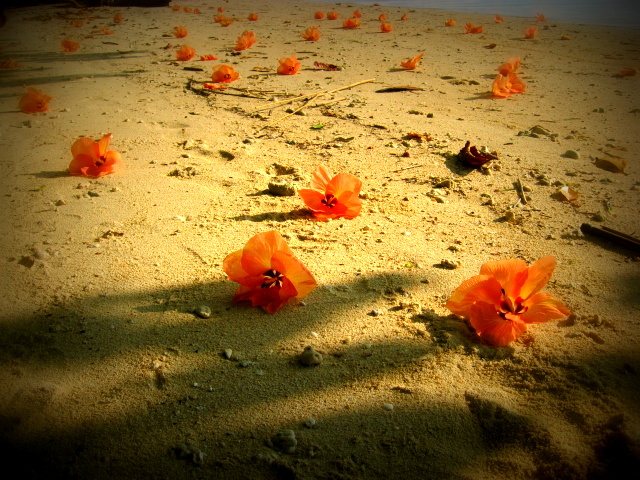
Tami Is Research photos 061
Flowers on Wanam Village, Tami Is, PNG. Tide coming in. J Leahy picture. 2009.

October Goal

My goal for October was to post one story every day. So far I have. I was thinking if I can keep this up, I could go for a goal to write 1000 stories. (I think I can). Since posting daily, my readership has now increased to an average of 50 per day and I had 103 one day this week. I had 20-30 in August. So, thank you to those who take the time to read my blog and comment or “like” and share.

Because of you/readers, all the hours of research and writing has been worthwhile. I will keep staying awake at night, thinking up new stories. Please email or let me know in the comments if there are any specific things you would like me to write about. And thank you Pauline Stegman for letting me know – you would like more re-cycled material stories.

joycelinleahy@gmail.com


Pacific Islanders draw a line on coal – and climate change


On October 14, I posted a story about 30 Pacific Climate Warriors heading to Newcastle, Australia on Friday October 17 to stage a blockade on Australia coal exporters. The warriors were joined by many Australians on the shores on Newcastle to protest.

3bf38034-d46f-47db-bb8c-7010c15ffc78-1020x680
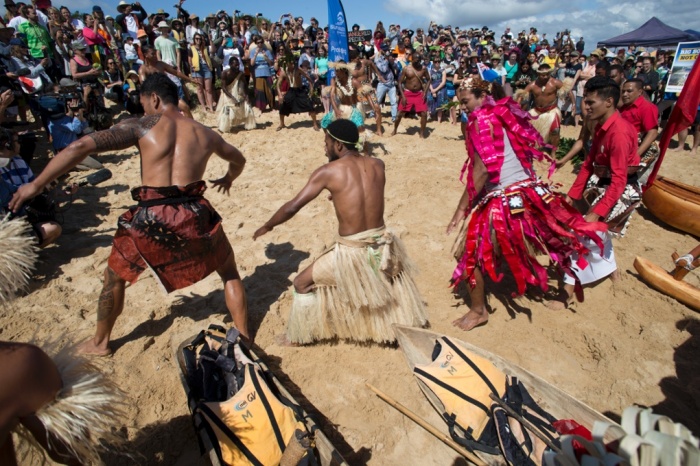
In a true Pacific Island spirit the warriors prepare to launch their vessels with traditional Polynesian war dances. Photograph: Mike Bowers/Guardian

Written and from the point of view of one of the protestors and fellow Papua New Guinean, Arianne Kassman, this is an update on what took place last Friday.  Arianne wrote this story for Reuters, Thurs, 23, Oct 2014.

20f024f9-61aa-4823-8499-89ec2017ba09-1020x612
Author Arianne Kassman. Photograph: Mike Bowers/Guardian

Over 700 islands, more than 800 languages and cultures and some 1500 bird species – Papua New Guinea’s diversity is without a doubt unique and the country is home to some of the world’s most beautiful flora and fauna.

Land is one of the most valuable assets in PNG. More than 90 percent of the land is customary land and owned by the people.

I was born and raised in the capital city of Papua New Guinea, Port Moresby. I was brought up in a strong Christian family and my traditions and my culture were also a part of my upbringing. I also learned the importance of different cultural obligations I had to my people and the land.

Today, all of this continues to be threatened by climate change. Rising sea levels, coastal flooding and king tides are all too common along the coast and for many of the islands.

This month, I travelled to Australia together with my 30 brothers and sisters from the Pacific to bring a message to Australia that decisions being made are having serious consequences on my home.

Even though it is one of our closest neighbours, Australia’s continued commitment to expanding the fossil fuel industry is destroying my home. Australia is the world’s second largest coal exporter – with plans to triple those exports in the coming years.

38bdc04b-9a64-476e-b3db-36feb24cc36c-1020x680
Protestors try to block the Rhine as police try to clear a path. Photograph: Mike Bowers/Guardian

It is also one of the world’s largest gas exporters, with plans underway to make Australia the largest exporter in the world. These are plans that are distant from me, but ones that are felt by me and my people.

For Pacific Island communities the connection to the land, and to the sea, is paramount. The land plays a central role in our culture. But now, as sea levels rise, storms increase, and droughts hit, we are losing that connection. The sea, which used to play a central, calming role, in our community has now become a force to be feared.

For the Cartaret Islands this loss couldn’t be felt more. Their entire connection to their land has been lost. And that is the fate being faced by communities all across the Pacific. Just recently king tides hit Tuvalu, Kiribati and the Marshall Islands.

When a king tide hits in those countries there is nowhere to go – the land is literally flooded. These are nations that have already been given a death sentence, told by scientists that within decades their entire land will be under water, that the only connection they will have to their land, and their culture, will be a passport.

This is what the fossil fuel industry is doing to us. Through their reckless plans to massively expand the mining of coal and gas they are trying to lock us into a future of disaster, one of rising sea levels, floods, storms and the destruction of livelihoods and places we call home. It is a future of destruction based on a shallow desire for greater profits.

This year, however, we have decided to no longer let this future be dictated for us. For years we have tried to negotiate with global leaders to halt emissions and stop climate change. But it has fallen on deaf ears.

604-1
Traditionally dressed representatives from South Pacific nations push their canoes into the water as they prepare to participate in a protest aimed at ships leaving the Newcastle coal port, located north of Sydney, on October 17, 2014. REUTERS/David Gray

That’s why I joined 30 Pacific Climate Warriors who travelled to Australia, leading a peaceful blockade of the Newcastle Coal Port on October 17. We are calling out the industry for their plans to drown our Islands. And we were joined by thousands of other Australians – those who joined us in Newcastle, or the others who led peaceful occupations of the headquarters of the fossil fuel industry in the week that followed.

We are refusing to drown; we are fighting for our islands, and for a safe climate for all of us. We’re creating a line not in the sand but in the port with traditional canoes that we have built, which no coal ships shall pass.

It is not too late. We can save the Pacific. We must save the Pacific and we must stand up, not only for the Pacific, but for all those around the world impacted by climate change. But to do so we need to stand up to the industry that is willfully destroying our home. We need to stop these destructive plans in their track.

I came to Australia not because I wanted to, but because I had to do whatever it takes to preserve my culture, my traditions, my home, the birth place of my heritage and my identity. I am proud to join the 30 Pacific Climate Warriors, and the hundreds of Australians who are standing up in support.

This is the action we need to take to save our islands. This is the action we need to take to keep our islands above water.

…………………………………………

(refer to link below for my previous post on the same subject)

Pacific Climate Warriors to blockade Australia coal export

Other pictures, video and story: The Guardian

http://www.theguardian.com/australia-news/gallery/2014/oct/17/pacific-climate-warriors-blockade-newcastle-coal-port-in-pictures

http://www.theguardian.com/australia-news/video/2014/oct/10/pacific-protesters-in-australia-to-block-newcastle-coal-exports-video

The 2014 Afrovibes Festival


Celebrating the end to Apartheid in South Africa 20 years on 

13 Oct to 8 Nov

http://youtu.be/J0_UV_i4QPk

The City of Birmingham, United Kingdom, welcomed the festival this week from October 21 to this Saturday, October 28.

This year’s festival bringing the very best of contemporary South African theatre, music, dance, film and culture to the UK
marks 20 years since the ending of apartheid and the building of the new South Africa. 

Afrovibes brings to UK, ten productions at 17 venues in 13 cities of England, Scotland & Wales. Afrovibes is a European focused  presentation of contemporary performing arts from South Africa. The festival scouts for and programmes topical African performing arts productions. These productions promote the exchange of knowledge and practice between European and African artists and theatre makers. 

History of Afrovibes

Since the festival began in 1999, Afrovibes has developed into a multidisciplinary arts festival which takes place in both the UK and the Netherlands. It connects arts and culture from South Africa with European audiences, bringing talented emerging and established African artists and their work to European venues.

Founded in the Netherlands, the festival is now a valued addition to arts provision in the UK, having been always supported by Arts Council England.

The first UK edition of Afrovibes (London, Birmingham, Manchester) took place in 2010. The second, much larger festival was in 2012, and was presented in Cardiff, Nottingham, Liverpool, Lancaster and Hereford as well as the three original cities. In 2014. Newcastle, Swansea, Bracknell, Edinburgh and Glasgow will now be added to the list.

Artistic Direction

The Artistic Director of the Afrovibes festival is the South African director / actor James Ngcobo, who has recently taken on the role of Artistic Director at the Market Theatre. Ngcobo is also an award-winning stage, television and film actor both in South Africa and internationally. He was previously Associate Director of The Market Theatre and Creative Director of Sibojama.

http://www.afrovibesuk.com/

Touchable Memories


“Touchable Memories” is a short film about blindness. The film was made by Marco Aslan. Director Marco Aslan lost his sight 12 years ago. He works as director of photography without seeing. In this film, he and others who have lost their sights share their stories about how they “see” a photo. It is a moving film about something many of us take for granted – being able to see.


http://www.marcoaslan.com


A beauty from the highlands of PNG


2014-10-18-23-26-04_01Roe
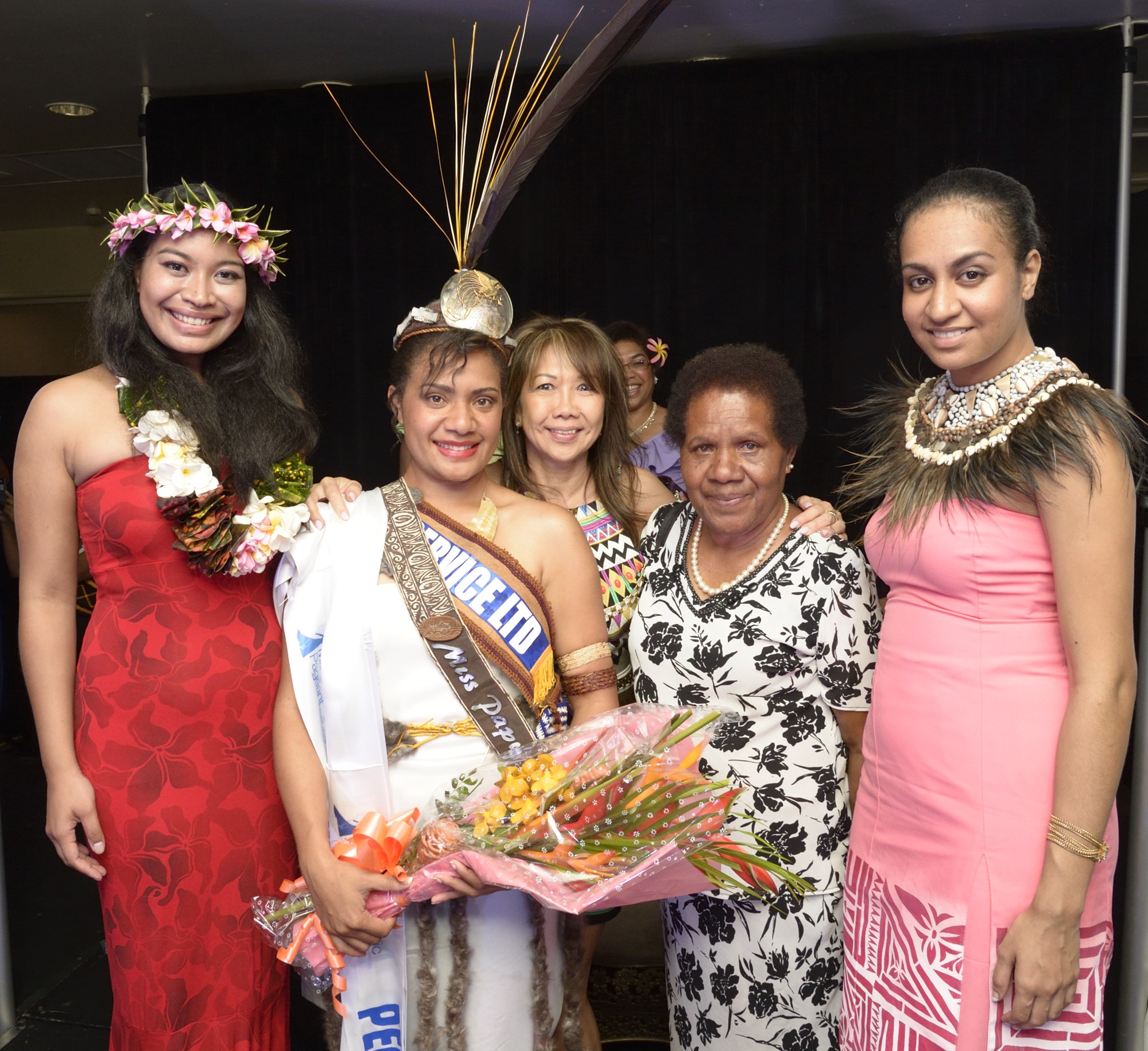
Grace Nugi pictured last Saturday with a bouquet is surrounded by two former Miss PNGs, Quest Committee member Kathy Johnston and her mother.

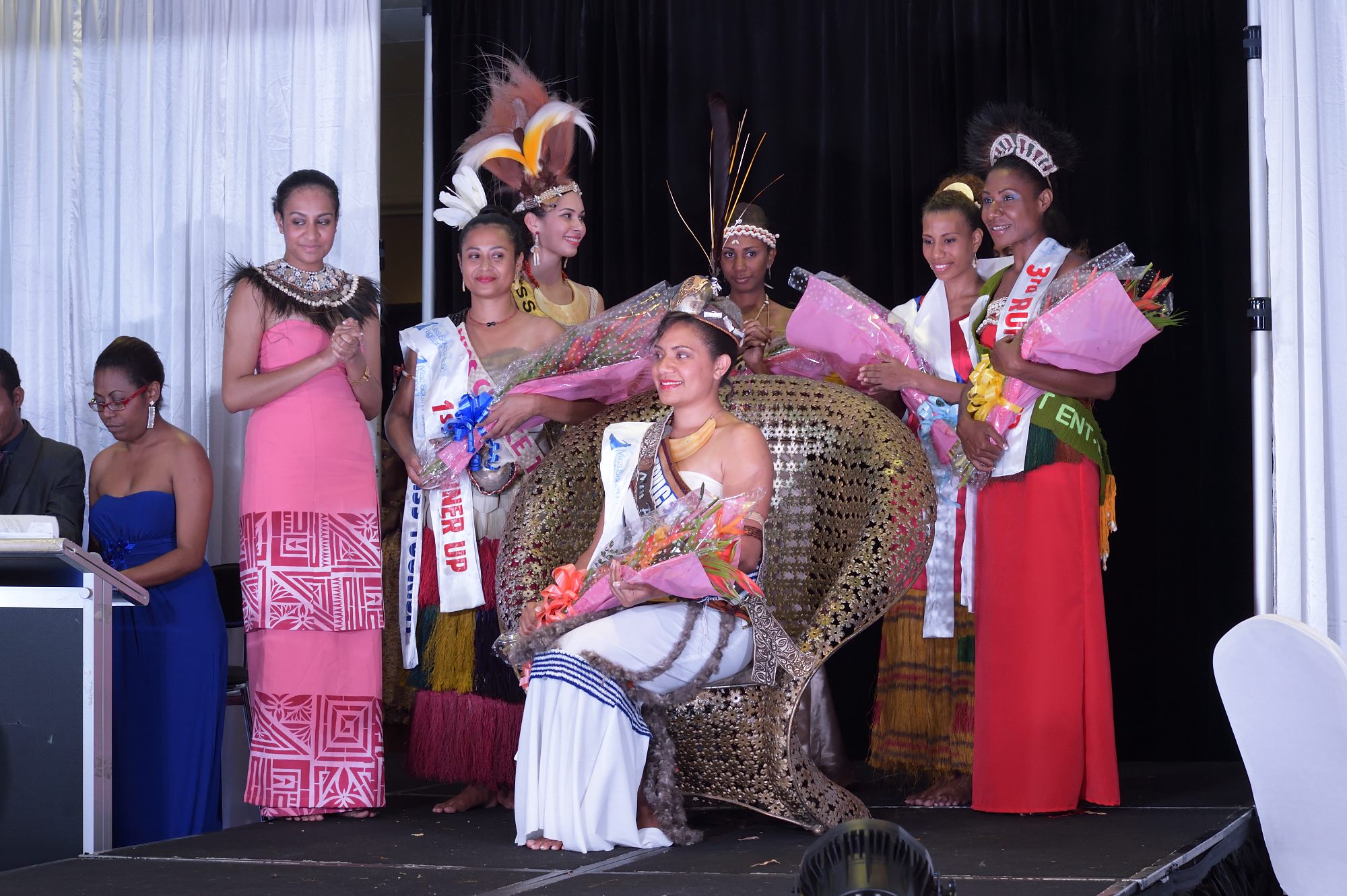
Grace Nugi was crowned Miss South Pacific-PNG 2014. The 24-year-old from the Papua New Guinea Simbu Province took out four other awards from her five competitors. Grace will represent Papua New Guinea in the Miss South Pacific Quest in Samoa later this year.

2014-10-18-21-37-20Roe     2014-10-18-20-36-30Roe

My Views

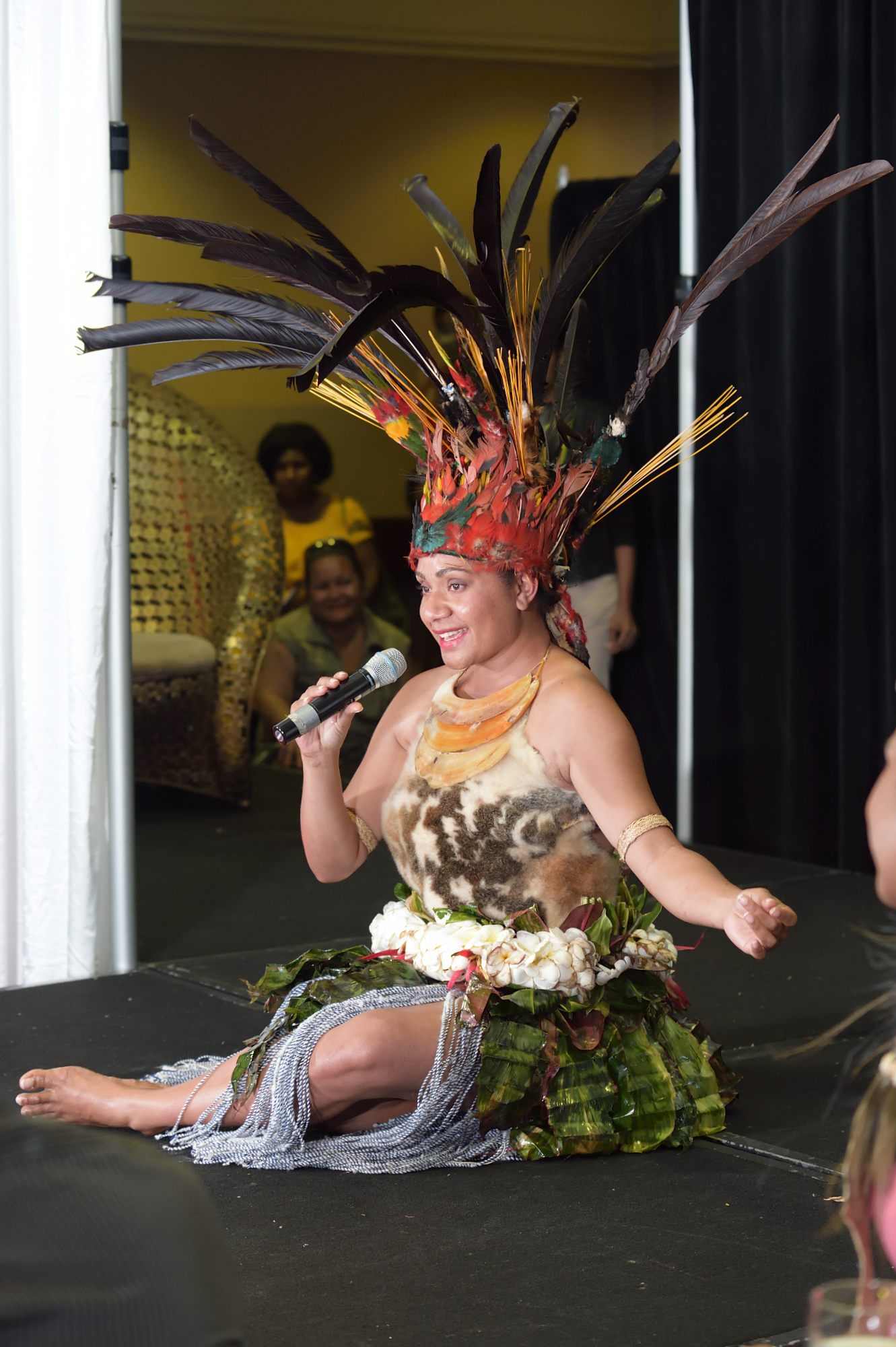
What I enjoy most from this beauty quest is, it is nothing like what you see or hear in the international arena. Coming from challenging personal backgrounds and a wider culture (PNG) where women’s freedom is threatened with continued violence and in many areas women and girls are regarded as lesser than their male counterparts. It takes a lot of courage for the contestants to be in public and learn to develop a sense of confidence. The quest teaches these young women – how to gain confidence and strive to be whoever they want to be. The quest opens doors for the young contestants to opportunities in education and career apart from the obvious tourism aspect.

2014-10-18-20-30-52Roe      2014-10-18-20-37-33Roe

2014-10-18-22-08-15Roe      2014-10-18-20-57-03Roe

Cultural Heritage and Cultural Preservation

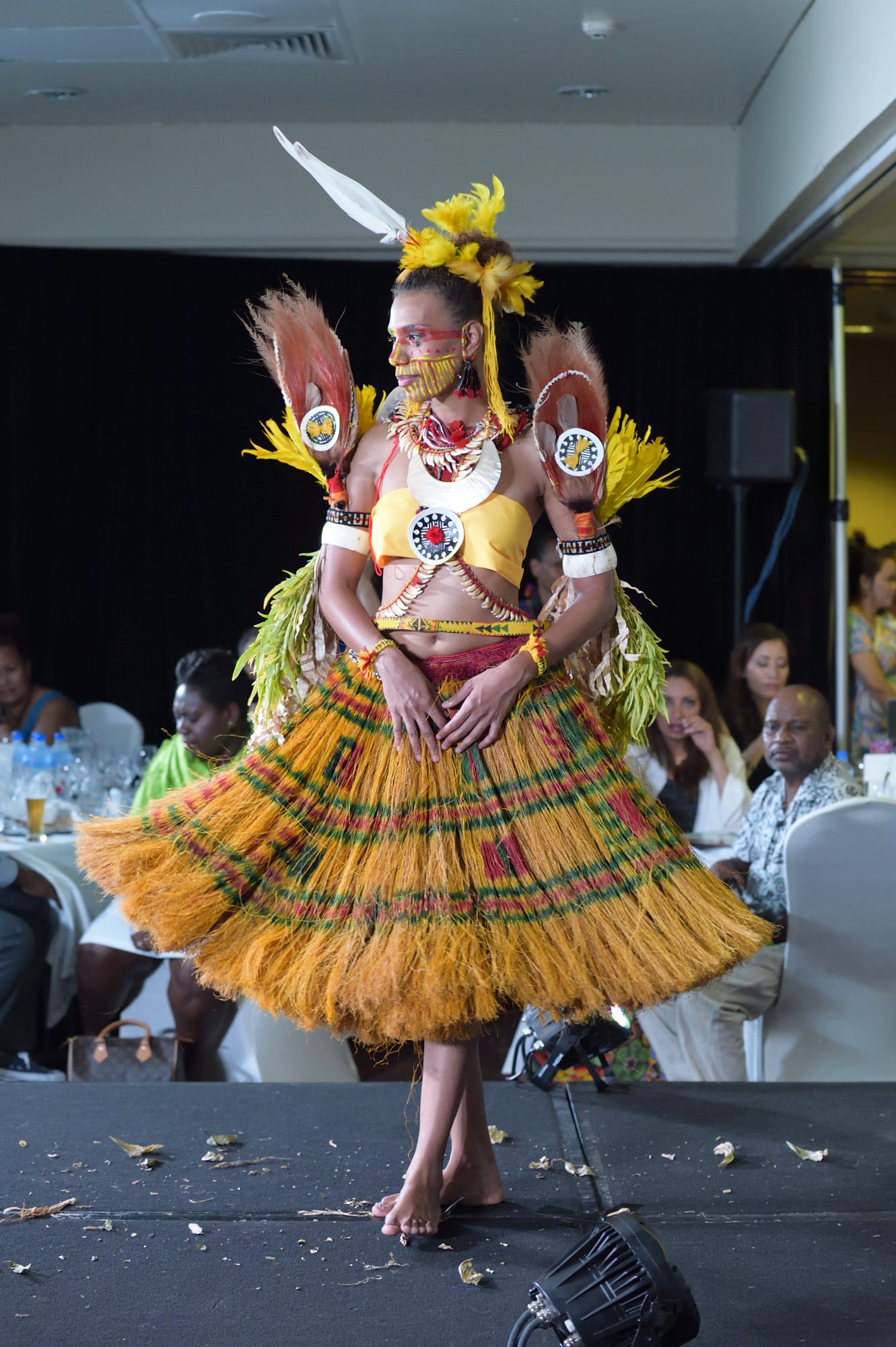
The other thing I love about the quest is that it promotes our material culture, the intangible culture and it involves family and community. Through the promotion of both tangible and intangible culture we preserve our heritage.

How does this happen? Each contestant wears (traditional and day wear) that is original and handmade. The dress could be made using tapa cloth or hand knitted string made fibre (hilum) from natural fibre, shells, bark etc. The headdress and body adornment would come from the province of their heritage and most likely made by family members. Each contestants have to perform a traditional dance from her own heritage. Bear in mind PNG has over 330 languages and 22 provinces with many tribal groups.

Finally, the money paid by their sponsors, is put to a good cause. It funds other young women to complete their education. The quest also assists the winners in international travel to the Miss South Pacific, and further develops the contestants while they are engaged in tourism to promote their country.

2014-10-18-21-59-45Roe-2     2014-10-18-20-34-58Roe

2014-10-18-20-32-18Roe     2014-10-18-21-41-06Roe

2014-10-18-21-06-08Roe     2014-10-18-21-32-55Roe

2014-10-18-23-08-56Roe


All pictures shown here are from Rocky Roe Photographics. http://www.rockyroephotographics.com

For more on Miss South Pacific (PNG) click on the click below:

https://www.facebook.com/misssouthpacificpng


Red Lionfish: A “Super-Invader” or Super Supper?


redlionfish
Google Image: A most beautiful and most invasive creature.

Red Lionfish: A “Super-Invader” for Supper?

In the world of art-practice this creature is one of the most photographed, filmed, painted and generally studied for its beautiful, delicate and visually exotic body. When you look at a lionfish, it is so luminous, graceful and breath-taking that it is hard to imagine such a creature could be so harmful to humans and other species.

The Red lionfish has been named an invasive species, taking over the smaller fish and other crustaceans in the Atlantic ocean. Scientists reported that lionfish were invading the Atlantic Ocean at an increased rate they  were worried that the consequences could be grave. A year ago (October 21, 2013) UPI released a report that this native of the tropical waters of the South Pacific and Indian Oceans, was not only venomous but it was also a fast-reproducing fish that had no known predators. The lionfish can produce 30,000 to 40,000 eggs every few days. They are aggressive eaters that will eat almost anything and the lionfish can destroy 90 percent of a reef. 

If you found this story disturbing, read the next part.

1-d3736a1359
Photo: Grace Beahm

In an article written for the Coastal Heritage magazine Editor John H. Tibbetts wrote; a group of strategist made up of fishermen, divers, chefs, educators, conservationists and scientists have come up with a solution to rid the lionfish in Bahamas, Mexico, Cayman Islands and Florida Keys.

The strategy is simple: the only way to get rid of the invasive species they said was to harvest and eat it.

To read more:

https://www.academia.edu/5962273/Red_Lionfish_A_Super-Invader_for_Supper

http://www.upi.com/Science_News/Blog/2013/10/21/Lionfish-invasion-is-threatening-the-Atlantic-Ocean/9321382363683/


Short Story – Mother’s Coffee Land


Memoir series – JLeahy

article-2290094-1883C6D0000005DC-964_634x429
Credit: Dr Wright picture

In the first moon of the coffee season, the bees would have long gone from the sweetness in the coffee blossom. The delicate petals of coffee blossoms would wither, turn brownie-yellow and drop to carpet the base of the trees. Here, under the tree, other insects such as ants would gather around the sticky rotting pulp. This was the picking time. My mother and her sisters would prepare to harvest grandpa’s coffee.

This is my mother’s Coffee Land story.

39c91a5d89f1a8c1b3a504398b06a31a
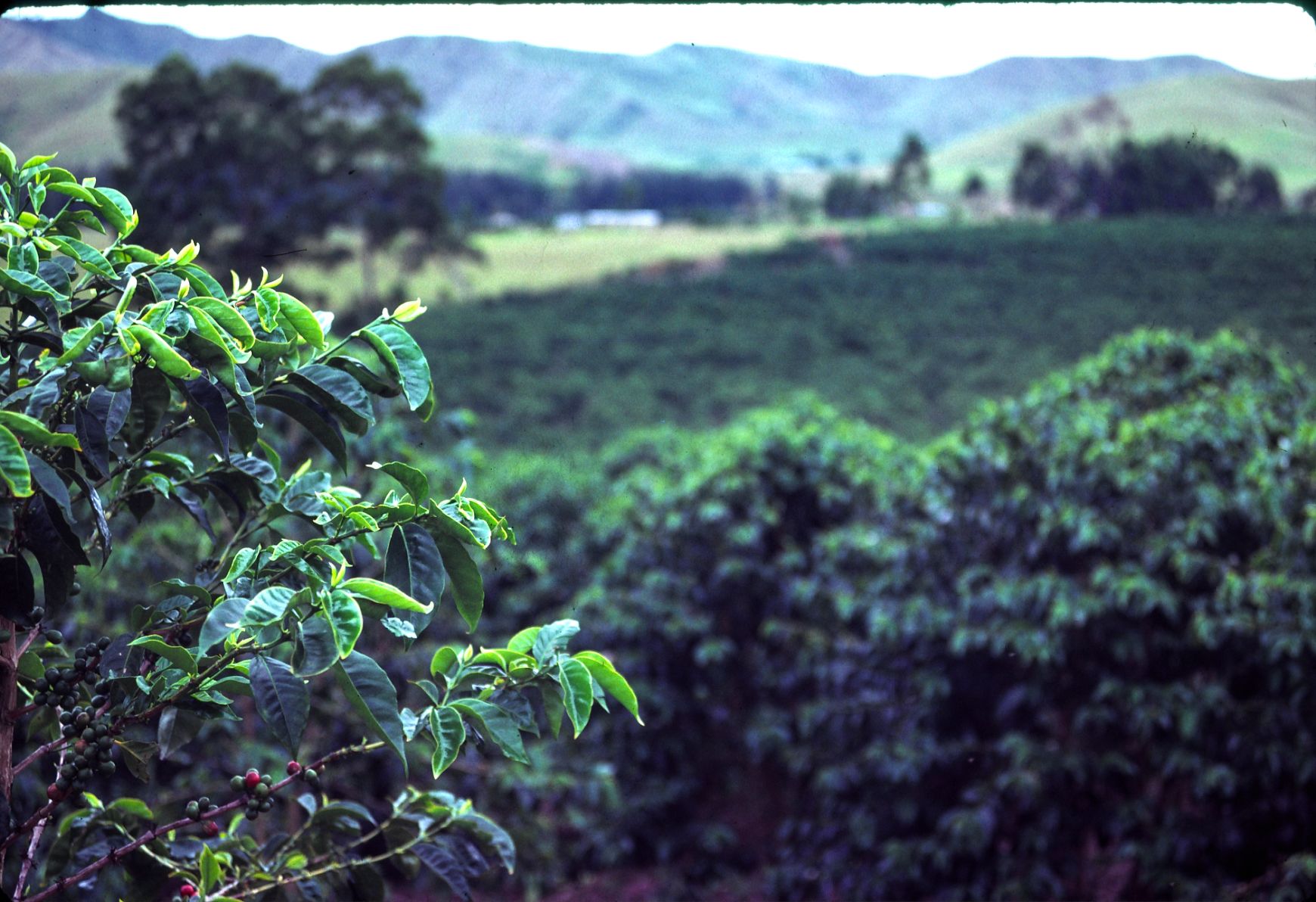
A coffee plantation in Morobe Province

My grandfather’s name means “intelligent” and so he was. Kauc’s coffee garden was planted on his father’s land, miles away from our village.

To harvest the coffee beans; equipment, food, bags, water and all other necessities for processing had to be carried to the garden on foot. It was a labour-intensive method in which cherries are picked, selected and pulped by hand all day and for several weeks.

The remaining flesh from the pulping process was used as composting material for both the coffee and food gardens. Once the bean was dried, it was shelled. The coffee was now ready to sell and grandpa took it to town and in exchange, he bought sugar, rice and a small stick of tobacco. The tobacco was his treat, although he rarely smoked. My mother often wondered why he spent his hard-earned money on tobacco he did not really smoke. She said perhaps he shared it with his friends.

The coffee garden was Kauc’s pride and joy. Being a male and the second eldest in his family, Kauc owned a large piece of land. He was a devout Lutheran and a teacher. Kauc loved the land and he tried some cocoa and his coffee garden for cash.

The coffee garden, near our food garden, was situated less than an hour walking distance from our small coastal village outside Lae, Morobe Province, Papua New Guinea. Kauc grew Arabicas. With a high rainfall and good soil, the trees grew well and produced top quality beans. The family did not drink this coffee. They drank tea which came from Garaina, a sub-district in our province. This coffee garden was purely cultivated as a cash crop.

When the coffee berries ripened they developed a glossy sheen on its deep red shades. My mother, her sisters and my grandparents would go to the garden to pick the coffee and spend the whole day sorting and processing.

Sometimes, they would take a break and make a fire in nearby kunai (grassland) to surround and trap bandicoots for lunch. This made the long day interesting.

My mother said she would feed me milk and lay me down in a bilum (string bag) and hang the bag on a Rosewood branch. Under the shade, the cool breeze kept me asleep while she and her sisters picked coffee. My grandfather washed and peeled the red skins, revealing pale beans. The sisters would pick and bring bags of the red cherries and pour them into my grandpa’s pulper.

“He would stand there in his laplap and T shirt and just turn the handles until the machine skinned and spit the pale brown seeds out the other end. The seeds were collected and dried in the sun. He was in charge of this machine” my mother said.

The trees and in particular, the Rosewood tree became the landmark. Memories of the coffee garden surfaced in a family argument over land allocation eight years ago. My grandfather and his brother were the head of our family and clan. Both men had died three decades ago. Their sons, my two uncles who became head of our clan and land had also died. My mother remains the eldest of the family and clan. Her being a woman brought another cultural and customary argument about where she would live.

According to my cousin brothers, my mother should not have any land. Fortunately for my mother, and for the fact that she was born the daughter of an intelligent man, she stood up for her share. My mother made sure she had spoken to my uncles and got both their approvals before they died. When my uncles asked her to choose, she had marked the land where she used to hang me in a bilum, while she picked coffee with her father. This coffee garden became her land. In memory of her father, my mother named her son Kauc and I named my son Kauc.

Overtime – Earning more or Losing more?


One of the things I love about being older and having “been there, done that” is that I am beginning to understand what life is all about. Everything is starting to make a lot more sense. I keep learning and one of those things I have come to realise was, how much time I have spent/lost in a nine to five job. The nine to five job routine has never appealed to me. Sometimes I wonder if I had gained enough money doing that extra time in comparison to the living that I have lost.

Sadly, we are conditioned to believe that our nine to five job IS what life is all about. We often get stuck in the routine…forever! Before we know it, we are too old to enjoy what we truly aspire to do. I wasn’t going to blog about “overtime” tonight – really.

It was London Live celebrating the National Poetry Day and while listening to some poetry I came across Mr Gee’s interpretation of the 9 to 5 job and the More Overtime. I could not have put my view about a day job any better. Mr Gee’s spoken word inspired this post. I would like to put it out there that if there is something good you really want to do in life – go and do it!


The Nightmare of Story-writing


I haven’t forgotten to publish a new short story. I have written a few for my Creative Writing workshop and my memoir. The thing with writing stories is that every time you read it, you want to re-write it. It is not verbal so you could just correct yourself as you tell the story. And, just like the critical eye of an artist about his or her work, I feel that the story is never finished. When I do attempt to re-write, I often lose the magical essence I applied during free writing. For example, a short story of 800 words may flow so well on my first draft but when I start to add more descriptions and enrich the content, I start to lose the tension building or the essence of the conflict.

Then, you still have the general structure and language of the story to worry about. I cringe sometimes when I read my writing that I have published and I had missed a typo, grammar or perhaps a paragraph could be better placed or written. You could pick up something in this piece of writing and I would be in trouble again. What a nightmare it must be for all writers. Thank goodness we have editors and ‘know-it-all’ friends who will point out our mistakes. Sometimes you feel like saying, “You think it is easy; why don’t you write it then?” But without them, these “auto-corrector assistants”, we would not be able to bring good stories out to our readers in good writing.

Anyway friends, that was really my reason for delaying a new short story on this page. I am still editing some of them but let’s just call this one a work-in progress so I can give it to you as promised. It is a non-fiction short story from what I am writing for my memoir.

The Windy Curse 

JLeahy Memoir

The wind was howling curses. Footsteps ran on gravel. People were rushing up the main road, away from Wagang, our small coastal village. It had stormed all night and all day. The waves rose in great heights over the far end of Wagang outside Lae, Papua New Guinea. It was 1972.

My uncle Sam said: “Yesterday morning, some houses were washed away with part of the coastline”. I could not go to school.

“The sea is coming!” I heard a woman call out. She half ran with two crying children behind her. Mounted on her back, the woman had three bilums filled with clothes and food. Dusk had approached when she threw that warning at Tinang, my grandma. There was panic in the woman’s voice as she hurried with her children up the road. We lived at the mouth of the main road to Lae town. Other men, women and children with bags walked quickly by, some dragging or carrying smaller children and animals.

I grabbed my clothes, towel and blanket then followed my own mother out of the room. Mother grabbed a few things. She packed them madly in a handbag and a large bilum. I was not sure what to take.

“Quick, come!” she called.

“Where are we going?” I said.

“We must leave now,” she said. I followed her out of our room.

The village was in danger. We had to follow the rest of the villagers inland. The wind had not stopped for two days. The dry coconut leaves and nuts dropped randomly, making it dangerous to walk outside our house. There was some flying debris of plastic, paper, Tuk and Abong leaves. I wanted to run to grandpa’s house, next to our big house but I was scared. I also thought our roof might fly off.

“I will get the mosquito net,” Mother said. She disappeared and returned with a white bundle with pink ropes and added it to my arms. She made eyes at me to go to Tinang.

I could hear the waves getting louder in the distance and heard my aunty Giuc screaming that the sea was coming in. She was also yelling curses at her cousins to leave the village and run up the road. Aunty Giuc was a few years older than I and tough.

“Hurry!” mother said. I had no idea where mother meant. There was no further instructions.

“Are we running up the road?”. It did not make sense to me, I thought – the road was too flat. The sea would get us.

Yesterday, the government radio said we needed to move quickly as the waves would be at the village on the second day.

“Where are we going?” I asked again.  Mother left me in the lounge and headed for grandpa’s house. I stood near the window and watched through the broken fly-wire. There were no louvres so I felt the wind.

Grandpa once dreamt that our village, less than a metre above sea level was going to sink into the sea. He told villagers that one day the water was coming in and we would disappear because the two rivers that surrounded our village joined on both ends.  Grandpa also told the villagers our house was built on the stone so even if the village sunk,  our house would remain standing, just like the biblical house that was built on the stones. I think that part made the villagers angry because they thought he meant our house was better than theirs. The villagers thought my grandpa’s dream was a crazy story.

As I watched everyone running past, I wondered if today was “The day” grandpa predicted. I walked to the front of the house to see where grandma was. I stopped at the top landing of our steps shocked at what was on our front yard.

There was sea-froth on the sand. The bubbles on the browny white foam slowly burst and disappeared into the sand. It left curly wet sandy trails. It was not normal for the sea to come this far, I thought. We were over 100 metres away from the beach. I scanned the ground to see if there would be fish. It was weird. In the last King tides, my cousins caught some tuna in the middle of our village soccer pitch.

I turned to look in our backyard; my eye caught the river rising. The river seemed angry like the wind. The dirty brown water twirled and rushed along debris and household rubbish.  I could smell the sea from my left and at the same time, from my right, I smelt the swamp coming to meet the sea. Watching it, the swamp swell drowned everything in its path as it spilt over the banks and leaked towards me rapidly. Mother’s garden of maa-le, a scented deep green waterlily used for curing fever, disappeared under the brown smelly water. Just like the swamp people’s houses, I saw our kitchen house posts and the fireplace disappearing into the water. Where grandma had planted the Chinese Kangkung and watercress, flotsam mixed with village rubbish of empty Marvolene bleach bottles, Ommo packets and old thongs pushed in, crushing the green healthy vegetable carpet with its filthy weight.

I looked to grandpa’s small house and I could not see mother. I wondered if father and daughter were praying. It made sense. Tamang (grandpa) believed in God.

“Mamaa!” I called out.

She did not answer. I looked at the people passing our house again. No-one waved goodbye or passed greetings. Everyone looked anxious. I decided they were going to walk to town and climb Mt Lunaman. That was the only high ground I knew.

“Mama! Mama!” I called. I sat on the cold timber floor and waited. The sand caught between the timber gaps caught my eye. There was so much sea-sand in the house.

In the past, the waves had come like a thief and took three village houses on the beach. Luckily no human lives but only pigs, dogs and some chickens went with the houses in the waves. The villagers became smarter and built away from the shoreline. On bad days like this one, we all left the village. The waves were left to what to do what they wanted.

“Yupla kisim ol samting na igo antap long rot”, the loud voice interrupted.

Get your things and move up the road. It was the village councillor. The village bell rang three times signalling emergency. Three times also meant someone died. I was confused.

“Hariap!” a loud voice called. I did not see my uncle Sam but he was barking instructions too at my family to hurry. He told them not to bring rubbish.  He also told his wife, his sisters, cousins and brothers to make sure they brought their underpants as he did not want anyone making pictures he did not want to see in the bush. This remark made everyone scream in laughter. It eased their tension only slightly.

I knew mother was with Grandpa. I stood up and looked out through the broken fly wire again. Then I saw Tinang, my grandma and ran down to her near the main road.

I waited near Tinang. My head reached her shoulders. I could smell lime and betel nut. I felt my way into her colourful nylon bilum to see if she had any betel nut. I was nervous and wanted to chew. In Tinang’s bilum, my hand touched empty nut skins, a towel, her Koala skin purse and other small things and not betel nut.

Tinang said, “it would be hard to move grandpa.”

“Why?”

“Because he is stubborn,” she said in Bukawac.

Grandpa can walk. I could not see how grandpa would walk all the way – but to where? The nearest mountain was miles away.

“Where are we going?” I asked Tinang.

“We are just going to go into the bush,” she finally told me. It finally made sense to me. In the bush, if we had to, we could climb up trees.

Soon, sea water ran in from the front of grandpa’s small house. It was made of bush material. There was froth and I knew more sea would come.

Then, I heard a truck coming. It was my grandma’s brother Mambu’s truck, Maac Kalac. A flat-top Mitsibishi with passenger seats. Its name, Maac Kalac in Yabem means the “proud bird”.

“Ampom!” I heard mother calling me and I ran to her. She came over to grab our things. She pulled my hand and took me to the truck and told me to get up. Someone lifted me and sat me on top of some clothes.

Below the truck engine, and all the chattering, I heard the village boys splashing and laughing in the distance and I knew they were having fun. I thought how silly they were to not see danger coming. Mother continued to madly pack food, matches and torch into our bag. Uncle Sam was giving final directions to all our family members to get on Awac Mambu’s truck.

This was a Public Motor Vehicle (PMV) licensed to transport the villagers into town for 10 cents. Tonight it was a free ride. Packed from top to bottom, it was loaded with bags, food, pots, pans, coconut. I could not believe it. Some people brought everything. There were dogs and chickens. Someone brought a duck! A duck could swim and fly. Why did they bring a duck?

“Tamang?” I turned my attention back to mother for my grandpa.

“He will come,” mother lied. Perhaps she was hoping he would come, I thought.

We loaded in less than an hour and the water started to sweep across the road to the tyres. Awac Mambu wanted to drive off and someone said grandpa was not on the truck. I sat up and looked back to the deserted house. I started crying and wanted to get off. Everyone started arguing. My mother ran back with the kerosine lantern. She disappeared behind our big house. Ten minutes later, mother ran back without the lantern and without grandpa. She whispered to me that we had to leave now and Uncle Sam would come back to get grandpa. We drove off. I thought about grandpa’s dream. I put my head on the bag of clothes next to the food and animals and closed my eyes.


A Physical Stance Counts


Among many talents, skills and expertise they have on environment, my dear friends Rae and John Sheridan are scientists and climate activists. Last week I posted a picture and brief story about their new pup Chaos who they adopted while fighting to protect the environment in New South Wales, Australia. This protest event took place in July. Here is a short factual account by Rae Sheridan about the events that took place when Rae, John and the members of 350.org took a stance on the establishment of a coal mine in Whitehaven Coal’s Maules Creek mine site.


Rae arrested1JPG

Above, Rae Sheridan on the scene of the protest when she got arrested.

P1300117-2

Far right and in front, Rae and John Sheridan hold banners with members of the 350.org.


A Physical Stance Counts

by Rae Sheridan

The police road block two kilometres from camp was our first taste of being part of a ‘suspect’ group. After the road-block, we were welcomed at camp and immediately given a tour of the very considerable facilities; kitchen, information tent, campfire gathering circle, farm barn-cum meeting hall, solar recharging nook, communications unit, toilets, showers and a little further  the tepee belonging to indigenous activist Muzz the owner of an impressive part dingo Mother, Dubi, and her irresistible ten 7-week-old pups.

The NSW convoy arrived as we put up our tents.  A flurry of activity followed with a walk up a nearby hill led by Muzz and Dubi.  From a craggy summit lookout we had a good view of the surrounding rural farms and in the glancing rays of a winter sunset we learnt of what was at stake with the clear felling of the critically endangered Grassy Whitebox woodland, and cultural heritage sites of the Gomeroi people, the traditional owners of the Leard State Forest.

There were around 200 people in camp.  Before dinner we met in the barn for a basic briefing which covered some of the history of the campaign, legal aspects and an outline of the two planned actions for the next day.  We decided along with about 40 others to be in the band that would seek to trespass on Whitehaven Coal’s Maules Creek mine site to disrupt the logging operations knowing that if successful we would be arrested.  Others planned to blockade a mine approach road.  Dinner was a buzz with folk meeting and sharing stories. There was a sense of anticipation and excitement.  For many of us, this was our first foray into deliberate arrestable illegality.  Further planning followed.   Our band was asked to form sub groups to devolve care, making checking on each other and monitoring of the whole group easier.  We choose intrepid as our foursome’s name … fitting for the most senior of the smaller groups. We put together our provisions for the next day in our back packs and set alarms for 1:30am. With a 2am start planned we realised that the moon would have set and we’d be walking in the dark.

The trip to the mine site had to be overland as the roads were policed on every approach. As our 12 kilometre route passed houses and crossed roads we had to walk in silence and without lights. Led by three local ‘scouts’ we evaporated in single file into the darkness …along tracks, across recently sewn fields, along fence lines, across creeks and finally into forest.  For our subgroup of veteran bushwalkers this was an unusual variant in which a loftier purpose added to the fun. Our timing was spot on. At dawn we crossed onto the mine site and past the Whitehaven Coal signage warning of trespassing. Within minutes flickering orange lights announced the arrival of 2 ‘security’ utes. Both ‘sides’ knew their ‘rights’.  The security guards could not touch us, just advise. We marched on shepherded by security fore and aft, stopping to plant eucalypt seedlings and greet the dawn with photographs of the landscape intact on one side of the road and levelled on the other. Girt by pink plastic ribbons, some isolated ‘habitat’ trees still stood erect.  Their wild inhabitants had 24 hours to evacuate before their homes would also be felled.

We moved to a road junction attracting more security officers on all sides.  They warned us to be careful, not to venture off the road in case we should ‘trip’. More sapling planting was accompanied by singing, a banner display and a bite to eat.  Eventually three police vehicles arrived stimulating another round of photography on both ‘sides’. We were charged with trespassing, our packs examined and as two Greenpeace paragliders sailed overhead, each of us was photographed, our details taken and, in groups, we were ferried off the site in paddywagons to a road junction near our camp.  The entire 4 hour standoff was marked with civility touched with a cast of theatricality.  John’s request for a senior’s discount on the fine was taken in good spirits. Back at camp we learnt that the other larger party had made a colourful ‘act up’ on one of the roads leading to the mine site.  There was a short debrief after lunch.

How do you assess the impact of the protest?  Social media, local media and some mainstream news outlets reported the action. The deforestation ceased the next week after the company was threatened with a court injunction. The fight will be back in court in September. Meanwhile the site is being thoroughly cleansed of trashed forest in preparation for explosion-driven excavation. The fight to save what remains of this unique forest is ongoing.

The experience left me convinced that physically taking a stand counts. I feel it is a necessary frontline strategy to combat environmental injustice.  For me it is the logical next line of action – a restorer of mental health in the face of so much frustration and it was fun.  Taking action has had a ripple effect. In my immediate circle of friends and relatives taking direct action has raised awareness of the threat of coal mining. It has stimulating self reflection in others leading to a reassessment of what getting arrested means.  My 70th birthday could not have been spent in a better way for a better cause.  On a less personal level non-violent direct action definitely feeds the voracious media and brings wide awareness.

I was impressed with the organisation, preparation and the monitoring of this direct action by the numerous supporting groups especially 350.org.  I was impressed by the commitment of the wonderful local farming families. My quandary is why more ‘affected’ people are not involved?  I’m convinced that the arrest of one popular ‘famous’ person such as a football player or singer would overcome a crucial hiatus in changing attitudes to non-violent direct action. More folk would be motivated and mobilised. It is reassuring to hear that there is a growing demand for non-violent direct action workshops. I cannot help but feel that the more  the public  hear  stories from individuals at the protest line the more non-violent direct actions will be seen as an effective, risk adverse and safe form of protest…. especially for the retired who do not have the threat of a career being compromised by having a ‘record’.

It is now two weeks after the action. I have been fined $100 and not the $350 that was expected. John, as yet, has not received notification. A collateral benefit is that we have become besotted parents to one of Dubi’s pups.

We look forward to being part of further non violent direct actions as an effective way to support farmers such as Rick Laird and the climate change movement.

Rick Laird, fifth-generation farmer from Maules Creek, said, “We have exhausted every legal and political avenue to make our voices heard. Whitehaven’s mine will destroy our community and our livelihood. We’ve seen this happen in mining areas all over the country – eventually the farmers will be forced to move out. My family has lived here for generations: we are prepared to fight for this place.”

(https://www.greenleft.org.au/node/55615)

http://350.org

Rae Sheridan

7th  July, 2014