The Tufi tattooing is a beautiful tradition that remains alive in Oro Province. The art of traditional tattooing is dying, but, traditional artists and master tattooist in Tufi have kept the tradition alive for women in this culture. Tufi is known world-wide for its enchanting natural beauty. The town of Tufi is surrounded by reefs. It is one of the top diving spots in the world and a place of rich cultural heritage. The Tapa cloth also comes from Tufi. The town is located in the Eastern Peninsula of Cape Nelson in Oro Province, Papua New Guinea.
When a Tufi girl is ready for marriage she might, for some weeks, enter the hibernating process of getting a facial tattoo. The tattooing is an old traditional practice that has faded away and disappeared in most communities, but there are some areas where the tradition lives on.
Ethel is proud of her tattoo
The girl stays in seclusion during the time of the application, which is made by a qualified tattooist – sometimes a relative; always a woman. First the pattern is drawn in black, and when the girls’ parents have expressed their appreciation the tattooist starts the actual process. Dulcie at Kafuaruru village and Levinia at Angorogho, two of the still active tattooists, use a modern needle instead of the bush needle that was tapped by a stick, which was the old way. The dyes today are also mixed with modern ingredients that give a stronger…
We learn early to fish and catch food for our families. In Papua New Guinea, as in many indigenous cultures, children are taken with their mothers to learn about nature and where to find food. Picture taken my JLeahy on Suki River, PNG. 2008
I stuck my right fore-finger into the freshly dug sandy, mud holes. A crab must have tried to invade this hole and got chased out. It left tracks in the mud. I imagined how it happened, and smiled. There were other holes, all about bottle-top size. The sandy mud was soft and pale brown. We needed food so my uncles had to fish tonight. My job was to catch bait; baby eels.
“Kalem! Ampom!”, Tinang called. Tinang was my grandma. She used both my names meaning, a welcoming joy, and light-skinned.
“I’m here!”, I responded softly, trying to not disturb the eels nor other life forms.
“Go there!”, she directed me, pointing to the other side.
I nodded and stepped to the other side of the creek and my eyes canvassed the freshly dug holes. I was in my blue shorts and T-shirt. At seven I was tall so mosquitoes loved my long bare legs. Even when they had filled their tight blood bellies, I could not smack them for fear I would disturb the catch. The mosquitos were also too ‘drunk’ with the blood, so I rubbed them off.
There were crab holes and eel holes but there was a difference. The eel holes did not have a messy gathering at their entrances. From the size of the hole, you could tell how big the eel was. These were small. The eels had two exit points. I started digging into the top opening and then feeling my way to the ending at the second hole. Where I had interfered, dirty water trailed down the footprints to the clean running creek water. I looked back to see where grandma was. I stepped carefully to avoid the small openings. Then, I picked one and I inserted my fingers into the hole and followed with my hands. I trusted my instincts and repeated the process until we had enough eels.
As early as you could, most children in the village were taught how to catch an eel. I was around seven and very good at catching eels. Catching eels was always exciting and scary at the same time. Physically, the eels scared me, but they were beautiful when I watched them gliding through the water. There was a certain peace and calmness about them. We were not allowed to catch very large eels. I have watched many get away. The large eels were considered landowners, art of us and our ancestors.
The trick to catch the eel was all in the hands. You reach the eel in the hole by touch, and caress the eel until it relaxes, and you can catch it. Sometimes you can catch the eels with bare hands, but they were slippery and difficult. My aunts were better at hand-catching the eels. The way we were catching today was by scarring the small eels back into the creek and they swam down into a hand-held net.
My uncles and grandma’s brothers would use the eels on large hooks for the open and deep-sea fish.
About six metres downstream, my mother was waiting with the open nets ready to catch the eels. I could not see her, but I could hear her smacking mosquitoes and flies and trying not to curse.
There was bush and wild banana trees between us. Vines from cane and pandanus crisscrossed above me, letting rays of sunlight spill onto the sandy bank. Not far from me, I could see the eels easing their way out and following the creek downstream. We only had to catch a few. Tinang was a few metres behind me, digging on the opposite side. If she started a song, we would sing together quietly.
Sometimes we just hummed in low tones while we fished but we were in a little creek and catching eels so we could not sing. It was very quiet except for the silent scratching noises on the sandy bank. I did not even hear one bird sing.
“Tinang!” I called in a whisper.
She looked at me.
“Did you see?” I asked, excited about the eels that swam down.
She just nodded and kept digging.
Earlier, I had asked Tinang to hold the net. We always fished together. I held the net and she brought the fish into the net. Today, Mother came along. I don’t know why because Mother hated eels. Just like snakes and anything that looked or shaped like snakes, she would run if she saw any. Mother even hated lizards and lizards had legs.
I didn’t eat eels but I didn’t mind them. My uncles said, the eel had a special smell that attracted fish-just like blood drawing sharks under water. An eel was the best bait.
“No, let your mother hold the net Tinang had told me earlier. You are better at catching the eels”. Tinang said.
“You go with Tinang” Mother said, smiling at me. I gave her my net and followed grandma up the creek. I knew mother was up to something. She wore her evil eyes in her funny smile.
The nets were cut out of small knitted nylon fishing nets. They were shaped and sewn along the sides. The top part was held in a hoop by a cane/rattan stick. To catch an eel, we got all our three nets and plugged their mouths halfway into the muddy base of the creek. Half of the mouth of the net would be open to catch anything that floated downstream. The three nets joined and combined at base, blocked off the width of the creek. The creek was about three metres wide.
Mother had bent forward and held onto the three nets. Where she was positioned, Mother could see everything that came downstream – fish, eels, yabbies, nuts from the trees and any other floating rubbish.
Port Moresby. PNG. The Ranuguri Hill is in far background. Picture: UK Telegraph.
A short background about “The Hillside Find“.
My work as a journalist in PNG took me to police work as the Public Relations Deputy. I was based in the Police Headquarters, Papua New Guinea (PNG). My job was to handle media, write press releases, write speeches for the Police Minister and Commissioner and handle all public relations for the Police Force. There I rose through the ranks to become the deputy of the Community Relations Directorate. The late Commissioner David Tasion pushed for me to become the head of the Community Relations. He set up a rigorous training committee and programme that ensured all my training was packed into 12 months. During this time, the crime rate in PNG was very high and the Police PR was not good. My main role would be to improve this negative image.
Among all my training, I completed an inspector training course at Bomana Police College to earn an inspector’s ranking; I spent time in various sections of the Royal Papua New Guinea Constabulary and worked in many squatter settlements throughout Port Moresby in community relations programmes. I also had an attachment with the Royal Hong Kong Police in 1986, whilst Hong Kong was under British rule.
I became the Director at the age of 21 and took over a staff of 400 civilians and trained policemen (mostly male and much older than I). People like Beth Harding, an Australian, a very strong woman and a dedicated teacher in PNG for over 30 years was working in the constabulary training. Beth also pushed me to become a strong managerial contender in one of PNG’s most fragile disciplinary forces and we did it! We set up many community programmes that linked police and the public and they joined hands to fight crime together.
My years in PNG Police were very interesting, exciting and sometimes dangerous and challenging. Because my role was multi-faceted and complex, my friends often joked at parties, rather than giving a long explanation, that I was a police dog trainer.
We established very good networks with the people on the streets and we had police living amongst squatter settlement communities. I had the best, teach me and I pay my respects to many that have passed away. I will always remember that time in my life from 1985 – 1989.
It was one of those days that I went out on detective work with head of the Investigating Unit, Supt Roy Tiden that left permanent imagery in my mind. I wrote this short story, “The Hillside Find” mid year, in my Creative Writing Class. The story is part of my memoir that I am writing. If you like this true story, look out for my memoir next year. With my teacher, Isabel D’ Avila Winter guiding me, I hope to complete most of the writing for the memoir this year.
Please click on the link below to read The Hillside Find – by Joycelin K Leahy


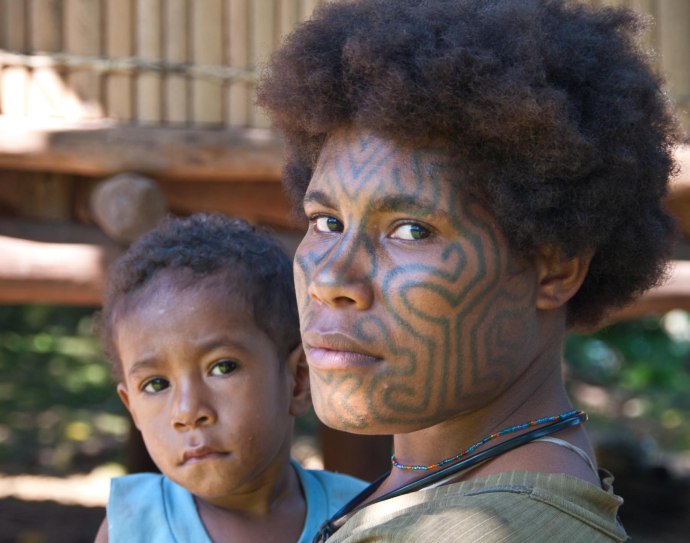 Ramona at Kasiawa
 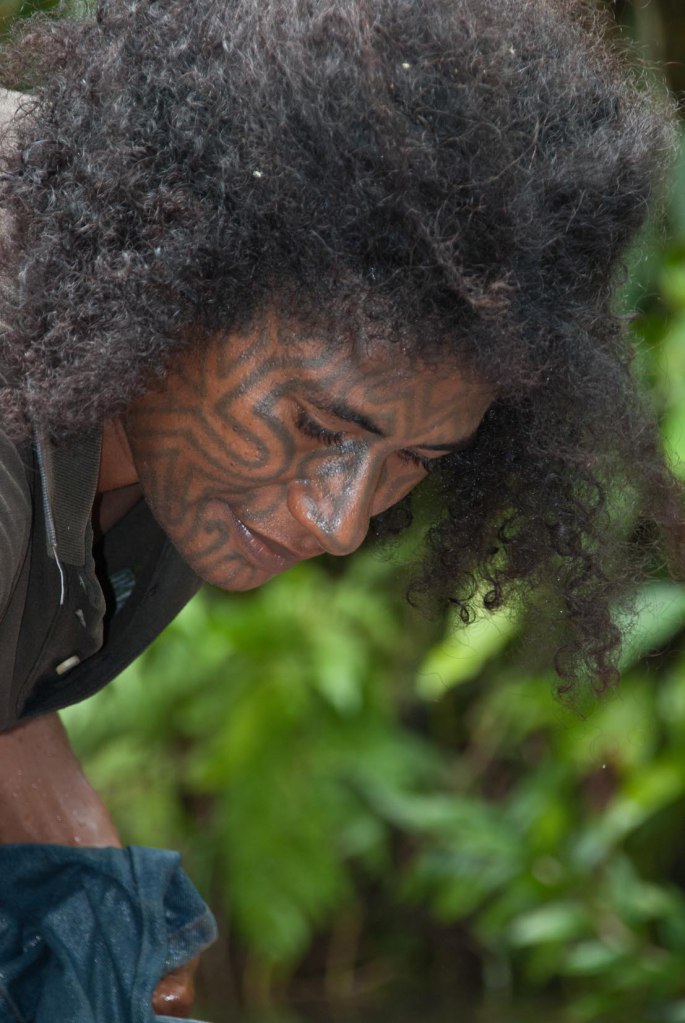 Ethel is proud of her tattoo

 Tribalmystic Stories