Category Archives: Women

Inspiring stories about people – women in particular

The Paper Thief


The Paper Thief  Short Story JLeahy (non-fiction)

newspaper-roll1-1

This morning, the rain stopped about 9am. I had welcomed the last two weeks of wet weather in Brisbane. My gardens have had a good drink and everything looked green with patches of bright tropical colours all around our property. I walked to one of my gardens, closer to our street and watched our chickens dirt-scratching near the roadside. They had ventured too far out and I was concerned for their safety. Besides, when the big black rooster is leading the pack of four hens, they were capable of doing anything. They could reach the public bus stop metres away and if the rooster decided to have its way, they could all catch the bus to the city. The rooster was very bossy, cocky and unruly. Apart from crowing several times continuously in a minute to annoy, it had a way of nodding its head from side to side and flapping its wings when scolded.

Today, the five were only two metres off the street, leaving their nesting place 100 metres away. The lined gum and acacia trees had shed so many leaves. Given the recent wet weather, the ground before me was covered in a thick layer of brown and black wet, slippery soil. I stayed at a dry spot, away from the road.

A small white Mitsubishi i-MiEV pulled up slowly and parked across the road from our mailbox. It was about 30 metres away from me and about ten metres from the chickens. I could see the car clearly. I was thinking it was a learner driver or a neighbour stopping to make a mobile phone call. As I watched, the car door opened and a large woman, about 150kg struggled to get out. She made it to her feet, straightened her short dark-brown hair and put on her glasses. She was dressed in a dark blue pair of denim and a lacy white blouse; two sizes too small. She wore flat slippers with no jewellery. Her tight clothing did not restrict her walk or her air of confidence. I almost thought, I had a visitor, this woman was coming up to my house.

Then, the chilling truth dawned on me. I recognised her and that car. I remembered her face. She had often sat in the car and sent a child to run across the road to take the paper. I had watched from the distance. I always wondered what they were taking, and then, our newspapers went missing. She must be the newspaper thief!

It has been almost eights months of the paper going missing and I have never been close enough to speak to her. Our gate is quite far from the house. I had suspected, the thief did their deed during my daytime work hours. The paper was gone before I got home in the evenings.

Westside News delivers the Wednesday weekly newspaper on Tuesday mornings. If I were lucky, the paper would still be there when I checked the mailbox area. Most times however, the weekly paper would be gone.

The woman looked around casually, and then crossed the road towards me, unaware I was watching her. She came up to my mailbox and with some difficulty she bent down and picked up the paper that was delivered this morning. When she got back up, her eyes caught me and she stopped, still holding the paper in her right hand. She gave me a wry smile. I stared at her. She reminded me of my black rooster with that look of arrogance and superiority. She looked hard at me, almost as if to say: “Well now that you have caught me, what are you going to do about it?”

In return, I gave her my disgust look with: “Thief, don’t ever let me catch you stealing my paper again, you have no idea what I am capable of”. She turned away. I was not surprised by her behaviour. I thought to myself, she is a pro, she is good at it, but, how many papers has she stolen each week and what did she do with them? In silence and after that ‘exchange’ between us, the woman strutted across the road and got into her little white Mitsubishi, and drove off with my paper.
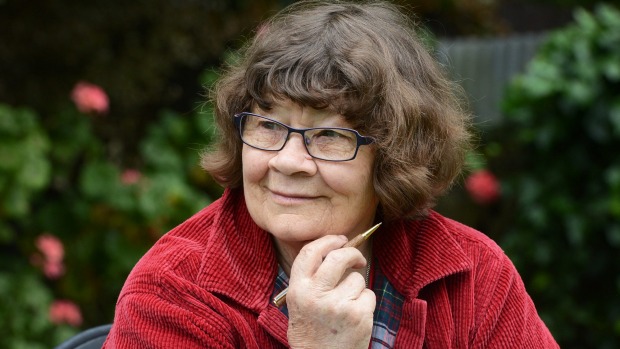
When the word was silence


Joy Cowley
Picture by Loren Dougan/Fairfax NZ. Joy Cowley talks about the 30-day silent retreat she just completed in Wellington.

What do you do to get your creative juices flowing?

I spend time in solitude in my garden.  There is something exciting about the rhythm of plants living, rooting, shedding and flowering. I also paint to get my inspiration to write. I was commenting on MilliThom’s blog today and thought, how many times have I spent trying to create stories and even artwork, when my heart was not in it. Sometimes, shutting down and walking away or diverting my mind to something else helps me come back to story-telling and the story gets even better. I have set a goal to blog each day. On top of that, I am writing my memoir and a collection of short stories. I also write magazine articles which I have not done in a while. Daily chores and the day job takes a lot of that time and numbs the brain. My mind has to travel and seek new things to write about all the time so I read too. When my brain slows down and I become forgetful, I go to the garden and start again.

There is a meditation place in Brisbane my cousin and I had once discussed going to for a week of silence and meditation. I cannot imagine how one month of silence would be like, although, I have spent a lot of days on my own when my sons have been away. I do speak with the animals so it is not complete silence. Being in complete silence for one month would be quite an achievement, especially when you are around people, eating and sitting with them and even looking at them. I think people who choose to live alone or live away from others, being in silence for a long time would seem quite normal.

Here is a story about a writer who finds her own way to “sharpen” her brain through silence in an old tradition.

When the word was silence by Nikki MacDonald

In a suburban Wellington dining room 10 people sit silently. Condiments pass across the table at the raising of an eyebrow or flick of a finger. One diner sees a neighbouring table’s empty water jug and rises quietly to fill it.

A mix of religious and non-religious, the group had never met until a month ago. Most of them had never visited this place. Now, 30 days later, they share a close connection but can scarcely remember the sound of each other’s voices.

When their voice boxes are finally awoken after a month of disuse, one man declares “silence has become my friend”. Another calls it the most radical experience of her life.

After a hugely busy year, writer Dame Joy Cowley was feeling “about as sharp as a wet cornflake”. So she switched on her email out-of-office – and disappeared for a month. But her email bounce-back message wasn’t the Rarotonga beach break brag.

“Terry and I will be on a silent retreat from Nov 2 to Dec 7. We will not have internet contact at this time. Joy,” was the message.

For a month Cowley and her husband lived at Island Bay’s Home of Compassion, which functions as an urban monastery. The mission was rest, renewal and reflection, in the oldest tradition of the Catholic Church. The twist was that it all had to be achieved in complete silence, save for a 15-minute daily chat with a spiritual director.

For Cowley, spirituality and creativity are inextricable.

“I wouldn’t know the difference between meditation and writing.”

She already wakes at 4am every day to savour half an hour of quiet before the emails begin and the phone starts ringing. But even for her, spending an entire month in silence was hard work.

“You really have to look at yourself very closely. There are always bits of ourselves that we would like to discard and you have to accept those.”

Cowley and Terry were two of a group of 10 who came from around the country to the retreat. Some were religious, others were not. They had three days of orientation to get to know each other and the home’s glorious garden setting, before stilling their vocal chords and beginning 30 days of exercises in reflection. To read more, click on the link below.

http://www.stuff.co.nz/dominion-post/64156983/When-the-word-was-silence

The Cab Conversation


Taxi Brisbane Times
Brisbane Times picture.

Short Story (original draft JLeahy) The Cab Conversation

I parked on the taxi rank and waited in the queue. It was a warm night and I had started my shift at 6:30pm. It was nearly 2am. This would be my last trip for this shift. The streets were packed with drunks. Many of them were young. The cab ranks were still full. I had my tinted windows up, to cut out glaring lights and the street noise.

There was always action on Friday nights in Brisbane City, Australia. Nothing much has changed in people’s behaviour out here as I could see, after driving cabs for 30 years. The buildings and some of the streets have changed, but the people. Sadly, the drunks were becoming younger. The two cabs in front of me picked up and drove off. I rolled my white taxi sedan forward. Immediately, two drunken young men stepped off the sidewalk and started cursing and pulling the door levers to get in, even before I stopped.

I had been driving for the Turkish cab-owners for five years. They have been good to me. I would love to buy my own cab soon. The cabbie-money was good, but the nights were often scary.  With my own cab, I can set the hours. The shorter of the two men, dressed in a white polo and jeans, finally managed to open the front door. He quickly turned back to his friend.

“It’s a big Indian woman”, he said. They laughed and he closed the front door. They got into the back of the cab. His friend, taller, was wearing a red cotton shirt that was tucked into a navy pair of pants. The street was well-lit so I could clearly see both their sweaty, drawn faces. They said something to each other, giggled and fell heavily into the backseat. The cab rocked. I ignored what was said and watched them on the rear-vision mirror.

“Kelvin Grove!” the shorter man said with pretentious authority. He looked barely 20. They seemed very drunk. I checked them again from the rear vision mirror, making sure there was no funny business.

“$30 dollars up front”, I turned to them.

“What? We will pay when we get there”, the short one spoke again.

“No, you pay now”, I insisted, knowing that there may be trouble ahead.

“Are you Indian?” he asked, ignoring what I had said. They laughed.

“You fucking pay now or you get out of my cab,” I said firmly.

“Joe, just pay her, I want to get home”, the one in the red shirt stopped laughing. He peered at me from the corner of the seat.

“Ok! Ok!” his friend Joe said fumbling in his pocket and hands me a $50 note. His expression was more serious.

“Address please”, I said taking the $50 note and placing it on my dashboard.

“We will show you”. Joe said.

“No, tell me the address now”.

The tall one called out the address quickly and I punched it into the GPS.

“I will give you change when we get there”, I said and released the hand-break.

“Ok, now can you tell me if you are Indian?” Joe started again.

“I do not wish to make a conversation, I just want to take you and your friend home safely”, I said, keeping my eyes on the road. I glanced in the rear-vision mirror. Everything seemed fine. They both sat in the back seat but the taller one started leaning to the side. I thought to myself, hope he does not vomit in the seat. The traffic eased as we left CBD.

“You are so rude, why can’t you talk to me?” the short one said raising his voice from the back seat and leaning forward. His friend was now asleep; slumping his tall lean body into the corner of the black leather seat as I could see quickly in the mirror. I could feel the short one closer to me.

“I don’t want to talk to you. I just want to drive”.

“That is bad service, you are rude, I am going to report you to your authorities and they will sack you tomorrow”, he said and leaned back into the seat.

“Please do”, I invited. I stayed calm, and kept my eye on the road and  the speed limit. The police were out everywhere.

Joe started to say something else, but I took no notice. The fare had almost reached $20. It had been ten minutes, and we had almost arrived at their destination. I stopped to the red traffic light a few blocks away from their address. I glanced at the rear-vision mirror. I saw the short one shaking his sleeping tall friend roughly.

“Jeff! Jeff! Wake up! We are almost here; I don’t want her to see where we live”.

As his friend woke up, the light turned green and released the brakes and picked up speed. I changed to second gear.

“Stop here!” he ordered as I went through the set of lights.

I rolled the cab towards the left sidewalk and stopped. I turned to them.

The short one was already outside the cab, trying to pull his friend through the opened door.

“‘C’mon Jeff, hurry up man!” he said angrily. His friend reluctantly woke and staggered out.

“Run! Run! We are not paying the bitch, run!” the short one shouted and ran. At first, the tall one called Jeff looked surprised, and then he started running too.

I switched the high beam on and watched them run into the darkness.

I picked up and called control on the radio. I looked down at the total fare ‘blinking’, as I spoke to my supervisor.

“I am reporting a runaway”, I told my supervisor.

“What happened? They didn’t pay?”

“Yes. I got paid”

“What seems to be the problem?”

“I had insisted on a deposit when they got into the cab in the city.”

“Where are you now?”

“Kelvin Grove.”

“How much was the fare?”

“$23”

“And?”

“They gave me a $50 note”, I said, staring at the $50 bill, still sitting on my dashboard.

“Don’t worry about it, we will deal with it when they show up at the office. Have a good night”, the supervisor said and hung up.

……………………………

Note to readers. Taxi stories. My girlfriend nicknamed Mary, drives cabs in Brisbane. She is Papua New Guinean, aged 52. This is a true story. 


Pidil: A Small but Powerful Instrument


Published on Sep 17, 2014 by komnairima

I love interesting sounds, particularly  unusual musical instruments from Papua New Guinea. Here is the Pidil, a rare instrument belonging to the Gunantuna of The Blanche Bay Area of New Britain. I have read that this instrument is played by men during ritual ceremonies to attract young women into the bush. We can guess what that means. 

I do not have any more information on the object except for the sound of it which is on the YouTube link below. The brown, almost finely polished seed, (it’s naturally like that), is common in PNG in coastal areas. In my province we remove the inside and hollow the seed before we use it as a decoration on string bags (bilum). We also  string a bunch of the seeds together to make it another musical instrument, that sounds like a shaker. The women and men carry the bunch and shake them to create the sounds that accompany the kundu drums, singing and dancing.

Rabaul is the famous centre of New Britain. It is known for the Japanese occupation during the world  war and also for its volcanoes. Since January 1942 the Japanese had held Rabaul on Blanche Bay, the flooded crater of an extinct volcano which gives deep water almost to the shore. The regional area and the province itself is rich in culture and heritage. The Pidil in New Britain has a longer story behind it. I dare not ask, I am a woman, but, someone from this area may offer us some follow-up story for this blog in the future. For now, click on the link to listen to its sound.

Short Story: The Christmas Opal


Picture: http://www.aussietreasurechest.com.au

Draft (Opening Chapter – JL Memoir series)

The Christmas Opal

I looked at it. The black briefcase sat by the door. It was Saturday, mid year, 1988. The mid morning light through the slit in the curtain, drew a right angle across the exposed top corner. This did not lightened the case colour, only, it darkened what remained of the briefcase in the shadows. The thick heavy-backed curtain kept the case concealed. There was a twirling spectacle of dust stirred by the slow-moving fan. The dust particles moved between the dark case, and the top of the opened window. This twirling dust caught my eye briefly as this spot of light was the only light in the room today. From the dark interior, it was hard to tell that the sun was high, the sky was blue and it was 36 degrees outside. The unit had trapped dust but how do I get it out? I was limited to what I could do, and what I could not do. My boundaries were quite clear as they were bashed into me several times over four years. I also knew whom not to speak to and where not to go. Sometimes I felt like a trapped animal and sometimes I was just like a chipped, trapped dog in a yard with electrical fencing all around and someone watching from the shadows.

It was getting hotter and I felt thirsty. I took a step to the briefcase. It was bulky, large, and square, with gold fittings like a pilot’s or a travel case . It had black strong rubber wheels and gold clasps that snapped shut. I looked at the briefcase and did not touch it, afraid.

I have heard him snap-shut the clasps and the lock so many times. He liked that, the strict, military-type barking of orders and routine snapping of things into place. Orders for curtains to close when night fell. Open curtains, he said, meant, I was sending out invitations to be seen, to be looked at, by strangers and our neighbours.

“What if it’s a trap?” I almost whispered, delaying my urge to open the damn briefcase. My curiosity tugged at me one more time but I refrained from touching it. I could never imagine what could be held inside this large dark briefcase.

I went upstairs to the bathroom and washed my face. It was hot. Then I returned down the stairs and sat down at the last one. My legs were weak, but I was not hungry. My eyes went back to the case.

It could fit a small gun perhaps, but he already had a sewn-off rifle. I remembered him removing, caressing and dressing the gun with a soft towel and placing it like a baby in its cuddle spot, in his car. He was excited by his newly acquired possession. Apparently, he got this gun from his cousin, and that was a piece of information I needed to know. I thought to myself, as I poured myself a glass of water, to cool down. What a cunning backstory to cushion my fear that he had access to a gun or weapons, any time, from his relatives.

I stood up and walked the few steps to the front door and peeked outside. The car-park was still empty.

He had stored the rifle in his car booth, under the spare tyre. A fine hiding place, where betel-nut chewing, sleepy, corrupted Port Moresby police were too heedless to look during roadblocks.

“No”, I told myself in realisation. He would not trust me with a gun inside the house. It has been almost four years. I was not dead yet, but something has happened to me. I was no longer myself nor was I the 19-year-old virgin from strong Lutheran faith. I was no longer the traditional Papua New Guinea village-innocent girl that he had conquered. I believed that he knew this. I believed he knew I had changed and this meant one thing – my days were numbered.

I collected the large pillows and took them outside. The colourful coleus amongst my tropical plants in the pots cheered me up. The pillows were heavy and only for show. No one used these pillows; they sat and collected dust on the New Zealand sheepskin leather, which covered parts of the downstairs/lounge. Under the cream sheepskin was a large olive-green, black and white carpet. The carpet looked Moroccan. The lounge was a sombre decoration completed with a collection of prints that I thought were depressing. Curly haired, empty, pale and ghost-like maidens, stared down from sepia prints. They showed no particular emotion, yet, their eyes looked sad. Whoever drew these miserable women, sold them to the right person, that was my view.

I picked up the last pillow and went out the back. I shook bread crumbs off the pillows into the backyard and laid them on stacked sandy-brown pavers, lined with pot plants. There were three of the pillows. Regaining composure, and letting my aching body breathe fresh air, I stepped inside. I thought of cleaning the windows but it meant, I would open the curtains. He liked them shut.

“It keeps the sunlight off the artwork,” he said sarcastically. I wondered if I was the artwork he referred to. Not the monochrome of beautiful and sad curly-haired pale women with very large haunting eyes.

I crossed the small lounge to the front door. Remaining inside, I opened the door enough to look outside. I kept my hand on the handle. I dare not step outside, someone might see me and report back. No-one was there. The normal raucous of the compound seemed to have disappeared. The compound area of 1000 square metres encased three blocks of cream concrete airline employee residential units. They were all quiet. His unit was in the first block, second last. The Talis tree outside, in full bloom had seduced bees and insects and a few city birds watched for their own meals. The wide, long leaves were turning yellow,  orange and red, like autumn colours in the movies I had seen. The Talis tree usually housed wives and babies of employees under its cool shade. Today, the shade was abandoned.

I pulled back into the unit, closing the door behind me and locking it. I felt the coolness of the ugly 1970s brown tiles on my feet even when the air inside was hot. I looked at the case again. I had nowhere else to go today. The order was to stay home. I stared at the briefcase again. It was Christmas Eve. He left it there. Why had he not taken the briefcase to work? I decided to ignore the briefcase. This was a test and I was very tired.

I completed and took the washing out and hung it. I returned inside the hot two-bedroom brick unit and counted seven small presents I had bought and wrapped. I felt ashamed. I told myself, I was weak and revolting. I was pathetic. I bought these presents – for what? I hated him. My hands were sweaty, I was trembling and my heart beat faster as I thought of what lay ahead. Three things could happen this Christmas. One, I could be dead. Two, there could be a resolution to this relationship. Oh, the third thing…I could kill him. The third was pathetic and I knew it.

My eyes glazed over with tears as I laid the presents under the green, fake Chinese-made Christmas tree. The tinsel and the plastic brush leaves scattered and messed up the base. I did not care. I hated fake things. I let the tears come, that’s was all I had. The tree had red and white bells with some glittering reindeer. I was very careful not to trip the tree over even though, I did not like it. Then, I picked myself off the floor and went to the briefcase and opened it. I felt my face burnt with excitement and fear. My trembling hands worked swiftly over books, papers and travel documents. The smell of planes mingled with the strong smell of vinyl.

My hands touched a small box. It was a dark blue jewellery box with sharp edges. I pulled it out, unafraid anymore. I opened the lid and it stayed ajar. Inside, immaculately placed in white cushion padding were a set of Australia’s beautiful white Opals. There was a pendant with matching earrings. The settings were in gold. It was a perfect Christmas gift for a woman, I thought, marvelling at its beauty. I remembered these opals from the Brisbane duty-free shop. The white opals were my favourite from all the other colours but it was not something I would ask for. I looked at the stones, mesmerized by their beauty, even from the mouth of the dark briefcase. Briefly, I thought of the depth of the earth where they came from and years the stone took to form and evolve into such luminous work of art. I thought of the person that spent laborious hours grinding, polishing and shaping them. I made jewellery so I knew the work involved. The light sipped into and was trapped in the stones, lighting and reflecting layers of intricate colours. The Opal had a sense of innocence, purity, and tenderness. Suddenly, I felt cold and quickly placed the small box back in the briefcase and snapped it shut. Deep down I knew, these Opals were not for me.

The Sisterhood of World Bloggers Award


World Sisterhood Blogger Award

I want to sincerely thank MillieThom for nominating my blog, Tribalmystic, for, The Sisterhood of World Blogger Award. Millie is the author of Shadow of The Ravens. Millie makes history sound like hot romance. She writes about various subjects with many fascinating historical content, and that’s why I enjoy her blog.

Once again, the show of kindness is deeply touching. Thank you Millie, fellow bloggers, friends and readers for supporting this blog.

The Sisterhood of World Bloggers Award

Five rules to follow:

  1. Thank the blogger who nominated you, linking back to their site.

  2. Put the Award logo on your blog.

  3. Answer the ten questions sent to you.

  4. Make up ten new questions for your nominees to answer.

  5. Nominate seven blogs.

Ten Answers About Me

1. What do you like best about blogging?

I love the writing or storytelling in blogging. This becomes more valuable with the responses I get from the readers and respect from the blogging community. I also love reading and learning from other writers/bloggers. I am driven to seek new or interesting stories for my readers. These stories can be  humanitarian news, environment and nature stories, inspiring human stories or stories about beautiful things.

I enjoy writing fiction, but on this blog, most of my stories are about life. I love writing about my culture and heritage and that helps maintain my sense of identity. I also understand the greater world we live in, therefore, I cannot ignore the realities of cruelty and poverty; what we humans do to one another. As a victim of violence myself, I want to see an ending to violence against women, children and the helpless – so I write about these topics. When I feel something is not right when I am reading an article, I share the post or write about it too. My passion goes beyond mankind. It includes other living things in the ocean and all nature. Blogging about the real and the living is the least I can do. Many risk their lives every day to fight for what is right, or to save other lives. I can only do it with my keyboard and posts on this blog, from the safety and comforts of my home.

2. If you could visit any place in the world, where would that place be and why?

I would like to go to Zanzibar, Africa one day. I would learn to dance like the Zanzibar women. Sounds crazy? Well, in 1998, I was in World Festival for Island Cultures in Cheju Island, Korea. I was pregnant with my second son. In a very rhythmic  performance, I saw large women from Zanzibar dancing at the festival like I had never seen before. They were big and heavy but so light on their feet and movements. It was incredible. I come from the islands and we dance, but not like this. From that day, I thought, I would like to go there and learn to dance like that. I am sure, the music ran through these women like their own blood. I tried to learn while on Cheju but my stomach was in the way. This trip is on my bucket list.

3. If you could change one thing about your life, what would it be?

I would like to change my pace of doing things – from fast to slow. I feel sometimes that I need to slow down and relax. I do not sleep enough. Writing is helping me to slow down, sit and think more than I have ever done in my life.

4. List 3 things that you are proud of doing / having done.

  1. Being a mother.

  2. Standing up for Women’s Rights.

  3. Being a Climate Change activist

5. What was your favourite subject at school, and why did it appeal so much?

I have never had one particular subject appeal to me – I loved many. I really enjoyed Maths and History apart from Arts, Philosophy and Literature. I loved problem solving and satisfying my curiosity. I enjoy old stories and understanding meaning of life. Social science and Geography were fun too. I could be in nature and interact with insects, animals and also people.

6. Is there any particular environmental issue that causes you concern?

What deeply concerns me is Climate Change and sea level rise in small Pacific Island nations, less than two metres above sea level. These islands will be lost soon. I would like the developed countries to lend their ears to hear us. Help us work together for a better planet for our future generation. It is not only about us sinking. We only have Earth to live on. Our earth deserves better treatment. In Australia, Prime Minister, Tony Abbott announced last week, his proudest and best decision he made was to reverse the climate policy. Two days ago, he employed a climate skeptic. The ignorance and denial of developed countries such as Australia is shameful.

7. What is your favourite childhood memory?

Being in the swamp, catching fish with my grandmother was what we did daily, for our food. One day, my grandma and I went to town with almost $5. She made this money from selling betel nut. She told me, she felt like eating bread so we went to town. It was a long walk and then a bus ride. We headed for the bakery in Lae City (Papua New Guinea). Grandma bought a whole loaf of white, unsliced bread; still hot and straight out of the bakery oven. The smell of the bread was unbelievable. Hugging the hot bread, I walked with grandma to the supermarket and she used the change to buy a tub of butter. Then we searched for a shady tree and she broke the loaf in half. She told me, it was half each.

“Eat it all” she said.

We dipped the halves in butter and ate the whole thing under the shade of a tree in the middle of Lae town. Bread was a treat. We never had that in the village. I cannot believe how much I ate that day. I can still smell the bread, 40 years later.

8. Who is your favourite character in a novel or film and why do you like them so much?

I love too many. One worthy of note is the common decency and friendship developed in Shawshank Redemption. I loved it because life has a way of rewarding us if we listen and feel more. Sometimes, because of our own perceptions, we miss the truth, opportunities and friendships.

9. What is your greatest ambition in life?

To teach more about LOVE by showing more LOVE. Hopefully it will grow and help others feel the same way.

10. What is the biggest compliment you have ever had?

I have been told that I am a good listener. That compliment is a kind one because, I am a very good talker too. I believe that being a good listener, takes skill. I hope they are right.


I have chosen these sister blogs because I really enjoy reading them, and I learn a lot from the writers. Some of these ladies make me laugh and I really like that because life is not all about being serious.

  1. A Refugee’s Journey – Vietnam to Australia

  2. Razorbackwriteraus

  3. Fifty Shades of Reality

  4. Altitude of Art

5. Poetheart

  1. L.T.Garvin

  2. Love Letters to Spam

Ten questions to nominees

  1. What makes you want to blog?

  2. What inspires you in life?

  3. What are your three favourite things and why?

  4. What is the most important thing you have ever done?

  5. Describe where you would like to live in the future and why?

  6. What do you miss most?

  7. Is there something special you would really like to do for someone and what is it?

  8. Do you have a lucky charm? Tell us about it.

  9. Have you or anyone close to you had a near-death experience? What happened?

  10. Name one thing you would like to do to change the world, if you could and how would you do that.


The Sorcerers’ Watch


The Sorcerers’ Watch

JLeahy memoir series – opening chapter/short story

We buried him this afternoon. He had died a week ago. There were a few hours left before the sorcerers would come for his remains. That’s what his father said. We needed to get to his grave before dusk and guard the grave until dawn. His father, mother and I left for Karogo’s graveyard after the last of the gathered family members left.

My aching joints gave me small comfort as I forced them to help me walk quickly up the main road, away from Saroa Village. We were near Rigo, Central Province, Papua New Guinea and in this region, witchcraft and sorcery were rife. We walked inland, headed for the small hill where Karogo and some of his deceased family members had been buried. Other villagers buried their dead in their backyard, gardens and other special places; something I was not used to. In my village, we had one cemetery for everyone.

The heavy rain and dense humidity kept the soil on the road, wet and slippery. The red clay had been washed frequently down the hills by the torrential rains leaving earthy red lines meandering through rough patches of grey and black gravel. I placed my feet carefully away from the soft red mud and in between the milky puddles. I wore thongs and these flipped a backsplash of sand and muddy water onto the dress. My clothes and looks were the last things on my mind.

For a few minutes, I stepped off the main road and I walked along the greyish clay roadside track. The muddy track was imprinted with hundreds of footprints from local traffic. I passed a few thongs left stuck in the mud and this made me want to smile. A pair of thongs was a priceless footwear. Obviously the toe parts of these pairs came apart so the thongs had been abandoned. Karogo’s father was ahead and his mother was walking behind me. I knew the couple had planned to be in this position, to protect me.

I walked as quickly as I could because it was getting dark very quickly. The moon was still rising but night creatures were already on the scene, I could hear them.

Today had flown by quickly like each day in the past week. The funeral only ‘formalized’ the death certificate. Karogo was long gone and this absence was so stark in this strange village. This place was an hour’s flight and several hours on the road, south from my home town. Apart from his immediate family, I did not know anyone. That did not bother me. I wasn’t afraid to spend the night in the graveyard. I knew I was a stranger and as his father told me, “you are a target, so you must follow everything I say”.

“Ok” I said. My own family had taught me how to handle any kind of situation with sorcery. It was always best to follow local rules as grandma would say. I had really wanted to go to the graveyard. That may have sounded crazy, as it sounded to me, but I needed to know what the sorcery-watch was about and I wanted to see Karogo again. Fear was not my issue. I could face the sorcerers or anyone from the dead.

It was not fear, as I had said, it was my anger. Karogo’s death made me very angry. This anger was so strong, that I felt cold and hardened inside. I started to feel older and stronger than my 17 years. I had insisted to his parents to take me to the grave tonight.

The torch slipped out of my tired hands and dropped into the mud almost tripping me.

“Shit!” I cursed and picked it up quickly. I quickened my pace to reach Solomon, Karogo’s father. As I caught up, my mind went back to the funeral again. My eyes salted and I wiped them quickly.

This morning about 9am, while the pastor was preaching, trying to cover his eulogy and bring closure to Karogo’s 18 years of living, I had felt every vein in my heart burst into tatters. Our past three years together were a mixture of child-play and maturing into adulthood together. Then, there were the mysteries in his life that I now could never ask anyone about, ever.  He was beautiful inside and out, but he had secrets.

In the front pew, among strangers today, I felt I had been thrown off a plane into a strange place where no one understood my language or me. People were just staring at me, even in church, while the pastor was preaching. To find comfort amongst the staring pitiful eyes, I had looked down at the bright red roses on my black polyester dress. The hem had come apart but the dress kept together. My “Gypsy dress”, Karogo had called it. We were together when I bought this Gypsy dress at the second-hand store in Lae. I was on two weeks mid-year holiday from Year 12. The dress cost me 50 cents. It was strange to feel at ease for a moment while looking at the red roses on the Gypsy dress. I wanted to see Karogo alive in my memories about the dress but only briefly I saw him before my eyes moved and focused on the coffin. The roses in the wreath on his coffin were alive. Karogo wasn’t. He laid there, just like he could have been on the day-bed at his father’s house. His eyes were shut, but he wasn’t sleeping in the opened, beautiful, rosewood coffin.

My dress was the only item that connected us briefly and at that moment in the village church. I sat amongst hundreds of strangers. Mourners, children and adults, dressed in white,  kept sneaking glances at me, probably feeling sorry for the young widowed girlfriend. I had cried inside and begged for my heart to stop right then. Yet, above the haunting Perovetta hymn at the funeral service, I could hear my heart still beating while I tried to understand why death could come to a life so young and promising.

“Joyce!’ someone had called me in the church. I remember, I did not even turn. Perhaps it was someone else with the same name. I didn’t know. I was in a daze. My thoughts were too far-gone. I had wanted to know why my chest kept moving, expanding, and contracting. I was breathing air and life, which I did not want, into me. I had wanted to stop breathing.

“Joyce!” Solomon called.

I turned my head quickly to him. I paused. He was a large, tall man with a large Afro. He combed it out neatly and sweat combined with water from his wet hair was coming down his face. He pointed a few metres ahead of me. The physical and emotional pain returned to my body once more as I stepped in the slippery, pale mud towards him.

“Come this way”, Solomon directed and I walked closer to him.

“Are you ok?” he asked, searching my face when I stopped and looked at him. We were both sweating from the walk. His wife caught up and wiped her flushed, sweaty face. She also looked at me concerned.

“Yes”, I tried to smile.

“Let’s go”, Solomon said.

We turned away from the main road and reached a small, slow flowing creek, about ankle-deep. The stones in the creek were all covered in green and black algae. We crossed the creek as the day’s shadows dissolved, forcing us to use artificial light. Solomon lit the Chinese kerosene lantern and gave me the large torch. His wife held the smaller torch. We climbed. In a few minutes, we will be at Karogo’s graveyard.

(Draft only)

Pushing Up Daisies


images

Chapter One: Casting Shadows continued

Viola flung the rest of her stale drink into the garden and carelessly dropped her glass on the day table. She turned and watched the remaining yoke of the sun slide away and as quickly, the darkness enveloped her. The evening breeze caressed her, nudging her silk cream blouse under her full breasts. Her navy linen pants hung loosely about her short fat legs. It felt weird but nice. No-one has touched her for so long. She made no attempt to rejoin her guests inside. The time had crawled to 6:30pm, when the automated sprinklers were due to start spitting. She paced the verandah to check if the entire irrigation system had come on to water her beloved garden. Her mind went back to events earlier.

Nora had asked her if she was all right – the stupid girl. Viola felt anger rising in her like bile, but swallowed it, only responding with “good”. For years, she had been telling her friend about how ‘he’ had treated her. Nora knew. Just like she had, Viola gritted her teeth and told Nora everything was good.

To Viola, “good” was a great word. When people ask how she was, she would reply on a reflex, “good”. According to Viola, the word good was so vague and final that anyone who asked could not ask any other questions. They left her alone. The word ‘good’, Viola thought, had protected her all these years. Kept her safe from the pity and concern that exhausted her so. Viola hesitated, as she paused and put the lights back on. They instantly flooded the lush bushes enclosing two carports and her guests’ extra two cars parked next to her black BMW and his silver Nissan 280Z. He would catch the $150 cab ride home tonight. She felt glad, she was not picking him up from Brisbane airport.

Over the years, she had kept all her feelings deep inside her, in the smallest pocket of her heart, layered with obligations and responsibilities as the daughter, mother and wife. But tonight, she was going to tell him everything when he came home. She would tell him she has had enough. She began thinking of her plan. Letting the scenario play out, she strolled back to the front of the house. Viola noticed at the end of the verandah that the sprinkler at her rose garden, nearest to her neighbours was off. Without thinking, she stepped bare feet onto the dying lawn and walked straight across towards the dark shadows to turn the sprinkler on. The light switch was near the tennis courts.

To read part one, see my earlier post and for more – visit my Wattpad:

http://www.wattpad.com/myworks/27925992-pushing-up-daisies


Aussie men join in to fight the women’s fight


According to a Sydney Morning Herald article published in March on International Women’s Day, one woman dies every week from domestic violence in Australia in 2014. In NSW, 24 women were killed last year in domestic-related incidents. Of all homicides in NSW, 42 per cent are domestic. One woman is hospitalised every three hours across the country.

Access Economics has estimated about 1.6 million Australian women have experienced domestic violence in some form.

That’s just the official toll. Less than half the abuse is reported.

As NSW Police Commissioner Andrew Scipione says: “These are mothers, your daughters, your sisters, wives, girlfriends, these are the people who work at the desk next to you at work. These are real people and they are horrifying numbers.”

Behind the veneer of social respectability across all demographics, women are suffering from physical, psychological, manipulative and controlling behaviour by culprits. It emanates from a mindset that blames the victim and tolerates disrespect for those who are of another gender, background, lifestyle or simply powerless.

Children are being assaulted, traumatised and used as weapons.

Change will require challenging the culture of saying nothing.

For so long the fear of social ostracism or economic desolation prompted women in particular not to report their dire situations. Witnesses felt it was a private matter or feared retribution.

There must be must be more protection of whistleblowers who lift the veil of secrecy.

True, more women today are economically independent and most know there are services out there to help if partners become abusive. Some take the risk of speaking out and refuse to be demeaned. But fewer still make the flight to safety or use the support of courts and the police to remain in their own homes.

Most live in fear of being tracked down by their abuser. Men have to help us fight this fight.

One such group is the White Ribbon. Last week, November 25th was the White Ribbon Day in Australia. White Ribbon is Australia’s only national, male led Campaign to end men’s violence against women. Already, there are over 150,000 people in and supporting the cause of White Ribbon Australia.

Vision
All women live in safety, free from all forms of men’s violence.

Mission
Making women’s safety a man’s issue too.

The campaign works through primary prevention initiatives involving awareness raising and education, and programs with youth, schools, workplaces and across the broader community.

Globally, White Ribbon is the world’s largest male-led movement to end men’s violence against women. Originating in Canada in 1991, White Ribbon is now active in more than 60 countries.

White Ribbon began in Australia in 2003 as part of UNIFEM (now UN Women), formally becoming a Foundation in 2007.

White Ribbon Australia observes the International Day of the Elimination of Violence against Women, also known as White Ribbon Day, annually on November 25. White Ribbon Day signals the start of the 16 Days of Activism to Stop Violence against Women, which ends on Human Rights Day (December 10).

However the campaign runs all year and is evident across the community through, for example, advertising and marketing campaigns such as Uncover Secrets, social media, community events

To support White Ribbon Australia, visit: http://www.whiteribbon.org.au/what-is-white-ribbon

The End of the broom – Part Two


This is the second part of a draft chapter I am working on and sharing with you. If you find grammar or other errors, just smile and forgive me. This chapter may change as I edit and re-write. There is still a lot to be done.

……………………………………….

JLeahy Memoir Series   The End of the broom

“Where is the mouth of the road?

At the entrance of the cemetery.

That’s where my body will rest and become soft.

But my spirit would fly to you,

Where I will see your face Lord”

I hummed the song in my head. It really wasn’t a good song for the start of a day. I was too distracted today.

I had to get my Saturday morning chores done. I picked up the broom; a bundle of dried brown coconut sticks, and went to the back of the house near the pig pen to sweep. In preparation for my getaway, I threw my red on the weak, bouncy, low wire clothes line that was slowly coming apart from the two ends, tied on coconut trunks. I was careful not to ‘bounce’ some of the wet clothes off; they had no pegs on them. We did not have any.

“Kalem! Kalem!” the children were calling me from the river. I waved and made hand signs that I was busy, and would join them later.

From the back , I used the coconut broom to sweep to the front yard. The bare sandy yard studded with beach pebbles embraced two houses, both of distinct characters. The larger house faced the main road to the village and the other faced the side of the larger house. There was a large hardwood tree at our entrance called Abong. Because we lived under this tree, our place was called Abonghu, which meant, “at the foot of the Abong tree”. The larger, white house, had blue trimmings and two blue door exits. With her nursing money, Mother helped her father to build this house for all of us. It happened before I was born. After I was born, when I was asleep, she hung me in the bilum on the Abong branch. The three rooms were shared with her two siblings and parents. Mother often fought with her older brother and his children over the ownership of this house. Each time, she would count the number of cement bags, timber, and roofing iron and tell them the total amount of her pension she had spent.

I tried to avoid the pig droppings as I swept. Pigs made such a ‘neat’ mess. Little black round balls looking almost as if they were rolled by hand. It did stink though. I swept past Mother and my room.

There were three bedrooms. Each room in the house Mother built housed several people. There was a lounge room, which turned into guest room when our families visited from the coast or inland. The lounge room had tired old fly-wired windows. Scrawly pen and pencil marks drawn by kids on the wall. The brown unpainted Masonite walls dropped down to unpolished evenly nailed timber hardwood floors. Various stains in years, soaked into the fibre of the dead wood giving it a distinct character. The other house was made from unpainted timber with a mis-matched stacking of planks. The roof was made from sewn sago leaves, and topped with a few iron roof sheets. The sheets had holes in them. Inside, the house was blackened by the built up of daily smoke from the fire. My grandma’s fireplace was on the verandah of this house. The two rooms had no fly wire, just cotton laplaps. The roof had holes. If your bed is positioned right, a raindrop will fall from heaven straight through the hole into your eye – shocking you. My cousin and I have tried this. It was funny.

To my readers:  If you had enjoyed this draft, let me know. I won’t be posting the end of this chapter. It will be in my book. I shall be posting other parts of chapters as I start writing them. These last two stories (in The end of the broom) were parts of the first chapter I have ever written of this memoir. I have been writing a series of short stories in the last two years in my creative writing workshop. I am now attempting to connect them together and create a structure and a spine for the story. If this is the wrong way of writing a book – then I guess I have created a new way. Thank you for reading.