Category Archives: Women

Where My Eyes Are From


Where My Eyes Are From


I turned to face the door and sat down in the centre edge. It was the softest part of mama’s large queen-size bed. I ran my large grey eyes over the bed. Papa had built this bed. The bed was rustic but sturdy. Because of the many years in the timbers, the bed talks like an old man when you are on it. Right now, the bed is not talking because I am not moving. The white cotton sheets were crumply and warm. I wanted to climb into the sheets but I could not.

We had buried mama at 3pm. The day had been long and tiring.

The few friends and family returned to our small two bedroom cottage on the edge of town in the hills of Mt Crosby. The offering of sweet tea and cake to the mourners wrapped the day. However, the sweet tea did not change the taste in my mouth. Soon, they left papa and me. We sat together on the small veranda and did not speak. At 15, I knew half of papa was buried with mama this afternoon.

The day hurried passed. Soon, it burnt orangey into dusk. The ambers from the remains of the daylight pierced through the small cottage.

“You can go to her room” Papa had said close to 5pm.

I saw the small clock on mama’s bedside as I sat down. Mama’s room smelt like Vanilla with faint coffee. I had tried to shut out the noises with the door, but I could hear the puppies. All five of them ready for their milk. They needed their mother. A sharp pain went through me.

My hand felt under the pillow slip and I found it. The small white envelope mama promised before she took her last breath. I gazed back at the door. I waited. My heart started to race.

Through the gaps in the window I caught the late breeze approaching carrying bush smells of Gum and Acacia. I could hear my father humming “Gershwin’s Summer Time” and rocking in the old chair. The chair squeak was rhythmic and soothing. It re-assured me of his location. I did not want him to come in.

The house seemed to mimic Papa’s humming and suddenly I felt the sadness heavy in my chest. Papa was a real sweet man. Not only did he lose his woman, but his best friend.

I sat still and held mama’s envelop; firmed by the content of its small card. In this envelope was something mama wanted only me to know. My stomach did not feel right and I knew it was something I do not wish to know.

The room held on to the last of day light. In this dim light I read my name written neatly across with dainty curls. Mama always made a point of making big long tails in letters ‘y’ and “g”.  My name was Margaret Meadows. Mama shortened it to “Maggy” with a “y” instead of an “ie” like in other Margies which was short for Margaret.

I brought the card closer to my nose. It smelt of Vanilla too. This made me smile and my eyes salted. I felt that weight in my chest move up to choke me. I looked at mama’s photo of us in a white frame by the bed. Tears rolled down my eyes. Slowly, I pinched the corner of the white envelop and slit the end through with my index finger. This forced the white envelope open to reveal a small red card.

I eased back on the bed. I felt I needed some support and security before I opened the red card. I let my shoes drop on the wooden floor. I starred at the door; hoping papa would not come in. I need to be alone when I read this. That was what mama wanted.

“My Love Maggy,

You were born a beautiful baby of glorious soft honey skin, pink lips, fair hair and long legs and arms. You were a fairy with piercing eyes. I swear if you had had wings, you would have flown away. Your eyes were a mysterious twinkle to your father and me. When you were little I had wondered if you were worried or just curious about your eyes because you asked me many times why your eyes were different from your father’s and mine. As you know, we both have brown eyes.

I need you to understand that Paul Meadows loves you like his own daughter. There is not a single person that loves you more and not a single reason to be ashamed of who you are.

Your grey eyes came from a man named Peter Sullivan who was once your father Paul’s best friend. Last year, I found out that he died in a car accident while driving back to Brisbane.”


In Hot Water


In Hot Water

(By JLeahy 11.2.2014)

I caked my face. Covering it with a pale brownish mud mask, I worked my way from the top down. Soaking my hands in water to glide the muddy consistency, I spread the mask thickly down my chin and neck, avoiding my eyes and nostrils and lips.

The mud mixture, an old New Zealand-made Nutrimetics face mask, felt cool and soothing. It stank like a familiar dried river bank. The smell did not bother me. Each second the mud started drying, it cracked visible veins across my nose, cheeks, brow and neck. The cracked mud also stretched my face in all directions like something out of Sci Fi. The mask felt dry and prickly.

I glanced into the mirror. In place of my reflection was an aged stranger. I had thought of this person in my head many times. Now, I was slowly bringing her to life. It was a very cold July evening, 1981 in the Eastern Highlands Province, Papua New Guinea. I was in Year Eleven.

Here in this dormitory in the cold weather, it was rare to have a luxury of warm shower. For almost six months I washed in freezing water every morning and night.

Usually I would see steam escaping and feel the heat as I queued into the shower. When I got in, only cold water would run down. At this same time, I would hear other girls next door cursing and I knew the hot water has run out again!

Tonight I did not feel 100 percent. I desperately needed a hot shower. I did not go to study period and once the bell went, I rose from my single metal bed and got into the shower. I had enjoyed every drop of my warm shower before I started applying the cake on my face. It has been almost two hours since I got out of the shower.

I starred at the stranger and smiled knowingly at what was about to happen.

The temperature dropped sharply. The timing was perfect for the person in the mirror to emerge. I added some mud to her lips and cracked it when I smiled. I had planned to make this person reflected in the mirror; look dead but alive. I had only a few minutes left to complete her make-up.

I rinsed my muddy hand and gently nudged out a piece of soft gold and silver foil from my right pocket.  It was the inside of the Benson and Hedges cigarette packaging. I found this gem outside the Biology classroom this afternoon, rinsed it and pocketed it. What a fine finish this “metal leaf” would add to the mirrored person’s make-up, I thought. I quickly moulded the silver side of the foil onto my teeth with the gold side was showing.

I checked myself in the mirror. I grinned. I looked like the giant Jaws in James Bond films. I looked strange but not nasty!

Jaws got the name from his steel teeth that are able to bite through different kinds of materials. The character was played by actor Richard Kiel. I thought even though I now looked ugly like Jaws, my teeth were too neat. That wasn’t what I had wanted. I needed something more sinister.

I reached for my black eyebrow pencil. I coloured over the foil on three random teeth and blackened them. In the evening light, the blackened teeth disappeared. The stranger in the mirror started to look like an old witch with a few teeth.

With the same pencil, I dabbed firmly under my eyes and smudged dark grey shadows, like bags. These smudges gave my light brown skin a dull and decayed look. Then with the Johnson Baby Powder, I quickly dropped a splash of talcum on my hair to add at least 50 years to my age. With the pencil again, I finished off with some lines down my cheeks to the corners of my lips. I drew in a pair of crow’s feet on the edges of my eyes. I made a weird frown and traced where the rest of the wrinkles went. I pulled my hair back in a tight knot. This enhanced the severity in my expression.

I looked at the clock feeling its hurry in the ticking. It was almost 9pm and the study. The period would end in seconds. I felt the temperature plummeting and knew ice has formed on the hilltops. At any moment, the Year Eleven girls at Aiyura National High School would rush out of their classrooms and thunder down the hills. The rush was to get into the showers first, enjoy and linger under the hot showers.

The bell was going to go in any second I thought to myself.

I reached up to grab my thick knitted black cotton cloth I bought in a Lae second –hand shop. The bell went. I wrapped myself. Then quickly I slipped out of my 2 x 3 metre cubicle I shared in the Year Eleven Girls’ dormitory and headed for its shower block. Carefully I placed my steps on the wet floor so I would not slip or make a noise. The shower block  was about 8 metres from my room.

Energised by my hot shower earlier, I was refreshed and ready. I positioned myself at the edge of the laundry, facing the doorway to the shower block. Through the dark laundry door, a gust of wind hit me with a stench from the sewerage. I hugged my black cloak completely around me and ignored the smell. The only visible part of me was my face. The face was also the stranger, I had created minutes ago.

As I waited, my mind counted events of the last three hours. I had told the duty teacher I was sick and stayed in my room. I enjoyed a quiet meal of bully (canned meat) and Morobe biscuit and had the best, hottest and longest shower ever. This had been the only hot shower I had since I left my hot, humid city of Lae. I was not cut out for boarding school and the cold in Kainantu was miserable. Aiyura in the hills of Kainantu was one of the coldest places in PNG. In the past six months, the cold showers were unbearable. November was the warmest with an average temperature of 23.9 °C at noon. July was the coldest with an average temperature of 10.2 °C at night.  Aiyura had no distinct temperature seasons; the temperature was relatively constant during the year. However, the temperatures dropped sharply at night, just like tonight.

Suddenly my thoughts were cut with the sharp noise of running feet. The stomping got louder with giggles and shouting as they got nearer. The sound intensified. It vibrated like a herd of elephants approaching a waterhole. The Year Eleven girls hit the garden beds and raced down the hillside. They burst through the dormitory doors. I heard books and bags thrown recklessly on the floor and beds. Towels were yanked off wall nails and curtain rails. The girls raced, pushing one in front of the other to fit through the doors.

We all knew too well, the hot water did not run for long. Only the first girls to get in got warm shower.

I moved into position. I only needed one person to see me and at this thought I grinned.

At that same moment I heard a shocking gasp so close to me and caught a glimpse of a girl named Thecla. Her face dropped in a horrific expression as she reversed from the doorway.

Thecla had sneaked in first and had surprised me and herself. Turning in horror, Thecla started screaming and running down the hallway to the exit door: Tewel! Tewel! Tewel! (Devil! Devil! Devil!) “Devil! Devil!, Mi lukim tewel. I saw the devil!” she screamed again as she ran up the hill.

As Thecla rushed out and crashed into other girls behind her, her fear rippled through their emotions. These girls turned and ran out screaming the same thing in a chant. “Devil devil, we saw the devil.

I knew at that point, apart from Thecla, only two other girls may have seen me. Not all.  But, I heard a lot of screaming and running.

The shower, laundry as well as the dorm emptied in just a few minutes. The noise shifted outside rapidly. I eased the “stranger” back into my cubicle, wiped off the make up and cleaned my face with a wet towel. I covered myself into a sleeping position. The “stranger” was gone.

From my warm bed I listened to more screaming and confusion outside. If only I could have had some champagne through a drip to celebrate, I thought. But I had not drunk alcohol yet so I imagined the taste of champagne. I wanted to laugh out loud. I could not. I smiled and closed my eyes with satisfaction.

By now the boys ran down from their dormitories to help. The duty teacher and deputy principal, Graham Darby came with all the prefects to investigate. The screaming of “devil” went to “prowler” “rascals” and other things. There was even a claim that the residential ghost, a young lady who died in the dormitory years ago had returned. I could hear people surrounding our dorms. Torches were flashing across our curtains.  There were footsteps walking and running with urgency through the thick grass. The search continued for another half hour. Others searched in our agriculture class rhubarb garden and in the stinky drain.

“Let’s go! There is nothing”, I heard a male voice with finality. Nothing had been found and everyone were tired and longed for the warmth of the dormitories. It was freezing outside. Some girls were too afraid to shower that night. Everyone went to bed. I looked outside and once again, the chill and the blackness of the night engulfed the remains of the day and the shape and colour of everything.

Days went by and school returned to normal. Everyone in our dorm was cautious of the shower block and ironically many of the regular hot shower “queens” became considerate of others.

One night as we sat together to a meal, my friends started discussing the ‘Devil in the Shower Block” incident. They all agreed that it was a hoax. I was very quiet. Someone had asked me where I was the night the incident happened. This question brought up other prodding questions about my whereabouts on the night of the ‘crime’.

Soon my friends agreed that and if anyone could pull off such a hoax and bring the school to its knees, it would have been me. I denied the accusation. My friends were not convinced that I was too sick to do anything. The fact that I had been alone in the dorm that night did not save me. A few days later, they got the whole story out of me. I told my friends the truth to so much laughter and each of us joining in to re-enact of the events of the night. Because our rooms were only divided by cloth, other Year Eleven girls heard the story and reported me. Next day, the deputy Principal Mr Darby called me into his office. I had never been called into the deputy or the principal’s office before and prepared myself for the worst.

Darby asked why such a student like me could do something like that. The thought of finally tarnishing my record made me want to smile but underneath, I could picture my mother’s face.

“I just wanted to have a hot shower”, I told Mr Darby the truth. I looked at his face. His blue steel eyes held mine and I knew my reason sounded ridiculous.

Mr Darby reprimanded me and recalled the story of “The Boy Who Called Wolf”.

The significance of this story to my hoax was because in our school, Aiyura, the students and staff members often got attacked by nearby villagers. That night when the Grade Eleven Girls were screaming, Mr Darby had thought we were being attacked.

“I understand that story and I am sorry about my actions”, I said to Darby.

I looked at Mr Darby, expecting him to expel me from school.

Darby sat there looking back at me for a long time – then; he laughed out loud and asked me to not ever do something like that again.

Mine Affected Get Control of Assets


IMG_1936IMG_2029-1IMG_1918IMG_1933IMG_2021

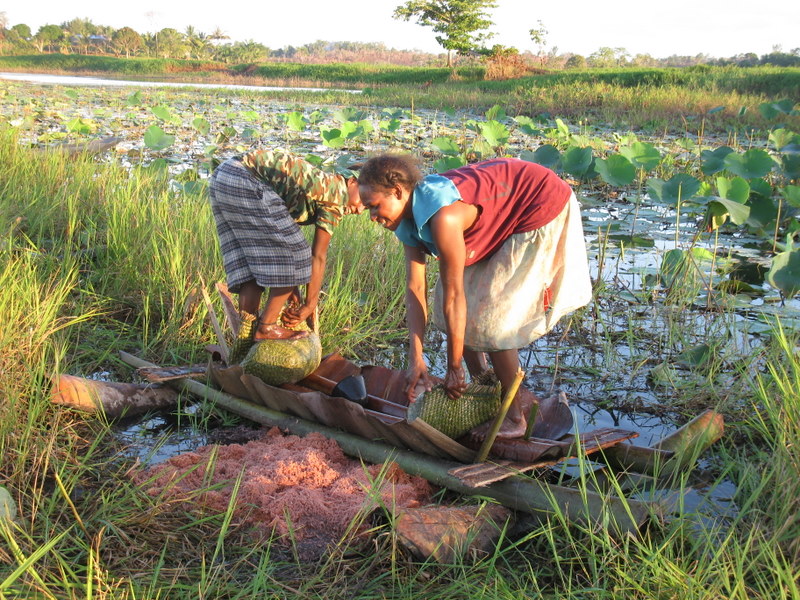
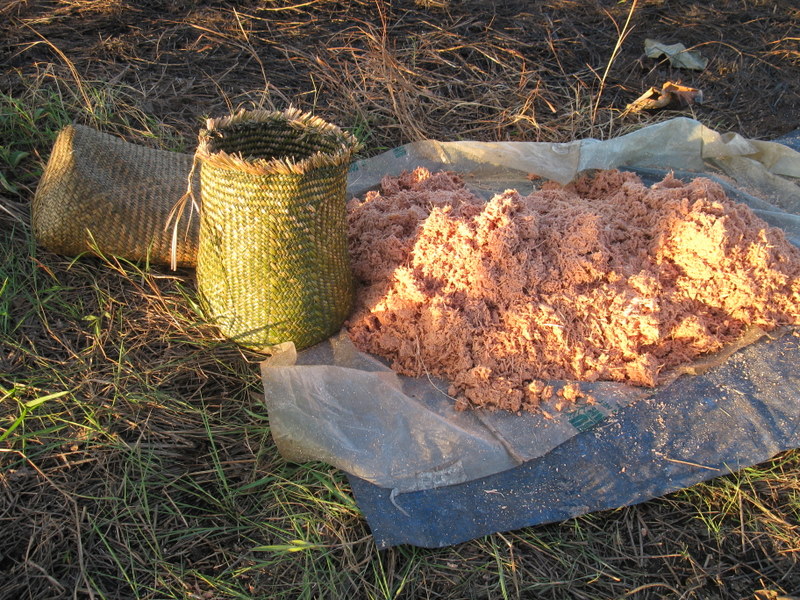
Like many indigenous people, we in PNG are totally dependent on our land and our environment. In the picture on the top left, the women make sago. Most of their livelihood including fishing and other staple food such as sago is dependent on their rivers.  On the right (above) I sit with women leaders who gathered at Puka Duka Village to discuss the craft and capacity building workshop I run.

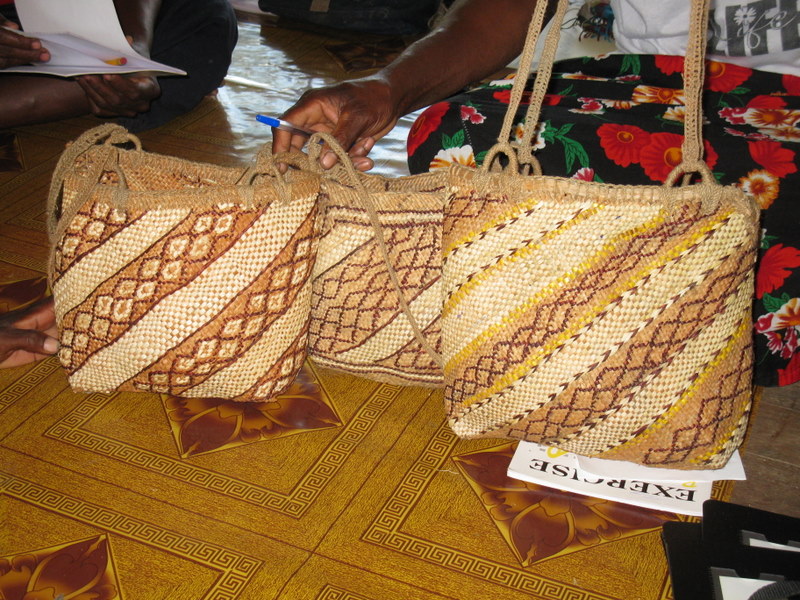
I wanted to re-blog this post (below) on PNG Mine Watch because I work with women in the mine affected areas in Western Province. Much of these mine affected areas have been in the news in Papua New Guinea lately. Earlier in this blog, I posted personal stories about women and violence. Some of the women I have worked with in these areas were in those stories. Under the project I am working with, there are a total of 64 villages. These women are very hard workers and they are also producers of some of the most beautiful and intricate arts and crafts in Papua New Guinea.

The project I work in is part of the Mine Closure and mine affected projects run by Ok Tedi Development Fund and PNG Sustainable Development with a contribution from the Women’s Association. The story below shows the “big picture” of what we are dealing with right now in these areas – the mine affected areas. I have watched the news keenly with a heavy heart that there are some good things happening in the affected areas and they should continue.

My role here was to research and find crafts (conducting cultural mapping) and run workshops to develop these crafts with the women craft makers so that the crafts are suitable for the export market. This job is not easy. Most of the creators of the crafts are traditional craft makers and they randomly produce items such as baskets, mats and other small crafts they use themselves. Sometimes they make some for the markets. However, markets being so far away, like a day to two days trip in the dinghy or half a day in a small aircraft. They women in the mine affected areas have very little access to – EVERYTHING!

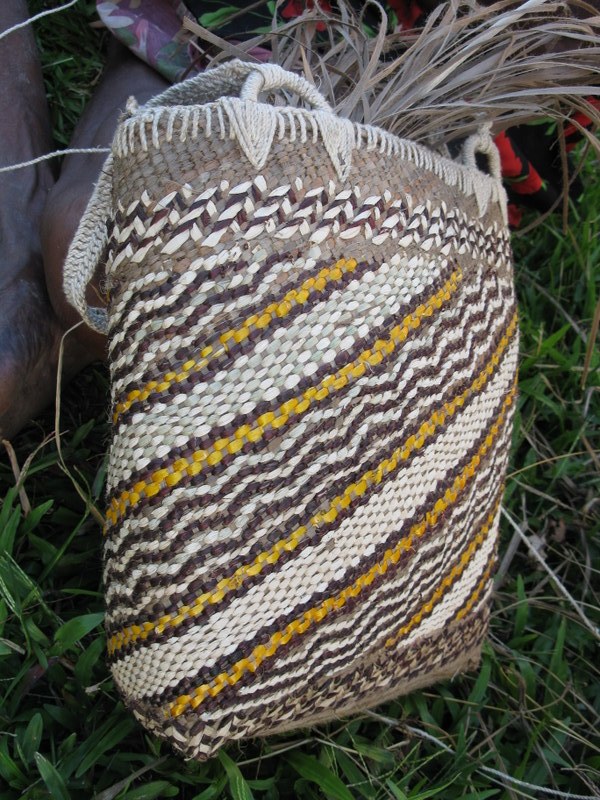
By setting up goals and small steps we could take, I take the participants through a training where we set up a network to produce the crafts, plant raw materials, teach intangible skills (such as weaving) to younger generation and record and keep techniques that may die as part of a sustainable approach. One of the things I discovered was that many traditional raw materials were destroyed by the tailings but the women have moved seedlings and planted in new locations. We also looked for and brought back many traditional pigments which are no longer used. Instead, Western and Chinese dyes have been used to colour some of their baskets. After our last workshop in Eniyawa Village, South Fly, I can proudly say that some of the women are finding, using the old dyes and also re-planting them for the future. Once we sort out the materials, production and the preservation part; we then develop the product itself for the world market.

The recent concerns have been that many projects such as craft development may be stopped as a result of the dispute between all parties concerned – Landowners, Government of PNG, Ok Tedi, PNG Sustainable Development, and Mine Affacted Communities.

It is bad enough being far from all basic services but when the environment is also destroyed, your food, your water, your livelihood and even your art is destroyed. You become dependent on outside help.

Recent developments and court actions against the OK Tedi Mine and the PNG Sustainable Development has brought a lot into light about the people that live in these places. Now we can talk about the people, not just nameless, faceless humans whose livelihoods have been destroyed by the tailings. Here is the ABC Radio interview posted earlier by the PNG Mine Watch. I am very happy to hear that the people can now access more money and help.  This need for development and improvement to the livelihood of this area and the province as a whole has been long over-due.

………………………………………………………

ABC Radio Australia

The people affected by Papua New Guinea’s Ok Tedi mine have gained direct control of key assets created by the mine’s wealth, for the first time.

On Friday, Sir Mekere Morauta, Chairman of the PNG Sustainable Development Program handed over million’s of dollars worth assets to mine affected communities and to the government of Western Province.

It is part of the continuing fall-out from the PNG government decision to take over the Ok Tedi mine.

Presenter: Jemima Garrett

Speaker: Martyn Namorong, Western Province Blogger who has worked for both Ok Tedi Mining Ltd and the PNG Sustainable Development Program

GARRETT: When the PNG government took control of the giant Ok Tedi copper mine in it starved the Papua New Guinea Sustainable Development Program, until then Ok Tedi’s biggest shareholder, of income.

PNGSDP was forced to shed the vast majority of its close to 80 staff.

Now, unable to continue its work as a development agency working on behalf of the people of Western Province, it has been forced to handover its assets.

PNGSDP still has legal action pending challenging the government takeover but in a statement Chairman Sir Mekere Morauta said he was aware of the desperate need for development to continue in Western Province and so wanted to gift the assets to the people in an orderly and planned way so they do not go to waste.

The mine area communties take control of almost 6 million dollars worth of housing in the Star mountains town of Tabubil.

PNGSDP’s 25 per cent share in the Ok Tedi Developoment Foundation goes to the wider group affected by the mine – more than 100,000 people living in 156 villages.

PNG blogger Martyn Namorong who is from Western province applauds the move.

NAMORONG: It was the right thing to do. Those assets in the end belong to the people of western province and had to be transferred over otherwise they deteriorate without funding coming to PNGSDP.

GARRETT: Martyn Namorong says the community control of the 25 per cent stake or one share in the Ok Tedi Development Foundation (or OTDF), is particularly significant.

NAMORONG: It will mean communities will have direct board representation on OTDF whereas previously they only had associated directors on the board of the Ok Tedi Development Foundation. That will also have an impact on decisions that are being made on development programs throughout the Fly River communities.

GARRETT: Do the communities have the resources they need to get the advice they need to run these institutions effectively?

NAMORONG: Yes, they do have money in their trust funds. They can get the right people. The interesting thing has been the transfer of one share in OTDF, which means the communities will now have a director on OTDF and have a direct say in the application of their resources. They do have the financial capacity to get the experts that are necessary to run those projects. So if it is done properly it should work out well for those communities.

GARRETT: Control over the biggest asset PNGSDP’s 100 per cent equity in Western Power – which provides mobile phone and television transmission, as well as electricty – was given to the Western Province government.

In recent months blackouts have become more frequent and and Western Power’s ambitious expansion plans have been on hold.

In his acceptance speech, Western Province Governor Ati Wobiro promised to use the company to extend electricity supplies across the province.

Sir Mekere Morauta says there is ample income from the Ok Tedi mine for all the projects PNGSDP to continue but that may not happen, especially with the Western Province government short on staff and expertise.

Five million dollars has been spent by PNGSDP on design and equipment for a water and sewerage system for the people on Daru Isalnd and piles have been laid for the Tawao’o Point wharf.

Martyn Namorong says the continuation of the water and sewerage project is particularly important.

There is money in the Western province dividend trust fund, there is hundreds of millions there that the provincial government can apply for the benefit of the people of Western province.

GARRETT: Why is that water and sewerage program so important?

NAMORONG: Around 2010-11 there was a cholera outbreak in Papua New Guinea and the impacts were worse around daru because at the moment there is a night-soil waste disposal system. Basically, human waste is collected in buckets and then transferred out. There is no proper sewerage. The water supply is iregularly, irregular. we have about one hour of the water being turned on on the island. People collect the water and then for the rest people don’t have water going to the island. So it creates a huge public health risk. That is a very vital project that needs to get off the ground to improve the quality of life of the people of Daru island.

Living and Dying


It may have seemed like I fell off the blog table recently but all I did was stop to take my breath.

The good thing is that I can get my head around that fall and blog again.

You see, when I wrote my first blog, I was drawn to the excitement of writing to someone or more than one person who was reading it and appreciating the issues I wrote about or just enjoying the short stories. The many comments and praises that came in about my posts fed my ego. I could not stop. A close friend remarked that it was “godly” and I can understand what he means now although I did not at first. I thought he was being sarcastic.

The respond from the readers (whom I would like to thank very much), also encouraged me to go from my initial plan to write once a week to a daily scribble of stories.

So there I was enjoying my new celebrity status in blogging, even though you veteran bloggers may not think I am quite there yet; I was so driven in that moment and nothing could stop me until the big fall.

In the middle of all that blog-buzz, right there, on the centre stage, I fell apart.  My personal relationship ended suddenly and it literally crushed my heart. My old body wanted to shut down. I probably could have handled the break up better if I had wanted it to end. I felt hurt, sick, angry, insecure and most of all helpless.  I spent two weeks alone.

I read many of what others wrote and although some were funny, there were many different messages too, but all about the same things. Our life. Our relationships. Our struggles and our triumphs being some of these emotions we all live through in life.

Above all, I believe, our life is about love and happiness. Everyone needs love. When you have love, you are happy.

So, some soul searching, a little bit of bird talk, music from rustling trees, croaking frogs and the cicada choir sorted me out. Nature can give you some love back and this is true when you are surrounded by beautiful animals and birds.

Last week, my aunt passed away after a long illness with diabetes. It was deeply sad. Illness can make us lose hope and separate us from people that we love and things that we do. Illness can also make us despair and hate life itself. Sometimes, there is nothing we can do to save someone we love. Life can make us very powerful and also take all that power away and we become helpless. And money cannot buy all power. What use is that power when you cannot help someone you love that is dying?

Two days after my aunt’s death, a very close girl friend’s father who was also a friend of mine died of a heart attack. He was a very successful lawyer and  one of the change maker who inspired many. It was shocking news. No-one saw that coming.

When I went to the family, my girlfriend read some of the things her father had written for her and showed me some pictures. These were her most powerful memories she hung onto while the rest of her mind was trying to accept that her father whom she really loved was very healthy, fit and happy when she had only seen him a few weeks before. She could not accept that death had stolen her dad.

I myself felt there was injustice as to why a happy, healthy man would die like that. It made me think of many of my own family members that had died for no good reason at all.

Travelling between and spending time with the two families gave me a lot to think about. I thought about how life can be so full and rich yet, anything can happen and change it drastically. And in the case of my aunt, no-one could do any-more to heal her, even though she was cared for and loved. With my friend, I hope she finds some peace in her heart and comfort in her family and friends. When my brother passed away just before he turned 32, we as a family never spoke much about what happened. None of us knew why he died. It just happened one day. We accept that he is not around but we don’t really accept that he will never be back.

It is true what they say about living in the moment and living now. You just never know what can happen next.  Enjoy your life. Strive to be happy.

Creative Writing – “My Last Walk”


My last post on my personal journey through domestic violence brought a lot of pain, anguish and fear. With the graphics being provided in the New York Times film by Carey Wagner, my mind took a long trip to many forgotten places where the monster lived.

I have taken some time to work through things I kept to myself for a long time but in response to the article, many kind words have been spoken by friends, family and even caring strangers both here, personal emails, phones and my Facebook Page. It is a long hard walk to the end of violence against women but we have to continue to talk about it and fight the monster.

I have two very important people in my life; my sons Nathan(18) and Chris(15). As a mother I always worry that whatever actions I take that the boys would be watching me and there would be consequences. I always worry I may hurt them emotionally. This is one of the things we need to teach our boys and young children in PNG if we are serious about starting at ground level.

For my own case, all these years, I did not speak much about my life with the monster. I felt very strongly about many things and my priority was always to protect sons. I knew they would soon learn about me and the culture they are part of. Because they were born into a combination of cultures and parents the responsibility comes back to their father and I to teach them about what is expected of them and how they should treat others.

My past did involve my sons but only just. I recall a confronting incident in 1999 that involved my children and my past. I had fled from the monster in 1988. I changed my life, settled several years later in a very happy relationship and had my sons.

Our family went to a friend’s place one day. My sons were barely 3 and six-months-old. We were invited to the friend’s place for Sunday brunch. When we arrived, the boys my partner and I, in front of my friend’s house was the man who had beat me for four years. He was invited! It was absurd. However, when you look at the big picture, which took me a long time to see was that – everything was ok. Even friends accepted that what this man did was ok.

I was shocked but having my baby (Chris) in my arms, I pretended to ignore the beast and proceeded forward. What I did not expect was he came forward, passing me, to pick up a ball my three-year-old had dropped. Stunned, I watched him hand the ball back to my son. Then the man did something that made me want to kill him. He gently touched my son’s head. I nearly fainted.

We left the party and returned home because my partner and the father of my sons could see that clearly, I became very ill. We never spoke about this incident but I knew that I could never let that person come near my children.

Like all families, life continues and we grow as people and as a family, we take on life’s challenges together. I believe as a parent, I must always do my best and show what is in my heart.  Show love. This love that I teach and show is the greatest conqueror of all hardships and it teaches my sons to love others and treat them as they would want to be treated. That was what my late grandmother, Geyam Kauc always said. I tell my sons to always treat people with love and respect. And when they are older, especially in relationships, treat women with the same love and respect and the women will appreciate and reciprocate.

Thank you to all those people that commented on the “PNG Women: When can we be safe in our own country” post and I hope that what I wrote made a small contribution to help in creating more awareness and also give hope to victims of violence.

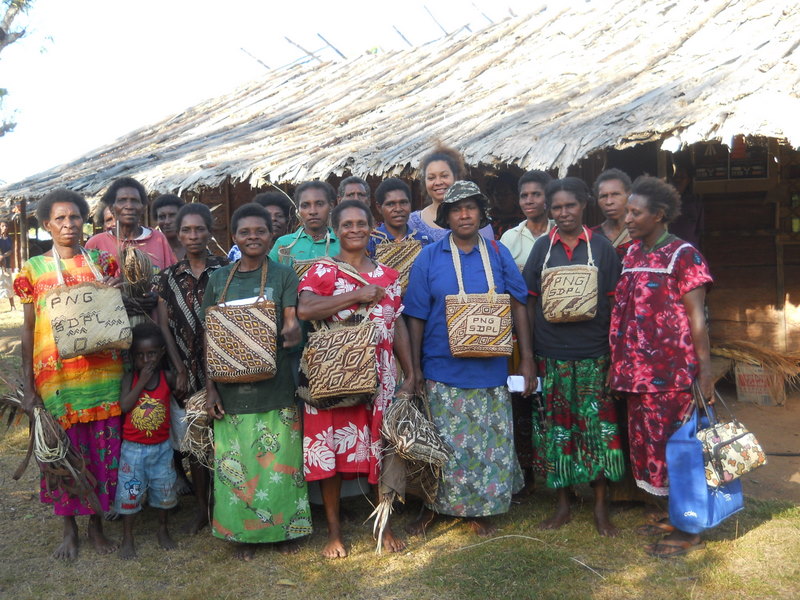
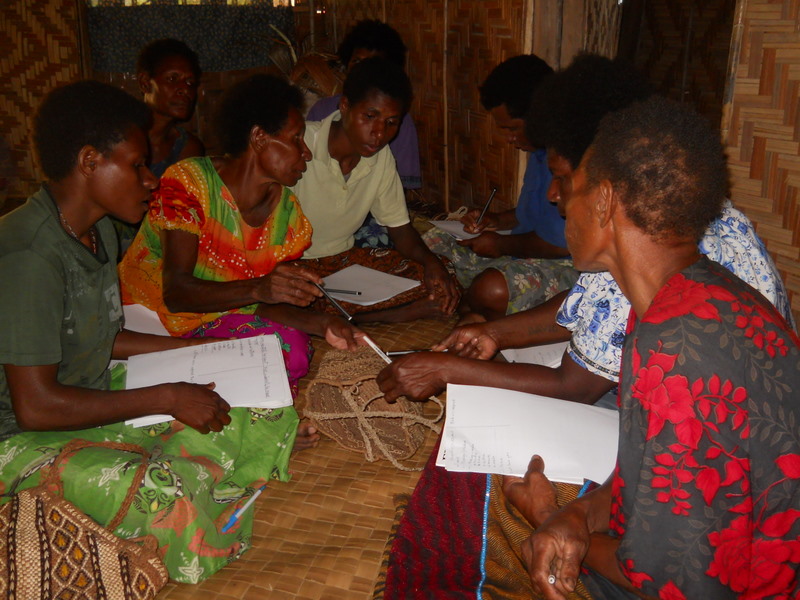
As promised, I am sharing a story I wrote based on a true story of another woman who was a victim at the hands of the monster. This story hopefully one day will be published in a book of short stories. I thank my teacher Isabel D’ Avila Winter for editing and formatting this story. If you have any comments about the story, please let me know. Pictured below is a picture of women I worked with in Eniyawa Village, Suki, PNG where I was told this story. I met several very talented women weavers, leaders and also victims of domestic violence relationships. It was in the evenings after our weaving workshop that we would sit and discuss some of our own personal triumphs and how we got away from the “the monster”.
DSCN3392DSCN3401

My Last Walk

By Joycelin Leahy

I could feel his eyes burning into my back as I struggled uphill and over the grass stubs. The air was tight around me. It is almost four in the morning and chilly.

“Walk faster!”

This time I felt Bomoga’s heavy breathing, close and menacing. I longed for the day’s first warmth, for the softness of my three-month-old baby Boni and for the giggles of his older siblings. I felt extremely fatigued and wished I could stop walking. A sudden breeze brushed over the tall grass making a shoos sound. I shivered.

This was how Bomoga and I walked to the garden, except I walked behind him with a child on my shoulder, one in the bilum on my back, whilst pulling my eldest by the hand. Their father walked proudly in front with his spear, his small bag strung across his chest. This time I was in front, wearing my favourite red meri blouse. In haste, I had worn it inside-out. It hung loosely on me.

As I reached the top of Kasu Hill, I struggled for air.

“Hurry Up!”

I could feel myself sweat vigorously as my heart pumped wildly.

Kasu was the only hill in Domogu Village in the wallaby plains of Western Province in Papua New Guinea. The rest of the area was flat grassland hunters burnt often to entrap wild game.

As commanded, I marched a further three kilometers along the ridge and then descended gradually. I stopped feeling the mud and my sore right foot. Near Kasu Hill, NGO environmentalists were studying the tailings allegedly from Ok Tedi Mining. Along the river bank, hundreds of fish and plants had died. Usually there would be people here, but it’s too early – there is no-one.

I felt my milk starting to drip down my blouse. I hadn’t worn a bra, so my breasts were full and uncomfortable. My heart beat faster as I steered my thoughts from my baby. The sun rose and faint shadows began to form while warm air caressed my face. I was sure now: we had crossed the open country and left Domogu Village. Bomoga’s ancestors, nomads like mine, had decided to settle in this land because of its fertility.

We’re up high and it is clearer. My eyes scanned over the mountains where mining giant Ok Tedi explored. To the south, there was an airstrip; Airlines PNG flew in weekly. From the top, the village looked like an exquisite jewel, a deep jade opal, festooned with glassy lakes of various sizes.

“Move!” his voice cut through the silence.

I stumbled forward.

Soon, we entered a dark forest, the only obscure part of the land. Strangely, the birds were silent. I had never been here, but I knew sorcerers came here often for bush medicine. I looked for the outside light through the tree openings. I saw only the lingering fog, separating me further from my children.

“Keep walking,” he hissed behind me.

From the moment he’d woken me this morning, I had not looked once in Bomoga’s eyes. It was still dark and I had felt his sweaty hands touch my arm. His physical stench was almost invasive. I thought he wanted sex but he shook me roughly and ordered me up and out of the house. His shadow had loomed over me as I carefully took Boni off my breast and put my meri blouse on quickly. My baby stirred and nestled into his flannelette blanket, eyes still shut. Thank God, I thought, he didn’t wake up and cry for more milk. I hung on to the last touch of his tender little fingers. Eka and Maria were asleep. I heard Bomoga pick up something and then close the door behind us. The mood between us was chilling. He was quiet and cagey, unlike his usual loud and showy ways.

If we were not having sex, which was rough and unpleasant, we had arguments which would end with a sudden punch in my eye or stomach, sometimes causing me to blackout. I knew if I answered back or cried out, the beating would be worse.

He repeatedly told me no-one would help me because I was his wife. Not even his mother, sisters, or other villagers. I always felt like his prey, moving under his watchful eyes while I went about my daily chores.

My thoughts reached out to my children, then my mother. Our years of marriage had worked this way: while Bomoga ruled, I kept my mouth shut. My bride price had been paid and when my family left after the wedding ceremony, I knew I would never see my mother again. I ran after her. We cried and hugged for a long and last time.

The sobbing began from inside now, my eyes warmed and salted with tears.

I remembered a slight improvement in Bomoga at the birth of our first son. I’d made him a proud Melanesian man by having a first male child. Eka was my child of hope. I held this hope close to my chest along with the bible. Children can change a marriage, the village pastor had said. Sadly, Bomoga’s cousin came back from the city one day with SP beer and some other alcohol. The two had many days of stories.  I saw a change aroused in Bomoga, followed by his old ways. When I had two more children and threatened that I would leave, I saw something new in his eyes. He started beating me.

Today his manners are different again. He is like a time-bomb, ready to go off at anytime. As I walked on, I remembered how no-one had seen us leave the house. Not even Tau, the old Papuan. I wish he had already opened his trade store. He was a kind man. If he or someone else saw us leave then, one day, they could tell my children. I did not leave willingly. It was not my choice to leave them behind.

As we descended through the gloomy thick undergrowth into a flatter area, I glanced across a small opening. I could finally see sunlight touching the mid canopy. It was a pretty sprinkle of luminosity touching various leaves and the moss. I caught a glimpse of a beautiful Bird Wing butterfly on a fern, just waking up. I felt a flash of hope.

We left the dense of the forest and approached a Y junction. I could hear rapids.

“Turn down towards the River,” Bomoga commanded.

I turned towards the sound of the rapids. My mind focused on the returning pain in my foot. In each step, I felt the sharpness of the rocks greeting me as I descended over each one. The rapids became louder. Before me was the belly of a fast flowing river and it was full from the rain last night. Is he going to drown me? Perhaps this was my last walk, I wondered.

I imagined villagers rushing to screaming children. My body laid there as the women rushed to the children. My laplap had been swept away and only my treasured meri blouse, still inside out, was clinging to my slim frame. I was dragged ashore with a paddle shafted under the hem of my blouse. Here, I was left on the pale silky banks of Suki River while everyone gathered to look. Then a woman ran up and started yelling and then, in a cry of recognition, she bellowed my name: “Sulita!, Sulita! It’s Suli!.” Everyone would turn and ask; “Who is Sulita?” They had not recognised me half dressed and impaled by a black palm spear. By then my corpse had been soaked pale and bloodless by the hours in the river.

“Stop!” he yelled over the rapids.

I stumbled and halted, snapping into reality.

On the river’s edge lies soft silky mud. The ground is pale and covered with smooth boulders of all kinds. In places there were no stones and the ground looked easy to dig. I kept my face down and turned away. My staggering feet were covered in mud and grass. I needed to relieve myself. Under my extreme state of duress, blood rushed to my head, causing a war of pins and needles.

“Turn around and face me. Look at me.”

Slowly, I raised my head, looking up into the point of his most prized black palm spear. In the background everything there was to see and hear faded.

Bomoga had speared the biggest pig, the fastest wallaby and driven the largest cull of deer. Many feared him because of his mastery with the weapon itself. My eyes shifted from the spear and held my husband’s eyes. Even after ten long years we stared at each other as if we were strangers. I finally felt at peace.

Bomoga’s eyes were wild, bulging and red. His nose flared and his eyebrows twitched in the anticipation of violence. He raised and pointed with the spear.

“Where would you like to be buried?” he asked.

PNG WOMEN – “When can we feel safe in our own country”?


In the beginning of 2013 there was an up-rise  in Port Moresby, Papua New Guinea (PNG), to stop violence against women. It was called “Women Arise (PNG)”.  The theme was “Enough is Enough”. This up-rise brought in media and world-wide attention on gender violence in PNG. This issue is not new, it just escalated to another degree. Foreign interests in this issue peaked and organisations such as UN and World Bank started speaking out against the gender violence again in 2013.

For me, a past victim, this new spark of re-lived activism (about ending violence against women in PNG) gave me hope for many victims who face this monster (violence) daily and for the baby girls who would be born innocently into the monster’s hands. I watched the campaign from the distance. I had offered some help earlier on the the Women Arise (PNG) Facebook Page but no-one took notice. Many people I knew took active roles to fight against issues of violence against women. 

Upon reflection, I have to admit, at that time last year, I did not feel confident enough to take part in the march organised in Brisbane, Australia where I live. I had been part of a similar up-rise campaigns two decades before – organised and successfully executed by women leaders such as Josephine Kanawi and others through the PNG Law Reform Commission.  I was studying Journalism in the University of Papua New Guinea and at that time I supported the campaign and felt that finally, things will change for PNG women. In 1985, I became a journalist and covered news as well as got involved in the protests against gender violence.

A year later,  I fell victim to it myself. The “monster” got me at a ripe age of 20 when I had begun my first relationship. While I suffered and tried to work out what I had got myself into, laws were introduced and I believe changes were taking effect. However, when I went through my own situations, I noticed just by the reaction that although good people were doing something to stop the violence, the general state of affairs showed clearly that the monster lived on.

In the city itself, we all hid behind tall barbed wire fencing, security guard dogs and male security gates. Incidences and violent crimes against women continued. The women would be snatched at gates and pack-raped. Some were raped by gangs and others by people they knew. A close friend who lived in the settlement, a mother, was taken by a group of men and in conversation of her rape, she said she thought knew who the men were. She just could not work out exactly why they did this to her.

I still felt unsafe living in Port Moresby. And inside my own home – it was worse.

During the time of the recent Women Arise campaign, I was horrified at how easily I transported myself back to the past. I have been away from PNG for ten years. The various scenes running like a film in my head depicting a young version of me being chased. Sometimes it would be the cold touch of the gun barrel and the waiting for the click and the low menacing voice.

These thoughts made me afraid. I felt sick. I could not go back there. I wanted to keep those images where I had kept them safely for two decades. Each day while watching the news on the 2013 campaign, I felt better that we were all talking about the violence again and it would help to make change. I know it would take a long time to end violence against women in my country or anywhere. It may not even happen in my lifetime but we need to keep hoping. 

Today, my friend Kevin Miller  sent me this video (click link below the story) about how women are violently treated in PNG. The New York Times video and interview by Carey Wagner stirred deep emotions in me and forced me to write this post.

The video did not shock me. It made me cry because this video is so true. I have not tolerated foreign media as often as I find many stories to be one-sided and exaggerated. This one is true. The sad part is, there are so few of us – the victims of domestic violence and violence against women who are prepared to speak out. The majority, hundreds of thousands of women are being reduced to nothing daily. Many die at the hands of the monster.

PNG is a Melanesian country. Violence is accepted. Violence against women is a global issue. I speak for my own country because I want it to change. I want my young sisters, cousins and daughters to feel safer. Here, a woman’s ‘place’ is accepted as lesser and insignificant.  Educated men and leaders  beat their wives and get away with it. Brothers cut sisters with bush knives and get away with it. Sons beat mothers.

“Em meri blong em, em ken paitim em” –  (“that’s his wife, he can beat her”) or “Em sista blong em, larim em, lainim em” – “that’s his sister, let him teach her”). That’s how we as a country are always quick to justify a beating. And if a woman goes out and comes home where she is taken from the gates and raped, she is blamed for being in the wrong place at the wrong time. It is shocking sometimes to hear this culture and attitude echoed by women themselves. It is almost as if to say – what else is there to do? That is the way it is.

PNG, can we as a country resolve issues without violence? Is there a need to beat someone to get the message across? ..Really?! What about the rapes – what is the message there?

The topic of gender violence was something that has been part of my past – aged 20-23. I had moved on. We migrated to Australia when my sons were six and three. We were shot at the night before, and coming home from a farewell function at Port Moresby Golf Club. Months before I made the decision to leave, my manager, a young woman and a mother who ran my store, Beyond Art, got held up, stripped and almost pack-raped in the middle of the day in my store about 2pm.

I have seen it all as a police officer and a journalist. With difficulty, I was allowing time to drag my own personal shit about this issue slowly out of me. Almost two decades later, you would think I could just forget it. I cannot. I wish there was a way I could tell it easier,  softer, and nicer. I also wish I could make sense of it all and why it is happening and what our culture holds against us women. I don’t know.

Today,  I want to speak up against the evil monster that suppresses lives of many women in PNG. There is no other nice way to tell it. Men and women – we need to fight the monster together. This is a root, we must uproot and let it die. It is something a healthy society has to do.

On my street called Mavaru in Port Moresby, I recall throwing myself between a man who was trying to stab his wife one morning in 1989. After screaming and attracting neighbours to the scene, he fled. I tried to help the woman to take her to Boroko Police station but she would not do it. She believed if she did, he would kill her. In another incident, during a community development workshop I conducted in Suki, Western Province, PNG in 2011,  I met a woman on the first workshop day who looked very familiar. She had fresh bush-knife scars all over her body. I did not recognised her at first. The bandages were still on her head. I sat with her two days later with Neurofen and water and realised, I had met her before in 2009.  She was one of the women leaders. A young, beautiful, active and very intelligent woman. A high school graduate (that is the second highest achieving level for many PNG girls – the first would be primary school). This woman was a mother of four. The woman, (her name is withheld) told me the story of how she got her injuries. Her husband had gotten angry one day and decided to chop her with a bush knife in several places including stomach, neck and her arms which she held up to defend herself with.  She was left to die. Villagers helped her to the nearest hospital which was miles away and she lost a lot of blood. Surprisingly, although badly disfigured, she survived.

I asked her if she would take her husband to court and leave him. She refused because she was worried about her children. She was also concerned about what her own people and her husband’s would do to her if she left. I understood her.

I am no expert. I do know that the issue of violence against women is still very serious in PNG. The laws have to be even tougher. PNG women need to have an environment where they can feel safe to get help. There could be like triple zero phone lines or a task force to intervene. There has to be practical accessible help.

As a victim, I just want to say it was not easy and is never easy – do not judge the victims, they need your help. Every human has a right to feel safe. Never begin to imagine or say to the victim that you know what it is like. Every woman deserves love and security and appreciation for what they contribute to their loved ones, families, their community and their country. We cannot take it for granted that there are safe places.

I was even working for the police as the media person at that time I was attacked. I did not get help. On one specific day I was physically beaten in my police accommodation while neighbours and colleagues heard and saw me dragged away to a car and driven off. I was in the police ‘safe’ compound, the Bomana Police College. What took place afterwards remains in that secret place.

For me, finding that no-one could help me, I lived inside of myself and let my captor do as he pleased at least for a few more months. But what he did not know was that I had grown a rebellious monster within myself and my monster wanted to fight back and get out and run. There were times when I tried to go to someone to help and even before I mentioned anything, the gun barrel was on my head, in my ears or down my throat warning me – my helpers would become victims themselves. The monster, the man, read me too well.

For the happy ending, one day, I woke up bruised and bleeding. I was not sure if I was dead or alive. Even if I had to crawl out of there, this was the day I had to do it before he came back home.  I was determined to live.

A miracle happened.

Someone or some people heard me and quickly and surprisingly help came from friends and family. I ran. I was on the road and in the air. I travelled over the sea. I stayed with people with kind hearts and protective spirits. And, wherever I went, the monster went.

With the support of a friend lawyer I went to court with hard evidence; bullets, doctor’s report and photos.  I had journals, dates, ‘incident occurrences’. These provided a strong case but I still needed some very important people to protect me.  When my ex had been jailed one night, he cried and the male police let him out. They said it was not right for a grown man to cry like that in the cell.

I kept on running for almost three years after I got away. And it took me a total of five years before I stopped looking over my shoulder.  I truly believe I had gotten away only because the man monster had found himself his new victim.

…………………………………………………………….

To this day, I am indebted to so many good people. Thank you for giving me my life. You all know who you are. We need more good people to help our women and make them feel safe.

Next week, I will post a short story based on true events of a friend of mine who also ran and survived.

Below, click on links to watch Carey Wagner’s story or join Women Arise PNG. You can also Google many related stories about the violence against women in PNG.

http://screen.yahoo.com/new-york-times/culture-violence-155905673.html

other https://www.facebook.com/groups/539615502744906/