Category Archives: wildlife

Old Precious Things…


r1396715_19902761
The Llareta is a flowering plant as much as 2,000 years old.

I am about to celebrate one of my big birthdays and today was a mix bag of events. It started with a premature but a lovely morning tea birthday party from fellow staff. We ate ice-cream cake. Weird, but ok. The morning tea was followed by a reprimand from my ordinary boss, he was throwing a tantrum that is not worth mentioning. Then, I caught up with special friends from PNG during the course of X-rays and scans and medical tests leading to my doctor at 2pm, telling me, I must have surgery. I decided to return to work after the doctor’s visit and take a deep breath and keep going until the end of the day.

I have left that day and I decided that I will forget everything ordinary that happened.  I only want to remember the extraordinary things and prepare a huge party for my birthday next week. And speaking of ageing, you may know, I enjoy art, reading and writing when I am not outdoors. I have been working on some art projects and looking at art. I found an interesting story about an artist who documented old things from around the world in the last ten years. I am not posting this because I am getting old, it just happened to be something I unexpectedly discovered and somehow, it made sense to link it to age. Aged things always interest me and it was part of my purpose in completing a Masters programme in Museum Studies. Rachel Sussman is a contemporary artist based in Brooklyn. Her photographs and writing have been featured in Smithsonian  in The New York Times, Wall Street Journal, The Guardian, and NPR’s Picture Show. Her book The Oldest Living Things In The World sells for $1500 per copy.

From ABC Environment

8 things in nature so old you’ll feel young

THERE IS SOMETHING about extreme age that fills us with awe.

It’s hard not to feel it, when standing in the presence of a huge eucalypt that has raised its branches to the sun since long before European settlement. Or when watching the silent majestic form of an immense whale, which has outlived several generations of humans, glide through the dark blue.

Sometimes it takes a little more intellectual investment to find that awe, like when staring at a grey-green patch of lichen that grows just one centimetre every century and which has weathered the harsh climate of Southern Greenland for more than 3,000 years.

“In thinking about the natural sublime and awe and that sort of thing, a lot of it is tied to scale and to time,” says Rachel Sussman, a New York-based contemporary artist who has spent 10 years researching and photographing some of our planet’s oldest living entities.

Sussman has taken an extraordinary series of photographic portraits, published in her book The Oldest Living Things In The World.
Read More

The Hideous Beauty of Plastic


r1390581_19769523
Tim Pearn art

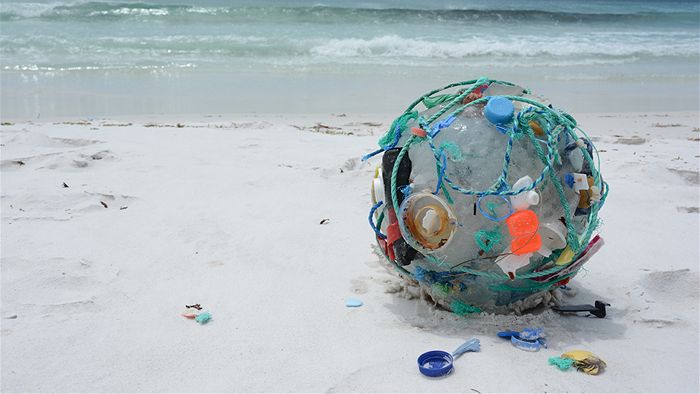
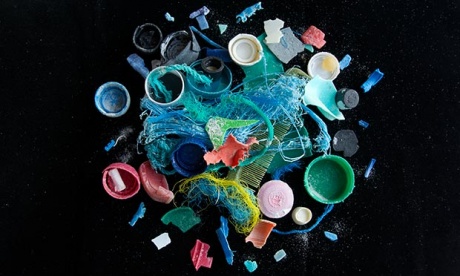
On an isolated stretch of Western Australian beach, artist Tim Pearn creates works from washed-up plastic waste collected over the course of a year on Albany’s Goode beach. The resulting artworks, both beautiful and disturbing, are on show during the Great Southern festival, part of the 2015 Perth festival.

The Great Southern conjures images of pristine coastline and unspoilt beaches. The Western Australian artist is challenging this picture by sculpting with artificial materials found on an Albany beach.40 beach walks. 40 bags of plastic rubbish. That’s all it took for Pearn to collect enough material for his exhibition, On the Beach.

Tim-Pearn-On-the-Beach-012
Tim Pearn art

Featuring sculpture, photography and video work, the display uses plastics collected from Goode Beach to create eerily beautiful images of artificial materials in the natural environment.

“I lived on Goode Beach for over a year and started to notice little, tiny specs of plastic and started collecting it. I was amazed how every time I walked down the beach I could pick up a small bag,” says Mr Pearn.
Speaking to the ABC Great Southern Morning show, the artist was struck by the sheer volume of waste he encountered on his regular walks.
“I started picking up stuff to throw away and it just kept coming and kept coming. I started to think ‘What could I do with this?’ and I was amazed that it never stopped really”.
Mr Pearn hopes that his exhibition will draw attention the problem of plastic pollutants.
“It really is a provocative exhibition. I think we’re being very irresponsible in how we use plastic. It’s very useful material if it’s used properly, but we’re really having an awful impact on the environment,” he said.
“The impact of plastic waste is affecting us severely in the Great Southern like everywhere else.”
No place left untouched

Dr Jennifer Lavers knows more about ocean plastics than the average beach goer. A marine biologist at the Institute for Marine and Antarctic Studies, Hobart, she has spent considerable time researching the impact of plastic pollutants on marine birds in the Great Southern.
Dr Lavers says the problem cannot be understated.
“It’s absolutely everywhere. Nowhere is immune. From the top of the world to the bottom, from the Antarctic to the Arctic, plastic is absolutely everywhere.”
Dr Lavers studies the health of marine birds, including local mutton birds, to paint a picture of the health of the ocean.
“Seabirds are really reliable indicators to gather the data that we need of what’s happening,” she said.
Ocean plastics feature heavily in her research.
“It’s the main component of what I work on,” said Dr Lavers, who considers the pollutants one of the biggest threats to the environment.
Her research has demonstrated the biological impact of plastic pollutants ingested by ocean birds.
“Once ingested, more toxins such as mercury and arsenic can be found in the bird tissues.”
“The ability of plastic to act as a vector for pollutants is accepted.”
Ocean plastics in humans?

If plastic pollutants are being ingested by marine life, could this be impacting humans higher up on the food chain?

“That’s the million dollar question. That has not yet been proven, but there are various lines of evidence that are moving in that direction,” said Dr Lavers.
“Whilst no one has made a direct link, other independent lines of evidence are quite strong and suggest that we should be worried,” she said.

On the Beach is showing the Western Australian Museum, Albany until March 7, as a part of the Great Southern Festival 2015.

Click Here to watch the artist interview

ABC

Short Story: Swamped


Final part of  SWAMPED

(JLeahy on Creative Writing with Isabel De Avila Winter ) ©

Mangroves-1024x682
Public Domain image.

I remained standing at the T-junction and my attention shifted to where the two waterways met. I wondered where the birds were today. By now, the sun rays would have come through the leaves and woken the birds, causing an eruption of an electrifying orchestra. There was not a single bird-song. That part of the equatorial rainforest norm was missing.

My arms hung loose and lifeless, I could not feel them. I tried to, but I could not lift my arms nor move my legs. I was not terrified; I only felt stuck and this alarmed me a little because the mud was not deep. When I drew breath, it was slow, restrictive, and my chest was constricted. Something large of several layers like a heavy coil of thick, soft, rubber hung around my neck and shoulders. It weighed me down. I was tall for a teenager, but my thin, weak and small shoulders were crushed by this weight. I thought it was a heavy towel as we often hung towel around our necks to keep warm while fishing. I shut my eyes.

And then it moved, so suddenly. I realised this was not a towel. It was a large snake, a python! A different set of knots, the horrid kind, started tightening inside me. On me, I saw the coils move and could feel it tightened.

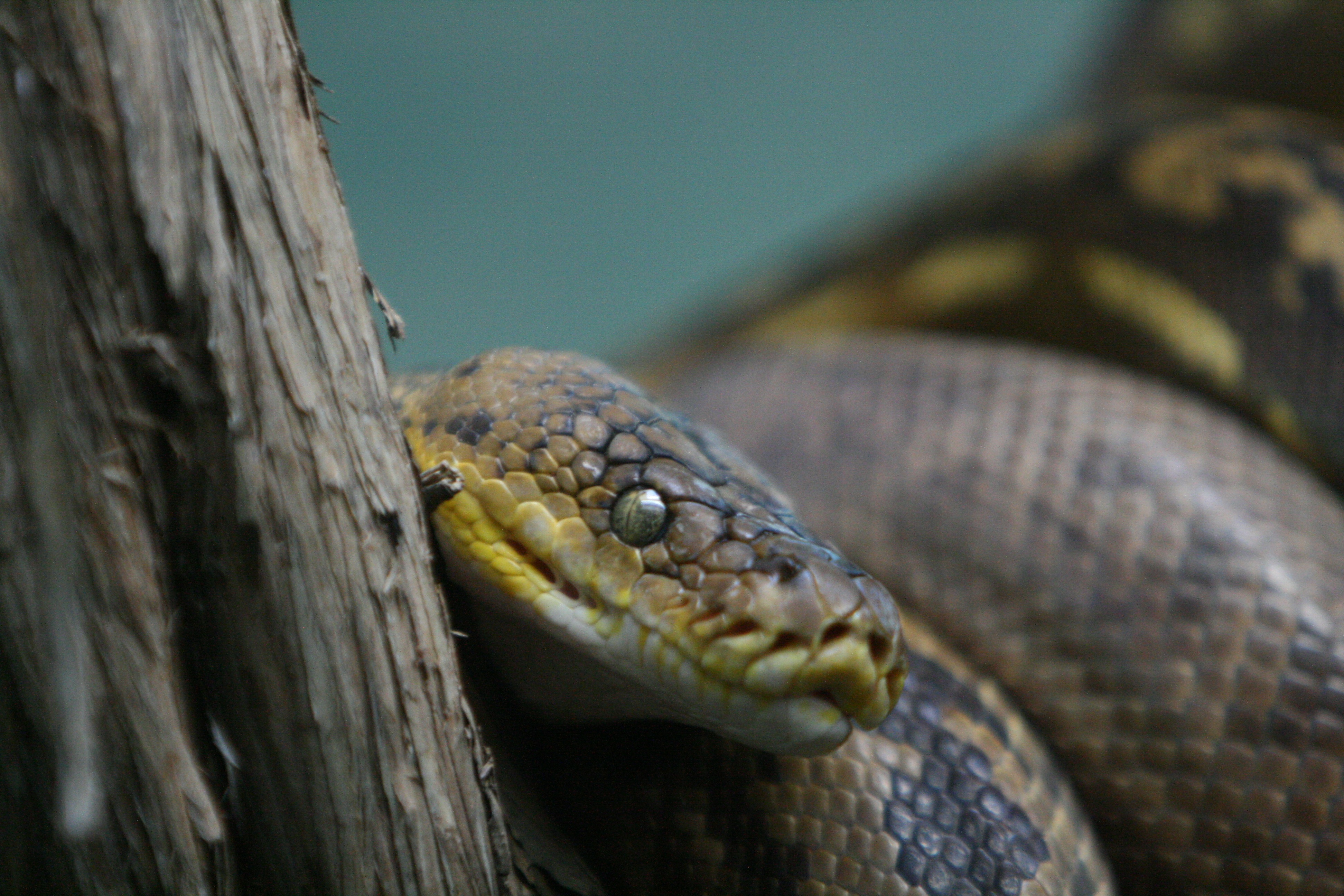
My eyes re-focused. The snake’s colour reflected that of the greyish mud, faint yellow like a banana skin, and the brown mangrove tree bark. I could see the diamond-shaped outline of each scale. It was detailed vividly in intricate patterns on its centre spine above my breasts and just beneath my chin. The scale patterns, beautiful and seamless, disappeared under the next coil. I became more aware, alarmed and numbed by the weight, closeness and firmness of its grip. I shifted my eyes ahead beyond the mangrove. It did not make sense to scream and it seemed too hard to remember how to scream. I refused to imagine where the snake’s head would be, I did not want to meet it nor look into its eyes. Now I remember how that poor pig must have felt when the python took it behind our house. Was this the same snake?

TimorPython
Timor Python: Public Domain image

I waited for a few more minutes and I sensed the snake was not trying to kill me. That was strange. It seemed comfortable the way it restricted and detained me, and I was afraid to move and disturb it. The dank smell re-appeared and honed the swamp stink. I could not feel the mosquitos. I wondered if that stink was the snake. Its weight became too much and I wondered how long I would be standing there in the mud, carrying the snake.

Then, a single call of a Sock-ngkwing bird, the spirit bird, pierced the silence and my eardrums. I moved to the bird’s cry. The python tightened its grip, and squeezing .. and I screamed just like the bird, feeling my body become alive. I moved my arms and legs. I flipped over and woke up with my bed sheet tight around my neck. It was THAT dream. Before I went to high school, in my early teens, I had this dream so many times. It was always the same dream. I shuddered. Still tense and terrified, I went to see grandma.

I re-told the dream to my grandmother; she looked at me for a long time.  Her eyes searched, speaking to my face, without words.

“There is a decision you have to make, a path you have to choose. What is stopping you from choosing, is your fear”, she said.

I looked at Tinang, afraid.

“Don’t be afraid” she said and hugged me. I shut my eyes and fell against her soft, tattered, spun rayon dress. Grandma’s scent of Chinese White Flower lotion, mixed with mustard and chewed betel-nut soon erased the swamp stink. I had thought about this dream interpretation often when I was growing up, and it always frightened me because I knew what it was, but it was not a single thing; it was many…

The Dance for Love


https://www.youtube.com/watch?v=OMU15ToyOF0

Here is a documentary (49 mins) by Tadashi Shimada about the Birds of Paradise, one of my favourite creatures on earth.

New Guinea is a true garden of Eden for birds. Some of the most unique are birds of paradise. With plenty of food such as nuts and fruits and very few natural predators, they’ve been able to leisurely hone their courting skills. The ribbon-tailed astrapia flaps its long white tail feathers, while the blue bird-of-paradise unfurls its feathers to create a pulsating eye-like shape. Since they live deep in the jungle, their courtship displays have long been steeped in mystery. Tadashi Shimada, a wildlife photographer who’s made numerous visits to New Guinea over the years, has for the first time ever captured images of the blue bird-of-paradise’s courting behavior. This program delves into the fascinating world of these beautiful and mysterious birds.

Published on Jun 25, 2014 – For more please visit NHK World.

Nothing Came With the Rain


The Family
First days in the family (Australian Wood ducks).

The rain eased at noon in Bellbowrie, Queensland today, but only for a few minutes. It has been storming for two days. The rain’s destruction was evident in washed garden beds and the main road overflows. I found some of my cuttings and seedlings floating in odd places, near the main road.

Yesterday, at the Coles Supermarket we were unable to purchase staple food like bread and rice. A Cole’s staff member said residents had a panic buy, stocking up in case it flooded like the 2011 Queensland floods. The supermarket was empty.

Several places outside our house were flooded. I had kept indoors and started a new artwork and read blogs. Only two days of wet weather and storms – yet there was too much water. On the news Brisbane was supposed to have 500mm of rain over the weekend. More rain will come.

In the distant, I heard a familiar cry that tugged at my heartstrings. I left the watercolour and went outside to the balcony.

“Listen!” I told my son Nathan.

We both waited and the cry was muffled by the sound of rain on our iron rooftop. It came again and I knew the cry was coming from the open field and then it moved around the back, near the duck’s nesting ground. She did come back. Her cries were strange, long and despondent. I knew.

“It’s her, something has happened”, I said.

I put my raincoat on and walked through the drizzle in the soft mushy flooded ground to her. The male duck, her partner was by her side, quiet. They made a striking couple. Her brown and white spotty breast and belly topped with deep brown-black wings, and he with a touch of spotty chest, blue-grey and black flumes. They stood on the fuzzy open plain of short stubby blue couch, Queensland’s native grass. The rain water was caught in the grass blades giving it a wet, fuzzy sheen.

I looked around the two ducks. The seven ducklings were nowhere to be seen. My heart sank. The inevitable had happened. The mother’s face was turned towards the pool, where she had hatched them. Her neck stretched forward and long in a breaking curve. Her mouth was wide opened, showing her pink insides as she wailed. Her cries were louder as I got closer. My eyes warmed into tears.

She looked at me and stopped crying. I stopped a few meters away. I wished I had some duck-words to comfort her. I could only offer her some food and walked away.

Saved Duck Returns With Babies


Will the ducklings make it?

Mr Cuddle

The wild duck we saved twice, once from the drought (in December last year) and the second time from the python has hatched seven ducklings today in our backyard at Bellbowrie, Queensland. The python had taken one of the two ducks we saved (see story here) last February and the rest of its siblings died from the drought and the cold.

our-two-ducks

Today,  my two sons already saved the seven ducklings from being eaten. As I write this story, I can hear the ducklings quacking in high baby pitches and I am torn between separating them for a safer enclosure or leaving them out in the bush with their mother and father. I have made a warm bed and tried to make their hiding place as safe as it can be but the babies could be eaten before day break. As babies do, they are making too much noise and soon, others will know their hiding place – the swimming pool skimmer box.

Short Story: Swamped


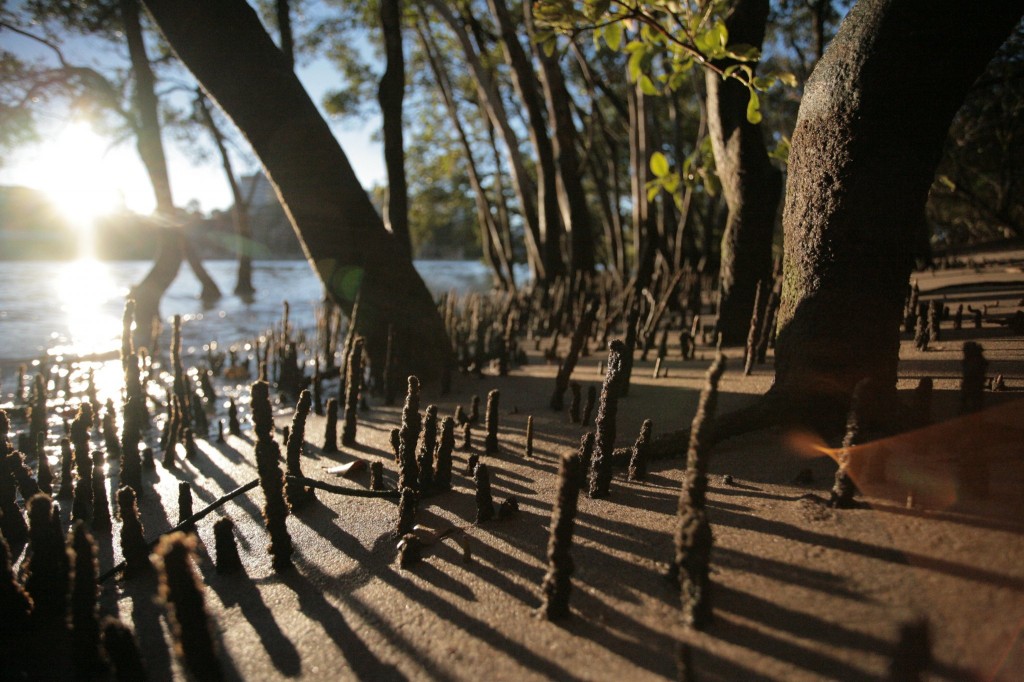
Pneumatophore_overkill_-_grey_mangrove
From Wikimedia Commons, the free media repository

If you have missed the story opening published last week, click here

Although peeking through the pale mud with life and vibrancy, the young mangrove regrowth looked naked and vulnerable against the open swamp, and without the mother-tree nearby. In the distant, under the long shadows, piles of de-skinned fallen mangrove laid like stacked cadavers. This was part of an extensive wetland area used for fishing and gathering food like sugo, small snails and Kina, a fresh water mussel. There was some kind of an order in the distribution of the mangrove shoots along the random waterways. It was a peculiar, and neat arrangement. Amongst this orderly disarray, I stood out like the tallest cross in a dwarfed graveyard. The young mangrove shoots only came to my knees, just like the old stumps.

I must remove myself from here, I had thought although this had always been our favourite fishing spot. Today, the place felt strange, unlike before. Before, we would fish for hours and take our breaks on the logs. We ate with one hand and smacking of mosquitoes, then wiping their blood off and scratching the small bite mounds with the other hand. I had been to this place with my Grandma and Aunty Yellow. I also came here with my cousin Alison before she lost her mind to Malaria. I should not have been here alone today.

Once when Alison was eleven and I twelve we spotted a stranger here. On that day, we had brought with us Tinang’s (grandma) bush knife, which we were forbidden to use. The bush knife had cost a lot of money and one bush knife served many families in many ways. It turned out, the man we had seen was not a stranger, nor was he real. From his actions and the way the Sockwing (a type of wag-tail) birds were calling, my cousin and I became alarmed and we ran off, leaving grandma’s bush knife behind. I had to run back and get it. If we had left the knife there, we would have been punished for taking the bush knife. We were told that same evening, the man we had seen was a spirit of a dead great-uncle. This too was his favourite fishing spot.

I thought I saw a movement and my eyes tried to focus. Nothing seemed out-of-place, and everything around me looked like it had always been.

The Japanese bombing in the Second World War left a large gap in the wetlands. The bombs opened the place as wide as a soccer field, and made it lifeless; right in the middle of the thick mangrove that was relished by fish, birds, snakes, lizards and all kinds of insects. My Aunty Yellow said, in the open centre, mangrove regeneration since the bombing struggled for decades. The bomb explosions took both natural and human lives; our great-uncle was amongst those.

Apart from the war, this place was a landmark because the mouths of many small creeks gathered into the head of the largest one, which flowed into the main river, named Bu-dac. Budac meant Blood River, a name that reminded us of our history.

Our house was built along the river near its centre and at the entrance to our village. In pidgin, it is called, maus-rot which means mouth road.

I was standing at the head of Budac. There was a large T-junction, where the main creek met the river. The swamp clay was very soft and pale and covered with dead rotting leaves. In the dark river, life existed; a place where fresh-water fish feeding, spawning and nursery took place. Fish gathered daily to feast on other fishes and debris collected and deposited by the creek as well as the river at this meeting point. Not today, I had not seen fish movement breaking the water rhythm nor its surface. I could not understand nor remember why I was here today, and alone – only a few kilometres away from our village, just outside Lae, Papua New Guinea.

(© JLeahy, 2015)

More Swamped soon…

Livelihood Futures – Papua New Guinea


by Dr James Butler

Many coastal communities in Papua New Guinea are particularly vulnerable to change. Global drivers such as peak oil, fluctuating economic conditions and climate change all have complex impacts on local livelihoods.

In response to rapid and accelerating rate of change and uncertainty, CSIRO research helps make predictions of their potential impacts and allowing groups to plan proactively. This requires designing flexible strategies that can bring benefits under a variety of future conditions.

Planning sustainable development for such uncertain futures is a key area of research for CSIRO. The design of development programs which can improve livelihoods and achieve the United Nations Human Development Goals, while also being adaptive and flexible to uncertain futures, is a big challenge. Such planning must include the multiple groups which have an interest in development, including members of the local communities, government, civil society and international donors.

Our research project “Climate futures, ecosystem services and livelihood adaptation strategies in West New Britain Province, PNG” explored these issues. From 2011-2013, we worked with local communities, non-governmental organisations and government groups to develop a framework using CSIRO science to help inform future decision-making in a collaborative way. We hope you enjoy the video report.


The Richness of Rainforests


http://youtu.be/Eflt7otpeoQ

An Unseen World (United Nations Award Winner) – by Paul Rosolie

I am sharing this short film from my friend Gordon Eaglesham’s blog. We share the love of nature and protection of wildlife. Thank you Gordon.