Category Archives: Stories

General stories, Other posts, Reblogs

An Eel Escape


From memoir series JLeahy. Part 1

Suki workshop3 066
We learn early to fish and catch food for our families. In Papua New Guinea, as in many indigenous cultures, children are taken with their mothers to learn about nature and where to find food. Picture taken my JLeahy on Suki River, PNG. 2008

I stuck my right fore-finger into the freshly dug sandy, mud holes. A crab must have tried to invade this hole and got chased out. It left tracks in the mud. I imagined how it happened, and smiled. There were other holes, all about bottle-top size. The sandy mud was soft and pale brown. We needed food so my uncles had to fish tonight. My job was to catch bait; baby eels.

“Kalem! Ampom!”, Tinang called. Tinang was my grandma. She used both my names meaning, a welcoming joy, and light-skinned.
“I’m here!”, I responded softly, trying to not disturb the eels nor other life forms.
“Go there!”, she directed me, pointing to the other side.
I nodded and stepped to the other side of the creek and my eyes canvassed the freshly dug holes. I was in my blue shorts and T-shirt. At seven I was tall so mosquitoes loved my long bare legs. Even when they had filled their tight blood bellies, I could not smack them for fear I would disturb the catch. The mosquitos were also too ‘drunk’ with the blood, so I rubbed them off.

There were crab holes and eel holes but there was a difference. The eel holes did not have a messy gathering at their entrances. From the size of the hole, you could tell how big the eel was. These were small. The eels had two exit points. I started digging into the top opening and then feeling my way to the ending at the second hole. Where I had interfered, dirty water trailed down the footprints to the clean running creek water.  I looked back to see where grandma was. I stepped carefully to avoid the small openings. Then, I picked one and I inserted my fingers into the hole and followed with my hands. I trusted my instincts and repeated the process until we had enough eels.

As early as you could, most children in the village were taught how to catch an eel. I was around seven and very good at catching eels. Catching eels was always exciting and scary at the same time. Physically, the eels scared me, but they were beautiful when I watched them gliding through the water.  There was a certain peace and calmness about them. We were not allowed to catch very large eels. I have watched many get away. The large eels were considered landowners, art of us and our ancestors.

The trick to catch the eel was all in the hands. You reach the eel in the hole by touch, and caress the eel until it relaxes, and you can catch it. Sometimes you can catch the eels with bare hands, but they were slippery and difficult. My aunts were better at hand-catching the eels. The way we were catching today was by scarring the small eels back into the creek and they swam down into a hand-held net.
My uncles and grandma’s brothers would use the eels on large hooks for the open and deep-sea fish.

About six metres downstream, my mother was waiting with the open nets ready to catch the eels. I could not see her, but I could hear her smacking mosquitoes and flies and trying not to curse.
There was bush and wild banana trees between us. Vines from cane and pandanus crisscrossed above me, letting rays of sunlight spill onto the sandy bank. Not far from me, I could see the eels easing their way out and following the creek downstream. We only had to catch a few. Tinang was a few metres behind me, digging on the opposite side. If she started a song, we would sing together quietly.

Sometimes we just hummed in low tones while we fished but we were in a little creek and catching eels so we could not sing. It was very quiet except for the silent scratching noises on the sandy bank. I did not even hear one bird sing.

“Tinang!” I called in a whisper.

She looked at me.

“Did you see?” I asked, excited about the eels that swam down.

She just nodded and kept digging.

Earlier, I had asked Tinang to hold the net. We always fished together. I held the net and she brought the fish into the net. Today, Mother came along. I don’t know why because Mother hated eels. Just like snakes and anything that looked or shaped like snakes, she would run if she saw any. Mother even hated lizards and lizards had legs.

I didn’t eat eels but I didn’t mind them. My uncles said, the eel had a special smell that attracted fish-just like blood drawing sharks under water. An eel was the best bait.

“No, let your mother hold the net Tinang had told me earlier. You are better at catching the eels”. Tinang said.

“You go with Tinang” Mother said, smiling at me. I gave her my net and followed grandma up the creek. I knew mother was up to something. She wore her evil eyes in her funny smile.

The nets were cut out of small knitted nylon fishing nets. They were shaped and sewn along the sides. The top part was held in a hoop by a cane/rattan stick. To catch an eel, we got all our three nets and plugged their mouths halfway into the muddy base of the creek. Half of the mouth of the net would be open to catch anything that floated downstream. The three nets joined and combined at base, blocked off the width of the creek. The creek was about three metres wide.

Mother had bent forward and held onto the three nets. Where she was positioned, Mother could see everything that came downstream – fish, eels, yabbies, nuts from the trees and any other floating rubbish.

TO BE CONTINUED..tomorrow.

Mother Risks Her Life To Protect Environment and Heritage


604-1
Aleta Baun, an award-winning environmentalist who led non-violent protests against marble mining companies in West Timor for more than a decade, pictured at a summit on women and climate in Bali, Indonesia, Aug. 5, 2014 TRF/Thin Lei Win.

Author: Thin Lei Win

BALI, Indonesia (Thomson Reuters Foundation) – Under a full moon one night in 2006, 30 machete-wielding men surrounded Aleta Baun in the middle of a forest as she headed home to breastfeed her youngest daughter.

 “Each of the men slapped me, pulled my hair and kicked me. They banged my head against a tree. I now get headaches often,” she told Thomson Reuters Foundation. “It was very, very painful but I just prayed. I still feel thankful they just hit me and did not kill me”, Baun, now 54, told Reuters.

Baun was leading protests against mining operations in her West Timor community. Baun was protesting against the miners for destroying the land sacred to her people, the Molo Indigenous people. Baun’s attackers told her blatantly that night; they had been hired to kill her. 

Baun’s husband was at home tending to their children when she was attacked. Baun had called her husband before she was attacked.

“He(husband)said, ‘We will come and help you,’ and I asked, ‘How many of you are there?’. When he said ‘Five,’ I told him, ‘That’s useless. Don’t come. Stay at home so if something happens to me there’s someone to look after the kids”.

Baun’s attackers took the only $20 on her.  After discussing they would gang-rape or kill her, they hacked her legs with machetes, and left her to die.

Baun survived the attack but the threats continued, placing the lives of her husband and children in grave danger.  She was finally forced to leave home for a year.

Read more about Baun and other heroic women here:

http://www.trust.org/item/20140818092642-qdpr9/?source=spotlight

Ryan Lobo Story-tells With Pictures


Ryan Lobo has traveled the world, taking photographs that tell stories of unusual human lives. In this haunting talk, he reframes controversial subjects with empathy, so that we see the pain of a Liberian war criminal, the quiet strength of UN women peacekeepers and the perseverance of Delhi’s underappreciated firefighters.

Believing In Yourself


Where is your grass-skirt?


8d524500ea988a90d94234c395a8ba42
A young woman in a brand new grass-skirt from the Trobriand Islands.

The story about grass-skirts

A question I’m often asked, and I know I am being teased by friends and people from other cultures is; “where is your grass-skirt?” Many people expect you to have one and wear one because you are from the islands. May be they are just joking or wishing they could see you in a grass-skirt. Who knows? The other question I often get asked is, “where are your coconut shells?” We will leave the second question for later. May be they have watched too many Tahitian dancers.

As for the grass-skirt, let me tell you, I do have one. In-fact, I have had more than one over the years. I have one grass-skirt with me here in Australia. It was not easy getting it through quarantine, but it got through. The sad part is that I have not had a chance to wear the grass-skirt in ten years. It is now too short and small for me. That says a lot doesn’t it? I need to start thinking about making a new one.

images-5
Smaller skirts for ankles.

The heritage of PNG women

Grass-skirts are the pride of women in Papua New Guinea and other Pacific islands. In the Melanesian region, grass-skirts are made from  and dyed, with natural fibres and pigments. More women are using Chinese made dyes for the brighter colours, but often, traditional performances, songs, and dancing call only for plain grass-skirts.

$_20
Sago palm fibres on a Central Province grass-skirt waistband.

Grass-skirts are made from young fibres of sago palms, bark, sisal, pandanus, banana fibres, and many other natural fibres. The time it takes to source, collect, and prepare the raw materials; splicing, drying and dying takes a lot longer than actually making the skirt. The collection of the material process could be weeks or months and the skirt can be made in a week or less.

images-2
Using imported dyes in a Trobriand Island grass-skirt.

Using natural fibres

In my tribe, women use young palm leaves for grass-skirts. The shoot is cut early morning and boiled or spliced and dried immediately to stop iodising/browning of the cream colour. This process captures the supreme creamy white colour. If you ever see the weaving of the Micronesian women, the same kind of process is used to keep young coconut fibre almost white. A tree bark is kept under water for weeks before it becomes soft enough to pulp and split into threads for twisting. The threads would then be used to sew the palm leaves into place at the waist band. When the palm leaf is dried, we decide where the colours would be on the grass-skirt design and dye the colours. For black we use charcoal and dark grey, the fibres are buried in the water for a few weeks. Red comes from a tree seed and finally turmeric is used for yellow and orangey shades.

Rhonda prepares her grass-skirt for festival

I found this interesting film on YouTube (see link below) which gives an insight into a young woman’s preparation for the Hiri Moale Festival. Rhonda Tiana, a Motu-Koitabuan gives you an opportunity to see her prepare her grass-skirt, and use it in the Festival. This grass-skirt is from Central Province.

A Filipina mother’s story of birth and survival in a cave during Typhoon Haiyan


604-1

Author: Thin Lei Win

MARABUT, Philippines, Nov 6 (Thomson Reuters Foundation) – Elizabeth Caramol was nine months pregnant with her ninth child last November when Typhoon Haiyan, the strongest storm on record to hit land, swept away her family’s rickety home on a coconut farm in the Philippines.

Haiyan damaged practically everything in its path as it hit land on Nov. 8, packing winds of up to 315 km an hour (195 miles an hour) and unleashing seven-metre (23-foot) storm surges. It killed, or left missing, some 7,000 people and forced up to 4 million from their homes in the central Philippines.

Caramol and her family took refuge in one of the many caves along the beautiful, winding coastline in Marabut municipality in Samar province. She feared for her life but safely sheltered, delivered a healthy boy and named him Cavein – pronounced “Kevin”.

A year later, Caramol, now 36, spoke to Thomson Reuters Foundation from her home, a newly rebuilt wooden house on stilts, about how her family is slow rebuilding their lives.

“A day before the storm, we evacuated to a cave about 200 metres from our home. It was a big cave with two levels. About 60 families took refuge there, but we stayed there until Dec. 4. We were the last to leave because we didn’t have anywhere else to stay.

“We went to the cave because we were told a strong storm was coming and there could be sea level rise from the water. Here, the water was halfway up the coconut trees and even came inside the cave.

“Many people moved up to the second floor when the water started coming in, but I had to stay on the first floor. I was due to give birth on Nov. 8, and I was starting to experience labour pains. They hurt so much I could not move.

“I thought I was going to die. I told Napoleon, my husband, to take all the kids to the second floor and leave me there. The water rose to around one foot and then it went down the next day.

“I didn’t want the baby to come out because the conditions in the cave were not good. We brought rice, water, salt and matches, but we ran out of water and matches pretty quickly. There was no other means to get water. We just had a container to collect water that dropped from the trees. There were no toilets either.

“I had labour pains for five days. When I finally gave birth on Nov. 12, I was so excited but I also had fear in my heart because of the hygiene conditions and the infections that could set in.

“Our home was washed away so we had nothing for the baby, not even clothes. We cut some blankets into pieces of cloth to wrap the baby. We named him Cavein Cuevas Caramol, because he was born in a cave.

“For five days, we ate nothing but rice and salt. I just breastfed the baby, like how I raised my other kids. I was worried that he is not going to be healthy but he is.

Source: Thomson Reuters Foundation – Thu, 6 Nov 2014 07:49 GMT


Thank You Kind Stranger


“I was on the seat in the back. I felt the bus moving away. I saw  everybody, even Nathan on the ground as the bus went. When I turned around, no-one from my school was in the bus with me”. I remember my son’s words even to this day.

Chris Harris, five, was left in the public bus after the bus dropped off his brother (8), the staff and other children from Chapel Hill State School/After School Care.

Tomorrow, Chris will turn 16. Thanks to you, the Good Samaritan/ a stranger who helped Chris, find his way home.

It was in September 2004 in Brisbane City. We had migrated to Brisbane on July 13, 2004. As we were approaching Christmas, it would had been almost a year since the disappearance of Queensland boy Daniel James Morcombe and there was wide-spread publicity about him being missing. I was going through a difficult time, trying to settle into a new country without my extended family and my mother’s help with my sons.

The boys started school straight away and enjoyed it. They did better than I. In September, I was at work in Milton, near the city, and placed both boys at their school’s Holiday Care. A paid service run by the school. On that day, a trip to Southbank was organised so the children would be taken to the city to watch a movie. I understood at that time, there were three carers and 25 children. When the bus got to Southbank, a large amusement and entertainment park area, everyone got off the bus except for Chris. Chris is a very tall boy, even at age five. As a parent and an adult, I never understood how a responsible carer or teacher could not have done a head count of young children transported from one place to another. How did they not see Chris? None of the carers knew Chris was missing until they sat for the movie. His brother Nathan had started looking for him.

For Chris, after the initial shock of finding himself in the public bus all alone, and driven away, he said he searched in the faces of members of the public to “see who was nice”.  Chris found a certain young man, he thought, “looked like” his uncle Kauc. Uncle Kauc is my brother. The bus stopped at the terminal in Myers Centre, Brisbane City. Apparently, Chris walked up to the stranger (that looked like my brother) and said; “excuse me, please help me. I am lost. My brother and other kids went off the bus as Southbank, it’s all my fault, I didn’t get off”.

According to Chris, the stranger said “Ok” and asked Chris to follow him. They walked out of the bus and through the crowds in the shopping centre, straight to the police station.

I asked Chris later if the man touched him and Chris said “No mum. He did not want to hold my hand. He told me to follow him”.

At the police station, Chris gave the police my name, number and address. Chris had memorised it, and police also found the contact details I wrote on Chris’ hat and bag. A call to the school and within a few hours, the Brisbane police brought my son back to Southbank to re-unite with his brother and the rest of the group. No-one called me.

After work that afternoon I walked to the school from the bus stop to pick up my sons. One of the carers came out to see me and told me about what had happened. Before she even finished the story I demanded to know where my children were. I called Chris over, checked his body, asked if he was Ok. When he said he was, I picked him up and hugged him and got his brother. I lifted Chris onto my shoulders and held Nathan’s hand as we walked home. I refused to speak with the carers or anyone before we left the school. I was outraged and terrified of what might have happened. I just wanted to get home. I wanted to just be with my sons. I walked and I wailed like a true Papua New Guinean woman for the five kilometres home. I remember people in our suburb coming out of their houses to see what was going on and just stared.

The next day I resigned from my job. I was afraid to leave the boys with anyone. It took me two whole weeks before I could speak to the school and the Holiday care people. We never really resolved the issue. I moved on.

This week at work one of my colleagues made a collection for Daniel Morcombe’s foundation, set up by Daniel’s parents to help other parents who have lost their children to evil people. Some parents have never found their children.

I am celebrating my son turning 16 tomorrow and I am truly grateful to God and the kind stranger who helped Chris find his way home, almost eleven years ago.


The Hat Made It! The Horse Didn’t!


Across Australia today, people celebrated the Melbourne Cup Day.

Photo_2652DE77-E148-8EAF-A491-B596A2F13D21
The finished hat; all in a few hours work.
20141104_094148-2
Funny day today in the office.

After a long morning of trying to speak to clients who were mostly out for Melbourne Cup Day, my colleague and friend Celise and I went to our work party.  The atmosphere was alive. The weather behaved. The food and drinks were enjoyed and then came the moment all punters were waiting for – The Cup Race

.20141104_094414

My friend Celise, looking stunning.

All lights went off and the large video screen in our boardroom came on, showing the horses running. The screen was linked to our office internet network and when the clock stroke the start, I looked around the dim room at the intense faces. Some sat and others stood. I had no money on anything, but it was interesting how excited and aggressive the atmosphere became and I looked back at the screen wondering if the most popular horse, I was told, a Japanese horse, would win.

The funniest thing was, the internet kept on stalling. The screen paused, then, a stop-start repetition. It drove everyone crazy. There was more screaming at the streaming than the actual race. The race in our boardroom took longer than the usual time. Finally, the horse everyone thought would win, did not. It was over. One colleague bravely took this breaking moment to ask if everyone knew how much damage horses endured in these races. No-one heard her. The faces were pre-occupied. Some were busy calculating how much they won and others, how much they lost. All in all, it was a fun day, especially in our hats.


Australia Stops for Melbourne Cup Tomorrow


275795-6745a3ba-6329-11e4-bdd3-73a977145716
2013 Melbourne Cup race

The Emirates Melbourne Cup is on tomorrow, November 4th. While the main race will be in Flemington, Melbourne, many Australians will celebrate nation-wide. It is not a public holiday in Queensland, but it might as well be.

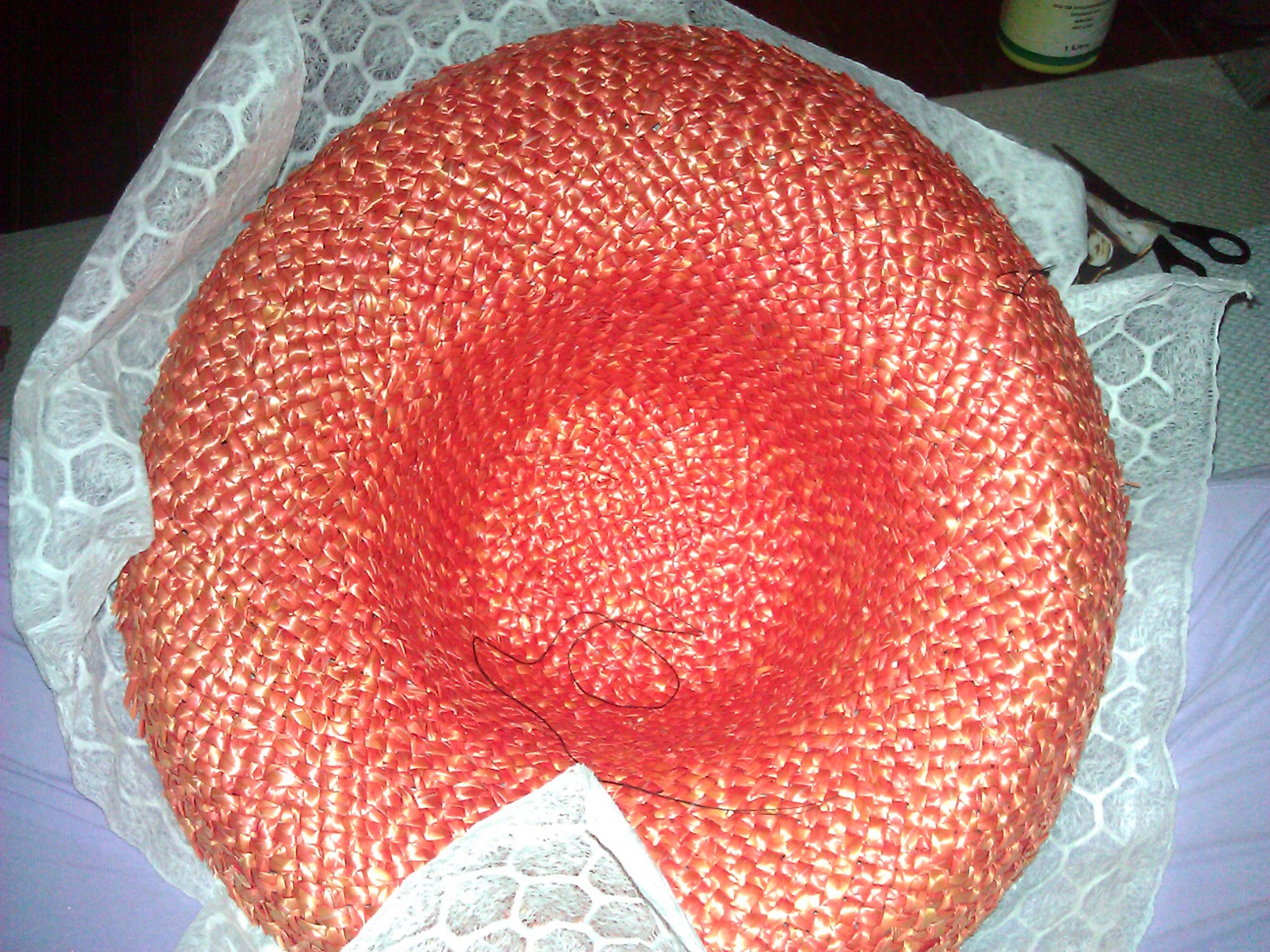
For the race, I am making a hat, badly. I  know it is not my best work because I have made better hats in the past. I know I left it too late and I don’t have all the right materials.

Photo_83346D1F-6933-3709-09C7-46EDBF6E88B5

The Cup day is tomorrow and the office will have a party. I am not a big gambler, nor a horse race lover, far from it. I did not know our office wanted to party. But, it makes sense because most people in this country will take up to three days off work to gamble and party for Melbourne Cup.

Photo_3949CD22-1FAE-3C9B-F7AA-F398A4B4A257

I don’t have any fancy hats. And, I don’t need one. The ladies in my office made a pack to wear hats so I wanted to make one for fun.

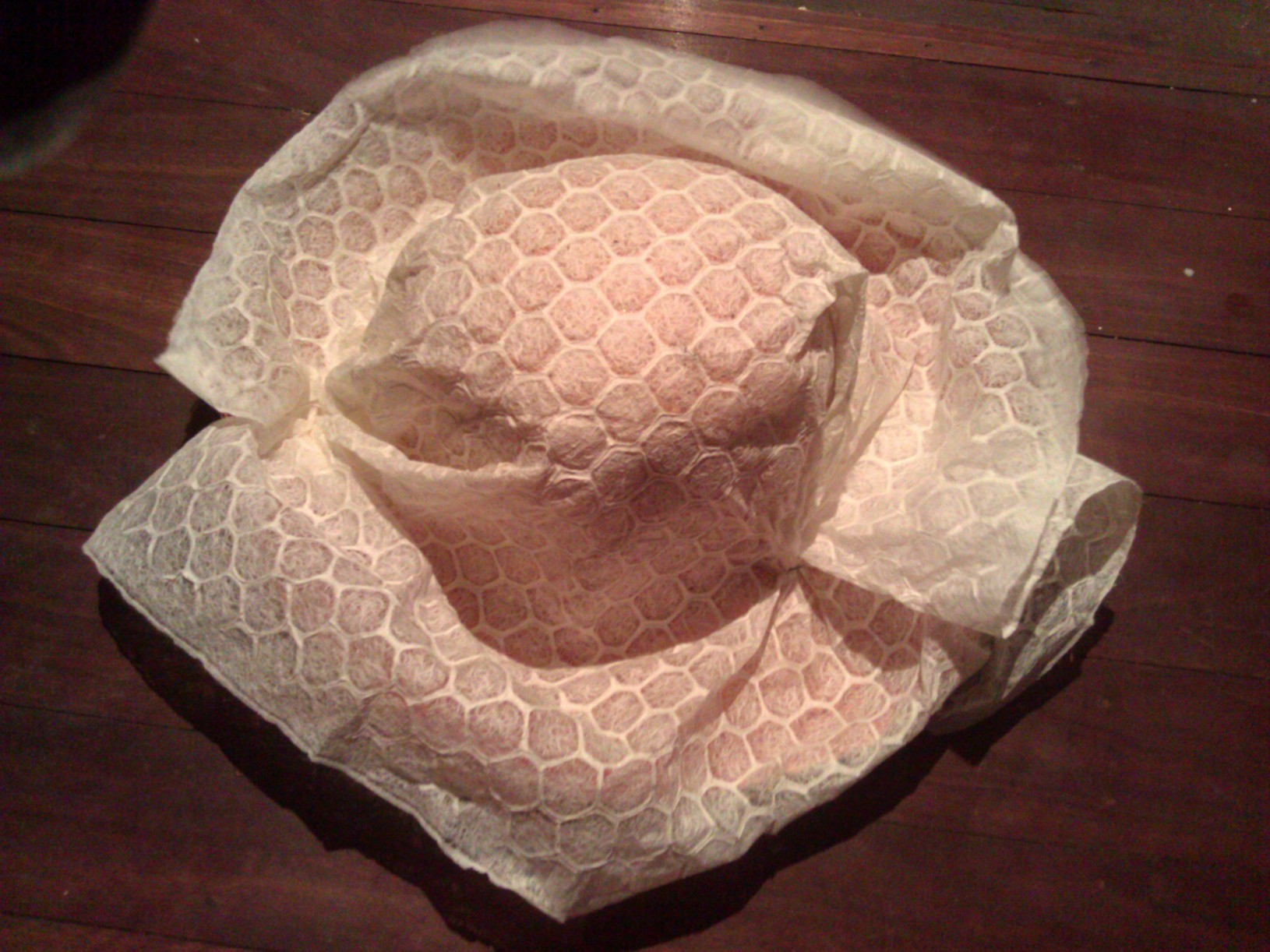
So far my sons had various pointers and suggestions on how to improve the hat before going off to bed and leaving me with the task. I have found various pieces of craft material at home. I am about to re-create a 10-year-old straw hat into something…yeah ‘something’ I don’t even know. The good thing about it is that if the ‘hat’ fails, I can dump it in my compost and recycle the  bits and pieces. It is all organic.

Photo_8ADFEBA1-A417-574E-AB09-7139CB6C80C0-2

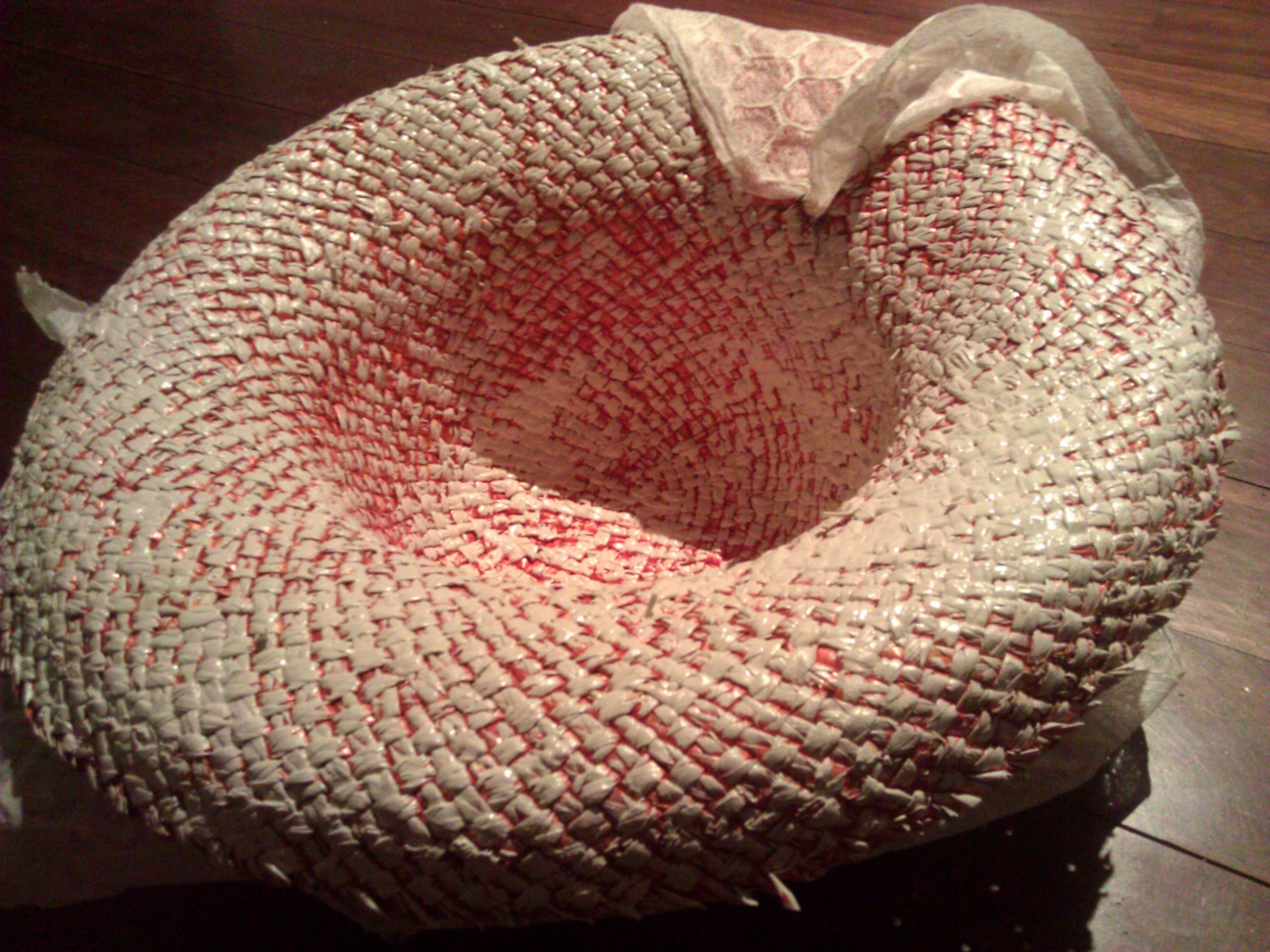
Pictured here, I found some hand-made re-cycled paper I had for a different project, and thought I could use it. I sewed the paper onto the orange hat and the paper was not opaque enough so I needed to paint the hat white. I was on a mission. The can of white paint was in my art workshop and without thinking or smelling the paint, I took a brush and painted the hat . Once finished, I could not wash the brush nor my hands, and I realised I had used the oil-based house paint. Worst of all my son told me,  we did not have any mineral turpentine left to clean off the oil paint. Sounds great doesn’t it?

With his help, I used a combination of Antiseptic Dettol and nail polish remover to rid the paint on my finger tips so I could type this blog post. Don’t try to use that Dettol combination to clean your hands, it is not nice. I guess I won’t be needing that nail polish tomorrow either; I have white-painted nails.

To make the slow-drying oil paint dry faster, I have been blow drying the hat for two hours. I am hopeful; I will wear that hat tomorrow. Thank you universe for challenging my creativity but the hat will happen, regardless.

I hope I have made you readers smile tonight with this silly story and my pathetic hat-making effort. If you are following The Melbourne Cup tomorrow – have fun and win. My friend won a few thousand dollars on a $3 bet, so I know it can be a day for anyone. I am just going to finish my hat.

Cool Stuff: Wood Casting with Hilla Shamia


16

For someone who is interested in art and beauty in everyday things, it came as no surprise that my sons have developed the same ‘eye’. My son Nathan introduced me to Hilla Shamia, an Israeli furniture designer who combines wood and metal in a way you don’t see too often.

Hilla Shamia is a Israel-based designer with B.Des. at Holon Institute of Technology, Industrial Design department.
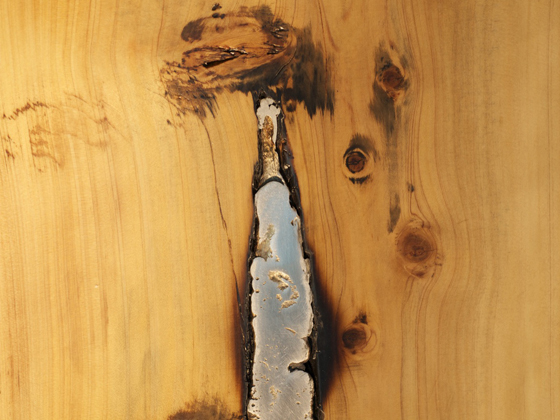
Hilla developed a unique technique that joins the materials of aluminum and wood. She created a series of furnitures based on this technique called – Wood Casting.

0715

These ‘wood castings’ are made from a whole tree trunk, and that enables them to preserve the natural form of the wood while still maintaining distinct boundaries in its creation. Each is a One-of-a-Kind piece.

08


http://www.hillashamia.com/