Category Archives: Stories

General stories, Other posts, Reblogs

Bobcat Dirt-nap


Screenshot_2015-03-14-14-17-27

At 9am yesterday, after watching the news on the cyclone in Vanuatu I started cooking pan cakes and my older son Nathan made coffee. My younger son Chris and his friend Cameron, both 16 were outside, moving the soil. I hired a bobcat to move some clean fill (soil) into an area in my garden. We were raising the ground level and  turning the spot into an outdoor living place. This change to our landscape would level a slight hill and give us an additional 100 square metres of flat area to entertain and enjoy the gardens outside.

The ‘cat’ was a few hundred dollars per day so time was crucial. The Hire company dropped the machine on Friday afternoon and I had a quick lesson on how to drive the 1.5 tonne machine.

When Chris arrived from high school yesterday, I showed him how to drive the machine. He was excited and took to it easily. He started moving the soil and filling up the enclosure. He had already built the wall and enclosure in the last two weeks.

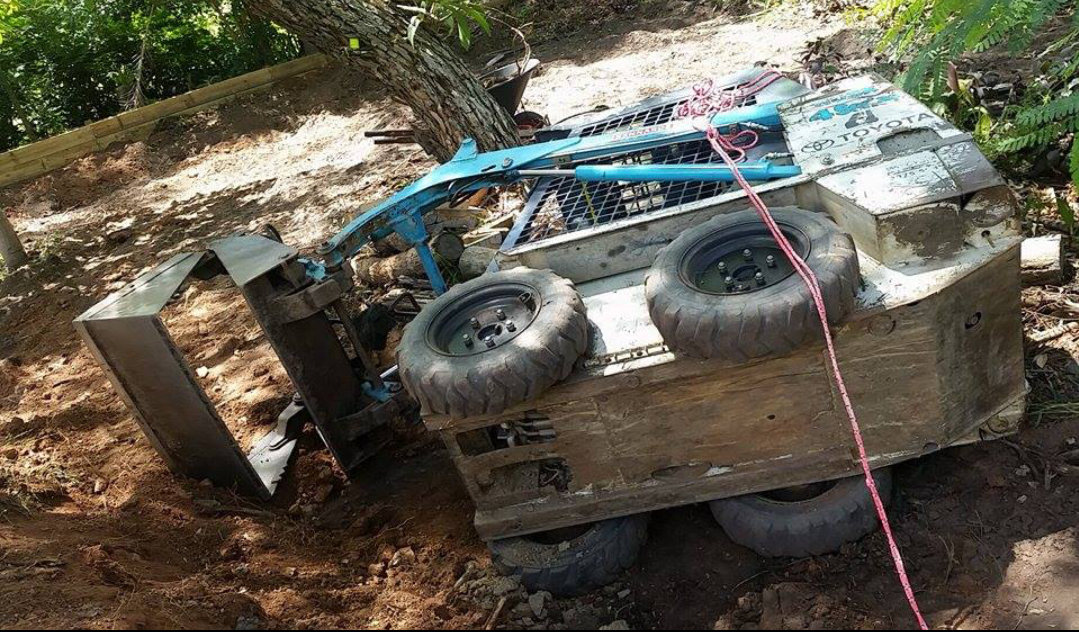
Half hour later, while watching through the kitchen window, I saw the bobcat capsized with Chris in it and started screaming his name and running out to the balcony with his brother.  Chris’s friend Cameron had his ear-phones on and did not know, Chris and the bobcat capsized. The machine was on its side, as if it was taking a dirt-nap. I could see Chris inside the sitting cage of the bobcat.

I was still trying to get to Chris when he crawled out shaken, but without any scratch or injuries and said, “Mum, I’m fine”. He had a bemused face on. Apparently he tried to dig into the side on the dirty mount and the bobcat flipped over.

The bobcat’s ‘head’ rested on my garden bed, crushing everything I had been planting the last six months. Its two left tyres were up in the air and the other two buried in the soft dirt.

For the next hour, the boys told me not to ring for help because the cat was only on its side, and we could lift it back up. We could not. We tried.

Two more, and the ropes tied to my Honda to tow were snapped. We were exhausted and the pancake mixture dried in the mixing bowl when I got back into the kitchen to drink water. I was too afraid to leave the boys on their own – for safety reasons and we all decided, best to get a chain to tow the sleeping cat. Our local hardware charged a ridiculous $28 per metre for the largest sized chains. We bought four metres, and returned to the site and used the chain to join the cat to the Honda. We tried to pull and lift it up. The bobcat came up half way and fell back.

My sons decided it was easier to use the car jack to lift the sleeping cat part of the way  to help the Honda (to lift it). The boys still refused help from the hire company and I did not want them to feel, I underestimated their intellect or their determination to get the cat back on its feet their way.

Inch by inch, they car-jacked the 1.5 tonne cat up with a combination of counting, wrenching, and inserting off-cut timber slippers to raise the cat. Another half hour and Nathan said, “Mum! we are ready to tow”.

I started the Honda and revved it and at the first go, the cat was till too heavy and rocked back, instantly killing the Honda’s engine. On the second attempt I floored the poor Honda’s accelerator and although I burnt off the outer front tyre skin – it was not an intended burn out, the Honda smoked, jerked forward and pulled the cat to its feet. The boys jumped with joy and cheered and I honked. We all laughed and Chris got back inside and rolled the cat forward. Everything was in good order and we started working about 2pm until seven in the evening.  The bobcat stayed on its feet all day today and completed the job. Thanks to Chris and Nathan, all the hard work is done. I am a proud mum.

20150315_121226
The project manager Chris and I on the new reclaimed living area.


Vanuatu Needs Your Help


1426389521013
Paradise pounded: Vanuatu in the wake of Cyclone Pam 20150315_Vanuatu_Port Vila Cyclone Pam damage_CARE_Inga Mepham4.jpg Photo: CARE/Inga Mepham

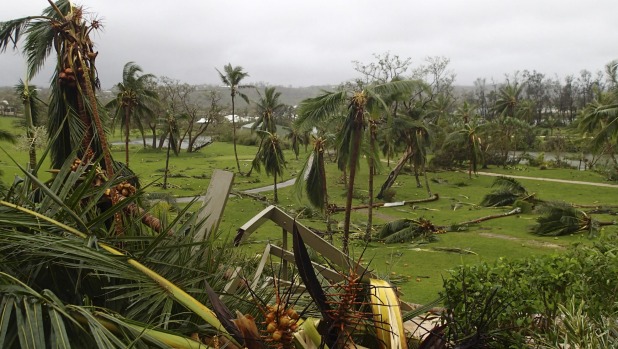
Australia’s Foreign Minister Julie Bishop announced an initial $5 Million Aid recovery package for Vanuatu. The Category 5 Cyclone Pam that struck Vanuatu on Friday has devastated the country. This cyclone is possibly the strongest ever in the south Pacific region. Tens of thousands of people are homeless, without adequate food, water, shelter or sanitation.

The Government of Vanuatu estimates that 80% of homes have been either destroyed or have sustained significant damage. Communications infrastructure has been knocked out in the hardest hit islands and there are grave fears for rural communities that were directly under the path of the cyclone’s eye.

Essential services have been wiped out on most islands, and even in the nation’s capital Port Vila, home to about 60,000, restoring water and electricity may take weeks.

Vanuatu needs your urgent assistance. Here are our suggestions on how to help:

Australia is coordinating drop off points in Australia for relief supplies such as tarps, tents, ropes and tinned food. Please visit their page for details.

Emergency appeals you can donate online to are:

Donate to UNICEF Australia Cyclone Pam appeal

Donate to Red Cross Cyclone Pam Appeal or call 1800 811 700 to make a secure donation

Donate to Oxfam Australia International Crisis Fund – Cyclone Pam

Donate to CARE Australia Cyclone Pam Response or call 1800 020 046

Save The Children Cyclone Pam Appeal or call 1800 76 00 11.

New Zealand
Donate to Red Cross NZ Pacific Disaster Fund

UK and Europe
Donate to UNICEF UK Cyclone Pam fund

USA
Donate to UNICEF USA Cyclone Pam fund
Remember, give responsibly: some fake donation appeals are already circulating on social media. Only give to reputable organisations.

Vanuatu After Cyclone Pam Last Night


11008586_788509844563388_761084741217907697_o
Storm damage to boats caused by Cyclone Pam in Port Villa (UNICEF Pacific)
11009856_788512884563084_6378003344459726858_o
Residents search for belongings amidst storm damaged property (UNICEF Pacific)

Australia offers help to Vanuatu. Strong winds still prevents the authorities from confirming the number of deaths and cost of damage.

Australia’s Foreign Minister Julie Bishop said that Canberra was ready to assist, and had medical and search and rescue staff on standby while New Zealand immediately announced NZ$1 million in an initial funds to assist Vanuatu, Fiji, Tuvalu and the Solomon Islands.

Aid agencies have launched appeals and are hoping to start flying in emergency supplies of food, shelter and medicine from Sunday, when the airport in Port Vila is expected to reopen.
“We are extremely concerned for the safety and wellbeing of tens of thousands of people as one of the most intense cyclones to ever hit any Pacific country continues to batter Vanuatu,” said Australian Red Cross’ head of international programmes Peter Walton.
United Nations chief Ban Ki-moon, speaking from Japan, said while the impact was not yet clear “we fear the destruction and damage would be widespread” as he offered his deepest condolences to the people of Vanuatu.
Fiji Weather Service meteorologist Neville Koop said the cyclone was weakening as it slowly moved away from Vanuatu, and would pass between Fiji and New Caledonia before brushing the North Island of New Zealand on Monday.
Koop said Pam was not the strongest cyclone for the South Pacific, with Zoe packing bigger winds when it hit Vanuatu and the Solomon Islands in 2002. But he said the current storm had gusts of 320 kilometres per hour and sustained winds of 250 kilometres per hour.

Dozens Feared Dead in Vanuatu


The UN is checking reports 44 are dead in Vanuatu’s outer islands in Penema Province by Cyclone Pam. The winds are still very strong in Vanuatu and Pam heads towards New Zealand. No images of destruction is available, communication is still down.

Another major cyclone, Cyclone Olwyn is looming on Yeppoon in Rockhampton, Queensland. Olwyn has been running down the coast of Australia at the same time as Cyclone Pam.

Pam, a category 5 cyclone made a direct hit on the Vanuatu archipelago’s capital Port Vila, after travelling through Kiribati, Tuvalu and Solomon Islands.

Pam crashed through the 80 islands of the archipelago last night as an unexpected change of course put key populated areas in the path of its destructive 270km h winds.

Watch Nine News

UNICEF team on the ground

LATEST: UNICEF Pacific Communications Specialist Alice Clements spoke to Radio New Zealand where she mentioned unconfirmed reports of deaths.

“We have some very unconfirmed reports of casualties from the outer islands as well but we’re waiting to get official confirmation on those, which is very sad news if it’s true.”
Speaking to Mashable, Alice described the devastation in the capital of Port Vila, where she sheltered from the storm.

“There’s still really strong winds. There’s debris everywhere, there are buildings that are destroyed… this is really a catastrophe,” she said. “People haven’t experienced a storm of this strength here.”
Alice also told Radio New Zealand the storm had gone on far longer than anyone expected.
“I stayed in a concrete hotel that was three storeys high, and even so I’d lost the sliding doors from my room, I had all the wind howling through the room. It was terrifying.”

More News on Cyclone Pam


ABC Reports Click on Earth to see Cyclone Pam

Flooding, destructive winds as category five storm bears down on Vanuatu

Updated 20 minutes ago

Speaking from a hotel shelter, program director for CARE Australia in Vanuatu, Inga Mepham, told the ABC’s World program that people have heeded warnings to take shelter.

“It’s a thundery noise coming through and obviously things are starting to fly around. We can feel things hitting us at different times,” she said on Friday.

“I think people would still be in disbelief tonight … certainly we are.”

In Fiji, head of the United Nations Office for the Coordination of Humanitarian Affairs for the Pacific, Sune Gudnitz, said the storm was the “worst-case scenario”.

“The most vulnerable will certainly be the people who are living or residing closer to the coastline, which in a place like Vanuatu is a lot of people,” he said.

“Very few structures I think will be able to withstand a category five cyclone of the magnitude that we are seeing.

“So we are looking at potentially total destruction of many shelters, residences, especially in the islands south and outside of Port Vila.”

Vanuatu’s northern islands were the first to feel the destructive force of Pam, the strongest storm to hit the nation of 270,000 people in nearly 30 years.

Aid agencies said many people living in flimsy slum accommodation were particularly at risk, as well as those in remote outlying islands.

Authorities in Vanuatu issued red alerts for four provinces, advising thousands of residents to shelter in evacuation centres ahead of the storm.

UNICEF spokeswoman Alice Clements said the capital resembled a “ghost town” as people battened down.

“The winds have definitely increased, the palm trees are blowing around like crazy, you’re starting to get that kind of howling wind coming through,” the official with the UN children’s agency said.

Meteorologist Neville Koop, from Fiji’s Nadraki Weather Service, said Pam’s winds were capable of bringing down even well-built structures.

He said they could be more destructive than Cyclone Uma, which killed at least 30 people when it sank two ferries off Port Vila.

“Pam has winds which are much stronger than Vanuatu experienced (in 1987)”, he said.

6314798-3x2-940x627
Earlier destructions caused by Cyclone Pam in Kiribati’s capital Tarawa.
6314792-3x2-940x627
Causeway between Bateo and Kariki in Kiribati was badly damaged by Pam.

More pictures on ABC

Cyclone Pam: massive storm bears down on Vanuatu, with 260,000 people in its path


cyclonepamanimation
Tropical cyclone Nathan, off Australia’s Queensland coast, and tropical cyclone Pam, near Vanuatu. Image: Australian Bureau of Meteorology/Japan Meteorological Agency

Tonight  Vanuatu is preparing for one of its worst storm predicted to hit the island later tonight. I hope that the people of Vanuatu will be safe as Pam travels through and completes her course. So far, Pam  has  destructed parts of several other small Pacific islands as she travelled down south.

The Guardian reported, the capital of Vanuatu went into lockdown as the “once-in-a-lifetime” storm bore down on the South Pacific island nation, threatening up to a quarter of a million people in its path.

Tropical cyclone Pam, a category five storm with predicted wind gusts of more than 280km/h at its core, was on track to hit the capital, Port Vila, at about 11pm Friday night, local time.

Evacuations across the country followed warnings of a life-threatening weather event bringing storm surges, torrential rain, flash flooding and landslides.

The United Nations agency UNICEF, which along with aid agencies was on the ground with personnel and emergency supplies, warned about 260,000 people were in the potential disaster zone.

Port Vila was in lockdown by 7pm local time, with sources in the area describing “panic” setting in among those who filled 12 evacuation centres, while hotels crammed with guests booked in to shelter for the night ordered them into underground bunkers.

Read more on the Guardian

http://gu.com/p/46tda/sbl


Short Story : Enveloped


Enveloped (fiction JLeahy short stories)

9_7
Public Domain image

This is a draft opening of a short story I am working on. I have not decided where the plot is going. I have  a few options and will post more later.

Betty picked up contents of their mailbox. It was only 4pm and she was extremely tired having entered her third trimester last week. Her mother was overseas, and still unhappy at Betty’s choice to keep the baby.

In her Mother’s eyes, Betty was the faltered child, not pursuing the right career or man, having wasted her mother’s precious money and now having a baby at 23 before she had her own income. Her choice to follow arts while keeping her casual job as a Cole’s cashier was beneath her mother’s expectations. Her mother wanted a Law, Business or Accounting Degree – not Arts!

“She thinks just because she herself married a rich man, that I have to do the same, Betty complained to her aunt.

On the other hand, Betty mentioned to her aunt, her younger sister Mina, 22 was exceeding their mother’s expectation with a University degree in business and now engaged to a young engineer from a wealthy family.

Betty has been out of work for three months and already she feared her mother was right – that she needed to find some money quickly. Her mother refused to spare a cent from her own millions.

“Betty must earn it herself, she must work for it”, her mother told her aunt. The house they lived in on the hills in Brookfield belonged to her mother’s multi-millionaire lover. He gifted it to her, after his second divorce was final.

As Betty shuffled white envelopes, bills and junk mail, the young mother-to be wondered how she would pay her bills this month. Amongst the pile she noticed a small yellow aged envelope, stamped and posted in Brisbane. The envelope was addressed to her. Betty examined the back but there was no return address. She looked at the stamp again. She could not think of anyone in Brisbane that would send her a letter, most of her friends contacted her on Facebook or emailed her. The enveloped was marked Monday, January 15, 2013, just two days ago.

Old Precious Things…


r1396715_19902761
The Llareta is a flowering plant as much as 2,000 years old.

I am about to celebrate one of my big birthdays and today was a mix bag of events. It started with a premature but a lovely morning tea birthday party from fellow staff. We ate ice-cream cake. Weird, but ok. The morning tea was followed by a reprimand from my ordinary boss, he was throwing a tantrum that is not worth mentioning. Then, I caught up with special friends from PNG during the course of X-rays and scans and medical tests leading to my doctor at 2pm, telling me, I must have surgery. I decided to return to work after the doctor’s visit and take a deep breath and keep going until the end of the day.

I have left that day and I decided that I will forget everything ordinary that happened.  I only want to remember the extraordinary things and prepare a huge party for my birthday next week. And speaking of ageing, you may know, I enjoy art, reading and writing when I am not outdoors. I have been working on some art projects and looking at art. I found an interesting story about an artist who documented old things from around the world in the last ten years. I am not posting this because I am getting old, it just happened to be something I unexpectedly discovered and somehow, it made sense to link it to age. Aged things always interest me and it was part of my purpose in completing a Masters programme in Museum Studies. Rachel Sussman is a contemporary artist based in Brooklyn. Her photographs and writing have been featured in Smithsonian  in The New York Times, Wall Street Journal, The Guardian, and NPR’s Picture Show. Her book The Oldest Living Things In The World sells for $1500 per copy.

From ABC Environment

8 things in nature so old you’ll feel young

THERE IS SOMETHING about extreme age that fills us with awe.

It’s hard not to feel it, when standing in the presence of a huge eucalypt that has raised its branches to the sun since long before European settlement. Or when watching the silent majestic form of an immense whale, which has outlived several generations of humans, glide through the dark blue.

Sometimes it takes a little more intellectual investment to find that awe, like when staring at a grey-green patch of lichen that grows just one centimetre every century and which has weathered the harsh climate of Southern Greenland for more than 3,000 years.

“In thinking about the natural sublime and awe and that sort of thing, a lot of it is tied to scale and to time,” says Rachel Sussman, a New York-based contemporary artist who has spent 10 years researching and photographing some of our planet’s oldest living entities.

Sussman has taken an extraordinary series of photographic portraits, published in her book The Oldest Living Things In The World.

Read More

The Song in Gwen’s Sonnet


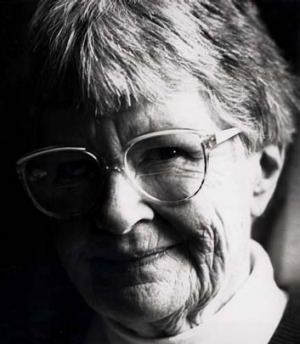
I was recently asked by my younger son Chris to read with him some Australian poetry. Chris wrote a critique for two of the poems for his Year 12 English studies. Chris and I found Critically Acclaimed Gwen Harwood’s words and her life fascinating so I wanted to share her story.  Gwen Harwood also grew up in our neighbourhood in Brisbane’s western suburbs. Below is part of Chris’s critique.

1367157941403
Sydney Morning Herald image: Gwen Harwood

Gwen Harwood was born in 1942 and grew up in Taringa, in Western Suburbs Brisbane. She went to Brisbane Girls Grammar School and All Saint High. Harwood had studied music and completed a Diploma to teach music but found herself in a typist job at the War Damage Commission. Although early in her life she had developed an interest in literature, philosophy and music, she was limited to what the society enabled her to do in her career. She would later be described in our time as brilliant but was understated.

Harwood’s father taught her music and her grandmother introduced her to poetry. For years, Harwood could not publish her work under her own name because she was a woman. The society, male editors mostly, thought a woman should not be a writer or get published. As a woman poet in a largely male dominated place, Harwood used Pseudonyms to be allowed or belong to the publishing world. A local Brisbane publisher, Minjiin first published her poem in 1944. From 1960s, Harwood started to publish more of her writings in journals and books. Her discreet life in the literary world reflected the place expected of a woman during that time (from 1940s). Poems such as the Suburban Sonnet reflected Harwood’s strong views about how the society’s view of women was.
Generally in a sonnet, the poem is about a beautiful woman in love. In this case, Harwood depicts a woman in a chaotic household in contrast to the traditional rule of a sonnet.
Drawing from her own experiences, she wrote poems that question the status of women and the right to be whatever a woman aspired to be. She portrayed the suburbia woman to boring and ordinary. In the Suburban Sonnet, Harwood showed the restricted society she and other women belonged to by challenging the norm of the social and cultural ideologies on suburban women, especially mothers.
The dead mouse could be interpreted as her dream of teaching music being dead. In her society, a woman’s artistic ambitions may as well be dead, because her society expected her to do things in certain ways. “The Stale bread” could refer to a woman’s domestic life, which she saw as boring. Harwood was accepted as belonging to the male dominated publishing world only after she made a startling publication. 1961, The Bulletin accepted a sonnet from Walter Lehmann, and after it was published it was brought to the editor Donald Horne that the initial of each line formed the phrase “Fuck All Editors”.

The Suburban Sonnet : Boxing Day (Gwen Harwood)

She practices fugue, though it can matter

to no one now if she plays well or not.

Beside her on the floor two children chatter,

then scream and fight. She hushes them. A pot

boils over. As she rushes to the stove

too late, a wave of nausea overpowers subject and counter subject

drain out with soapy water as she scours

the crusted milk. Her veins ache.

Once she played for Rubinstein, who yawned. The children caper round a sprung mousetrap where a mouse lies dead.

When the soft corpse won’t move they seem afraid.

She comforts them; and wraps it in a paper

featuring: Tasty dishes from stale bread.

A Love Story