Category Archives: Nature and Climate Change

Aid flows in for Vanuatu, Death Toll Still Unknown


pacificisland1
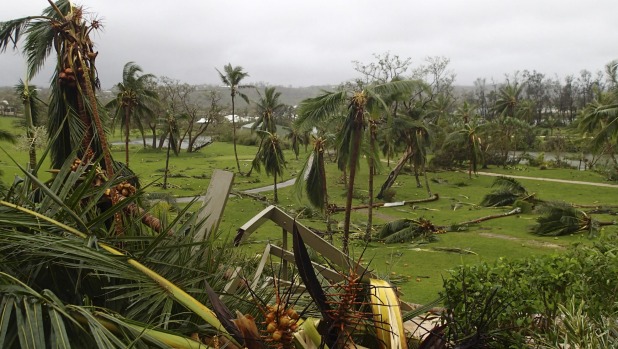
A home-owner tries to make sense if what Cyclone Pam left of his sago palm roof.

As world-wide aid flows in for Vanuatu, death the toll is still unknown.

Communications and some electricity have been installed in parts of Port Vila, after Cyclone Pam’s weekend devastation.

…………………….

Thank you very much to all the friends/bloggers who shared my post calling for help for Vanuatu. For the latest news, there is power connection and communication in Port Vila. All outer islands still cannot be reached and death toll is still unknown except for the eight initially reported.

Those who are interested to donate to assist recovery work in Vanuatu, please click on the link below. I am sharing this link from Vanuatu friends (including a senior minister and member of parliament)

Donate direct to Cyclone Pam/Vanuatu’s Recovery programme – click here

What are the funds for?

As a community of researchers, volunteers, aid workers, friends and family we are saddened by the loss of life and injuries caused by Cyclone Pam. As an international community with links to Vanuatu we want to help.

Our hearts go out to all our friends and family in Vanuatu.

Funds will be spent directly in Vanuatu on rebuilding essential infrastructure at the Central Hospital, Port Vila. The Central Hospital sustained significant damage and flooding during the cyclone. This is significantly impacting on the care that the hospital can currently offer its patients.

Allocation of funds will be administered on-the-ground by a Committee made up of the Vanuatu High Commissioner or his representative, a representative of the Australian Friends of Vanuatu, and a representative of the Vanuatu Department of Finance.

Who will manage the funds?

This is a joint initiative based on an ongoing partnership between ‘the Australian Friends of Vanuatu’ and the Vanuatu High Commission, located in Canberra.

The request to set up this funds comes directly from the Vanuatu High Commission. The Vanuatu High Commissioner Kalfau Kaloris has been involved in developing this fund with representatives from the Australian Friends of Vanuatu.

The bank account attached to this fund is located in the Vanuatu High Commission, in Canberra. All funds will be properly acquitted to donors.
Vanuatu Needs Your Help


1426389521013
Paradise pounded: Vanuatu in the wake of Cyclone Pam 20150315_Vanuatu_Port Vila Cyclone Pam damage_CARE_Inga Mepham4.jpg Photo: CARE/Inga Mepham

Australia’s Foreign Minister Julie Bishop announced an initial $5 Million Aid recovery package for Vanuatu. The Category 5 Cyclone Pam that struck Vanuatu on Friday has devastated the country. This cyclone is possibly the strongest ever in the south Pacific region. Tens of thousands of people are homeless, without adequate food, water, shelter or sanitation.

The Government of Vanuatu estimates that 80% of homes have been either destroyed or have sustained significant damage. Communications infrastructure has been knocked out in the hardest hit islands and there are grave fears for rural communities that were directly under the path of the cyclone’s eye.

Essential services have been wiped out on most islands, and even in the nation’s capital Port Vila, home to about 60,000, restoring water and electricity may take weeks.

Vanuatu needs your urgent assistance. Here are our suggestions on how to help:

Australia is coordinating drop off points in Australia for relief supplies such as tarps, tents, ropes and tinned food. Please visit their page for details.

Emergency appeals you can donate online to are:

Donate to UNICEF Australia Cyclone Pam appeal

Donate to Red Cross Cyclone Pam Appeal or call 1800 811 700 to make a secure donation

Donate to Oxfam Australia International Crisis Fund – Cyclone Pam

Donate to CARE Australia Cyclone Pam Response or call 1800 020 046

Save The Children Cyclone Pam Appeal or call 1800 76 00 11.

New Zealand
Donate to Red Cross NZ Pacific Disaster Fund

UK and Europe
Donate to UNICEF UK Cyclone Pam fund

USA
Donate to UNICEF USA Cyclone Pam fund
Remember, give responsibly: some fake donation appeals are already circulating on social media. Only give to reputable organisations.

Vanuatu After Cyclone Pam Last Night


11008586_788509844563388_761084741217907697_o
Storm damage to boats caused by Cyclone Pam in Port Villa (UNICEF Pacific)
11009856_788512884563084_6378003344459726858_o
Residents search for belongings amidst storm damaged property (UNICEF Pacific)

Australia offers help to Vanuatu. Strong winds still prevents the authorities from confirming the number of deaths and cost of damage.

Australia’s Foreign Minister Julie Bishop said that Canberra was ready to assist, and had medical and search and rescue staff on standby while New Zealand immediately announced NZ$1 million in an initial funds to assist Vanuatu, Fiji, Tuvalu and the Solomon Islands.

Aid agencies have launched appeals and are hoping to start flying in emergency supplies of food, shelter and medicine from Sunday, when the airport in Port Vila is expected to reopen.
“We are extremely concerned for the safety and wellbeing of tens of thousands of people as one of the most intense cyclones to ever hit any Pacific country continues to batter Vanuatu,” said Australian Red Cross’ head of international programmes Peter Walton.
United Nations chief Ban Ki-moon, speaking from Japan, said while the impact was not yet clear “we fear the destruction and damage would be widespread” as he offered his deepest condolences to the people of Vanuatu.
Fiji Weather Service meteorologist Neville Koop said the cyclone was weakening as it slowly moved away from Vanuatu, and would pass between Fiji and New Caledonia before brushing the North Island of New Zealand on Monday.
Koop said Pam was not the strongest cyclone for the South Pacific, with Zoe packing bigger winds when it hit Vanuatu and the Solomon Islands in 2002. But he said the current storm had gusts of 320 kilometres per hour and sustained winds of 250 kilometres per hour.

Dozens Feared Dead in Vanuatu


The UN is checking reports 44 are dead in Vanuatu’s outer islands in Penema Province by Cyclone Pam. The winds are still very strong in Vanuatu and Pam heads towards New Zealand. No images of destruction is available, communication is still down.

Another major cyclone, Cyclone Olwyn is looming on Yeppoon in Rockhampton, Queensland. Olwyn has been running down the coast of Australia at the same time as Cyclone Pam.

Pam, a category 5 cyclone made a direct hit on the Vanuatu archipelago’s capital Port Vila, after travelling through Kiribati, Tuvalu and Solomon Islands.

Pam crashed through the 80 islands of the archipelago last night as an unexpected change of course put key populated areas in the path of its destructive 270km h winds.

Watch Nine News

UNICEF team on the ground

LATEST: UNICEF Pacific Communications Specialist Alice Clements spoke to Radio New Zealand where she mentioned unconfirmed reports of deaths.

“We have some very unconfirmed reports of casualties from the outer islands as well but we’re waiting to get official confirmation on those, which is very sad news if it’s true.”
Speaking to Mashable, Alice described the devastation in the capital of Port Vila, where she sheltered from the storm.

“There’s still really strong winds. There’s debris everywhere, there are buildings that are destroyed… this is really a catastrophe,” she said. “People haven’t experienced a storm of this strength here.”
Alice also told Radio New Zealand the storm had gone on far longer than anyone expected.
“I stayed in a concrete hotel that was three storeys high, and even so I’d lost the sliding doors from my room, I had all the wind howling through the room. It was terrifying.”

More News on Cyclone Pam


ABC Reports Click on Earth to see Cyclone Pam

Flooding, destructive winds as category five storm bears down on Vanuatu

Updated 20 minutes ago

Speaking from a hotel shelter, program director for CARE Australia in Vanuatu, Inga Mepham, told the ABC’s World program that people have heeded warnings to take shelter.

“It’s a thundery noise coming through and obviously things are starting to fly around. We can feel things hitting us at different times,” she said on Friday.

“I think people would still be in disbelief tonight … certainly we are.”

In Fiji, head of the United Nations Office for the Coordination of Humanitarian Affairs for the Pacific, Sune Gudnitz, said the storm was the “worst-case scenario”.

“The most vulnerable will certainly be the people who are living or residing closer to the coastline, which in a place like Vanuatu is a lot of people,” he said.

“Very few structures I think will be able to withstand a category five cyclone of the magnitude that we are seeing.

“So we are looking at potentially total destruction of many shelters, residences, especially in the islands south and outside of Port Vila.”

Vanuatu’s northern islands were the first to feel the destructive force of Pam, the strongest storm to hit the nation of 270,000 people in nearly 30 years.

Aid agencies said many people living in flimsy slum accommodation were particularly at risk, as well as those in remote outlying islands.

Authorities in Vanuatu issued red alerts for four provinces, advising thousands of residents to shelter in evacuation centres ahead of the storm.

UNICEF spokeswoman Alice Clements said the capital resembled a “ghost town” as people battened down.

“The winds have definitely increased, the palm trees are blowing around like crazy, you’re starting to get that kind of howling wind coming through,” the official with the UN children’s agency said.

Meteorologist Neville Koop, from Fiji’s Nadraki Weather Service, said Pam’s winds were capable of bringing down even well-built structures.

He said they could be more destructive than Cyclone Uma, which killed at least 30 people when it sank two ferries off Port Vila.

“Pam has winds which are much stronger than Vanuatu experienced (in 1987)”, he said.

6314798-3x2-940x627
Earlier destructions caused by Cyclone Pam in Kiribati’s capital Tarawa.
6314792-3x2-940x627
Causeway between Bateo and Kariki in Kiribati was badly damaged by Pam.

More pictures on ABC

Cyclone Pam: massive storm bears down on Vanuatu, with 260,000 people in its path


cyclonepamanimation
Tropical cyclone Nathan, off Australia’s Queensland coast, and tropical cyclone Pam, near Vanuatu. Image: Australian Bureau of Meteorology/Japan Meteorological Agency

Tonight  Vanuatu is preparing for one of its worst storm predicted to hit the island later tonight. I hope that the people of Vanuatu will be safe as Pam travels through and completes her course. So far, Pam  has  destructed parts of several other small Pacific islands as she travelled down south.

The Guardian reported, the capital of Vanuatu went into lockdown as the “once-in-a-lifetime” storm bore down on the South Pacific island nation, threatening up to a quarter of a million people in its path.

Tropical cyclone Pam, a category five storm with predicted wind gusts of more than 280km/h at its core, was on track to hit the capital, Port Vila, at about 11pm Friday night, local time.

Evacuations across the country followed warnings of a life-threatening weather event bringing storm surges, torrential rain, flash flooding and landslides.

The United Nations agency UNICEF, which along with aid agencies was on the ground with personnel and emergency supplies, warned about 260,000 people were in the potential disaster zone.

Port Vila was in lockdown by 7pm local time, with sources in the area describing “panic” setting in among those who filled 12 evacuation centres, while hotels crammed with guests booked in to shelter for the night ordered them into underground bunkers.

Read more on the Guardian

http://gu.com/p/46tda/sbl


Old Precious Things…


r1396715_19902761
The Llareta is a flowering plant as much as 2,000 years old.

I am about to celebrate one of my big birthdays and today was a mix bag of events. It started with a premature but a lovely morning tea birthday party from fellow staff. We ate ice-cream cake. Weird, but ok. The morning tea was followed by a reprimand from my ordinary boss, he was throwing a tantrum that is not worth mentioning. Then, I caught up with special friends from PNG during the course of X-rays and scans and medical tests leading to my doctor at 2pm, telling me, I must have surgery. I decided to return to work after the doctor’s visit and take a deep breath and keep going until the end of the day.

I have left that day and I decided that I will forget everything ordinary that happened.  I only want to remember the extraordinary things and prepare a huge party for my birthday next week. And speaking of ageing, you may know, I enjoy art, reading and writing when I am not outdoors. I have been working on some art projects and looking at art. I found an interesting story about an artist who documented old things from around the world in the last ten years. I am not posting this because I am getting old, it just happened to be something I unexpectedly discovered and somehow, it made sense to link it to age. Aged things always interest me and it was part of my purpose in completing a Masters programme in Museum Studies. Rachel Sussman is a contemporary artist based in Brooklyn. Her photographs and writing have been featured in Smithsonian  in The New York Times, Wall Street Journal, The Guardian, and NPR’s Picture Show. Her book The Oldest Living Things In The World sells for $1500 per copy.

From ABC Environment

8 things in nature so old you’ll feel young

THERE IS SOMETHING about extreme age that fills us with awe.

It’s hard not to feel it, when standing in the presence of a huge eucalypt that has raised its branches to the sun since long before European settlement. Or when watching the silent majestic form of an immense whale, which has outlived several generations of humans, glide through the dark blue.

Sometimes it takes a little more intellectual investment to find that awe, like when staring at a grey-green patch of lichen that grows just one centimetre every century and which has weathered the harsh climate of Southern Greenland for more than 3,000 years.

“In thinking about the natural sublime and awe and that sort of thing, a lot of it is tied to scale and to time,” says Rachel Sussman, a New York-based contemporary artist who has spent 10 years researching and photographing some of our planet’s oldest living entities.

Sussman has taken an extraordinary series of photographic portraits, published in her book The Oldest Living Things In The World.

Read More

Livelihood Futures – Papua New Guinea


by Dr James Butler

Many coastal communities in Papua New Guinea are particularly vulnerable to change. Global drivers such as peak oil, fluctuating economic conditions and climate change all have complex impacts on local livelihoods.

In response to rapid and accelerating rate of change and uncertainty, CSIRO research helps make predictions of their potential impacts and allowing groups to plan proactively. This requires designing flexible strategies that can bring benefits under a variety of future conditions.

Planning sustainable development for such uncertain futures is a key area of research for CSIRO. The design of development programs which can improve livelihoods and achieve the United Nations Human Development Goals, while also being adaptive and flexible to uncertain futures, is a big challenge. Such planning must include the multiple groups which have an interest in development, including members of the local communities, government, civil society and international donors.

Our research project “Climate futures, ecosystem services and livelihood adaptation strategies in West New Britain Province, PNG” explored these issues. From 2011-2013, we worked with local communities, non-governmental organisations and government groups to develop a framework using CSIRO science to help inform future decision-making in a collaborative way. We hope you enjoy the video report.


Tiny Ornate Rainbows Under Threat


R.ornatus (Evan Heads) GS
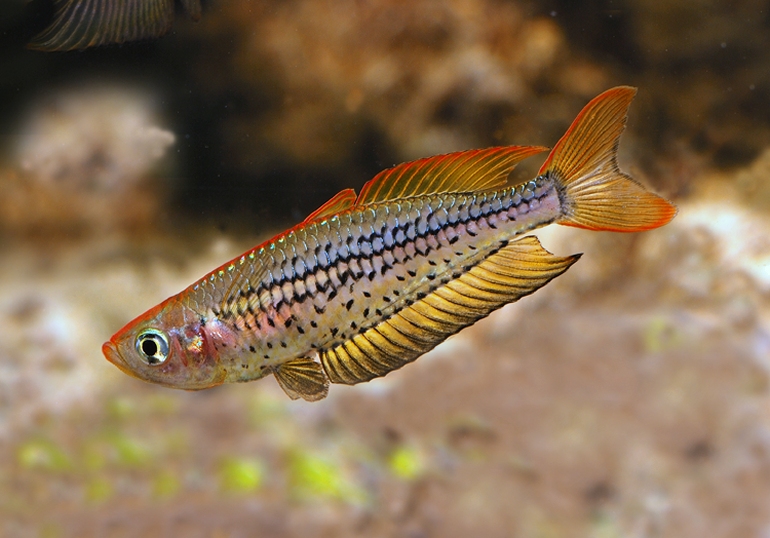
Rornatus (Evans Head), Wildlife Queensland picture.

The ornate rainbow fish (Rhadinocentrus ornatus) is a small and beautifully coloured freshwater fish. You don’t often spot them straight away in dark creek ways because their colours show when the light catches their scales. Few populations of these fish are scattered in freshwater creeks in parts of Brisbane where I live, and some creek systems in Queensland’s Redlands, Moreton Bay and Byfield regions.

ornatesunfish
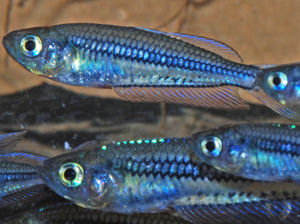
Ornate rainbowfish (R.ornatus) Castaways Creek Photo Leo O’Reilly/ANGFA

The ornate rainbow fish, also known as soft-spine sun-fish can also be found in Nambucca, New South Wales. Four distinct populations have been found in the areas between Queensland and New South Wales.

The numbers of the ornate rainbow fish have decreased rapidly due to human impact. Urban and rural development have caused experts to fear that certain species of the fish have already been lost forever. Every creek in the parts of Australia where the fish is found, has its own unique population which varies in colour and scientists believe they could also be genetically exclusive. The ornate rainbow fish on average grows five to six centimetres long. They can grow up to 8cm long.

“The sad tale is that every time we lose a population of ornate rainbow fish from a creek system we are effectively losing a very unique group of fish forever”, Wildlife Queensland.

ornatesunfish3
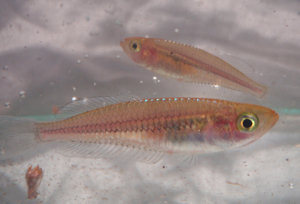
Female ornate rainbowfish (R.ornatus) Redlands Photo © Simon Baltais/WPSQ

Wildlife Queensland has issued a fact-sheet for voluntary information on spotting of the ornate rainbow fish. They hope this data collection would determine where the fish are still found and how many types are left. The information would also assist Wildlife Queensland to educate the public and minimise threats to the fish life.

ornaterainbowfish
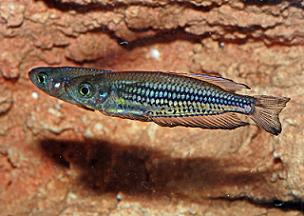
Male ornate rainbowfish (R.Ornatus) Stradbroke Is – Aranerawal Creek Photo ©Leo O’Reilly

To assist in voluntary spotting and documentation, and more information on the ornate rainbow fish, visit:  Wildlife Queensland

The Chivoko Stories of Nature’s Offerings


According to the Chivoko people, anything and everything you need comes from the forest and the sea. Food, building materials, things they could wear, are all provided by Mother Nature. If Mother Nature was destroyed, that would be the end of life. This is a story about a community coming together to make a conservation effort to protect their land, sea, environment, and their heritage for their further generation. What is great about this short film is that the future generation are taking action and are part of this effort.

Written and filmed by the storytellers themselves from Chivoko Village, Northwest Choiseul,  the Solomons Islands. Choiseul Province is the northernmost island in the Solomon Islands double chain archipelago and lies approximately 45 kilometres southeast of Bougainville, Papua New Guinea.