A full documentary about ancient Ireland’s myths and monuments
Some of you know about this archeology site in Ireland. I found its story and the artwork very intriguing. The High Man documentary is about a fascinating giant figure of a warrior god in the ancient landscape of Ireland.
Spirit of Mambesak was initially formed in the 70’s and 80’s by West Papuan artists Arnold Ap and Eddie Mofu. They understood the importance of culture and strove to use music as a medium to convey their basic human right: the freedom of expression.
Mambesak was formed to revitalise traditional West Papuan dance, music and song and eventually provided a certain colour, form and inspiration for the birth of music and dance groups throughout Papua, actively promoting and strengthening West Papuan identity. However, Arnold Ap and Eddie Mofu’s popularity and the conscious pride in being Papuan Mambesak’s music engendered, brought them to the attention of the Indonesian military who accused them of being separatists. They were finally murdered. Today, the spirit of Mambesak endures with new faces and new songs. This album was released in 2004.
You can listen to more or purchase their music here
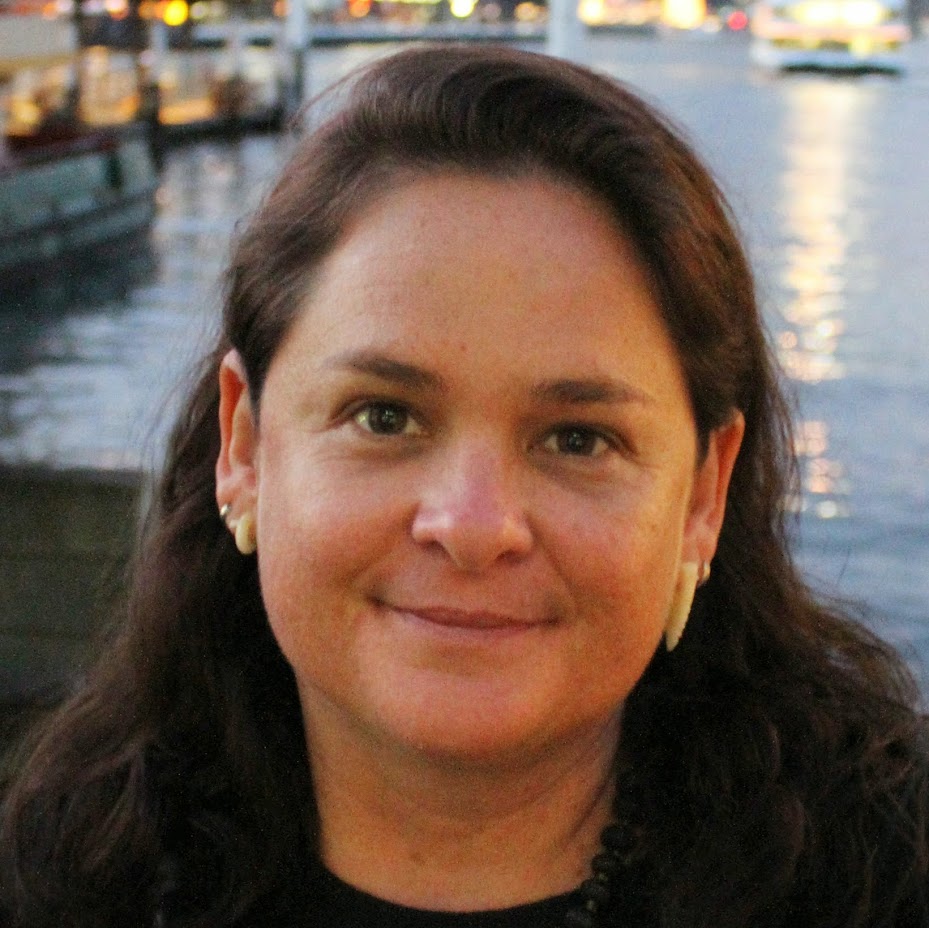
My next story to celebrate Australia Day is about an exceptional woman. She is an artist, an advocate for the rights of the aboriginal people and also a very clever curator. Recently, Jenny Fraser has decided to move from making art and digital films into traditional and natural healing.
Jenny Fraser is a digital native working within a fluid screen-based practice. Because of the diverse creative media Fraser uses, much of her work defies categorization, taking iconic and everyday symbols of Australian life and places them into a context that questions the values they represent. With a laconic sense of humour she picks away at the fabric of our society, exposing contradictions, absurdities, and denial. Her practice has also been partly defined through a strong commitment to Artist / Curating as an act of sovereignty and emancipation.
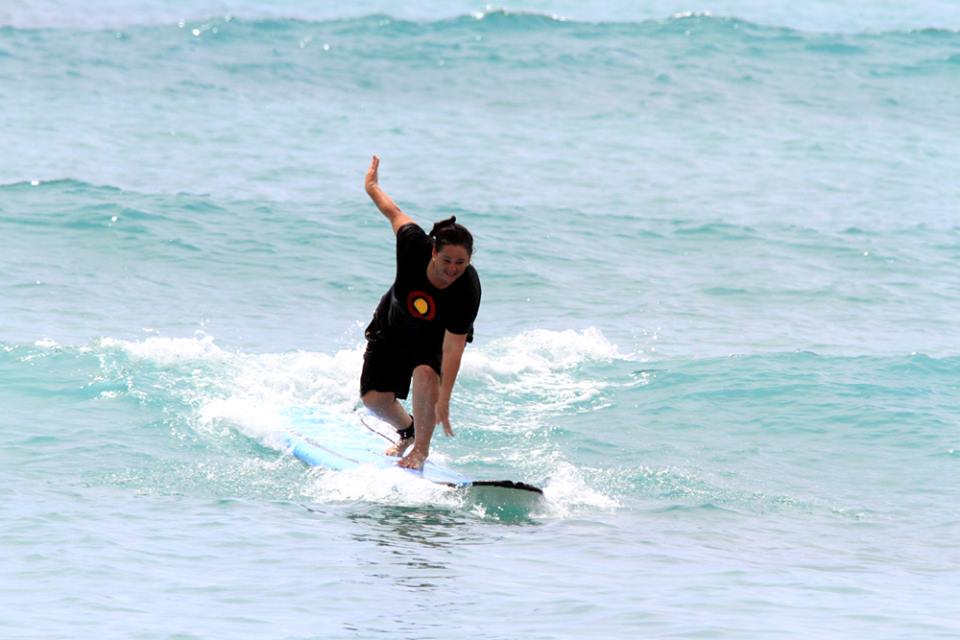
On the waves, Jenny Fraser
A Murri, she was born in Mareeba, Far North Queensland in 1971 and her old people originally hailed from Yugambeh Country in the Gold Coast Hinterland on the South East Queensland / Northern New South Wales border. She has completed a Master of Indigenous Wellbeing at Southern Cross University in Lismore, New South Wales and is currently completing a PhD in the Art of Aboriginal healing and Decolonisation at Batchelor Institute in the Northern Territory. Jenny is the eldest of three girls.
Jenny spent her early years with one of her sisters, driving across Australia. This is where she learnt to be comfortable with the lifestyle, be that in the Australian bush, city or by the ocean.
“I have always known that I would be an artist. Although I am a trained Art / Film and Media Educator, I resigned from that in 2000. The artists lifestyle suits me much better.”
As a child, Jenny had a keen interest in many cultural approaches towards different lifestyle choices, practising and maintaining traditional knowledges, and relaxation techniques.
The curator’s transition into Natural medicine was a defining moment for her when she was making films and speaking with some of the healers in natural medicine. Jenny felt that was something that greatly interested her, she had only realised it when she spent more time with the people in that natural medicine.
“This awareness became more solid for me, when I worked on some films and witnessed the way people work so hard in that industry, which often drives them to sickness. But some have learnt from the hard work and have opened their own businesses in Natural medicine instead”.
Jenny is also a spearhead for Aboriginal Media Arts, founding cyberTribe online Gallery in 1999 and the Blackout Collective in 2002. More recently she was the first Aboriginal Curator to present a Triennial exhibition in Australia: ‘the other APT’ coinciding and responding to the Asia Pacific Triennial which was then accepted for inclusion into the 2008 Biennale of Sydney.
She has travelled extensively and completed residency programs from remote communities in Queensland and the Northern Territory to the Rocky Mountains in Canada and also Raw Space and New Flames in Brisbane.
The best way to see some of Jenny’s work is to click on some of the links below:
I have been a fan of my next Australian story for many years. Gurrumul Yunupingu has a magical voice and one that always reduces me to tears. He has a beautiful story as told by the ABC Stories. Please click on the link at the end of the post to watch a documentary about this amazing Australian’s life.
Briefly, Geoffrey Gurrumul Yunupingu has eluded the media since becoming a household name. The enigmatic blind Aboriginal musician first came to attention when he released his eponymous first album in 2008 to international acclaim.
Sung in the Yolnu dialect of Arnhem land, Gurrumul’s music transcends cultural boundaries and touches listeners in the UK and Europe as much as it does in Australia.
Yet despite the accolades and awards, Gurrumul has resolutely refused to do media interviews or provide any clues to journalists about his background or motivations; to both the chagrin and respect of the people responsible for his success.
For the first time, in 2010, Australian Story presented an intimate profile featuring behind the scenes footage of Gurrumul shot by filmmaker Naina Sen, combined with interviews from his family and unofficial spokesperson Michael Hohnen. Watch the film on the link below.
The Australia Day will be next Monday, January 26, and I would like share a few Australians that have extraordinary stories and make me and the country proud. There many Australians I am proud of. It would even be impossible to fit them all into my blog in the 1000 posts I had promised in September. However, given the limited time between now and the actual day, I will share only a few stories. I would like to start with someone my sons and I admire for his musical talent, his love for his culture and nature. It is a little like me, except, my musical talent appears when there is no audience and I have had a few wines.
On a serious note, please ask Abung (Google) to help find Xavier Rudd and listen to many of his beautiful songs. I am sure many of you will know him. He is a one-man band and plays most of the instruments himself. His life as a nature activist makes me particularly proud and this is his story from The Nature Conservancy
Xavier Rudd
Hometown: Bells Beach, Australia
Day Gig: Environmental Activist, Surfer
Night Gig: Internationally Acclaimed Singer Songwriter and Didgeredoo Master
Environmental Concern: Oceans
Singer-songwriter, musician, activist and surfer Xavier Rudd is considered to be an iconic voice in Australian music. Using a range of instruments, including guitars, yidakis (also known as didgeridoos), stomp box and percussion, Rudd has become known for marrying uplifting music with thought-provoking lyrics.
Since his first studio album, To Let, debuted in 2002, Rudd has earned a reputation as a strong mult-instrumentalist who writes, sings and plays from the heart. Solace, his second album, was recorded in Vancouver with friend and producer Todd Simko. It debuted in 2004 in the top 20 of the ARIA charts and three of its songs were voted into triple j’s annual Hottest 100. It was followed with the ARIA-nominated albums, Food In The Belly and White Moth. In 2008, the gritty, dark and dynamic Dark Shades Of Blue redefined Rudd as a lapsteel player and lyricist. His sixth album, Koonyum Sun, was recorded as “Xavier Rudd And Izintaba,” and featured a collaboration with bassist Tio Moloantoa and percussionist Andile Nqubezelo.
In 2012, Rudd released Spirit Bird. His seventh studio-recorded album, Spirit Bird debuted at #2 on the ARIA album chart, and has earned critical acclaim as well as a 2012 Australian Independent Record Labels Association Awards nomination for Best Independent Blues And Roots Album.
As a review in the Seattle Post Intelligencer notes: “over the course of his career [Rudd] has evolved from being the accompaniment for surfers and late night beach parties (not only were some of his songs featured in the movie Surfer Dude, he wrote parts of the movie’s score) with an environmental conscience to singing about having a spiritual bond with the planet and the compassion required to create it… he gives us his vision of the potential for a better world.”
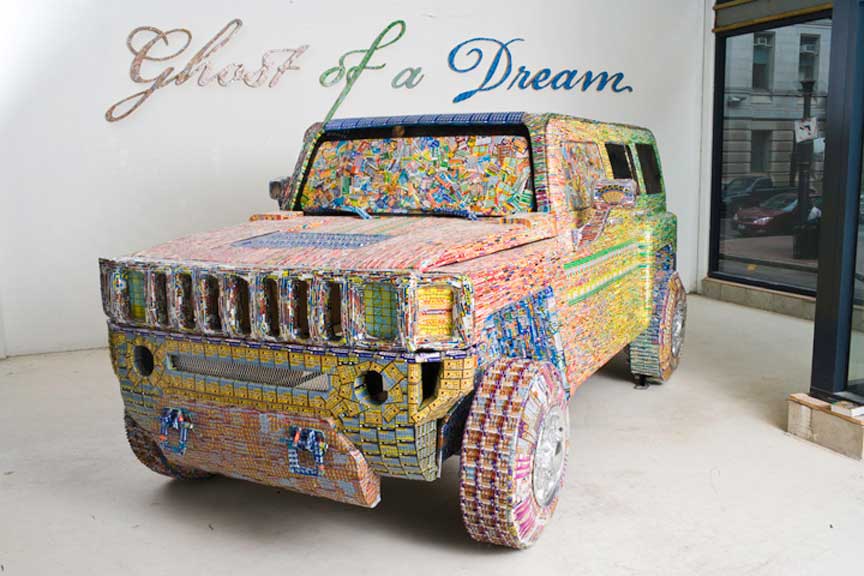
Dream ride 5,6,7 2010 discarded chinese and us lottery tickets, wood and plexiglass 44″ x 78″ x 190″
Ghost of a Dream
A sculpture and installation dream car
If only I had kept all my lottery tickets that did not win, I could have made myself a car or a piece of art. Please don’t laugh, I’m serious. Look at these babies. They made it into the Cool Stuff on my blog. For those of you that are new to the blog, every now and then, I post something I think is really cool. It can be a piece of furniture or art. These exquisite sculpture and installations were created by Adam Eckstrom and Lauren Was. For more of their work, click on the link at the end of the post.
Rear view of Dream CarDream Car 2008 $39,000 worth of discarded lottery tickets, cardboard, cast plastic, wood, steel, and mirror
I have been painting “Josephine”, the woman from my head in watercolours on paper.
With several layers of pigment on heavy paper, she has taken some time to surface. In almost three weeks, and working with three other artwork at the same time, I took no notice of how she was looking. I knew “Josephine” was due to finish soon.
My sons had been away south. My younger son returned today and wanted to see what I had been up to. I showed him the gardens, told him about the chickens, the paper thief, and how my blog was going. He could see I had been painting. As usual, he went through my paintings, telling me which ones he liked. When he saw “Josephine”, he asked me if I was painting “Bubu”. Bubu is a shortened Motuan (Papua New Guinea) word for grandmother/father. Chris was referring to my mother, Freda.
I laughed. Chris was right. This woman in the painting is what my mother looked like in her younger days. Apart from her hair, most of Freda’s looks have not changed much over the years, so much so, my 16-year-old recognised her. I had not realised Josephine’s resemblance to my mother before.
How did I paint my mother without knowing? (Maybe, I miss her).
I don’t think I can tell my story in five seconds, but, Robert Clear can. I recently discovered Robert’s stories and pictures. I wanted to show it on Cool Stuff. I think what Robert is doing is amazing and some of his stories are funny. Sometimes, to tell a story, one only needs a few words. I asked Robert how does he do it, and why?
……………………………………
“My name’s Robert Clear and I’m an artist and writer from London. In my work I combine words and images to tell stories, but I impose a special constraint on myself: I aim to tell each story in no more than five seconds. That’s one twelfth of a minute to conjure in the viewer’s mind a world, its characters and a sense of what’s at stake for them. That means a tight economy of words and line and form, a careful balancing of text and image and a sense of rhythm that uses words and pictures as semantic cues and as pure pattern.
Why five seconds? We live in an age where the rest of the world is always at hand, available through the glass screens that connect us to the internet. We have the means to obtain instant gratification, to be entertained always. In this age an artist or writer can expect no more than five seconds of a stranger’s time. Advertisers know this. They craft hooks to sell products that use those precious seconds to leave the viewer wanting more. I decided to use that fragment of time to construe the entire experience; to create something that can be viewed, inwardly digested and (hopefully) enjoyed in five ticks of a clock.
The inspiration for much of my work is London. Perhaps surprisingly, given that it’s a sprawling mass of eight and a half million people, it’s the city’s animals that frequently become my subjects. ‘London Beasts’ is one of my recent series, and animals are the main characters. Each has a particular association with London, whether it be an area, a park or a specific building, and for each I created a story that evoked this connection.
One of the most interesting things about taking my work online has been the chance to interact with others who are interested in art and storytelling. If anyone wants to get in touch, I’d love to hear from you”.
Robert Clear blogs on WordPress. You can click on his name in the first paragraph to reach his blog or click this link:
The Zhangye Danxia is located in the Gansu Province of China. I found these mountains absolutely stunning! Red sandstone and various other mineral deposits ‘paint’ these spectacular series of coloured landscapes, depending on light, and which angle you look from. Watching the video is like watching a series of landscape paintings. Tourist board walks and trails have been built over the land formation, making it easier for visitors to see it up close. The colours of these surreal mountains have been referred to as the Paint Palate of God.
The mountains and surrounding areas covered with red sandstone and conglomerate has intrigued geologists for many years. Six of the Danxia landform sites have been inscribed as part of the World Heritage sites.
I love interesting sounds, particularly unusual musical instruments from Papua New Guinea. Here is the Pidil, a rare instrument belonging to the Gunantuna of The Blanche Bay Area of New Britain. I have read that this instrument is played by men during ritual ceremonies to attract young women into the bush. We can guess what that means.
I do not have any more information on the object except for the sound of it which is on the YouTube link below. The brown, almost finely polished seed, (it’s naturally like that), is common in PNG in coastal areas. In my province we remove the inside and hollow the seed before we use it as a decoration on string bags (bilum). We also string a bunch of the seeds together to make it another musical instrument, that sounds like a shaker. The women and men carry the bunch and shake them to create the sounds that accompany the kundu drums, singing and dancing.
Rabaul is the famous centre of New Britain. It is known for the Japanese occupation during the world war and also for its volcanoes. Since January 1942 the Japanese had held Rabaul on Blanche Bay, the flooded crater of an extinct volcano which gives deep water almost to the shore. The regional area and the province itself is rich in culture and heritage. The Pidil in New Britain has a longer story behind it. I dare not ask, I am a woman, but, someone from this area may offer us some follow-up story for this blog in the future. For now, click on the link to listen to its sound.






 Tribalmystic Stories