
Ryan Lobo has traveled the world, taking photographs that tell stories of unusual human lives. In this haunting talk, he reframes controversial subjects with empathy, so that we see the pain of a Liberian war criminal, the quiet strength of UN women peacekeepers and the perseverance of Delhi’s underappreciated firefighters.
All posts by tribalmysticstories, lazylittlefrog.com
Believing In Yourself
Unwanted Fall
Short story, JLeahy, Tribalmysicstories

I stepped outside the doctor’s room into the surgery. The air felt warm even though the air-condition was on. It smelt clinical and I felt nausea. My mouth dried and suddenly, I felt I needed to drink a whole tank of water. From the red seats, amongst the other sick patients, and their loved ones, Bill dutifully stood up. He walked to me. I saw the water cooler near the receptionist but resisted the urge to stop and drink. A toddler, covered in bandages was crying in pain. I needed to get out.
Bill wore a black T-shirt and a pair of old Levis. His hair was messy.
“Yes?”, he asked when his eyes met mine.
I didn’t reply. I walked past his glaring eyes to the lift. I felt his previous night’s anger slicing through my back as I stopped in front of the lift. The lift arrived on the 13th floor, and I stepped in. I pressed the green “G” button set on the silver squares inside the lift door. I tried to get a space as far from Bill as possible. It was close to midday and already the lift was full of office workers and sick people.
“What did the doctor say?” Bill asked as he squeezed next to me. He reeked of Old Spice and alcohol. I turned away.
“I’ll tell you at home”, I mumbled as I looked at the people in the lift.
A beautiful 5’ foot 7” blonde with popped China Red lipstick gave me a weak sympathetic smile. Her make-up was flawless. She had my height, but her red high heels put her at least two inches taller. An old Muslim lady, head covered in pink cotton stood next to the blonde. The old lady only reached three-quarters of the blonde’s height. In contrast to the blonde’s green slimline dress, the old lady wore a brilliant blue Mama-dress, and a pair of flat, soft, black shoes. The old lady was holding onto two girls, about three, and five years old. The three had beautiful olive skin and deep-set eyes. The girls were looking at the blonde. The old lady looked at me with no expression.
“Why don’t you tell me now?”, Bill broke my thoughts.
“I don’t want to”, I said.
The middle-aged man, Indian, dressed in a fine, light grey Cashmere suit stared at me. He was on the other side of the blonde, and directly opposite. I looked down. The Indian man’s right hand-held
a briefcase by his sleek pants. He should look at the blonde, not me, I thought. On the floor, next to the Indian man’s black Italian leather shoes, my eyes caught a pair of white crocodile-skinned shoes. It had a pointy tip, just like a real crocodile’s mouth. Who wears crocodile skin shoes?, I wondered. My eyes travelled back up his green tight vinyl pants into the eyes of some 17-year-old wacko with pink shirt. He had stood his pale two-inch blonde hair up in an attention with strong gel. He slipped me a fake smile when I caught him starring. Croc-shoe boy wore a small gold earring on one ear, and a diamond stud plunged into his narrow flat nostril. He exaggerated his eye lines with some make-up. The croc-shoe boy’s friend was twice his size. He seemed to be the same age but looked unhealthy. He was pimply, scruffy and dirty; a complete opposite to the croc-shoe boy. They were saying something and giggling. They both looked at me, mocking. Why is everyone looking at me?, I wondered and kept my eyes down.
“Is everything alright?” Bill asked me again, and the lift jerked off and glided down towards the front of Wickham Terrace, Brisbane.
I ignored Bill. I felt the lift stopped. A tall young man stepped in, and greeted the blonde awkwardly.
“Lunch?” he asked smiling. She blushed.
The lift took off and did not stop on the next level, nor the next. The Indian man in Cashmere tried to press the buttons. The lift kept going, and accelerated.
“It is not stopping!” he yelled.
It felt like the lift was falling into empty space and my gut was going in the opposite direction. I heard screams. My mind went into slow motion.
BANG! The lift crashed into something hard and stopped. We must have hit “G” Level. Everybody kept screaming. The lights went off and came back on. Some people fell on the floor. Bodies crashed onto me. The two girls screamed for their mother. They grabbed the old lady. The alarm went. I felt sick. I turned into the cold silver wall and let myself slide onto the floor. The last thing I saw were the white crocodile shoes.
“Jess! Jess!” I heard Bill calling.
“Jessica! Wake Up!”
I came to. It was very hot; I was drenched in sweat. It smelt. Different smells of people smell, both good and bad. I must have passed out. I could vaguely see the others in the room but they felt close. They were in various moving shapes. I didn’t know what had happened.
I felt like throwing up again and tried to focus. Slowly, everyone came back into form. I could hear the two little girls crying softly into the old woman’s dress. She was speaking very gently to the girls in a foreign language. The awkward young man, looking concerned, had his arms around the beautiful blonde. The blonde was pale. Her lipstick smeared. The Indian man had taken his jacket off, revealing a sky-blue cotton shirt teamed with a pin-stripe tie. In a large “V” shape, sweat soaked and darkened all his front chest. He looked crumpled on the floor with his briefcase in his lap and jacket rolled in a ball.
“Jess!”
My eyes turned to Bill’s face hanging over me and I looked away. I had leaned into the lift wall with my head resting on the croc-shoe boy’s shoulder. The croc-shoe boy and his friend were cursing nervously. I felt awkward. I could not move myself so I turned and looked at Bill. In place of his 40 years of age, I saw a sweaty 55-year-old wrinkled man. His unshaven face matched his salt and pepper hair. His eyes were bloodshot and his jaw line was tight. Now the Bourbon was obvious on his breath. His eyes continued to hold the question as he spoke.
“The lift is stuck. There is someone coming.”
There was no emotion in his recount.
“You have to stay awake,” he changed his tone.
What is wrong with you?”
I had no more strength to hold it back.
“I am pregnant!” I said aloud.
Bill’s jaw dropped. He stared at me in disgust, speechless. Everyone in the lift looked at me as if I had announced I had smallpox. I had kept this for three months. Bill and I have not had sex for at least three years.
Where is your grass-skirt?

The story about grass-skirts
A question I’m often asked, and I know I am being teased by friends and people from other cultures is; “where is your grass-skirt?” Many people expect you to have one and wear one because you are from the islands. May be they are just joking or wishing they could see you in a grass-skirt. Who knows? The other question I often get asked is, “where are your coconut shells?” We will leave the second question for later. May be they have watched too many Tahitian dancers.
As for the grass-skirt, let me tell you, I do have one. In-fact, I have had more than one over the years. I have one grass-skirt with me here in Australia. It was not easy getting it through quarantine, but it got through. The sad part is that I have not had a chance to wear the grass-skirt in ten years. It is now too short and small for me. That says a lot doesn’t it? I need to start thinking about making a new one.

The heritage of PNG women
Grass-skirts are the pride of women in Papua New Guinea and other Pacific islands. In the Melanesian region, grass-skirts are made from and dyed, with natural fibres and pigments. More women are using Chinese made dyes for the brighter colours, but often, traditional performances, songs, and dancing call only for plain grass-skirts.

Grass-skirts are made from young fibres of sago palms, bark, sisal, pandanus, banana fibres, and many other natural fibres. The time it takes to source, collect, and prepare the raw materials; splicing, drying and dying takes a lot longer than actually making the skirt. The collection of the material process could be weeks or months and the skirt can be made in a week or less.

Using natural fibres
In my tribe, women use young palm leaves for grass-skirts. The shoot is cut early morning and boiled or spliced and dried immediately to stop iodising/browning of the cream colour. This process captures the supreme creamy white colour. If you ever see the weaving of the Micronesian women, the same kind of process is used to keep young coconut fibre almost white. A tree bark is kept under water for weeks before it becomes soft enough to pulp and split into threads for twisting. The threads would then be used to sew the palm leaves into place at the waist band. When the palm leaf is dried, we decide where the colours would be on the grass-skirt design and dye the colours. For black we use charcoal and dark grey, the fibres are buried in the water for a few weeks. Red comes from a tree seed and finally turmeric is used for yellow and orangey shades.
Rhonda prepares her grass-skirt for festival
I found this interesting film on YouTube (see link below) which gives an insight into a young woman’s preparation for the Hiri Moale Festival. Rhonda Tiana, a Motu-Koitabuan gives you an opportunity to see her prepare her grass-skirt, and use it in the Festival. This grass-skirt is from Central Province.
A Filipina mother’s story of birth and survival in a cave during Typhoon Haiyan

Author: Thin Lei Win
MARABUT, Philippines, Nov 6 (Thomson Reuters Foundation) – Elizabeth Caramol was nine months pregnant with her ninth child last November when Typhoon Haiyan, the strongest storm on record to hit land, swept away her family’s rickety home on a coconut farm in the Philippines.
Haiyan damaged practically everything in its path as it hit land on Nov. 8, packing winds of up to 315 km an hour (195 miles an hour) and unleashing seven-metre (23-foot) storm surges. It killed, or left missing, some 7,000 people and forced up to 4 million from their homes in the central Philippines.
Caramol and her family took refuge in one of the many caves along the beautiful, winding coastline in Marabut municipality in Samar province. She feared for her life but safely sheltered, delivered a healthy boy and named him Cavein – pronounced “Kevin”.
A year later, Caramol, now 36, spoke to Thomson Reuters Foundation from her home, a newly rebuilt wooden house on stilts, about how her family is slow rebuilding their lives.
“A day before the storm, we evacuated to a cave about 200 metres from our home. It was a big cave with two levels. About 60 families took refuge there, but we stayed there until Dec. 4. We were the last to leave because we didn’t have anywhere else to stay.
“We went to the cave because we were told a strong storm was coming and there could be sea level rise from the water. Here, the water was halfway up the coconut trees and even came inside the cave.
“Many people moved up to the second floor when the water started coming in, but I had to stay on the first floor. I was due to give birth on Nov. 8, and I was starting to experience labour pains. They hurt so much I could not move.
“I thought I was going to die. I told Napoleon, my husband, to take all the kids to the second floor and leave me there. The water rose to around one foot and then it went down the next day.
“I didn’t want the baby to come out because the conditions in the cave were not good. We brought rice, water, salt and matches, but we ran out of water and matches pretty quickly. There was no other means to get water. We just had a container to collect water that dropped from the trees. There were no toilets either.
“I had labour pains for five days. When I finally gave birth on Nov. 12, I was so excited but I also had fear in my heart because of the hygiene conditions and the infections that could set in.
“Our home was washed away so we had nothing for the baby, not even clothes. We cut some blankets into pieces of cloth to wrap the baby. We named him Cavein Cuevas Caramol, because he was born in a cave.
“For five days, we ate nothing but rice and salt. I just breastfed the baby, like how I raised my other kids. I was worried that he is not going to be healthy but he is.
Source: Thomson Reuters Foundation – Thu, 6 Nov 2014 07:49 GMT
Thank You Kind Stranger
“I was on the seat in the back. I felt the bus moving away. I saw everybody, even Nathan on the ground as the bus went. When I turned around, no-one from my school was in the bus with me”. I remember my son’s words even to this day.
Chris Harris, five, was left in the public bus after the bus dropped off his brother (8), the staff and other children from Chapel Hill State School/After School Care.
Tomorrow, Chris will turn 16. Thanks to you, the Good Samaritan/ a stranger who helped Chris, find his way home.
It was in September 2004 in Brisbane City. We had migrated to Brisbane on July 13, 2004. As we were approaching Christmas, it would had been almost a year since the disappearance of Queensland boy Daniel James Morcombe and there was wide-spread publicity about him being missing. I was going through a difficult time, trying to settle into a new country without my extended family and my mother’s help with my sons.
The boys started school straight away and enjoyed it. They did better than I. In September, I was at work in Milton, near the city, and placed both boys at their school’s Holiday Care. A paid service run by the school. On that day, a trip to Southbank was organised so the children would be taken to the city to watch a movie. I understood at that time, there were three carers and 25 children. When the bus got to Southbank, a large amusement and entertainment park area, everyone got off the bus except for Chris. Chris is a very tall boy, even at age five. As a parent and an adult, I never understood how a responsible carer or teacher could not have done a head count of young children transported from one place to another. How did they not see Chris? None of the carers knew Chris was missing until they sat for the movie. His brother Nathan had started looking for him.
For Chris, after the initial shock of finding himself in the public bus all alone, and driven away, he said he searched in the faces of members of the public to “see who was nice”. Chris found a certain young man, he thought, “looked like” his uncle Kauc. Uncle Kauc is my brother. The bus stopped at the terminal in Myers Centre, Brisbane City. Apparently, Chris walked up to the stranger (that looked like my brother) and said; “excuse me, please help me. I am lost. My brother and other kids went off the bus as Southbank, it’s all my fault, I didn’t get off”.
According to Chris, the stranger said “Ok” and asked Chris to follow him. They walked out of the bus and through the crowds in the shopping centre, straight to the police station.
I asked Chris later if the man touched him and Chris said “No mum. He did not want to hold my hand. He told me to follow him”.
At the police station, Chris gave the police my name, number and address. Chris had memorised it, and police also found the contact details I wrote on Chris’ hat and bag. A call to the school and within a few hours, the Brisbane police brought my son back to Southbank to re-unite with his brother and the rest of the group. No-one called me.
After work that afternoon I walked to the school from the bus stop to pick up my sons. One of the carers came out to see me and told me about what had happened. Before she even finished the story I demanded to know where my children were. I called Chris over, checked his body, asked if he was Ok. When he said he was, I picked him up and hugged him and got his brother. I lifted Chris onto my shoulders and held Nathan’s hand as we walked home. I refused to speak with the carers or anyone before we left the school. I was outraged and terrified of what might have happened. I just wanted to get home. I wanted to just be with my sons. I walked and I wailed like a true Papua New Guinean woman for the five kilometres home. I remember people in our suburb coming out of their houses to see what was going on and just stared.
The next day I resigned from my job. I was afraid to leave the boys with anyone. It took me two whole weeks before I could speak to the school and the Holiday care people. We never really resolved the issue. I moved on.
This week at work one of my colleagues made a collection for Daniel Morcombe’s foundation, set up by Daniel’s parents to help other parents who have lost their children to evil people. Some parents have never found their children.
I am celebrating my son turning 16 tomorrow and I am truly grateful to God and the kind stranger who helped Chris find his way home, almost eleven years ago.
The Hat Made It! The Horse Didn’t!
Across Australia today, people celebrated the Melbourne Cup Day.


After a long morning of trying to speak to clients who were mostly out for Melbourne Cup Day, my colleague and friend Celise and I went to our work party. The atmosphere was alive. The weather behaved. The food and drinks were enjoyed and then came the moment all punters were waiting for – The Cup Race

My friend Celise, looking stunning.
All lights went off and the large video screen in our boardroom came on, showing the horses running. The screen was linked to our office internet network and when the clock stroke the start, I looked around the dim room at the intense faces. Some sat and others stood. I had no money on anything, but it was interesting how excited and aggressive the atmosphere became and I looked back at the screen wondering if the most popular horse, I was told, a Japanese horse, would win.
The funniest thing was, the internet kept on stalling. The screen paused, then, a stop-start repetition. It drove everyone crazy. There was more screaming at the streaming than the actual race. The race in our boardroom took longer than the usual time. Finally, the horse everyone thought would win, did not. It was over. One colleague bravely took this breaking moment to ask if everyone knew how much damage horses endured in these races. No-one heard her. The faces were pre-occupied. Some were busy calculating how much they won and others, how much they lost. All in all, it was a fun day, especially in our hats.
Australia Stops for Melbourne Cup Tomorrow

The Emirates Melbourne Cup is on tomorrow, November 4th. While the main race will be in Flemington, Melbourne, many Australians will celebrate nation-wide. It is not a public holiday in Queensland, but it might as well be.
For the race, I am making a hat, badly. I know it is not my best work because I have made better hats in the past. I know I left it too late and I don’t have all the right materials.
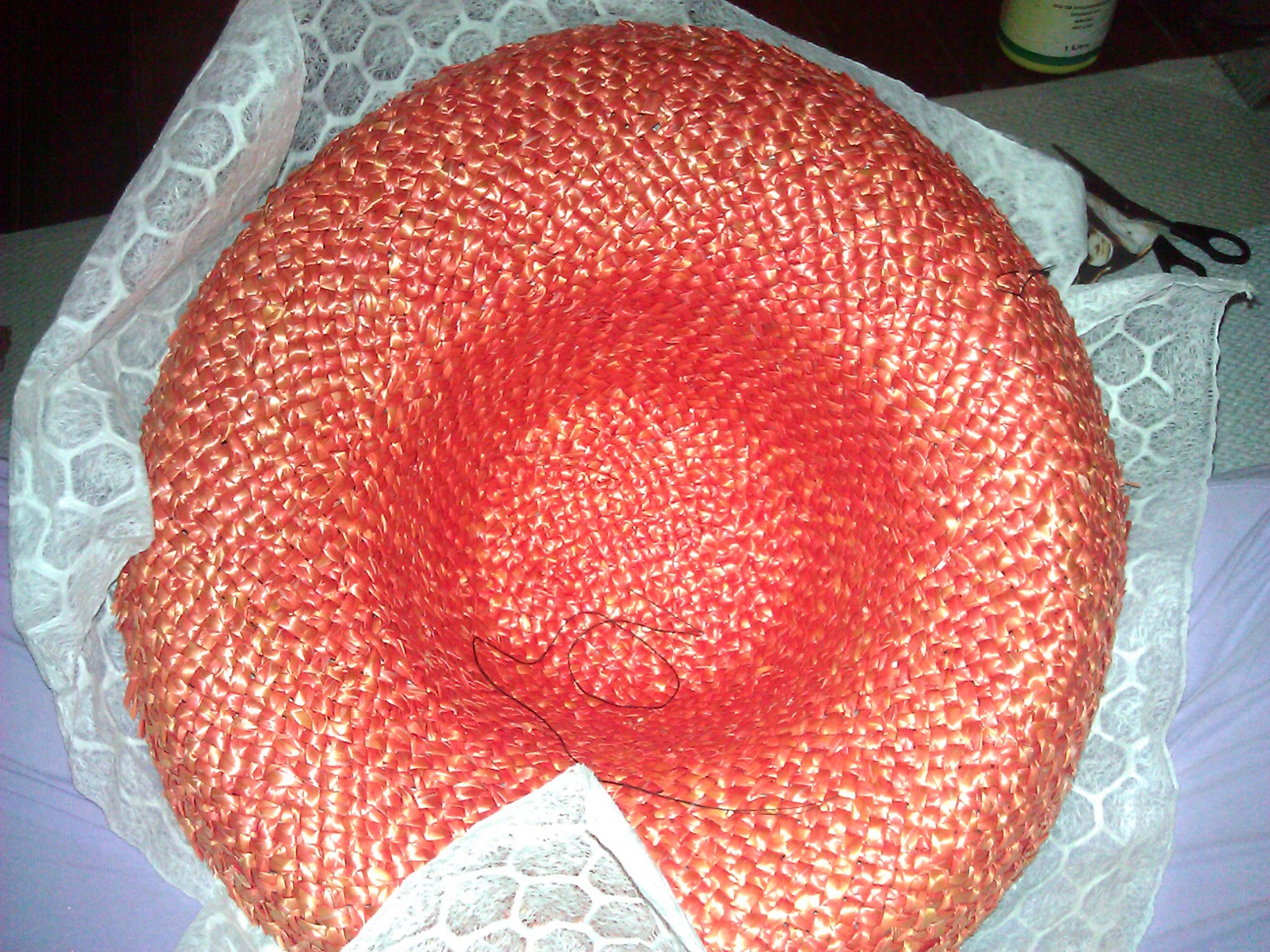
The Cup day is tomorrow and the office will have a party. I am not a big gambler, nor a horse race lover, far from it. I did not know our office wanted to party. But, it makes sense because most people in this country will take up to three days off work to gamble and party for Melbourne Cup.
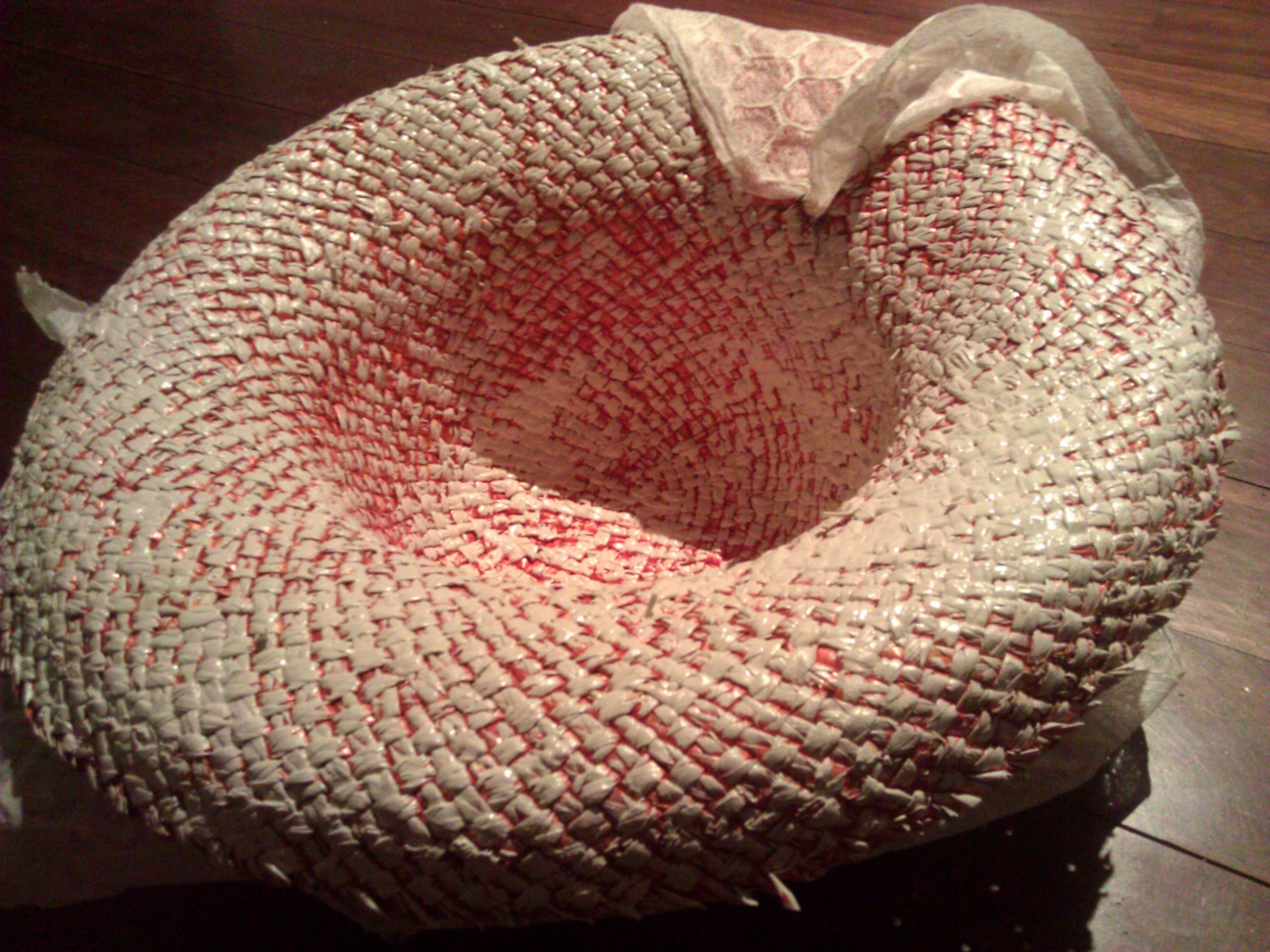
I don’t have any fancy hats. And, I don’t need one. The ladies in my office made a pack to wear hats so I wanted to make one for fun.
So far my sons had various pointers and suggestions on how to improve the hat before going off to bed and leaving me with the task. I have found various pieces of craft material at home. I am about to re-create a 10-year-old straw hat into something…yeah ‘something’ I don’t even know. The good thing about it is that if the ‘hat’ fails, I can dump it in my compost and recycle the bits and pieces. It is all organic.
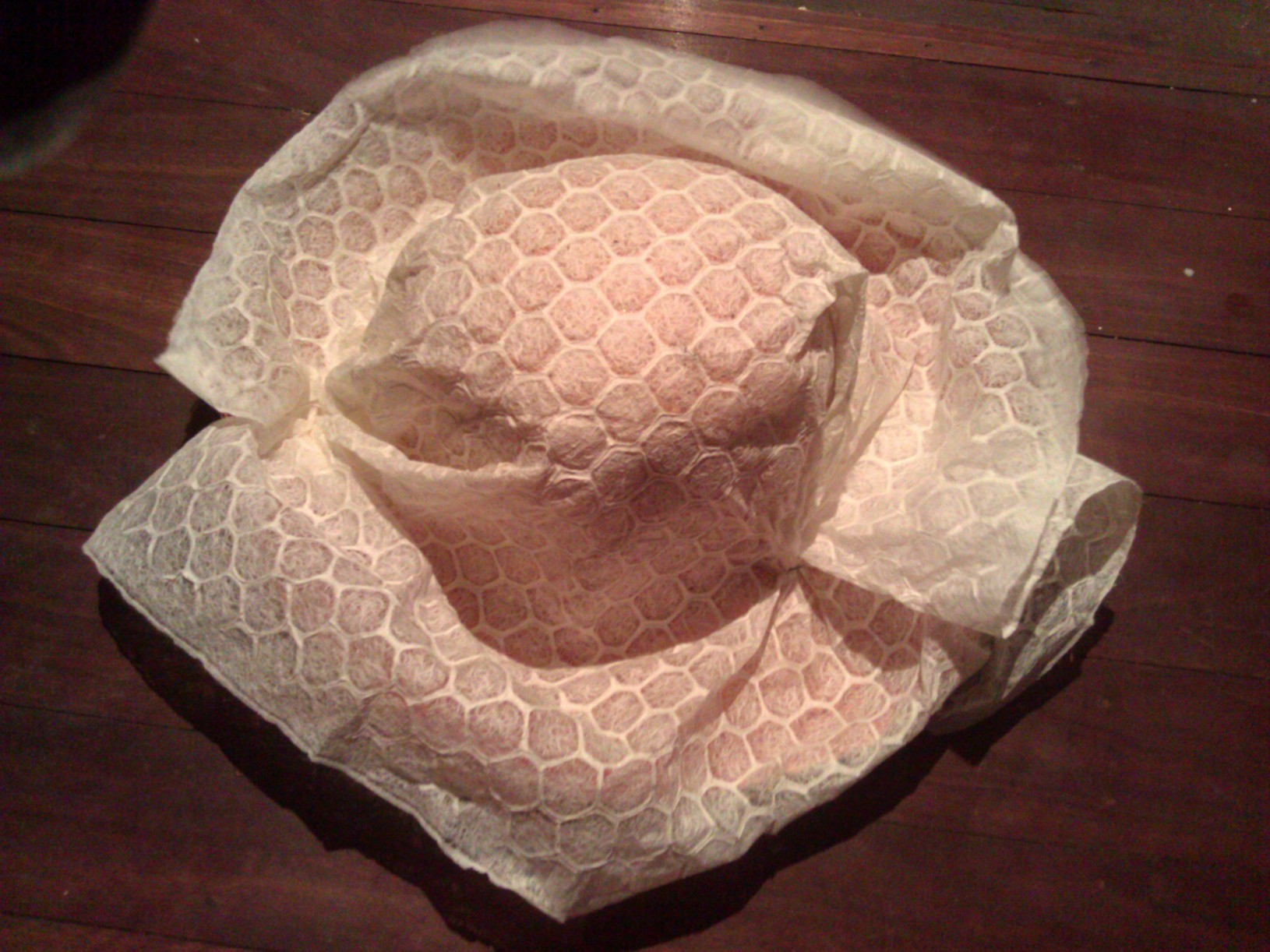
Pictured here, I found some hand-made re-cycled paper I had for a different project, and thought I could use it. I sewed the paper onto the orange hat and the paper was not opaque enough so I needed to paint the hat white. I was on a mission. The can of white paint was in my art workshop and without thinking or smelling the paint, I took a brush and painted the hat . Once finished, I could not wash the brush nor my hands, and I realised I had used the oil-based house paint. Worst of all my son told me, we did not have any mineral turpentine left to clean off the oil paint. Sounds great doesn’t it?
With his help, I used a combination of Antiseptic Dettol and nail polish remover to rid the paint on my finger tips so I could type this blog post. Don’t try to use that Dettol combination to clean your hands, it is not nice. I guess I won’t be needing that nail polish tomorrow either; I have white-painted nails.
To make the slow-drying oil paint dry faster, I have been blow drying the hat for two hours. I am hopeful; I will wear that hat tomorrow. Thank you universe for challenging my creativity but the hat will happen, regardless.
I hope I have made you readers smile tonight with this silly story and my pathetic hat-making effort. If you are following The Melbourne Cup tomorrow – have fun and win. My friend won a few thousand dollars on a $3 bet, so I know it can be a day for anyone. I am just going to finish my hat.
Cool Stuff: Wood Casting with Hilla Shamia
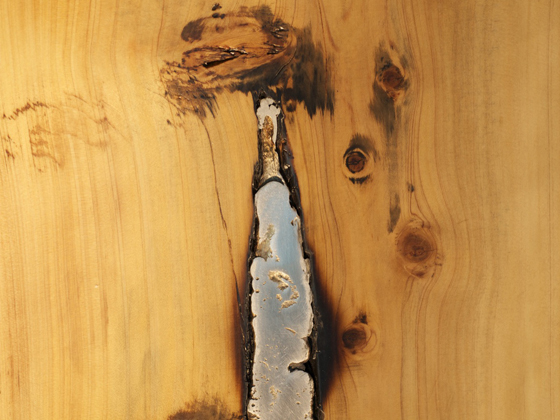
For someone who is interested in art and beauty in everyday things, it came as no surprise that my sons have developed the same ‘eye’. My son Nathan introduced me to Hilla Shamia, an Israeli furniture designer who combines wood and metal in a way you don’t see too often.
Hilla Shamia is a Israel-based designer with B.Des. at Holon Institute of Technology, Industrial Design department.
Hilla developed a unique technique that joins the materials of aluminum and wood. She created a series of furnitures based on this technique called – Wood Casting.


These ‘wood castings’ are made from a whole tree trunk, and that enables them to preserve the natural form of the wood while still maintaining distinct boundaries in its creation. Each is a One-of-a-Kind piece.

A Wash In The Bush – Short Story
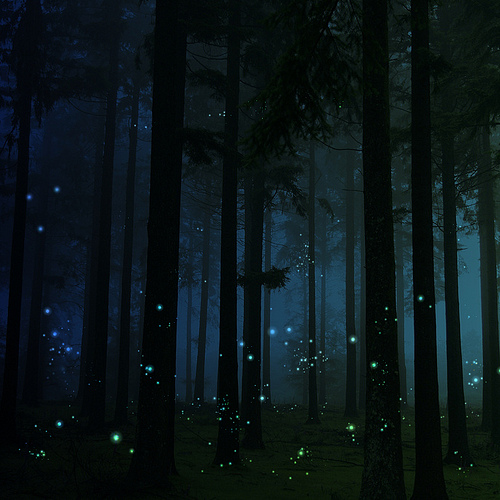
It was pitch black. The day had gone. Heat and humidity parted swiftly and everything was swallowed by the early evening darkness. By touch, I placed my towel on a nearby tree branch and stripped for my bush wash. My skin woke to the cool breeze. My right foot carefully searched on the large, rough and wet stones to the small piece of plywood. I stepped up, trying to keep it balanced under my weight. The ‘ply’ was held up by other stones. The underneath was muddy water. I stared into darkness and caught very faint glimpses of trees.
Already pulled out of the well with a rope and bucket, I reached it. The water felt cold. Today was an especially hot day. My mind went over how sticky it was. As I filled the saucepan, the steel cooled to the temperature of the water. I raised the saucepan and saw them coming. The ‘light’ visitors. They came in a fanfare of glows seemingly in rhythm, yet, their presence was soundless. I realised I had missed the fireflies in Port Moresby’s city life.
The fireflies came closer as if curious. They scribbled bright disappearing lines in the ‘black’ all around me. Their light made the darkness even darker.
I poured quickly. The water was cold.
“Ohhh nice!” half-shivering, I yelled out to my family, wanting to connect us through the depth of darkness between us. The chattering of my mother, my sons and, nieces and nephews were a few metres away.
This well water must have come from the centre of the earth. Untouched by the 36 degrees heat of Lae, Morobe Province. It was so cold.
After pouring three saucepans of water on myself I looked up again. By now the fireflies gathered just above me. They synchronised in an orbit-like dance. I looked up at the fireflies, entrenched, and the soft mushy Lux bathing soap slipped out of my hand. The soap’s creamy white oval-shape slithered away under the old plywood with a soft plonk in the muddy water.
“Shit!”
I am not about to put my hands in there I thought. I stared at the ‘nothing’. It was still pitch black. I bent my knees but half-way, I decided, it was not a good idea. I am not going to find that soap unless I am prepared to feel through snakes, centipede, spiders, worms, and God knows what else is in there.
An owl startled me back to reality. I listened to the owl speak to another softly. I was dripping, half-soaped and cooling down fast. The fireflies lost their rhythm and separated. They flew away. I reached for another saucepan of the cool rinse and grabbed my towel.
“I’m finished!” I called and picked up my clothes.
Through the bush, I could hear my mother bringing my sons towards me to wash them. They were nine and six. She had the lamp and the boys had their torches. Suddenly, everything looked different.
In the background, my nieces and nephews were waiting their turn to the waterhole. My cousin Sam Newton dug this well before he even built his house. The water feeds and quenches the thirst of hundreds in our community. Because of where Sam had dug the well, the water remained cool all day and night. We used the water for cooking, drinking and washing.
“Where is the soap?” I heard my mother ask.
“Forget the soap Ma, just wash them in the water”.
I smiled and dried myself.
 Tribalmystic Stories